
I recently went to ConQuest, a science fiction and fantasy convention in Kansas City. It was amazing, to say the least, given that I’ve been wanting to attend a writing convention for the last few years. (Plus, I got a couple of my favorite books signed by Brandon Sanderson, and he is an awesome panelist. Just throwing that out there). Anyway, one of the writing panels I attended suggested that, when it came to writing blog posts, to write about what you’re working on.
Of course, I try to post once a week with behind the scenes information about my book cover design work. I hope that the information is useful in multiple ways. First, it highlights the book. Nothing big, but it does promote the cover for the publisher and the author. Second, it highlights what I’m doing. Yes, I hope that potential clients will see the work I’ve done and decide to hire me later down the road. But third, I hope these posts provide useful information to authors who are considering self-publishing, whether they hire me, someone else, or do it themselves. I also hope the posts provide useful information to other cover designers who are looking for tips or tricks to improve their work. I’ve certainly found blogs with behind the scenes information about book cover design useful in my learning. So please, let me know if you have questions about the cover design process. I’d be happy to offer insight if I can.
That being said, I also do a lot of writing. Writing (and studying writing and publishing) is my passion. I love seeing the worlds and characters I explore. So I’m going to try the advice the panel offered and see if I can write the occasional post about what I’m working on or what I’m contemplating… my thoughts on writing in general. You may hear a lot about my story-writing progress, and maybe my theories on publishing. And I’d love to hear your input. What do you think about the topics I’m thinking about?
With that in mind, let’s jump into the first topic that got me thinking about writing a blog post. Plotting versus pantsing. A plotter is someone who plots out everything in advance. They may have outlines, they may have fully developed worlds, they may have every scene figured out in their head before they even write a single sentence. Pantsers are the opposite. They write “by the seat of their pants,” and outlines drive them nuts. They want to see where their characters take them, and explore the world as they go.
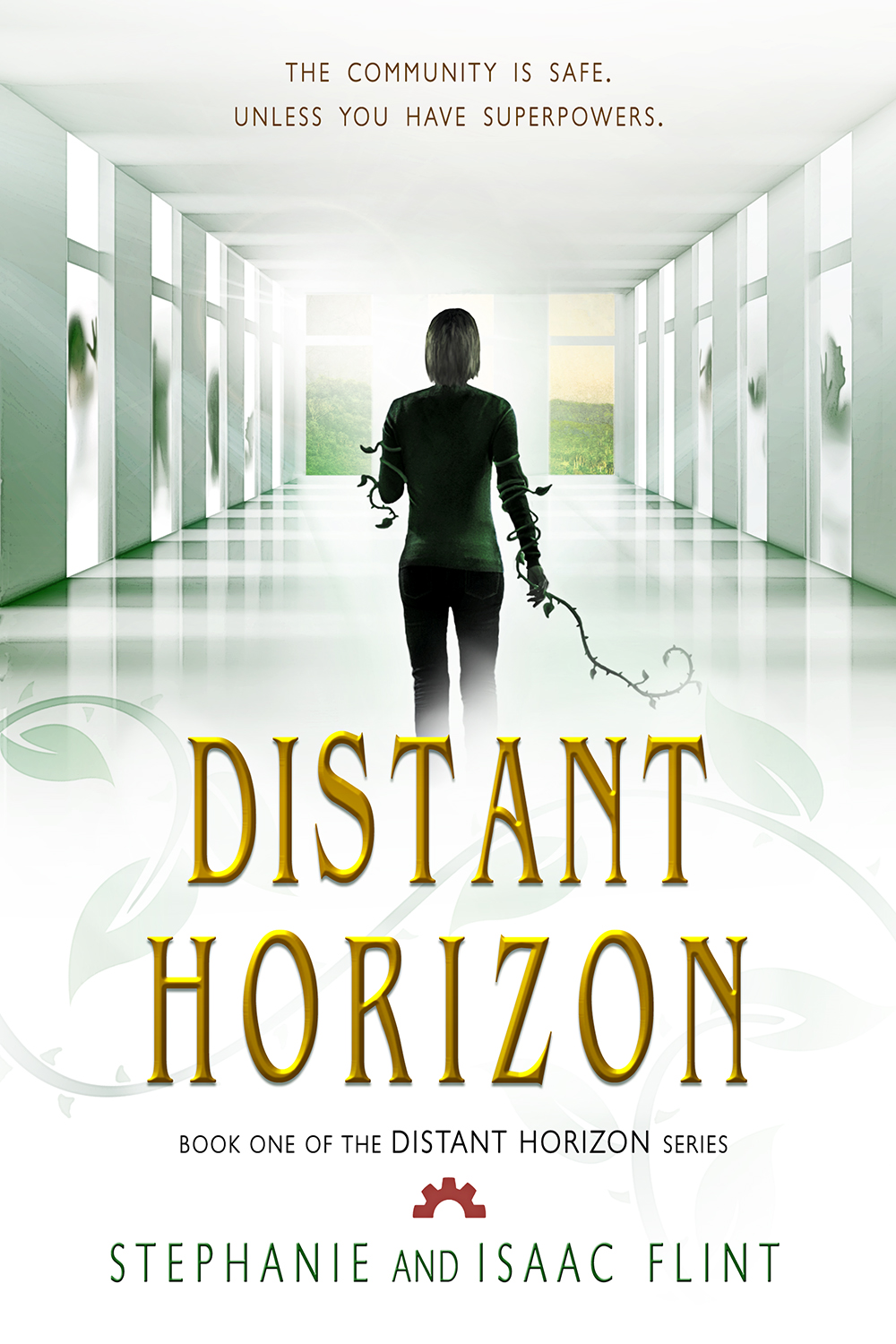
There’s absolutely nothing wrong with being either. Everyone’s writing style is different. But there’s a good chance you’ll be a little bit of both, maybe leaning one direction more-so than the other. Me? It depends on the story I’m writing. Some of my original stories were very much “pantsed.” I daydreamed the story in my head, but when I wrote the scenes, I let the characters go where they wanted to go (or where the scenery seemed interesting). When I started work on my Distant Horizon universe (which got me back into novel-writing after doing short stories for a while), it was plotted out. My husband (then fiance) created the world for a role-play game between the two of us, and about halfway through the campaign, I decided to log the adventures of my main character in the form of the novel. We continued developing that story, which has been through many rounds of edits and beta readers, and is currently being queried to agents.
Since then, I’ve written a few other stories in the Distant Horizon universe. Some were more plotted out than others. They each had a general outline, but I had a little more freedom with them to maneuver and explore. And even with Distant Horizon, I did quite a bit of exploration with it outside of the original game before I was finally happy with the story as a novel.
Then last year, for Camp NaNoWriMo , I decided to write The Messenger of Gaia, a science fiction space novel based on another role-play my husband and I played. Though the role-play game relied very little on actual dice rolls, the written story was heavily plotted. I had a heavy-duty synopsis/outline I worked from, and I wrote an even larger outline for the second book, since I realized it would be a while before I get the chance to write the rough draft for that particular novel.
Now I’m working on a story called The Wishing Blade. YA/NA fantasy, based on a rough draft I wrote in 2003. The original manuscript is… rough. We’ll go with that. But I’ve been wanting to rewrite it for a long time (tried several times, in fact. Got 10,000 words in on one rewrite, but I made it too heavily adult fantasy and took it in a completely different direction, which didn’t work. I also wrote a version of it as play for a playwrighting class… that particular version is terribly over-dramatic and cheesy), and I finally got the idea that if I worked on the manuscript from scene to scene, rewriting but sticking to the original premise, it might actually work. So far… it has. I’m about 45,000 words into the new version, and I’m enjoying it. In a sense, I’m being a plotter. I’ve got an “outline” (the original rough draft) that I’m following. However, I’m also being a pantser. I’m not sticking directly to the original story (which had a 200-year’s war worth of plot holes), and if I see something interesting… I’m running with it. I’ll write it, daydream it, and see where it takes me. In the long run, I’ll have a stronger novel.
Does that mean I’ll always straddle the pantsing/plotting line? Nah. It’ll just depend on the story I’m trying to tell.
Am I enjoying playing with different methods of writing? You bet.
I suspect that if you’re having a hard time writing something, you might want to try a different method of writing. Instead of trying to force a story to follow an outline, you might see where the story takes you when you let it run wild. (Sort of wild. You may need to reign it back in after a bit). If running wild is causing your story to go in circles, try stepping back and outlining. Do whatever works best for you.
Now, I have a main character who is currently plotting an assassination to attend to. I hope this post was useful, and please let me know what you think. 🙂




 Stephanie Flint - Author and Artist