Tag Archives: Stephanie Flint

Thoughts on Writing – Developing Character Relations

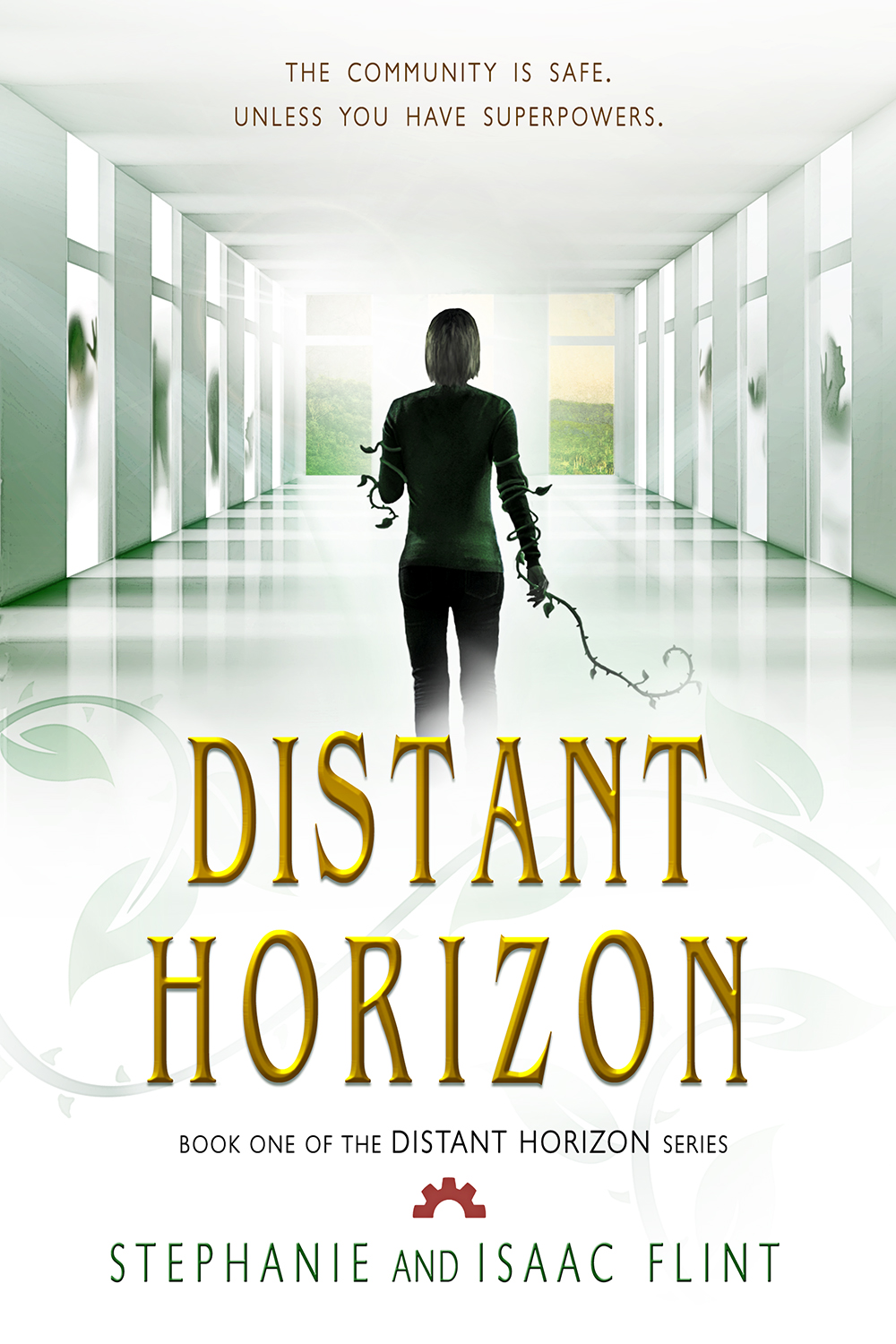
While waiting for beta readers to finish reading Magic’s Stealing, I’ve been doing a lot of edits on The Multiverse Chronicles. However, editing is not writing, and I got the itch to write. I didn’t want to move to book two of The Wishing Blade series until book one was complete, and I just finished reading On Writing Romance, so I decided to attempt to write a new adult, science-fiction romance. It’s set in the early days of the Distant Horizon universe, where super villains have secretly taken over the US government and wiped out people with super powers, all by claiming they have a hallucinogenic plague. In hindsight, writing a romance was probably a terrible idea, given that I am not an avid romance reader, and romances tend to end badly in the DH universe. But it was a personal challenge, and I accepted.

Anyway, I’ve been writing scenes here and there, and I’ve been developing the characters. Since romance focuses heavily on character interaction, I soon found that I had an issue. My characters felt weak and unrelated to the plot. They interacted, but only loosely.

That wasn’t going to work.

So I started examining the individual characters, and how they interacted with the other characters in the story.

These are the original characters:

Tamara: The heroine. College freshman with an undeclared major. Considering business or graphic arts. No powers. As a kid, she was raised by her mother, and due to shaky relations with her father, her mother instilled the whole ‘stranger danger’ fear in her daughter. Because of this, Tamara longs for stability, so she signs up for the new “EYEnet Match” program at her college, which promises to find her a near-perfect match.


Cole: The hero. College junior studying communication and leadership. Telepath, but he can’t tell anyone due to government regulations. He’s forced to join the EYEnet Match program as a means to get close to Tamara’s best friend, Amy, so that he can secretly scan her mind and see if she’s working with Challenge, a so-called terrorist cell. He doesn’t want to participate because he likes Tamara and he’s afraid he’ll end up hurting her if the government’s suspicions prove true.


Amy: Tamara’s best friend. College freshman. No powers. Lost a sibling to the ‘plague.’ She believes in true love, and thinks the EYEnet Match program is basically another online dating site. She’s interested in linguistics. She’s a bit of a rebel, but she has no interest in Challenge. She starts to fall for Joan.


Joan: College freshman. Skeptical of EYEnet Match, but decides to give it a try. Develops feelings for Amy when they meet in linguistics club, causing problems with her own ‘match.’ Joan carries a shield, which blocks powers, and she secretly works for Challenge (the ‘terrorist’ cell that the government is eyeing. Most of them aren’t really terrorists, but that’s how they’re portrayed).


Mr. Rivera: The counselor who organizes the EYEnet Match program on campus. He is Cole’s government supervisor, and he believes he lost his daughter during a terrorist attack. He orders Cole to keep an eye on Amy, and arranges for Tamara and Cole to hook up so that Cole can get in close without raising suspicions.

The problem with this particular arrangement of characters, however, is that the main plot lacked a focus on Tamara and Cole. Plus, when I described Amy and Joan to my husband as I went through the basic points of the plot (and it doesn’t help that I accidentally kept calling the main character Amy), he initially thought that Amy and Joan were the same person. Not only were the characters weak, but the plot lacked a strong conflict. Why wouldn’t Mr. Rivera have Cole keeping an eye on Joan, instead?

My husband suggested that I ‘kill my darlings’ and merge Amy and Joan’s characters. Then he suggested that I develop Tamara’s character a bit differently, since she currently had very little effect on how the story played out.

These are the modified characters:

Tamara: The heroine. College freshman with an interest in journalism. Secretly keeps a stash of old articles detailing the history of super powers, so she immediately becomes suspicious of Cole, who seems to read her mind. Nosy, she’s gets herself involved with the plot as she seeks answers to Cole’s secrets. She still has her family background of instability, which increases her need to know what he’s hiding because she longs to make their relationship work.


Cole: Hero. Not much changed from above. He believes his powers are a result of the plague, at least until Tamara gets involved.


Amy: Tamara’s best friend. College freshman studying linguistics. Has powers– the extended ability to block other people’s powers. She’s not a member of Challenge, but she’s trying to get their attention because she wants in, and it’s leading her to make a few rash decisions. In the past she was close friends with a cousin who was part of the program, but he kept her powers a secret from them and refused to let her join because he wanted her to get an education first. She has no interest in EYEnet Match, and because she’s not interested in men, Mr. Rivera can’t have Cole approach her directly.


Mr. Rivera: Still a counselor and still Cole’s supervisor, but now, instead of believing that he lost his daughter during an attack, he knows the truth– she was killed by the government villains because she was one of the dissidents. But Mr. Rivera maintains the charade of believing the lies so he can act as a double-agent. He pairs Cole with Tamara because he wants Cole close to Amy, mostly so he can find out if she might be interested in joining Challenge.

By combining Amy and Joan’s characters, and fleshing out the details of the other characters, we have relationships that are ripe for conflict, while still ensuring that these characters actually want to be together. Combining characters won’t always work, but it often leads to stronger character development. I plan to move a couple lines from Joan to a minor character, but other than that, I think combining them will make the story much stronger.

Now I’ve got to decide on her new name: Amy, Joan, JoAnn, Amy Jo/AJ… the list goes on. For now, I’m listing her as Amy in the manuscript, and I’ll do a ‘find and replace’ once I make a decision.

I hope you found this post helpful. 🙂

Have you ever thought about combining characters to make a story stronger?


6 Comments

Filed under Writing

Thoughts on Gaming – How Online Pet Sim Sites Helped Me Develop as an Author and a Book Cover Designer

My husband recently picked up a free app on his tablet: SimCity BuildIt. It’s a rather addicting game where you build a city by collecting resources from a factory, make various commodities and goods, and then use those goods to upgrade houses or sell on the global market. If you sell the goods, you make simoleons, the game’s currency. Needless to say, Isaac and I managed to work out a system (at least while I’m waiting for my seasonal day job to start back up), where Isaac manages the actual city stuff before and after he does his article-writing job, and I manage the game’s resources and make in-game money. Our city has grown quite well, and I’ve enjoyed playing with the ‘global market’ aspect, in which you figure out what items sell best, how many to sell at one time, and which items are worth the time it takes to make.

All of this got me thinking about how various different games have helped me further my writing and book cover design work, along with marketing.

For example, website design. When my husband and I sat down to create our website for Infinitas Publishing, it reminded me a lot of my time running a Petz fan website, my time playing online, text-based RPGs, and the time I took a class on Dreamweaver in college.

Let’s break these down.

Petz was a PC game ranging from version 1-5, which was actually two separate games: Catz and Dogz. If you bought both, your petz could interact. P.F. Magic (the company that developed the game) encouraged fan sites. A whole community sprang up from this, where fans created elaborate websites where other players could adopt petz, show petz, earn awards for having an awesome looking site, play mini games of ‘find-it’ across the site by looking for a specific images (usually one of the petz or toyz), or download custom content. Most ‘kennelz’ had an about page, an adopt page, and a linkz page (‘S’ was commonly replaced with ‘Z’ if it came at the end of the word, a reference to the name of the game), along with whatever else the site owner wanted to take care of.

I got started in the petz community by adopting petz. Most sites would have an adoption form where you would give your (online) name, your email, name of the pet you wanted to adopt, and state why you wanted that pet. There was usually a code word to insert in the form so they would know you had read their rules. Sometimes you would get the pet (and it was awesome when you did), and sometimes you didn’t. The more popular sites might have several people vying for the same, adorable, pixelated bits of code.

In a similar vein, you could sign up for a site review so that the owner would look at your site, rate it and give you feedback, and hopefully include a link to your site on their review list. Other players who browsed the original site would see the link and click on it… thus bringing you potential ‘business’ in the form of show entries and adopted petz.

How does this relate to writing?

Well, when I started looking at review sites to get a feel for what to expect when sending out review copies of my books, I realized the process was similar. You have to find blogging sites where the site owner hosts reviews. You’ve got to see what criteria the site owner has, then write to them with the reasons why you think they might like your book.

In terms of ‘adoption,’ you want readers to go to your book page, like what they see, then go buy the book.

Anyway, I also mentioned that online text RPGs helped me in setting up the website. Aside from helping me improve my writing, many of the RPGs were hosted by the same site. Basically, the host site used templates. Once you figured out how to use the template, you could easily design an RPG forum, even with restrictions. This came in handy when creating the main site (and in creating a WordPress blog) because I was familiar with the concept, if not how Zoho (the host Isaac and I use for Infinitas Publishing) specifically worked.

My Dreamweaver class came in handy because it taught me the basics of CSS (I already knew basic HTML from my days of running a petz site). Knowing those basics allowed me to do minor alterations to the template so that the site looked more like how Isaac and I wanted it to look.

But having a functional website wasn’t the only thing online games taught me.

I spent several years playing Furry Paws, an online dog-showing simulation. In the game, you have in-game currency, but you also have FPP, which is usually purchased with real money, then used to buy an upgraded account. I was a teenager when I played the game, and I couldn’t funnel real money into an online game. So I created art (various tags for the players on the forums) who would pay me in-game currency, which could then be exchanged for FPP via other players, then be used to buy an upgraded account.

Players also wanted shiny photomanipulations for their show dogs, so I learned to blend images (my first step in learning the skills needed for book cover design) along with learning the basic rules behind creative commons and royalty free licences in terms of personal use for a game. (We couldn’t just grab any old image. I sometimes question if our understanding of those rules might still have been a tad bit off, but we tried our best to keep the use of the images legal).

I also learned, however, the importance of not spamming.

While I usually didn’t fall for this tactic, I joined a horse showing sim on a whim. But unlike Furry Paws, which had regulated forums, the horse site had a relatively unregulated chat room as a means for advertising your in-game sales. As such, about the only way to get your advertisement viewed was to button-mash the enter button with your message and see a whole stream of your ad go up at once (before quickly vanishing due to the next button-masher).

The whole process was ineffective, and I felt scummy afterwards (though that might have had something to do with being home with a fever that day). I didn’t play that game very long, but I did see the value in not spamming, and only ‘bumping’ threads once. On Furry Paws, if you had a strong advertisement or product, other people would comment, and that would keep your thread active.

This was useful background when learning to use Twitter, especially #Pitmad. Pitmad is a pitch contest for writers interested in finding an agent or publisher for their finished manuscript. However, it has a limit of two tweets per hour, per manuscript, because you could otherwise spam the board and make it hard for all the entries to be seen. It’s hard enough as it is.

I recently followed an author on Twitter who posted some really useful links. However, I’ve been considering unfollowing them because they post a couple times an hour, every hour, making it difficult for me to see anything else in my feed. And they’re reposting the same information. I don’t mind if the information is new, but after I’ve seen it a couple time, I want it to cycle through. Maybe once in the evening, once in the morning, but not every hour. I’ve found Twitter Lists, which helps me sort through tweets, but be careful that you don’t end up spamming your followers.

Finally, I wanted to mention fan art. In particular, music videos. While I don’t have any of mine up anymore, at one point I’d made several Star Wars: Knights of the Old Republic music videos. Unfortunately, Youtube didn’t like me using popular music, so I took them down (another learning experience regarding copyright law… even though I was trying for fair use). Working on fan videos taught me how to do basic video edits, which I suspect may come in handy when I go to create a book trailer.

There’s plenty more examples that could be made, and plenty of other games I played (Power Pets, Mweor), but that’s all for now. The main point I wanted to make was that because I wanted an in-game commodity, I learned valuable skills that I still use today.

So if you play online games and have learned skills to make that game a more enjoyable experience, you might consider whether you could use those skills in marketing your books, using social media, or creating promotions. You might be surprised what you come up with.

I hope you enjoyed this post. 🙂

Have you ever benefited from skills that you learned in a game?

Leave a comment

Filed under Business Ventures, Gaming, Writing

Thoughts on Publishing – Guest Author – The Importance of the Title

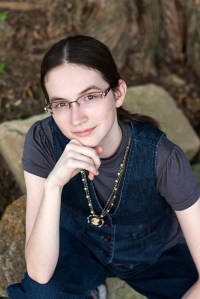
Quick Announcement: Thank you to everyone who pitched in with their thoughts about which author photo they liked best. I’m currently deciding between 1 and 4, and I plan to announce which one I’ll primarily use when I do the cover reveal for Magic’s Stealing. Thanks again!

* * *

Today I’m doing something a little different. Today my husband (and co-founder of Infinitas Publishing), Isaac, is going to be a guest author. He’s written a post about the importance of a title.

Take it away, Isaac! 🙂

* * *

Author Photo - Isaac FlintHere is a quick little brain exercise.

Recall a chapter, short story, or article that you’ve recently read. Now imagine trying to sum that up in 500 words. Now try summing that up in a two-to-five word phrase. This phrase needs to be eye-catching and communicate the essence of the work.

This phrase is the title.

Creating an effective title in real life it is not an easy task. Arguably, the title of your work is one of the most important things to keep in mind when trying to attract the attention of an audience. This can be especially true if you are a new, unknown author, since the people browsing through your book don’t know you or your style. If your book is shelved face-out, the first thing readers are likely to notice when they pick up your book is the cover art. After that, they read the title. But odds are that your book will not be face-out on a bookshelf. The book will show only its spine, so the title is all a potential reader gets. Together, the title and the cover must persuade a reader to look at the back-cover blurb. And while some readers may overlook a tacky cover, if the title is bad, the book may never leave the shelf.

What makes a good title?

First, many good titles are similar to the other books in their genre. Why? Wouldn’t it be better to be the rebel and make your title stand out from the rest? The answer is often no. When readers–or anyone buying a new product–are looking for something different, they are not likely to go for something totally different. They are likely to try something close to what they already know they like.

Thus, when an author of a mystery novel names his new book My Puppy, Spot, odds are she won’t do as well as if she named her novel The Canine Case.

There are two reasons for this. The first being that the title of a book is often used by readers to identify what genre it belongs to. (For example: Magic’s Stealing is decidedly fantasy). The second has to do with a psychological phenomenon known as the ‘mere exposure effect.’ Simply put, the mere exposure effect states that people are going to prefer things they have already been exposed to, over new things. This is not always the case, but there is a definite trend.

Second, a good title can set the tone without a blurb or cover art. Many young adult dystopian titles will use a single subject as their title, such as the trial or hardship the protagonist must face, to set the tone. For example: the Frost Trials. On the other hand, many romance stories will use a steamy phrase or specific fantasies as their title. For example:  Arctic Pleasures.

In Frost Trials, ‘frost’ sets the reader up for a cold setting, while ‘trials’ tells the reader the protagonist is going to be under pressure to pass some kind of test. Opposed to Arctic Pleasures, in which ‘Arctic’ implies somewhere exotic, even dangerous, and ‘pleasures’… well… you get the point.  

Now try to image how well a young adult novel about the life of a teenager living in post World War III Alaska, which is titled Arctic Pleasures, would sell. The title might get someone to read the blurb, but they are going to be in for a big letdown.

Third, the title must be relevant to the story. Not only does Arctic Pleasures set the wrong tone for our post-war Alaskan protagonist, but it’s also not relevant. Sure, the story takes place in the arctic, but it’s mostly about finding one’s self in a desolate, frozen wasteland while trying to survive the harsh climate and undead polar bears.

Not exactly an arctic pleasure.

As the author, you might know the connection, but the new reader won’t.

For example, my wife and I are writing a series of short stories currently titled The Multiverse Chronicles: 1953. We named it such because it takes place in an alternative dimension in their year of 1953. However, after reading a couple samples to our critique group, it became apparent that this name was misleading.

Why?

In our alternative universe, the progress of technology has been hindered due to many of its people using magic-like powers. Thus, their 1953 looks more like ‘18’-53 (Okay… technically it’s a tad bit later than that, but the point remains).

When we told our critiquers the name of the story, they were confused. From the title, they expected propeller-driven airliners and cars with white-rimmed tires and fenders, not dirigibles and motor carriages.

These are few things to keep in mind when creating titles for any type of writing, unless you want to go bold and create a title that will have your readers confused about what your book is about when they pick it up. However, this is not an all-inclusive list, more like a little brain exercise.

Also, all the titles mentioned in this are fictitious save for Magic’s Stealing and The Multiverse Chronicles: 1953, so if anyone now wants to write the steamy version of Arctic Pleasures, have at it.

* * *

Thanks, Isaac! 🙂

Now I thought I’d chime in with a couple notes. Having a strong title is important even before your book hits the shelves. In traditional publishing, a strong title can make your query stand out among the other queries in an agent’s inbox, sometimes speeding up the long wait for someone to read your manuscript.

The other thing to keep in mind is whether or not there is already a similar title out there. For example, you might find that certain keywords, which are great titles in themselves, have already been used.

In some cases, this isn’t a problem. You can’t copyright a title, so you can use the same title as someone else. (However, using a trademark in the name gets into a whole different set of legal ramifications).

However, if that book has a strong following, you run the risk of confusing readers who are looking for the other book. They may be less than pleased if they pick up the wrong one. If your story is different enough that there would be very little confusion (and here the book jacket can help), then by all means, reuse the title. Otherwise, use a similar title at your own risk.

At the moment, we’re considering renaming the first season of Multiverse to “The Trials of Blood and Steel,” but we haven’t settled on that title yet, and there is a book series that has a similar name (A Trial of Blood and Steel), which appears to be high fantasy. I don’t think the two stories would easily be confused, especially given that the book covers would be sufficiently different and that the other series appears to be a few years old. At the same time, what are your thoughts about changing The Multiverse Chronicles: 1953 to The Multiverse Chronicles: The Trials of Blood and Steel? What genre does that convey to you? Do you see it as a problem if two books have the same name (Even if one is a series title, and the other a book title)?

Anyway, I hope you found this post useful. 🙂 Have you had any experiences with a title not conveying the correct reading experience?

2 Comments

Filed under Business Ventures, Writing

Thoughts on Writing – Creating Tension

In my previous post about what a serial episode needs, one of the key elements I mentioned was having tension and/or conflict. Each episode needs to have some kind of tension, or else the story will be boring.

Often times we add conflict to a story by adding action. But that’s not always what creates tension (and action scenes can be boring if the stakes aren’t right for the character involved). At times, I’ve struggled in my edits of The Multiverse Chronicles to see what is missing. In some cases, it’s the lack of scenery details. In other cases, the characters aren’t interacting properly. In yet others, there’s a lack of tension, as I discovered in one of the recent episodes I edited.

In the first part of that episode, Trish, a cadet in the Queen’s Royal Army, is riding a cart towards the camp where she will be stationed for the next six months. She has a chat with the driver, but everything is peaceful.

Too peaceful.

So I delved deeper into the scene. There needed to be some tension involved, or the scene would fall flat. Upon looking closer, I realized there was plenty of tension to be had. The tension starts with Trish. She’s not just a cadet, she’s a second-chance cadet. An earlier mishap got her dishonorably discharged. She still feels guilty for the incident, but she’s determined to prove that she will make a great rider. But, compounding the problem, she wasn’t the best student to begin with (she didn’t think pterosaurs would be that difficult to ride), and she’s prideful. By examining the scene through Trish’s eyes (What is she worrying about? What does she think of the driver?), the tension starts to develop.

So I built up the relationship between her and the driver (who unintentionally makes a major jab at her pride), showed her in a world where the details lend to uncertainty, and watched the tension rise.

(Note, this scene may change in the final version of this story.)

Example:

 The cart ahead of them swayed, sending its recruits wincing against the frame, and Trish braced herself for another jolt. The cart lurched and the young driver next to her yelped under his breath.

 (Already we know that Trish isn’t in the most comfortable situation. The stage is being set.)


Mr. Ó Riagán was lanky and pale—made more pale by his flame-orange hair and prominent freckles—and he sported a bright pink sunburn anywhere that wasn’t covered. Trish guessed he wasn’t more than eighteen years old, given his baby face, but he still donned the crimson uniform of Her Royal Army.

(The driver seems young. This will come back later.)


He drew back the reins and slowed the horses. “Easy there, Norwich,” he crooned in a soft Irish accent. “You’re going to break your leg if you hit one of those holes directly.”

 (Another problem… a horse breaking its leg isn’t good. Not a major hindrance, but it’s now something the main character could worry about.)


The mare nearest to him shook her head as if to protest. In fact, Trish got the distinct impression that she was more likely to break his leg if he didn’t give her a little more lead. He frowned uncertainly and loosened the reins a bit.

(Now we see Ó Riagán being a bit unsure of himself, at least in Trish’s mind, due to his earlier mentioned age.)


“So…” The guy glanced at Trish, licked his lips nervously, then went back to watching the roads. “You’re the one who can control the rogue?”

(He’s trying to make conversation…)


Trish blinked, surprised that he’d said anything. He hadn’t spoken more than a mumbled “hi” to her until now. (Apparently he hasn’t been very talkative.) She turned to their cargo behind her, the rogue pterosaur. The creature slept peacefully, drugged so that the trip wouldn’t be too stressful. The other drakes flew overhead, but since Trish wasn’t a trained pterosaur rider, this one had to be brought in by cart. (A reference back to how she was able to re-enlist, and a stab at the fact that Trish isn’t trained to ride yet).


With that in mind, Trish wasn’t sure how Colonel Pearson planned to handle her training. Her deployment had been sudden.

(This is all happening a bit fast for her.)


Still, she nodded to the young man and smiled fondly at the sleeping pterosaur. “You could say I can control her, but I think that’s because she likes me.”


The young man’s green eyes lit up in awe. “You have a familiar bond?”


“A what?” Trish frowned. She wasn’t sure what he was talking about.

(More uncertainty on her part.)


He blinked. “You don’t know about familiar bonds?”


Trish shook her head.


“Oh, I’m sure the colonel will explain when he has the chance.” The young man grinned. “I would try, but I’m afraid I’d butcher the explanation.”


“Butcher the explanation?”

(She’s trying to get information, but he’s not giving it.)


“Yeah… I graduated from the beastmasters’ academy in Oxford, but—”


“Wait. You went to Oxford?”

(Guy who looks younger than her went to prestigious academy)


“Yeah, well…” He scratched the back of his neck, sheepish. Trish hadn’t thought his sun burnt cheeks could get any redder, but they did. “The instructors said I was gifted. I started using beast mastery when I was eight.”


Trish stared at him. “You were eight?” Here she thought she’d been special, given the strength of her beast mastery. But she’d started showing her powers when she was thirteen, along with most the other people who had powers.


Not nearly so young.

(And now she’s feeling a bit dejected because this guy is obviously more gifted than her. Earlier episodes revealed her prideful tendencies.)


Mr. Ó Riagán nodded enthusiastically. “I liked to scare my older sister when she was reading. I’d have Jesse—that was our terrier—sneak up behind her and bark real loud.” He chuckled. “I was such a twerp.”


Trish forced a smile. “So what do you do now? Are you a rider, a pack master…?”

(She’s trying to change the conversation…)


“General Buford and Ruger are the pack masters for the wolves. I’m the head assistant for Lady Akeyo Kaburu. She’s the beasts’ caretaker.” He puffed out his chest with pride. “Just call her Lady Akeyo, though. She doesn’t like formalities. Not unless she doesn’t like you. By the way, I’m Sean. Do you mind if I call you Trish?”


“Um… sure.” She wasn’t sure what to think of him quite yet, and he was… chatty.

(She’s not so sure she likes this guy… but she’s trying to withhold judgement.)


“Hey!” he called out to the horses. “Stop trying to aim us for the potholes!”


The second mare nickered, as if she were blaming Norwich, but they maneuvered cleanly around the rugged hole that the cart ahead of them hit square on.


Trish eyed him, amused. “Do you talk aloud to all your beasts?”

(A sort-of jab at him.)


Sean shrugged. “Well, sometimes. Most the soldiers don’t talk to me. Granted, these fellows don’t talk back either, but I can get their general feelings.”


Trish nodded sympathetically. She hadn’t gotten much chat from the other soldiers, either, though that might have had something to do with the short notice in which she’d joined and been deployed to this particular station.

(And now they’ve found common ground. The tension has shifted from her dealing with Ó Riagán to her dealing with the other soldiers.)

By adding the details of the jolting wagon and the uncertain road, we’ve added scenery details to the world that enhances the tension. Those scenery details also lead to the characterization of Ó Riagán, who thereby gets into an in-depth conversation with Trish, which leads to more uncertainty on her part.

There’s not a lot of action, but there’s still tension between characters.

I hope you found this post helpful. Have you read any books where the story felt flat and lacked in tension? Have you worked on any stories where you realized that conflict was missing?

Leave a comment

Filed under Writing

Behind the Scenes – Oh Wicked Escort

A cover for Melange Books. For this cover, the author already had a pretty good idea of what they wanted it to look like, and they provided a mockup along with the art form.

My job, then, was to find the appropriate stock images, the right font, and position those images based on what they had. In addition, I added the gilded, embossed effects to enhance the feeling that the book came from the particular era. I was a little concerned about being able to find an actual omnibus, as they requested, but once I went to the idea of using the gilded effect, I searched through the stock site’s illustrations along with photos, and found something that worked. This is the end result:

SBibb - Oh Wicked Escort - Book Cover

SBibb - OWEbackcoverblog
Stock images from Dreamstime:

http://www.dreamstime.com/royalty-free-stock-images-brown-leather-book-cover-image7811399
http://www.dreamstime.com/royalty-free-stock-images-vector-image-omnibus-th-century-image30204939
http://www.dreamstime.com/stock-photo-street-lamp-isolated-white-background-image51506457

4 Comments

Filed under Book Covers, Client Work, Photo Illustration

Thoughts on Publishing – Author Photos

As I get closer to releasing Magic’s Stealing, I’ve been thinking about the little details that still need to be decided before publishing. What do I want to put on the copyright page? Where should I put the acknowledgements? Do I want the blurb after the title page inside the ebook edition? Should I have an author photo?

Let’s focus on the author photo, because that’s the one that’s been puzzling me.

SBibb - OldAuthorPhoto

Really Old Artsy Author Photo

My first author photo (artist photo, really, since I started by using it on DeviantArt) is quirky. I’m in costume and I’m holding a shiny, reflective ball that I bought at a renaissance faire. This particular photo is really small, I’m not sure where the original picture is, and it was probably taken during my early college years or during my late high school years.

Then there is my current author photo, which I use on Twitter and in various places. This was taken by my husband during college (edited by me), and still went for artsy . Black and white, a little mysterious. I’m fond of this photo. Problem is that I’ve heard from several people that it doesn’t look like me. (Striped lighting and no glasses… I guess I’m not too surprised).

SBibb - Current Author Photo

Current Black and White Author Photo

But I’ve been using this fairly consistently, so I wasn’t sure if I should change it. On the other hand, if the photo doesn’t look like me, and I ever do a local book signing… I can see a benefit to having a picture that looks more familiar.

For example, when I went to ConQuest this year, I could very easily recognize Brandon Sanderson and George R.R. Martin because their photos look like them, or at least how they present themselves publicly. I pulled out a few books on my bookshelf, and about half of them have author photos. It was interesting to find one of Brandon Sanderson’s earlier books that I bought, which has an early photo of him, and to compare it to later books, which have a more recent photo. So obviously, authors change which photo they use over a period of time.

Another thing to consider, author pictures often represent the author’s primary genre. For non-fiction, a more business-oriented photo lends credibility. For hard science fiction (I’m thinking of a few older authors here), the author might be sitting in a library setting, usually black and white. (Though the lack of color may have been due to printing limitations). For fantasy, authors might get dressed up in relevant costume. Middle grade authors often use more colorful photos, or illustrated pictures of themselves.

SBibb - Steampunk Author Photo

Steampunk Cosplay Snapshot

The question is, how do we want to be perceived? Should our author photos be a straightforward, contemporary photo? Or should we go for the fun costume pictures (as long as they still look like us)?

Do we really want to be recognizable? Should we even have a photo? A person with a pen name might not. Perhaps they have a hat that hides their face, yet makes them distinguishable (like Authoress, from a blog I follow).

We might not necessarily need an author photo, but there are cases where having one could prove useful. For one, an author can unite their Twitter, Goodreads, and Facebook accounts with a single photo as their avatar. (Though they might use a relevant symbol, instead). Or an author might include a photo when guest blogging, or at conventions.

There are benefits to having a photo on hand, which brings me back to deciding on an author photo.

I did a little bit of reading on the subject, and one thing that stood out in the reading was a distinction between a professional head-shot versus a snapshot. Both of which can be a good photo, but a professional photograph will give the feeling that your book is professionally written. And having a picture that represents the genre (a more somber image for mystery and crime, versus a friendlier image for romance) can affect how a reader perceives a book.

Anyway, Isaac and I went out on Thursday evening, found a nature-y spot that still had some sunlight, and took a few pictures. I dressed up for them (semi-modern, semi steampunk), and Isaac had the camera. I have a degree in photography and he’s had a few classes, so I felt comfortable that we could get a reasonably professional photo on our own. Then we sorted through the pictures in Adobe Bridge and selected the best five. I did a few retouches to improve lighting, and we posted them to Facebook to see which ones our friends liked best.

These are the resulting favorites (in no particular order):

SBibb - New Author Photo Options

Author Photo Option 1

SBibb - New Author Photo Options

Author Photo Option 2

SBibb - New Author Photo Options

Author Photo Option 3

SBibb - New Author Photo Options

Author Photo Option 4

One of these has a few more friend votes than the others, but I’m curious to see which one you guys like best before I make my final decision. Once I decide on one of these photos, I’ll need to decide on how much editing to do to them, and whether or not to keep them in color, desaturate them, or go with black and white. Granted, the print edition will be in black and white, but I could use color on the web or in ebooks.

I hope you enjoyed this post. Which photo do you feel is the strongest, and have you chosen an author photo?


Further Reading About Choosing An Author Photo:

http://maryrobinettekowal.com/journal/debut-author-lessons-the-author-photo/

http://www.thedailybeast.com/articles/2013/12/10/a-picture-says-it-all-or-does-it-judging-an-author-by-their-photo.html

https://www.standoutbooks.com/author-photo-tips/

http://www.huffingtonpost.com/heather-hummel/the-relevance-of-a-profes_b_4498575.html

https://www.graywolfpress.org/blogs/and-against-author-photos-part-one

22 Comments

Filed under Business Ventures, Writing

Thoughts on Writing – What does a Serial Episode need?

While waiting for the final round of beta comments on Magic’s Stealing (there are a lot of waiting phases… which is why it is really helpful to have another project on hand), I’ve been working on editing The Multiverse Chronicles.

As I’ve said before, The Multiverse Chronicles is a set of short stories written by my husband, which I then revise and edit. Our current goal is to have twenty-four episodes in the first season, which will be released weekly over a period of six months.

There are a few specific challenges associated with this project. While all the episodes must fit together as a whole (and I’m not sure I’d recommend reading them out of order), they each need to stand alone on some level.

The reason is this: Not everyone who might stumble upon the Multiverse blog will read them from the very beginning, and readers who do start from the beginning may miss a week. While each episode stands alone, Isaac and I must decide how much information to remind a reader of in each episode (since we don’t want to remind them that Alia is the bodyguard of Prince Alfons every episode–that would get monotonous very quickly if they’re reading the full season all at once).

So what do I want us to achieve in our upcoming serial blog series?

Each episode needs to be compelling. There needs to be:

  • A strong sense of character, and relationships between characters.
  • Both humor and serious notes… usually involving some bit of quirkiness.
  • A strong sense of world-building.
  • Conflict and/or tension.
  • A reasonable beginning, middle, and end.
  • Something that propels this episode into the next.

With these core elements, I believe each episode has the potential to draw a reader back the next week, or, if they aren’t interested in serial fiction, maybe get them intrigued by the complete volume of season one (which needs to be complete in itself while opening up questions of interest for season two).

Isaac and I intend to have the entire first season written  (at least a rough draft), as well as the first four episodes polished, before releasing the first episode. This way we have a month’s worth of episodes ready to release without worrying about what happens if we run into a snag while polishing a later episode. Of course, I’m hoping we will have the majority of the season polished beforehand, but we’ll see. I’ve also got to continue writing the rough draft of the second book in The Wishing Blade series.

Will this work? Can we successfully imbue each episode with these elements? Will readers enjoy The Multiverse Chronicles?

Hard to say until we start releasing episodes, but if I think that if we keep the above ideas in mind, I’ll have a decent guide to work from as I edit each episode.

I hope you enjoyed this post. Do you have any serial stories that you’ve enjoyed? Are there certain traits of serial fiction that you like or dislike?


Further Reading About Writing Serial Fiction:

http://tuesdayserial.com/?p=2032

http://riptidepublishing.com/faq/all-about-serial-fiction

http://thewritepractice.com/serial-novels/

http://blog.karenwoodward.org/2013/04/how-to-write-episodic-serialized-fiction.html

http://ezinearticles.com/?How-To-Write-Serial-Fiction—The-Four-Keys&id=6243275

http://www.justinmclachlan.com/1948/5-tips-writing-serial-fiction/

http://writerunboxed.com/2014/02/24/serial-fiction/

http://blog.janicehardy.com/2013/04/what-downton-abbey-can-teach-us-about.html

5 Comments

Filed under Business Ventures, Writing

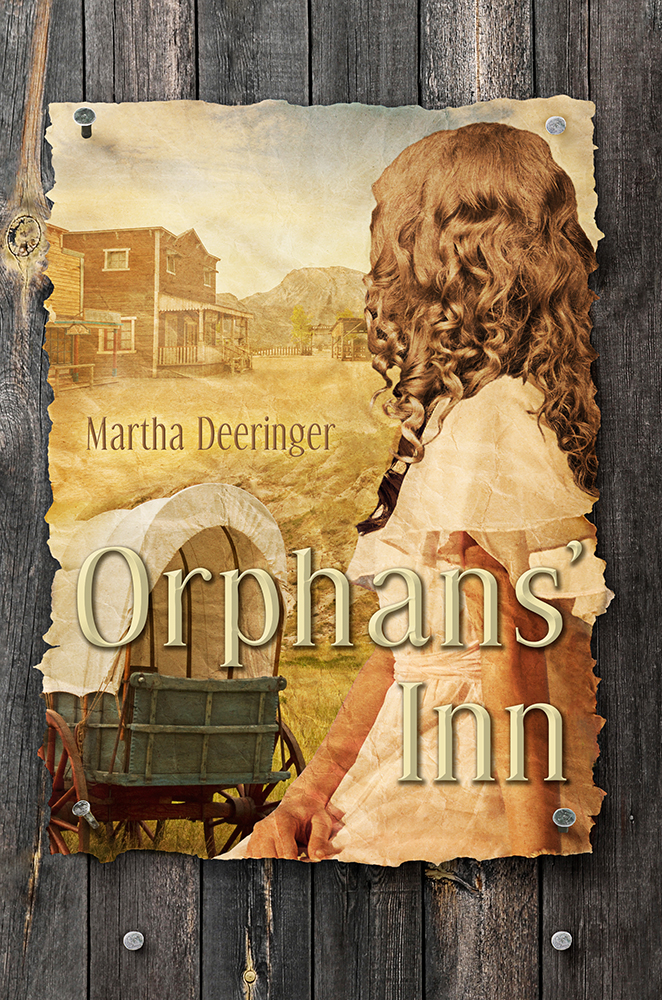
Behind the Scenes – Orphans’ Inn

A cover for Melange Books. For this cover, we wanted to give the book a historical feel. The author had found an image of the actual inn in the story, which I used to look for similar buildings. Though we ultimately chose to focus on the feel of the book, rather than use an exact image, the author was able to obtain permission to use a cropped photo of the inn on the back cover. So the picture of the actual inn will be on the back cover, a piece of history that adds to the book’s theme.

I used a similar treatment for both the front and back of the book, using the picture of paper that was nailed to a wall as the guidelines for a frame. The composite image on the front gives a feel for the time period, characters involved, and genre, while the back cover provides room for text. I adjusted the back cover image to make room for the barcode and publisher information.

This was my first time using stock from the Dollar Photo Club, a new stock site that Melange Books uses. While I found that the comp images were very small (which made it hard to render a full mask, which I can usually do with comps from Dreamstime), the final image quality is about the same. I had no problems using Photoshop to resize and align the images with the proof cover.

This is the end result:

SBibb - Orphans' Inn - Book Cover

SBibb - Orphans' Inn - Back Cover
Stock images from The Dollar Photo Club:

https://www.dollarphotoclub.com/80507187 – map texture
https://www.dollarphotoclub.com/61586012 – town
https://www.dollarphotoclub.com/73464105 – wagon
https://www.dollarphotoclub.com/56496709– girl body
https://www.dollarphotoclub.com/65625942 – curly hair
https://www.dollarphotoclub.com/84585040 – paper on wall

3 Comments

Filed under Book Covers, Photo Illustration

Thoughts on Writing – The Little Details Count

My husband, Isaac, enjoys creating houses on the XBOX 360 Sims 3 game, and since my parents are coming up to visit, he decided to create a model of my parent’s house. He created the general layout, placed the furniture, and after fussing with the game to find the proper sized lot so he could include the backyard, he handed the controller over to me so I could add in the little details. Funny thing… I hadn’t realized how many “decorations” this game has. I added a boom box on an end table in the corner of the dining room. I added the chair that sits beside the hallway. I added a shelf-organizer-thing over where the piano should be (no piano, though), and a little phone on the table beside my grandma’s chair. Then I added a couple paintings (posters) for my room, appropriate colored walls, and a clock above the bay window… and a lot of other little things to make the Sims house look more real.

The end result was uncanny. Depending on the camera angle and the placement in the room, the model house actually looked like my parent’s house.

Those little details made it feel real.

A little detail, carefully slipped into a story, can make a world of difference.

Details enhance the world, make readers feel like they are actually there, and reveal the tone of the novel. A lot of my favorites books and movies pay careful attention to detail across various senses. The background detail in the Babylon 5 TV series, particularly whenever they went into seedy areas on the station, always captured my attention. The last time I watched Star Wars: The Empire Strikes Back on a large screen TV, I was captivated by the snakes and vines in the swamps of Dagobah. Rebekkah Ford’s Beyond the Eyes series always made me feel like I was in a forest, or at a loud dance club, wherever the character happened to be.

Often, you only need a few carefully placed details to inspire a full scene in the reader’s mind.

Take a look at this paragraph from The Multiverse Chronicles draft:

Ten minutes later, the cart topped a hill and revealed a large military camp in the close distance. Trish eyed the rows upon rows of canvas tents, men marching in formation, and packs of wolves running attack drills on wooden manikins.

Of course the reader will see what is directly mentioned within the text.

But what else do they imagine? What else do they see? What do they feel? Do they feel like they’ve been traveling a ways? Do they hear the muffled din of people and wolves interacting, despite not being told how they sound?

Coupled with the rest of the story, a reader’s mind might add other details which were never explicitly mentioned, based on previous experiences with the words involved and the various connotations those words carry.

That’s why choosing to slip in a detail here and there, relevant to the action but never fully stopping the story, can offer a strong boost to your world building. Some stories will use more details than others, but you can choose when you want the reader to “stop and smell the roses” by letting the character say more about the world around them.

Take a look at this section from the intro of Magic’s Stealing:

Toranih kicked off the covers, knife in hand, and hopped out of bed. She waited, just in case the shadow returned, then walked to her dresser, picked up the crystal, and carefully raised the light again.


The dresser was pristine, with only an oil lamp sitting in the dustless corner. A small oak chest at the foot of her bed remained locked with steel. Heavy brocade curtains obscured the window.


No sign of intruders.


So why couldn’t she shake the feeling that someone had been watching her?

We linger on the details of the room as she surveys her surroundings, tension mounting because she thinks someone is there. But how different might it be if she paid only a little attention to these things?

Toranih kicked off the covers, knife in hand, and hopped out of bed. She waited, just in case the shadow returned, then walked to her dresser, picked up the crystal, and carefully raised the light again.


No sign of intruders.


So why couldn’t she shake the feeling that someone had been watching her?

Without the line detailing what she sees (thus “showing” that there are no intruders), we feel like she’s not really putting any effort into her search. She turns on the light, sees no one is there, thinks something’s odd, but moves along. Having extra details, as in the first example, show that she’s not just shrugging her shoulders at the notion. She really is concerned.

However, if you want to do a slow build-up, you might have a character notice something is odd but not pay much attention to why. Then, as they become more and more concerned, they notice more details, which may or may not truly be ominous.

Going back to that Sims house that Isaac created, the downside of that house was that the model wasn’t quite right. There weren’t stairs where there should be. The swings overlooked a creepy ocean instead of another house. The back room looked similar, but not the same. The windows didn’t fit memory, and he used a white bookshelf instead of a bunch of clear storage tubs in the corner for old toys.

As cool as the Sims house was, I didn’t want to look at it from certain angles too long because the house was unsettling.

You can use this mechanic in stories.

For example, a hero coming home after a long time away may find that things have subtly changed. In a horror story, a picture frame that always sits by a lamp may seem a smidgen too far back. In a desolate future, a character may look out over a ruined landscape, able to see a familiar sight here or there, while the rest is in shambles. What remains in place and what does not can affect the tone of the story. Consider the Statue of Liberty in the Planet of the Apes movie.

A little detail in the right spot can make a world of difference.

This can also be used in game creation.

While I haven’t played the game myself, MatPat’s theories on Five Nights at Freddy’s (a popular jump scare game) often references the little details that make the game creepy, such as the fan on the desk. The detail used in these games gives clues into the world’s backstory, all while adding to the nightmarish atmosphere.

When I first played Portal (a puzzle game), I was alone in my dorm room. The empty quietness of walking through the testing chambers had me super jumpy as I expected a turret to shoot me at every turn. And that game isn’t horror.

If you happen on the one detail that gets under a player’s skin, that one detail will have them on the edge of their seat.

I hope you enjoyed this post. Do you have any favorite details that you’ve read in a book or seen in a movie? 🙂


8 Comments

Filed under Gaming, Writing

Thoughts on Writing – The Omniscient POV

For most of the stories I’ve written, I prefer a deep point of view. I like being right next to the character, getting their thoughts and feelings as they see it. Most of the time I choose either first person (Distant Horizon and Glitch), or close third (Magic’s Stealing and The Little One). While I might swap point of view characters between scenes, those scenes stay distinctly in one person’s head.

And then I started working on The Multiverse Chronicles.

The Multiverse Chronicles is pseudo-steampunk fantasy that consists of a series of short episodes (each around 1,000 to 2,000 words long) that will posted weekly on a blog dedicated to the series. My husband, Isaac, writes the rough draft, which I edit.

At first, editing an omniscient point of view drove me nuts. I wanted one person to follow, and I wanted to stay with that person. (This despite toying with the omniscient POV in The Little One, where one of the characters is a fourthwalling telepath). All of those rules about not head-hopping? They kept poking me while I tried to edit. But once I finished editing the first episode, I tentatively took it to the writing group we attend. To my surprise, they didn’t have a problem with the point of view.

Okay, cool. So I just need to keep up whatever we did with the first episode, right?

I started work on the next episode. I initially wrote with the expectation that I was writing from the bodyguard’s point of view, but then I realized she wouldn’t see the scene in the way we’d written it. In this particular episode, the bodyguard is grudgingly attending a ball in which the man she loves is about to be formally engaged to a snobby princess who looks down at her.

But what I’d embellished focused on the splendor of the ball… not the dark side of the festivities.

Let’s take a look at the current (rough) intro for this episode:

The grand hall of Britannia’s castle was adorned with ornate, stained-glass lanterns. Their yellow arc lights depicted the glorious reign of the Dragon Dynasty across the cream-colored wallpaper. Flickering images of gold and crimson dragons danced among pink-tinted clouds at sunrise. Further down the grand hall, these lanterns revealed the proud history of Britannia. The first Dragon Queen sent her dragons to battle an unkempt hoard of miscreants, and later, she stood with her proud chin high as she morphed into the form of a glistening dragon, uniting her subjects into an unshakable empire for the past two-and-a-half centuries.


Beneath the lanterns, diplomats from across the continent mingled, tipping crystal goblets at each other with brilliant smiles as they eagerly awaited the announcement from the current Dragon Queen, Queen Catherine V.

Not exactly the reaction I’d expect from a scorned bodyguard.

However, it did match the mood of the queen, who is pleased with the arrangement of her daughter to the prince.

Suddenly, it made sense. I needed to write part of this scene from the perspective of the queen. Because we’re writing this in omniscient, I could bring in her point of view, even in the same scene, allowing us to see the contrast between the two characters and sense the rising tension.

For example, compare the queen’s thoughts about the bodyguard with the bodyguard’s thoughts about the royalty:

The queen had to admit that the prince was bit relaxed, slacking on the formalities she’d worked so hard to instill into her daughter. But he would come around, just as her Ramón had.


Her telepaths had assured her that the prince was faithful, even if his doting bodyguard was something of a slob. She rapped her fingers on the armrest’s dragon head, exhaled in time with the methodical orchestra, and returned her attention to the guests.

Now, for the bodyguard:

“Indeed, this has been a marvelous party, fit for the First Queen, and now, for my daughter.” The queen cast a loving gaze to Princess Cassandra, who beamed with pride.


As if she was ever anything but prideful.


Alia kept her face blank, but her cheeks burned at the thought of that snooty, high-horsed princess being anywhere near Alfons.


Not that there was anything she could do about it.


“Over these past months,” the queen continued, “I have been thrilled with the courtliness of Prince Alfons, crown prince of the house of Egilhard, who has treated my daughter with the utmost respect that can be expected from a man of his station.”


Because anyone who isn’t raised like some prude isn’t expected to be respectful, right? Alia clenched and unclenched her fists, but Alfons was too busy fawning over his princess to notice the queen’s slight.

Neither queen nor bodyguard like each other. Since we’re in an omniscient point of view, we get to see inside the heads of both characters.

The question I pondered, then, was how to make sure the transition was smooth. The danger of omniscience is head-hopping, a disorienting feeling of being thrown from one person’s point of view to another.

In order to avoid that problem, I decided to make sure that whenever a transition occurs, that transition must be clear. Our focus subtly shifts to the new character with a few cues, such as naming the character and quickly getting into their thoughts with a thought that is clearly not the thought of the former character.

As I considered the topic, I realized we could model this concept after movies and TV shows. Different camera shots let us see what different characters are up to, even in the same scene. (Off the top of my head, I’m thinking of Agents of SHIELD and Once Upon A Time). Without leaving the scene, the camera subtly pans to a character with an ulterior motive. We see their reaction, whether it be a malicious smile or a sad lowering of the eyes. We don’t hop heads, but we do switch point of view.

Let’s take a look at the current draft of The Multiverse Chronicles, in which the point of view switches from the queen to the bodyguard.

The queen’s telepaths had assured her that the prince was faithful, even if his doting bodyguard was something of a slob. She rapped her fingers on the armrest’s dragon head, exhaled in time with the methodical orchestra, and returned her attention to the guests.


Amongst the rigid guards and the pristine diplomats, amongst the proper dukes and the swirling, bejeweled duchesses who danced at their side, stood a lone, blue-uniformed soldier.


Alia Behringer, the prince’s favorite bodyguard. She was tall, especially among this crowd, with wheat blond hair and a lean, muscled body.


Alia cast a furtive glance toward the Dragon Queen, caught her glower, and looked away. She remained stoic as the redcoats, but unlike her counterparts, her blue-eyed gaze returned to the prince.


He was her charge, and she would defend him with her life.


She avoided the queen’s heavy gaze and gave her attention to the prince. Months ago he would have been joking at her side, not perched on miss high-and-mighty’s ‘graceful, endearing, and oh-so-lovely’ arm.

This scene could still use some tightening in terms of point of view, but we can see the switch from the queen to the bodyguard. The queen focuses on the bodyguard, we get a bit of information about her, and then we start seeing her thoughts, things she would know but the queen wouldn’t. Calling the guards redcoats, for example, or noting that she would defend the prince with her life, or how she calls the princess ‘high-and-mighty.’

The queen would not think in these terms.

The Multiverse Chronicles is still very much a work in progress. But the beginnings of the omniscient point of view is there, slowly unraveling itself and making itself useful.

I’ve tried taking cues from other books that feature an omniscient point of view (Ray Bradbury’s Something Wicked This Way Comes, for example) but I’ll admit, I haven’t read many stories with an omniscient POV that I remember, though I know I’ve read them.

I hope you enjoyed this post. Have you had much experience in reading or writing omniscient points of view? 🙂

Further reading I found on the subject:

http://io9.com/5924661/how-to-write-an-omniscient-narrator-if-youre-not-actually-omniscient-yourself (A really nice explanation of omniscient narration, and how to make it work)

http://www.scribophile.com/academy/using-third-person-omniscient-pov (Explains the difference between subjective and objective narrators, and potential pitfalls with an omniscient point of view)

4 Comments

Filed under Writing