Tag Archives: writing tips

Thoughts on Writing – To Time Travel or not to Time Travel

In my current manuscript, The Wishing Blade, I’ve been streamlining the original story while striving to maintain the overall tone. I started the original draft in 2003, and I set it aside for several years before pulling it out again this year to revise it into a workable manuscript. While some plot points have been easy to keep or discard, there’s one point I’ve been going back and forth on… whether or not to keep the time travel incident in the novel or whether to remove it all together.

Now you get to have a first hand look at my thinking process regarding revisions… all while I try to work this out for myself.

First, let’s look at reasons to remove this incident:

1. Potential Confusion: I have a tendency to confuse people once I start talking about time and dimensional travel in my stories, and I’ve seen agents list ‘no time travel’ in what queries they accept. (However, the last point is negated since I intend to self-publish this particular story. And technically, while some agents might not want time travel, others might. So this bullet revolves entirely on whether or not the incident is confusing to readers and pulls them out of the story.)

2. Potential Loss of Tension: One of the main characters must ‘die’ if the time travel incident remains. The other character goes back in time with the aid of the gods, and they prevent the death of the other character. There are complications that arise once the character returns to the present, but those complications are minimal. Worse, by showing readers that there’s an object that does allow time travel in this particular universe, any future sequences threatening the main characters’ lives is moot, because readers may then wonder why the characters don’t just go back in time and fix it?

3. Unnecessary Plot Point: At this point, the time travel device only allows time travel once in the story. It does do other things, but I could pretty easily remove the time travel incident and chalk up its bizarre powers to other magic.

Possible solutions:

1. Streamline the sequence: Make sure what happens is clear to readers (or is as clear to the readers as it is to the main characters…).

2. Consequences: To avoid loss of tension, I could make sure there are consequences to going back in time. (In this case, I need to make sure those consequences are clear to both character and reader). Also, I could make the complications that arise from time travel a little more immediate. This was actually the case in the original draft, but was removed when I didn’t find a reasonable place to reinsert the point. (And this is a good example of where having fresh eyes to look at a manuscript can be useful, because you might remove an important tidbit without noticing the resulting effects).

3. Increase Relevance: Similar to the point about consequences, if I can better tie in the time travel incident to the main plot, along with making the incident crucial with what’s to follow (along with the irony of the incident regarding the antagonist), the incident shouldn’t feel out of place. Linking the antagonist further into this scene could also improve the overall story.

Besides the reasons I might remove the incident, I’m also considering reasons to keep the incident:

1. Character Development and Increased Tension: We get to see the antagonist step forward to protect one of the main characters– and get a hint as to why, and what she’s willing to do if that character dies (and remains dead). The goal? Tension rises as the character she’s trying to protect risks their life time and time again, because if the antagonist loses said character, all bets are off in regards to what she’s willing to do to achieve her larger goal, and what she isn’t.

2. Magical World Building: We have an explanation of why the ‘time travel device’ reacts a certain way to the bad guys later. Cause and effect comes into play, and the world gets a little more exploration. And we get to see more of the various character relationships.

3. Time Travel Is Cool: I like time travel and dimensional world travel. I know, that’s not a good excuse. But really… we’ll get to see the effects of time travel first-hand in the story. We don’t just hear about it from a side character.

4. Paradoxes! Or so the characters think…: The incident sets up tension between the antagonist and protagonist, because the protagonist knows who the antagonist is but doesn’t know how they got there…

This is a case where beta readers will come in handy. They’ll help decide if the time travel plot point should be removed altogether (requiring a light restructuring of the plot), or whether the plot point works. For now, (thanks in part to having a friend enthralled by the backstory of the antagonist), I’m going to keep the incident.

So… onward to editing, and I hope you enjoyed this post. Let me know what you think, and please let me know if there’s any topics you’d like me to cover. 🙂

2 Comments

Filed under Personal Work, Writing

Thoughts on Writing – Creating Fantasy Languages

One of the topics I’ve been thinking about recently is creating fantasy languages. Reason being, I’m creating a language for use in my YA fantasy manuscript, The Wishing Blade. Now, in the original draft (and even across several drafts for different books in that world), I only had a handful of made-up words sprinkled into the story to give it flavor. This time, however, the use of the language system suddenly had a reason to shine– I actually intended to show ‘word magic,’ one of the magic systems in my Cirena stories coming from the Cantingen Islands. Suffice it to say, creating a language has been fun, if not a bit difficult.

When I attended ConQuest, one of the panels I attended was about creating alien languages. Some of the topics in the panel included: deciding how in-depth you wanted the language to be– do you want to have a word here and there, or will there be full sentences in this language? How does it look? How does it sound to the ear? Might it have odd sounds (like clicks) that you might not normally read? Do you base your new language off of a current language, and if so, how do you change the language to fit the needs of your story? For example, does a word or phrase mean something now that it doesn’t mean in the future where your story takes place?

All of this is food for thought and can be applied to a fantasy language of your creation. For example, I like the idea that language changes over time. We can portray this in our stories. An example of this in The Wishing Blade is the name of a town, Shuhritan Fritarando. Which no one says because it’s ridiculously long. Most characters, unless they happen to be upper class or a particular linguist (I’m debating on my word mage correcting my main characters about the city’s name), are simply going to call the town Shu Frit. It gets even more fun, because the full name isn’t entirely exact. Shuhritan is an ancient Cantingen word for ‘male royalty’ or ‘king.’ Fritarando translates to ‘small male kin.’ Which could mean nephew, cousin, son, etc., but in this instance refers to ‘son.’ Shu Frit becomes ‘Little King’ in the terms of cultural history, even though neither word actually means that. It’s a colloquialism, informal and a pain to translate, but a natural part of how languages evolve.

Of course, this whole explanation may never show up in the story itself (and probably shouldn’t), but it shows how you can play with language to create cultural history in your novel. It’s a way to add flavor.

However, not everyone in my story is going to use such colloquialisms. In the example I gave, the characters are referring to a language that’s outdated. Outside of naming conventions, the language is only used by word mages. Due to the nature of word magic, these mages need to make sure that what they say is exact– or risk the consequences of having a fireball light them on fire instead of their opponent. Pronounciation is key. Which is why, when I went to place all the words and phrases I had thus far into an Excel spreadsheet, I realized that I needed to change one of my words. I had qui meaning ‘as,’ quis meaning ‘good health,’ and ki being an emphasized word that connects an unusual modifying word to what it is modifying. And they were all pronounced like the English ‘key.’

That could get dangerous for a word mage who is trying to say something about ‘good health’ and instead has his word translated to ‘as.’ (As what? Something deadly?)

So I changed qui to li and did a word search in my manuscript to make the changes. Small details, but hopefully fun for anyone who pays attention to the language in the novel. Eventually I want to make symbols that represent each phonetic pronunciation. (Oh, IPA (international phonetic alphabet)… so fun in high school theater).

If you decide to create a language for your story, I highly recommend writing down the words in a spreadsheet and keeping track of your rules. I recently updated my word document of notes into an Excel Spreadsheet. When I did, I saw several potential problems that I went ahead and fixed. Primarily verb conjugations. (Spanish… French… these classes are starting to be rather helpful, even if I never did become a proficient reader of either language). The Cantingen language is supposed to be precise. Repetitive, even. And I really didn’t want to mess with irregular verbs. So I adjusted each verb that I ran across. As long as you know the ending for “I did something” versus “you did something” or “he did something,” you’ll be able to tell who or what the verb refers to. None of this irregular verb mess we commonly deal with in English. In addition, a single add-on to the word will signify if something is past or future.

Is this a simplification?

Oh yeah. Definitely. But I’m not trying to be Tolkien (though I did try to learn Sindarin Elvish several years ago. Didn’t get far, but I got a few words of Enya’s “May It Be” translated into Sindarin beyond what was already translated). My goal is to add flavor to the story, and keep the language consistent.

And maybe try writing a song in pure ancient Cantingen. That would be fun, though that’ll be after I get more words and verbs ironed out. There’s plenty more that can be said about creating languages, but I’ll leave that for a later post. Let me know what you think, and I hope you enjoyed my ramblings. 🙂

21 Comments

Filed under Personal Work, Writing

Thoughts on Writing – Writer’s Block

Writer’s block… that pesky concept that makes writing difficult and that everyone loves talking about. How to break writer’s block, how to deny writer’s block…

When it comes to writer’s block, I find that trying to write something, anything, is better than writing nothing at all, because it pushes me to another point in the story. But how to work through ‘writer’s block’ is different for everyone. For plotters, this is where having that outline is handy. You write what’s next on the outline, even if you’re cringing as you write. It might not be as terrible as you think once you go back and take a second look. For pantsers, this is where deviating from what you thought you had planned and saying ‘Forget what’s supposed to happen next. I’m going to write whatever comes to mind.’ comes in handy. It might end up leading you to the break-through you need.

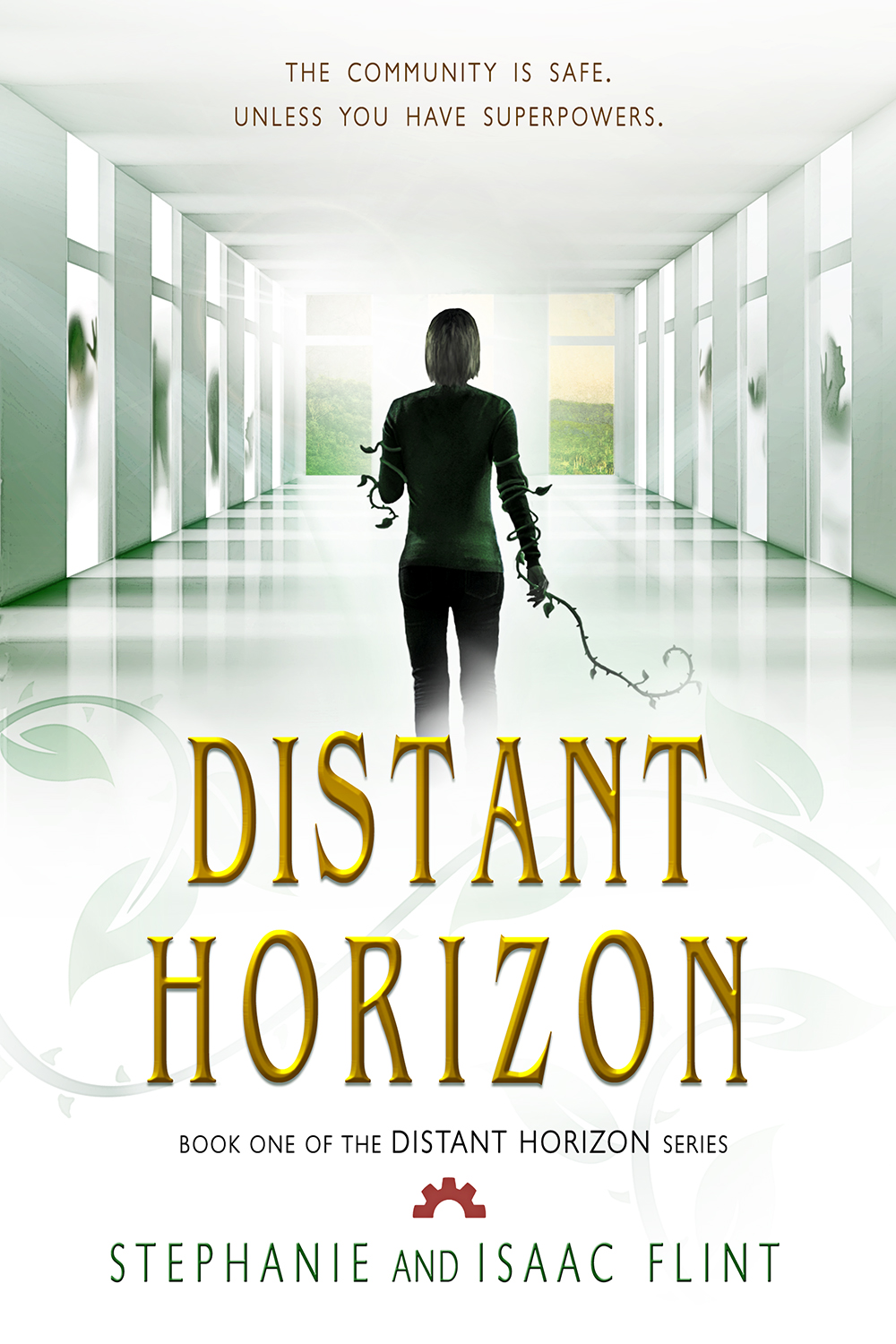
One of the things mentioned at ConQuest was that you can’t always force a novel to do what you want. Having trouble writing a scene can be a sign that what you’re trying to write doesn’t fit the novel you’re writing. On the other hand, one of the most important things I took from my creative writing minor in college was that the difficult scenes we tend to avoid writing can also be the best ones to read. With a little polish (or a lot), these scenes can be fantastic. Or… you might read back through the scene and wonder what you were thinking. This has happened to me, especially in my Distant Horizon manuscript. *Cough.* So you learn from trial and error which scenes are causing difficulty because they’re taking you out of your comfort zone, and which scenes are causing difficulty because they simply don’t fit.

For example, I’ve run into a set of scenes in my current manuscript, The Wishing Blade, which are completely new to the story line. These scenes aren’t in my original manuscript, but with the edits I’ve written, they are necessary to keep the story moving forward. Ultimate goal: The good guys want to stop the bad guys from gaining enough power to attack the gods and successfully plunge the country into shadow. Literal shadow… the bad guys’ magic consumes the mortal realm and thrusts it into a dreary half-dimension where the bad guy have complete control over everyone in it. There are two main characters, Toranih and Daernan, and a goddess has granted them some of her magic in an effort to fight the bad guys. Thing is, Toranih absolutely hates magic and would rather be a swordsman. But she gets caught by the bad guys, turned into a shadow, and she has to deal with resisting the bad guy’s magical commands. Daernan isn’t particularly gifted with weapons, but he’s got a decent skill when it comes to wielding magic, and he’s working with a group of people in an attempt to help refugees escape from a city under siege by the bad guys, all while trying to figure out how to get Toranih out from the shadow realm.

Problem is, in the original version of this story, Daernan thinks Toranih is dead, and there is no one else to help him with magic, so he ran along to the king to warn the country about the attacks and put up a defense at the castle. Now he has different motivations, which I’m trying to sort out before I write the next few scenes. I need to know how much he’s going to do to help save the innocent townspeople, which will help for a time, and at what point will he abandon them to go retrieve a weapon that will defend against the shadows in the long run. As for Toranih, she’s trying to slow the spread of the shadows, but I’ve been having a terrible time trying to get through the scene where she acts against their leader. (Because she’s overconfident and actually thinks she might be able to assassinate him. Yeah– that’s going to work so well).

But every time I sat down to write the scene, I wasn’t sure where to go next. My plotting sort of… stopped.

Then my husband, Isaac, gave me the solution that I needed all along. Toranih doesn’t like magic, but she likes swordplay– which is something the bad guy is good at. In the original version of the story, she’s caught in the shadow realm and forms an uneasy friendship with the bad guy, learning from him as she tries to foil him. In this version I have her trying to assassinate him, but I wanted to have her fail miserably. Unfortunately, I wasn’t sure where to go once her attempt failed and he got her back in line. But when Isaac suggested that she attempts to attack the bad guy, who then casually tosses her one of his swords and more or less starts training with her (much to her confusion), this opened up a whole new possibility. Because now she’s not the moping and following the bad guy around because she’s being magically commanded to. Now she’s having to deal with inner conflict. She can learn quite a bit from the bad guy if she sticks around, and it puts her in a position to be close enough that she might be able to strike him later. However, she still doesn’t like being a shadow, and as long as she’s nearby, he might order her to do something she doesn’t want to do.

Which keeps the story rolling and keeps me interested in writing what happens next.

The whole point of this example is that when you’re stumped, you may want to explore new options, or step back and consider character motivations. Or maybe step in and examine character motivations. For my story, there’s a lot of other stuff happening off-screen that affects the main characters. But if I put too much attention there, the task of writing becomes overwhelming and I forget to focus on the characters who are actually important. So try approaching the scene from a different angle. Stop worrying about what the rest of the story world is doing and write what matters to your main characters. Once you’ve got the rough draft written, then revisit the rest of the world.

That being said… it is entirely possible to be stumped on a scene and to use your procrastination as a tool to get chores done. I think this is how I actually remember to do laundry.

Anyhow, I hope this post was helpful, and please let me know what you think. 🙂

Leave a comment

June 1, 2015 · 8:00 pm

Thoughts on Writing – Pantsing vs Plotting

I recently went to ConQuest, a science fiction and fantasy convention in Kansas City. It was amazing, to say the least, given that I’ve been wanting to attend a writing convention for the last few years. (Plus, I got a couple of my favorite books signed by Brandon Sanderson, and he is an awesome panelist. Just throwing that out there). Anyway, one of the writing panels I attended suggested that, when it came to writing blog posts, to write about what you’re working on.

Of course, I try to post once a week with behind the scenes information about my book cover design work. I hope that the information is useful in multiple ways. First, it highlights the book. Nothing big, but it does promote the cover for the publisher and the author. Second, it highlights what I’m doing. Yes, I hope that potential clients will see the work I’ve done and decide to hire me later down the road. But third, I hope these posts provide useful information to authors who are considering self-publishing, whether they hire me, someone else, or do it themselves. I also hope the posts provide useful information to other cover designers who are looking for tips or tricks to improve their work. I’ve certainly found blogs with behind the scenes information about book cover design useful in my learning. So please, let me know if you have questions about the cover design process. I’d be happy to offer insight if I can.

That being said, I also do a lot of writing. Writing (and studying writing and publishing) is my passion. I love seeing the worlds and characters I explore. So I’m going to try the advice the panel offered and see if I can write the occasional post about what I’m working on or what I’m contemplating… my thoughts on writing in general. You may hear a lot about my story-writing progress, and maybe my theories on publishing. And I’d love to hear your input. What do you think about the topics I’m thinking about?

With that in mind, let’s jump into the first topic that got me thinking about writing a blog post. Plotting versus pantsing. A plotter is someone who plots out everything in advance. They may have outlines, they may have fully developed worlds, they may have every scene figured out in their head before they even write a single sentence. Pantsers are the opposite. They write “by the seat of their pants,” and outlines drive them nuts. They want to see where their characters take them, and explore the world as they go.

There’s absolutely nothing wrong with being either. Everyone’s writing style is different. But there’s a good chance you’ll be a little bit of both, maybe leaning one direction more-so than the other. Me? It depends on the story I’m writing. Some of my original stories were very much “pantsed.” I daydreamed the story in my head, but when I wrote the scenes, I let the characters go where they wanted to go (or where the scenery seemed interesting). When I started work on my Distant Horizon universe (which got me back into novel-writing after doing short stories for a while), it was plotted out. My husband (then fiance) created the world for a role-play game between the two of us, and about halfway through the campaign, I decided to log the adventures of my main character in the form of the novel. We continued developing that story, which has been through many rounds of edits and beta readers, and is currently being queried to agents.

Since then, I’ve written a few other stories in the Distant Horizon universe. Some were more plotted out than others. They each had a general outline, but I had a little more freedom with them to maneuver and explore. And even with Distant Horizon, I did quite a bit of exploration with it outside of the original game before I was finally happy with the story as a novel.

Then last year, for Camp NaNoWriMo , I decided to write The Messenger of Gaia, a science fiction space novel based on another role-play my husband and I played. Though the role-play game relied very little on actual dice rolls, the written story was heavily plotted. I had a heavy-duty synopsis/outline I worked from, and I wrote an even larger outline for the second book, since I realized it would be a while before I get the chance to write the rough draft for that particular novel.

Now I’m working on a story called The Wishing Blade. YA/NA fantasy, based on a rough draft I wrote in 2003. The original manuscript is… rough. We’ll go with that. But I’ve been wanting to rewrite it for a long time (tried several times, in fact. Got 10,000 words in on one rewrite, but I made it too heavily adult fantasy and took it in a completely different direction, which didn’t work. I also wrote a version of it as play for a playwrighting class… that particular version is terribly over-dramatic and cheesy), and I finally got the idea that if I worked on the manuscript from scene to scene, rewriting but sticking to the original premise, it might actually work. So far… it has. I’m about 45,000 words into the new version, and I’m enjoying it. In a sense, I’m being a plotter. I’ve got an “outline” (the original rough draft) that I’m following. However, I’m also being a pantser. I’m not sticking directly to the original story (which had a 200-year’s war worth of plot holes), and if I see something interesting… I’m running with it. I’ll write it, daydream it, and see where it takes me. In the long run, I’ll have a stronger novel.

Does that mean I’ll always straddle the pantsing/plotting line? Nah. It’ll just depend on the story I’m trying to tell.

Am I enjoying playing with different methods of writing? You bet.

I suspect that if you’re having a hard time writing something, you might want to try a different method of writing. Instead of trying to force a story to follow an outline, you might see where the story takes you when you let it run wild. (Sort of wild. You may need to reign it back in after a bit). If running wild is causing your story to go in circles, try stepping back and outlining. Do whatever works best for you.

Now, I have a main character who is currently plotting an assassination to attend to. I hope this post was useful, and please let me know what you think. 🙂

4 Comments

Filed under Business Ventures, Personal Work, Writing

Do your characters pass judgement?

Today I have another writing-related post. Do your characters pass judgement?

It’s something I’ve seen blogged about in regards to point-of-view, and it also has quite a bit to do with showing. Your characters, as you write them (especially whichever character is leading the scene), pass judgment on everything they see or hear. This may be good, or it may be bad. It’s how they view the world, and it shows their attitude and voice. For example, take the small bit of scene from the manuscript I’m currently working on (Glitch).

Val pushes a plate of ham and eggs in front of me. She polished hers off a good while ago, as if she has already forgotten yesterday’s concerns. “When’s the last time you ate?”
I’m not sure. Maybe that’s why my head feels fuzzy. I push the plate aside and go for a bowl of applesauce. Though the chunky apples are practical, they taste far more extravagant than anything the Community… or the Coalition… would serve. I check the recipe in the database: cinnamon, chili powder, nutmeg.
I’d be happy with sugar.

If I’ve done my work right, the scene should give you a few clues into the main character’s personality: a bit more down-to-earth (going for practicality), curiosity (he checks the database for something as simple as a recipe), and to some degree, simplicity (being happy with just sugar, and not the other spices). When you look at the scene on the whole, he’s passing judgment on the applesauce… even though it might not be something we’d normally thinking of passing judgement on. It’s not meant that he’s being negative, only that we see it from his point of view.

Now, for a bit more obvious of a scene passing judgement:

The door opens to a bright, tall room. I breathe sharply. The Legion Spore is ugly. There’s something awkward about the mess of tentacles dangling beneath the Legion Spore’s fleshy, bulbous body, though I’m drawn to the thin membrane of its air sac. Pink fins softly ripple, glowing under the blue light.

Short, since the rest would be confusing out of context, but the main character is being introduced to the vessel he’s going to be piloting, which is a monster in its own right. While it’s supposed to be ugly, like he says, it’s also supposed to be impressive. Now, both these scenes are still in draft-phase, so I may end up changing them or omitting sections altogether, but the idea is there. The main character passes judgement. ‘Awkward’ and ‘mess’ are both negative descriptors, while the softly rippling fins are meant to be positive.

These may just be my own meanderings I’ve been considering, but feel free to share your thoughts. Have you noticed your characters passing judgment? Are the scenes in which they do more prone to being “showing” rather than “telling?” What are your thoughts?

Leave a comment

Filed under Personal Work, Writing

Using “How It Should Have Ended” to catch your own plot holes

Taking another week for story-writing related posts. 🙂

For a while now, my husband and I have enjoyed watching a series of Youtube shorts called “How It Should Have Ended” ( http://www.youtube.com/user/HISHEdotcom ). The premise is that they take a popular movie (For example, the Star Wars movies, Hunger Games, Star Trek: Into Darkness, Iron Man, etc…) and look for those little ridiculous plot holes that like to throw a wrench in the whole plot. These are usually simple things, (like the Emperor asking very specifically that there is not a hole large enough for a spaceship to fly through on the second Death Star) that we generally overlook for the sake of the story.

However, keeping this kind of premise in mind when plotting for your own stories can be a useful tool (and a fun procrastination device, while you’reat it). Having watched several of the How It Should Have Ended episodes, my husband had quite a bit of fun finding numerous points where our current manuscript series could have ended quickly. A place where a villain looked back and considers, why didn’t they beef up security if they were trying to capture a high profile target? and etc. While we enjoyed coming up with the ideas, it made me think of how using this technique could help in writing. For one– you look for plot holes. Then you can address them. You can make sure that there’s a logical reason something happened, not just for the sake of the plot.

If you haven’t already, check out the episodes. They’re typically quite humorous. 🙂 In the meantime, have you ever run into any plot holes in your writing that you realized needed to be fixed (or otherwise might have thrown a kink in your story?)

2 Comments

Filed under Writing