Tag Archives: fantasy

Thoughts on Writing – Consistency of Style

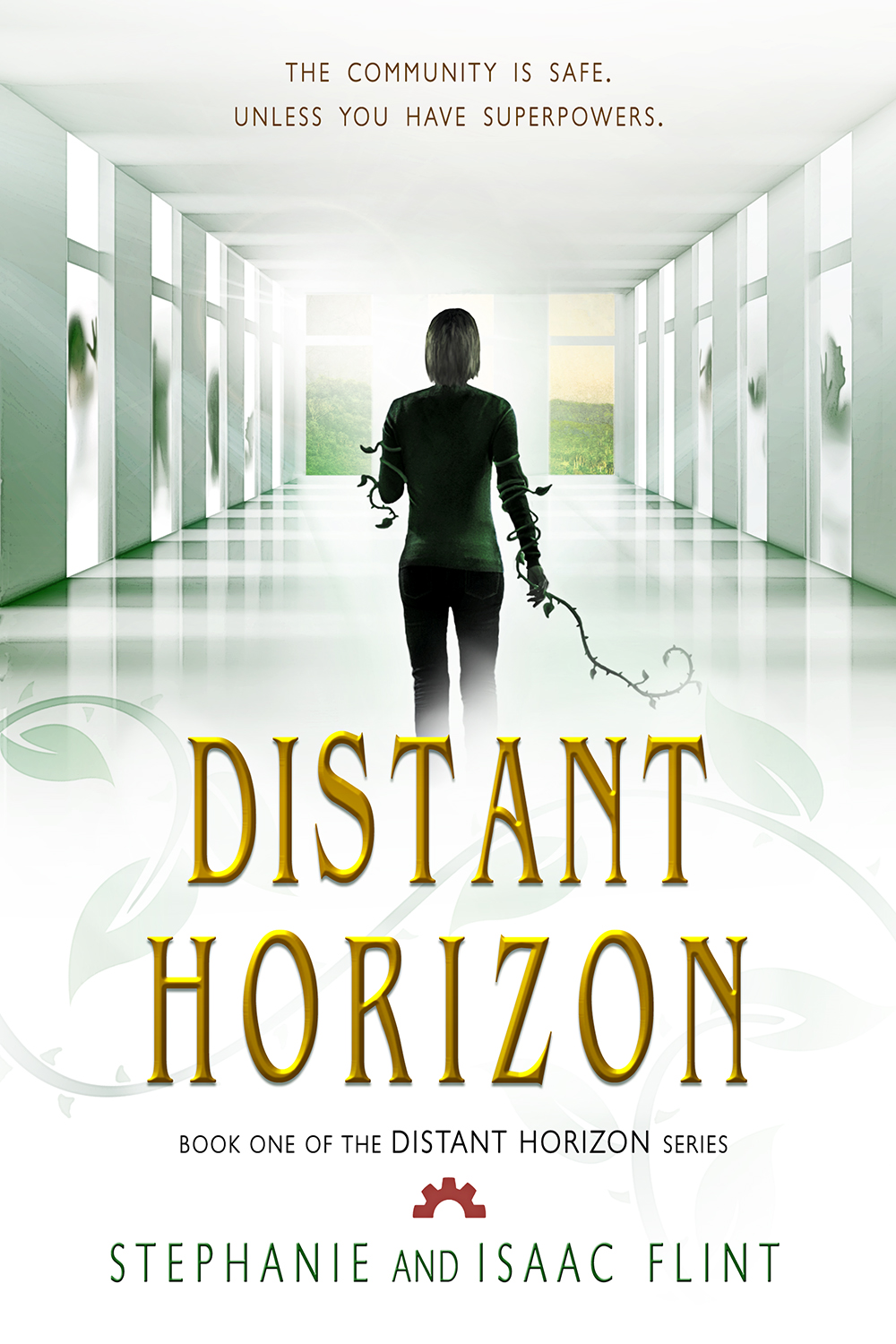
With Magic’s Stealing out to beta readers, I’m trying to avoid working on that story line until I get the collected thoughts of the readers. That way I can evaluate all the comments and figure out how best to apply them. In the meantime, I’ve switched gears. I’m working on Isaac’s and my Distant Horizon story line. The first book is written and mostly polished, so I’m working on plot consistency in the second book. To do that, I’m rereading the first book to refresh my memory on what changes were made. (Seriously… my notes suggest I’ve read the first book twenty times. Granted, some of those rounds only involved skimming for minor edits, but some of those included major overhauls, and needless to say, I’m starting to get a little tired of rereading it.)

During my read-through, I realized that there’s a shift in the writing style from the first few chapters to the later chapters. There’s less description, more every-day action, and the slow set-up of things starting to go wrong for the protagonist. Events are happening, but I’m worried that they aren’t as enticing as they could be. Now, one possibility is that I’ve read through these first few chapters so many times that it’s all kind of a gray blur. I know the plot too well, but the story may be fine as-is. The other possibility is that there’s a definite shift in writing style that needs to be corrected, or risk turning away readers who might otherwise be interested in the story.

When the story first starts, its sounds very much dystopian:

The first time I flushed adominogen, the oblong capsule tumbled from my hand and bounced off the bathroom sink, once, twice, then fell into the toilet with a finalizing plop.

Gone.

I waited all day for someone to ask why I didn’t report accidently losing my pill. But no one did, and I didn’t have any of the hallucinations that I might have had for not taking adominogen. Instead, the world around me felt so much more alive. My attention improved, not that it was bad to begin with, and I could think clearer. Be more efficient.

After that, I stopped taking the pill. I graduated high school and moved into my first year of college, no sign of theophrenia. But when our hall advisor announced that the annual Health Scan would take place in two days, I panicked.

I needed three things to graduate: excellent grades, as many efficiency points as possible, and to pass the scan. It wasn’t often that someone failed, but it did happen. One of my friends in high school had a sister who failed. Galina. She took the scan at the clinic downtown, and Special Forces escorted her away, all while assuring her everything would be fine.

I didn’t want to end up like her, so right after the announcement yesterday, I took the pill. It was like throwing a clear, plastic tarp over my world. I couldn’t concentrate, but I couldn’t go to the doctor for the symptoms.

Not taking the pill was an international offense.

And a little bit later, still in the same style:

After the incident with Lady Black, I had this constant, nagging feeling that someone stood right behind me, watching me. Stalking me. If this was the plague, then I could only guess this was the onset of paranoia, the delusion that I was somehow important enough to warrant special attention.

Or I maybe I was just paranoid; the Health Scan was less than twenty-four hours away.

My bedroom door rattled and I looked up from my biology book. Faint, golden light traced my desk, highlighting the leaves of my plant and trailing along the edge of my bookcase.

The doorknob rattled again, followed by a new, chinking sound of metal.

I scooted from my chair, then sidled against the wall before checking the door’s peephole.

No one was out there.

Maybe the air pressure was playing with the hinges.

I opened the door and stuck my head into the hall. A couple students passed by, but they’d been too far back to affect the door.

But, as the story progresses (leaving act one into act two), the style shifts, bringing on more description:

Pops led us into a dark, narrow hall, a far cry from the neatly glowing dorm corridors. What might’ve gleamed with bronze reflections was now a dull, dented bit of metal. Yellow lights ran the length of the ceiling in small round inlets, casting a weird, brownish glow over the area. One of the lights was burnt out, and another was completely missing, the socket bare.

We headed up the second flight of stairs. The elevator we passed had a piece of yellowed paper with a DO NOT USE warning taped across it.

“We’ve been running on minimal repairs,” Pops explained. “We have decent funding, but we haven’t had a chance to resupply, and Crush only has so much time to work. He usually monitors the computers for signs of enemy activity.” Pops stopped at a plain, bronze door at the top flight of steps. “This is Jim’s office. My room is across the hall.”

Inside, a dusty world globe sat on the corner of an ornate, wood desk, obscured by various file folders and papers. Books were piled high, their spines haphazardly stacked like a puzzle game. An ancient, faded rug lay beneath the desk, so worn that its vibrant, geometric shapes and numbers were barely distinguishable. Bookshelves surrounded us from floor to ceiling, organized and decorated with models of antique stealth planes and trinkets. A giant, arched window graced the far wall, overlooking the night sky, and two red, plush chairs sat opposite the desk, where a reading lamp blanketed the room in a warm glow.

Later, part of an action sequence:

I followed Lance, since he was closest, and we huddled in the leaves, taking shelter from the fight. A local rushed the monster, and the beasts grabbed him by the throat and yanked him from the ground. Bones snapped and his screams fell short.

“We’ve got to help,” Lance said.

I wasn’t sure if it was his heart or mine pounding double-time in my ears.

No wonder Inese gave me her gun.

Behind us, there was no sign of Jack or Matoska, and I couldn’t hear anything more than a mingled mass of screams and shouts. Ahead, more beasties darted through the field, half-loping, half-running. One was lanky and pale, what little clothing it wore hooked over its bony waist. Crusted blood and clods of dirt plastered its skin. A feline eye stared my direction, while the other was swollen shut.

Other beasts were bulky and heavily muscled, swinging swords or metal clubs, bashing in the locals’ skulls if they got too close. A large glob of water hovered around a beast that stood straighter, more human than the others. The creature lunged at a man and water splashed onto the electric spear. Static traversed the metal shaft. Both man and beast crashed to the ground as electricity coursed over the beastie’s water-slick skin.

In the long run, I see a potential benefit of keeping the story the way it is because, as the style shifts, it suggests that the main character, Jenna, opens her eyes and really starts to see the world as it is, not how it’s portrayed by the sheltered Community. The story goes from being light on description to heavy on description, and the writing style includes thicker paragraphs. In addition, at least in the examples I’ve posted, the character goes from reflecting on the world around her (distant), to becoming heavily involved, a participant. Which might not be a bad thing. I won’t know until I have it available for readers to read.

I hope you enjoyed this post (and the sneak peek at Distant Horizon), and I’d love to hear your thoughts. Have you experienced any issues with keeping the style and tone of a story consistent? Have you read any books where the style shifted subtly, or even dramatically?

Leave a comment

Filed under Personal Work, Writing

Thoughts on Publishing – A Novel or Three Novellas?

In general, I write novels. Then I trim said novels because their early drafts are excessively long. However, I’ve recently become fascinated with the concept of serial novelization. You release the novel in several parts, with the idea that readers know they aren’t getting a complete work at one time and that the next installment will come in a timely manner. I toyed with the idea of doing this for my current manuscript, The Wishing Blade, with each installment between 10,000 to 15,000 words. But as I started the rewriting stage, I realized that each section didn’t feel complete. The sections left on a cliffhanger, and weren’t really satisfying.

The other serialized option I’d studied was to write a complete short story (or novella), and make sure it had a full beginning, middle, and end, even if it was part of a larger work. At the moment, I’m thinking that might actually work well for The Wishing Blade. Each installment would be around 30,000 words, maybe more, with an expected three installments. I could release the story sooner, while still producing a reasonable quality work. Each story would be complete in itself, so there would hopefully be fewer unhappy readers who aren’t satisfied with the ending. With each installment, the reader should feel the series has made progress. Think about the show Avatar: The Last Airbender. (I think Legend of Korra and Fullmetal Alchemist where this way in their first seasons, too, but it’s been long enough since I’ve watched them that I don’t remember). For the most part, each episode (or set of episodes) felt complete, even though there was a larger story arc in progress. Granted… I’m still in the second season of Avatar, so that might change.


So here’s how it would work.

1. I separate The Wishing Blade into three novellas. They’re tentatively called Magic’s Stealing, The Shadow War, and The Immortal Realm. (What do you think of the names? Good? Bad? Neutral?)

2. I then figure out the story arc for each individual novella. This is crucial, because while reading them in order would be preferable, I also want readers to be able to pick up book three, enjoy it, then go back to book one. I personally have a habit of grabbing whichever book interests me… even if it’s in the middle of the series.

So the novellas would look something like this:

  1. Magic’s Stealing: Focus on the loss of ribbon magic in Cirena. Main character who hates magic is suddenly one of the few who can still use magic, and she’s trying to figure out what happened to the magic and where she fits into the whole scheme.
  2. The Shadow War: Main characters get separated. One works from within the shadows to foil the trickster god’s plot to kill the gods and get magic for himself. The other seeks out glass-stone, a material which has been proven to kill shadows and not be susceptible to shadow magic, then seeks to protect and warn others in the mortal realm. (For those of you who read my post on creating fantasy languages, this is where word magic shows itself).
  3. The Immortal Realm: Character in shadow realm escapes into ‘immortal realm’ and seeks out artifact (from book one) which could wipe out shadows for good. Other character defends Cirena’s capitol city from the shadows’ massive onslaught. They’ll either succeed in their separate goals, which serves to aid the other, or they’ll fail and the shadows will take over the kingdom.

3. Edit book one and make shiny. Send to beta readers for feedback. Work on a different story in the meantime (either finish the rough draft for The Wishing Blade: The Shadow War, or work on long-overdue edits to book two in my husband’s and my Distant Horizon universe). Once beta readers return comments, I’ll review said comments, make edits as necessary, then set book one aside for a while. Work on The Shadow War in the meantime.

4. Polish book one. Do what editing I can, maybe get an additional beta reader to proofread for errors.

5. Begin publishing process. Upload to Kindle and Smashwords, and consider other markets (I’m currently considering Drive Thru Fiction and Draft2Digital, but I haven’t had experience with either). For now, The Wishing Blade will be in ebook format only. I hope that once I have all three books out, I’ll be able to earn enough from them to purchase a block of ISBNs. Then I’ll need to decide if I want to make a collected print edition with all three books, or make a separate edition for each story. (If you’re looking for a length comparison, I’ve been looking at the old Animorphs series. Wrong genre and age group, but the word count is about right.)

6. Continue process with book two. I’m hoping to release each book around two months apart, though I may change my mind on that once I get further into this process.


Granted, there’s a lot more going on in the background (my husband and I setting up a partnership to publish this, and we’re picking up the DBA, EIN, and trying to figure out tax forms, etc…) but this is what I’ve got going on in the front end. Hopefully you found this post to be interesting, and I’d love to hear what your thoughts are regarding this process. 🙂

6 Comments

Filed under Business Ventures, Personal Work, Writing

Thoughts on Writing – To Time Travel or not to Time Travel

In my current manuscript, The Wishing Blade, I’ve been streamlining the original story while striving to maintain the overall tone. I started the original draft in 2003, and I set it aside for several years before pulling it out again this year to revise it into a workable manuscript. While some plot points have been easy to keep or discard, there’s one point I’ve been going back and forth on… whether or not to keep the time travel incident in the novel or whether to remove it all together.

Now you get to have a first hand look at my thinking process regarding revisions… all while I try to work this out for myself.

First, let’s look at reasons to remove this incident:

1. Potential Confusion: I have a tendency to confuse people once I start talking about time and dimensional travel in my stories, and I’ve seen agents list ‘no time travel’ in what queries they accept. (However, the last point is negated since I intend to self-publish this particular story. And technically, while some agents might not want time travel, others might. So this bullet revolves entirely on whether or not the incident is confusing to readers and pulls them out of the story.)

2. Potential Loss of Tension: One of the main characters must ‘die’ if the time travel incident remains. The other character goes back in time with the aid of the gods, and they prevent the death of the other character. There are complications that arise once the character returns to the present, but those complications are minimal. Worse, by showing readers that there’s an object that does allow time travel in this particular universe, any future sequences threatening the main characters’ lives is moot, because readers may then wonder why the characters don’t just go back in time and fix it?

3. Unnecessary Plot Point: At this point, the time travel device only allows time travel once in the story. It does do other things, but I could pretty easily remove the time travel incident and chalk up its bizarre powers to other magic.

Possible solutions:

1. Streamline the sequence: Make sure what happens is clear to readers (or is as clear to the readers as it is to the main characters…).

2. Consequences: To avoid loss of tension, I could make sure there are consequences to going back in time. (In this case, I need to make sure those consequences are clear to both character and reader). Also, I could make the complications that arise from time travel a little more immediate. This was actually the case in the original draft, but was removed when I didn’t find a reasonable place to reinsert the point. (And this is a good example of where having fresh eyes to look at a manuscript can be useful, because you might remove an important tidbit without noticing the resulting effects).

3. Increase Relevance: Similar to the point about consequences, if I can better tie in the time travel incident to the main plot, along with making the incident crucial with what’s to follow (along with the irony of the incident regarding the antagonist), the incident shouldn’t feel out of place. Linking the antagonist further into this scene could also improve the overall story.

Besides the reasons I might remove the incident, I’m also considering reasons to keep the incident:

1. Character Development and Increased Tension: We get to see the antagonist step forward to protect one of the main characters– and get a hint as to why, and what she’s willing to do if that character dies (and remains dead). The goal? Tension rises as the character she’s trying to protect risks their life time and time again, because if the antagonist loses said character, all bets are off in regards to what she’s willing to do to achieve her larger goal, and what she isn’t.

2. Magical World Building: We have an explanation of why the ‘time travel device’ reacts a certain way to the bad guys later. Cause and effect comes into play, and the world gets a little more exploration. And we get to see more of the various character relationships.

3. Time Travel Is Cool: I like time travel and dimensional world travel. I know, that’s not a good excuse. But really… we’ll get to see the effects of time travel first-hand in the story. We don’t just hear about it from a side character.

4. Paradoxes! Or so the characters think…: The incident sets up tension between the antagonist and protagonist, because the protagonist knows who the antagonist is but doesn’t know how they got there…

This is a case where beta readers will come in handy. They’ll help decide if the time travel plot point should be removed altogether (requiring a light restructuring of the plot), or whether the plot point works. For now, (thanks in part to having a friend enthralled by the backstory of the antagonist), I’m going to keep the incident.

So… onward to editing, and I hope you enjoyed this post. Let me know what you think, and please let me know if there’s any topics you’d like me to cover. 🙂

2 Comments

Filed under Personal Work, Writing

Thoughts on Writing – Creating Fantasy Languages

One of the topics I’ve been thinking about recently is creating fantasy languages. Reason being, I’m creating a language for use in my YA fantasy manuscript, The Wishing Blade. Now, in the original draft (and even across several drafts for different books in that world), I only had a handful of made-up words sprinkled into the story to give it flavor. This time, however, the use of the language system suddenly had a reason to shine– I actually intended to show ‘word magic,’ one of the magic systems in my Cirena stories coming from the Cantingen Islands. Suffice it to say, creating a language has been fun, if not a bit difficult.

When I attended ConQuest, one of the panels I attended was about creating alien languages. Some of the topics in the panel included: deciding how in-depth you wanted the language to be– do you want to have a word here and there, or will there be full sentences in this language? How does it look? How does it sound to the ear? Might it have odd sounds (like clicks) that you might not normally read? Do you base your new language off of a current language, and if so, how do you change the language to fit the needs of your story? For example, does a word or phrase mean something now that it doesn’t mean in the future where your story takes place?

All of this is food for thought and can be applied to a fantasy language of your creation. For example, I like the idea that language changes over time. We can portray this in our stories. An example of this in The Wishing Blade is the name of a town, Shuhritan Fritarando. Which no one says because it’s ridiculously long. Most characters, unless they happen to be upper class or a particular linguist (I’m debating on my word mage correcting my main characters about the city’s name), are simply going to call the town Shu Frit. It gets even more fun, because the full name isn’t entirely exact. Shuhritan is an ancient Cantingen word for ‘male royalty’ or ‘king.’ Fritarando translates to ‘small male kin.’ Which could mean nephew, cousin, son, etc., but in this instance refers to ‘son.’ Shu Frit becomes ‘Little King’ in the terms of cultural history, even though neither word actually means that. It’s a colloquialism, informal and a pain to translate, but a natural part of how languages evolve.

Of course, this whole explanation may never show up in the story itself (and probably shouldn’t), but it shows how you can play with language to create cultural history in your novel. It’s a way to add flavor.

However, not everyone in my story is going to use such colloquialisms. In the example I gave, the characters are referring to a language that’s outdated. Outside of naming conventions, the language is only used by word mages. Due to the nature of word magic, these mages need to make sure that what they say is exact– or risk the consequences of having a fireball light them on fire instead of their opponent. Pronounciation is key. Which is why, when I went to place all the words and phrases I had thus far into an Excel spreadsheet, I realized that I needed to change one of my words. I had qui meaning ‘as,’ quis meaning ‘good health,’ and ki being an emphasized word that connects an unusual modifying word to what it is modifying. And they were all pronounced like the English ‘key.’

That could get dangerous for a word mage who is trying to say something about ‘good health’ and instead has his word translated to ‘as.’ (As what? Something deadly?)

So I changed qui to li and did a word search in my manuscript to make the changes. Small details, but hopefully fun for anyone who pays attention to the language in the novel. Eventually I want to make symbols that represent each phonetic pronunciation. (Oh, IPA (international phonetic alphabet)… so fun in high school theater).

If you decide to create a language for your story, I highly recommend writing down the words in a spreadsheet and keeping track of your rules. I recently updated my word document of notes into an Excel Spreadsheet. When I did, I saw several potential problems that I went ahead and fixed. Primarily verb conjugations. (Spanish… French… these classes are starting to be rather helpful, even if I never did become a proficient reader of either language). The Cantingen language is supposed to be precise. Repetitive, even. And I really didn’t want to mess with irregular verbs. So I adjusted each verb that I ran across. As long as you know the ending for “I did something” versus “you did something” or “he did something,” you’ll be able to tell who or what the verb refers to. None of this irregular verb mess we commonly deal with in English. In addition, a single add-on to the word will signify if something is past or future.

Is this a simplification?

Oh yeah. Definitely. But I’m not trying to be Tolkien (though I did try to learn Sindarin Elvish several years ago. Didn’t get far, but I got a few words of Enya’s “May It Be” translated into Sindarin beyond what was already translated). My goal is to add flavor to the story, and keep the language consistent.

And maybe try writing a song in pure ancient Cantingen. That would be fun, though that’ll be after I get more words and verbs ironed out. There’s plenty more that can be said about creating languages, but I’ll leave that for a later post. Let me know what you think, and I hope you enjoyed my ramblings. 🙂

21 Comments

Filed under Personal Work, Writing

Thoughts on Writing – Pantsing vs Plotting

I recently went to ConQuest, a science fiction and fantasy convention in Kansas City. It was amazing, to say the least, given that I’ve been wanting to attend a writing convention for the last few years. (Plus, I got a couple of my favorite books signed by Brandon Sanderson, and he is an awesome panelist. Just throwing that out there). Anyway, one of the writing panels I attended suggested that, when it came to writing blog posts, to write about what you’re working on.

Of course, I try to post once a week with behind the scenes information about my book cover design work. I hope that the information is useful in multiple ways. First, it highlights the book. Nothing big, but it does promote the cover for the publisher and the author. Second, it highlights what I’m doing. Yes, I hope that potential clients will see the work I’ve done and decide to hire me later down the road. But third, I hope these posts provide useful information to authors who are considering self-publishing, whether they hire me, someone else, or do it themselves. I also hope the posts provide useful information to other cover designers who are looking for tips or tricks to improve their work. I’ve certainly found blogs with behind the scenes information about book cover design useful in my learning. So please, let me know if you have questions about the cover design process. I’d be happy to offer insight if I can.

That being said, I also do a lot of writing. Writing (and studying writing and publishing) is my passion. I love seeing the worlds and characters I explore. So I’m going to try the advice the panel offered and see if I can write the occasional post about what I’m working on or what I’m contemplating… my thoughts on writing in general. You may hear a lot about my story-writing progress, and maybe my theories on publishing. And I’d love to hear your input. What do you think about the topics I’m thinking about?

With that in mind, let’s jump into the first topic that got me thinking about writing a blog post. Plotting versus pantsing. A plotter is someone who plots out everything in advance. They may have outlines, they may have fully developed worlds, they may have every scene figured out in their head before they even write a single sentence. Pantsers are the opposite. They write “by the seat of their pants,” and outlines drive them nuts. They want to see where their characters take them, and explore the world as they go.

There’s absolutely nothing wrong with being either. Everyone’s writing style is different. But there’s a good chance you’ll be a little bit of both, maybe leaning one direction more-so than the other. Me? It depends on the story I’m writing. Some of my original stories were very much “pantsed.” I daydreamed the story in my head, but when I wrote the scenes, I let the characters go where they wanted to go (or where the scenery seemed interesting). When I started work on my Distant Horizon universe (which got me back into novel-writing after doing short stories for a while), it was plotted out. My husband (then fiance) created the world for a role-play game between the two of us, and about halfway through the campaign, I decided to log the adventures of my main character in the form of the novel. We continued developing that story, which has been through many rounds of edits and beta readers, and is currently being queried to agents.

Since then, I’ve written a few other stories in the Distant Horizon universe. Some were more plotted out than others. They each had a general outline, but I had a little more freedom with them to maneuver and explore. And even with Distant Horizon, I did quite a bit of exploration with it outside of the original game before I was finally happy with the story as a novel.

Then last year, for Camp NaNoWriMo , I decided to write The Messenger of Gaia, a science fiction space novel based on another role-play my husband and I played. Though the role-play game relied very little on actual dice rolls, the written story was heavily plotted. I had a heavy-duty synopsis/outline I worked from, and I wrote an even larger outline for the second book, since I realized it would be a while before I get the chance to write the rough draft for that particular novel.

Now I’m working on a story called The Wishing Blade. YA/NA fantasy, based on a rough draft I wrote in 2003. The original manuscript is… rough. We’ll go with that. But I’ve been wanting to rewrite it for a long time (tried several times, in fact. Got 10,000 words in on one rewrite, but I made it too heavily adult fantasy and took it in a completely different direction, which didn’t work. I also wrote a version of it as play for a playwrighting class… that particular version is terribly over-dramatic and cheesy), and I finally got the idea that if I worked on the manuscript from scene to scene, rewriting but sticking to the original premise, it might actually work. So far… it has. I’m about 45,000 words into the new version, and I’m enjoying it. In a sense, I’m being a plotter. I’ve got an “outline” (the original rough draft) that I’m following. However, I’m also being a pantser. I’m not sticking directly to the original story (which had a 200-year’s war worth of plot holes), and if I see something interesting… I’m running with it. I’ll write it, daydream it, and see where it takes me. In the long run, I’ll have a stronger novel.

Does that mean I’ll always straddle the pantsing/plotting line? Nah. It’ll just depend on the story I’m trying to tell.

Am I enjoying playing with different methods of writing? You bet.

I suspect that if you’re having a hard time writing something, you might want to try a different method of writing. Instead of trying to force a story to follow an outline, you might see where the story takes you when you let it run wild. (Sort of wild. You may need to reign it back in after a bit). If running wild is causing your story to go in circles, try stepping back and outlining. Do whatever works best for you.

Now, I have a main character who is currently plotting an assassination to attend to. I hope this post was useful, and please let me know what you think. 🙂

4 Comments

Filed under Business Ventures, Personal Work, Writing

Behind the Scenes – Fallenwood

Another cover for Melange Books.

This is actually for the book prior to Forgetting Fallenwood, but the book is being re-released by Melange Books, and so it’s getting a new cover. For this one, I tried capturing the feel of the other covers I’ve done for this series, including text placement, colors, blur effects, and the fonts I used. I quite enjoyed playing with the concept of the unicorn, as well. The author had mentioned on the art form that it might be neat to have the unicorn somewhere on the cover. I took the idea and ran. 🙂

This is the end result:

SBibb - Fallenwood - Book Cover

Stock images from Dreamstime:

http://www.dreamstime.com/stock-photo-black-horse-runs-image14200120
http://www.dreamstime.com/royalty-free-stock-photography-woodland-glade-image22617867
http://www.dreamstime.com/royalty-free-stock-images-wild-eland-image5106959

Leave a comment

Filed under Book Covers, Client Work, Photo Illustration

Do your characters pass judgement?

Today I have another writing-related post. Do your characters pass judgement?

It’s something I’ve seen blogged about in regards to point-of-view, and it also has quite a bit to do with showing. Your characters, as you write them (especially whichever character is leading the scene), pass judgment on everything they see or hear. This may be good, or it may be bad. It’s how they view the world, and it shows their attitude and voice. For example, take the small bit of scene from the manuscript I’m currently working on (Glitch).

Val pushes a plate of ham and eggs in front of me. She polished hers off a good while ago, as if she has already forgotten yesterday’s concerns. “When’s the last time you ate?”
I’m not sure. Maybe that’s why my head feels fuzzy. I push the plate aside and go for a bowl of applesauce. Though the chunky apples are practical, they taste far more extravagant than anything the Community… or the Coalition… would serve. I check the recipe in the database: cinnamon, chili powder, nutmeg.
I’d be happy with sugar.

If I’ve done my work right, the scene should give you a few clues into the main character’s personality: a bit more down-to-earth (going for practicality), curiosity (he checks the database for something as simple as a recipe), and to some degree, simplicity (being happy with just sugar, and not the other spices). When you look at the scene on the whole, he’s passing judgment on the applesauce… even though it might not be something we’d normally thinking of passing judgement on. It’s not meant that he’s being negative, only that we see it from his point of view.

Now, for a bit more obvious of a scene passing judgement:

The door opens to a bright, tall room. I breathe sharply. The Legion Spore is ugly. There’s something awkward about the mess of tentacles dangling beneath the Legion Spore’s fleshy, bulbous body, though I’m drawn to the thin membrane of its air sac. Pink fins softly ripple, glowing under the blue light.

Short, since the rest would be confusing out of context, but the main character is being introduced to the vessel he’s going to be piloting, which is a monster in its own right. While it’s supposed to be ugly, like he says, it’s also supposed to be impressive. Now, both these scenes are still in draft-phase, so I may end up changing them or omitting sections altogether, but the idea is there. The main character passes judgement. ‘Awkward’ and ‘mess’ are both negative descriptors, while the softly rippling fins are meant to be positive.

These may just be my own meanderings I’ve been considering, but feel free to share your thoughts. Have you noticed your characters passing judgment? Are the scenes in which they do more prone to being “showing” rather than “telling?” What are your thoughts?

Leave a comment

Filed under Personal Work, Writing

Interview with Rebekkah Ford – Dark Spirits

Hello, everybody. Today we have an interview with Rebekkah Ford, the author of Beyond the Eyes, and most recently, Dark Spirits.  For today’s interview, we’ll look at both Dark Spirits and the self-publishing process. So, without further ado, please welcome Rebekkah Ford to the blog! 😀

SBibb - Dark Spirits Cover

***

What was the inspiration for Dark Spirits?

Well, the whole series was created from an idea I came up with from the beginning. The movie that scares me the most—The Exorcist, my love for history, my experience with the paranormal world, and the out-of-box ideas I have about it.

Was it easier or more challenging to write Dark Spirits than Beyond the Eyes?

I think it was harder because I had to recount some of the things I wrote in Beyond the Eyes to keep the continuity of it all and to remind readers of events that happened in that first book. It’s more time consuming I think.

Who is your favorite character to write?

Nathan. He’s fun to write, and I enjoy writing in the male POV.

Anything we should look forward to in book three, The Devil’s Third?

Yes, the reader will finally get to discover what Paige is, there will be magic, and shocking revelations.

Why did you decide to write the Beyond the Eyes trilogy?

Because I grew up in a family that dealt with the paranormal and the unknown fascinates me.

What was your process for writing Dark Spirits?

I wrote every chance I got. I have a f/t day job, so I would get up extra early in the morning just so I could write before I had to go to work, and then in the evening I would write as well. I also spent most of my whole weekend writing. I still keep to that routine.

What made you decide to self-publish?

It felt like the right thing for me to do. Beforehand, I did a lot of research on it and the pros outweighed  the cons. I did have some agents interested in Beyond the Eyes, but unfortunately it didn’t work out. So I decided to take the plunge and self-publish.

Have you been satisfied with the experience?

Pretty much. It’s hard, hard, work though. I don’t care for the marketing aspect, but then again, even if I were to have taken the traditional route, I’d still have to market my books. So there’s really no way around it at this point in my life. I honestly would much rather write than try to sell my work.

How did you go about choosing an editor?

I was on Absolute Write, which is a wonderful writing forum. I saw an ad an editor posted for his services, so I emailed him, and the rest is history.

What kind of editing did you have done to your novel, and how was the process?

My editor and I have a process—I send him a chapter at a time. He line edits, checks for errors, and leaves comments. Once I receive my chapter back, I make the corrections, maybe do some rewrites, and send it back to him. He double checks it and sends it back to me. Afterwards, I send him the next chapter.

Did you do your own formatting, or hire someone to format the book for you?

No. I’m horrible when it comes to technology. I wish I knew how to format my book, but I don’t. I hired somebody else to do it for me. Tugboat Designs formatted Dark Spirits for me and did a wonderful job.

How have you gone about promoting your book?

I did a launch party on Facebook and next month I’m doing a couple blog tours. I’ve been using social media like Twitter and Facebook. I’ve been doing giveaways as well and getting reviews from readers who are already a fan of this series which is wonderful.

You mentioned enjoying writing Nathan’s POV. I personally enjoyed reading it. What was the best part about writing his POV, and what was the most challenging?

Thanks! The best part was stepping inside Nathan’s head, discovering what thoughts he had, and getting to know him on a much personal level. The most challenging was restraining myself from writing erotic thoughts about Paige. Nathan had them, but since this is a young adult series, I had to refrain from writing such naughty things. 🙂

Any idea when we can look forward to reading The Devil’s Third?

I’m not sure yet. I’m hoping before the end of this year.

You introduced the concept of parallel dimensions in Dark Spirits. Will we be seeing more of that?

Oh, yeah! 😀

What’s your favorite part of the magic system in the Beyond the Eyes trilogy?

I like that Paige is slowly discovering what she can do and Carrie has dabbled in elementary magic. It’s not like their characters woke up one day and BAM, they have all these powers. I like to keep it realistic, so my favorite part about the magic system is it’s not ostentatious.

Do you have any favorite books that helped inspire you to write the trilogy?

Believe it or not, Anne Rice’s vampire books. There are no vampires in my trilogy, but one of the many things I love about Anne Rice’s stories is how she spins realism into a fictional tale that’s dark, but yet alluring. If that makes sense? The cool thing about my Beyond the Eyes trilogy is, after The Devil’s Third, I still have the option to continue writing this trilogy if I wanted too. There are still endless avenues to explore without it being tiresome.

Anything you’d like to add (either about the books or self-publishing) before the interview concludes?

I just want to thank the fans of this series and future readers. Your support means the world to me. I could have went the traditional way and published this series through a publishing house. However, I had to find out if I could do this on my own. I also wanted complete creative control and to know that my books would never get pulled from the shelves. So I carved out my own path, and although it’s a lot of hard work, I have no regrets. I did this and nobody can ever take it away from me. That’s a feeling that money can’t buy, along with bringing enjoyment to the readers who fall in love with this trilogy and them telling me about it. So if you’re an author reading this, do what makes you happy and follow your heart. If you do those things, there will be no regrets. 😀

***

Great, thanks for the interview! You can find Dark Spirits at the links below. As a side note, Beyond the Eyes is currently available for 99 cents on Amazon, so get it while you can. 🙂

Beyond the Eyes: http://www.amazon.com/Beyond-the-Eyes-ebook/dp/B0088JF7HQ/

Rebekkah’s Blog: http://themusingwriter.blogspot.com

Rebekkah’s Facebook: https://www.facebook.com/RebekkahFord2012

Amazon: http://www.amazon.com/Dark-Spirits-Beyond-Eyes-ebook/dp/B00BEKJ9VG/

B&N: http://www.barnesandnoble.com/w/dark-spirits-rebekkah-ford/1114506937?ean=2940016397214

Smashwords: https://www.smashwords.com/books/view/286383

1 Comment

Filed under Book Covers, Business Ventures, Client Work, Writing

An Age of Mist – Cover Reveal

SBibb - An Age of Mist Cover


This is another cover I did for Melange Books. 🙂

Stock from Dreamstime:

http://www.dreamstime.com/royalty-free-stock-photography-serious-preteen-boy-image21381697
http://www.dreamstime.com/royalty-free-stock-images-misty-fjords-national-monument-alaska-usa-image780119

All other images are my own. Photoshop CS6 and Lightroom 4.0.

Leave a comment

Filed under Book Covers, Business Ventures, Client Work, Photo Illustration

Book Cover Reveal – Forgetting Fallenwood

SBibb - Forgetting Fallenwood Cover

This is another cover I did for Melange Books. It’s for a fantasy novel. Photoshop CS6 and Lightroom 4.0. All the images except for the woman and the fence (From Dreamstime: http://www.dreamstime.com/royalty-free-stock-photography-business-woman-disposable-coffee-image11631967 ) are my own.

Leave a comment

Filed under Book Covers, Business Ventures, Photo Illustration