Tag Archives: science fiction

Thoughts on Writing – Literary Doppelgangers

You know those times when you’re writing a story, and you think you’ve finally created a character that’s at least a little bit different… and then you find their literary doppelganger?

That character which just seems far closer than you would have liked?

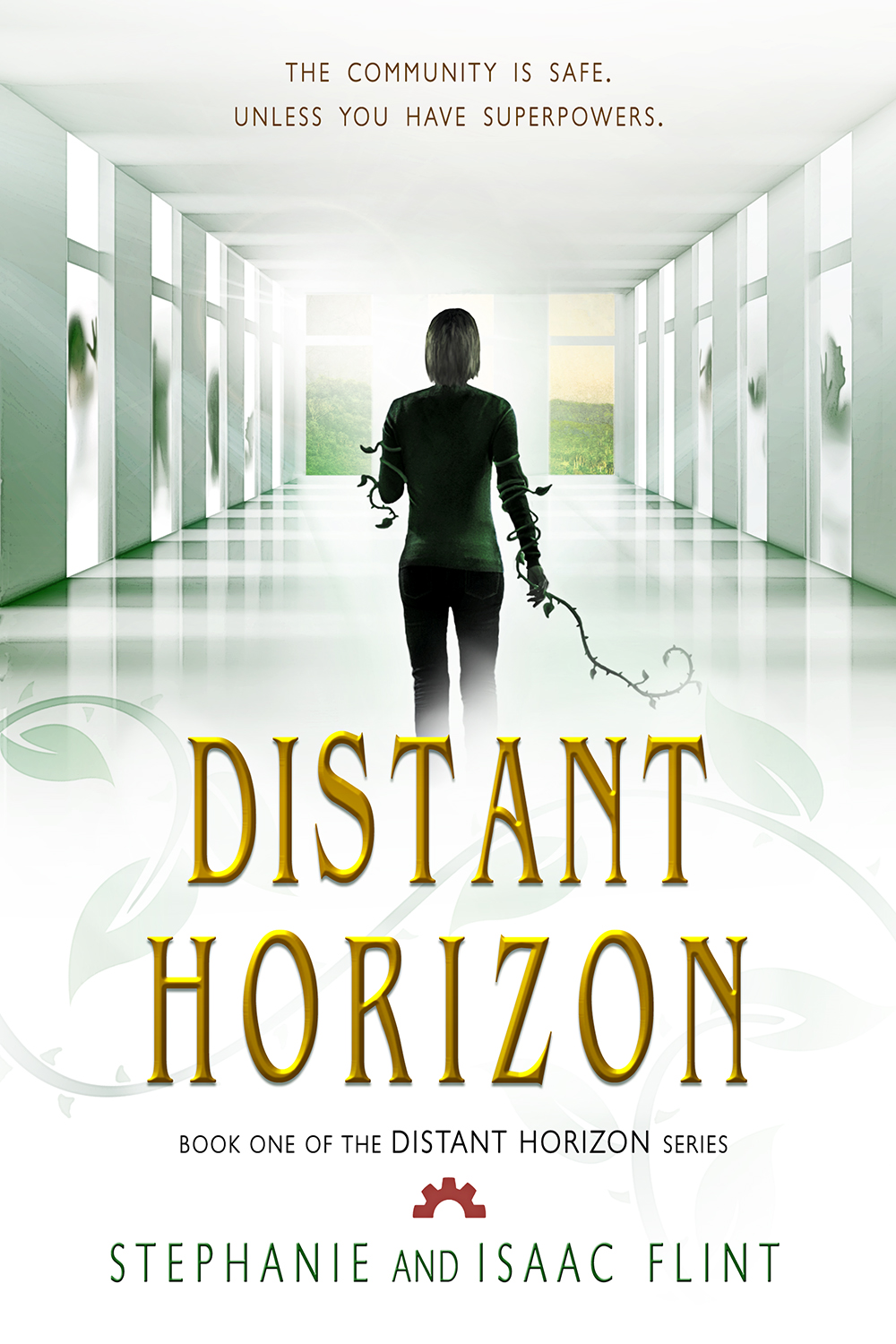
While watching Jessica Jones (which is an awesome show, by the way), one of the things that struck me and Isaac was the similarities between the villain of the show, Killgrave, and Brainmaster, the villain of our story, Distant Horizon.

They’re definitely different, but they do have some striking similarities (except that Killgrave is just so much more evil… An absolutely fascinating character, but evil). Note: I have only seen the show, so I’m not sure how he compares from the comics.

First, let’s take a look at Killgrave.

Killgrave has mind control powers. He can walk up to a person, tell them to do something, and they’ll do it. His powers have a time limit (12 hours), and a limited range. He’s obsessed with Jessica Jones, trying to win her back after she finally managed to escape his grasp. He doesn’t mind leaving behind a body count just to get Jessica to move in closer as she tries to stop him. (But he doesn’t do the dirty work. No. He comes up with creative ways for other people to kill each other or themselves… and leaves an even bigger mess for Jessica to clean up).

Also, he wears a purple suit. Kind of his style.

Now, let’s take a look at Brainmaster, from the story Isaac and I are working on.

Brainmaster has telepathy, which, in our story, equates to three possible options… mind reading, mind control, or communication via thought. Powerful characters can do all three. We see her doing all three of these things, but one of her trademark moves is taking control of characters by implanting suggestions in their brains… some of which cause them to attack others or themselves.

And she wears purple robes.

(This is where I was cringing watching Jessica Jones. Killgrave, also a mind controller, has a purple suit. I’d never even heard of his character (at least, not other than a single cartoon episode of X-Men with a very different version of him) until a few weeks ago.

These characters are different, but they do have similarities. Both have mind control powers. Both haunt the main characters (Jessica has traumatic flashbacks of Killgrave, Jenna has traumatic memories that Brainmaster plants in her head), and both wear purple. Maybe it’s because of the idea that the color purple often reflects royalty and power. (There’s an interesting web page about the historical uses of the color purple here).

For characters who are meant to be powerful, it makes sense to have them wearing purple.

Anyway, I thought it would be fun to post a short scene from Distant Horizon, one where we get to see Brainmaster for the first time.

Note: This scene has been truncated to minimize spoilers.

I pushed the door open.

Inside, a lady wearing a flowing, deep purple robe stood at the end of a long metal table. Her robes were fringed by golden swirls and thick, bold lining. Part of her white hair was rolled into an elaborate bun; the rest cascaded to her shoulders.

The lady’s eyes narrowed and her face contorted into wrinkles. She wore just enough eyeliner to accentuate her fierce eyes, and her nails were painted a gold that matched her outfit. More than most leaders, she was dressed for appearance.

Beside her, an elderly woman with graying hair was bound to the chair. Her shoulders were slumped and her head lolled back.

Go away.

I jumped. I hadn’t heard anything, but it was clear that the woman standing with her manicured hand on the corner of the woman’s chair had spoken. She lifted her chin and scowled.

“Let her go.” I tightened my grip on my spear.

Brainmaster smirked and slid her nail along the edge of the chair. Something forced me– my mind– away.

I couldn’t move. My arms were frozen in place.

She smiled and brushed back a wisp of white hair. Drop the spear. Close the door behind you. Take a seat. She gestured to the chair, a slow, elegant motion.

I dropped the spear, took a seat. Listened.

A slow smile crawled across her cheeks. She gestured to the woman in the chair. “The true plague is disobedience. It makes our society inefficient. This woman is a traitor. She spreads the plague by her presence. She’s a lost cause. Kill her.”

I stood, vines uncoiling from my arms, and walked the length of the table. Power pulsed through my vines, urging me to take control. To let them flourish. To use them.

The traitor turned her head, her eyes half-shut.

“She’s the true monster,” Brainmaster murmured. “A threat to everything we hold dear.”

I wrapped my vines around the woman’s throat. Felt their pressure against her skin. Closed them tight. The woman coughed, gasping, but I didn’t let go.

Funny thing, Nickleson. Do you ever wonder how a beast feels when it’s given orders? Is this what you want?

I stared at the dying woman, confused.

A beast is such a mindless thing. You could be so much more.

The woman sputtered and fell limp. Her head lolled.

A chill clawed through my spine.

She was dead.

I’d killed her.

And that’s where I’m going to leave that scene…

*Cough.*

Brainmaster. Yeah, she likes messing with people’s minds. Maybe that’s why I enjoyed watching Killgrave’s character so much.

Anyway, I hope you enjoyed this post. 🙂 Have you ever written a character, then found their literary doppelganger?


2 Comments

Filed under Writing

Thoughts on Writing – Combining Characters Part 1

One of the writing tips I’ve heard for making stories stronger is to combine characters. Theoretically, combining characters cuts down the number of supporting characters (thus making the cast easier to remember) and makes for a stronger single character (by bringing in conflicting, but often interesting behaviors).

When I was working on Distant Horizon, a YA science fiction novel I’m co-authoring with my husband, Isaac, a suggestion we got from one of our beta-readers was to combine two characters who both played the role of a mentor. Ultimately I turned down the idea, because each character had conflicting backstories that I wanted to be able to bring in later (though that isn’t technically a good excuse–somewhere I read a similar train of thought about a Wheel of Time character, but I can’t remember which article that was).

However, by realizing how similar the two characters were, I realized how important it was to differentiate between them if I chose not to combine them.

Let’s take a quick look at these two characters, Pops and Jim, from Distant Horizon.

Pops is the main character’s grandfather, though she knows him for the same length of time as Jim. He has the wisdom of experience from working with the people he now fights, and he wants to protect the main character from those people.

Jim, on the other hand, is older than Pops, and he’s never worked with the bad guys. He knows the time from before the bad guys took over, and thus, he took on the role of the rebel’s historian.

Both characters are mentor figures, and in my earlier drafts, had a tendency to convey repetitive information.

I needed to determine what made each separate character crucial to the plot, and why I wanted them to be different characters.

One reason was their respective eras.

Pops grew up during a time when the bad guys had almost full control of their territories, but their reign was still uncertain. They were no longer seen as the bad guys, and thus, Pops took part in helping their agenda. He grew up familiar with the earlier uncertainty where the lack of jobs and money were a problem, and he understood the promise of the coming “Community ideals.” But in his work he’s seen the darker side of the Community, and while he still values the ideals, he no longer supports the bad guys. While with them, he trained as a scientist who studied powers, and so he is the resident expert.

As for Jim, he grew up in the age of superheroes (relatively similar to our world, but with powers). He saw the fall of the Super Bureau, and the fall of the free world. He is familiar with the concept of democracy, various religions (which were largely wiped out by the bad guys) and freedom. He was there to watch the world spiraling out of control, and he was there at the founding of the rebels’ group. He’s seen the change of eras. Paralyzed from the waist-down in his early days, he no longer fights direct battles, but he provides useful information regarding the past as it was… and how the bad guys have covered up that past with lies. He is the only surviving member of the Super Bureau.

Each character has several similarities. But they are also different. When the main character wants information regarding how the bad guys act from within their ranks, she should go to Pops. When she needs more information on powers, she should go to Pops. When she wants comfort in the Community ideals she believed in, she should go to Pops.

But when she wants to know why this rebel group behaves as they do, she needs to go to Jim. Only he can give her the dynamics that neither she, nor Pops, can fully understand. When she wants information on the world as it was, and might be yet again, or answers that don’t involve the Community’s dark secrets, she needs to go to Jim. He has a different perspective than Pops, and unlike Pops, who is jaded from the world he’s seen, Jim still has some lingering hope within the sadness of everything he’s lost, in part because of how he was raised.

Now, would it be possible to combine these characters? Probably. The ages might change. The new character might have been a superhero trained in the science of powers who worked for the bad guys for a while, then quit for reasons that are revealed in the story. The new character would still be a mentor, but due to the change in backstory, how they see the world–and how others see them–would be different.

It’s not quite what Isaac and I were going for. There’s a certain symbolism we’re hoping to achieve through the two characters, and they each have different outlooks on life. Maybe the story would have been stronger if they were merged. Maybe it wouldn’t.

For now, I’m planning to keep them separate. But having considered merging them helped me to consider what made them stronger separately.

I hope you enjoyed this post, and next time, I’ll be talking about a couple characters I’m considering combining in The Shadow War. 🙂

Have you considered combining any of your characters? Why or why not?

EDIT: You can read the second part of this post here.


4 Comments

Filed under Writing

Thoughts on Writing – Trademarks and Evolving Languages

Yesterday at the writing group my husband and I usually attend, one of the writers made a comment about how English is a growing language. They pointed out that it constantly shifts and adds new words, whereas other languages are stagnant and are ruled by a constant number of words. This caught my interest, so I thought I’d do a little bit of research on the topic.

Though my research didn’t go quite the way I anticipated, I focused on new influencers to a language.

The National Science Foundation website mentions in their article on language and linguistics that there are a few things that can influence a change in language. For example, the invention of new technologies can bring with it new words (or specifically, the new use of words). The article says, “Plastic, cell phones and the Internet didn’t exist in Shakespeare’s time.” Which, if you think about it, means that time period wouldn’t have had a need for those words.

But what happens when those new technologies develop? The new words have to come from somewhere.

In an article from The Atlantic, they explain the origin of the term ‘cell phone,’ or more accurately, cellular phones. At the time, the word cellular referred to biological cells (still does). What does that have to do with phones?

The network for sending signals to each phone was conceived as being of a cellular nature (check out the article for a diagram). As such, a cellular phone would use a cellular network, and the term was later shortened to ‘cell’ phone.

(As a side note, if you are developing a magic system and your story spans over many years, you might consider what developments might influence that magic. For example, in Isaac’s and my Distant Horizon universe, one of the characters has techno sight… the ability to manipulate (digital) technology with their mind. If you go backward to the Multiverse timeline, there aren’t any computers (at least, not that don’t use artificial spirits), so those characters don’t have the techno sight power. Or they might, but it would basically be an unknown power that doesn’t get used, even if it’s in their bloodline for future generations)).

New technology can impact how a language evolves, especially as new terms are needed.

However, when new technology gets involved, so do trademarks. And that’s where things get interesting. For example, look at the the Xerox photo-copying machine. How many people might say “I’m going to xerox that…” turning Xerox, a trademarked brand name, into something generic… (despite attempts to keep in it in their grasp).

If you look at the name, Xerox is the brand, whereas their product is a photo-copying machine. Note that photo-copy is a combination of two words to describe what the product does. But as people became familiar with the product, they turned Xerox into the verb, and thus a new word (or at least a new meaning to the word) was born. HighNames has an article regarding the origins of Xerox, and it turns out that Xerox pulled their name from a combination of Greek words… xeros (dry) and graphia (writing). If xerox, from xeros, now means ‘to photocopy,’ we can see how influences from other languages, plus the change over time, shaped a new word. (Read more about generic trademarks here).

Even now, companies fight to keep their trademarks intact. Google (to use a search engine, originally pulled from ‘googol,’ the number ‘one’ followed by a hundred zeroes). Kleenex, technically a brand name, but now often used to mean a tissue. (“Go grab me a kleenex.”) This is yet another example of a company having to work to keep its trademark intact (This article from The Atlantic has some great examples of companies trying to protect their trademarks). Yet another example of how a trademarked brand has become (or is on it’s way to becoming) a common word is Coke, in which a Concurring Opinions article mentions people asking for a coke (referring to soda in general) and restaurants must distinguish between a Coke or a Pepsi due to trademark legalese.

If you are interested in more information about the evolution of language over time, TED has series of videos about of “How Language Changes Over Time.” I haven’t watched these, but having watched a few TED Talk videos before, I imagine they could have good information.

So how does all this apply to fiction?

Well, if you include conlangs (constructed languages) in your stories, especially over a period of time, you could have fun with changing the language across the generations. Perhaps it’s a company trying to protect their trademark, if you want to stay with the trademarks theme. Perhaps there is a misunderstanding in general. Perhaps there is confusion, if someone from the future tries to explain something to someone from the past. Or perhaps its the opposite. Someone from the past, using an older variety of an evolving language, has a hard time being understood by someone whose updated language no longer sounds the same. (Refer back to the National Science Foundation article for a good example of having a hard time trying to understand an older language).

There’s all sorts of things you can play with, both with fictional languages, and with real languages and real history.

Alternatively, maybe you have a language that is stagnant. One that has only a specific list of words, and that’s that. How do your characters and your society deal with the changes of time? Do they smash words together? Do they struggle to explain technologies? Do they refuse new technology altogether?

Given the way I’ve currently addressed Cantingen word magic in the rough draft of The Shadow War, I suspect their language will be fairly stagnant, with some interesting combinations when trying to explain an object that doesn’t have a specific name or translation.

I hope you’ve enjoyed this post. 🙂 Have you thought much about how languages evolve, and how you can use that evolution in your fiction?

Further Reading:

http://www.scientificamerican.com/article/use-it-or-lose-it-why-lan/ – Talks about the frequency of a word compared to how fast it evolves

http://www.telegraph.co.uk/technology/mobile-phones/11274292/Do-you-understand-text-speak.html – Text speech (In this case, also slang, not specific to text) and trying to translate text speech

http://www.telegraph.co.uk/education/educationopinion/9966117/Text-speak-language-evolution-or-just-laziness.html – Debates whether text speech is language evolution or a lack of proper teaching (leans toward the latter, but does bring up points regarding text speech and ease of communication that would have been interesting had they been developed further

http://knowledgenuts.com/2015/10/10/text-message-slang-goes-back-to-telegraph-operators/ – More or less a counter-argument to the above complaints about text speech, which points out that it got its start with telegraph operators

http://dictionary.reference.com/browse/verbing?s=t – A Definition of ‘verbing’

2 Comments

Filed under Writing

Thoughts on Writing – Figuring Out ‘What Happens Next?’

As you may have read in my last blog post, I’ve been working on a new adult, science fiction romance set in the Distant Horizon universe. Which has been… interesting, to say the least. Romances in that particular universe have a habit of not ending well.

However, since I challenged myself to write a romance, and not a science fiction story with romantic elements, that means I’ve got to figure out how to give my hero and heroine a happily ever after with each other. Or at least a happy-for now ending.

*Head-desk.*

Right now I’m working on the climax. I’m in a lovely spot where I’ve figured out what triggers the ending… but not where to go from there.

Let’s take a look, shall we?

Quick back story: Tamara is the main character. She doesn’t have powers and she craves stability (and a stable relationship), but secrets bug her to no end. Meanwhile, Cole (the hero), is a telepath working under Mr. Rivera, who has ordered Cole to date Tamara so that he can get close to her best friend, Amy (who has successfully concealed her powers), to see if Amy has ties to a so-called “terrorist” group, Challenge. There’s plenty of secrets surrounding them, which Tamara is trying to unravel.

Got all that?

So here’s the precursor to the scene I’m on.

Tamara figures out that Cole has telepathy, thanks to her long-running interest in super powers. She calls him out on it, and though he physically can’t tell her everything, he gives her enough information that she finally realizes that he has some kind of telepathic block holding him back. While he’s trying to work around that block, Amy bursts into the room. (She’s Tamara’s roommate and doesn’t expect to find them nuzzling). Cole instantly notices that his powers have been shielded. Since Amy was already scanned a while back… and she didn’t show as having powers, Cole attributes this as proof that she has a rare set of powers and that she may be working for Challenge. He runs off to report to Mr. Rivera because he’s worried for Tamara’s safety if Amy is involved with Challenge.

Shortly after their talk, Mr. Rivera reports to his superiors (his actual superiors, he’s a double-agent for Challenge) so that he can try to recruit Amy. But Cole doesn’t know this, so he’s moping around thinking that he’s just sent away the best friend of the woman he likes.

Meanwhile, Tamara goes to Mr. Rivera’s office in hopes of getting information from him about Cole’s strange behaviors. Instead, she finds an empty office with a folder of incriminating evidence on Mr. Rivera’s desk that suggests the counselor is a member of Challenge… along with a note that has Amy’s name on it. Worried that he’s going after Amy, she tries to contact her best friend. After no response, Tamara then contacts Cole to confront him and see if he had any idea that Mr. Rivera was a double-agent. Cole is perplexed, since Mr. Rivera has been his supervisor for the last several years. But he begins to question himself when Tamara shows him her evidence.

This is where I run into problems.

Tamara has just enough information to be suspicious of the government’s motives, but she has no absolute proof. Cole, on the other hand, has long believed that his powers were a result of the plague he survived, and Amy has been rather vocal in her distrust of the government’s recent actions. So when Cole explains that Amy might have blocked his powers, Tamara is not entirely surprised. But she has evidence that, prior to the plague, Challenge was typically a criminal group (and they had super powers), so she’ not ready to trust them immediately, despite evidence suggesting that Challenge might no longer be criminal. If the government has been corrupted, Challenge is not be the bad guy everyone thinks they are. However, if the government hasn’t been corrupted, then Challenge is most definitely the bad guys.

Back to Tamara and Cole.

They could sit around and hope for the best, (but that would be boring and they have enough evidence to be worried for their friend’s safety), they can call the police, or they can investigate on their own.

In order to figure out what should happen next, I needed to look at the whole picture, even that which isn’t going to be shown to the readers.

Let’s figure out what’s going on with Amy and Mr. Rivera, even though we may not see this particular exchange in the story.

First of all, I needed to know what Amy could do to get out of a tough situation. If you recall, she’s a shielder, which means she can block powers. More importantly, shielding is a combination of three powers: life-spirit, radiation, and power steal. That’s a pretty nice combo to have, especially if she has any training. Given that she’s been meeting with her cousin, a member of Challenge who would want her to protect herself, it’s certainly not impossible. In addition, her power blocking skill is coveted by pretty much every group involved.

People want her alive.

Mr. Rivera, on the other hand, does not have powers, but he does know of a ‘key’ that has been telepathically embedded in Cole’s brain that would allow Mr. Rivera to issue commands to Cole… which Cole would have to follow. The particular process could be experimental, though, and may not always work properly (especially if anyone else knows they key).

The question, then, is the order of events after which Mr. Rivera learns that Amy has powers and might be sympathetic to his cause. He might inform someone in his group that he’s going to approach a potential recruit in case he needs backup. Or he might approach her directly. If Amy has a night class, he might wait until she’s done with class and try to talk to her afterwards, if he’s not afraid of scaring her off. (Granted, I’m not sure about taking this route, since a similar scene happens in Distant Horizon).

Or Mr. Rivera might contact Amy shortly after he learns what she can do, and not bother talking with other members of Challenge. He tries to approach her directly, and thus meets with her in a semi-public place to ease her concerns.

As for Amy, she would be skeptical. She knows that the government is trying to weed out people with powers. But she’s also been trying to get involved with Challenge, so she might take risks that she wouldn’t otherwise take.

Let’s say that Amy skips her night class and goes to meet Mr. Rivera at the coffee shop in the student union. She’s in public, so she’s not meeting a stranger in a high-risk situation. But she’ll have to be careful about demonstrating any of her powers. If innocent people notice and she causes a scare, the security involved may just wipe out the whole area and claim the campus was devastated by the plague.

Wouldn’t be the first time it’s happened.

Now that we know where Amy and Mr. Rivera are (not in a secret facility, like I initially day-dreamed, though that may happen later, depending on the outcome of this scene), let’s jump back to Tamara and Cole.

If Tamara and Cole call security because they’re worried for Amy’s safety, they’ll be questioned and a search will go out for Amy and Mr. Rivera. If Cole mentions Amy’s powers, Special Forces will get involved and everyone’s chances of surviving gets really slim.

This makes for a difficult happily-ever-after, though it has nice stakes if I can figure out how to get them out of trouble. Amy can fend for herself, while Tamara and Cole could potentially help them escape (not quite sure how yet), unless they go the ‘bad guy’ route and go pro-government, entirely believing Challenge is the bad guys. (This could happen if Amy and Mr. Rivera aren’t careful of what they say).

But if Mr. Rivera has a chance to explain himself first, he may be able to prove that the government has been killing off people with powers, and doing a few other nasty experiments on them, too. Cole, with his telepathy and persuasion powers, would be a perfect test subject for their major experiments, and Cole can’t be certain they would let him go after Mr. Rivera gets captured, even if he complies with their orders (and does he even want to? His life hasn’t exactly been his for the past few years).

If Cole agrees to help Mr. Rivera, they could get Amy to safety, and then Cole has to find some way to stay in the country without drawing attention to himself. Or he could flee altogether.

In the meantime, we have Tamara. She would want to protect Amy and get answers, and she would get a lot more transparency if she leaves with Mr. Rivera. But then she wouldn’t be able to see what’s going on from the inside the way that Amy has. By playing the part of the ‘good citizen,’ Tamara might be able to help other people with powers escape.

But then she wouldn’t have the stability she longs for.

Here we have a sacrifice on either end of the spectrum. Does Tamara flee the country, in which she gets the stability she longs for and a more definite idea of what’s going on? Or does she stay behind to pass along inside information to Challenge and help others escape? How does Cole figure into this equation?

This story is supposed to be a romance, after all, with the two of them discovering that they want to be together.

Maybe Tamara remembers that Amy has a night class, and decides it would be best not to jump to conclusions. Cole asks if she’s had dinner yet, and she hasn’t, so they decide to head to the cafeteria while they wait. But once they get there, they see Mr. Rivera sitting at a secluded table chatting with Amy.

But this feels like it has lower stakes, unless they make a pre-emptive call, only to discover the Amy and Mr. Rivera in the cafeteria, and security quickly descending on them…

I haven’t quite decided how this scene plays out, but I’m another step closer. By looking at the whole equation, the potential actions of each character makes a lot more sense, and gives me more room to play while narrowing the options to a logical path.

So… will they call security? Or will they set out to find Amy themselves?

To be determined.

I hope you found this post helpful. 🙂

What do you do when you get stuck with a scene?

Further Reading:

http://blog.janicehardy.com/2015/08/dont-know-how-to-end-your-scene-heres.html

4 Comments

Filed under Writing

Thoughts On Writing – Foreshadowing

I was talking to one of my beta-readers the other day and they got me thinking about foreshadowing. Foreshadowing is important to having a satisfying ending, especially if the reader doesn’t see that ending coming. Without foreshadowing, readers may feel confused and lost. That’s okay if that’s the effect you’re going for, but be warned, sharp turns, like on a really rough, old, wooden roller coaster (I’ll take the smooth metal ones, thank you), can leave a reader nauseated if they aren’t prepared.

For example, I once critiqued a short story which started out sounding like a pleasant memoir. Kind of happy-go-lucky scenes, but the story rambled. It lacked direction. A couple plot points seemed out of place with the tone of the rest of the story, but they still felt… normal. Then, out of nowhere, there was a rather graphic scene that scarred the character (and the unsuspecting reader). In all fairness, I don’t mind stories that have some graphic violence, but in this particular story, that scene came out of the blue. It wasn’t satisfying. Had the foreshadowing been stronger, I think the scene could have worked perfectly, but the author wasn’t inclined to make changes to the manuscript that would allow such foreshadowing to take place. Their story, their say, but that incident did get me to start thinking about how important foreshadowing is to a story’s plot.

Some foreshadowing happens intentionally. You leave clues for the reader to create an expectation about what’s to come. This can occur within a short scene, across a book, or across a series. You might see this in the form of a prophecy. An example of this can be seen in Lord of the Rings movie, when the leader of the ringwraiths tells Eowyn (who is concealed by her armor), “No man can kill me,” and she replies, “I am no man,” then proceeds to defeat him. Prophecies are ripe with foreshadowing, and my favorites are the ones that seem clear but have double-meanings. The Sight, by David Clement-Davies, also uses prophecy to foreshadow events, and then twists the prophecy’s meaning to have a different ending than expected. With foreshadowing, those twists are exciting, rather than confusing. Take a look at any Twilight Zone episode. These shows often take unexpected turns, but those endings were cleverly foreshadowed so that the viewer has an ‘ah-ha!’ moment. Suddenly all the puzzle pieces fall into place and the viewer understands.

Something Wicked This Way Comes by Ray Bradbury also has several examples of foreshadowing. The story revolves around two twelve-year-old boys who discover a dark secret about the carnival that has come to their town. Throughout the book, the tone is dark, sinister, foreboding. Before the carnival arrives, we know a storm is coming because a lightning-rod salesman announces the coming of a storm and proceeds to gift the boys with a lightning-rod that has been adorned with various ancient, mystical symbols. But when the storm arrives, it’s not a lightning storm, as predicted, but the mysterious carnival with a dark, illustrated man and his tricks. The lightning-rod’s ancient symbols hint at the coming dark magic, and even (as the story later reveals) that the magic is ancient. Later in the story (Warning, spoilers ahead!), Will’s father (who has been foreshadowing the sinister purpose of the circus through his unease and concern) discovers that his laughter hurts the dust witch (who is absolutely creepy in her own right). Faced with the chance to confront her during a so-called ‘bullet trick,’ he carves a crescent moon into the bullet before firing. The crescent moon isn’t a moon, however, it’s a smile, and it kills her. (As a side note, the end of this book had me daydreaming an entertaining My Little Pony crossover where Pinkie Pie must face off with the Illustrated Pony…)

Foreshadowing allowed the ending to make sense, and for the reader to anticipate how the main characters would defeat the evil carnival. Readers keep reading in hopes of seeing if their theories prove true.

In a sense, foreshadowing is a shadow cast by the future. It can be a pale shadow, a single line or reference that hints at what’s to come. Or it can be a heavy shadow, a constant application of tone and mood and imagery. Characters may have suspicions (incorrect or not) about the future, which you can use to foreshadow events and to create lovely twists when the reader least expects them. Foreshadowing creates questions that entice a reader to keep turning pages. If you have a genre shift in your book, foreshadowing may be immensely important to keeping readers on board. Foreshadowing is a way to help readers suspend disbelief. Same with characters. If they’re going to need an obscure skill later to save the day, showing this early on, even in passing, allows the reader to believe in the character when the time comes.

Another kind of foreshadowing is the kind you don’t mean to add. Sometimes you write subtle hints into the story that you read later, which point at the outcome even though you didn’t realize you wrote them. There’s a line in Distant Horizon that stopped me cold after I’d written the rough draft of Glitch, a sequel in which one of the main characters dies rather horribly to save their friends. I remembered writing the line, but I hadn’t realized the potential impact it would have and how true it was. Granted, the line only has impact if you read Distant Horizon after Glitch, but it does provide a little bit of set-up for the character in question.

I also use foreshadowing heavily in The Little One, a prequel novel for the Distant Horizon series. Little One is a childlike spirit who has a number of chilling visions which eventually come to pass in one way or another. In several of the scenes (as they currently stand, since I still need to do edits), she references a rising sun. The rising sun is a reference to a symbol in the later stories, but, aside from being an Easter egg for readers, these scenes are meant to add to the story’s mood. The scenes start off lighter and become progressively darker. I’ve truncated a few scenes and edited them to make sense out of context:

First scene where the sun is referenced as foreshadowing…


One morning, Knight had gotten up early to use the restroom and found Little One staring out the window in her make-shift bedroom. Tiny rays of pink sunlight flickered across her face through the trees.


“It’s pretty,” she said absently.


He wandered around the foot of the bed and squeezed in beside her. The air conditioner tickled his feet from the floorboards, and early light twinkled across his eyes. He blinked. He hadn’t really watched the rising sun lately. Most the time he was sleeping. Or if he was headed to work, he was planning out his day. Not watching the sun slowly grow and ascend.


“It’s changing,” Little One said.


He glanced at her. “Yeah. It’s because of the earth’s spin and–”


“Not that. It’s different.”


He tried to tell if there was anything different from this sunrise than all the other sunrises he’d ever seen, but it looked the same as any other sunrise.


Little One shook her head. “It’s different. Just a little. Small. But it’s different.”


Knight twisted his lips. The kid seemed attuned to the subtle variances an adult couldn’t see, and he didn’t want to think about what those variances might be if she had insight for a power.


Later…


Knight sat down the drawings. There were images from Little One’s dreams, but there were other drawings, too. Swirling night skies and rising suns. And each time, Little One drew the sun just a little bit darker.


Later…


Hawk looked one more time at the drawing scribbled on his wall. On the far side, scribbled between the happy images of trees and squirrels, was a rising red sun, with five rays extending from it like spokes, but each cut off halfway through their usual extension.


Later… (One of Little One’s visions)


The poster was blurred to Little One. She paused, taking a second look. She couldn’t see it well, save for the red, rising sun of her usual vision. Then reality shifted. The normal colors downgraded, passing through a dark veil. The sun twisted and darkened, shrinking on itself until only five tiny rays remained, red as fresh-drawn blood. The buildings loomed and darkened, and the crowds thinned… as if a film had been placed over them, and the people raced and ran as flames consumed the new night, warping the street until the colors ran together and bled into one dull, monotonous grey.


Later… (near the end of the story, after a major battle scene)


Behind the city, like a crimson cog, the storm sun rose, its light sending spoke-like rays through the dark thunderheads, and basking the city in a bloody glow.

Note… that’s from the rough draft. I still need to go through and do edits.

There’s a lot of foreshadowing in The Little One for the entire Distant Horizon series. The Little One is a prequel, and the character has ‘insight,’ a power which lets her know more than she should, so it’s to be expected. Those scenes were a lot of fun to play with, and I wonder how different readers will read the various scenes…. especially depending on whether they read The Little One first or the other stories first.

Alternatively, let’s look at Magic’ Stealing. The antagonist has a lot of room for foreshadowing, but beta-readers have pointed out that the references seem odd and pulled them out from the story. There’s a reason those references seem odd, but I want the story to read smoothly, and as much as I don’t want to cut the references, I’m planning to do so (leaving the less obvious ones). Foreshadowing should serve the story, and in this case, beta-readers confirmed that I needed to try a lighter method.

I hope you enjoyed this post and found it helpful. What are your thoughts on foreshadowing? Have you read anything where the foreshadow did or didn’t work well? 🙂

4 Comments

Filed under Personal Work, Writing

Thoughts on Writing – Consistency of Style

With Magic’s Stealing out to beta readers, I’m trying to avoid working on that story line until I get the collected thoughts of the readers. That way I can evaluate all the comments and figure out how best to apply them. In the meantime, I’ve switched gears. I’m working on Isaac’s and my Distant Horizon story line. The first book is written and mostly polished, so I’m working on plot consistency in the second book. To do that, I’m rereading the first book to refresh my memory on what changes were made. (Seriously… my notes suggest I’ve read the first book twenty times. Granted, some of those rounds only involved skimming for minor edits, but some of those included major overhauls, and needless to say, I’m starting to get a little tired of rereading it.)

During my read-through, I realized that there’s a shift in the writing style from the first few chapters to the later chapters. There’s less description, more every-day action, and the slow set-up of things starting to go wrong for the protagonist. Events are happening, but I’m worried that they aren’t as enticing as they could be. Now, one possibility is that I’ve read through these first few chapters so many times that it’s all kind of a gray blur. I know the plot too well, but the story may be fine as-is. The other possibility is that there’s a definite shift in writing style that needs to be corrected, or risk turning away readers who might otherwise be interested in the story.

When the story first starts, its sounds very much dystopian:

The first time I flushed adominogen, the oblong capsule tumbled from my hand and bounced off the bathroom sink, once, twice, then fell into the toilet with a finalizing plop.

Gone.

I waited all day for someone to ask why I didn’t report accidently losing my pill. But no one did, and I didn’t have any of the hallucinations that I might have had for not taking adominogen. Instead, the world around me felt so much more alive. My attention improved, not that it was bad to begin with, and I could think clearer. Be more efficient.

After that, I stopped taking the pill. I graduated high school and moved into my first year of college, no sign of theophrenia. But when our hall advisor announced that the annual Health Scan would take place in two days, I panicked.

I needed three things to graduate: excellent grades, as many efficiency points as possible, and to pass the scan. It wasn’t often that someone failed, but it did happen. One of my friends in high school had a sister who failed. Galina. She took the scan at the clinic downtown, and Special Forces escorted her away, all while assuring her everything would be fine.

I didn’t want to end up like her, so right after the announcement yesterday, I took the pill. It was like throwing a clear, plastic tarp over my world. I couldn’t concentrate, but I couldn’t go to the doctor for the symptoms.

Not taking the pill was an international offense.

And a little bit later, still in the same style:

After the incident with Lady Black, I had this constant, nagging feeling that someone stood right behind me, watching me. Stalking me. If this was the plague, then I could only guess this was the onset of paranoia, the delusion that I was somehow important enough to warrant special attention.

Or I maybe I was just paranoid; the Health Scan was less than twenty-four hours away.

My bedroom door rattled and I looked up from my biology book. Faint, golden light traced my desk, highlighting the leaves of my plant and trailing along the edge of my bookcase.

The doorknob rattled again, followed by a new, chinking sound of metal.

I scooted from my chair, then sidled against the wall before checking the door’s peephole.

No one was out there.

Maybe the air pressure was playing with the hinges.

I opened the door and stuck my head into the hall. A couple students passed by, but they’d been too far back to affect the door.

But, as the story progresses (leaving act one into act two), the style shifts, bringing on more description:

Pops led us into a dark, narrow hall, a far cry from the neatly glowing dorm corridors. What might’ve gleamed with bronze reflections was now a dull, dented bit of metal. Yellow lights ran the length of the ceiling in small round inlets, casting a weird, brownish glow over the area. One of the lights was burnt out, and another was completely missing, the socket bare.

We headed up the second flight of stairs. The elevator we passed had a piece of yellowed paper with a DO NOT USE warning taped across it.

“We’ve been running on minimal repairs,” Pops explained. “We have decent funding, but we haven’t had a chance to resupply, and Crush only has so much time to work. He usually monitors the computers for signs of enemy activity.” Pops stopped at a plain, bronze door at the top flight of steps. “This is Jim’s office. My room is across the hall.”

Inside, a dusty world globe sat on the corner of an ornate, wood desk, obscured by various file folders and papers. Books were piled high, their spines haphazardly stacked like a puzzle game. An ancient, faded rug lay beneath the desk, so worn that its vibrant, geometric shapes and numbers were barely distinguishable. Bookshelves surrounded us from floor to ceiling, organized and decorated with models of antique stealth planes and trinkets. A giant, arched window graced the far wall, overlooking the night sky, and two red, plush chairs sat opposite the desk, where a reading lamp blanketed the room in a warm glow.

Later, part of an action sequence:

I followed Lance, since he was closest, and we huddled in the leaves, taking shelter from the fight. A local rushed the monster, and the beasts grabbed him by the throat and yanked him from the ground. Bones snapped and his screams fell short.

“We’ve got to help,” Lance said.

I wasn’t sure if it was his heart or mine pounding double-time in my ears.

No wonder Inese gave me her gun.

Behind us, there was no sign of Jack or Matoska, and I couldn’t hear anything more than a mingled mass of screams and shouts. Ahead, more beasties darted through the field, half-loping, half-running. One was lanky and pale, what little clothing it wore hooked over its bony waist. Crusted blood and clods of dirt plastered its skin. A feline eye stared my direction, while the other was swollen shut.

Other beasts were bulky and heavily muscled, swinging swords or metal clubs, bashing in the locals’ skulls if they got too close. A large glob of water hovered around a beast that stood straighter, more human than the others. The creature lunged at a man and water splashed onto the electric spear. Static traversed the metal shaft. Both man and beast crashed to the ground as electricity coursed over the beastie’s water-slick skin.

In the long run, I see a potential benefit of keeping the story the way it is because, as the style shifts, it suggests that the main character, Jenna, opens her eyes and really starts to see the world as it is, not how it’s portrayed by the sheltered Community. The story goes from being light on description to heavy on description, and the writing style includes thicker paragraphs. In addition, at least in the examples I’ve posted, the character goes from reflecting on the world around her (distant), to becoming heavily involved, a participant. Which might not be a bad thing. I won’t know until I have it available for readers to read.

I hope you enjoyed this post (and the sneak peek at Distant Horizon), and I’d love to hear your thoughts. Have you experienced any issues with keeping the style and tone of a story consistent? Have you read any books where the style shifted subtly, or even dramatically?

Leave a comment

Filed under Personal Work, Writing

Thoughts on Writing – Creating Fantasy Languages

One of the topics I’ve been thinking about recently is creating fantasy languages. Reason being, I’m creating a language for use in my YA fantasy manuscript, The Wishing Blade. Now, in the original draft (and even across several drafts for different books in that world), I only had a handful of made-up words sprinkled into the story to give it flavor. This time, however, the use of the language system suddenly had a reason to shine– I actually intended to show ‘word magic,’ one of the magic systems in my Cirena stories coming from the Cantingen Islands. Suffice it to say, creating a language has been fun, if not a bit difficult.

When I attended ConQuest, one of the panels I attended was about creating alien languages. Some of the topics in the panel included: deciding how in-depth you wanted the language to be– do you want to have a word here and there, or will there be full sentences in this language? How does it look? How does it sound to the ear? Might it have odd sounds (like clicks) that you might not normally read? Do you base your new language off of a current language, and if so, how do you change the language to fit the needs of your story? For example, does a word or phrase mean something now that it doesn’t mean in the future where your story takes place?

All of this is food for thought and can be applied to a fantasy language of your creation. For example, I like the idea that language changes over time. We can portray this in our stories. An example of this in The Wishing Blade is the name of a town, Shuhritan Fritarando. Which no one says because it’s ridiculously long. Most characters, unless they happen to be upper class or a particular linguist (I’m debating on my word mage correcting my main characters about the city’s name), are simply going to call the town Shu Frit. It gets even more fun, because the full name isn’t entirely exact. Shuhritan is an ancient Cantingen word for ‘male royalty’ or ‘king.’ Fritarando translates to ‘small male kin.’ Which could mean nephew, cousin, son, etc., but in this instance refers to ‘son.’ Shu Frit becomes ‘Little King’ in the terms of cultural history, even though neither word actually means that. It’s a colloquialism, informal and a pain to translate, but a natural part of how languages evolve.

Of course, this whole explanation may never show up in the story itself (and probably shouldn’t), but it shows how you can play with language to create cultural history in your novel. It’s a way to add flavor.

However, not everyone in my story is going to use such colloquialisms. In the example I gave, the characters are referring to a language that’s outdated. Outside of naming conventions, the language is only used by word mages. Due to the nature of word magic, these mages need to make sure that what they say is exact– or risk the consequences of having a fireball light them on fire instead of their opponent. Pronounciation is key. Which is why, when I went to place all the words and phrases I had thus far into an Excel spreadsheet, I realized that I needed to change one of my words. I had qui meaning ‘as,’ quis meaning ‘good health,’ and ki being an emphasized word that connects an unusual modifying word to what it is modifying. And they were all pronounced like the English ‘key.’

That could get dangerous for a word mage who is trying to say something about ‘good health’ and instead has his word translated to ‘as.’ (As what? Something deadly?)

So I changed qui to li and did a word search in my manuscript to make the changes. Small details, but hopefully fun for anyone who pays attention to the language in the novel. Eventually I want to make symbols that represent each phonetic pronunciation. (Oh, IPA (international phonetic alphabet)… so fun in high school theater).

If you decide to create a language for your story, I highly recommend writing down the words in a spreadsheet and keeping track of your rules. I recently updated my word document of notes into an Excel Spreadsheet. When I did, I saw several potential problems that I went ahead and fixed. Primarily verb conjugations. (Spanish… French… these classes are starting to be rather helpful, even if I never did become a proficient reader of either language). The Cantingen language is supposed to be precise. Repetitive, even. And I really didn’t want to mess with irregular verbs. So I adjusted each verb that I ran across. As long as you know the ending for “I did something” versus “you did something” or “he did something,” you’ll be able to tell who or what the verb refers to. None of this irregular verb mess we commonly deal with in English. In addition, a single add-on to the word will signify if something is past or future.

Is this a simplification?

Oh yeah. Definitely. But I’m not trying to be Tolkien (though I did try to learn Sindarin Elvish several years ago. Didn’t get far, but I got a few words of Enya’s “May It Be” translated into Sindarin beyond what was already translated). My goal is to add flavor to the story, and keep the language consistent.

And maybe try writing a song in pure ancient Cantingen. That would be fun, though that’ll be after I get more words and verbs ironed out. There’s plenty more that can be said about creating languages, but I’ll leave that for a later post. Let me know what you think, and I hope you enjoyed my ramblings. 🙂

21 Comments

Filed under Personal Work, Writing

Thoughts on Writing – Pantsing vs Plotting

I recently went to ConQuest, a science fiction and fantasy convention in Kansas City. It was amazing, to say the least, given that I’ve been wanting to attend a writing convention for the last few years. (Plus, I got a couple of my favorite books signed by Brandon Sanderson, and he is an awesome panelist. Just throwing that out there). Anyway, one of the writing panels I attended suggested that, when it came to writing blog posts, to write about what you’re working on.

Of course, I try to post once a week with behind the scenes information about my book cover design work. I hope that the information is useful in multiple ways. First, it highlights the book. Nothing big, but it does promote the cover for the publisher and the author. Second, it highlights what I’m doing. Yes, I hope that potential clients will see the work I’ve done and decide to hire me later down the road. But third, I hope these posts provide useful information to authors who are considering self-publishing, whether they hire me, someone else, or do it themselves. I also hope the posts provide useful information to other cover designers who are looking for tips or tricks to improve their work. I’ve certainly found blogs with behind the scenes information about book cover design useful in my learning. So please, let me know if you have questions about the cover design process. I’d be happy to offer insight if I can.

That being said, I also do a lot of writing. Writing (and studying writing and publishing) is my passion. I love seeing the worlds and characters I explore. So I’m going to try the advice the panel offered and see if I can write the occasional post about what I’m working on or what I’m contemplating… my thoughts on writing in general. You may hear a lot about my story-writing progress, and maybe my theories on publishing. And I’d love to hear your input. What do you think about the topics I’m thinking about?

With that in mind, let’s jump into the first topic that got me thinking about writing a blog post. Plotting versus pantsing. A plotter is someone who plots out everything in advance. They may have outlines, they may have fully developed worlds, they may have every scene figured out in their head before they even write a single sentence. Pantsers are the opposite. They write “by the seat of their pants,” and outlines drive them nuts. They want to see where their characters take them, and explore the world as they go.

There’s absolutely nothing wrong with being either. Everyone’s writing style is different. But there’s a good chance you’ll be a little bit of both, maybe leaning one direction more-so than the other. Me? It depends on the story I’m writing. Some of my original stories were very much “pantsed.” I daydreamed the story in my head, but when I wrote the scenes, I let the characters go where they wanted to go (or where the scenery seemed interesting). When I started work on my Distant Horizon universe (which got me back into novel-writing after doing short stories for a while), it was plotted out. My husband (then fiance) created the world for a role-play game between the two of us, and about halfway through the campaign, I decided to log the adventures of my main character in the form of the novel. We continued developing that story, which has been through many rounds of edits and beta readers, and is currently being queried to agents.

Since then, I’ve written a few other stories in the Distant Horizon universe. Some were more plotted out than others. They each had a general outline, but I had a little more freedom with them to maneuver and explore. And even with Distant Horizon, I did quite a bit of exploration with it outside of the original game before I was finally happy with the story as a novel.

Then last year, for Camp NaNoWriMo , I decided to write The Messenger of Gaia, a science fiction space novel based on another role-play my husband and I played. Though the role-play game relied very little on actual dice rolls, the written story was heavily plotted. I had a heavy-duty synopsis/outline I worked from, and I wrote an even larger outline for the second book, since I realized it would be a while before I get the chance to write the rough draft for that particular novel.

Now I’m working on a story called The Wishing Blade. YA/NA fantasy, based on a rough draft I wrote in 2003. The original manuscript is… rough. We’ll go with that. But I’ve been wanting to rewrite it for a long time (tried several times, in fact. Got 10,000 words in on one rewrite, but I made it too heavily adult fantasy and took it in a completely different direction, which didn’t work. I also wrote a version of it as play for a playwrighting class… that particular version is terribly over-dramatic and cheesy), and I finally got the idea that if I worked on the manuscript from scene to scene, rewriting but sticking to the original premise, it might actually work. So far… it has. I’m about 45,000 words into the new version, and I’m enjoying it. In a sense, I’m being a plotter. I’ve got an “outline” (the original rough draft) that I’m following. However, I’m also being a pantser. I’m not sticking directly to the original story (which had a 200-year’s war worth of plot holes), and if I see something interesting… I’m running with it. I’ll write it, daydream it, and see where it takes me. In the long run, I’ll have a stronger novel.

Does that mean I’ll always straddle the pantsing/plotting line? Nah. It’ll just depend on the story I’m trying to tell.

Am I enjoying playing with different methods of writing? You bet.

I suspect that if you’re having a hard time writing something, you might want to try a different method of writing. Instead of trying to force a story to follow an outline, you might see where the story takes you when you let it run wild. (Sort of wild. You may need to reign it back in after a bit). If running wild is causing your story to go in circles, try stepping back and outlining. Do whatever works best for you.

Now, I have a main character who is currently plotting an assassination to attend to. I hope this post was useful, and please let me know what you think. 🙂

4 Comments

Filed under Business Ventures, Personal Work, Writing

Behind the Scenes – Moth and Rust

Another cover for Melange Books.

Oiy, this one was a doozy. I finally got a chance to play with anthropomorphic characters again, and these aren’t your usual species… here we have a spiny anteater and an armadillo. Let’s just say I got to really play with character creation and setting creation. This one took a bunch of stock photos to complete, and this is an example of where it’s helpful to have a stock subscription to be able to pick up everything at a lower cost. Melange Books had the stock subscription, so that helped. I put together the mock first, and then did the final tweaks once we had the basics. Some stuff went together really easily with the use of auto-align layers, while other pieces had to be separately liquefied or smudged or drawn in. Meanwhile, I tried using fonts and word placement as close to the previous books in this series as possible (we were trying to give the series a more ‘adult’ feel to it by changing styles), while keeping the consistency.

Overall, I’m really pleased with the final result.

SBibb - Moth and Rust - Book Cover

I also put the back cover together for this cover, though the image on the back is not mine. It was provided by the author.

SBibb - MaRwraparound


Stock Photos from Dreamstime:

http://www.dreamstime.com/royalty-free-stock-photos-cave-hall-image14618508
http://www.dreamstime.com/royalty-free-stock-photo-strong-athletic-man-black-background-image30214805
http://www.dreamstime.com/royalty-free-stock-image-australian-echidna-image6339046
http://www.dreamstime.com/stock-photography-metal-texture-image17228342
http://www.dreamstime.com/royalty-free-stock-images-brunette-image17777569
http://www.dreamstime.com/royalty-free-stock-photos-armadillo-walking-wild-beach-patagonia-argentina-image32754688
http://www.dreamstime.com/royalty-free-stock-photo-echidna-image20668355
http://www.dreamstime.com/stock-image-dancing-floor-ballerina-her-hand-up-isolated-grey-concept-elegant-art-sportive-hobby-image34059181
http://www.dreamstime.com/royalty-free-stock-photos-brunette-image17777658

http://www.dreamstime.com/royalty-free-stock-image-isolated-crystal-ball-quartz-pewter-image33701686
http://www.dreamstime.com/royalty-free-stock-photos-hand-grenade-image4470988
http://www.dreamstime.com/royalty-free-stock-photography-crystal-ball-yellow-image13590487
http://www.dreamstime.com/royalty-free-stock-photo-colorful-smoke-clouds-close-up-image37751135
http://www.dreamstime.com/royalty-free-stock-image-rainbow-abstract-fractal-image13255096
http://www.dreamstime.com/royalty-free-stock-images-abandoned-room-rubble-floor-image26141509

http://www.dreamstime.com/royalty-free-stock-images-male-fist-holding-wooden-gavel-image12796869
http://www.dreamstime.com/royalty-free-stock-photo-medieval-dagger-image21957385

http://www.dreamstime.com/stock-photo-color-sound-waves-image25814440
http://www.dreamstime.com/stock-photo-oscilloscope-image-image34795210

Helpful Tutorial: http://www.thepsd.net/2013/11/glowing-lines-photoshop-effect-photoshop-cc.html

4 Comments

Filed under Book Covers, Client Work, Photo Illustration

Do your characters pass judgement?

Today I have another writing-related post. Do your characters pass judgement?

It’s something I’ve seen blogged about in regards to point-of-view, and it also has quite a bit to do with showing. Your characters, as you write them (especially whichever character is leading the scene), pass judgment on everything they see or hear. This may be good, or it may be bad. It’s how they view the world, and it shows their attitude and voice. For example, take the small bit of scene from the manuscript I’m currently working on (Glitch).

Val pushes a plate of ham and eggs in front of me. She polished hers off a good while ago, as if she has already forgotten yesterday’s concerns. “When’s the last time you ate?”
I’m not sure. Maybe that’s why my head feels fuzzy. I push the plate aside and go for a bowl of applesauce. Though the chunky apples are practical, they taste far more extravagant than anything the Community… or the Coalition… would serve. I check the recipe in the database: cinnamon, chili powder, nutmeg.
I’d be happy with sugar.

If I’ve done my work right, the scene should give you a few clues into the main character’s personality: a bit more down-to-earth (going for practicality), curiosity (he checks the database for something as simple as a recipe), and to some degree, simplicity (being happy with just sugar, and not the other spices). When you look at the scene on the whole, he’s passing judgment on the applesauce… even though it might not be something we’d normally thinking of passing judgement on. It’s not meant that he’s being negative, only that we see it from his point of view.

Now, for a bit more obvious of a scene passing judgement:

The door opens to a bright, tall room. I breathe sharply. The Legion Spore is ugly. There’s something awkward about the mess of tentacles dangling beneath the Legion Spore’s fleshy, bulbous body, though I’m drawn to the thin membrane of its air sac. Pink fins softly ripple, glowing under the blue light.

Short, since the rest would be confusing out of context, but the main character is being introduced to the vessel he’s going to be piloting, which is a monster in its own right. While it’s supposed to be ugly, like he says, it’s also supposed to be impressive. Now, both these scenes are still in draft-phase, so I may end up changing them or omitting sections altogether, but the idea is there. The main character passes judgement. ‘Awkward’ and ‘mess’ are both negative descriptors, while the softly rippling fins are meant to be positive.

These may just be my own meanderings I’ve been considering, but feel free to share your thoughts. Have you noticed your characters passing judgment? Are the scenes in which they do more prone to being “showing” rather than “telling?” What are your thoughts?

Leave a comment

Filed under Personal Work, Writing