Tag Archives: conlangs

Rough Drafts and Conlangs

The process of writing a rough draft can be… well… a bit rocky. Surprisingly, at the time I originally wrote this post to send to newsletter subscribers, the draft for a novella I’d been working on (and later shelved) had been going surprisingly smoothly.

Well… sort of.

Originally, I planned on it being a short story. (If you’ve been following me long at all, you probably have an idea of where this is going.

At the time I wrote newsletter email, the story was sitting firmly in the “novella” category at 28,000 words.

And it wasn’t done yet.

The story finalized at finalized at 37,000 words. For comparison, Magic’s Stealing is a novella of 34,000 words, and Wind and Words clocks in at 22,000 words.

The good news was that I only had two or three scenes left before the story is complete. Then came the challenge of editing to create a tight plot (because extraneous scenes like to make their way into the rough draft while I’m still figuring out the details).

Then I got to go back and add in the translations for the various spells and sections in different languages.

Which is what I wanted to talk about today. Because seriously, I had sections in the rough draft that looked something like this:

He came out of the storeroom with a shallow bowl and a pitcher of water. “Be la mireyan naébiéeth so nocho Farris NAME chono li mirra da nac so wusna miduhan la be.” (CHECK PHRASE… add (not to exceed my focus))

In this case, I snagged the scrying spell from The Shadow War, inserted the correct name (and realized I didn’t have the targetted character’s last name), and made a note to myself to recheck the phrase and add in an extra qualifying statement.

Err… it looks a lot more coherent when it’s done.

The extra fun part of this was that I knew I’d probably have to do additional grammar work due to including the then-fledgeling conlang in the story.

He went back to the storeroom and came out with a shallow bowl and a pitcher of water. “Be la fayquelvi miruen, mireyan naébiéeth so nocho Farris chono li mirra da nac so wusna miduhan la be.”

Magic, not to exceed my focus, reveal the location of Farris in the form of an image in the bowl of water before me.

And as you might notice… I decided to omit the last name. Ideally, the caster would use the full name. But this character is supposed to be exceedingly strong at wielding intent versus precision (which is also extremely dangerous), so it’s fine. And words got added.

But that’s a little look into my rough draft process where conlangs are involved.

Originally I planned to release this story after Magebane, with the idea that it was going to be a bridge between The Wishing Blade series and the Stone and String series.

But Isaac pointed out some world-breaking holes in the current version of the story, so it’s been hanging out on the back shelf of one of my hard-drives while I tackle other books.

That said, I’d like to return to this one eventually…

* * *

Read the two series that this novella was intended to bridge…

* * *

Happy reading and writing!

Leave a comment

Filed under Writing

The Immortals’ Languages

If you’ve read any of the Stone and String stories or later Wishing Blade books, you know I very much enjoy creating fictional languages. The Cantingen language for word magic is fairly fleshed out with grammatical rules and a good-sized list of words, though it still has a ways to go before being fully functional.

That being said, it isn’t the only language present in the world of The Wishing Blade.

We also hear reference of the the Cirenan language, Ancient Cirenan (mentioned in Magic’s Stealing), the Maijevan language, and the immortals’ languages.

The fun part is that Cirenan is supposed to be kind of like English… a mixture of several different languages. The problem?

I needed to figure out at least a portion of Ancient Cirenan for use in one of the later Stone and String stories.

Since Ancient Cirenan is supposed to be a mix of Cantingen, the immortals’ language, and an as-of-yet-undetermined language (Anethian?), I realized I needed to start delving into creating the other languages of influence… at least the basics.

So, I made notes on the immortals’ languages. So far I’ve got a basic idea of sentence structure, interrogatives, how verbs work, and the phonetics.

There would be too much to cover in one post (though if you want to see my notes on creating the sounds of the language, click here to check out my blog post from 2018), so I wanted to focus on one specific aspect… what the immortals call themselves.

The thing is, the Immortal Realm is fluid… a misty, fog-filled place with different regions inside it that don’t have any concrete position on a map. You could leave the edge of one region, travel through the mist, and arrive at a different region each time, despite traveling the same “direction.”

As a result, there are several different tribes and clans of immortals… beings which often resemble humanoid wolves, giant bears, equines, and other animals, although you also get the occasional griffin, dragon, minotaur… etc. Each group has their own dialect and variant of religion and culture, which results in occasional clashes.

I chose to focus on the primary language of the wolves, the one which has the most influence on Cirena. (Though, admittedly, I’ll sometimes use the same version of the language for the bears, and go with the idea of borrowed phrases or similar development of words).

One of the first things I wanted to figure out is what the immortals call themselves. While a lot of this is still in flux and may change, here’s what I’m currently looking at:

Since the immortals believe themselves to have come from the mist/fog of their realm (the word for “Mist” being “nirrin,” I decided that they would call themselves Mist Children. They live long lives (they don’t typically die unless they are outright killed or if disease takes them), and they have immortal ribbon magic, which is considerably stronger than regular ribbon magic.

The word for child is “cira’ma.” Plural, it becomes “gercira’ma.”

When creating names or special places that have a possessive tendency or description, the two words simply go together, primary noun first, and then the descriptor.

Thus, “Children of Mist” / “Mist Children” becomes:

gercira’ma’nirrin

(I’ll note that the apostrophes simply mean that the vowel sound before it does not merge with the next consonant. Thus, this words sounds something like “gair-cir-ah-ma-near-in.”)

I’ve got a lot more planned for this language, including what they call “created” beings who are still “immortal” but aren’t Children of Mist… but I’ll save that for another day.

* * *

Explore the my different conlangs…

* * *

Happy reading and writing!

1 Comment

Filed under Writing

Lonely Child Song – Conlang Poetry

I enjoy creating the language of word magic and the Cantingen Islands in my Wishing Blade Universe. So much so that I have a handy Excel sheet with a handful of pages and a semi-clear structure that I’ve realized I really need to get organized (because it’s rather… fun… trying to remember sentence structure when I’m in the middle of revising my current project, The Dark Forest of Aneth, and need to construct a sentence in Cantingen and don’t remember if I’ve decided how that particular grammar is supposed to look.)

One exercise I’ve especially enjoyed, however, is the creation of poetry and songs using the conlang (constructed language). Whether or not I’m actually good at poetry is an entirely different matter, but it’s still fun.

Wind and Words, the second book in the Stone and String series, features two different poems/songs (well, one is intended to be a chant), and one of those songs is called “Dornoram” (“Lonely Child”) and features Madia when she was still a young goddess, before she created mortal-kind.

Though I don’t include the entire song in the story itself (I did include both the Cantingen version and the rough English translation in the back of the book), here’s a look at part of the song:

Dornoram, dornoram
Lonely child, lonely child

illselvimorin sut wuget so vinllada’ralencos.
wandering in the fog of her father’s new world.

Dornoram, dornoram
Lonely child, lonely child

fallamin kidame nevésil vego cochome si kecirme.
She has no toys to play with but feathers and strings.

*

Viskar vrethin si walin
So she sits and she weaves

drogos osain vieram jévidasil.
while she yearns for a playmate that she understands.

Vego éda ralencos dratethia shadi si fashuvasia.
But this new world is magic and does not comprehend.

*

Dor so shadi si niitéra
Child of magic and creation,

morladiin vieram.
she dreams of a playmate,

Morladiin vieram néollased.
dreams of a playmate to keep company.

Viskar novanin vincede loch lalli esil, esildo.
So she weaves her hair into the form of a doll, little doll.

Morladiin kryl vinvieram llullamia.
Dreams of the story her playmate might have.

Vego esil dratethia goréso,
But the doll is a puppet,

fallamia kareme,
has no thoughts of its own,

si luuh vinmorladsme ketondruv nékryl.
and only her dreams give it life.

Essentially, the Cantingen Islanders believe they are Madia’s esilme, her dolls, who return to her from the mortal realm after they die. The rest of the song continues that story, and the idea plays an important role in the Stone and String series.

Do you enjoy seeing fictional languages in stories?

If so, what’s your favorite one? (I’m personally a fan of Tolkien’s Sindarin Elvish, though I never learned more than a few words).

* * *

A spell to infuriate the goddess of the dead…

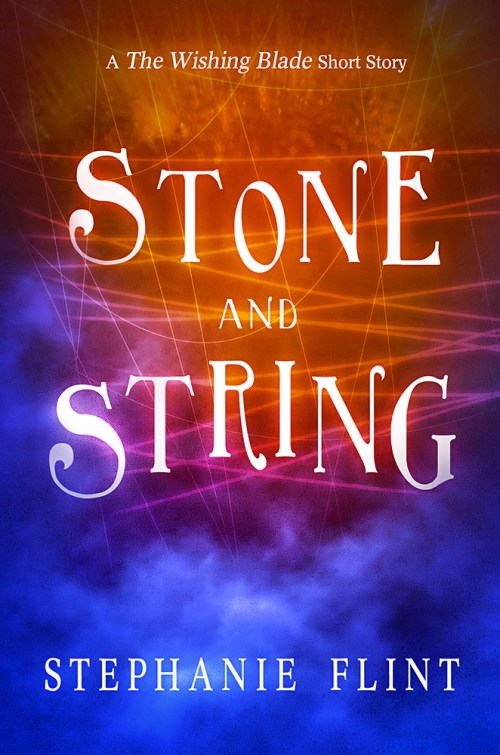
Quick reminder… you can read Stone and String for free by signing up to my newsletter!

* * *

Happy reading and writing!

5 Comments

Filed under Writing

Thoughts on Writing – Trademarks and Evolving Languages

Yesterday at the writing group my husband and I usually attend, one of the writers made a comment about how English is a growing language. They pointed out that it constantly shifts and adds new words, whereas other languages are stagnant and are ruled by a constant number of words. This caught my interest, so I thought I’d do a little bit of research on the topic.

Though my research didn’t go quite the way I anticipated, I focused on new influencers to a language.

The National Science Foundation website mentions in their article on language and linguistics that there are a few things that can influence a change in language. For example, the invention of new technologies can bring with it new words (or specifically, the new use of words). The article says, “Plastic, cell phones and the Internet didn’t exist in Shakespeare’s time.” Which, if you think about it, means that time period wouldn’t have had a need for those words.

But what happens when those new technologies develop? The new words have to come from somewhere.

In an article from The Atlantic, they explain the origin of the term ‘cell phone,’ or more accurately, cellular phones. At the time, the word cellular referred to biological cells (still does). What does that have to do with phones?

The network for sending signals to each phone was conceived as being of a cellular nature (check out the article for a diagram). As such, a cellular phone would use a cellular network, and the term was later shortened to ‘cell’ phone.

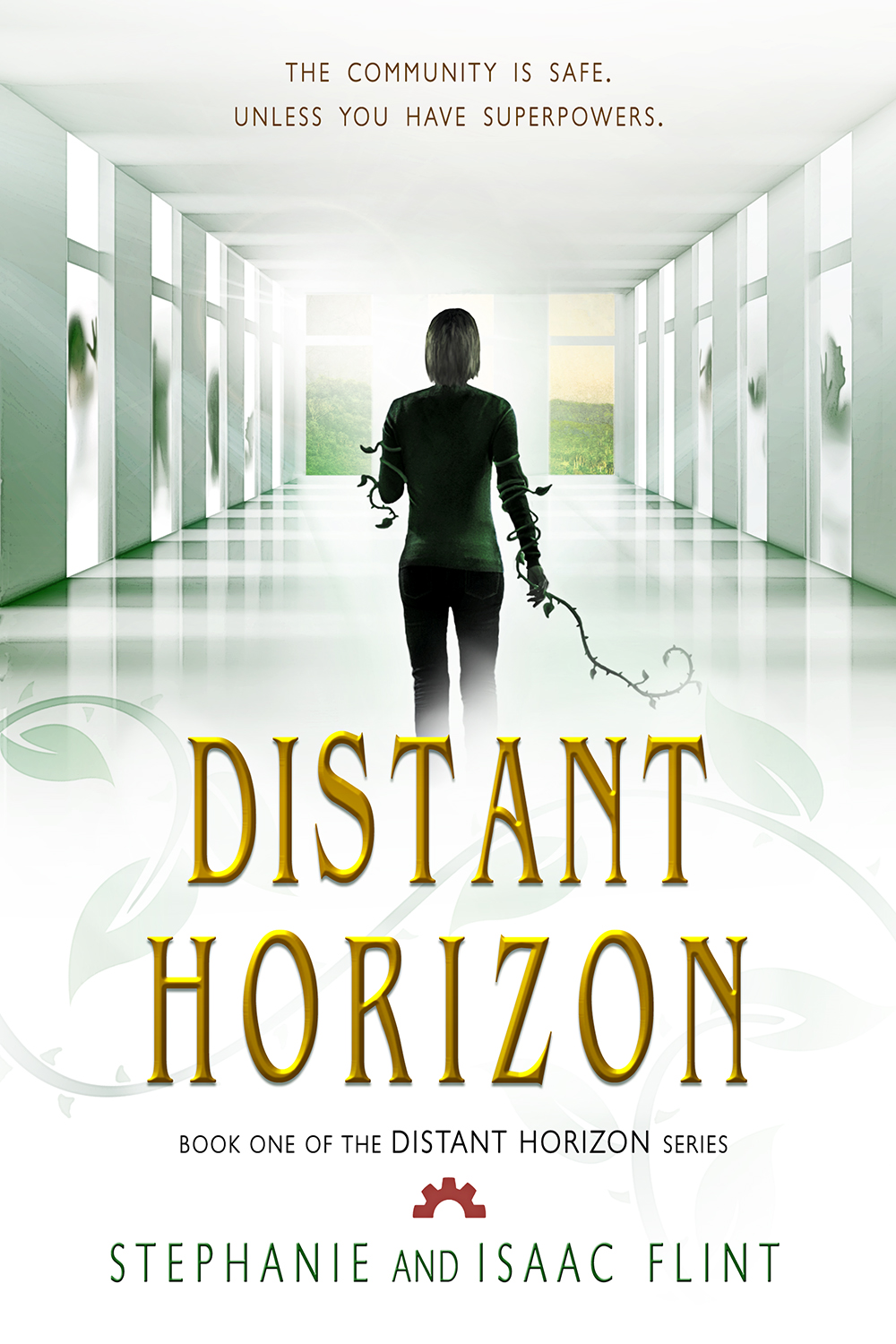
(As a side note, if you are developing a magic system and your story spans over many years, you might consider what developments might influence that magic. For example, in Isaac’s and my Distant Horizon universe, one of the characters has techno sight… the ability to manipulate (digital) technology with their mind. If you go backward to the Multiverse timeline, there aren’t any computers (at least, not that don’t use artificial spirits), so those characters don’t have the techno sight power. Or they might, but it would basically be an unknown power that doesn’t get used, even if it’s in their bloodline for future generations)).

New technology can impact how a language evolves, especially as new terms are needed.

However, when new technology gets involved, so do trademarks. And that’s where things get interesting. For example, look at the the Xerox photo-copying machine. How many people might say “I’m going to xerox that…” turning Xerox, a trademarked brand name, into something generic… (despite attempts to keep in it in their grasp).

If you look at the name, Xerox is the brand, whereas their product is a photo-copying machine. Note that photo-copy is a combination of two words to describe what the product does. But as people became familiar with the product, they turned Xerox into the verb, and thus a new word (or at least a new meaning to the word) was born. HighNames has an article regarding the origins of Xerox, and it turns out that Xerox pulled their name from a combination of Greek words… xeros (dry) and graphia (writing). If xerox, from xeros, now means ‘to photocopy,’ we can see how influences from other languages, plus the change over time, shaped a new word. (Read more about generic trademarks here).

Even now, companies fight to keep their trademarks intact. Google (to use a search engine, originally pulled from ‘googol,’ the number ‘one’ followed by a hundred zeroes). Kleenex, technically a brand name, but now often used to mean a tissue. (“Go grab me a kleenex.”) This is yet another example of a company having to work to keep its trademark intact (This article from The Atlantic has some great examples of companies trying to protect their trademarks). Yet another example of how a trademarked brand has become (or is on it’s way to becoming) a common word is Coke, in which a Concurring Opinions article mentions people asking for a coke (referring to soda in general) and restaurants must distinguish between a Coke or a Pepsi due to trademark legalese.

If you are interested in more information about the evolution of language over time, TED has series of videos about of “How Language Changes Over Time.” I haven’t watched these, but having watched a few TED Talk videos before, I imagine they could have good information.

So how does all this apply to fiction?

Well, if you include conlangs (constructed languages) in your stories, especially over a period of time, you could have fun with changing the language across the generations. Perhaps it’s a company trying to protect their trademark, if you want to stay with the trademarks theme. Perhaps there is a misunderstanding in general. Perhaps there is confusion, if someone from the future tries to explain something to someone from the past. Or perhaps its the opposite. Someone from the past, using an older variety of an evolving language, has a hard time being understood by someone whose updated language no longer sounds the same. (Refer back to the National Science Foundation article for a good example of having a hard time trying to understand an older language).

There’s all sorts of things you can play with, both with fictional languages, and with real languages and real history.

Alternatively, maybe you have a language that is stagnant. One that has only a specific list of words, and that’s that. How do your characters and your society deal with the changes of time? Do they smash words together? Do they struggle to explain technologies? Do they refuse new technology altogether?

Given the way I’ve currently addressed Cantingen word magic in the rough draft of The Shadow War, I suspect their language will be fairly stagnant, with some interesting combinations when trying to explain an object that doesn’t have a specific name or translation.

I hope you’ve enjoyed this post. 🙂 Have you thought much about how languages evolve, and how you can use that evolution in your fiction?

Further Reading:

http://www.scientificamerican.com/article/use-it-or-lose-it-why-lan/ – Talks about the frequency of a word compared to how fast it evolves

http://www.telegraph.co.uk/technology/mobile-phones/11274292/Do-you-understand-text-speak.html – Text speech (In this case, also slang, not specific to text) and trying to translate text speech

http://www.telegraph.co.uk/education/educationopinion/9966117/Text-speak-language-evolution-or-just-laziness.html – Debates whether text speech is language evolution or a lack of proper teaching (leans toward the latter, but does bring up points regarding text speech and ease of communication that would have been interesting had they been developed further

http://knowledgenuts.com/2015/10/10/text-message-slang-goes-back-to-telegraph-operators/ – More or less a counter-argument to the above complaints about text speech, which points out that it got its start with telegraph operators

http://dictionary.reference.com/browse/verbing?s=t – A Definition of ‘verbing’

2 Comments

Filed under Writing