Tag Archives: world-building

Using charts to write The Wind Mage of Maijev

Today, I thought I’d take a look at one of the methods I used in writing The Wind Mage of Maijev, the first in the Legends of Cirena series.

This series started with me writing a “segment a week” based on voting from members of the Legends of Cirena Facebook group (now on a semi-permanent hiatus).

My writing partner, Isaac, did quite a bit of world development for the Legends era, especially in regards to the different districts and the shops. While this was meant for a personal tabletop roleplay version of Cirena, it’s also been really helpful for world development. (And I’ve still occasional yanked out the charts he made for reference in later stories that are currently in development).

In this case, Isaac took what I had already developed of Maijev (the general concept for the city, the larger world map, etc.), divided the city-as-a-country into districts (such as the Northern and Southern Quarters, of which the Southern Quarter is the primary area where The Wind Mage of Maijev takes place), and figured out who would likely frequent the region, the kind of prices those stores would have, and even which factions characters might run into.

Here’s a glimpse at the document he created:

Enen’s Study and Zora’s Market are the primary characters and locations I pulled for The Wind Mage of Maijev, though Cross Bones does get a brief reference.

Overall, having these charts has been really helpful in developing the Legends stories, since I can easily look to them to figure out what might be in the area and what sort of encounters a character might have.

For example, Livena, the protagonist of The Wind Mage of Maijev, has mixed feelings about Zora’s Market… especially since they sell a few items that probably shouldn’t be in Maijev. 😉

* * *

See how those charts turned into a story in The Wind Mage of Maijev, (and you can get the ebook edition for FREE from online retailers!)

The Wind Mage of Maijev - Book Cover

* * *

Happy reading and writing! 📖
Leave a comment

Filed under Writing

Designing the Cover for The Cursed Halls of Kalecen

I recently shared my process for designing the cover of The Restless Sands of Neel, and today I thought I might take a look into the steps I took for the next book in the series, The Cursed Halls of Kalecen.

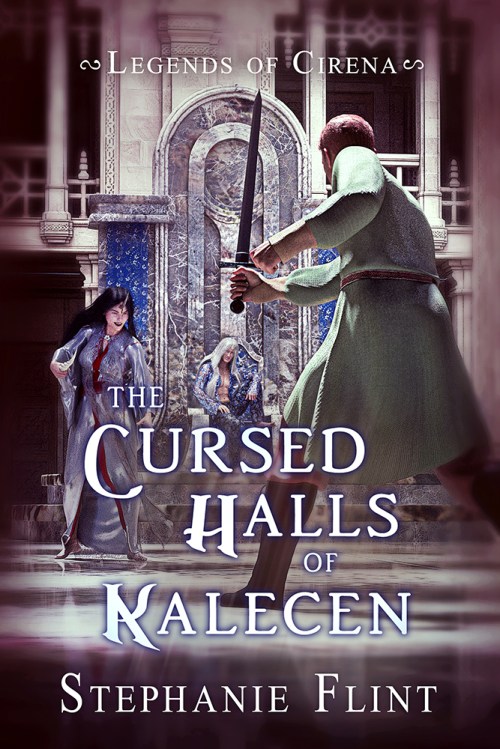
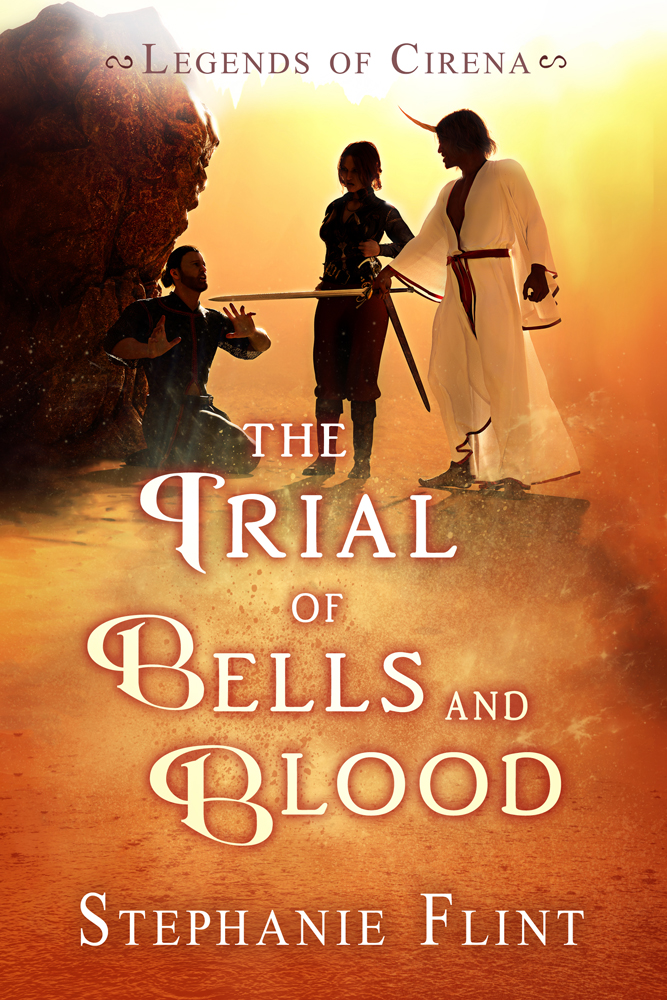
This ended up being the final cover:

The Cursed Halls of Kalecen - Book Cover

I had a lot of fun with this story, since it deals with an immortal creature known in Cirena as a chesnathé.

Long story short, they’re this world’s version of a unicorn… except they’re a mix of the European unicorn and the Asian qilin, so chesnathéme are known for either judging their victims as guilty and killing them by spearing the guilty party’s heart with their horn, or determining they’re innocent and, (if “pure of heart”), granting them immortality.

Thing is, one of the Cirenan gods, Kalecen, has a broken horn and his sense of justice is… skewed. Technically a god of justice, he’s more a god of revenge.

So when the student of a protective duelist, Hahven,foils a revenge plot and incurs the wrath of Kalecen, it’s up to Hahven to shield her from the god’s harsh judgement.

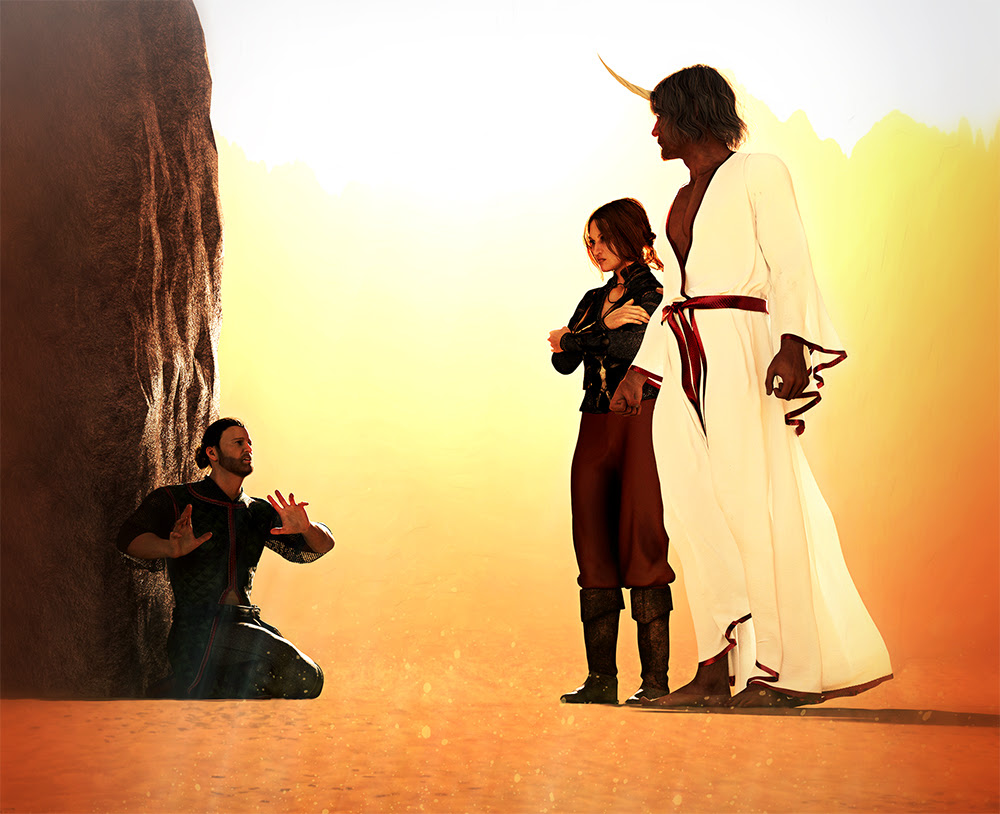
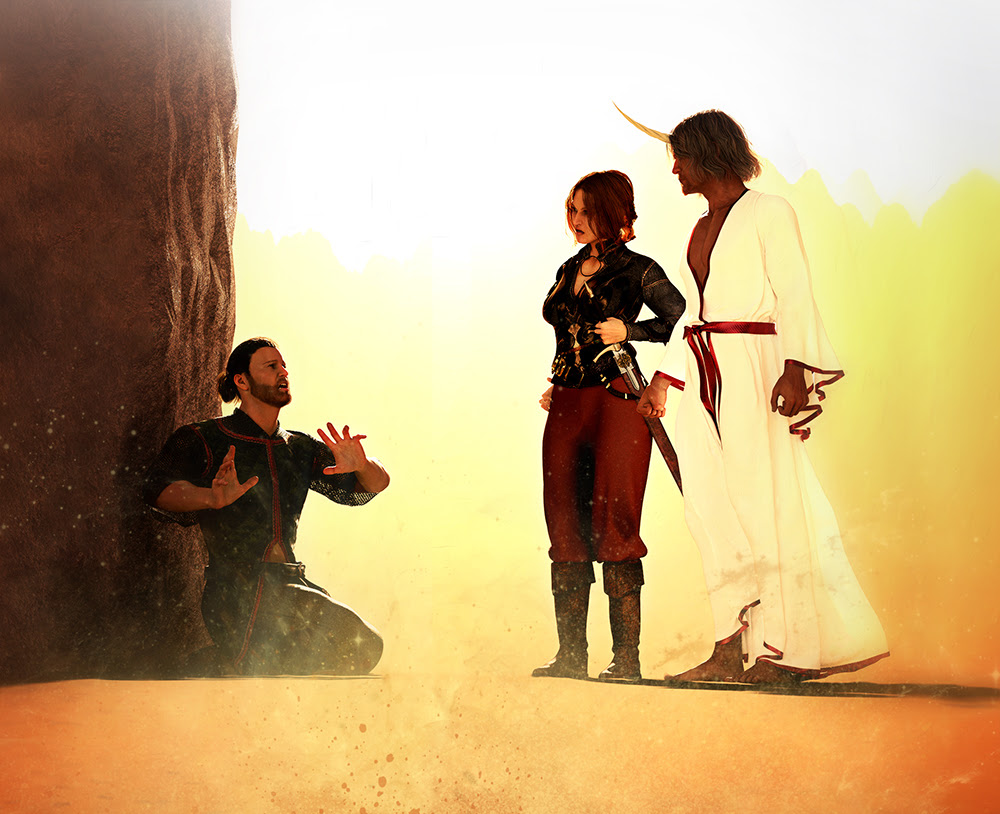
For the cover, I wanted to depict Hahven facing off with Kalecen, but the first few images I rendered seemed far too static, so I ultimately ended up adding the god’s blood-thirsty champion to the picture… and I liked the result a lot better.

Here’s a few of the in-progress pictures:

I used Daz Studio to model the images, and it took several tries before I was finally happy with how it looked. (And a few days of running renders at night to give it enough time to render at a large size without being grainy). The images above are the raw renders, before I took them into Photoshop.

A: The first version. I used atmospheric lighting, which I liked, but it was too dark and Hahven’s pose seemed too static. Not exciting enough.

B. Different lighting method (no atmosphere), and I tweaked the pose so that he would be facing Kalecen better, but it was still missing something. Too static.

C. Added in Kalecen’s champion. Now he’s facing off with her… and he is supposed to be level headed, but… (can you guess what I’m going to say here?) Still too static.

(Noticing the trend?)

D. Brightened the scene a bit more and changed Hahven’s pose. Much more dynamic… but forgot to use DForce on the clothes to get them to lay naturally. Not a fan of the lighting. Also, accidentally angled the camera wrong and ended up with the purple blotch where the floor ended.

E. DForced Hahven’s clothes and now they lay properly. Also added the atmospheric lighting back (but with higher brightness levels). After changing the angle, I was much happier with the result. He’s benefitting from one of the roof’s lights, and it’s also much more dynamic. Plus… shiny reflection, even if you don’t get to see much of it on the actual cover do to the typography.

Ultimately I decided to zoom in so he’d be closer on the cover, but version E was the one I ended up Photoshopping. 🙂

* * *

Read The Cursed Halls of Kalecen and root for a duelist fighting an unhinged god of justice

The Cursed Halls of Kalecen - Book Cover

* * *

Happy reading and writing! 📚
Leave a comment

Filed under Writing

Designing the cover for The Restless Sands of Neel

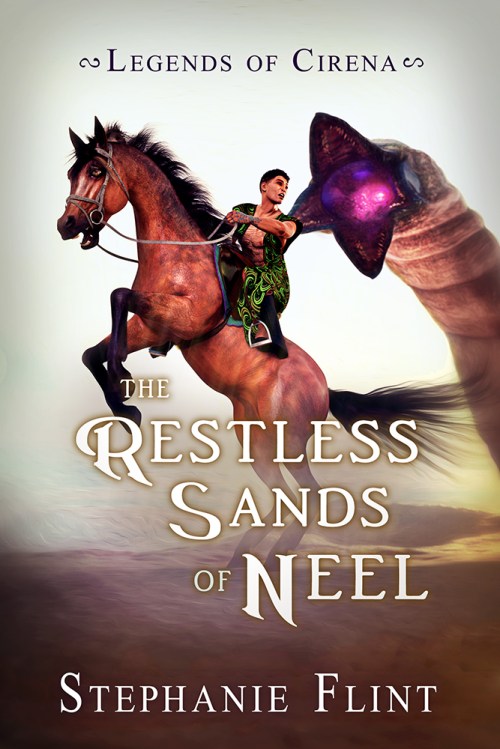
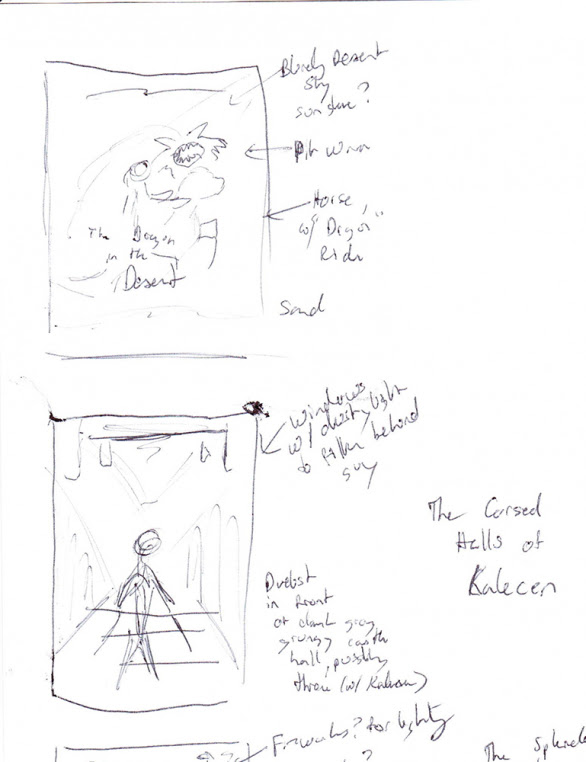
Like many of my cover designs, especially my designs using Daz renders, the design for The Restless Sands of Neel had a major shift from the first iteration to the final.

Sometimes the title changes, too! Originally I was going to call the novella, The Dragon in the Desert.

But, after feedback from newsletter subscribers, I was worried it might disappoint readers looking for a more typical dragon.

Ro’nor, the protagonist, might have descended from dragons, but he doesn’t have wings or any of their special powers, and he can’t shift into their form. The biggest creature we see in the story is a monstrous pit worm.

So… after a bunch of brainstorming, deliberating, and tweaking words to see what else might work, I finally settled on:

The Restless Sands of Neel

Anyhow, here’s a look at the first proof I made for the cover:

There were some changes I already planned to make: a different set of robes/shirt, maybe a different hair once I double-checked what was stated in the story, possibly a different coat pattern for the horse to make sure it’s consistent with the story, and the final touch-ups to make it look like a polished cover.

I sent this out, along with the tentative title, to the newsletter, and several readers chimed in with their thoughts and suggestions. (Much appreciated!)

As a result, I ended up making some major changes, two based on making it more accurate to the novella (the horse’s coat color and the main character’s hair style), and I did a bit of work to make it more dynamic and personal (a common problem of mine, for some reason).

And so I ended up with this for the final version of the cover:

What do you think? Did the changes work in its favor?

* * *

Read The Restless Sands of Neel and see how a (sort-of) dragon fairs against a giant pit worm…

The Restless Sands of Neel Book Cover

* * *

Happy reading and writing! 📚
1 Comment

Filed under Writing

A failed gryphon design inspired a short story

The second Legends of Cirena short story I released was called The Gryphon and the Mountain Bear.

And so I figured it would be a good idea to feature a gryphon on the cover.

Now, I create most of my own covers via photomanipulation or through Daz Studio renders (“The Singing Coil” was the exception, being illustrated via ink and Photoshop). But, sometimes, when you try to create a gryphon… the gryphon decides to be disagreeable.

And this was before I had discovered Daz Studio.

Sometimes you try to photomanip a gryphon, and you don’t end up creating a gryphon.

Like… what is this guy? I like him, but he’s definitely not a gryphon.

Needless to say, I had to take a different approach for that cover. However, the experiment did result in an idea for a new creature that can be found in the Immortal Realm, a strange owl-cougar-human-looking hybrid called an armansee.

And so this fellow flew his way into a short story I was planning to write but hadn’t fully plotted yet, one which would eventually be called A Path of Swords and Feathers.

I knew I wanted to write a story featuring Daernan’s father and the adventures he went on after he left Daernan and his wife behind to follow the demands of the goddess he serves. And with this strange creature as inspiration (and with me listening to a lot of filk–fictional folk–songs), the plot for A Path of Swords and Feathers came into being.

Now, whether this immortal is foe or friend… 

Well, you’ll just have to read the story if you want to find out. 😉

* * *

Want mystical, immortal creatures in your short story reads? How about one of these two stories?

* * *

Happy reading and writing! 📚
Leave a comment

Filed under Writing

Where’d we get the inspiration for Spectator?

Many years ago, while Isaac and I were enjoying Applebee’s 25 cent wing special (do they do that anymore?) and getting some studying done, we had the joy of running into someone who had read one of our books and seen us at the local comic con.

(*Squee! Recognition!*) ☺️

Anyway, that was awesome.

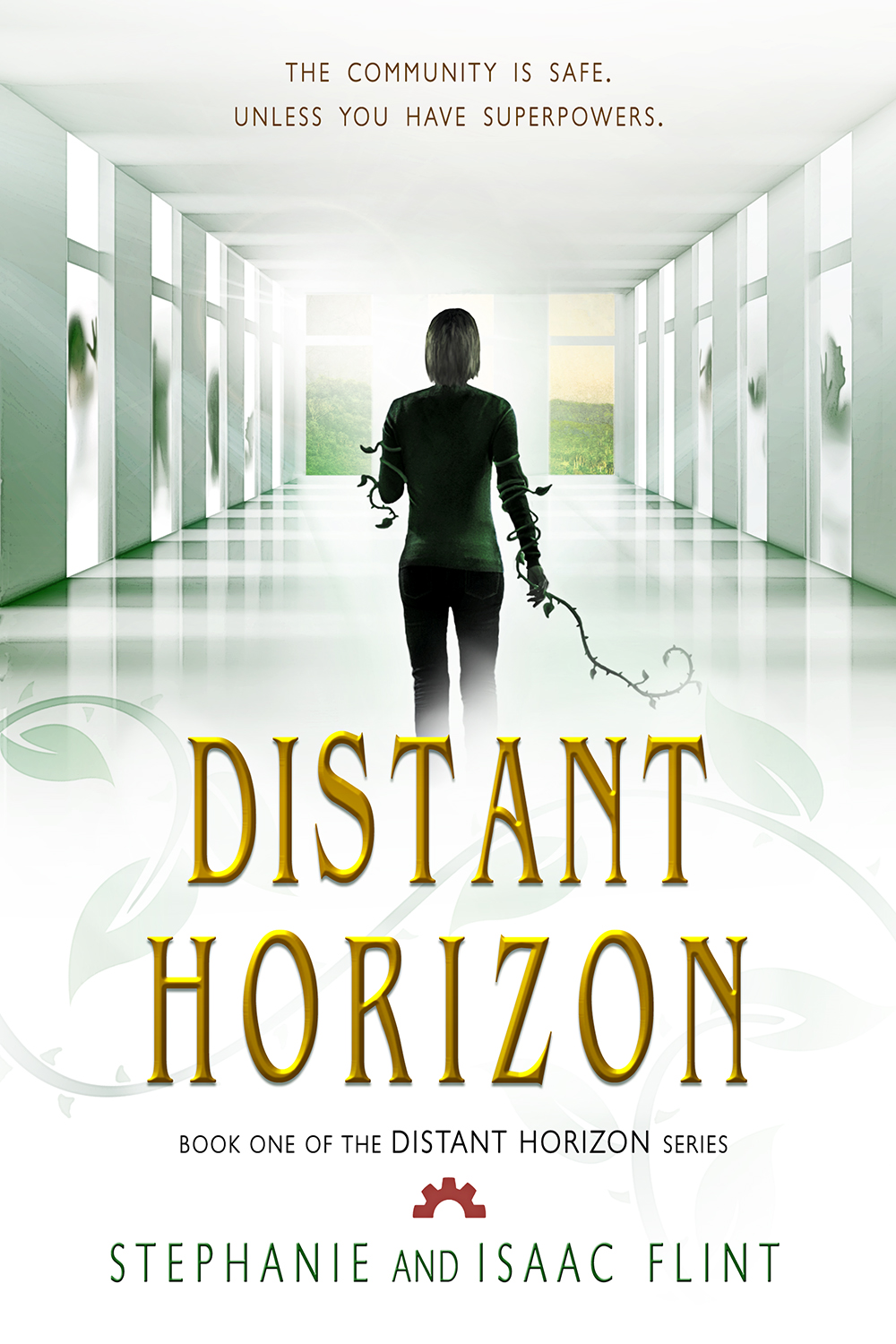
But during our conversation, one of the things the reader mentioned was wondering a bit more about the gamemaster guy and the sea monster he threw at the protagonists toward the end of Distant Horizon, and whether or not there’d be more about him in the next book.

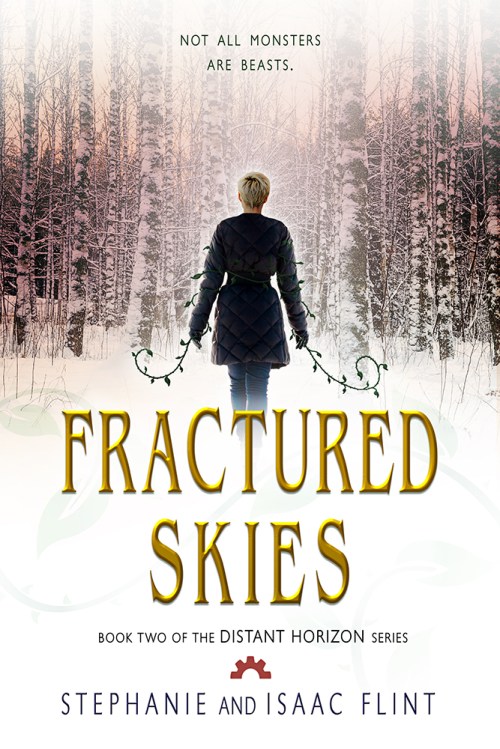
(Spoiler… there is. His name is Spectator, and he plays the role of a minor antagonist in Fractured Skies, and gets a couple mentions in Starless Night. He also makes a brief appearance in Initiated.)

The conversation got me thinking more about that character and his role in the Distant Horizon universe. Isaac and I have gone back and forth into how much of a role he should play (with me usually wanting to give Spectator a bigger role and Isaac wanting to scale him back… mostly because Spectator has a tendency to interfere with overarching plot points or become deus ex machina. His scenes have gone through a lot of revisions).

Granted, part of the deus ex machina problem might be because that was his original role in the game.

See… I had a tendency to make some not-great decisions for Jenna in the role-play game Isaac and I were playing, and I’d kinda-maybe-sorta gotten her captured by the bad guys with no explainable hope of escape in what was supposed to be a one-shot campaign.

That I very much wanted to see continue because I had questions and I wanted answers.

So Isaac snagged a character from one of my previous campaigns in the same world (but modern day), upgraded that character to Spectator status, and decided this newfound “Spectator” was going to make sure the game continued (see “fourthwalling,” below).

So Spectator does a bit of timey-wimey/alternate reality manipulation to make sure certain events can now happen, and the last scene of the one shot campaign got a teensy update.

And Jenna’s team is now able to come to her rescue.

(And we did a ton of work in the novels to make sure his involvement makes sense and doesn’t read quite so deus ex machina-y.)

And once we’d done a bit more work, we determined that Spectator is kind of like the “Q” of the Distant Horizon Universe (Q from Star Trek, for those not familiar). Spectator is not quite omnipotent but close, well aware of things he shouldn’t be, and mischievous. He can put just about any character who knows who he is on edge. He’s a reality bender, capable of changing the world around him to suit his whims, at least to an extent, and he’s also a fourthwaller, meaning he believes he’s part of game world of sorts, and thanks to his insight, he can break through the walls of that world.

Within the Distant Horizon universe there is a cult of fourthwallers who believe their world is controlled by two gamemasters, and that, in order to maintain their existence, they must be as interesting as possible to hold the attention of those gamemasters. Unfortunately, this means that if they lock in on somebody they think is a “player character,” they’ll cause them worlds of trouble in an attempt to stay in the gamemaster’s focus.

That’s all fairly meta, though, and most of the characters simply try to avoid fourthwallers when possible, dismissing them as crazy. Jenna, having come from the Community, has no idea these people exist until Spectator shows up. The rest of the rebels, once they realize he’s a fourthwaller and getting involved, are quick to research everything they can about him… all while trying to keep mysterious artifacts (the ones that lead to the sea monster showing up during Distant Horizon— it actually wasn’t Spectator’s fault) out of the hands of their rivals.

Spectator’s role in the story is explained more in Fractured Skies, so I’m going to avoid delving too much into that since that would be spoilers. But I hope you find him as interesting as I do.😁

Eventually, more will be revealed about the role of reality benders and fourthwallers, a trope I have readily enjoyed both in shows like Star Trek, involving Q, and in superhero stories, like X-Men.

Long story short, Isaac and I are both fans of Star Trek (For me, Voyager was long my favorite, though my first experience came from Next Generation, but Lower Decks now might be my favorite among the series, followed pretty close by Strange New Worlds).

Next Generation, however, introduced me to one of my favorite Star Trek characters: Q.

He’s such a fun character, especially paired against straight-laced Jean Luc Picard. It also helps that the actor who plays Q, John de Lancie, is pretty cool, too. (At least from what I’ve seen of him).

Fun fact, if you ever watch the My Little Pony: Friendship is Magic series (which has some surprisingly great nods to science fiction, fantasy, and various social themes you might not expect), Discord (a chaotic character of that series) is played by John de Lancie. The show’s writers wanted to get someone who could pull off a Q-like character. The people in charge of casting decided, why not ask the original actor, just in case? According to one of his interviews, he was a bit surprised, but went ahead and agreed to the role… meaning that a few iconic references to Q from Star Trek landed in MLP.

Also, the actor was one of my favorite panelists at a Star Trek convention I went to when I was in high school, and he was really friendly at answering my teen self’s questions about acting and directing. Plus, he can direct a pretty good radio play (I had the fortune of seeing that in college).

All righty… I digress. 

Point is, I think Q is a cool character, so of course that made its way into characters I enjoy writing.

* * *

See how the meddlesome Spectator gets involved in the Distant Horizon universe…

* * *

Happy reading and writing!

Leave a comment

Filed under Writing

Creating the Cover Art for The Wind Mage of Maijev

I’ve been rummaging through my older newsletters for blog content (circa 2018/2019), and I came across an email with my behind-the-scenes process of how I put together the cover of The Wind Mage of Maijev.

So, today, I’m revisiting that. 😊

Below you can see the stock images that went into it, and then the final version:

Since the storm plays a major role in the story (including the cause of most of the conflict), it seemed fitting to include that element. Plus, the walls leading to the entrance seemed to work well with the walled city of Maijev. Livena, the main character, isn’t particularly excited about her magic, so I removed the outspread arms, but still, she faces the storm… which she ultimately must face if she is to deal with her magic.

Here’s the final version:

The Wind Mage of Maijev - Book Cover

I used the same photomanipulation technique for the next book in the Legends of Cirena series, The Gryphon and the Mountain Bear, but afterward switched to Daz 3D renders so I would have more flexibility with how I illustrated the covers.

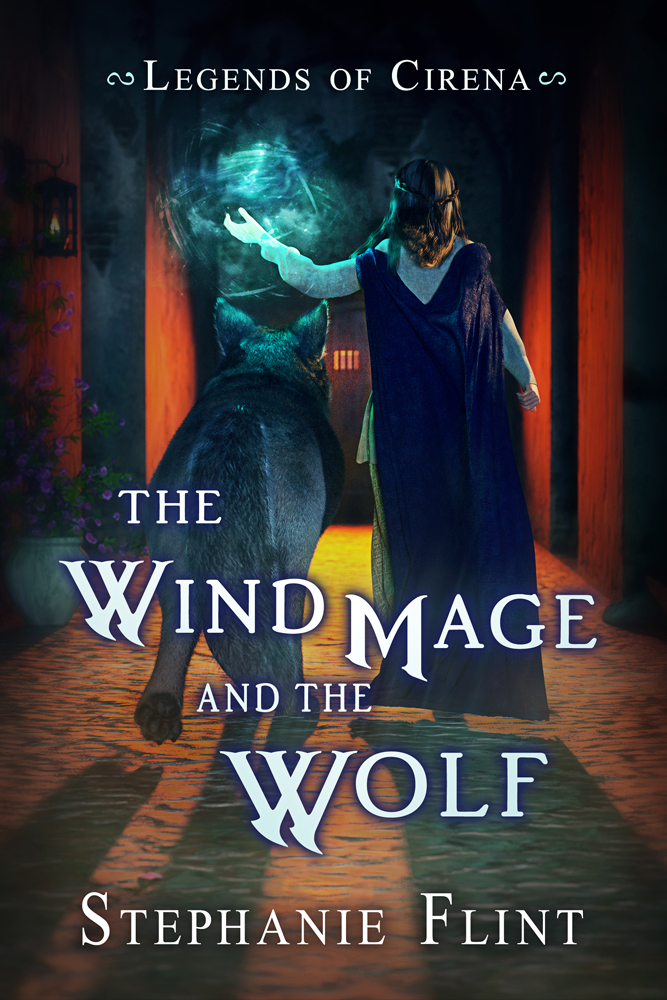
An example of the Daz style covers comes with book #7 in the series, The Wind Mage and the Wolf:

SBibb - The Wind Mage and the Wolf Cover

* * *

As a note… I try to keep The Wind Mage of Maijev ebook available for FREE, so if you’re interested in reading this one, grab it from your favorite retailer!

Amazon (US) | Amazon (UK) | Apple Books | Barnes & Noble | Google Play | Kobo | Smashwords
Our Store

(Just be sure to double-check the price before buying. Amazon especially is notorious for switching the permafree price back to its paid price, since they rely on price-matching rather than allowing authors to set the price to free).

* * *

Happy reading and writing! 📚
Leave a comment

Filed under Writing

Converting a fantasy story to a (very cheesy) stage play

A few years ago, while visiting my parents’ house, I found a stage play I attempted to write during college based on my original version of The Wishing Blade series.

It was cheesy.

Really cheesy.

But it was cool seeing which plot points changed and which ones had remained surprisingly similar to the final, published version of Magic’s Stealing and The Shadow War (originally part one and two of the same book).

When I first started writing the story that would eventually become The Wishing Blade series, it was in 2003. (I did a lot of plotting in eighth grade choir).

Eventually, the story got shelved during the later part of high school and college–except for a playwriting class where I decided to try reworking my story idea into a screenplay. While I think I got a decent grade on it, looking back now…

There was way too much going on for a stage play.

However, it was one of my first successful attempts to fully rewrite the original draft and re-envision the story as a whole.

As such, it was fun to read through sections of the play’s draft and see which aspects stayed the same from the original story, and which aspects changed. (Even though several things had already changed from the rough draft to the stage play version).

Here’s a look at what the stage play looked like. As a warning, there are spoilers for the current version of the story. It would be best if you’ve already read Magic’s Stealing and The Shadow War before reading this. However, I’ve tried to make annotations that relate to the series as a whole.

I’ve added my comments in red.


SHEVANLAGIY

(Aside.)

So easy to fool him (Isahna) with half-truths. He doesn’t know why Aifa attacked me, and he does not know who the traitor’s son is. Poor Nihestan got into so much trouble, yet still he lives. Better yet, only a few know how I came to be here. Isahna has an idea, yes, but there’s still so much he doesn’t know… unless he does know and he’s pulling the trick over me…

(Aside from Shevanlagiy monologuing, which happens a lot in the stage play version… Nihestan was Shalant’s original name, and he had connections to Lord Cafrash Menchtoteale. Though hinted at in The Shadow War, the “traitor” aspect has not yet been addressed in the current version of the series… though I think there’s a couple hints of this in Magebane).

(AIFA comes on stage.)

AIFA

You like to make things hard on us, don’t you? Here string magic binds you, and maybe string magic will hold you, unlike the ribbon magic of mortals.

(I was actually surprised that I had string magic referenced this early in the story’s development. The idea that something is wrong with Shevanlagiy’s string magic remains in the current version.)

SHEVANLAGIY

If I’m not mistaken, ribbon magic is the magic of the gods, too. Isn’t it?

AIFA

That… that is true.

SHEVANLAGIY

Sure, string magic can hold me for a time being. But how long before my look-alike pulls a trick that unravels this prison?

AIFA

She doesn’t have that kind of power. And she really doesn’t look that much like you.

SHEVANLAGIY

Close enough. Genetic code is amazing, yes?

AIFA

Genetic what?

SHEVANLAGIY

Heritage. I wouldn’t expect you to know. Though, being a matchmaker goddess, I would think you would be more inclined to know than some of the others. Then again, it isn’t like the gods to try multiverse travel.

(Though I’ve downplayed it in the current version of the story, Shevanlagiy’s travel to other worlds was more prominent in the earlier drafts, as was her tendency to befuddle those around her with her other-worldly knowledge. That being said, the concept of Shevanlagiy visiting other worlds starts playing a much larger role in Magebane.)

AIFA

That doesn’t change the fact that you’re stuck here.

SHEVANLAGIY

Actually, it does. But what’s a minor goddess like you doing with the Time Stone? How are you controlling it? Surely it’s beyond your powers.

(Originally, the shodo’charl was called the “Time Stone.” However, with the introduction of “time stones” in the Distant Horizon universe that Isaac and I write, I decided to change the name to the “stone of passage,” or “shodo’charl.”)

AIFA

It… is trying.

(As seen in the end of The Shadow War, the newer version of the story has it that Aifa’s not having nearly the same amount of luck controlling the stone as we see here. It’s a factor that I intend to play a larger role in the fourth book of the series.)

Some hints have already been snuck into the books, and more hints are working their ways into the upcoming stories as well…

Anyway, that’s a look at one re-imagining of the Wishing Blade series, even though that particular version has been permanently shelved.

(That said, I haven’t gotten rid of my idea that ribbon dancing should be used to portray ribbon magic in a theatrical version).

* * *

Read the published version of the series…

* * *

Happy reading and writing!

Leave a comment

Filed under Writing

A Misinterpreted Prophecy

One trope I really enjoy in fantasy is that of the misinterpreted prophecy.

Where characters are acting on a belief that a prophecy is going to go a particular way, but there’s a crucial misunderstanding somewhere in the usually archaic-sounding and ominous poem or lyrics. *Squee!*

Whether the misunderstanding is because a word or phrase gets passed along incorrectly or something gets lost in translation, it’s a twist and a trope that makes me happy.

(Not to be confused with misunderstandings between characters as the driving force of drama, which drives me nuts.)

My first encounter with the misinterpreted prophecy that I can remember comes from the book, The Sight, by David Clement-Davies. I adored both that book and its sequel, Fell, when I was in high school. (Or was it junior high? Might have been junior high for The Sight and Fell in high school, come to think of it). I enjoyed the books enough to create a dramatic interpretation from Fell for my speech and debate class.

The one time I ever took home a second place trophy at tournament was after winter break when I, having read Fell during break, loved it, and decided to cut a piece with reference to the prophecy in the intro, plunged into memorizing it and preparing it over the two weeks and took it fresh to the next tournament.

I also might have made at least one person do a double-take while walking by because I was out practicing in the hall and was having a lot of fun with accents.

*Ahem*

Anyhow, point is… there’s a prophecy in the series and there is a single word change that completely shifts how the prophecy might play out. And almost twenty years later (wait… it’s been that long?) I can still recite the first few lines of that prophecy based on what I memorized for the interpretation.

So… what does all this have to do with anything?

Well, you don’t think I’d pass up the opportunity to slip a misinterpreted prophecy into one of my stories, do you? 😁

(Okay, okay. Technically it’s two stories but the second one doesn’t have anything published from that series yet).

So, which universe are we talking?

The Wishing Blade Universe!

Now, to be fair, nothing has been full revealed. Technically I planned to reveal parts of this in the next Stone and String novella or its spin-off that ties into the backstory of one of the characters from Magebane, but those have been on hold for so long that it seems more likely you’re going to get bigger hints about it from the upcoming Legends of Cirena story, The Dark Forest of Aneth.

Now…

SPOILERS AHEAD!!!

If you don’t wish for any details regarding the misinterpretation, stop reading this post!
Seriously.
I’m going to be saying what got misinterpreted, but not why or how this affects the story going forward.
Okay with that?
Cool. Proceed with reading!

.

..

What’s the culprit for misinterpretation?

One word: Ralendacin.

If you’ve read the Stone and String series or The Shadow War, you already know that Ralendacin means “the destroyer of worlds.”

(Ralen: world)

(Dacin: to destroy)

However, it comes to the attention of a couple of characters in the eventually-going-to-be-written third Stone and String story that the name is, technically, incorrect. Cantingen, as it stands now, tends to be a very exact language.

But everyone agrees that “Ralendacin” means “Destroyer of Worlds” even though a more accurate translation would be “Ralenme’Dacinllah,” or, alternatively, “Dacinllah so Ralenme.”

(Ralenme: worlds)

(Dacinllah: one who destroys)

Therefore, perhaps, the prophecy foretelling of the coming of Ralendacin might not be entirely accurate. And if that name was translated incorrectly, what else might the translators of the prophecy have gotten wrong? And why have so many people mistaken the meaning behind the prophecy?

Some hints have already been snuck into the books, and more hints are working their ways into the upcoming stories as well…

* * *

Ralendacin is the mastermind behind the inciting incident of both these stories… but her lore goes far deeper than any of these characters yet know…

* * *

Happy reading and writing!
Leave a comment

Filed under Writing

The Sinister Ribbons of Magic’s Lure

The primary magic we see in The Wishing Blade series is ribbon magic. Today I thought I’d showcase the sinister maroon ribbons of magic’s lure.

Magic’s lure is a rare form of ribbon magic with the power to command people to do a mage’s bidding. Unlike the telepathy powers in the Distant Horizon universe, it doesn’t actually change the target’s mindset… it’s physical.

But some people are more aware than others that they’re being affected. It depends largely on how closely the command matches with what they already want, and what other external factors might distract them from recognizing what’s happening.

Few mortals have access to magic’s lure, and Daernan (one of the main characters in the Wishing Blade series) is one such mage. He keeps his power hidden, knowing most people equate magic’s lure to being a power of the Trickster, Isahna, a nefarious, ill-favored god. Worse, since Daernan has royal blue shapeshifting ribbons, which are also a favored magic of the Trickster, he’s occasionally accused of being one of the god’s pawns… though that couldn’t be farther from the truth.

Daernan would prefer to avoid using magic’s lure when he can. Still, it has its uses, and when time is of the essence, he’ll sometimes bend that rule.

Here’s a scene from The Shadow War in which Daernan and his friend, Siklana, are trying to get past a stubborn secretary to deliver an important message, but Siklana’s diplomatic attempts are failing miserably.

Siklana raised an eyebrow. “I am not going anywhere if this buffoon will not permit me speak with Marquis Eornayan. I’ve tried reasoning with him. I’ve tried listing my family credentials. I even tried giving him an exact time schedule of when the shadows are likely to arrive, and he still won’t listen. I don’t suppose you want to try your charms?”

“Not really,” Daernan admitted. But considering the glare the secretary gave Siklana, and the quill the secretary had snapped a moment ago in frustration, Siklana wasn’t getting in on her own.

He sighed. Siklana knew far more about court manners than he did, but he knew enough that he could manage an upper class attitude when he needed to, and he did have magic that might get them inside. He hated using it, but they only had a short amount of time remaining before the shadows got here…

An uncomfortable lump formed in his throat, but he returned to Siklana’s side, put on a proper pose, and added just a bit to his height via his shapeshifting ribbons. He offered the secretary his hand. “I apologize for the behavior of my assistant, good sir. I am still familiarizing her in the way of the court.”

Siklana’s jaw dropped and her cheeks blushed a furious red.

Play along, he sent, and I should be able to get us in.

She shut her mouth, though her eyes remained as wide as horseshoes. He didn’t usually communicate telepathically with anyone other than Toranih.

“I am Mage Daernan Nivasha. Please let Marquis Eornayan know that I have urgent news regarding a threat to the sovereignty of this excellent city. While I am willing to wait until his earliest convenience, I should note that an attack by the same cursed trickster who stole the magic of Cirena may be imminent. It is of the utmost importance that we speak with him.”

The secretary parted his mouth in a soft “O” and a tiny, fluttering maroon ribbon finished working its charm. The secretary smiled apologetically. “Just a moment. I shall alert him.” He shuffled from his desk, discarded his broken quill into a wicker basket on the way out, and then slipped between the giant doors behind him.

“How… how…” Siklana stared at Daernan. The redness in her cheeks had been replaced with a white that resembled that patch in Daernan’s hair.

He lowered his eyes and scuffed his boot on the marble floor. “We’ve got a way in now.”

“When I said to work your charm, I didn’t mean… There is no way you did that with good looks alone,” she hissed. She lowered her voice. “You have magic’s lure?”

He cringed. “Let’s not go announcing that to everyone, shall we?”

“Certainly not,” she murmured. “Everyone else can figure that out for themselves.”

Daernan let out a breath. If anyone else found out, they’d say he really was a pawn of the Trickster. It had taken a long time for him to accept he had those ribbons. He kept them on a short leash. A cage, really. If people hated string mages, they hated magic’s lure equally. “Go on in if they ask for us. I’ll be back in a moment.”

Daernan’s usually a lot more down-to-earth (Down-to-Cirena? Down-to-the-mortal-realm? I should probably decide what their equivalent phrase would be) than the other nobles, but when it comes down to it, he knows how to play the part.

The question, of course, is whether or not that’s going to work in his favor in the long run. Daernan might prefer not to use magic’s lure more than necessary, but the gods have other plans in mind (as we see in Magebane).

Other instances where we see magic’s lure is The Wind Mage and Wolf, involving one of the city guards that the main character, Livena, does not see eye-to-eye with, and as the magic of one of the main characters in the novella I’m currently writing and releasing through the Wishing Blade Universe Newsletter. Both of those stories are set in the Legends of Cirena era, two hundred years prior to the Wishing Blade series, though the latter novella leans heavily into setting up the events that eventually lead to the Wishing Blade era.

Of course, the fun thing about the in-progress novella (currently just titled “the Ferta story” is that it’s also set at a time when Isahna, the Trickster in the Wishing Blade series, is still only a god’s champion. And yes… he still gets to play a role. 😉

* * *

Beware of magic’s lure…

* * *

Happy reading and writing!
Leave a comment

Filed under Writing

The Immortals’ Languages

If you’ve read any of the Stone and String stories or later Wishing Blade books, you know I very much enjoy creating fictional languages. The Cantingen language for word magic is fairly fleshed out with grammatical rules and a good-sized list of words, though it still has a ways to go before being fully functional.

That being said, it isn’t the only language present in the world of The Wishing Blade.

We also hear reference of the the Cirenan language, Ancient Cirenan (mentioned in Magic’s Stealing), the Maijevan language, and the immortals’ languages.

The fun part is that Cirenan is supposed to be kind of like English… a mixture of several different languages. The problem?

I needed to figure out at least a portion of Ancient Cirenan for use in one of the later Stone and String stories.

Since Ancient Cirenan is supposed to be a mix of Cantingen, the immortals’ language, and an as-of-yet-undetermined language (Anethian?), I realized I needed to start delving into creating the other languages of influence… at least the basics.

So, I made notes on the immortals’ languages. So far I’ve got a basic idea of sentence structure, interrogatives, how verbs work, and the phonetics.

There would be too much to cover in one post (though if you want to see my notes on creating the sounds of the language, click here to check out my blog post from 2018), so I wanted to focus on one specific aspect… what the immortals call themselves.

The thing is, the Immortal Realm is fluid… a misty, fog-filled place with different regions inside it that don’t have any concrete position on a map. You could leave the edge of one region, travel through the mist, and arrive at a different region each time, despite traveling the same “direction.”

As a result, there are several different tribes and clans of immortals… beings which often resemble humanoid wolves, giant bears, equines, and other animals, although you also get the occasional griffin, dragon, minotaur… etc. Each group has their own dialect and variant of religion and culture, which results in occasional clashes.

I chose to focus on the primary language of the wolves, the one which has the most influence on Cirena. (Though, admittedly, I’ll sometimes use the same version of the language for the bears, and go with the idea of borrowed phrases or similar development of words).

One of the first things I wanted to figure out is what the immortals call themselves. While a lot of this is still in flux and may change, here’s what I’m currently looking at:

Since the immortals believe themselves to have come from the mist/fog of their realm (the word for “Mist” being “nirrin,” I decided that they would call themselves Mist Children. They live long lives (they don’t typically die unless they are outright killed or if disease takes them), and they have immortal ribbon magic, which is considerably stronger than regular ribbon magic.

The word for child is “cira’ma.” Plural, it becomes “gercira’ma.”

When creating names or special places that have a possessive tendency or description, the two words simply go together, primary noun first, and then the descriptor.

Thus, “Children of Mist” / “Mist Children” becomes:

gercira’ma’nirrin

(I’ll note that the apostrophes simply mean that the vowel sound before it does not merge with the next consonant. Thus, this words sounds something like “gair-cir-ah-ma-near-in.”)

I’ve got a lot more planned for this language, including what they call “created” beings who are still “immortal” but aren’t Children of Mist… but I’ll save that for another day.

* * *

Explore the my different conlangs…

* * *

Happy reading and writing!

Leave a comment

Filed under Writing