(Note: The giveaways above are hosted through BookFunnel. Authors will usually ask for your email address, and in many cases, the author will collect these addresses for their newsletters.)
(Note: The giveaways above are hosted through BookFunnel. Authors will usually ask for your email address, and in many cases, the author will collect these addresses for their newsletters.)
(Note: The giveaways above are hosted through BookFunnel. Authors will usually ask for your email address, and in many cases, the author will collect these addresses for their newsletters.)
Today I thought I’d go into a little more detail about the mysterious time stones.
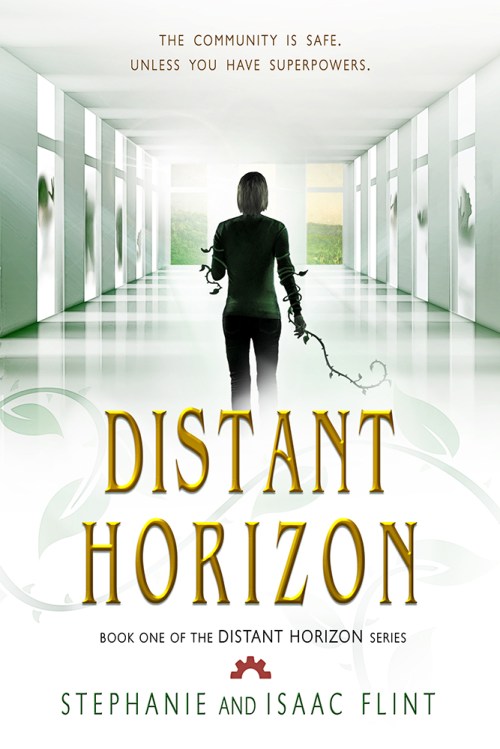
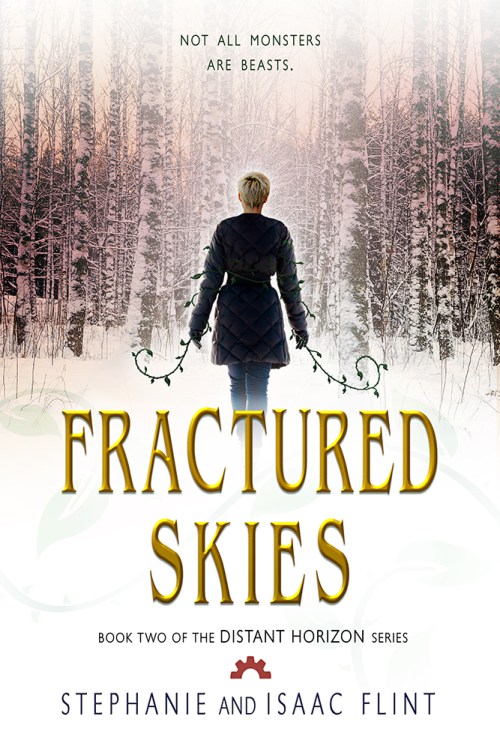
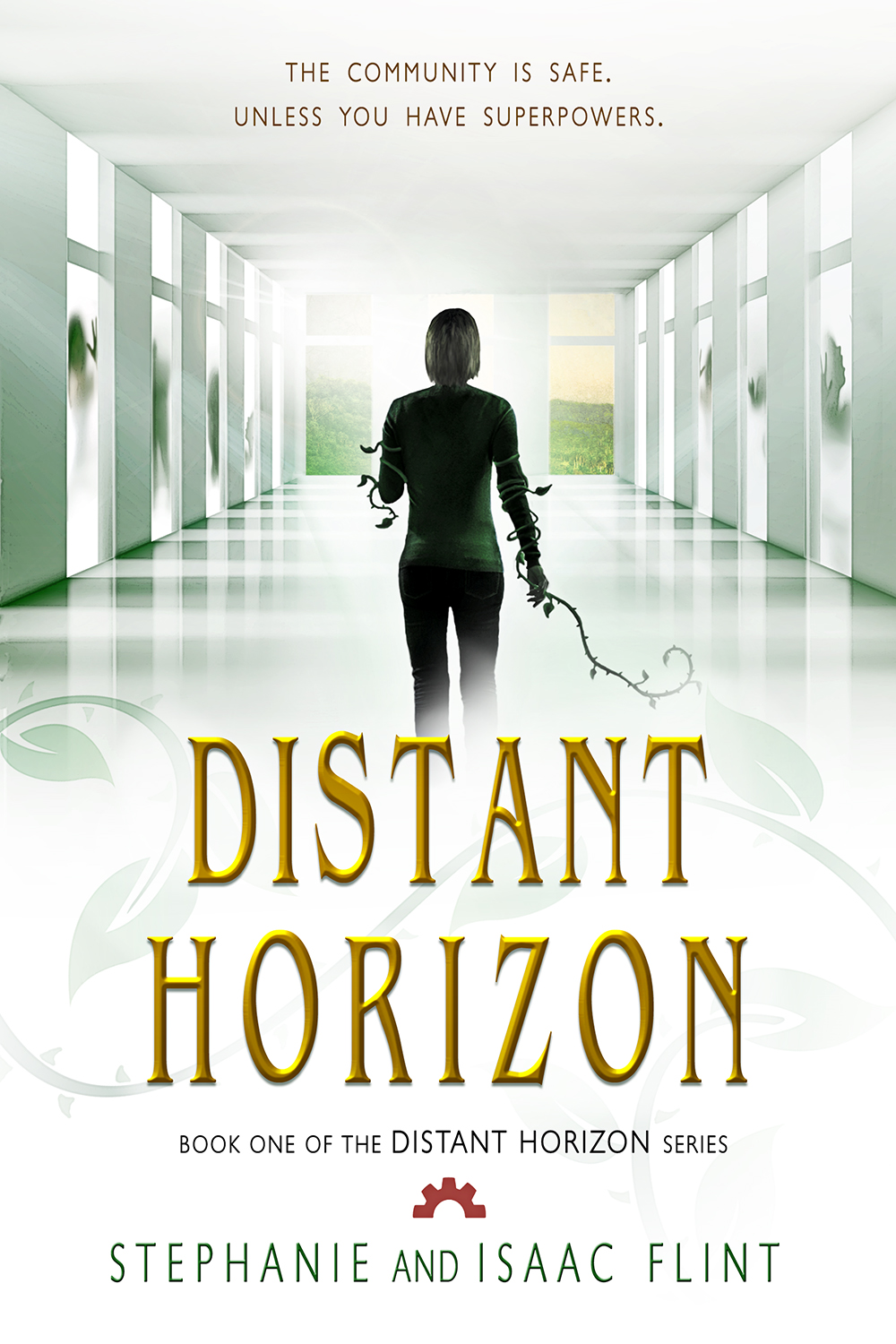
These are the artifacts both the Camaraderie and the Coalition of Freedom are trying to obtain throughout Distant Horizon, Fractured Skies, and the Glitch saga.
The Camaraderie wants the stones because they know how much the rebellious Coalition wants them… and thus the ancient artifacts make good bait.
The Coalition wants the stones because of their theoretical ability to travel time… which means a chance to upend the Camaraderie before they get their start, but also to keep them out of the Camaraderie’s hands.
Though no one is entirely sure if they can travel time (except Spectator, and he’s going to make everyone figure it out for themselves), the stones do have a few properties that have been clearly demonstrated:
Primarily that they have a very powerful spirit guardian… (possibly a constructed spirit, per Jenna’s research in Fractured Skies). There are five different stones with artwork reminiscent of five different cultures (Maya, Inca, India, Japan, and Egypt), and a matching guardian. Not much is known about the origin of the stones, save for them being “Catonian,” at least according to the Camaraderie’s alchemist.
Each guardian, however, has the usual spirit powers (life-spirit, telepathy, telekinesis, and teleportation), in addition to their own unique power set. (Such as the spirit dragon in Distant Horizon being a water elemental). Some of the spirit stuff gets covered in Fractured Skies, but it gets covered a whole lot more in the next book… for reasons. Trying not to spoil the ending of Fractured Skies or the beginning of Starless Night.
Anyway, while these guardians protect the stones, they’re limited to a certain region. Once defeated… if the stone has been moved far enough… they don’t manifest again. (Otherwise, keeping even one of the stones on an airship would be a terrible idea).
The next question becomes… how exactly is anyone supposed to use the stones?
They know there’s something about a “circle of stone,” but which circle of stone? And can the stones really travel time? Or might it do something else entirely?
And if they can use the stones to travel time, should they?
* * *
Collect the mysterious time stones while trying to thwart an evil, superpowered regime…
Have you wanted to try out our tabletop games, but aren’t local? Or maybe you don’t have a second person to play those games with?
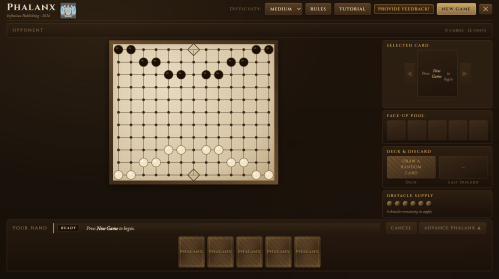
Well, now you can try Phalanx in your favorite web browser!
Now, some quick housekeeping…
The browser edition is in beta. Why? Well, neither Isaac nor I are great HTML coders, so this edition was created using Claude AI, based on the game mechanics Isaac designed, with me doing the work of guiding Claude in bug fixes, game corrections, and making sure the design and mechanics still matched Isaac’s vision.
Which means that it’s still a little… clunky.
Therefore, “beta.”
But it is functional, and has let me scratch the itch of playing the game even when no one else is available to play it with me. 😁
I recommend going full-screen, but it’s available in both web browser and on mobile.
Now a caveat… I’ve only been able to test it on Windows 11 with a Chrome browser and on an Android phone.
But have a go, and please consider filling out the survey linked at the top of the game (click “Provide Feedback”). That’ll help us refine the game in the future. ☺️
Want to know more about how Phalanx came about?
Well…
Originally, Isaac and I had Distant Horizon.
And in Distant Horizon, the characters played a card game called Battle Decks (Originally called Beastie Wars, but that sounded too similar to another franchise).
At some point, Isaac decided it’d be really cool to figure out the mechanics of the game, so he did. He ended up making a few different faction sets, including a steampunk version based on the universe the Camaraderie members (antagonists in Distant Horizon) came from.
And because we can’t just leave a story referenced, we decided to write the story of that universe, The Multiverse Chronicles! (Back in revisions! Yay!)
But then Isaac wanted to come up with a game that made sense for those characters to play, something simple, that they might have at taverns or in small bags easy to tote along while traveling on foot.
And one day I came back from work to a fully-fledged game designed in pencil on a manila folder using pennies and nickels for game pieces and art drawn on cut-up index cards.
We refined the game, then eventually created a boxed edition on The Game Crafter… but that site is really meant for prototypes, and ordering a single copy was expensive, and not quite how we wanted the game to look.
We also created a bag edition, in which Isaac ironed on the game board to cloth bags he sewed, and all the game pieces fit inside the bag. Looked cool, and we sold almost all of those, but they took a lot of extra time since we were hand-sewing the bags.
The other edition we made involved pairing up with a local wood-carver (actually, two, because our first round sold out), and had them create a really elegant wooden board edition.
Fancy! But definitely more expensive, so we were only able to stock a few at a time.
Looked great at festivals, though.
Eventually we had an idea for putting the board game on a mouse pad, but hadn’t found a feasible way to do that until more recently.
But that version is finally complete and debuted at the Flower Moon Spring Market back in May! Woot!
Even so, all those versions were limited to what we could do locally.
We kind of tinkered with the idea of a computer version using a program called Tabletop Simulator a while back, but didn’t get far with it. And then came Claude AI.
I’d been working with Claude for a bit on other projects, but if you know much about Claude, it’s known for coding. And at some point I asked, “If I gave you the rules and art and details for a game we made, could you make a computer version?”
Said yes, so I tabled that idea until I had a chance to gather the pieces.
Eventually I started up that chat, worked through a few details with Claude, and *mind blown.* Didn’t take much to get a working prototype of the browser game running.
After more tinkering and testing, we finally got the browser version to a point that I decided it was ready for its first reveal. I sent it off to the Distant Horizon Universe newsletter!
And now, finally, I’m doing the public reveal.
I expect there will still be bugs, though I’ve done what I can to smooth anything out that I’ve found. But I would love for you to have a look, give it a try, and let us know what you think!
(Note: The giveaways above are hosted through BookFunnel. Authors will usually ask for your email address, and in many cases, the author will collect these addresses for their newsletters.)
Since I was talking about updating the Whispers in the Code cover a couple weeks ago, today I thought I’d do a behind-the-scenes bit about the Glitch series. While I was in the process of writing Glitch, I’d often run the scenes in my head multiple times to get a feel for the surroundings, what was present in the environment, and what Tim might be feeling. There were a few scenes, though, that I particularly enjoyed writing.
First… the “Bedtime Story” sequence.
It’s starts out innocent enough (and a result of a glitch), and progressively gets more and more creepy as the Legion Spore begins to morph its surroundings to match the story of the Boy Who Cried Wolf.
“End recording and transmit.”
Yes, Master Zaytsev. Is there anything else we can do for you?
I nuzzle the flat pillow under my neck. Uncomfortable, but I’m sure it’s made for simplistic support. “No. It’s bedtime, now.”
Would you like us to read you a bedtime story?
“What?”
You like this one, remember? You like the story of ‘The Boy Who Cried Wolf.’
I sit up. The Legion Spore’s voice is different. It’s still clipped, not quite oriented, but its inflections are not the same as the artificial voice I heard all afternoon. “Bedtime story?” I don’t remember programming it to read bedtime stories—unless Benjamin has an unspoken interest in oral literature.
Once upon a time, there was a foolish little boy who stood guard over the shepherd’s sheep. The shepherd told him, ‘If you ever see a wolf, son, with large gold eyes and strong sharp teeth, you must immediately call for help.’ The little boy listened closely, for he was mischievous, and full of play.
The hairs rise on my arms. This doesn’t sound like the AI at all. “Legion Spore—acknowledge me.”
The shepherd knew of the little boy’s tricks, so he gave him a stern warning. ‘You must never cry wolf if there is none, for when the townspeople come running, they will be angry if you have disturbed them for nothing. Promise me, son, that you will be honest, and call for help only if there is danger.’ The little boy agreed with every bit of passion he could muster, and the shepherd went on his way. Do you know what happens next?
I shiver. Yes, I know the fable, but this isn’t right. “Legion Spore, I do not want to hear a story.”
The first night, the little boy did as he was told. But it was all very tedious, and staring at sheep was certainly the most boring task he had ever done.
“Legion Spore!” I push the covers aside and throw my legs over the edge of the bed. I pause. The floor is no longer made of ivory. It’s returned to the basic metal grate, while the walls have lost their leatheriness, now just a soft, fleshy musculature.
So the next night, the little boy did the most exciting thing he could imagine. He cried wolf.
I reach to the vessel with my mind, but the Legion Spore has erected some kind of firewall. I launch myself out of bed. This isn’t good. If the Legion Spore isn’t responding, I can’t command it.
All the townspeople came running. But when they got there, the little boy laughed. ‘You should see your faces!’ he cried. The only creatures in the field were the sheep and their lambs.
I scramble up the ladder, my sweaty fingers clutching the rungs. My fingers slip, but I quickly catch myself. Once on the next floor, I search out the controls on the central command point.
I’m locked out.
A lot of fun to write… though Tim was definitely relieved once he found and removed the source of the glitch.
That said, I think that sequence is one of the reasons I like the Legion Spore so much. For all that its creation is a monstrosity, it also has a certain innocence to it… and is utterly perplexed as to why Tim is so frazzled once the glitch is fixed.
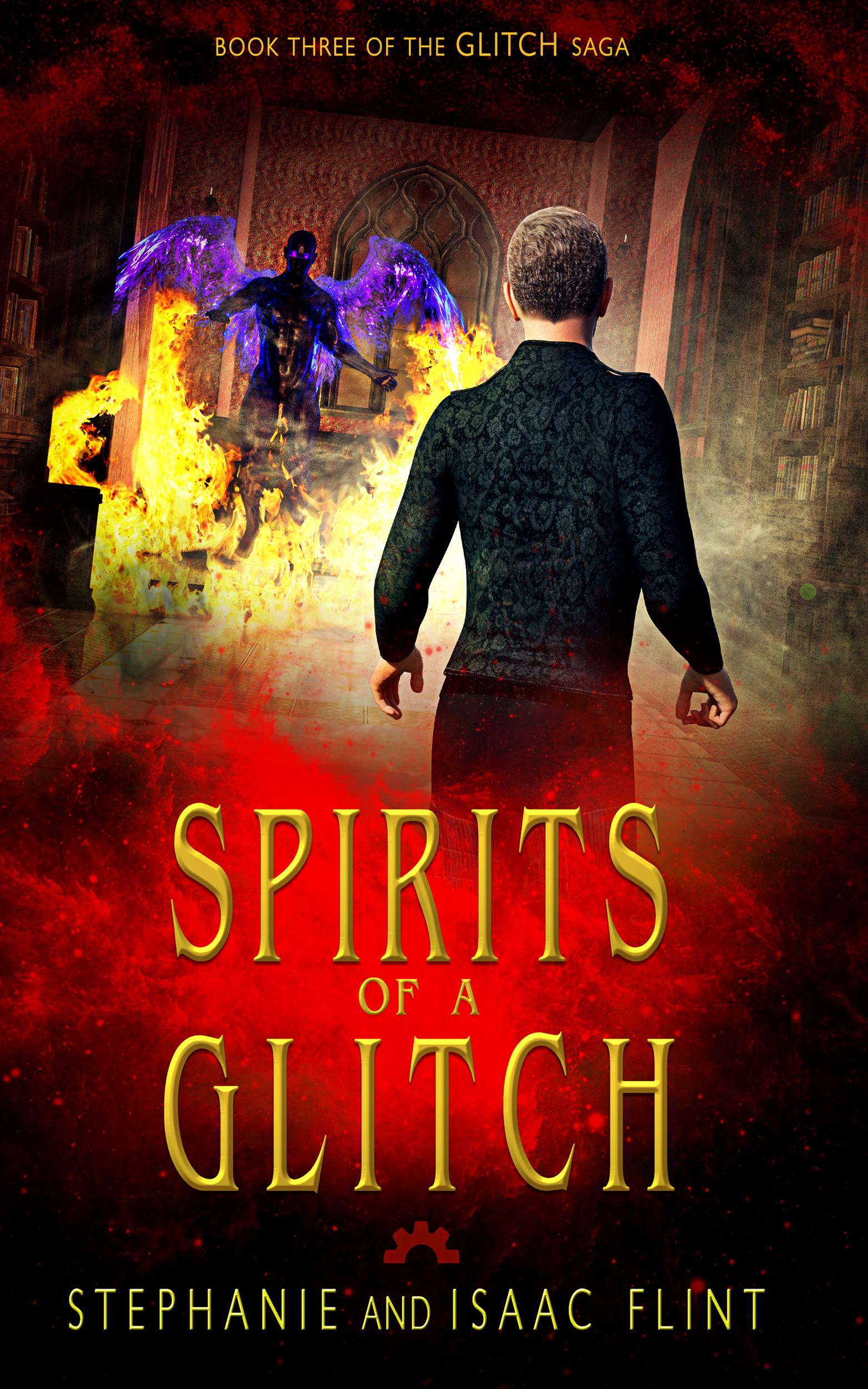
Another sequence I enjoyed writing comes later in Spirits of a Glitch, when the Manticore (a malicious version of the Legion Spore) erases Tim’s memory, trying to gaslight him for its own purposes.
This was particularly interesting for me since I wrote it from Tim’s perspective over the period of time it’s happening… so while the reader can see everything as it happens and the side effects of what’s happening, Tim’s memory gets clipped multiple times before he finally figures out what’s going on.
I’d share that one, but then it’d be pretty spoilery… so you’ll have to happen on that section yourself. 😉
There were plenty of other sequences I very much enjoyed writing, but those two stood out in my mind.
* * *
Read the rest ofthe Legion Spore’s tale of the Boy Who Cried Wolf… (but what happens when the “wolf” knows how keep the “villagers” from hearing the boy’s cries?)
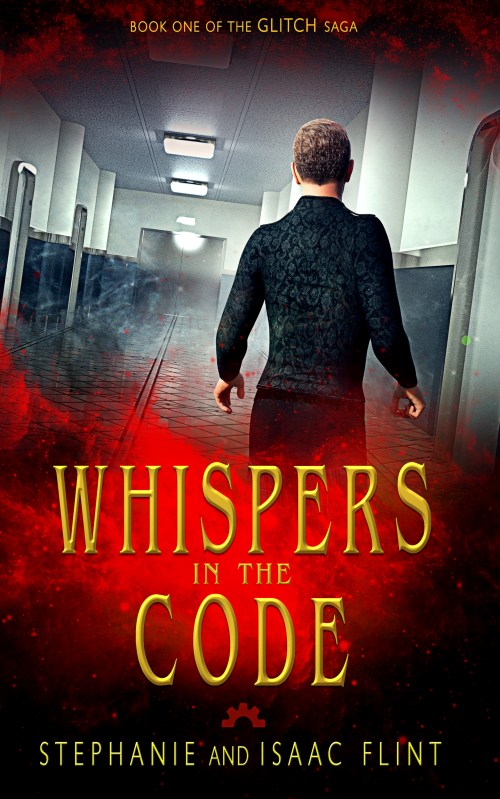
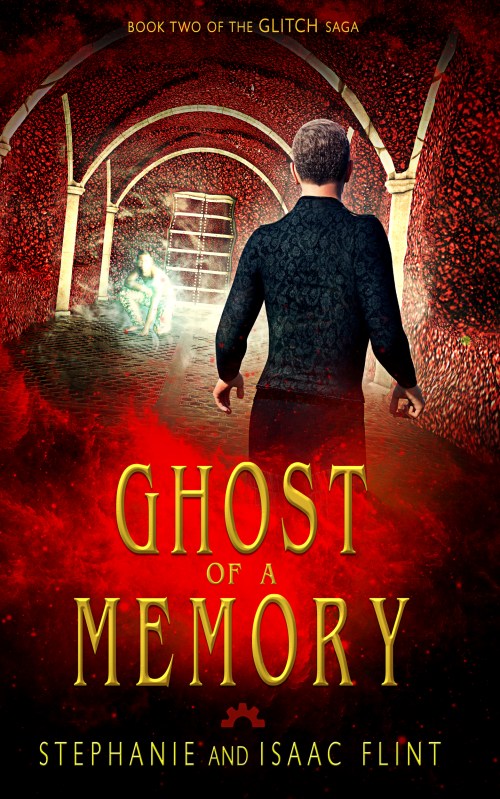
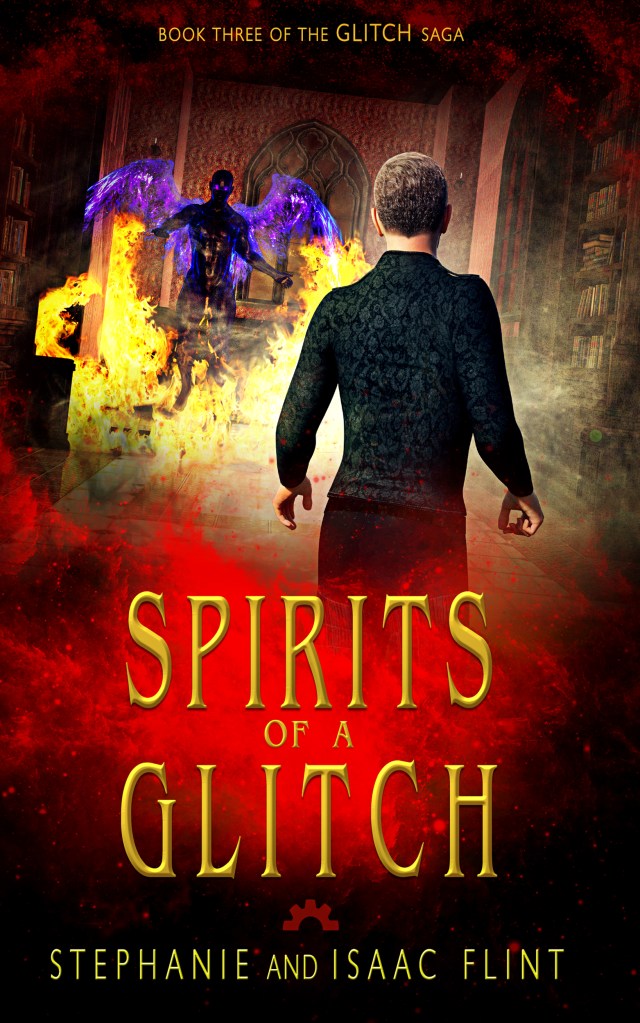
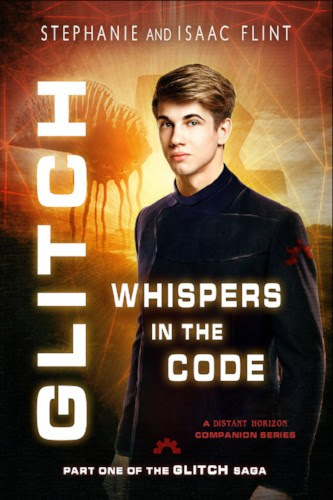
Sometimes we authors like to test different book covers to see if one might resonate better with readers. And Whispers in the Code, being a spin-off from the Distant Horizon series, has been through several iterations in my attempt to signal just what kind of book it is. (Genre-mashup. It’s very much a mashup with a lot going on… though horror underlies the entire trilogy).
Part of the job of being an indie author is figuring out which cover attracts the right readers (or rather, which cover is conveying the genre that best fits your book). It’s something I’ve struggled with for the Glitch saga, because it’s a genre mashup.
While I really like the original cover, I think it might convey more of a space military vibe… which it isn’t. Someone who goes in looking for the tropes of a space military story probably isn’t going to find what they’re looking for.
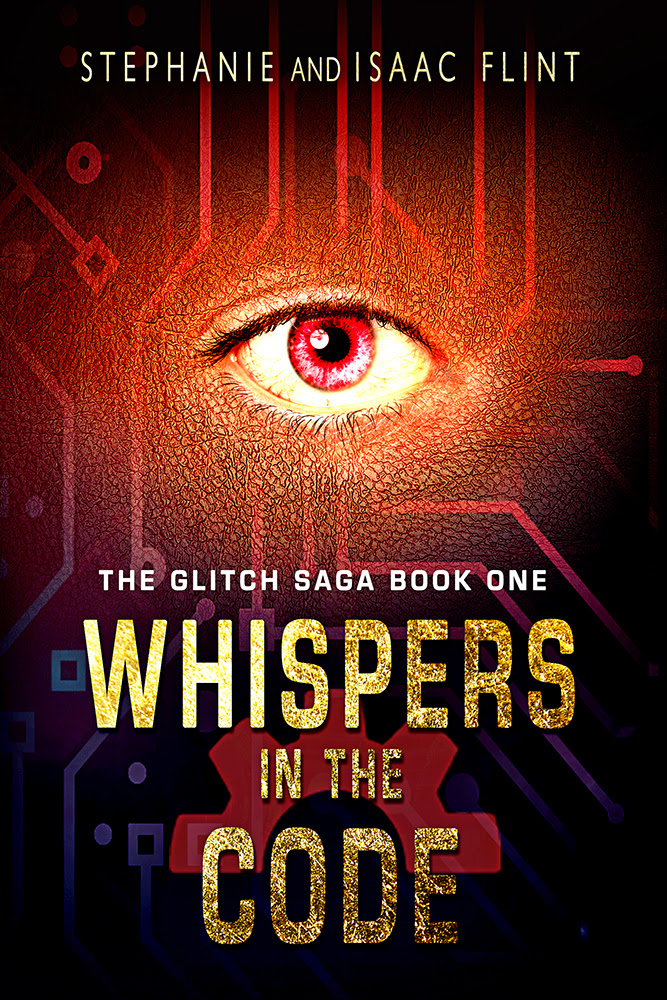
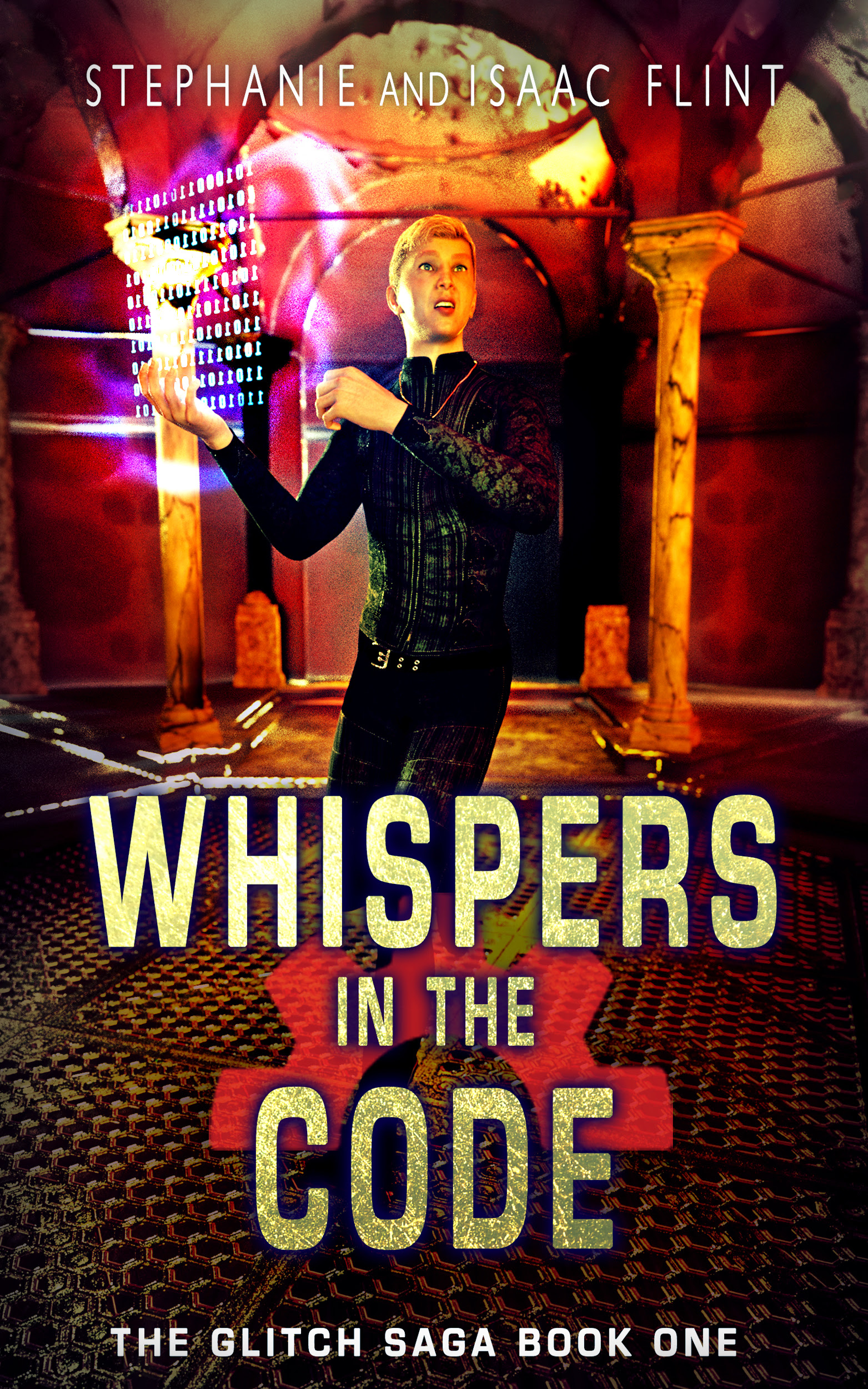
So, around October of 2019, I got the inspiration to test a new cover for Whispers in the Code.
My thought was, depending on how it goes, I’d either change the rest of the series to match it, or switch it back to the original.
Original Cover (February 2018)
Version 2 (October 2019)
While I still really like the newer cover, which I redid in hopes of hitting a more cyberpunk/dystopian vibe, and it did pick up a few more readers in KU (Kindle Unlimited)… it seems that those readers didn’t get very far before they stopped reading (in contrast to Huntress, where they typically finished in a day or two and moved on to Changeling).
Though I didn’t have a whole lot of data to back that up, since Whispers in the Code wasn’t getting many readers, I did wonder if it’s possible that either A: Something was wrong with the book, or B) Readers were picking up the book expecting one thing, and finding something else (such as getting a lot more “magic” or a style of writing that’s more similar to what I’ve seen in YA and urban fantasy than solid cyberpunk).
So…
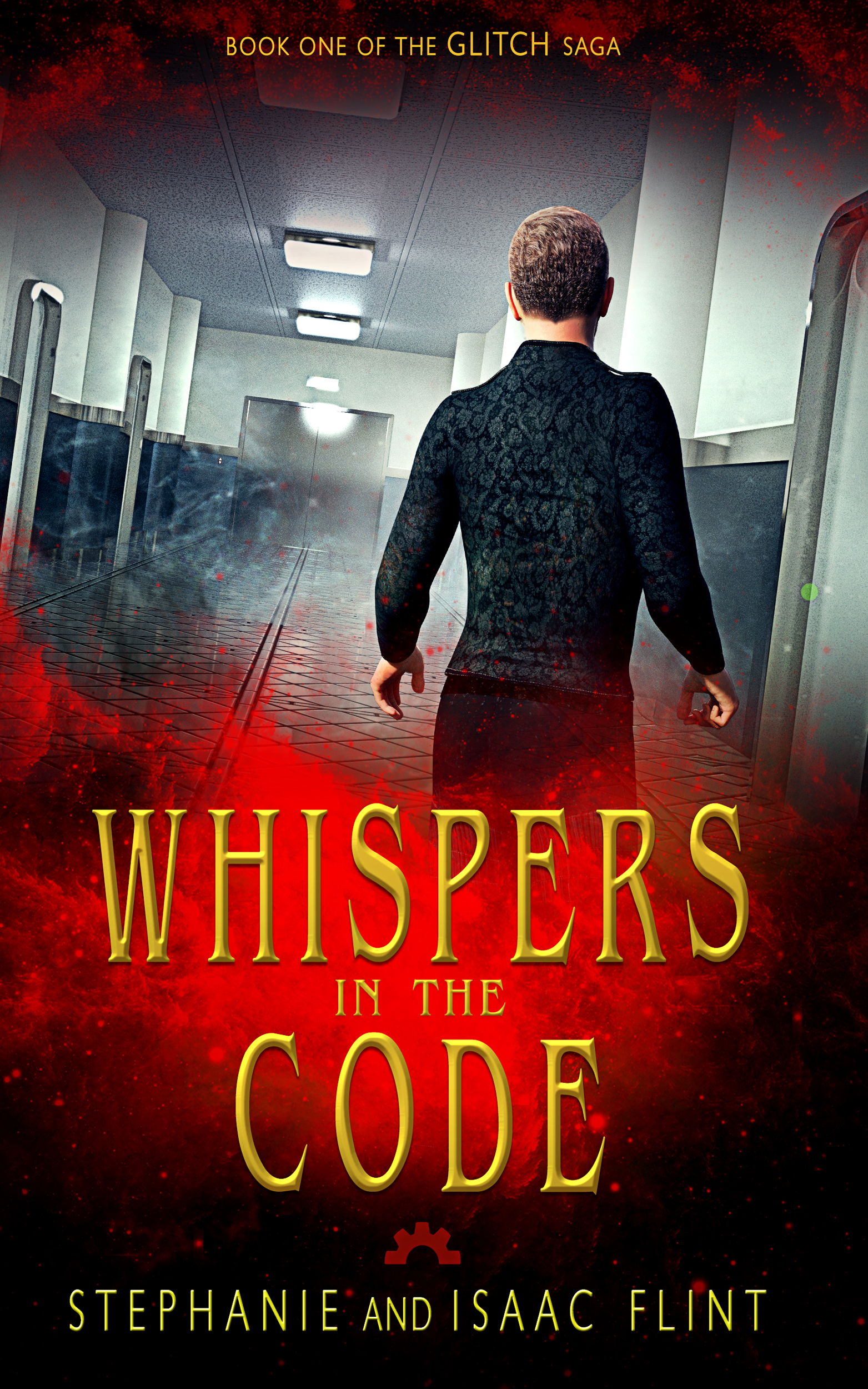
In February of 2020, I decided to try giving another cover a trial run for Whispers in the Code.
I put it together fairly quickly, and there’s a few things I wanted to change if I switched to this cover style for the series. But I hoped to convey more of the horror elements and more of the “magic” sense of things, while still hinting at the fact that technology is present (since it is set in the future).
Version 3 (February 2020)
I left the new cover up for a few months to see if it would get a better response from readers, though I knew I also needed to consider how to drive traffic toward it. I had hoped putting it in Kindle Unlimited would give more people to take a chance on it, but that wasn’t going to help if I’m not targeting the right readers.
In August of 2020, I did one more revamp to the Glitch series ebook covers. While I really enjoyed writing the series, it still hadn’t gotten much attention from readers.
At this point, I attributed that to a few factors:
Wrong cover for the audience
Very cross-genre, hard to market
Jumps right into the action without a lot of explanation
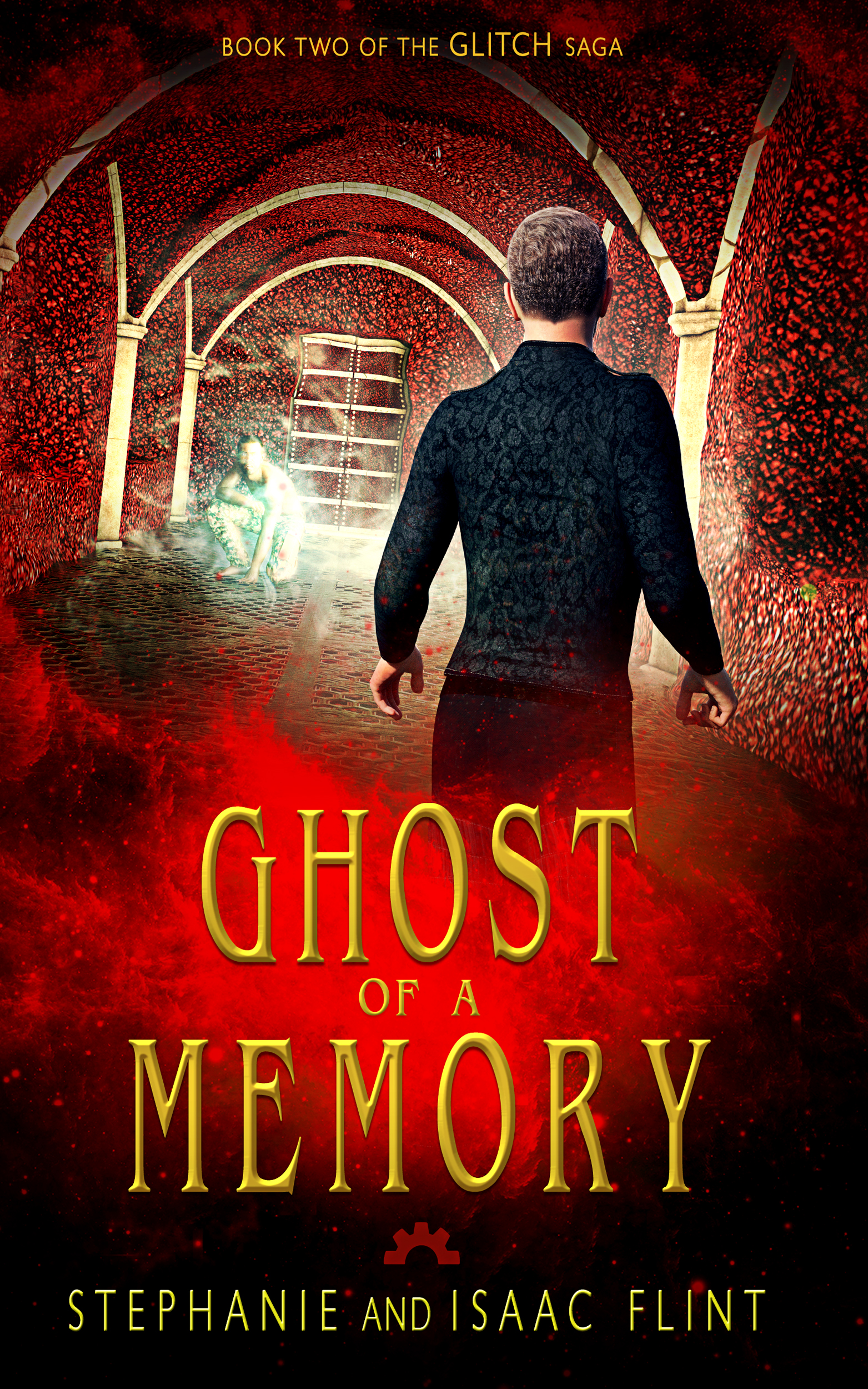
And so the August 2020 cover marked the fourth version for Whispers in the Code. For this version, I drew in part from the style of Distant Horizon, but tried to play up the paranormal aspect a bit more.
I also redid the blurbs.
Though I’m still iffy on the blurbs (and which one is really better might be a blog post for another day), these covers are the most true-to-the-book representations, I think.
(And while I haven’t analyzed the data on the different downloads, especially since for a time they were in Kindle Unlimited before I launched them wide and made Whispers in the Code permafree, I do see a handful of downloads of Whispers in the Code without extra marketing.)
Version 4 (August 2020)
I’m hoping these covers will attract readers interested in science fiction, thrillers, and stories with paranormal elements.
And one of the things about the Distant Horizon universe is that it has a lot of different elements to it. The issue that creates is knowing which readers to target when marketing.
For example:
It’s science fiction… with a lot of technobabble jargon and what-if world building, set in the future of a world similar to this one except that super powers started showing up sometime in the ’50s and an organization of super villains took over around 2012 to 2016.
It’s paranormal… because there are both the technical equivalent of ghosts (the Legion Spore’s glitches haunting the airship), and very literal ghosts (the spirits like Benjamin… a mad scientist who attached himself to an enchanted artifact).
It’s steampunk (actually gaslamp)… because there’s a lot of clockwork type references and aesthetics pointing that Victorian/Edwardian direction–though now that I’m more familiar with gaslamp fantasy, I’d say it’s gaslamp because of the heavier focus on “magic” and secret societies with a mysterious agenda (the Camaraderie of Evil).
It’s fantasy… because there’s a lot of epic type world building, enchanted artifacts, “magic,” lords and ladies, ballroom dances…
It’s a psychological thriller… because of the page-turning, high stakes element and mental games the main character faces…
An important part of marketing is knowing who to target and how to let them know this is the kind of book they’ll want to read. But with so many elements, it can be hard to pinpoint which genre is the best fit to work with (and some authors will switch marketing focus over time to bring in different readers).
This time around, I’m trying to lean into that gaslamp, paranormal sci-fi route… though I’m still not sure I’ve quite nailed that yet.
From a technical standpoint, an issue with the book itself is that it jumps right into the action and doesn’t take time to explain what’s happening, unlike Distant Horizon or Deceived. With that in mind, it may be that this series is better for readers who have already read the other series, rather than starting with this one. It’s a spin-off, and that may be hurting its chances of being read on its own.
*
So there you have it… four versions of the Glitch series covers. Eventually, I want to redo the box set cover. I’ve got ideas… I just need to set aside the time to revamp it.
* * *
Read the books whose covers keep changing…but at least now they match the mood!
(Note: The giveaways above are hosted through BookFunnel. Authors will usually ask for your email address, and in many cases, the author will collect these addresses for their newsletters.)
Sometimes it’s really obvious and you just point at that one and say “That one!”
For all the other times… We’re scratching our heads, trying to think if anything stood out while making revisions.
So when it came to figuring out the title for Galina’s story, we turned to the Distant Horizon Universe newsletter!
We proposed six ideas:
1. The Deception 2. Deceived 3. Quarantined 4. The Warning 5. The Outbreak 6. The Secret
But we weren’t 100% sold on any of them at that point.
So we asked readers:
Knowing that Galina’s story will be a young adult dystopian thriller in the same vein as Distant Horizon and Glitch, and having read the three sneak peeks from these newsletters, do any of those titles stand out to you?
Do you have an idea for a better title?
And we did get a few responses! (Which we very much appreciated).
Ultimately, we ended up settling on “Deceived,” which became part one of Galina’s Saga (which we later just called the “Deceived” series). Because, of course, we ended up having plenty more plot fodder itching to be written.
Which is why we now also have its newsletter-exclusive prequel, Initiated, and its sequel, Betrayed!
And yes. Figuring out those titles was also a pain. But at least we had the convention of the title to work with.
* * *
Now I just have to hope I can remember what I planned to title the next book in the series…