Tag Archives: rough drafts

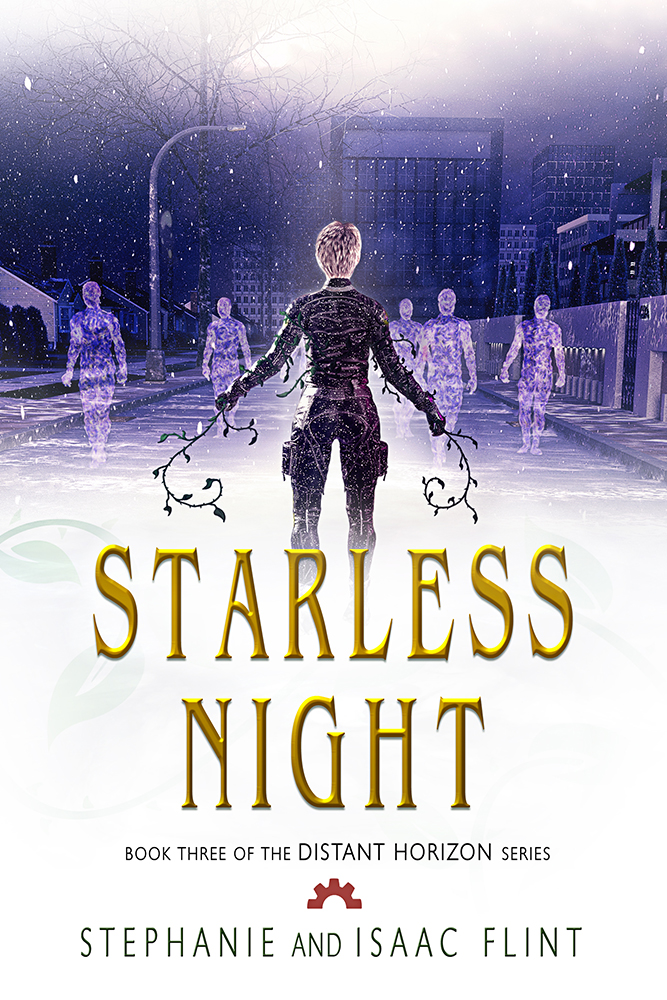
That time I completely redid the outline of Starless Night

I’d been sitting on the outline for Starless Night for a while… partially because I was cycling through projects, but also, because the prospect of the third Distant Horizon book was daunting.

I had a partial rough draft and an outline already written. (See the post from two weeks ago). But that outline was written before Isaac and I made major edits to Fractured Skies, thus changing the shape of where the story was headed.

Characters I thought were going to be dead were now still alive, and characters who lived in the role-play campaign ended up dead. (Still can’t quite believe Isaac convinced me to kill off that character… though it really did make sense for the story). And important plot points were revealed way earlier than we expected, rendering certain scenes in the third book no longer necessary.

Between all the character relationships and faction issues, I wasn’t sure where to start. Originally, I hoped to salvage bits and pieces of the previous draft to work into the revised version. But that seemed likely to cause more problems than help.

I stalled, hoping that writing Deceived would get me back in the swing of writing for the Distant Horizon universe. It did (and accidentally spawned a new series). I now wanted to return to Jenna’s story.

But it didn’t solve the wall I had been running into.

Then Isaac brought up the idea of cutting two very major plots that we had planned for the third book, and condensing the last two books back into one.

At first, I was resistant to the whole thing. I loved some of the scenes he was suggesting cutting, scenes we had discussed and honed a while back.

But…

There’s a saying that writers have to “kill their darlings.” (I kind of despise that saying, by the way). It doesn’t always hold true. But sometimes, eliminating a plot or a scene, or merging two characters, end up making for a better story. Or solves your problems.

I started thinking about Isaac’s suggestions. About eliminating those two major plot points and how it would affect the story.

And… um…

It worked a lot better.

Instead of taking a longer route to get to the climax by looking at various outside forces and their impact on Jenna’s brainseed, the focus is much more strongly related to the issues of Legion’s rise and the downfall of the Community.

Suddenly a lot of foreshadowing in Fractured Skies regarding artifacts, alchemist-enchanters, and the Elizabeth pendants had a direct tie back into the story. And the trimmed version made some of the future plans for this universe tie in more clearly, too.

I really liked the beginnings of the new outline and where it was going.

So I presented some of my new notes to Isaac and we began bouncing ideas off each other again, rather than coming to a stalemate about where the story should go.

So I decided to scrap the entirety of the previous rough draft. It exists as writing practice and helped to flesh out the world, but it was going to be simpler to start book three from scratch.

And that’s okay.

My hope was that my writing skills would have improved since I wrote the original draft, and starting from scratch helped reduce the amount of “revision smudge” likely to sneak in if we weren’t careful.

Best of all, we were having fun with the story again, and I looked forward to seeing how the pieces that we decided should stay would weave themselves together.

There were a couple directions we could take the end of Jenna’s arc, so we still had to figure out which one was the most satisfying and would make the most sense, especially since there was still going to be one more book after Starless Night, but it was now planned to be a four-book series instead of a five-book one.

((*Insert defeated laughter/crying here.* A note from present-day me who is in the process of revising this ancient newsletter email into a blog post… “Just four books? Sure… If I can figure out how to condense Changing Tides. Because last I checked, there’s still a whole missing middle section, and it’s already well over full-length. Either something major needs cut, or the book needs to be split into two.”))

So… what was one of those major changes?

Warning! Spoilers for Fractured Skies ahead!

It involved a return to the Community after Legion strikes.

The thing is, Legion isn’t entirely destructive. Though a lot of people end up with their life force drained to feed Legion’s ghostly legionnaires (hence sending teams to evacuate the area when it gets attacked), others choose to join Legion’s call to “control the chaos,” forming a cult that sees Legion as more efficient than the Community under Camaraderie rule.

Originally, we planned a sequence in St. Petersburg involving the destruction of the city, and after that, we didn’t see much of the cult (though Jenna did try to help with evacuations in other parts of the Community).

This time, we decided to explore what happens when Legion gets into the Community. The destruction-versus-life going on sort-of normally… while a certain prior (second-in-commands for Legion) becomes a primary antagonist, rather than being defeated early on. Which means this prior will return in Changing Tides.

And the HUGE thing we considered that we hadn’t before is how Jenna’s brain seed handles dealing with Legion.

After all, the brain seed’s creator also had a hand in creating Legion (well, the Legion Spore… since the creator didn’t expect it to be “killed”), and thus has a particular interest in Legion’s powers…

And acquiring said powers.

Normally, Jenna wants nothing to do with Legion. But while Jenna is under the brain seed’s influence, she has far more interest in Legion’s power than she should…

AND IT DOES NOT END WELL FOR THE RESCUE MISSION.

(Remember how I said there was a character who survived in the campaign but not in Starless Night?)

Anyway, that scene allowed us to really explore Legion’s influence, the Community, and the brain seed, in ways we had never expected…

And even ended up influencing the book cover design for Starless Night, as well.

I’m much happier with that book now. (And ugh… having a tooth pulled was literally easier than writing that particular book). But I really like how Starless Night wraps up. Redoing the outline was the right call.

So yeah. Ever completely scrapped an outline and tried again?

* * *

This series has undergone so many changes since we first started Jenna’s journey with a role-play game…
* * *

Happy reading and writing!

Leave a comment

Filed under Writing

Happy Novel November!

📚 Today is the start of Novel November!

What… precisely… is Novel November?

Well, in previous years, there was National Novel Writing Month, or NaNoWriMo. Many a book was drafted in the span of a month, the goal being 50,000 words by the end of the month, or a short novel.

This comes to writing, on average, 1,667 words a day.

Some writers would front load their word count (I know one very fast typist who hit 25,000 words in a day… though this is not the norm). Others would make a last minute rush during Thanksgiving break to complete their book before midnight on the 30th. (I think my highest count was 12,000 words in one day because of this).

But, for 1,667 words a day, you can complete the rough draft of a short novel in one month.

Or make some really, really good progress on a longer novel.

Unfortunately, NaNoWriMo is no more (for a variety of issues I won’t go into here), but the desire for a community of writers encouraging each other to meet their word counts, competing with each other if that’s what makes them write best, and simply proving to themselves that they can finish a book, or that they can make progress on a book, even if they don’t reach the 50,000 word count… that remains.

And I’m thrilled that ProWritingAid (an editing app) has put together something akin to what NaNoWriMo used to be. (I believe AutoCrit has something similar, but I haven’t had a chance to explore it yet).

This new edition is not as fancy or as glorious as NaNoWriMo was in its hey-day, but it promises a lovely word count tracker and a few forums for community.

What is this new sensation?

Novel November! Or NovNov, for short.

My goal? 50,000 words.

The book?

Let it be known that I’m finally going to finish Huntress #3.

(Seriously… after two drafts I wasn’t happy with, I am stoked to announce I have a full-blown outline/skeletal rough draft all ready to go that I’m super excited for.)

Let’s do this!

Are you doing Novel November this year, or something similar?

Let me know!

* * *

I wrote Huntress in two weeks, and I’m fairly certain I wrote Changeling as part of a NaNoWriMo challenge (whether Camp NaNo or November… I don’t remember).

* * *

Happy reading and writing!

1 Comment

Filed under Writing

Thoughts on Writing – Writing a Rough Draft, One Character at a Time

I recently finished the main draft for book three of The Wishing Blade series (the main draft, in this case, being a little bit more polished than a rough draft, but not quite ready for beta-readers). The process I took for writing this one was a bit different than some of my other books, so I thought I would take a moment to discuss the process.

Normally,  when I write, I write semi-chronologically… for the whole plot. I may skip around at times to write scenes that I feel particularly enthused about, or to bypass scenes that are giving me difficulty until the rest of the rough draft has been written, but I write in plot order.

This time, however, I focused on writing one point of view at a time. The third book (currently untitled) has four points of view, compared to the two in Magic’s Stealing (Toranih, with a few short scenes from Shevanlagiy), the three in The Shadow War (Daernan, Toranih, a few scenes with Shevanlagiy… and technically there’s four POVs because there’s a single scene with Siklana). Distant Horizon and Glitch each have only one point of view (Jenna and Tim, respectively). There’s also Little One, which has three primary points of view and several brief scenes with a bunch of other characters, but I was jumping all over the place when writing that one.

General consensus?

The process for writing each book is going to be different.

That’s okay. Some books are harder, some are easier.

But let’s take a closer look at my most recent experiment… writing one point of view at a time. While I haven’t sent book three out to beta-readers yet, and there may be other advantages and pitfalls that I’ve missed, I have already noticed a few key aspects of the process.

Advantages:

  1. Character goals and motivations are easier to keep track of.
    • Since you’re writing one point of view all at once, you aren’t distracted by the other characters’ motivations. You’re focusing entirely on one character and what that one character wants. Thus…
  2. Character arcs are smoother.
    • Their emotions are easier to follow. You can see when their emotions are shifting, and they aren’t reacting to what the previous point of view character was feeling. It’s easier to isolate them, thus…
  3. This allows you to clearly see what major players are doing.
    • Each character feels more fleshed out because he has his own wants and needs, and is acting with an individual character arc.

However, this particular character-oriented process comes with a few pitfalls.

Disadvantages:

  1. Occasional lapses in timeline.
    • When you’re writing these different characters, you may find that something that needs to happen in the morning happens in the afternoon, or days before or after an event should occur. Having a general outline that shows what each character should be doing, and when, can help alleviate this issue, as can leaving some time frames in which the events’ timing is not solidified to one point on the plot. I was pleasantly surprised at how all four POVs managed to come together for book three… and that was probably because I had a rough outline, which I wrote after one character’s POV was already completely written.
  2. Story flow may not be as smooth.
    • When writing the plot in a linear fashion, it may be easier to see the ups and downs for the reader, not just the character. You may run into problems where the scenes are jarring, with one character coming out of an extremely tense situation into a scene where other characters are in absolute calm. To counter this phenomenon, you may want to look for moments of irony. If one character believes one thing and the opposite is true, this may work in your favor. You can also play with parallels, in which we see how events are lining up between characters more than they know. You can place alternating POVs in such a way as to create moments of tension, in which one of the characters has discovered a great danger to another character (or is the great danger), and we know that the character’s POV that we just shifted into is under a threat they don’t suspect.
  3. Story plot might be forgotten.
    • When focusing on the character, rather than the plot, you may find that the characters have decided to go an entirely different direction than you had planned. This can be good… it provides twists the reader might not expect, but it can also be bad… (On hearing my plans for the plot of book three, my husband asked, “But where’s the Shadow War?” Needless to say, I’ve made a few notes which will need to be addressed in the next round of revisions). You may find that the external plot has shifted away from what your reader expects to read. This can sometimes be prevented by having an outline, or it can be adjusted scene-by-scene once you have the rough draft written.
  4. Your story might get bogged down with subplots.
    • You may find that writing all of the scenes from a single point of view means that you place more importance on a character than you necessarily should. These subplots decide to take over the story and run away like the horses of a wagon in a gold heist… (sorry… my mind is stuck on “frontier” and “mining” at the moment). Once you place them in the story with the other characters’ POVs, you might quickly realize which scenes are bogging down the plot and which ones need to be moved. Beta-readers may also be helpful here, if you’re having a hard time picking out the problem spots.

Overall, though, I found doing each character arc individually to be an effective method for writing multiple points of views when each of the points of views were largely separate from the other. The characters are contributing to the main plot, but what they do doesn’t directly affect the others… yet. Still, readers can see that a larger scheme is unfolding, and what each of the characters are learning should create tension for the other characters, especially as the web of the plot slowly weaves them back together.

The Wishing Blade - Section Break - Magic Swirl

I hope you enjoyed this post. 🙂

Have you ever tried writing a story from each individual point of view before placing everything together into one, mostly-cohesive draft?

6 Comments

Filed under Writing