Tag Archives: editing woes

Behind the Scenes with an Outline from Starless Night

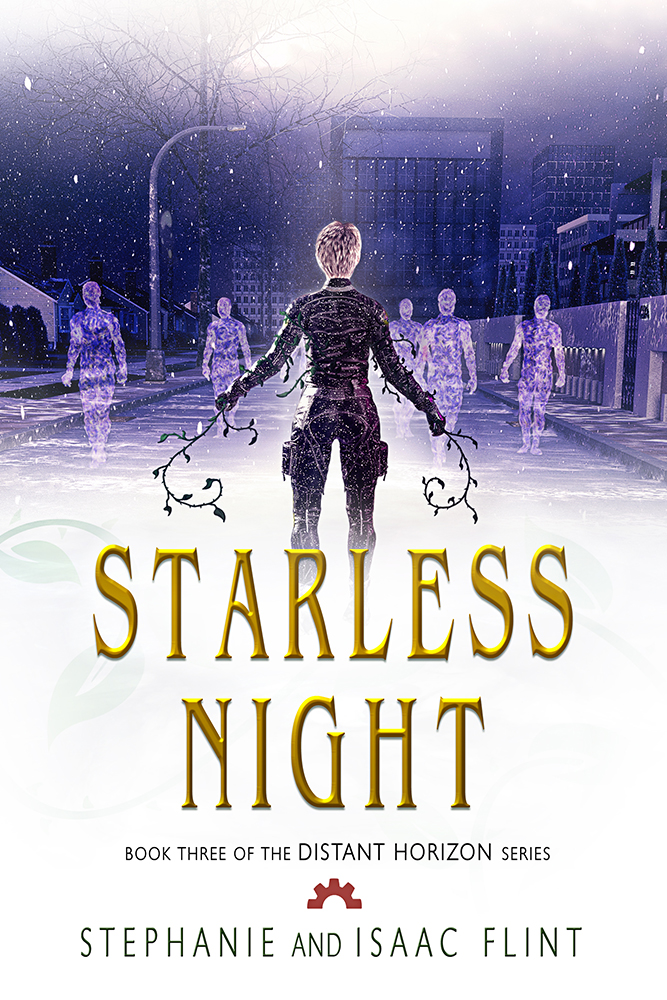
Today I thought I’d preview a small section of what had been the outline for Starless Night, the third book in the Distant Horizon series. 🙂

Key word is *had* because if you’ve read Starless Night, you’ll notice this isn’t how the story starts.

In a couple weeks, I’ll have a post for you about that time that I completely scrapped an outline… and an entire rough draft.

But first… let’s have a look at what one version of my outlines look like! (Because it might not look like what you expect).

WARNING: Spoilers ahead for the Glitch saga and Fractured Skies!

Already read those books? Don’t mind spoilers?

Proceed! 😁

Here’s what the beginning of my outline looked like. It’s rough, not always in complete sentences, and my outlines often change before I actually begin drafting. (And usually change again during drafting).

I’ve made a few adjustments here for clarity, since some of my notes were vague since I knew who/what they referenced, but probably wouldn’t be clear outside of context.

* * *

Jenna waiting with team on lawn for COE arrival (solidarity/support from team). When Camaraderie ship arrives, Lady Black and Stuart are the first to come out. They make it clear they want to discuss Val’s… and her guards’… release. They walk in like they own the place, much to the COF’s annoyance. Lady Black mentions to Pops that last time they met (before he switched sides) her grandfather had been with them (remind readers that the grandfather is Lord Black). Meanwhile, Pops feels like he’s never met Stuart before, though Stuart assures him he has. Jenna remembers Stuart from the COE base and has the beginnings of a memory attack (Legion Spore memory), which fades. She’s confused, but thankful it doesn’t get worse. The team members out to greet the COE are Pops, Jenna, Quin (Quin: “this is a historical meeting… *Squee!*” Jenna: you’re far too excited about this.), Lily there because Quin dragged her there (besides, if something does happen, it’s an excuse… she’s a good fighter… (really trying to get her to be less down and just go talk to Jenna)). Awkwardness between Jenna and Lily (they go to target range later?). Gwen, along with South African (SA) forces (introduce Ambassador Jordaan). Jenna heads to garden while the COE goes on tour of area.

While in the garden, the tour stops by. Pops formally introduces them… (though Jen has met Lady Black before… when kidnapped. “Can you kidnap your own citizens?” “Yes.” “You speak your mind… I like that.” Jenna perplexed, not sure what she thinks of her. However, Lady Black is #sorrynotsorry about it. Still thinks having Jenna on COE side would have been better for Community. But there are bigger issues to worry about now). Lady Black is polite, reserved… and nervous, Jenna realizes. (Tries to read her mind with flower charm, gets a little bit of the truth… then after almost using her flower charm to try sensing her motive, gets rebuked by Stuart who asks her to politely control her telepathic searches).

They’re starting to move on to a private part of garden, and Lady Black brings up the time stones and concern for Legion’s advances (foreshadowing further issues). Jenna notices that the lady seems a little more—invested—in those time stones than she expected. Pops suggests they can discuss this later. He’s hesitant to share information. Lady Black points out Master Zaytsev had info (a guilt trip for Jenna… it’s a reminder of Legion’s interest in her and the brain seed). She’s getting some emotion from her flower charm (though not actively prying on Lady Black). Decides to go back inside to get away from them… but gets a private thought from Stuart, who comments on Jenna’s garden (favorably… the first step in gaining Jenna’s trust). (Ugh… Telepaths!)

* * *

The outline is mostly meant to remind me of the general gist of what’s supposed to happen in the opening scenes and the kind of emotions the characters have, as well as what needs to be foreshadowed for later. I often have scenes visualized in my head from day-dreaming, so this is just meant to streamline the writing process.

(And sometimes I’m literally telling myself the story as I write the outline, and then the draft is just fleshing out the detail. This particular outline is short per scene compared to some of my recent outlines.)

But here’s the thing. When I shared the original version of this post with my newsletter a long, long time ago, Starless Night was still being the problem book of the series. And so it would go a while without any progress because it wasn’t working.

Until, finally, I realized I needed to scrap my outline and start fresh.

In a couple weeks, we’ll get back to that. So keep an eye out for that post, coming soon. 😉

* * *

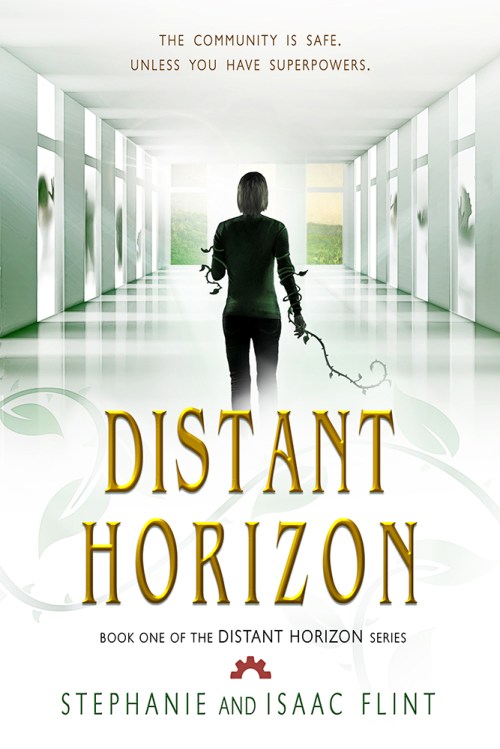
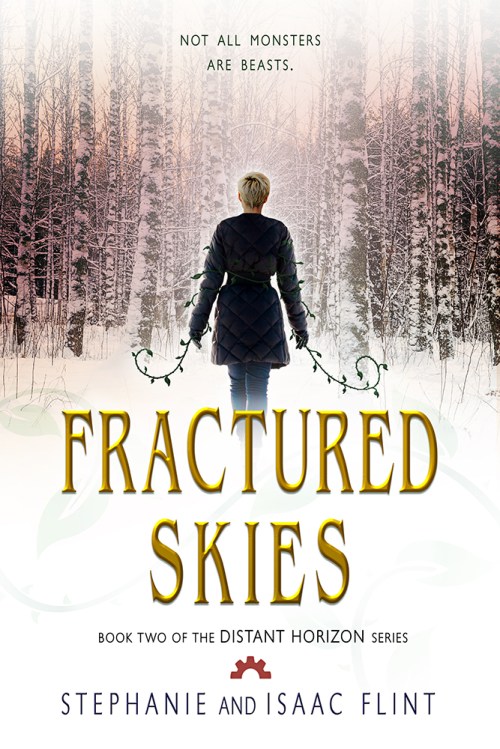
See the difference in how the story starts in Starless Night… (Though you might want to read the other two book first).

* * *

Happy reading and writing!

1 Comment

Filed under Writing

Where’d we get the inspiration for Spectator?

Many years ago, while Isaac and I were enjoying Applebee’s 25 cent wing special (do they do that anymore?) and getting some studying done, we had the joy of running into someone who had read one of our books and seen us at the local comic con.

(*Squee! Recognition!*) ☺️

Anyway, that was awesome.

But during our conversation, one of the things the reader mentioned was wondering a bit more about the gamemaster guy and the sea monster he threw at the protagonists toward the end of Distant Horizon, and whether or not there’d be more about him in the next book.

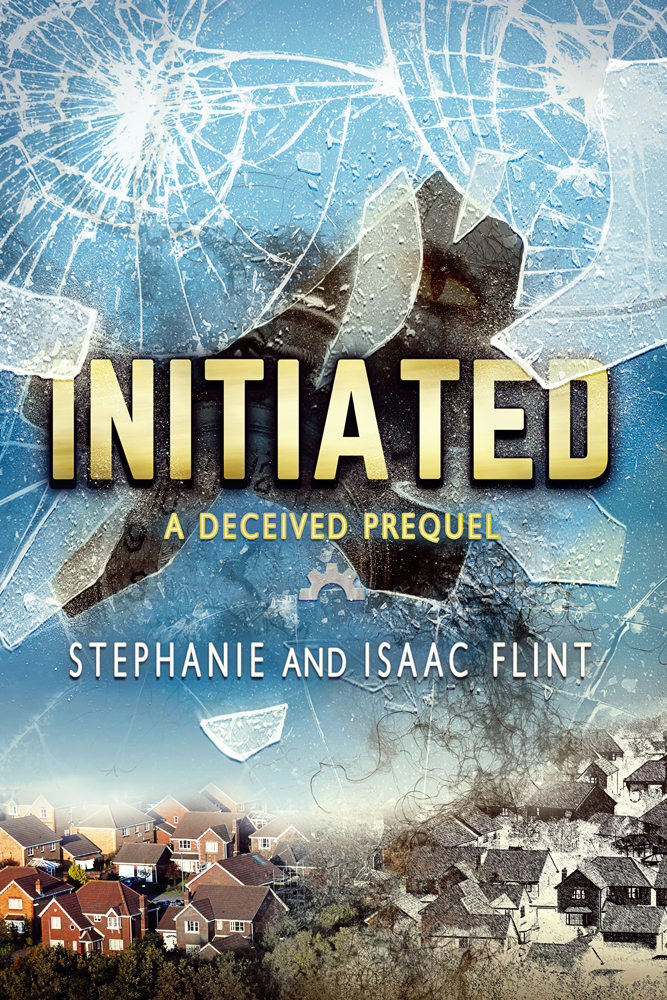
(Spoiler… there is. His name is Spectator, and he plays the role of a minor antagonist in Fractured Skies, and gets a couple mentions in Starless Night. He also makes a brief appearance in Initiated.)

The conversation got me thinking more about that character and his role in the Distant Horizon universe. Isaac and I have gone back and forth into how much of a role he should play (with me usually wanting to give Spectator a bigger role and Isaac wanting to scale him back… mostly because Spectator has a tendency to interfere with overarching plot points or become deus ex machina. His scenes have gone through a lot of revisions).

Granted, part of the deus ex machina problem might be because that was his original role in the game.

See… I had a tendency to make some not-great decisions for Jenna in the role-play game Isaac and I were playing, and I’d kinda-maybe-sorta gotten her captured by the bad guys with no explainable hope of escape in what was supposed to be a one-shot campaign.

That I very much wanted to see continue because I had questions and I wanted answers.

So Isaac snagged a character from one of my previous campaigns in the same world (but modern day), upgraded that character to Spectator status, and decided this newfound “Spectator” was going to make sure the game continued (see “fourthwalling,” below).

So Spectator does a bit of timey-wimey/alternate reality manipulation to make sure certain events can now happen, and the last scene of the one shot campaign got a teensy update.

And Jenna’s team is now able to come to her rescue.

(And we did a ton of work in the novels to make sure his involvement makes sense and doesn’t read quite so deus ex machina-y.)

And once we’d done a bit more work, we determined that Spectator is kind of like the “Q” of the Distant Horizon Universe (Q from Star Trek, for those not familiar). Spectator is not quite omnipotent but close, well aware of things he shouldn’t be, and mischievous. He can put just about any character who knows who he is on edge. He’s a reality bender, capable of changing the world around him to suit his whims, at least to an extent, and he’s also a fourthwaller, meaning he believes he’s part of game world of sorts, and thanks to his insight, he can break through the walls of that world.

Within the Distant Horizon universe there is a cult of fourthwallers who believe their world is controlled by two gamemasters, and that, in order to maintain their existence, they must be as interesting as possible to hold the attention of those gamemasters. Unfortunately, this means that if they lock in on somebody they think is a “player character,” they’ll cause them worlds of trouble in an attempt to stay in the gamemaster’s focus.

That’s all fairly meta, though, and most of the characters simply try to avoid fourthwallers when possible, dismissing them as crazy. Jenna, having come from the Community, has no idea these people exist until Spectator shows up. The rest of the rebels, once they realize he’s a fourthwaller and getting involved, are quick to research everything they can about him… all while trying to keep mysterious artifacts (the ones that lead to the sea monster showing up during Distant Horizon— it actually wasn’t Spectator’s fault) out of the hands of their rivals.

Spectator’s role in the story is explained more in Fractured Skies, so I’m going to avoid delving too much into that since that would be spoilers. But I hope you find him as interesting as I do.😁

Eventually, more will be revealed about the role of reality benders and fourthwallers, a trope I have readily enjoyed both in shows like Star Trek, involving Q, and in superhero stories, like X-Men.

Long story short, Isaac and I are both fans of Star Trek (For me, Voyager was long my favorite, though my first experience came from Next Generation, but Lower Decks now might be my favorite among the series, followed pretty close by Strange New Worlds).

Next Generation, however, introduced me to one of my favorite Star Trek characters: Q.

He’s such a fun character, especially paired against straight-laced Jean Luc Picard. It also helps that the actor who plays Q, John de Lancie, is pretty cool, too. (At least from what I’ve seen of him).

Fun fact, if you ever watch the My Little Pony: Friendship is Magic series (which has some surprisingly great nods to science fiction, fantasy, and various social themes you might not expect), Discord (a chaotic character of that series) is played by John de Lancie. The show’s writers wanted to get someone who could pull off a Q-like character. The people in charge of casting decided, why not ask the original actor, just in case? According to one of his interviews, he was a bit surprised, but went ahead and agreed to the role… meaning that a few iconic references to Q from Star Trek landed in MLP.

Also, the actor was one of my favorite panelists at a Star Trek convention I went to when I was in high school, and he was really friendly at answering my teen self’s questions about acting and directing. Plus, he can direct a pretty good radio play (I had the fortune of seeing that in college).

All righty… I digress. 

Point is, I think Q is a cool character, so of course that made its way into characters I enjoy writing.

* * *

See how the meddlesome Spectator gets involved in the Distant Horizon universe…

* * *

Happy reading and writing!

1 Comment

Filed under Writing

Changing names to better fit a story world

When Isaac and I first created the Distant Horizon universe, we made it as a homebrew role-play game, sort of a cross between the 90s cartoon X-Men, and The Giver. (Dystopian world with superheroes). There were a lot more superhero references in the game…

And in the names.

Especially for the villains.

For example, Lord Black (the founder of the Community), was usually called “Jellyman” or “Lord Gelatinous” due to his natural form looking something like jelly.

*Cough.*

We eventually decided he probably wouldn’t call himself that, and he definitely wouldn’t have encouraged the people in the Community to call him that (especially since they’re very particular about maintaining appearances and hiding the existence of super powers). But the rebels, particularly those who had a grudge against him, might.

I found a stray reference in an early draft of Starless Night where a character grumbles “Son of Gelatinous!” in frustration. Lord Black’s son was something of a rebel, and therefore a source of frustration to his father. Needless to say, that line got reworked, since it no longer made sense.

Another example was Lady Winters, who was first referenced as Brainmaster. She had a couple name changes, actually. First was Brainmaster, then we changed that to Lady Bridget. But that was too easily confused with Lady Black when reading, so we changed it yet again to Lady Winters.

Long story short, we decided there was no way she would call herself Brainmaster, and most of her underlings would know better than to call her that, too. And they try not to think it either, in case she’s reading their mind. That said, due to her cruelty, the Brainmaster moniker has stuck around for both the Camaraderie and rebel faction if she’s not within earshot or mind-reading range.

And then there’s “The Camaraderie of Evil.”

That name actually got to stay. In Whispers in the Code, Commander Rick explains why they kept the name.

“You will be challenged by much of what we do,” he continues. “In the Community, your tasks were simple: program basic systems, keep everything running smoothly… This job is not so simple. We call ourselves the Camaraderie of Evil because we are willing to take steps others wouldn’t dare consider. That’s the only way we can accomplish security and efficiency. I don’t personally believe we are evil, but the name stuck around from our earlier days, and they were… an interesting bunch.”

What the commander doesn’t mention is that they got the name because the founders were a group of young, ambitious (and variably “evil”) people with powers getting frustrated with their uptight “mad scientist” of the group and deciding they would call themselves that to taunt him.

They didn’t expect it to stick and, nowadays, the COE typically just calls themselves the Camaraderie… or if they’re in the Community, “The Community of E-Leadership.”

Other names were changed for ease of reading. Janice became Gwen because we had so many “J” names already and that was the easiest one to swap and keep the others.

Overall, I think the changes were for the better, though they did change the flavor a bit from role-play game to reading.

* * *

Most of the names got updated. Even so, characters leaving the Community for the outside world still have a few superhero/supervillain surprises in store…

* * *

Happy reading and writing!
1 Comment

Filed under Writing

Oh, the joys of proofreading

It seems like dishes… and just about anything else… gets done when it’s time for the proofreading stage.

Oh, there’s a chore that needs done? Dishes been piling up? The counters are clean now!

Laundry need washed? Everything’s now been washed and hung in the closet! (Or neatly stacked in a chair because the closet is cold and I’d rather put on warm clothes in the morning thank-you-very-much).

Plants need a little bit of pruning? Even those pesky scale bugs are about to face the gardener’s otherwise defeated wrath.

Or, for a little more fun… new stories need written? Old stories need revised? Let’s do this!

(Inner voice just scowls. “No new stories for you right now. Jot down a few notes and get back to proofreading! Finish what you’ve started!”)

*Sigh.*

There’s all these other new stories calling you to write them, but you’re stuck giving that manuscript you’ve looked over nearly a dozen times one more read to look for typos, and then after you’ve given it that maybe-final/maybe-not-final read you’ve got to actually input those notes into the manuscript.

*Cue second sigh.*

Proofreading might be my least favorite part of the process.

Still, proofreading is important, and helps me to correct little typos I don’t want you guys to suffer through. Missing “a”s and “the”s. The occasional word that just doesn’t make sense. Minor plot points I thought I removed during the read-aloud but accidentally remained in place. That sort of thing.

It’s all about polishing… even if, for me, it is the least interesting part of the process.

Funny thing is that in the 2018 newsletter email I’m adapting this post from, I was lamenting the proofreading process for Fractured Skies.

Now I’m lamenting the proofreading/editing process for The Dark Forest of Aneth. The reading part’s been done. I just need to add my editing notes to the manuscript. But… uh… there’s been an outline and draft written for Huntress 3 and a whole new 5,000-word short story drafted, polished, and sent to beta-readers since I finished that reading a few months ago. *Cough.*

So… yeah.

Do I need to write that draft I’ve been meaning to write for five years?

Looks like I just need to get myself some proofreading or editing notes!

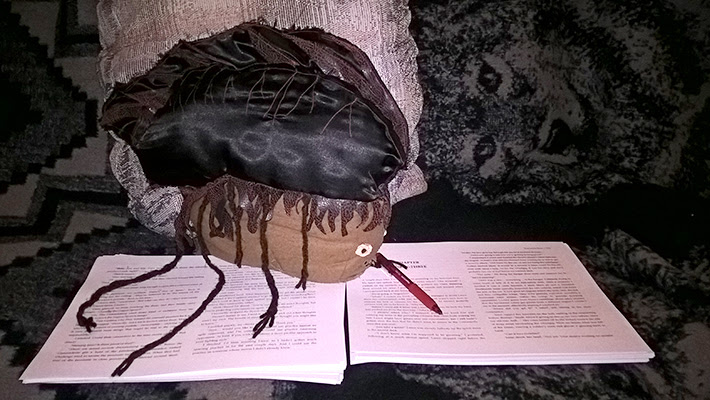
In the meantime… here’s a throwback to when my Legion Spore plushie got to help out with the proofreading:

A plushie Legion Spore sits atop a printed manuscript with a red pen

Isn’t it adorable? (Well, as adorable as living airships made from shapeshifters go). Isaac made it for me for Christmas a few years back.

Actually, I also made him a Legion Spore plushie (we both had the same idea), but let’s just say that the one he made better matched the first Legion Spore, and the one I made closer resembled the Manticore. We had a productive discussion after that regarding the differences between how we saw the living airship of The Glitch Saga.

Needless to say, the Legion Spores you see in the books have been refined a bit.

Or a lot.

And that’s another reason that proofreading… and read-alouds… and beta-reading… is important!

* * *

Read a few polished books that I at some point had to proofread or edit…

* * *

Happy reading and writing!

1 Comment

Filed under Writing