Tag Archives: Stephanie Flint

Thoughts on Gaming – The Importance of Clear Instructions

Isaac and I recently went to St. Louis to visit friends, and while there, we had them test out our new Battle Decks: Multiverse 1953 game (Thanks, guys!). The goal was to see how easy the rules were to follow without our intervention, as well as to make sure the game played as we intended based on those rules. Think of it kind of like beta-reading… you want to make sure your readers are getting the information and the meaning you intend. Where there is confusion, there is trouble.

It quickly became apparent that our rules could use some tweaking for clarity, namely in the form of pictures and diagrams explaining how to read the cards. The back of the box has a diagram showing the set-up of the game, but that was it. When we offered the diagram found in the trial version of the game, which allows players to play the game with a couple print-outs and two decks of poker cards, we found that the rules were a bit easier to follow. Especially if the player has played similar games, such as Magic: the Gathering or Pokemon. I haven’t played the latter to be able to say how close those rules play, but that was the comparison one of our friends made.

Battle Decks Basic Card Game Setup

The first version of the picture instructions for the trial version of Battle Decks.

As you can see in the picture, it tells what each card is, but not how to read them. Also, from using this picture, we found that it was confusing to have notes on both the opponent’s playing field and your playing field. We’re considering limiting the text to the player’s side of the field, that way players don’t have to feel like they’re reading the cards upside down (especially problematic if the player hasn’t had much sleep).

Isaac and I are also considering creating a diagram of the basic card types to explain how to read each card. For example, we’ll point out the HP, DEF, ATK, and DMG information and what those numbers pertain to, along with where the point cost of a hero card is and where abilities can be found. We’ll add pictures of counter tokens and explain how to use them (something we neglected entirely in the text-based rules).

Beta-testers are important!

We learned from our testing experience that being able to verbally explain the rules made the learning process go much smoother. Players understood the game much faster when we showed them how to play through a round. And once they figured out the rules, we got to see them effectively using abilities (the bodyguard ability in this case) in a way that we rarely used in our own game play. We also found where a certain young dragon character card had a potentially game-breaking trait, which we intend to remove before publishing the final version of Battle Decks.

Though we had entertained the idea before, we now know that a video explaining the rules and showing a round of the game is crucial. With a video, potential players can see how the game is played without having to wade through a lot of text rules… and we can include supplemental videos which explain the different cards’ abilities. Our goal is to make the game easy to understand and play. Otherwise, someone who chooses to give it a try might decide the game is too difficult and set it aside.

For example, when I first tried picking up the Star Wars: Miniatures game with my dad, it took a while to figure out since we didn’t know anyone else who played. We started out with simpler cards and ignored rules that didn’t make sense to us, and eventually, we figured it out. Later, I began playing the game with Isaac and we moved on to more difficult characters with bigger abilities.

We kept this in mind when creating Battle Decks. We included characters who only have a few abilities, along with characters who have several. That way players can ease their way into the game. We’re also considering creating “campaigns” with set characters for each player, or a limited S&R deck to vary game play.

Overall, I’d say this first round of beta-testing was successful, and we have quite a few ideas of how to improve the rules and improve a player’s experience.

I hope you enjoyed this post. 🙂 Have you ever found a game to have really difficult rules to understand? What did you do about it?

Leave a comment

Filed under Business Ventures, Gaming

Thoughts on Writing – Character Motivation

Today I’m talking about  how a character’s backstory influences their actions.

In the first draft of Magic’s Stealing, I never really explained why the main character, Toranih, didn’t like magic. She simply didn’t. But stories generally read better if the author knows why a character behaves a certain way, even if they never explain this directly to the reader. So, in order to add credibility to Toranih’s character, I began to explore her motives.

From Dictionary.com (a really useful resource when double-checking that a word means what you think it means), motives are “something that causes a person to act in a certain way, do a certain thing, etc.”

To see why Toranih acts so paranoid/distrustful of magic, while being so interested in learning how to effectively wield a sword, let’s take a look at her world. Toranih is the youngest daughter of the Lord of the Armory, so she has plenty of access to swords and the people who can teach her. In regards to magic, the kingdom has a high number of ribbon mages, so magic is common. However, the ability to see magic is not. Neither Toranih, nor her older sister, Siklana, can see ribbon magic, though her best friend can.

In the original draft of Magic’s Stealing, Toranih did not like magic because she felt like it was all tricks and illusions. (A side note: the trouble with using the term ‘illusion’ with magic is that if you actually have magic doing something, the illusion of something happening is no longer an illusion. I’ve been slowly weeding this word from the story). So my first idea for why Toranih didn’t like magic was that maybe a bad event scared her in the past. She gets her first glimpse of magic at a parade when she was little, and it overwhelms her. Thus, she’s been wary ever since.

However, my husband pointed out that a parade with a lot of colorful, fluttering ribbons is likely to be awe-inspiring to a four-year-old, not terrifying. While I still feel that everyone has different reactions, so what some kids like, others are terrified of (for example… clowns), I started looking elsewhere for answers. Toranih doesn’t like magic, and to the extent that she is paranoid in earlier drafts, there seems like there might be a bit more to her paranoia. So I cut the bit about the parade (keeping the event, but not having it terrify her), and considered Toranih’s distrust of their mythology. There are already several references in the current draft which lends itself to this theory.

For example, after an event involving Toranih being magically called to do a task she wouldn’t otherwise do:

Old fables flitted to the edge of her mind, haunting melodies of immortals and creatures whose very power was that of magic’s lure, the power to call and demand, to whisper in a person’s ear and convince them, without fail, to do their bidding.

In something of a flashback, Toranih’s sister tells her about life and death magic:

Once, long ago, when Siklana showed Toranih how to use her crystal, she’d convinced a couple of the servants to come stand in front of them. One had magic, the other did not. And she’d pointed to the one with magic and all the ribbons, and explained what ribbon magic was and how it worked.


Then Siklana pointed to the other servant, and said that even though he wasn’t a mage, he still had magic. Everyone had magic, but it was difficult to see because it was closer related to string magic, but couldn’t Toranih see it? There were two thin strings running through his body, each entwined and almost impossible to spot.


Siklana had adjusted the crystal to make them more visible. “That’s the only string magic visible to a ribbon mages,” she’d said. “One strand is life, and the other is death. Everyone has them. If you don’t, then you’re dead. That’s how the gods made us,” Siklana had continued, much to Toranih’s dismay. “But only the really powerful gods can manipulate those strings, so there’s nothing to be scared of.”


That memory had stuck with Toranih ever since.

In a conversation with Aifa, the Matchmaker goddess:

Aifa rolled her eyes. “Such a harsh tongue, tut-tut. Dear, I’m the goddess of relationships, not all-powerful. But if you don’t mind your manners, you’ll find yourself mute.”


Toranih swallowed hard. She had heard tales of citizens who’d crossed the gods in older times. Citizens who found their love lives broken or their ability to communicate… impossible.

Toranih has plenty of reason to be uneasy about magic and the gods’ use of magic. However, we can take this a step further. We know that Toranih is very interested in swordsmanship, and wants to be a guardsman except that her father doesn’t think that position befits her station. This is especially problematic when her sister, Siklana, reveals intentions to marry into a different estate, thus leaving Toranih as the sole heir.

Her father handed one of the servants his empty plate and rested back in his chair. “Understanding self-defense is important, but you’re taking these studies a bit far. There are more important subjects for a young lady to—”


“Siklana is much more adept at those studies,” Toranih interrupted. Her scone crumbled and she swept the crumbs into a napkin before he could get onto her about that, too. “Let’s be honest. When inheritance time comes around, she’ll inherit the estate. She’ll master magic at the academy, and she’ll be the one to win the hearts of the city and lead them in her wise, older age.”


Siklana ducked her head behind her bangs. Her dark brown eyes shown through. She was smaller in stature than her younger sister, especially since she lacked the muscle that came from Toranih’s years of swordplay. “What if I marry into a different house?”


Toranih turned sharply. Her sister… marry? Of course she would, she had always been interested in the attention of suitors, but Toranih hadn’t thought she would try to climb the social ladder through marriage.


If she married into a higher class, she would leave behind the Covonilayno estate. “I’d be the heir,” Toranih whispered, stunned.


Her father nodded. “The rights would fall to you. As is custom.”


Toranih glared at her sister. “How long have you been planning this?”


“I’ve been thinking about it for a year,” she admitted coyly. “I’ve already passed the academy’s first year exams, and I’m well into my second year. Our inheritance is decent, but there are a few worthy suitors who could help me further my education once I finish in Cirena City. With a decent suitor’s allowance, I could travel to the Islands. I’ll make sure that’s part of the contract. I might even learn word magic.”


Toranih swallowed hard. While having at least some degree of ribbon magic was common, word magic was practiced by very few. Anyone could learn it, so long as they knew how to pronounce the spell.


But say just one syllable wrong, and any number of horrors awaited the practitioner. Setting ones’ self on fire, opening a portal in the middle of a crowded city and killing anyone in its path, trying to heal someone and killing them instead… and a particularly powerful spell could bind a target to do the mage’s will.


Toranih shivered. Unlike ribbon magic, word magic was invisible. No crystal could reveal words the way it could reveal ribbons.

My husband pointed out that maybe Toranih doesn’t like magic because, unlike her sister (and most every other mage in the kingdom), she never really became adept with magic.

As a young child, Toranih saw her sister and Daernan surpass her with flying colors while she struggled to control ribbons for even basic tasks. At the same time, young noblewomen were taught basic self-defense, which is where she excelled. She threw herself into the study of swords and knives, hoping to become a weapons master. In the meantime, she became more and more resentful of magic. She eventually understood the basics (which we see her using in Magic’s Stealing), but she never quite comes to terms with the fact that she’s been left behind by the mages.

The result?

She can’t easily control magic, so she doesn’t trust it, and (as the current blurb says) she would rather have a sword in her hand than use her powers to heal and throw fireballs.

And now we have the reason that Toranih doesn’t like magic. We can see why she might, at times, lash out or vehemently deny anything to do with being a mage.

But she lives in a world so saturated with magic that she can’t ignore it, and so she still uses the magical light crystal her sister gave her. She still changes into an owl when Daernan convinces her to go to the parade. She still tries to save people who are dying when their magic is stolen. But she has a flaw, and because of that flaw she doesn’t always use her powers when she should, and her unwillingness to try could cost her the people she loves.

Now I’ve just got to make sure that is apparent within the story, even if I never come outright and say this is why she acts the way she does.

I hope you enjoyed this post. 🙂

Have you found any books where character motivations were well-done, or where they were lacking?

2 Comments

Filed under Writing

Thoughts on Writing – Developing a Magic System

I’m in the process of polishing Magic’s Stealing, and a beta reader pointed out a plot hole regarding one of my magic systems. Since my mind is now stuck on working through that problem, today I’m going to go into the process of developing magic systems.

In Magic’s Stealing there are three types of magic: ribbon magic, string magic, and word magic. The problem system is ribbon magic, which is the most common. It’s the magic that gets stolen, leaving the two main characters as the only mages.

As it stands in the current version of the story, ribbon mages either have all-magic—which allows a user to do most any common type of ribbon magic that they train for—and there is specific magic—in which the user is only good with one specific power.

Depending on their specialty, the colors of their ribbons vary. For example, a fire mage has yellow ribbons, while a light mage has turquoise ribbons. The problem is that once we get into all-magic, where there is no official specialty, the color system breaks down.

For example:

Toranih: Green ribbons. All-magic. She’s not particularly good with magic, though her specialty is telekinesis. She is also seen shape-changing and using her powers to heal wounds.

Daernan: Blue ribbons. All-magic. Specialty of shape-changing. Also seen casting fireballs and healing wounds.

Siklana: Turquoise ribbons. Specific magic. Specialty of light manipulation. Enchants light crystals for others to be able to see magic.

Shevanlagiy: Green ribbons. All-magic. She is seen creating portals, using telekinesis, and there is a mention of her enchanting a light crystal.

Cafrash: Yellow ribbons. Specific magic. Specialty of fire manipulation. (He’s a blacksmith).

We don’t see many different ribbon colors in the first book because the main character, Toranih, can’t see magic without a light crystal, and magic is stolen shortly thereafter. However, a beta reader pointed out that from the way I describe the ribbons in the book, the color of the ribbons seem to be based on the magic user, rather than on the type of magic. (Note that Toranih and Daernan can do the same things, but Daernan’s magic is blue, while Toranih’s magic is green.)

So I took a second look at how I explained ribbon magic. The only truly consistent piece of information was in regards to the strength of magic, and even that is not directly stated. (Ribbons are influenced by how often magic is used. Thin ribbons reveal magic that has been neglected. Thick ribbons show well-practiced magic. Like a muscle, the more practice a mage has, the stronger their ribbons will be). The other consistent deal with ribbon magic is the use of a certain color pertaining to a certain mage.

Since I want consistency in the system, especially as the series continues to evolve, I brainstormed a few ideas that might make the system stronger.

It didn’t immediately come together. The brainstorming process is messy, and you can see that from the ideas I have here:

Importance in the shade of magic: Inherent at birth. The more vibrant the color of magic, the more likely a mage has all-magic, or can do more with his ribbons. The paler the magic, the more specific their magic is, limiting them to what can be done.

Importance in the color of magic: Inherent at birth. Technically, similar colors should be similar powers. We also run into the problem that if the shade of magic says that the paler the magic, the more limited the mage, then we shouldn’t be able to tell what kind of magic a limited mage has. Their magic would be white.

So…

I wondered if I could flop these around.

The deeper the shade of magic, the more specific the power. This would be consistent with immortal magic, a type of ribbon magic which is described in the book as being “silver with black edges.” Their magic tends to be a little more all-encompassing (even though they each have their specialties). When Toranih and Daernan are granted a tiny bit of an immortal’s power, their ribbons take on an iridescent sheen. Which would make sense if the more all-encompassing their power, the more silvery-white it became.

Granted, that still doesn’t help me look at magic in terms of a visible light spectrum based on their current ribbon colors. But, if you take all the colors of the rainbow and put them together in the form of light, the light is white… which fits the idea of all-magic being paler in color (though brighter in luminescence).

That in mind, mortal mages would probably still have a visible color of magic because they don’t have nearly the kind of power that an immortal has.

Let’s look at the specialties in terms of a rainbow spectrum… with the addition of turquoise.

Red – (Not mentioned in this story)

Orange – (Not mentioned in this story)

Yellow – Fire

Green – Telekinesis

Turquoise – Light manipulation

Blue – Shapeshifting

Indigo – (Not mentioned in this story)

Violet – Portals?

Now, if specialties that are related are close together on the spectrum, then light manipulation should be more of a lime green or yellow-green than turquoise, and thus be closer to fire. If I go with the idea that each type of ribbon magic has a different color, unrelated, then those could remain the same.

But I still wasn’t really happy with this. I liked the idea of light manipulation being turquoise and fire being yellow, sticking straight to a rainbow spectrum is limiting, and besides that, this system still doesn’t help me with all-magic users.

I talked about this conundrum with my husband, Isaac, and the resulting discussion gave me the idea that maybe mages shouldn’t have one single color of magic. Instead, their ribbons could vary with multiple colors, depending on what kind of magic they have the potential to use. In this case, Daernan’s primary ribbon color would be blue, because he’s a gifted shapeshifter, but he would also have several thick yellow ribbons for fire, along with a few green ribbons for telekinesis and whatever other color I assign to the magic he practices. As he’s not particularly skilled with something like portals, but he’s capable, he might have a couple thin violet ribbons that no one really notices because they get lost among his blue ribbons.

Let’s take a quick look at a before-and-after of scene involving magic. This is how the section reads before I make changes:

The owl shrugged and puffed out its plumage like a feather duster. Not my fault you’re so jumpy.

Toranih crossed her arms. Though faint in the moonlight, the crystal’s twilight revealed blue ribbons swirling thick through Daernan’s owlish body.

Coming? The blue ribbons carried Daernan’s thoughts to Toranih’s mind, and she fought the urge to swipe them away.

However, if I make the changes I’m considering, the scene might read something like this:

The owl shrugged and puffed out its plumage like a feather duster. Not my fault you’re so jumpy.

Toranih crossed her arms. Though faint in the moonlight, the crystal’s twilight revealed various blue and yellow and pink ribbons swirling thick through Daernan’s owlish body.

Coming? The pink ribbons carried Daernan’s thoughts to Toranih’s mind, and she fought the urge to swipe them away.

Granted, I haven’t decided that pink is telepathy, but it’s an idea. This early in the story, readers should be able to immediately understand that different ribbons do different things. Before this segment we see Siklana’s turquoise ribbons of light magic, and after this segment we see Toranih using her own scrawny blue ribbons to transform into an owl.

If I go this route, I’ll need to make a chart of which colors represent which specialty, and I’ll have to be careful in editing to make sure the use of ribbon magic remains clear and consistent. But this last change might enhance the world, as well as fix a plot hole.

The system is still in development, but I hope this post gives you a bit of insight into how such a system can be developed. 🙂

2 Comments

Filed under Writing

Thoughts On Writing – The Revision Process

I recently finished the major revisions on Magic’s Stealing, and though I’m still in the process of making a few tweaks (trying to give the end just a bit more ‘oomph’ and trying to make sure that the antagonist has a clear motive while maintaining her mysterious persona) I thought I’d spend today’s blog post talking about my revision process.

First off, the difference between editing and revising. Honestly, I confuse the two and tend to use the terms interchangeably. But for the purpose of this post, I wanted to make sure I was talking about the right thing. So I did a quick web search, and this is what I found:

Editing is when you focus on a manuscript’s grammatical conventions. You’re looking for typos, words that like to get flip-flopped (my offenders were rein/reign and lose/loose), and grammatical issues. The story looks better when you edit.

Revising is when you focus on the big picture. You’re checking that the reader understands what you mean, that the story is clear, and the plot makes sense. The story sounds better when you revise.

Sometimes the two might clash, depending on whether you’re going for how something sounds, or how something looks. I’m fairly certain I drove one of my beta readers up the wall for my tendency to have ‘ , then ‘ in the middle of a sentence. For example: The owl sighed, best an owl could, then tapped the window with his beak. To be grammatically correct, the sentence should read: The owl sighed, best an owl could, and then tapped the window with his beak.

To be fair, I was doing this quite a bit, and I did go through and fix a number of those issues. However, as I was revising, I chose to keep certain instances because I liked how the sentence sounded, especially when compared to other sentences in the paragraph.

Here’s a breakdown of my revision process:

Step 1: Write rough draft. I don’t usually do much editing/revising at this stage. I just want to see the story completed.

Step 2: Examine rough draft. Tighten the writing, cut/add scenes as needed, now that I know how the story flows, and look for loose ends. Mostly revision.

Step 3: Polish the draft. Repeat Step 2 as necessary until I can’t find anything left to polish. I both edit and revise at this point. In some cases, this only takes one or two passes. In others… many, many more. (I really don’t want to think about how many times I’ve read through Distant Horizon. I feel like it’s fairly polished now, but it took several years to figure out this whole writing thing).

Step 4: Send polished draft to beta readers. Step away from manuscript and work on something else while waiting for a response.

Step 5: Ask beta readers questions. Once I have responses from my beta readers, I look through their comments and ask them questions to clarify anything I don’t understand. If one beta reader brings up a question that I think I should ask others, I send them those questions. For Magic’s Stealing, I did this in regards to what age they saw the characters as, as well as the readers’ theories regarding the antagonist. By doing this, I got a broader understanding of problems in the manuscript.

Step 6: Examine beta comments as a whole. Since it has been a while since I last looked at the manuscript, I read through all the comments to jog my memory.

Step 7: Apply critique to one chunk of the manuscript at a time. I examine what all the beta readers said about a particular section (in case there were conflicting opinions), and then applied the appropriate changes as necessary.

Step 8: Read the manuscript aloud. Once a couple sections were completed, I read the revised sections aloud, looking for any areas where I tripped over myself. Since I’m hoping to eventually do an audio edition of Magic’s Stealing, this is especially important. But even if you don’t plan to do an audiobook, reading aloud can help you catch errors or plot holes you wouldn’t catch if you are simply scanning the page. Plus, it’s kind of fun. (My Speech and Debate background likes to kick in here).

Step 9: Make any final adjustments that you know need to be made. For example, I know that the ending of Magic’s Stealing needs a little bit more ‘oomph,’ possibly in the form of one final confrontation with the antagonist. So I’ve been re-examining the rest of the manuscript to see if there are any loose strings there that I can use in that confrontation.

Step 10: Divide story into chapters. If you haven’t done this already, now’s the time to do it. Unfortunately, this is the part I don’t really like. Do I stick with a specific word count? Do I end at a really dramatic scene and have some really long or really short chapters? Should I cut before or after the antagonist view point? Eh… I much prefer revising.

Step 11: Read the full manuscript. If the story is truly polished, you’re only going to be making small changes or adjusting a word here or there. Nit-picking. If you see a major plot hole or flaw, you may want to go back and do further revisions. Each story is different. Like I said earlier, Distant Horizon went through a lot of revisions, and now when I look at it, I mostly nit-pick.

Step 12: Set the manuscript aside. Hand it over to any remaining proof-readers/beta readers. Read through it again after it’s been out of your thoughts for a little while. If readers say you’re good to go, proceed to the next step.

Step 13: Proceed with querying for trade publication or with self-publishing, depending on your goals. For Magic’s Stealing, I’ll be self-publishing, and I intend to print out the manuscript so I can look through it for typos. For Distant Horizon, I’ll intend to hire an editor before self-publishing, since it has been through so many changes that I’m bound to be missing something. The story is also considerably longer than Magic’s Stealing, and has a lot more room for plot holes (Distant Horizon is almost 100,000 words vs Magic’s Stealing’s 31,000 words).

There you have it: my revision process.

I hope you found this post useful. Have you had any revision techniques you found to be particularly helpful? 🙂

Want to share this post on twitter?

Thoughts On Writing – The Revision Process: http://bit.ly/1VcaEAl via @SBibbPhoto

Click to Tweet!

Leave a comment

Filed under Writing

Behind the Scenes – The Stage

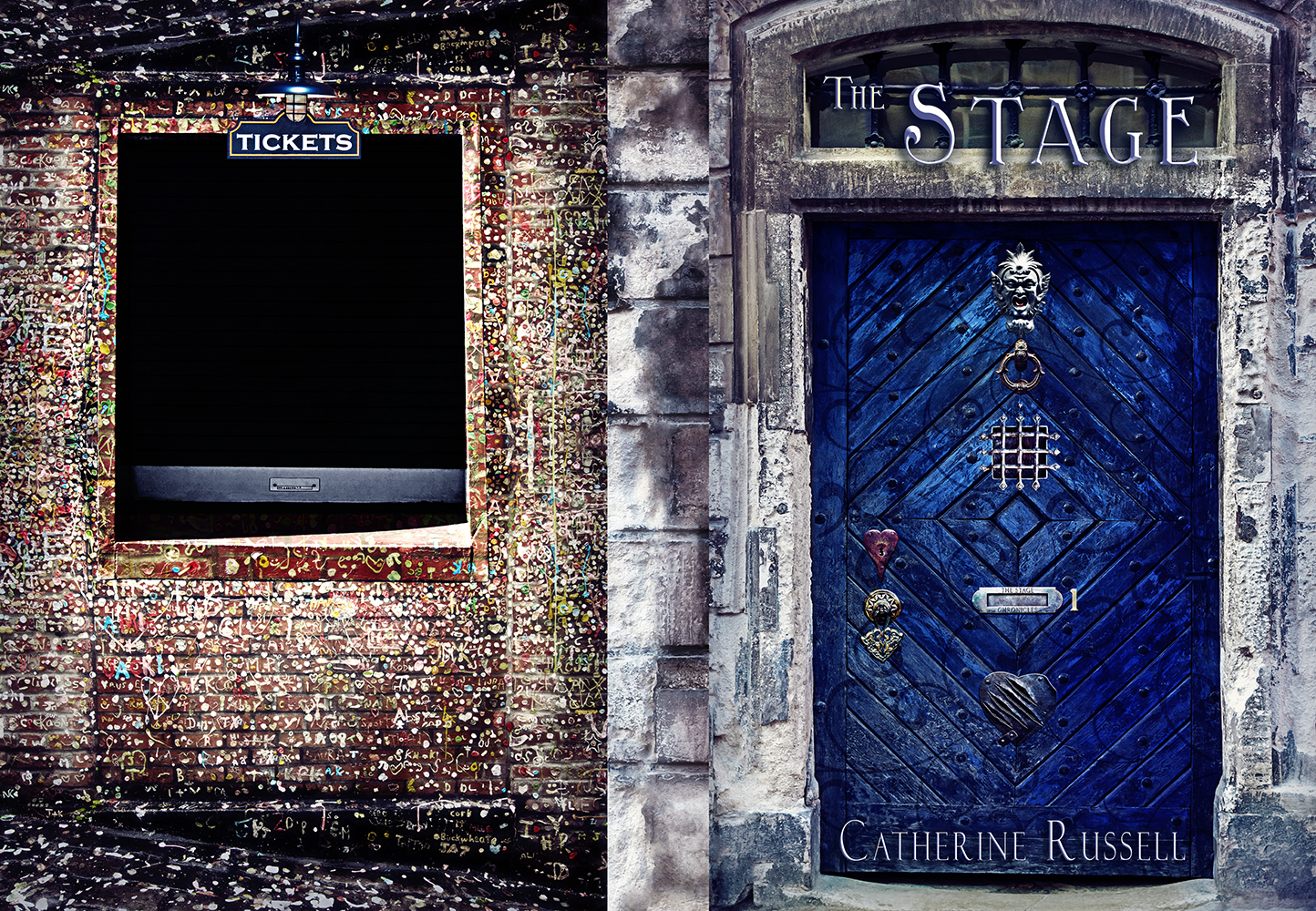
This is a cover for Barking Rain Press. For this cover, the author and publisher decided to focus on the setting, rather than characters, so we set out to create a mysterious club. With symbols from the book and direction from the publisher, I incorporated various different stock images from Shutterstock (provided by the publisher) to create a new scene: a nightclub for vampires. I chose the swirls to overlay across the door to add a hint of mysticism, and we went with the blue color because of its symbolism in the story (sacred to the vampires). For the back cover, the publisher asked me to use Seattle’s famous ‘Gum Wall,’ to place the novel. She wanted a ticket booth, so I merged a couple different ticket windows, which will serve to hold the back cover copy. You can see the results below. 🙂


SBibb - Book Cover - The Stage

SBibb - Wrap-Around Book Cover - The Stage
Stock images from Shutterstock:

http://www.shutterstock.com/pic-229526110/stock-photo-old-door.html?src=lb-34288799

http://www.shutterstock.com/pic-179242310/stock-photo-metal-door-of-the-ancient-castle.html?src=lb-34288799

http://www.shutterstock.com/pic-124981262/stock-photo-collage-with-retro-door-knockers-images-from-italy.html?src=lb-34288799

http://www.shutterstock.com/pic-257872856/stock-photo-old-copper-door-knob-with-arabic-pattern-on-black-wooden-gate-izmir-turkey.html?src=lb-34288799

http://www.shutterstock.com/pic-35080699/stock-photo-close-up-fragment-of-ancient-door-with-lock-keyhole.html?src=lb-34288799

http://www.shutterstock.com/pic.mhtml?id=221809120

http://www.shutterstock.com/pic.mhtml?id=221942575

http://www.shutterstock.com/pic.mhtml?id=42315235

http://www.shutterstock.com/pic-150461954/stock-vector-seamless-pattern-with-black-swirls-on-a-white-background.html

http://www.shutterstock.com/pic.mhtml?id=47336815

http://www.shutterstock.com/pic.mhtml?id=78116509

http://www.shutterstock.com/pic.mhtml?id=58882601

Leave a comment

Filed under Book Covers, Client Work, Photo Illustration

Behind the Scenes – Blood Loss

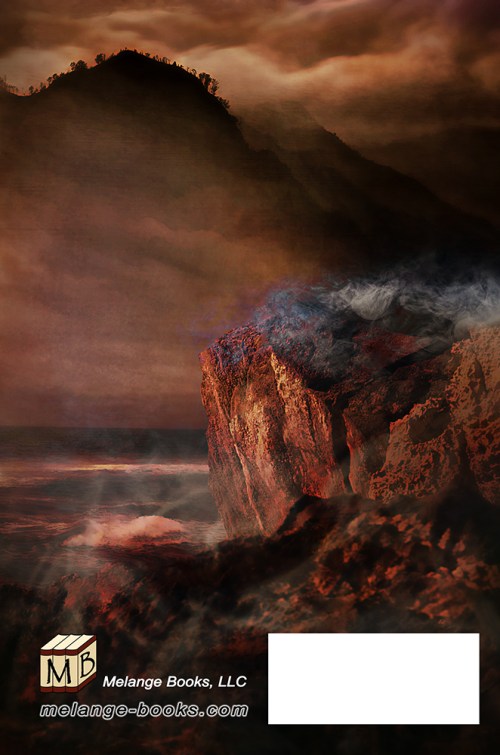
A cover for Melange Books. For this cover, we wanted to have the dark color scheme while keeping the cover light enough that the colors wouldn’t go to black in the print version. So I created the basic scene first, then played with multiple color options once those basics were in place. For the castle’s glow, I masked out all the windows, then tinkered with the lighting on layers below the castle layer. Once I had the light source, I added ‘soft light’ and ‘overlay’ layers over the castle layer. I typically use dark blue/purple for shadows, and yellow for highlights.

The proof version was fairly blurry, due to using comp images. Comp images are handy when you’re trying to see if the idea will work or not. When I created the near-final, I smoothed out the blending and adjusted how strong the gaussian blur was on the background layers, thus making it considerably sharper. Once you have the full-sized stock images, it becomes much easier to smooth out edges and see how sharp it will really go.

For the back cover, I stepped back several layers, removed the man and castle, adjusted my retouch layers, then flipped the merged image horizontally. This is the result:

SBibb - Blood Loss - Book Cover

SBibb - Blood Loss -  Back of Book Cover

Stock images from Dreamstime:

http://www.dreamstime.com/royalty-free-stock-photo-jagged-rocks-edge-cliff-desert-image29674305

http://www.dreamstime.com/stock-photo-edge-cliff-turquoise-ocean-image47133437

http://www.dreamstime.com/stock-image-morning-fog-mountains-image22074991

http://www.dreamstime.com/stock-photography-fog-lake-image37546892

http://www.dreamstime.com/stock-photo-ruins-tintern-abbey-former-cistercian-church-th-wales-banks-river-wye-close-to-english-border-image44804119

http://www.dreamstime.com/stock-photo-beautiful-dark-woman-black-robe-sword-fantasy-legend-image48884659

http://www.dreamstime.com/royalty-free-stock-image-smoke-background-image27490166

http://www.dreamstime.com/stock-photos-floating-smoke-black-background-image36147493

http://www.dreamstime.com/royalty-free-stock-photos-hooded-man-image9241498

2 Comments

Filed under Book Covers, Client Work, Photo Illustration

Thoughts on Writing: Author Interview at Cathleen Townsend’s Blog

Just a head’s up if anyone’s interested, Cathleen Townsend interviewed me at her blog today: http://cathleentownsend.com/2015/07/07/interview-with-stephanie-bibb/

Check it out, and if you like that one, she has a few other author interviews on her blog, as well. Enjoy. 🙂

Leave a comment

Filed under Writing

Thoughts about Publishing – Fireworks and Photoshoots

IP---Fireworks

A photograph from our fireworks photo shoot for the book trailer. The ‘scrying bowl’ from Magic’s Stealing.

Over the weekend, my husband and I visited my family for the Fourth of July. Among the things we did… per usual tradition… was to purchase fireworks. In previous years, we’ve typically picked up an assortment of fountains, smoke balls, and sparklers, then headed across town (or recently) up the hill in the evening to watch the fireworks from the city display. Over the years, the people around town have been picking up the big fireworks, so this year we watched them from the front yard. (And I made chocolate chip cookies during the lull… yum!) Anyway, we didn’t find any smoke balls for sale, but we did pick up a couple smoke canisters. The goal? To use the one day we had available to shoot off fireworks in a city area to get potential footage for the book trailer.

IP---Fireworks1

The setup for the 3D camera, ‘scrying bowl,’ and smoke canister.

While we don’t know for certain we’ll use the footage, the shoot was a lot of fun… and very smoky. Me, Isaac, and my dad headed up the hill, scoped out a decent spot for us to lay the bowl and the canister (we brought a couple bottles of water in case the canister didn’t fire properly), along with the 3D camera (it has video capabilities) and the DSLR. I set up the tripod for the 3D camera and kept it low to the ground, then once that was set up, Isaac lit the canister. I shot several still images with the DSLR for potential book cover usage, while Dad kept an eye on what the wind was doing with the smoke. Afterwards, we watered the area around the canisters and set them aside to cool. Dad went back the next day to throw them away.

IP---Fireworks

A still shot from the book trailer video shoot for Magic’s Stealing.

IP---Fireworks

Me having fun with Isaac’s Ultrasaber.

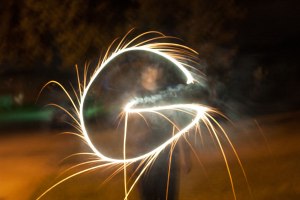
Later that night, I remembered a few photoshoots I’ve done previously using smoke balls and an FX lightsaber (I’m a Star Wars fan). I suggested that we should get a couple more smoke canisters (like Isaac suggested in the first place) and use Isaac’s new Ultrasaber to make long exposure shots. We each got one canister, and we took turns running around in the smoke, trying not to breathe it, to get the various effects. We also shot off a fountain, continued watching the surrounding fireworks show from the neighbors, and played with the sparklers and long exposures to see if we could get any ribbon-like effects for the Magic’s Stealing book cover. We had a lot of fun, and my parents joined in on playing with the sparklers. (We usually take turns lighting the sparklers and twirling them around). And I got poppers. So much fun…you throw them on the ground and they make light and noise… *Happy sigh.* Like my grandma said, “we had a party!”

IP - Fireworks

Isaac got creative with his sparklers and made various video game characters…

The next day we taped a bunch of streamers left over from party streamers ‘fireworks’ to a fan, then took both video and long exposure shots. We got a lot of abstract images, which are great for creating magical effects for the book cover.

IP---Fireworks

Long exposure of streamers for book cover art.


All in all, Isaac and I enjoyed combining our work with play. I hope you enjoyed this post, and I hope you had an enjoyable weekend, regardless of whether or not you celebrate the Fourth. 🙂


Leave a comment

Filed under Book Covers, Business Ventures, Photo Illustration, Writing

Thoughts On Writing – Foreshadowing

I was talking to one of my beta-readers the other day and they got me thinking about foreshadowing. Foreshadowing is important to having a satisfying ending, especially if the reader doesn’t see that ending coming. Without foreshadowing, readers may feel confused and lost. That’s okay if that’s the effect you’re going for, but be warned, sharp turns, like on a really rough, old, wooden roller coaster (I’ll take the smooth metal ones, thank you), can leave a reader nauseated if they aren’t prepared.

For example, I once critiqued a short story which started out sounding like a pleasant memoir. Kind of happy-go-lucky scenes, but the story rambled. It lacked direction. A couple plot points seemed out of place with the tone of the rest of the story, but they still felt… normal. Then, out of nowhere, there was a rather graphic scene that scarred the character (and the unsuspecting reader). In all fairness, I don’t mind stories that have some graphic violence, but in this particular story, that scene came out of the blue. It wasn’t satisfying. Had the foreshadowing been stronger, I think the scene could have worked perfectly, but the author wasn’t inclined to make changes to the manuscript that would allow such foreshadowing to take place. Their story, their say, but that incident did get me to start thinking about how important foreshadowing is to a story’s plot.

Some foreshadowing happens intentionally. You leave clues for the reader to create an expectation about what’s to come. This can occur within a short scene, across a book, or across a series. You might see this in the form of a prophecy. An example of this can be seen in Lord of the Rings movie, when the leader of the ringwraiths tells Eowyn (who is concealed by her armor), “No man can kill me,” and she replies, “I am no man,” then proceeds to defeat him. Prophecies are ripe with foreshadowing, and my favorites are the ones that seem clear but have double-meanings. The Sight, by David Clement-Davies, also uses prophecy to foreshadow events, and then twists the prophecy’s meaning to have a different ending than expected. With foreshadowing, those twists are exciting, rather than confusing. Take a look at any Twilight Zone episode. These shows often take unexpected turns, but those endings were cleverly foreshadowed so that the viewer has an ‘ah-ha!’ moment. Suddenly all the puzzle pieces fall into place and the viewer understands.

Something Wicked This Way Comes by Ray Bradbury also has several examples of foreshadowing. The story revolves around two twelve-year-old boys who discover a dark secret about the carnival that has come to their town. Throughout the book, the tone is dark, sinister, foreboding. Before the carnival arrives, we know a storm is coming because a lightning-rod salesman announces the coming of a storm and proceeds to gift the boys with a lightning-rod that has been adorned with various ancient, mystical symbols. But when the storm arrives, it’s not a lightning storm, as predicted, but the mysterious carnival with a dark, illustrated man and his tricks. The lightning-rod’s ancient symbols hint at the coming dark magic, and even (as the story later reveals) that the magic is ancient. Later in the story (Warning, spoilers ahead!), Will’s father (who has been foreshadowing the sinister purpose of the circus through his unease and concern) discovers that his laughter hurts the dust witch (who is absolutely creepy in her own right). Faced with the chance to confront her during a so-called ‘bullet trick,’ he carves a crescent moon into the bullet before firing. The crescent moon isn’t a moon, however, it’s a smile, and it kills her. (As a side note, the end of this book had me daydreaming an entertaining My Little Pony crossover where Pinkie Pie must face off with the Illustrated Pony…)

Foreshadowing allowed the ending to make sense, and for the reader to anticipate how the main characters would defeat the evil carnival. Readers keep reading in hopes of seeing if their theories prove true.

In a sense, foreshadowing is a shadow cast by the future. It can be a pale shadow, a single line or reference that hints at what’s to come. Or it can be a heavy shadow, a constant application of tone and mood and imagery. Characters may have suspicions (incorrect or not) about the future, which you can use to foreshadow events and to create lovely twists when the reader least expects them. Foreshadowing creates questions that entice a reader to keep turning pages. If you have a genre shift in your book, foreshadowing may be immensely important to keeping readers on board. Foreshadowing is a way to help readers suspend disbelief. Same with characters. If they’re going to need an obscure skill later to save the day, showing this early on, even in passing, allows the reader to believe in the character when the time comes.

Another kind of foreshadowing is the kind you don’t mean to add. Sometimes you write subtle hints into the story that you read later, which point at the outcome even though you didn’t realize you wrote them. There’s a line in Distant Horizon that stopped me cold after I’d written the rough draft of Glitch, a sequel in which one of the main characters dies rather horribly to save their friends. I remembered writing the line, but I hadn’t realized the potential impact it would have and how true it was. Granted, the line only has impact if you read Distant Horizon after Glitch, but it does provide a little bit of set-up for the character in question.

I also use foreshadowing heavily in The Little One, a prequel novel for the Distant Horizon series. Little One is a childlike spirit who has a number of chilling visions which eventually come to pass in one way or another. In several of the scenes (as they currently stand, since I still need to do edits), she references a rising sun. The rising sun is a reference to a symbol in the later stories, but, aside from being an Easter egg for readers, these scenes are meant to add to the story’s mood. The scenes start off lighter and become progressively darker. I’ve truncated a few scenes and edited them to make sense out of context:

First scene where the sun is referenced as foreshadowing…


One morning, Knight had gotten up early to use the restroom and found Little One staring out the window in her make-shift bedroom. Tiny rays of pink sunlight flickered across her face through the trees.


“It’s pretty,” she said absently.


He wandered around the foot of the bed and squeezed in beside her. The air conditioner tickled his feet from the floorboards, and early light twinkled across his eyes. He blinked. He hadn’t really watched the rising sun lately. Most the time he was sleeping. Or if he was headed to work, he was planning out his day. Not watching the sun slowly grow and ascend.


“It’s changing,” Little One said.


He glanced at her. “Yeah. It’s because of the earth’s spin and–”


“Not that. It’s different.”


He tried to tell if there was anything different from this sunrise than all the other sunrises he’d ever seen, but it looked the same as any other sunrise.


Little One shook her head. “It’s different. Just a little. Small. But it’s different.”


Knight twisted his lips. The kid seemed attuned to the subtle variances an adult couldn’t see, and he didn’t want to think about what those variances might be if she had insight for a power.


Later…


Knight sat down the drawings. There were images from Little One’s dreams, but there were other drawings, too. Swirling night skies and rising suns. And each time, Little One drew the sun just a little bit darker.


Later…


Hawk looked one more time at the drawing scribbled on his wall. On the far side, scribbled between the happy images of trees and squirrels, was a rising red sun, with five rays extending from it like spokes, but each cut off halfway through their usual extension.


Later… (One of Little One’s visions)


The poster was blurred to Little One. She paused, taking a second look. She couldn’t see it well, save for the red, rising sun of her usual vision. Then reality shifted. The normal colors downgraded, passing through a dark veil. The sun twisted and darkened, shrinking on itself until only five tiny rays remained, red as fresh-drawn blood. The buildings loomed and darkened, and the crowds thinned… as if a film had been placed over them, and the people raced and ran as flames consumed the new night, warping the street until the colors ran together and bled into one dull, monotonous grey.


Later… (near the end of the story, after a major battle scene)


Behind the city, like a crimson cog, the storm sun rose, its light sending spoke-like rays through the dark thunderheads, and basking the city in a bloody glow.

Note… that’s from the rough draft. I still need to go through and do edits.

There’s a lot of foreshadowing in The Little One for the entire Distant Horizon series. The Little One is a prequel, and the character has ‘insight,’ a power which lets her know more than she should, so it’s to be expected. Those scenes were a lot of fun to play with, and I wonder how different readers will read the various scenes…. especially depending on whether they read The Little One first or the other stories first.

Alternatively, let’s look at Magic’ Stealing. The antagonist has a lot of room for foreshadowing, but beta-readers have pointed out that the references seem odd and pulled them out from the story. There’s a reason those references seem odd, but I want the story to read smoothly, and as much as I don’t want to cut the references, I’m planning to do so (leaving the less obvious ones). Foreshadowing should serve the story, and in this case, beta-readers confirmed that I needed to try a lighter method.

I hope you enjoyed this post and found it helpful. What are your thoughts on foreshadowing? Have you read anything where the foreshadow did or didn’t work well? 🙂

4 Comments

Filed under Personal Work, Writing

Behind the Scenes – Dusk Runner

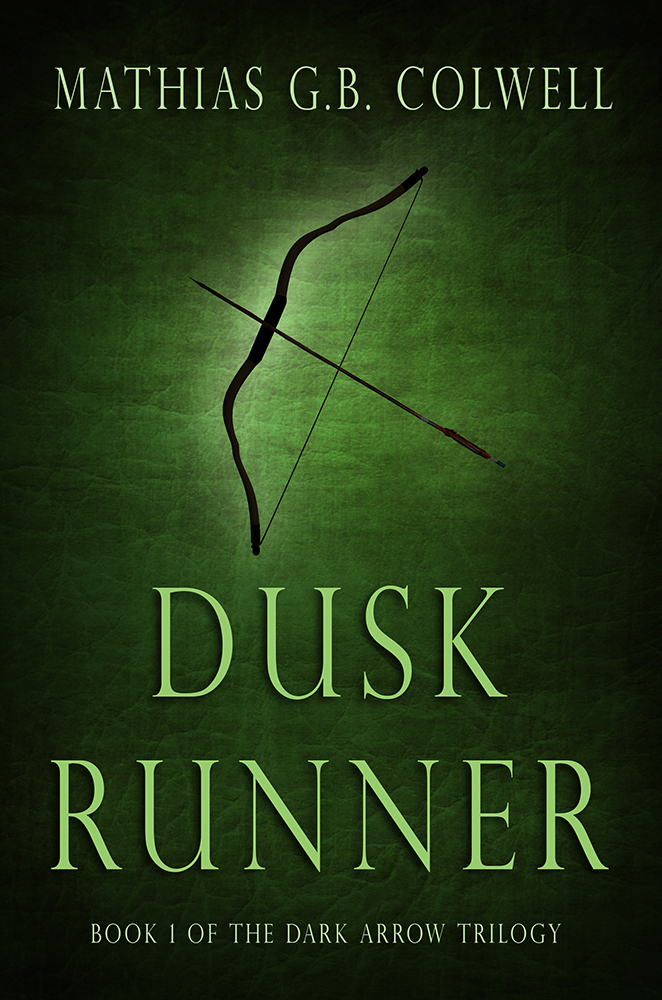
A cover for Melange Books. For this one, we focused on conveying the genre of the book, rather than particular characters. As such, people who like other fantasy books in a similar vein to this one can easily recognize another book they might enjoy. The author suggested covers similar to those of Diana Gabaldon’s Outlander series, which reminded me of the cover art for Game of Thrones. I merged the two styles, and this is the result:

SBibb - Dusk Runner - Book Cover

For the back cover, I flipped the background from the front cover with a few adjustments. Also, I saved the bow and arrow silhouette as a smart object so that it could easily be resized and added to the spine if the publisher chooses to do so.

SBibb - Dusk Runner - Back of Book Cover

Stock images from Dreamstime:

http://www.dreamstime.com/stock-images-brown-leather-texture-image21958744
http://www.dreamstime.com/stock-photos-old-yellow-brown-vintage-parchment-paper-texture-image24082203
http://www.dreamstime.com/royalty-free-stock-image-ethnic-arrows-image22897606
http://www.dreamstime.com/stock-image-bow-image11349751

1 Comment

Filed under Book Covers, Client Work, Photo Illustration