Behind the Scenes – Blood Loss

A cover for Melange Books. For this cover, we wanted to have the dark color scheme while keeping the cover light enough that the colors wouldn’t go to black in the print version. So I created the basic scene first, then played with multiple color options once those basics were in place. For the castle’s glow, I masked out all the windows, then tinkered with the lighting on layers below the castle layer. Once I had the light source, I added ‘soft light’ and ‘overlay’ layers over the castle layer. I typically use dark blue/purple for shadows, and yellow for highlights.

The proof version was fairly blurry, due to using comp images. Comp images are handy when you’re trying to see if the idea will work or not. When I created the near-final, I smoothed out the blending and adjusted how strong the gaussian blur was on the background layers, thus making it considerably sharper. Once you have the full-sized stock images, it becomes much easier to smooth out edges and see how sharp it will really go.

For the back cover, I stepped back several layers, removed the man and castle, adjusted my retouch layers, then flipped the merged image horizontally. This is the result:

SBibb - Blood Loss - Book Cover

SBibb - Blood Loss -  Back of Book Cover

Stock images from Dreamstime:

http://www.dreamstime.com/royalty-free-stock-photo-jagged-rocks-edge-cliff-desert-image29674305

http://www.dreamstime.com/stock-photo-edge-cliff-turquoise-ocean-image47133437

http://www.dreamstime.com/stock-image-morning-fog-mountains-image22074991

http://www.dreamstime.com/stock-photography-fog-lake-image37546892

http://www.dreamstime.com/stock-photo-ruins-tintern-abbey-former-cistercian-church-th-wales-banks-river-wye-close-to-english-border-image44804119

http://www.dreamstime.com/stock-photo-beautiful-dark-woman-black-robe-sword-fantasy-legend-image48884659

http://www.dreamstime.com/royalty-free-stock-image-smoke-background-image27490166

http://www.dreamstime.com/stock-photos-floating-smoke-black-background-image36147493

http://www.dreamstime.com/royalty-free-stock-photos-hooded-man-image9241498

2 Comments

Filed under Book Covers, Client Work, Photo Illustration

Thoughts on Writing: Author Interview at Cathleen Townsend’s Blog

Just a head’s up if anyone’s interested, Cathleen Townsend interviewed me at her blog today: http://cathleentownsend.com/2015/07/07/interview-with-stephanie-bibb/

Check it out, and if you like that one, she has a few other author interviews on her blog, as well. Enjoy. 🙂

Leave a comment

Filed under Writing

Thoughts about Publishing – Fireworks and Photoshoots

IP---Fireworks

A photograph from our fireworks photo shoot for the book trailer. The ‘scrying bowl’ from Magic’s Stealing.

Over the weekend, my husband and I visited my family for the Fourth of July. Among the things we did… per usual tradition… was to purchase fireworks. In previous years, we’ve typically picked up an assortment of fountains, smoke balls, and sparklers, then headed across town (or recently) up the hill in the evening to watch the fireworks from the city display. Over the years, the people around town have been picking up the big fireworks, so this year we watched them from the front yard. (And I made chocolate chip cookies during the lull… yum!) Anyway, we didn’t find any smoke balls for sale, but we did pick up a couple smoke canisters. The goal? To use the one day we had available to shoot off fireworks in a city area to get potential footage for the book trailer.

IP---Fireworks1

The setup for the 3D camera, ‘scrying bowl,’ and smoke canister.

While we don’t know for certain we’ll use the footage, the shoot was a lot of fun… and very smoky. Me, Isaac, and my dad headed up the hill, scoped out a decent spot for us to lay the bowl and the canister (we brought a couple bottles of water in case the canister didn’t fire properly), along with the 3D camera (it has video capabilities) and the DSLR. I set up the tripod for the 3D camera and kept it low to the ground, then once that was set up, Isaac lit the canister. I shot several still images with the DSLR for potential book cover usage, while Dad kept an eye on what the wind was doing with the smoke. Afterwards, we watered the area around the canisters and set them aside to cool. Dad went back the next day to throw them away.

IP---Fireworks

A still shot from the book trailer video shoot for Magic’s Stealing.

IP---Fireworks

Me having fun with Isaac’s Ultrasaber.

Later that night, I remembered a few photoshoots I’ve done previously using smoke balls and an FX lightsaber (I’m a Star Wars fan). I suggested that we should get a couple more smoke canisters (like Isaac suggested in the first place) and use Isaac’s new Ultrasaber to make long exposure shots. We each got one canister, and we took turns running around in the smoke, trying not to breathe it, to get the various effects. We also shot off a fountain, continued watching the surrounding fireworks show from the neighbors, and played with the sparklers and long exposures to see if we could get any ribbon-like effects for the Magic’s Stealing book cover. We had a lot of fun, and my parents joined in on playing with the sparklers. (We usually take turns lighting the sparklers and twirling them around). And I got poppers. So much fun…you throw them on the ground and they make light and noise… *Happy sigh.* Like my grandma said, “we had a party!”

IP - Fireworks

Isaac got creative with his sparklers and made various video game characters…

The next day we taped a bunch of streamers left over from party streamers ‘fireworks’ to a fan, then took both video and long exposure shots. We got a lot of abstract images, which are great for creating magical effects for the book cover.

IP---Fireworks

Long exposure of streamers for book cover art.


All in all, Isaac and I enjoyed combining our work with play. I hope you enjoyed this post, and I hope you had an enjoyable weekend, regardless of whether or not you celebrate the Fourth. 🙂


Leave a comment

Filed under Book Covers, Business Ventures, Photo Illustration, Writing

Thoughts On Writing – Foreshadowing

I was talking to one of my beta-readers the other day and they got me thinking about foreshadowing. Foreshadowing is important to having a satisfying ending, especially if the reader doesn’t see that ending coming. Without foreshadowing, readers may feel confused and lost. That’s okay if that’s the effect you’re going for, but be warned, sharp turns, like on a really rough, old, wooden roller coaster (I’ll take the smooth metal ones, thank you), can leave a reader nauseated if they aren’t prepared.

For example, I once critiqued a short story which started out sounding like a pleasant memoir. Kind of happy-go-lucky scenes, but the story rambled. It lacked direction. A couple plot points seemed out of place with the tone of the rest of the story, but they still felt… normal. Then, out of nowhere, there was a rather graphic scene that scarred the character (and the unsuspecting reader). In all fairness, I don’t mind stories that have some graphic violence, but in this particular story, that scene came out of the blue. It wasn’t satisfying. Had the foreshadowing been stronger, I think the scene could have worked perfectly, but the author wasn’t inclined to make changes to the manuscript that would allow such foreshadowing to take place. Their story, their say, but that incident did get me to start thinking about how important foreshadowing is to a story’s plot.

Some foreshadowing happens intentionally. You leave clues for the reader to create an expectation about what’s to come. This can occur within a short scene, across a book, or across a series. You might see this in the form of a prophecy. An example of this can be seen in Lord of the Rings movie, when the leader of the ringwraiths tells Eowyn (who is concealed by her armor), “No man can kill me,” and she replies, “I am no man,” then proceeds to defeat him. Prophecies are ripe with foreshadowing, and my favorites are the ones that seem clear but have double-meanings. The Sight, by David Clement-Davies, also uses prophecy to foreshadow events, and then twists the prophecy’s meaning to have a different ending than expected. With foreshadowing, those twists are exciting, rather than confusing. Take a look at any Twilight Zone episode. These shows often take unexpected turns, but those endings were cleverly foreshadowed so that the viewer has an ‘ah-ha!’ moment. Suddenly all the puzzle pieces fall into place and the viewer understands.

Something Wicked This Way Comes by Ray Bradbury also has several examples of foreshadowing. The story revolves around two twelve-year-old boys who discover a dark secret about the carnival that has come to their town. Throughout the book, the tone is dark, sinister, foreboding. Before the carnival arrives, we know a storm is coming because a lightning-rod salesman announces the coming of a storm and proceeds to gift the boys with a lightning-rod that has been adorned with various ancient, mystical symbols. But when the storm arrives, it’s not a lightning storm, as predicted, but the mysterious carnival with a dark, illustrated man and his tricks. The lightning-rod’s ancient symbols hint at the coming dark magic, and even (as the story later reveals) that the magic is ancient. Later in the story (Warning, spoilers ahead!), Will’s father (who has been foreshadowing the sinister purpose of the circus through his unease and concern) discovers that his laughter hurts the dust witch (who is absolutely creepy in her own right). Faced with the chance to confront her during a so-called ‘bullet trick,’ he carves a crescent moon into the bullet before firing. The crescent moon isn’t a moon, however, it’s a smile, and it kills her. (As a side note, the end of this book had me daydreaming an entertaining My Little Pony crossover where Pinkie Pie must face off with the Illustrated Pony…)

Foreshadowing allowed the ending to make sense, and for the reader to anticipate how the main characters would defeat the evil carnival. Readers keep reading in hopes of seeing if their theories prove true.

In a sense, foreshadowing is a shadow cast by the future. It can be a pale shadow, a single line or reference that hints at what’s to come. Or it can be a heavy shadow, a constant application of tone and mood and imagery. Characters may have suspicions (incorrect or not) about the future, which you can use to foreshadow events and to create lovely twists when the reader least expects them. Foreshadowing creates questions that entice a reader to keep turning pages. If you have a genre shift in your book, foreshadowing may be immensely important to keeping readers on board. Foreshadowing is a way to help readers suspend disbelief. Same with characters. If they’re going to need an obscure skill later to save the day, showing this early on, even in passing, allows the reader to believe in the character when the time comes.

Another kind of foreshadowing is the kind you don’t mean to add. Sometimes you write subtle hints into the story that you read later, which point at the outcome even though you didn’t realize you wrote them. There’s a line in Distant Horizon that stopped me cold after I’d written the rough draft of Glitch, a sequel in which one of the main characters dies rather horribly to save their friends. I remembered writing the line, but I hadn’t realized the potential impact it would have and how true it was. Granted, the line only has impact if you read Distant Horizon after Glitch, but it does provide a little bit of set-up for the character in question.

I also use foreshadowing heavily in The Little One, a prequel novel for the Distant Horizon series. Little One is a childlike spirit who has a number of chilling visions which eventually come to pass in one way or another. In several of the scenes (as they currently stand, since I still need to do edits), she references a rising sun. The rising sun is a reference to a symbol in the later stories, but, aside from being an Easter egg for readers, these scenes are meant to add to the story’s mood. The scenes start off lighter and become progressively darker. I’ve truncated a few scenes and edited them to make sense out of context:

First scene where the sun is referenced as foreshadowing…


One morning, Knight had gotten up early to use the restroom and found Little One staring out the window in her make-shift bedroom. Tiny rays of pink sunlight flickered across her face through the trees.


“It’s pretty,” she said absently.


He wandered around the foot of the bed and squeezed in beside her. The air conditioner tickled his feet from the floorboards, and early light twinkled across his eyes. He blinked. He hadn’t really watched the rising sun lately. Most the time he was sleeping. Or if he was headed to work, he was planning out his day. Not watching the sun slowly grow and ascend.


“It’s changing,” Little One said.


He glanced at her. “Yeah. It’s because of the earth’s spin and–”


“Not that. It’s different.”


He tried to tell if there was anything different from this sunrise than all the other sunrises he’d ever seen, but it looked the same as any other sunrise.


Little One shook her head. “It’s different. Just a little. Small. But it’s different.”


Knight twisted his lips. The kid seemed attuned to the subtle variances an adult couldn’t see, and he didn’t want to think about what those variances might be if she had insight for a power.


Later…


Knight sat down the drawings. There were images from Little One’s dreams, but there were other drawings, too. Swirling night skies and rising suns. And each time, Little One drew the sun just a little bit darker.


Later…


Hawk looked one more time at the drawing scribbled on his wall. On the far side, scribbled between the happy images of trees and squirrels, was a rising red sun, with five rays extending from it like spokes, but each cut off halfway through their usual extension.


Later… (One of Little One’s visions)


The poster was blurred to Little One. She paused, taking a second look. She couldn’t see it well, save for the red, rising sun of her usual vision. Then reality shifted. The normal colors downgraded, passing through a dark veil. The sun twisted and darkened, shrinking on itself until only five tiny rays remained, red as fresh-drawn blood. The buildings loomed and darkened, and the crowds thinned… as if a film had been placed over them, and the people raced and ran as flames consumed the new night, warping the street until the colors ran together and bled into one dull, monotonous grey.


Later… (near the end of the story, after a major battle scene)


Behind the city, like a crimson cog, the storm sun rose, its light sending spoke-like rays through the dark thunderheads, and basking the city in a bloody glow.

Note… that’s from the rough draft. I still need to go through and do edits.

There’s a lot of foreshadowing in The Little One for the entire Distant Horizon series. The Little One is a prequel, and the character has ‘insight,’ a power which lets her know more than she should, so it’s to be expected. Those scenes were a lot of fun to play with, and I wonder how different readers will read the various scenes…. especially depending on whether they read The Little One first or the other stories first.

Alternatively, let’s look at Magic’ Stealing. The antagonist has a lot of room for foreshadowing, but beta-readers have pointed out that the references seem odd and pulled them out from the story. There’s a reason those references seem odd, but I want the story to read smoothly, and as much as I don’t want to cut the references, I’m planning to do so (leaving the less obvious ones). Foreshadowing should serve the story, and in this case, beta-readers confirmed that I needed to try a lighter method.

I hope you enjoyed this post and found it helpful. What are your thoughts on foreshadowing? Have you read anything where the foreshadow did or didn’t work well? 🙂

4 Comments

Filed under Personal Work, Writing

Behind the Scenes – Dusk Runner

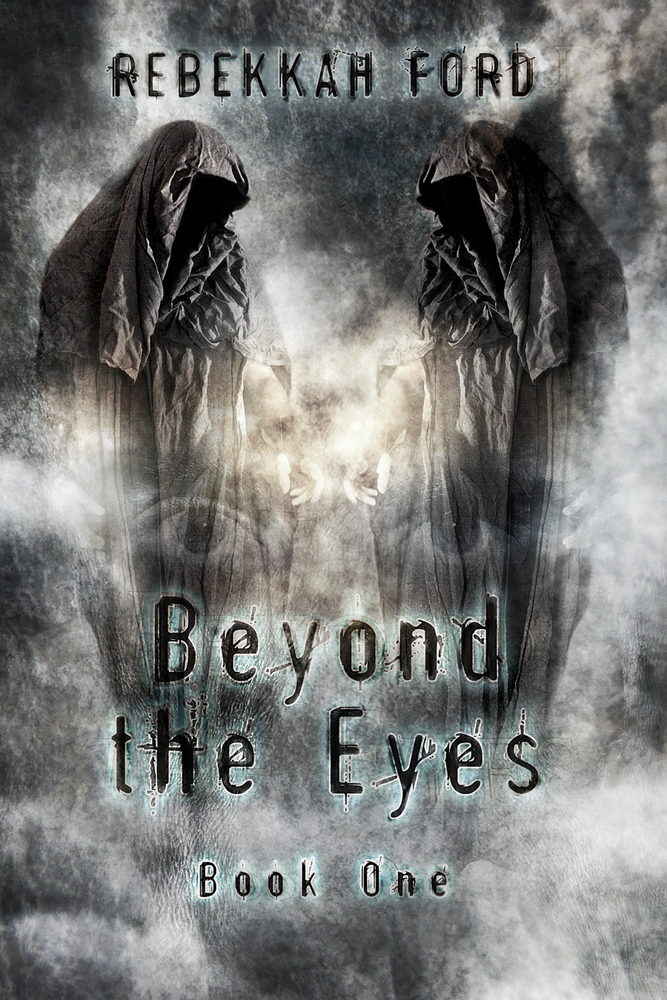
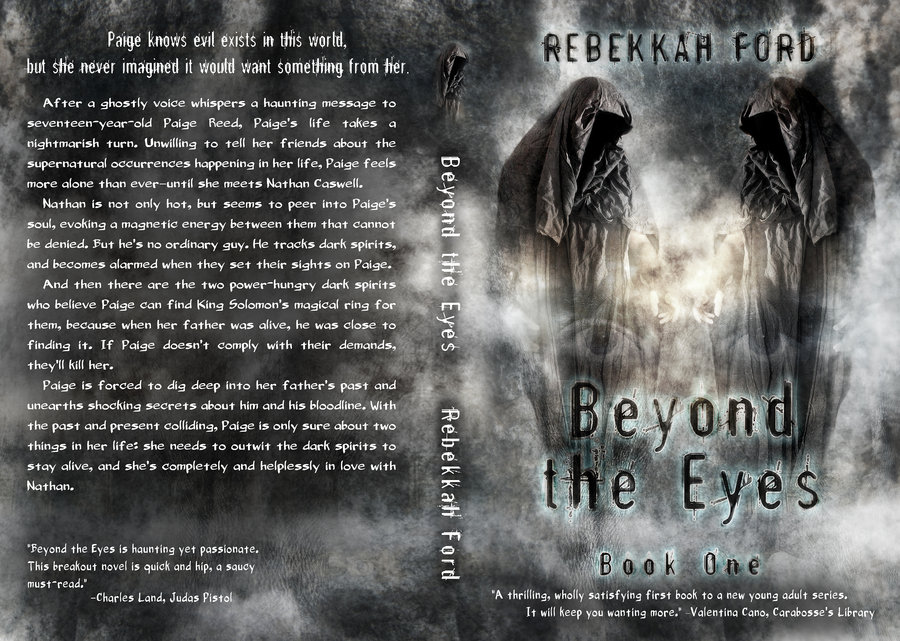
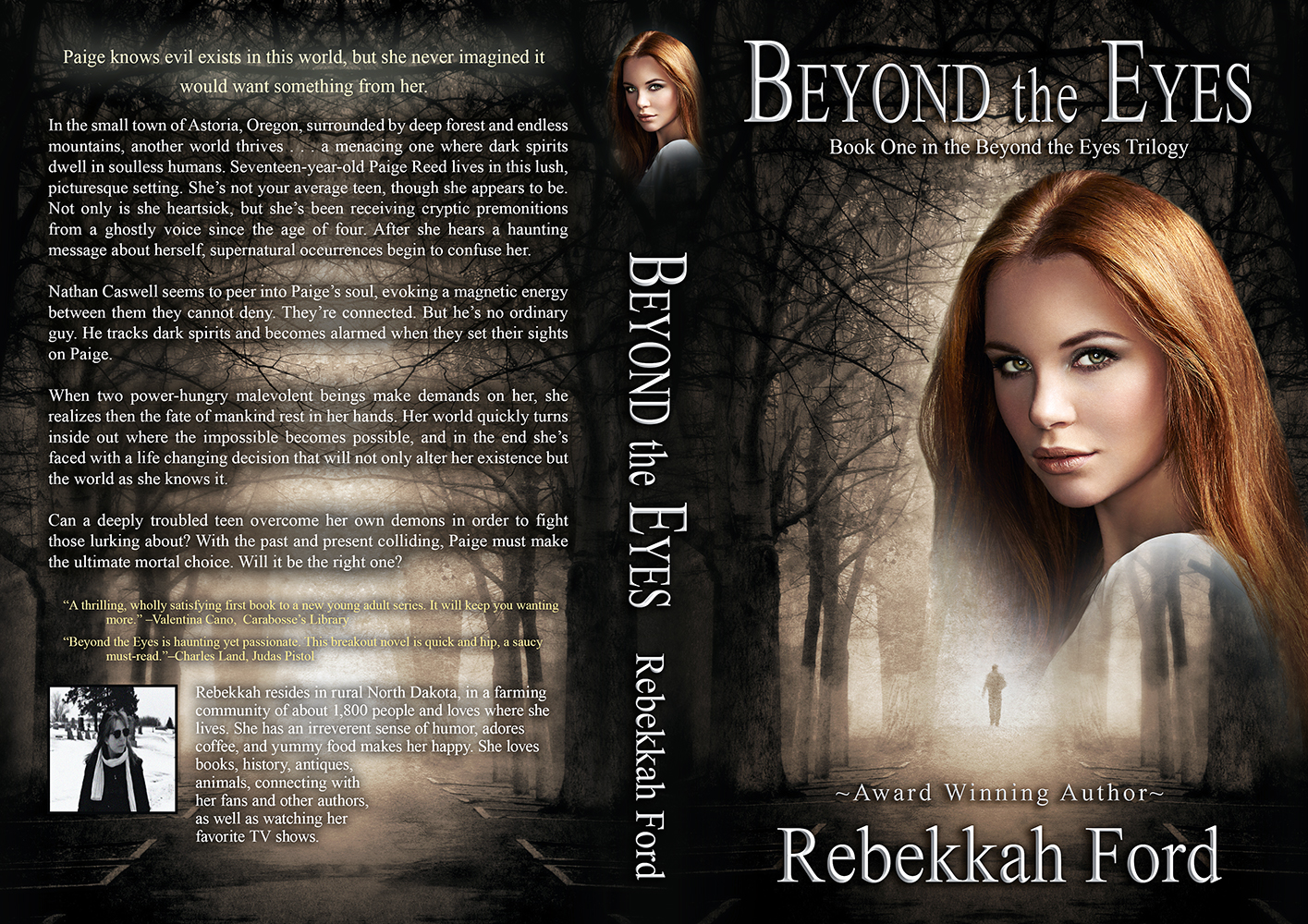
A cover for Melange Books. For this one, we focused on conveying the genre of the book, rather than particular characters. As such, people who like other fantasy books in a similar vein to this one can easily recognize another book they might enjoy. The author suggested covers similar to those of Diana Gabaldon’s Outlander series, which reminded me of the cover art for Game of Thrones. I merged the two styles, and this is the result:

SBibb - Dusk Runner - Book Cover

For the back cover, I flipped the background from the front cover with a few adjustments. Also, I saved the bow and arrow silhouette as a smart object so that it could easily be resized and added to the spine if the publisher chooses to do so.

SBibb - Dusk Runner - Back of Book Cover

Stock images from Dreamstime:

http://www.dreamstime.com/stock-images-brown-leather-texture-image21958744
http://www.dreamstime.com/stock-photos-old-yellow-brown-vintage-parchment-paper-texture-image24082203
http://www.dreamstime.com/royalty-free-stock-image-ethnic-arrows-image22897606
http://www.dreamstime.com/stock-image-bow-image11349751

1 Comment

Filed under Book Covers, Client Work, Photo Illustration

Thoughts on Publishing – A Blurb for Magic’s Stealing

As I get closer to publishing Magic’s Stealing, I’ve been compiling the various elements meant to catch a reader’s attention. While a lot of emphasis is placed on the book cover (and I’ve realized the current version I’m considering may be better suited to the third book, so I’m debating what I might use instead for the first), after the cover, a reader inevitably sees the blurb. The blurb should show what the book is about and entice a reader to either buy the book, or at least take a look inside.

However, as a writer, we’re so close to our stories that it’s hard to see what will draw the reader’s attention. I’ve posted my current idea for a blurb on Absolute Write (which is a very useful source of information for authors), and I’ve come up with two slightly different versions. The question is… which works better? Short and snappy? Or more details about the world?

In order to get a little more insight on the subject, I read through a few articles that discussed what makes a good blurb (see the links below if you’re interested), and came up with a list of elements to consider:

  • A sense of the main character(s). Who and what kind of character are they? (For Magic’s Stealing: Toranih is a young noblewoman who would rather have a sword in her hand than use magic to heal or throw fireballs.)
  • Just enough detail to show the type of story and what makes this book different. (For Magic’s Stealing: there’s a kingdom, magical ribbons, mages, shadows who are impervious to mortal weapons… and this is where I start to wonder if I need to hone in on the description)
  • What the main conflict/plot will be. (For Magic’s Stealing: Almost all magic is stolen from the kingdom, leaving two young mages–one of whom doesn’t like magic–to protect their home.)
  • A question that entices the reader, or leaves them wanting more. (For Magic’s Stealing: Will Toranih successfully adopt the responsibilities of a mage so she can fight the shadows? Or will she fail and cause her home to perish?)
  • Offer a taste of the writing style. (Maybe I can include a tiny clip at the beginning of the description. You know, those story bites usually seen in italics?)

These are the current versions of the blurbs that I’m considering for Magic’s Stealing.

Short Version:

Toranih would rather have a sword in her hand than use her powers to heal or throw fireballs, and as a result, her magic skills are lacking. But when the kingdom’s magic is stolen, she’s one of the few whose powers remain. With former mages dying from magic withdrawal, and the looming threat of an army of shadows who are impervious to mortal weapons, she must either adopt her neglected responsibilities as a mage or watch her home perish.

Long Version:

For centuries, ribbons of magic have provided the kingdom of Cirena with light, healing, and protection. Then, in a span of minutes, those ribbons fly from their masters, stolen, save for the ribbons of two young mages. One of these mages is Toranih, a noblewoman who never liked magic to begin with. The other mage is her best friend, Daernan, a gifted shapechanger who uses his magical sight to track the vanishing ribbons. Toranih would rather have a sword in her hand than use her powers to heal or throw fireballs, and as a result, her skills are lacking. But with former mages dying from magic withdrawal, and the looming threat of an army of shadows who are impervious to mortal weapons, she must either adopt the responsibilities of a mage or watch their home perish.

So my question to you is this: Which blurb, if either, holds your attention, and do they entice you to ‘look inside?’ Why? Or if you neither holds your attention, why not?

I’m concerned that the shorter one may read too fast, but that the longer one may loose readers with unnecessary information. One solution I’m considering is that Smashwords offers both a short and long description for retailers, and as such, I could use both descriptions in their respective sections. Anyone who wanted more information could click to read the longer description. In the meantime, if whichever description I choose for Amazon doesn’t seem to be working, I can try switching it out for the other and see which one works better.

I hope you enjoyed the post. Are there any blurbs that worked well for you? Anything you’ve found that didn’t?

A few articles I found particularly helpful while researching the subject:

http://romanceuniversity.org/2011/11/23/5-top-tips-for-writing-a-compelling-book-blurb-by-amy-wilkins/

http://kristenpham.com/2014/01/14/how-to-write-a-great-ya-fantasy-or-sci-fi-book-blurb/

http://www.thecreativepenn.com/2010/11/16/how-to-write-back-blurb-for-your-book/

http://www.lightmessages.com/lm/index.php/blog/writing/229-how-to-write-a-book-cover-blurb

6 Comments

Filed under Business Ventures, Personal Work, Writing

Thoughts on Publishing – Book Trailers

Isaac and I have been considering ways to promote our books once they’re ready. I’ve got a cover in mind for Magic’s Stealing, along with a couple possible blurbs, but we both agree that having a few other promotional materials meant to pique the interest of readers would be handy. One promo piece we’re considering is that of a book trailer.

Love ’em or hate ’em, a good book trailer catches the eye of a potential reader and either gets them to investigate what the book is about, or get them to make that final step toward picking up a book they’ve been on the fence about.

In order to get a feel for what makes a good book trailer, we perused Youtube and watched various (mostly young adult) book trailers. The below is our subjective conclusions.

Elements of a Good Trailer:

  • Music that fits the tone of the book. Compare the kind of music found in movies to your genre. A suspense might have suspenseful music. Horror might have music that is jarring or creepy. Action might be fast paced. Use music (make sure you have the right licence) to help convey genre to the reader.
  • Use cliches to catch interest… sparingly. If your book turns a cliche on its head, such as having a gladiator woman instead of a man… you might want to focus on that. Or you can hint at similarities in your book to other stories. For example, I showed my husband the book trailer for Throne of Glass (Note: I haven’t read the book, so I don’t know how well the trailer matches it), which starts off with a silhouetted version of the character on the cover. Isaac’s first reaction was ‘is this Assassin’s Creed?’ Since the book is about an assassin, then it makes sense that people who enjoyed Assassin’s Creed might enjoy a book about an assassin. Using similarities to other books, games, or movies allows the reader to consider that, if they enjoyed the other story, they might enjoy this one, too.
  • Set the theme. Convey the mood and tone of the book, and offer a sense of setting. This was often done using the imagery and/or animation shown. But also show what makes this book different from other books with similar themes… why readers should pick up this particular book.
  • If you already have a fan base from an existing prequel, touch on what excited them about the first book, but don’t leave new readers without a sense of what’s going on.
  • Include the name of the book and the author, along with when and where it will be available. Include buy links once available, and make it easy for a potential reader to buy your book. Don’t forget to include the cover of the book somewhere in your trailer, so readers can link the trailer to the book when it comes time to buy it.
  • Give readers something to remember. Granted, be careful not to use a cheesy gimmick unless the story calls for it, but if the reader remembers (and likes) the trailer, they may be more likely to pick up the book later, if they choose not to buy it immediately. If the reader doesn’t remember the trailer, they may not be as likely to pick up the book if they come across it later.
  • If writing non-fiction, give a sense of what the book will be about, introduce the author… maybe include a bit of humor, if you’re the kind of author who uses humor in your book.
  • Simplicity is your friend. You may not need a voice-over or a bunch of flashy images. Sometimes a simple ‘what if’ hook will catch a reader’s attention, as can using more ‘booky’ graphics. Words on the screen, skillfully placed, can be effective.
  • When comparing book trailers to movie trailers, Isaac and I noticed that the movie trailer showed the type of characters involved (such as a strong female protagonist and the rough-but-romantic guy). Movie trailers were typically faster paced, and those trailers focused on higher-budget graphics (something books often don’t have… the graphics or the budget). Movies that disappoint in theatres often show clips in the trailer that don’t deliver a consistent feel once you watch the movie.

Elements of a Bad Trailer:

  • Audio: Some trailers were obnoxiously loud or really quiet and hard to hear. Or the dialogue wasn’t clear. Be sure your potential reader can understand what is being said.
  • Too much telling, and/or a trailer that goes on too long. If you go on and on… and on… you may loose the reader. Worse, they may assume your book will drag, too.
  • Don’t quote your blurb verbatim. Readers will read that when they look at the book. Give the reader something new or expand on something that might interest them. You want a hook.
  • Cheesy lines. This can be hard to judge, because certain tropes are common, but make sure your dramatic pauses are actually dramatic… and don’t have you rolling on the floor in a fit of giggles.
    • Unless that’s the kind of story you’re trying to tell. If so, then by all means do so. I bought one book because the campy humor of the trailer was too entertaining to pass up.
  • Too distracting. If the trailer uses flashy elements and distracting colors, or elements that seem out of place, readers may be too distracted by those elements to remember what the actual book is about.
  • Don’t have ads on your book trailer. Seriously… the trailer is an ad. Readers don’t need to see unrelated Youtube ads popping up on the screen while we’re trying to watch it. Having other ads (when you can control them) impedes the message you’re trying to send out.

One thought I had during this whole process was to create a ‘teaser’ for the book rather than a ‘trailer.’ The idea would be to convey a small, interesting part of your story (For Magic’s Stealing, an example might be to voice over a section of the story where the antagonist, Shevanlagiy, is speaking to a rival. The teaser could therefore show what the protagonist is going up against. For example, there’s a line in the current draft of Magic’s Stealing where she say: “I’ll destroy everything,” she whispered, “if it gives me the power I need.” Granted, a little more context might be helpful.) For a trailer, you want to give a sense of the story as a whole. But for a teaser… one trailer we saw used a small bit of dialogue, a small scene that might have been directly from the book to show what the protagonist is dealing with. But it didn’t necessarily say a lot about the larger story.


I hope you enjoyed this post, and in the meantime, Isaac and I will be considering the above when we go to make a trailer for Magic’s Stealing. But what are your thoughts? Have you found any book trailers to be particularly effective (or ineffective)? 🙂


If you want to read more about book trailers:

http://therumpus.net/2013/06/fantastic-book-trailers-and-the-reasons-theyre-so-good/

https://www.goodreads.com/topic/show/1348243-what-makes-a-good-book-trailer

http://www.thecreativepenn.com/2011/01/07/how-to-create-a-book-trailer/


Example trailers, you be the judge of good or bad:

(Note, I haven’t read all of these. I just watched the trailer.)

Throne of Glass: https://www.youtube.com/watch?v=j_t1kXaDtRQ

An Ember in the Ashes: https://www.youtube.com/watch?v=sbvyCrkVT7M

Matched: https://www.youtube.com/watch?v=xaeNWL8rlBI

Steelheart: https://www.youtube.com/watch?v=6sC9NtpXLH4

The One: https://www.youtube.com/watch?v=qVDfV7gCCFE

Fire: https://www.youtube.com/watch?v=IEiijD-tV5M

The Monstrumologist: https://www.youtube.com/watch?v=B4V-biapntE

How to Catch a Russian Spy: https://www.youtube.com/watch?v=W2frzMX4IWM

The Glass Arrow: https://www.youtube.com/watch?v=G20Qz172G4s

Divergent: https://www.youtube.com/watch?v=tu5Erw-posg vs. https://www.youtube.com/watch?v=sutgWjz10sM

Virals: https://www.youtube.com/watch?v=MeBCqpUmPSU

Half Bad: https://www.youtube.com/watch?v=UIcpalOypmo

Three: https://www.youtube.com/watch?v=Zs46WskvpGU

Replica: https://www.youtube.com/watch?v=G62U728THG0

Existence: https://www.youtube.com/watch?v=_pUWjgCTTVg

The Raven Boys: http://maggiestiefvater.com/blog/the-animated-book-trailer-for-the-raven-boys/

The Young Elites: https://www.youtube.com/watch?v=F9VTgbB0dWg

Minder: https://www.youtube.com/watch?v=8lv6eC3E-9k

The Friday Society: https://www.youtube.com/watch?v=xs5rXZrglf4

Miriam Black: https://www.youtube.com/watch?v=gcR1B-48lK4

Leviathan: https://www.youtube.com/watch?v=PYiw5vkQFPw

The Flame Alphabet: https://www.youtube.com/watch?v=YMhEAIDclbI

Reboot: https://www.youtube.com/watch?v=adUV6qZgZdQ&index=8&list=PLogL8GFmSgvnNjVhWtvSFjawIn0HlzTRN

Leave a comment

Filed under Business Ventures, Photo Illustration, Writing

Sneak Peek – Battle Decks

If you’ve been reading my blog lately, you may know that my husband, Isaac, and I are starting a publishing company for our stories and games. Well, I’ve talked a lot about the stories, but today I’m going to give you a peek into one of our games-in-progress: Battle Decks.

I’m not going to give a whole lot of detail on the game just yet, but I will say this: it’s a fantasy pseudo-steampunk table-top card game, where there are two battling factions and your goal is to take out the opponent’s hero cards. We’re considering the catch-phrase of “Dragons, dinosaurs, and dirigibles, oh my!”SBibb - Battle Decks Sneek Peek

Anyway, at this point in time, we have the basic mechanics of the game, stand-in cards, and we’ve played it on and off between ourselves over the past couple years. Currently, we’re in the process of creating the art for the actual cards. For the typical card, Isaac creates the base image with pencil on sketchbook paper. Then I go in and add the details, smoothing out the line art in the process. We then scan the page onto the computer. I retouch the pencil art in Photoshop CS6. Isaac does the basic coloring. Then I do the final touch-ups to the coloring and shade the image. That completes the basic art, up to the point we add them to their actual cards.

We’ve already ordered one proof of the first few cards, and there are tweaks to be made for readability. But it’s coming along, slowly but surely. There might be a set of stories planned around this game, too…

Your sneak peek is one character from each faction. 🙂

SBibb - Battle Decks Sneek Peek

Leave a comment

Filed under Business Ventures, Photo Illustration

Thoughts on Writing – Aging Up Characters

I’ve been getting feedback from beta readers for Magic’s Stealing, and one of the comments that has been fairly consistent is that the characters (which I intended to be around twenty years old) feel like they’re twelve- to sixteen years old, effectively making the story sound like it’s aimed at a middle grade or the lower end of the YA audience. Which isn’t a bad thing… if I meant for my characters to be younger. However, I’m hoping to get them to sound like they’re at least eighteen, so it’s time to consider what’s making them sound younger, and what can be done to make them sound older. 🙂

To start with, once I knew that their age was an issue, I sought feedback from the beta readers. I needed to know why these characters were sounding younger.

1. Their actual age isn’t mentioned until later in the story. This leaves their age open for interpretation, and by the time a reader gets to the point where their age is mentioned, readers already have a solid idea of the characters’ ages in mind. (As a side note, there’s a book I read recently, Renegade by J.A. Souders, in which a certain intimidating character is revealed to be a child. The story is told in first person by a character who is brainwashed into thinking nothing of this, so she’s not surprised, but it is a twist for the reader. As a reader, I personally loved that twist. However, it did take me a little while to hold the image of a child in my head, rather than that of an older teenager. In  my current manuscript, I don’t want this kind of surprise for the age of my main characters, so I may need to bring up their ages sooner).

2. The characters act younger. In the opening scene, my main character, Toranih, is nervous because she’s been hearing footsteps and thinks she’s being watched. As soon as she ‘turns out the light,’ she dives under the covers of her bed. Personally, I love the image. However… this isn’t what we typically picture an older person doing. Therefore, the first impression is that Toranih must be younger. An option to fix this may be to have her consider diving under the covers, but she forces herself to walk calmly to bed. Or she may walk calmly to bed but reference that she’s going to bed with a knife at her side. Or… some combination thereof. Haven’t decided yet.

Darkness flooded Toranih Covonilayno’s sleeping chambers as she mentally extinguished her magic crystal’s light. She dropped the crystal on her dresser and rushed to her bed, then dove under the covers.

Silly, she knew, but the last few nights had brought strange creaking noises from the attic, soft footsteps and the brushing of rough wool on the edges of the wooden floorboard above. She listened now, waiting to see if the footsteps returned.

3. Lack of romance. The current draft doesn’t show much in the way of a romantic interest between the main characters. Now, that’s not to say you must have romance in a story to make it YA or adult, but without romance, this story seems like a more likely candidate for an MG novella. When I go to edit, I plan to hint a little more at the (lack of) romance between the main characters. I’m toying with the idea of having Toranih and Daernan ‘technically’ courting (mostly so Toranih can keep her father from trying to point other suitors in her direction, since she’s not necessarily interested in Daernan romantically), while Daernan actually does like her. Increases tension in the story, and gives a better clue about their age.

4. Expectations for the type of fantasy. Especially in YA, we seem to get a lot of hints that the teenage main characters are either actively seeking (or avoiding) marriage. These worlds have their characters finding partners at a younger age. In Magic’s Stealing, I’m going with the idea that the characters live longer and have a tiny bit more ‘modern’ of a society (with magic taking the place of electricity, but in an older setting with kingdoms and lords and ladies). However, to pull this off, I’m going to have to show more of their world. We need to see older characters walking in the streets. Maybe a reference to food spoiling when their ‘magic refrigerator’ no longer has magic to keep food cold. Maybe a reference that going to an academy for magic, versus sticking around and getting married, is a common occurrence. I’m considering having Toranih’s sister, Siklana, already be accepted into an academy (think college), rather than expecting to be accepted at the end of the month. Maybe she’s back at the manor because she’s visiting, and she’s planning to oversee the festival that takes place at the beginning of the book. And maybe Toranih actually is studying swordsmanship, rather than dreaming about it, but her lessons are private since she can’t convince her father that being a guardsman is fitting for a lady of her status (but she can’t pass her magic exams, so… what else is she going to do?). There’s a lot of world building opportunities here, and the great thing is that these changes don’t have to be major alterations.

5. Lack of (graphic) violence. Though there are a couple battle scenes, we don’t really see much blood spilled, and nor do we get graphic depictions of the shadows who are burned. Now, this doesn’t mean it isn’t for older readers, but it makes it more open to an MG audience. That being said, I’m  considering adding a bit more detail to these scenes, partially for the impact they have on the main characters, and partially so that once we get to the second book, it doesn’t come as a surprise when we actually start seeing more violence coming into play. Doesn’t mean it’s going to be gratuitous. Just means that the MC is going to be distinctly aware of what’s going on around them.

Her friend had backed into a rocky cove, but he was using that to focus his attention on the growing force of shadows in front. He shifted back and forth, thrusting each hand separately and delivering a blast of air or a blast of fire, to which they ducked and dived away.

The shadows shied from the wind, but they hated fire. They scuttled aside when his magic seared their hands and scalded their weapons. They sent new shadows to fight while they nursed their burns. Those burns healed, but slowly. And one shadow lay dead on the floor, burned beyond recognition, and did not appear to be healing at all.

Toranih shuddered. If these were mortal men, Daernan wouldn’t be using fire like this.

But fire did hurt them, and they weren’t mortal men.

6. How other characters perceive them. The antagonist refers to the main characters as the ‘boy’ and the ‘girl.’ Granted, from a god-like character who can’t die, it makes sense that she’d view these characters as being childlike. But with this scene placed early in the novel, it doesn’t help the perception of the main characters’ ages as being younger. I’ll probably keep these kinds of references for the actual deities, but at that point, the actual ages for the MCs should be established, so the reference should hint more at the internal thoughts of the deities in question.

A cloaked figure knelt beside a sprawling sycamore near the girl’s window, her eyes trained on the two owls.

Finally, they’re gone, the figure thought to herself. She climbed up the tree, bark catching on the tips of her leather boots, then slipped inside the open window. The room was dark, but the light crystal glowed with residual energy and lit the bare essentials.

The girl had rearranged the furniture since the night before. No night table or pile of books, and her usual set of sparring knives didn’t hang from the wall. Probably locked in the chest at the foot of the bed, or buried under the mattress.

There’s a lot of little things that could affect the perceived age of the main characters, and with a few tweaks here and there, I think I can have them sounding like they’re at least eighteen. And it’s worth noting that I do read a lot of YA and the occasional MG book. Therefore, it isn’t surprising that my narrative voice would lean that direction.

I hope you’ve enjoyed this post, and now it’s your turn. Have you had any experiences with your writing or reading where characters don’t sound like the age that they’re supposed to?

6 Comments

Filed under Personal Work, Writing

The Infinitas Publishing Site is now Live!

I’m happy to announce that Isaac and I now have our Infinitas Publishing site live. 😀

http://infinitaspublishing.com

Took most of yesterday (including a couple photoshoots) and a few hours here and there to get it up and running, but after finally figuring out how to get the domain properly mapped, it’s now up. You can read about the behind the scenes process on our first blog (written by Isaac): http://infinitaspublishing.com/blogs/post/Behind-the-Website/

A few parts of the site aren’t quite working yet (the upper banner doesn’t want to resize for mobile devices), but I’ve sent an email to the web host to see if they can help.

Also, we have a new twitter account where we’ll be making announcements in regards to the books and games we’re publishing: https://twitter.com/InfinitasPub

Not much up at the moment, but it’s a start. We hope you enjoy it, and we have more plans for it as we continue to move forward. 🙂

Leave a comment

Filed under Business Ventures, Personal Work