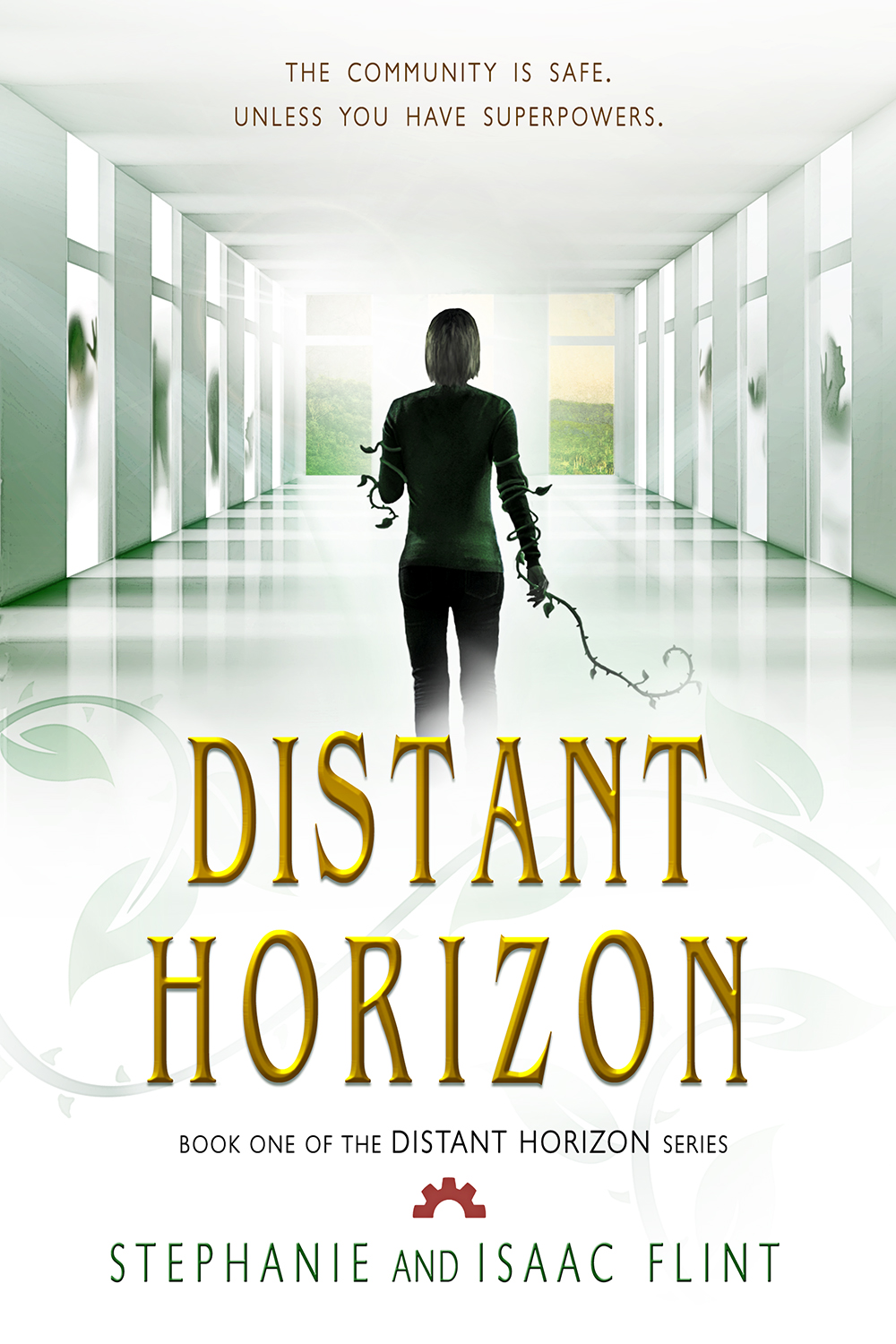
Tag Archives: fantasy

Thoughts on Publishing – Infinitas Publishing Status Report and First Chapter of Magic’s Stealing

Where does the time go? My day job started up again a couple days ago, and I’m currently readjusting my schedule to be able to be productive and not spend all my time daydreaming about what happened in the role-play campaign that my husband and I just finished this week. (A main character got a bittersweet ending… not the ending he was hoping for (he’s a fourthwaller), but an ending that left him reasonably happy and with his mind intact).

Anyway, while I’m readjusting my after-work patterns,  I thought I’d do a quick status report on the projects of Infinitas Publishing

When Isaac and I started up our business this summer, we created a rough schedule of when we would like to release our books and games. It’s something we created for our own personal use, which gives us an extra push to actually publish things, rather than getting into an endless loop of editing. It’s also a good measure for us to use in terms of how much time we have until we complete a project, even if we don’t release the prospective dates to the public. This should give us a little more wiggle room for when our planning inevitably goes astray.

For Magic’s Stealing, I’m about a month behind on my goal (Shh… don’t tell anyone), but I’m in the final phase. I’ve already got it formatted as ebook, except for the table of contents (easy to do, but needs to be different between Kindle and Smashwords editions), and I’m working on the final proofread for typos on printed paper. Once that’s done, I’ll put it up for pre-order and reveal the cover. Look for that coming soon… which I also need to update on the main website. A few months after that I am hoping to make the paperback edition available.

For Battle Decks: Trials of Blood and Steel, we’re on par. We’ve already ordered the initial proof copy (which I posted about a while back), got feedback, and made edits. I’ve updated the box title to Trials of Blood and Steel instead of Multiverse: 1953, based on further feedback, along with updated the rules (still needs to be proofread) and fixed the cards for consistency (cards now say +2 ATK instead of +2 attack, etc). Once we have the rules proofed, we plan to order a second copy of the game to make sure all of our edits are input correctly. We also need to recreate the trial edition of the game with rules specific to the trial (that way we don’t confuse players with irrelevant rules, such as how to choose heroes for each faction). Based on our current schedule, we should be able to release Battle Decks as planned.

For The Multiverse Chronicles: Trials of Blood and Steel, we should still be on par, but we’ll see as we get closer to our planned release date.  Isaac is currently working on the rough draft of episode 19 of the 24 expected episodes, though some of those we’ve planned to split, so we may be a bit further ahead (and there may be more than 24 episodes). I’ve gotten ten of those episodes edited and semi-polished, ready for us to do the full read-through and see how everything meshes together. I’ve got partial edits done on episode 11. However, once those are complete we will need to send out the episodes to beta readers to look for errors, and then polish the first few episodes to release online. We also need to prepare the blog site where we’ll be publishing the story. The first four episodes need to be ready to go before we release Battle Decks.

Beyond those projects, which are up for release by the end of this year, I also have plans for The Shadow War, (book two in The Wishing Blade series).The first draft is partially written (but requires changes), and I’ve been plotting the rest of the story and making sure it will flow easily into book three. The upside of my day job is that I have plenty of time to plot while I do greenscreen work on photos.

Once I have a definite date for these projects, I’ll make them public.

In the meantime, please enjoy the first chapter of my upcoming YA fantasy novella, Magic’s Stealing. 🙂

Magic’s Stealing


The Wishing Blade - Section Break - Magic Swirl ONE The Wishing Blade - Section Break - Magic Swirl

Darkness flooded Toranih Covonilayno’s sleeping chamber as she mentally extinguished her magic crystal’s light. She tossed the crystal onto her dresser and hurried to her bed. The silk covers rustled as she slipped underneath, where she felt for the leather hilt of the knife under her pillow.


The last few nights had brought strange creaking noises from the attic, soft footsteps and the brushing of rough wool on the edges of the wooden floorboard above. She listened now, waiting to see if the footsteps returned.


They did not.


Instead, wind whistled through a tiny crack in her bedroom windowsill. She peeked over the covers. A shadow passed by the heavy curtains and she clasped the smooth fabric between her fingers.


Ridiculous.


She kicked off the covers, knife in hand, and hopped out of bed. She waited, just in case the shadow returned. Then she walked to her dresser, picked up the crystal, and carefully raised the light again.


The dresser was pristine, with only an oil lamp sitting in the dustless corner. A small oak chest at the foot of her bed remained locked with steel. Heavy brocade curtains obscured the window.


No sign of intruders.


So why couldn’t she shake the feeling that someone had been watching her?


She dimmed the crystal’s light until the room was cast in an eerie twilight, but the only magic present was her own. The crystal’s faint light revealed thin, lime green ribbons of magic floating around her, while glowing turquoise ribbons darted in and out of the crystal.


Her older sister, Siklana, had created the artifact for Toranih when she was little. Few could see magic without a crystal. Whenever a mage used their ribbons to do… well… anything, she couldn’t see the cause.


And what she couldn’t see, she couldn’t fight.


Toranih sighed. She was seventeen now, and she wasn’t afraid of magic. She just didn’t like it. There was a difference.


Something tapped the glass. Toranih shrieked, fumbling with the crystal. She clutched it to her chest and spun toward the window. A cluster of ribbons danced around a small form on the other side.


Well, are you coming? Daernan’s telepathic voice flitted through her mind, amused.


Of all the times for him to show up unannounced—


She dropped the crystal on her dresser, sheathed the knife, then flung open the curtains. “Don’t scare me like that!”


A small, brown, ostensibly cute owl peered at her with bright yellow eyes and giant black pupils. Daernan, judging by the white ring of feathers crowning his left eye.


The owl shrugged and puffed out his plumage like a feather duster. Not my fault you’re so jumpy.


Toranih crossed her arms. Though dim in the moonlight, the crystal’s twilight revealed various blue and yellow and pink ribbons swirling thick through Daernan’s owlish body.


Coming? The pink ribbons carried Daernan’s thoughts to Toranih’s mind, and she fought the urge to swipe them away.


Toranih knelt beside the window so that she was eye-level with the owl. He tilted his head and blinked. She snorted. “I’ve been expressly forbidden from attending the festival,” she said in the most high-and-mighty voice she could muster. “So, no. I’m not coming.”


Not that she minded missing the event. Too much magic and too many people teasing her about when she and Daernan would make their courtship a formal engagement.


She turned from the window, lit her oil lamp, and then mentally killed the crystal’s light.


The ribbons vanished.


Let me guess. Your father wasn’t happy that you challenged Lady Ikara to a duel, then respectfully threatened that she ought to let her fiancé fight for her, lest you knock her off her high horse onto her—he mentally coughed for effect—her lazy ass?


Toranih shrugged. “She insulted you. Good excuse not to go.”


The owl sighed, best an owl could, before tapping the window with his beak. Can I at least come in?


She obliged him with a flip of the latch. Then she plopped onto her bed. The owl swooped inside, changing as he went. By the time he landed, the owl had morphed into a young man with shoulder-length brown hair. A patch of white hair ran through his bangs above his left eye.


Daernan stood from his crouch and shook himself like a dog that had just run through a pond. He looked as he usually did, no more dressed for the festival than any other day. Only a simple cotton tunic and loose fitting breeches, along with a leather belt that Toranih had helped to etch and dye. That belt had been an experiment, to say the least. Daernan proved much better at drawing the various creatures than she had. An owl, a shaggy dog, a horse… his favorite changes.


He tossed her a green velvet satchel. “I know you don’t like this holiday, but that’s for you.”


She scowled, dangling the satchel by its cords. “Really?”


If Daernan had brought her spicy cocoa flowers, like last year, she would swear to Shol that she’d make him pay the next time he tried to duel with her.


Daernan shrugged and leaned against the dresser, perilously close to her oil lamp. “Don’t worry, it’s not flowers or ribbons, or anything silly that you wouldn’t like.”


“I didn’t get you anything,” she said. Well, technically she had, but she’d planned to give him the owl-shaped ginger cookies she’d bought for him tomorrow, when the gift wasn’t linked to Aifa’s Night.


“In that case, you could make it up to me by coming to the parade.” He smiled hopefully.


Toranih raised an eyebrow. She dug into the satchel and paused when her fingers touched cool metal ridges. She withdrew a brooch made of sterling silver. The metal had been crafted into a raven that held a wreath of flowers in its talons. Small and not particularly gaudy, the piece would look nice pinned on the pouch she normally wore on long horseback rides.


Daernan rubbed the back of his neck self-consciously. “I might have lied about the flowers. I hope you don’t mind.”


“It’s…” She let out a breath and smiled. “I like it. Thanks.”


He grinned. “I commissioned the crafter whose goods you keep eyeing.”


“I do not!” Toranih had done her best not to let anyone catch her eyeing the metalsmith’s jewelry… just his weapons. They might think she’d gone soft.


“Sure you don’t.” Daernan chuckled, then glanced around the room. “Redecorated?”


“The room was cluttered. I cleaned it.”


“You? Clean something?” Daernan raised an eyebrow. “Who are you and what have you done with Toranih?”


She scowled. “There were too many things someone could hide behind.”


His smile faltered. “You still think someone’s watching you?”


“I heard noises last night. I checked the attic, but nothing was up there. I even used the crystal to look for magic.” She kicked her feet against the bed and sighed. “I know I don’t have enemies, but someone’s been in here.”


“Lady Ikara, maybe? She isn’t exactly friendly towards you.”


“Oh, please. She could run my ear off but I don’t think she could tell the difference between a dagger and a dirk.”


“She doesn’t have to know the difference to stab you,” Daernan pointed out.


Toranih punched his shoulder.


“Ow! I’m just saying!”


She snorted. He wasn’t helping. Lady Ikara wasn’t the kind to go snooping around the manor, and Toranih’s father, Lord Covonilayno, had relatively few enemies. Though he was officially a viscount who oversaw the day-to-day proceedings of Viyna, he was also tasked with guarding the kingdom’s armory, so most nobles chose to stay on his good side.


Daernan sighed. “The parade is starting soon. If you really don’t want to be seen, we can go as owls. There’ll be dancing…”


“Which we can’t enjoy since we’ll be owls.”


“Free food…”


“As owls? Do you want mice? Besides, you get free food anyway. Everyone likes you.”


“They like you, too,” Daernan protested.


“They bow and curtsy to me.”


“Unless you challenge them to a duel.”


“There is that.” Toranih grinned and eyed the raven brooch. Lady Ikara could sniff the air all she liked, but she wouldn’t keep calling Daernan a street mutt. Besides, he did have claim to noble lineage, even if his father wasn’t around to prove it. His mother permitted the commoners to tend to their estate in return for access to a small cottage inside the city. No one paid attention to the fact that she had married into nobility.


Seemed that was how she liked her life.


“And we’ll get to watch all the mag—entertainment.” Daernan closed his mouth quickly.


Toranih rolled her eyes. “Magical entertainment, right. Know what? You go. Report to me in the morning about all the beautiful light showers and flashy streamers, and don’t forget to tell me how the gracious Aifa blessed the newlyweds. If you get back here before sunrise, you might even beat Siklana to the story.”


Her sister always did like magic. She cast enough for the two of them.


Daernan groaned and tugged Toranih’s arm. “Come on—it’s no fun if I go by myself. And everyone’s expecting us, even if we are owls. You should come.” He beamed, giving her his kingdom-class puppy-dog eyes.


She swallowed uncomfortably. “This is a bad idea.”


“Please? It’ll be fun. I promise.”


Toranih sighed. Sometimes she wondered if he had ribbons of the persuasive nature, though she’d never caught him. Wasn’t likely, anyway. That kind of magic was rare.


She rose from her bed and set the raven brooch beside her prized lamp. Then she raised her crystal’s light until it was just right for seeing magic. After she extinguished the oil lamp, she focused on her royal blue ribbons and stretched her arms, her palms open to the ceiling. Tickles rolled through her fingers, then her hands, then her body. Blue ribbons swirled around her, merging into a thick smoke that rushed to her toes. She shrunk. Her bones mended into the form of an owl. Her magic glowed bright, twisting and fading with a heartbeat of its own.


 Ready? Daernan asked, already perched on the windowsill.


Toranih killed the crystal’s light and hopped toward the window with her leathery feet.


She preferred raven form— though it wasn’t much better—but at least now she could see.


Daernan hooted. Let’s hurry—the show should be starting! He dropped off the windowsill, his wings outstretched, and caught the air with a quick swoop.


Toranih cringed. What would happen if she hadn’t made the change properly? What if she didn’t actually fly?


The ground teetered beneath her, perilously far from the ledge. She spread her wings, prayed to Shol she wouldn’t crash, and dropped into the night.

* The Wishing Blade - Section Break - Magic Swirl *


A cloaked figure knelt beside a sprawling sycamore near the young woman’s sleeping chamber, her eyes trained on the two owls.


Finally, they were gone. She climbed the tree, bark catching on the tips of her leather boots, then slipped inside the open window. The room was dark, save for moonlight, but it was just enough for her to see that the young woman had rearranged the furniture since the night before.


No night table or pile of books, and her usual set of sparring knives didn’t hang from the wall. Probably locked in the chest at the foot of her bed, or buried under the mattress.


She didn’t bother to check, though, instead stopping beside the dresser and stroking her fingers across the light crystal. It responded eagerly, and turquoise ribbons flared to life.


She quickly extinguished the crystal and peered into the distance, waiting to see if her own sight revealed the magical ribbons that would signal the two’s return to investigate.


The night remained empty.


The only magic she saw was her own. The rest of the family was at the parade.


But there was something new in the room. Ashen moonlight shone through the oil lamp at the edge of the dresser. Skewed light reflected onto a metal brooch—a brooch with a raven and a wreath of flowers.


The intruder held her breath, reaching her fingers toward the jewel piece, then quickly withdrew. She couldn’t leave any trace that she’d come. That meant leaving objects where they’d been found.


She left the sleeping chamber for the hallway. Bronze wall sconces flickered with pale, turquoise light across elaborate tapestries. The crystals cast shadows along the crimson throw rugs, each one embroidered with curling gold patterns.


She paused, recalling the two owls flying into the night.


Always strange to see the young woman, but stranger still to see Daernan alive.


She wrapped her cloak tight around her shoulders, then traveled the familiar stairs downward, downward, and deeper—under the manor and into the kingdom’s dwindling armory.

Stay tuned for cover reveal and release date! 😀

3 Comments

Filed under Business Ventures, Personal Work, Writing

Thoughts on Writing – Creating a Fantasy Map

I recently received my final beta-reader comments for Magic’s Stealing, and I’ve been making edits (I’ll be doing a cover reveal soon!), but today I’m going to focus on one of the ideas that the beta-reader suggested, which was to include a map of the region.

A lot of fantasy stories include a map of some sort as a way to help readers envision the layout of the land, or the city where the story is taking place. Maps can be used to enhance the feeling of the story (seriously, take a look at the map of Middle Earth) and one article I read suggested that a well-drawn map, which includes elements of the story, can make the world feel more real. It’s sort of like having an artifact from the world itself.

I’ve debated before on including a map, but I originally put the idea aside because I wasn’t sure if I could make it look professional, and also because I didn’t want to lock down the distances before I finished the series.

Then my husband pointed out, having a map would be a good tool for future reference. Not only that, but I wouldn’t have to include it in the first edition of the ebook. I could wait until I release the print edition, then update the ebook at that time.

Anyway, let’s take a look at the steps I’m taking to create the map. I have a rough guide. When I wrote the first draft of this story twelve years ago, I also drew a map in Paint. It’s horribly inaccurate

The estate where Toranih lives probably shouldn’t be as large as the capital city of Cirena. The Cantingen Islands probably shouldn’t be quite so tiny. And there are plenty of other problems.

SBibb - Old Cirena Map

Original map… made many years ago

My husband suggested that I start by writing down the places referenced in the story, then taking note of their directions and the amount of time it takes to travel from one place to get to another, as mentioned in the story.

So I went through Magic’s Stealing and searched for key phrases related to traveling. Minute, hour, road, travel, east, west… etc. I didn’t include directions within buildings, such as going downstairs. Just the kingdom and the cities.

This is what I found in Magic’s Stealing through a basic search.

Fifteen minutes later, Toranih reached the place of the healers. (From the seer’s cottage, jogging)


In minutes they had left the square behind and pounded into the lower city. (Riding hard on horseback)


“We’re two hours from Viyna. A guard could stop here, and we’d be reasonably undercover…” (At the mountain forge, riding on horseback, not rushing)


They fled into the heavy rain, mud spattering them on the road to Viyna. (From the Covonilayno estate)


…and then stormed through yet another portal into the temple in the northern district of Ashan. (Directions within a large city)


The girl was cold and shadowy, colder than the northern village of Reveratch. (Region layout)


“Go to the northern tunnel. Tell Cafrash to send more of his shadows into the city…” (Directions of a tunnel)


“This is it. Sid-Dreh.”//“What’s Sid-Dreh?”//Siklana pushed Toranih out of the way and squinted at the plaque. “South and west, respectively…” (Cardinal directions in Old Cirenan)


…but many of them used the communal oven in the marketplace that had developed in the eastern side of the city. (Layout of Viyna)


The marketplace brimmed with travelers from Ashan, the eastern port. (Region directions)


The ribbons streamed into the sky, a dazzling array of colors, then fled East, away from the city in a glaring river. (Direction the magic is stolen, from Viyna to the mountain forge)


“…If the Trickster branches into the Islands or crosses the sea to the eastern lands, there is no telling how quickly he could rise.” (Region layout)


Ferta was several days out, even by carriage. (Regional layout)


“…When I’m at the academy, I practice in the forest outside of the city walls.” (Reference to Cirena City)

While I may not want to draw out the tunnels on the main map, having a map may make the tunnels be a little more understandable. At this point, though, I’m seeing potential for some interesting back story. How far out do these tunnels actually extend? As you’ll see in a bit, the distances between cities and towns is much greater than the original map suggests. Do the tunnels extend to other cities? Are there towns or dwellings I haven’t mentioned before? Or do they open in the middle of nowhere?

Anyway, instead of trying to mark out the full range of a city or estate, I’m considering following the lead of a few other maps I looked at, which use a basic symbol to designate the location of a city or important landmark. In order to figure out the rough scale, I’ll need to look up the average travel times of riding horseback or walking, and then place my locations based on that scale.

According to this site: http://www.lrgaf.org/guide/writers-guide.htm horses can walk 3-5 miles per hour, trot 8-10 miles per hour, canter at 15 miles per hour, or gallop at 25-30 miles per hour. Now, keeping in mind that weather, type of horse, and condition of horse will effect speed, let’s go with the idea that we’re talking about a horse with decent stamina and who hasn’t been tired from a lot of riding. And let’s go with the idea that the roads in Cirena are of decent quality, and the map is counting on non-rainy days. A general internet search suggests that a fit person can walk 4 miles in an hour (or 1 mile every fifteen minutes), on relatively flat terrain.

So… now that we’ve got some numbers, let’s look back at the descriptions pulled from the story.

Fifteen minutes later, Toranih reached the place of the healers.

In this scene, Toranih is jogging/quickly walking to the temple. She is in reasonably good physical condition, as she’s trying to train to be a guardsman. I had a hard time finding a single average for jogging, so let’s just say that she’s walking. In this case, she walked a mile to reach the temple from the seer’s cottage. If the temple is supposed to be relatively central in the city, then Viyna may be a couple miles wide.

In minutes they had left the square behind and pounded into the lower city.

The characters are riding hard in this scene, but they are likely cantering instead of galloping due to street layout and rain. At the quoted 15 miles per hour, a quarter of a mile per minute, and let’s say 4 minutes, then they have traveled 1 mile from the courthouse to the lower city.

“We’re two hours from Viyna. A guard could stop here, and we’d be reasonably undercover…”

Here, the characters reached the mountain forge by riding on horseback. They took it easy, probably walking or trotting, which puts us at 3-10 miles per hour. Let’s say they traveled at an average of 5 miles per hour. The mountain forge would be roughly 10 miles from Viyna, or if they had cars and a 60 mph speed limit, ten minutes to drive. Picture someplace that takes you ten minutes to drive to on the highway, and now you have the rough distance. (And the kingdom suddenly feels much smaller).

It was going to be a long week (of traveling through the wood).//Scene break//After a full day of assuring her sister that not only were bandits rare in this forest, but she was protected by two mages and– ahem– a well-aimed knife thrower, Toranih finally led Starlight to the forest edge. The dusty road from Viyna to Ashan wound its way in the distance around the edge of the forest. Though the road was smoother, the route jogged several miles north and was usually filled with travelers, adding almost a week to the trip when a couple days of hard riding through the forest would do.

They’re in a hurry to get through the woods, but it’s been raining and they’re somewhat tired. Let’s say their pace averages a fast walk, at five miles per hour, for seven hours of the day. That’s 35 miles a day, or 175 miles after five days of traveling. According to the narration, the road between Viyna and Ashan that avoids the forest adds a day to the trip, whereas hard riding (when possible), gets them quickly through the forest. Say ‘hard riding’ is 7 hours a day (based on 7.5 hours I read somewhere on the internet…which I don’t remember where now and may not be all that accurate) at 10 miles per hour due to rough terrain, so that would be 70 miles per day, or 140 miles in two days.

If they took the road directly from Viyna to Ashan, instead, then they would be walking 7 hours a day, 4 miles per hour, and let’s go with a full seven days, approximately 196 miles. Granted, if they stop to rest one or two of those days, and that’s been taken into account, then the distance isn’t quite as great.

But I went ahead and plugged 196 miles into Google Maps to get a comparative distance with a road I’m used to traveling, and eeps.

Ranging from 140 to 200 miles wide, that forest is much larger than what I was picturing.

This is why having a scaled map is a useful tool for world building. Even if you don’t give the readers the actual scale, you can figure out relative distances without having them wobbling all over the place.

So, for my test run, let’s say that this forest is 140 miles. I picture the edge of the forest not being too far from Viyna, maybe a quarter mile, and maybe a couple miles from Ashan. For the Cantingen Islands (which are mentioned in the second book as being ‘near’ to Ashan but without a more concrete detail), I went to look at the distances from other islands to a mainland. Miami, Florida, to Bailey Town, Bahamas, is about 55 miles out, according to Google Maps and a trusty ruler.

Let’s say the Cantingen Islands are 60 miles from Ashan.

Now, let’s look at another city…

Ferta was several days out, even by carriage.

Horses trot at 8-10 miles per hour, and I read that a pair of horses pulling a carriage would move faster than the average horse alone, so let’s go with 10 miles per hour. Then 8 hours of riding for 4-5 days, we’re looking at around 320 to 400 miles away.

It doesn’t even fit on my initial map attempt.

SBibb - Cirena Map Test Run

Then my husband reminded me that people rarely travel in straight lines. There’s hills, glades, rivers, lakes, avoiding certain unfriendly estates, resting the horses… a number of things that could increase the time, but not the distance.

So I took my current references, redrew a map that actually includes geography, replaced the cities with the scale as a general guide, not rule, and now I plan to check the narration to revise for the updated travel times (or have them be a little more accurate, anyway). I don’t plan for this to be the final version (since it’s missing a few cities and roads), and I probably won’t put this in the ebook.

But it should make a lot more sense than the original version–other than the fact that this map has the mountain forge at 90 miles away from Viyna, which doesn’t exactly work for the story.

Oh, well. It’s a starting point.

SBibb - Cirena Map Updated

I hope you enjoyed this post. 🙂

Have you ever tried making a fantasy map? What difficulties have you run into?

4 Comments

Filed under Photo Illustration, Writing

Thoughts on Writing – Creating Tension

In my previous post about what a serial episode needs, one of the key elements I mentioned was having tension and/or conflict. Each episode needs to have some kind of tension, or else the story will be boring.

Often times we add conflict to a story by adding action. But that’s not always what creates tension (and action scenes can be boring if the stakes aren’t right for the character involved). At times, I’ve struggled in my edits of The Multiverse Chronicles to see what is missing. In some cases, it’s the lack of scenery details. In other cases, the characters aren’t interacting properly. In yet others, there’s a lack of tension, as I discovered in one of the recent episodes I edited.

In the first part of that episode, Trish, a cadet in the Queen’s Royal Army, is riding a cart towards the camp where she will be stationed for the next six months. She has a chat with the driver, but everything is peaceful.

Too peaceful.

So I delved deeper into the scene. There needed to be some tension involved, or the scene would fall flat. Upon looking closer, I realized there was plenty of tension to be had. The tension starts with Trish. She’s not just a cadet, she’s a second-chance cadet. An earlier mishap got her dishonorably discharged. She still feels guilty for the incident, but she’s determined to prove that she will make a great rider. But, compounding the problem, she wasn’t the best student to begin with (she didn’t think pterosaurs would be that difficult to ride), and she’s prideful. By examining the scene through Trish’s eyes (What is she worrying about? What does she think of the driver?), the tension starts to develop.

So I built up the relationship between her and the driver (who unintentionally makes a major jab at her pride), showed her in a world where the details lend to uncertainty, and watched the tension rise.

(Note, this scene may change in the final version of this story.)

Example:

 The cart ahead of them swayed, sending its recruits wincing against the frame, and Trish braced herself for another jolt. The cart lurched and the young driver next to her yelped under his breath.

 (Already we know that Trish isn’t in the most comfortable situation. The stage is being set.)


Mr. Ó Riagán was lanky and pale—made more pale by his flame-orange hair and prominent freckles—and he sported a bright pink sunburn anywhere that wasn’t covered. Trish guessed he wasn’t more than eighteen years old, given his baby face, but he still donned the crimson uniform of Her Royal Army.

(The driver seems young. This will come back later.)


He drew back the reins and slowed the horses. “Easy there, Norwich,” he crooned in a soft Irish accent. “You’re going to break your leg if you hit one of those holes directly.”

 (Another problem… a horse breaking its leg isn’t good. Not a major hindrance, but it’s now something the main character could worry about.)


The mare nearest to him shook her head as if to protest. In fact, Trish got the distinct impression that she was more likely to break his leg if he didn’t give her a little more lead. He frowned uncertainly and loosened the reins a bit.

(Now we see Ó Riagán being a bit unsure of himself, at least in Trish’s mind, due to his earlier mentioned age.)


“So…” The guy glanced at Trish, licked his lips nervously, then went back to watching the roads. “You’re the one who can control the rogue?”

(He’s trying to make conversation…)


Trish blinked, surprised that he’d said anything. He hadn’t spoken more than a mumbled “hi” to her until now. (Apparently he hasn’t been very talkative.) She turned to their cargo behind her, the rogue pterosaur. The creature slept peacefully, drugged so that the trip wouldn’t be too stressful. The other drakes flew overhead, but since Trish wasn’t a trained pterosaur rider, this one had to be brought in by cart. (A reference back to how she was able to re-enlist, and a stab at the fact that Trish isn’t trained to ride yet).


With that in mind, Trish wasn’t sure how Colonel Pearson planned to handle her training. Her deployment had been sudden.

(This is all happening a bit fast for her.)


Still, she nodded to the young man and smiled fondly at the sleeping pterosaur. “You could say I can control her, but I think that’s because she likes me.”


The young man’s green eyes lit up in awe. “You have a familiar bond?”


“A what?” Trish frowned. She wasn’t sure what he was talking about.

(More uncertainty on her part.)


He blinked. “You don’t know about familiar bonds?”


Trish shook her head.


“Oh, I’m sure the colonel will explain when he has the chance.” The young man grinned. “I would try, but I’m afraid I’d butcher the explanation.”


“Butcher the explanation?”

(She’s trying to get information, but he’s not giving it.)


“Yeah… I graduated from the beastmasters’ academy in Oxford, but—”


“Wait. You went to Oxford?”

(Guy who looks younger than her went to prestigious academy)


“Yeah, well…” He scratched the back of his neck, sheepish. Trish hadn’t thought his sun burnt cheeks could get any redder, but they did. “The instructors said I was gifted. I started using beast mastery when I was eight.”


Trish stared at him. “You were eight?” Here she thought she’d been special, given the strength of her beast mastery. But she’d started showing her powers when she was thirteen, along with most the other people who had powers.


Not nearly so young.

(And now she’s feeling a bit dejected because this guy is obviously more gifted than her. Earlier episodes revealed her prideful tendencies.)


Mr. Ó Riagán nodded enthusiastically. “I liked to scare my older sister when she was reading. I’d have Jesse—that was our terrier—sneak up behind her and bark real loud.” He chuckled. “I was such a twerp.”


Trish forced a smile. “So what do you do now? Are you a rider, a pack master…?”

(She’s trying to change the conversation…)


“General Buford and Ruger are the pack masters for the wolves. I’m the head assistant for Lady Akeyo Kaburu. She’s the beasts’ caretaker.” He puffed out his chest with pride. “Just call her Lady Akeyo, though. She doesn’t like formalities. Not unless she doesn’t like you. By the way, I’m Sean. Do you mind if I call you Trish?”


“Um… sure.” She wasn’t sure what to think of him quite yet, and he was… chatty.

(She’s not so sure she likes this guy… but she’s trying to withhold judgement.)


“Hey!” he called out to the horses. “Stop trying to aim us for the potholes!”


The second mare nickered, as if she were blaming Norwich, but they maneuvered cleanly around the rugged hole that the cart ahead of them hit square on.


Trish eyed him, amused. “Do you talk aloud to all your beasts?”

(A sort-of jab at him.)


Sean shrugged. “Well, sometimes. Most the soldiers don’t talk to me. Granted, these fellows don’t talk back either, but I can get their general feelings.”


Trish nodded sympathetically. She hadn’t gotten much chat from the other soldiers, either, though that might have had something to do with the short notice in which she’d joined and been deployed to this particular station.

(And now they’ve found common ground. The tension has shifted from her dealing with Ó Riagán to her dealing with the other soldiers.)

By adding the details of the jolting wagon and the uncertain road, we’ve added scenery details to the world that enhances the tension. Those scenery details also lead to the characterization of Ó Riagán, who thereby gets into an in-depth conversation with Trish, which leads to more uncertainty on her part.

There’s not a lot of action, but there’s still tension between characters.

I hope you found this post helpful. Have you read any books where the story felt flat and lacked in tension? Have you worked on any stories where you realized that conflict was missing?

Leave a comment

Filed under Writing

Thoughts on Writing – What does a Serial Episode need?

While waiting for the final round of beta comments on Magic’s Stealing (there are a lot of waiting phases… which is why it is really helpful to have another project on hand), I’ve been working on editing The Multiverse Chronicles.

As I’ve said before, The Multiverse Chronicles is a set of short stories written by my husband, which I then revise and edit. Our current goal is to have twenty-four episodes in the first season, which will be released weekly over a period of six months.

There are a few specific challenges associated with this project. While all the episodes must fit together as a whole (and I’m not sure I’d recommend reading them out of order), they each need to stand alone on some level.

The reason is this: Not everyone who might stumble upon the Multiverse blog will read them from the very beginning, and readers who do start from the beginning may miss a week. While each episode stands alone, Isaac and I must decide how much information to remind a reader of in each episode (since we don’t want to remind them that Alia is the bodyguard of Prince Alfons every episode–that would get monotonous very quickly if they’re reading the full season all at once).

So what do I want us to achieve in our upcoming serial blog series?

Each episode needs to be compelling. There needs to be:

  • A strong sense of character, and relationships between characters.
  • Both humor and serious notes… usually involving some bit of quirkiness.
  • A strong sense of world-building.
  • Conflict and/or tension.
  • A reasonable beginning, middle, and end.
  • Something that propels this episode into the next.

With these core elements, I believe each episode has the potential to draw a reader back the next week, or, if they aren’t interested in serial fiction, maybe get them intrigued by the complete volume of season one (which needs to be complete in itself while opening up questions of interest for season two).

Isaac and I intend to have the entire first season written  (at least a rough draft), as well as the first four episodes polished, before releasing the first episode. This way we have a month’s worth of episodes ready to release without worrying about what happens if we run into a snag while polishing a later episode. Of course, I’m hoping we will have the majority of the season polished beforehand, but we’ll see. I’ve also got to continue writing the rough draft of the second book in The Wishing Blade series.

Will this work? Can we successfully imbue each episode with these elements? Will readers enjoy The Multiverse Chronicles?

Hard to say until we start releasing episodes, but if I think that if we keep the above ideas in mind, I’ll have a decent guide to work from as I edit each episode.

I hope you enjoyed this post. Do you have any serial stories that you’ve enjoyed? Are there certain traits of serial fiction that you like or dislike?


Further Reading About Writing Serial Fiction:

http://tuesdayserial.com/?p=2032

http://riptidepublishing.com/faq/all-about-serial-fiction

http://thewritepractice.com/serial-novels/

http://blog.karenwoodward.org/2013/04/how-to-write-episodic-serialized-fiction.html

http://ezinearticles.com/?How-To-Write-Serial-Fiction—The-Four-Keys&id=6243275

http://www.justinmclachlan.com/1948/5-tips-writing-serial-fiction/

http://writerunboxed.com/2014/02/24/serial-fiction/

http://blog.janicehardy.com/2013/04/what-downton-abbey-can-teach-us-about.html

5 Comments

Filed under Business Ventures, Writing

Thoughts on Writing – The Omniscient POV

For most of the stories I’ve written, I prefer a deep point of view. I like being right next to the character, getting their thoughts and feelings as they see it. Most of the time I choose either first person (Distant Horizon and Glitch), or close third (Magic’s Stealing and The Little One). While I might swap point of view characters between scenes, those scenes stay distinctly in one person’s head.

And then I started working on The Multiverse Chronicles.

The Multiverse Chronicles is pseudo-steampunk fantasy that consists of a series of short episodes (each around 1,000 to 2,000 words long) that will posted weekly on a blog dedicated to the series. My husband, Isaac, writes the rough draft, which I edit.

At first, editing an omniscient point of view drove me nuts. I wanted one person to follow, and I wanted to stay with that person. (This despite toying with the omniscient POV in The Little One, where one of the characters is a fourthwalling telepath). All of those rules about not head-hopping? They kept poking me while I tried to edit. But once I finished editing the first episode, I tentatively took it to the writing group we attend. To my surprise, they didn’t have a problem with the point of view.

Okay, cool. So I just need to keep up whatever we did with the first episode, right?

I started work on the next episode. I initially wrote with the expectation that I was writing from the bodyguard’s point of view, but then I realized she wouldn’t see the scene in the way we’d written it. In this particular episode, the bodyguard is grudgingly attending a ball in which the man she loves is about to be formally engaged to a snobby princess who looks down at her.

But what I’d embellished focused on the splendor of the ball… not the dark side of the festivities.

Let’s take a look at the current (rough) intro for this episode:

The grand hall of Britannia’s castle was adorned with ornate, stained-glass lanterns. Their yellow arc lights depicted the glorious reign of the Dragon Dynasty across the cream-colored wallpaper. Flickering images of gold and crimson dragons danced among pink-tinted clouds at sunrise. Further down the grand hall, these lanterns revealed the proud history of Britannia. The first Dragon Queen sent her dragons to battle an unkempt hoard of miscreants, and later, she stood with her proud chin high as she morphed into the form of a glistening dragon, uniting her subjects into an unshakable empire for the past two-and-a-half centuries.


Beneath the lanterns, diplomats from across the continent mingled, tipping crystal goblets at each other with brilliant smiles as they eagerly awaited the announcement from the current Dragon Queen, Queen Catherine V.

Not exactly the reaction I’d expect from a scorned bodyguard.

However, it did match the mood of the queen, who is pleased with the arrangement of her daughter to the prince.

Suddenly, it made sense. I needed to write part of this scene from the perspective of the queen. Because we’re writing this in omniscient, I could bring in her point of view, even in the same scene, allowing us to see the contrast between the two characters and sense the rising tension.

For example, compare the queen’s thoughts about the bodyguard with the bodyguard’s thoughts about the royalty:

The queen had to admit that the prince was bit relaxed, slacking on the formalities she’d worked so hard to instill into her daughter. But he would come around, just as her Ramón had.


Her telepaths had assured her that the prince was faithful, even if his doting bodyguard was something of a slob. She rapped her fingers on the armrest’s dragon head, exhaled in time with the methodical orchestra, and returned her attention to the guests.

Now, for the bodyguard:

“Indeed, this has been a marvelous party, fit for the First Queen, and now, for my daughter.” The queen cast a loving gaze to Princess Cassandra, who beamed with pride.


As if she was ever anything but prideful.


Alia kept her face blank, but her cheeks burned at the thought of that snooty, high-horsed princess being anywhere near Alfons.


Not that there was anything she could do about it.


“Over these past months,” the queen continued, “I have been thrilled with the courtliness of Prince Alfons, crown prince of the house of Egilhard, who has treated my daughter with the utmost respect that can be expected from a man of his station.”


Because anyone who isn’t raised like some prude isn’t expected to be respectful, right? Alia clenched and unclenched her fists, but Alfons was too busy fawning over his princess to notice the queen’s slight.

Neither queen nor bodyguard like each other. Since we’re in an omniscient point of view, we get to see inside the heads of both characters.

The question I pondered, then, was how to make sure the transition was smooth. The danger of omniscience is head-hopping, a disorienting feeling of being thrown from one person’s point of view to another.

In order to avoid that problem, I decided to make sure that whenever a transition occurs, that transition must be clear. Our focus subtly shifts to the new character with a few cues, such as naming the character and quickly getting into their thoughts with a thought that is clearly not the thought of the former character.

As I considered the topic, I realized we could model this concept after movies and TV shows. Different camera shots let us see what different characters are up to, even in the same scene. (Off the top of my head, I’m thinking of Agents of SHIELD and Once Upon A Time). Without leaving the scene, the camera subtly pans to a character with an ulterior motive. We see their reaction, whether it be a malicious smile or a sad lowering of the eyes. We don’t hop heads, but we do switch point of view.

Let’s take a look at the current draft of The Multiverse Chronicles, in which the point of view switches from the queen to the bodyguard.

The queen’s telepaths had assured her that the prince was faithful, even if his doting bodyguard was something of a slob. She rapped her fingers on the armrest’s dragon head, exhaled in time with the methodical orchestra, and returned her attention to the guests.


Amongst the rigid guards and the pristine diplomats, amongst the proper dukes and the swirling, bejeweled duchesses who danced at their side, stood a lone, blue-uniformed soldier.


Alia Behringer, the prince’s favorite bodyguard. She was tall, especially among this crowd, with wheat blond hair and a lean, muscled body.


Alia cast a furtive glance toward the Dragon Queen, caught her glower, and looked away. She remained stoic as the redcoats, but unlike her counterparts, her blue-eyed gaze returned to the prince.


He was her charge, and she would defend him with her life.


She avoided the queen’s heavy gaze and gave her attention to the prince. Months ago he would have been joking at her side, not perched on miss high-and-mighty’s ‘graceful, endearing, and oh-so-lovely’ arm.

This scene could still use some tightening in terms of point of view, but we can see the switch from the queen to the bodyguard. The queen focuses on the bodyguard, we get a bit of information about her, and then we start seeing her thoughts, things she would know but the queen wouldn’t. Calling the guards redcoats, for example, or noting that she would defend the prince with her life, or how she calls the princess ‘high-and-mighty.’

The queen would not think in these terms.

The Multiverse Chronicles is still very much a work in progress. But the beginnings of the omniscient point of view is there, slowly unraveling itself and making itself useful.

I’ve tried taking cues from other books that feature an omniscient point of view (Ray Bradbury’s Something Wicked This Way Comes, for example) but I’ll admit, I haven’t read many stories with an omniscient POV that I remember, though I know I’ve read them.

I hope you enjoyed this post. Have you had much experience in reading or writing omniscient points of view? 🙂

Further reading I found on the subject:

http://io9.com/5924661/how-to-write-an-omniscient-narrator-if-youre-not-actually-omniscient-yourself (A really nice explanation of omniscient narration, and how to make it work)

http://www.scribophile.com/academy/using-third-person-omniscient-pov (Explains the difference between subjective and objective narrators, and potential pitfalls with an omniscient point of view)

4 Comments

Filed under Writing

Thoughts on Writing – Developing a Magic System

I’m in the process of polishing Magic’s Stealing, and a beta reader pointed out a plot hole regarding one of my magic systems. Since my mind is now stuck on working through that problem, today I’m going to go into the process of developing magic systems.

In Magic’s Stealing there are three types of magic: ribbon magic, string magic, and word magic. The problem system is ribbon magic, which is the most common. It’s the magic that gets stolen, leaving the two main characters as the only mages.

As it stands in the current version of the story, ribbon mages either have all-magic—which allows a user to do most any common type of ribbon magic that they train for—and there is specific magic—in which the user is only good with one specific power.

Depending on their specialty, the colors of their ribbons vary. For example, a fire mage has yellow ribbons, while a light mage has turquoise ribbons. The problem is that once we get into all-magic, where there is no official specialty, the color system breaks down.

For example:

Toranih: Green ribbons. All-magic. She’s not particularly good with magic, though her specialty is telekinesis. She is also seen shape-changing and using her powers to heal wounds.

Daernan: Blue ribbons. All-magic. Specialty of shape-changing. Also seen casting fireballs and healing wounds.

Siklana: Turquoise ribbons. Specific magic. Specialty of light manipulation. Enchants light crystals for others to be able to see magic.

Shevanlagiy: Green ribbons. All-magic. She is seen creating portals, using telekinesis, and there is a mention of her enchanting a light crystal.

Cafrash: Yellow ribbons. Specific magic. Specialty of fire manipulation. (He’s a blacksmith).

We don’t see many different ribbon colors in the first book because the main character, Toranih, can’t see magic without a light crystal, and magic is stolen shortly thereafter. However, a beta reader pointed out that from the way I describe the ribbons in the book, the color of the ribbons seem to be based on the magic user, rather than on the type of magic. (Note that Toranih and Daernan can do the same things, but Daernan’s magic is blue, while Toranih’s magic is green.)

So I took a second look at how I explained ribbon magic. The only truly consistent piece of information was in regards to the strength of magic, and even that is not directly stated. (Ribbons are influenced by how often magic is used. Thin ribbons reveal magic that has been neglected. Thick ribbons show well-practiced magic. Like a muscle, the more practice a mage has, the stronger their ribbons will be). The other consistent deal with ribbon magic is the use of a certain color pertaining to a certain mage.

Since I want consistency in the system, especially as the series continues to evolve, I brainstormed a few ideas that might make the system stronger.

It didn’t immediately come together. The brainstorming process is messy, and you can see that from the ideas I have here:

Importance in the shade of magic: Inherent at birth. The more vibrant the color of magic, the more likely a mage has all-magic, or can do more with his ribbons. The paler the magic, the more specific their magic is, limiting them to what can be done.

Importance in the color of magic: Inherent at birth. Technically, similar colors should be similar powers. We also run into the problem that if the shade of magic says that the paler the magic, the more limited the mage, then we shouldn’t be able to tell what kind of magic a limited mage has. Their magic would be white.

So…

I wondered if I could flop these around.

The deeper the shade of magic, the more specific the power. This would be consistent with immortal magic, a type of ribbon magic which is described in the book as being “silver with black edges.” Their magic tends to be a little more all-encompassing (even though they each have their specialties). When Toranih and Daernan are granted a tiny bit of an immortal’s power, their ribbons take on an iridescent sheen. Which would make sense if the more all-encompassing their power, the more silvery-white it became.

Granted, that still doesn’t help me look at magic in terms of a visible light spectrum based on their current ribbon colors. But, if you take all the colors of the rainbow and put them together in the form of light, the light is white… which fits the idea of all-magic being paler in color (though brighter in luminescence).

That in mind, mortal mages would probably still have a visible color of magic because they don’t have nearly the kind of power that an immortal has.

Let’s look at the specialties in terms of a rainbow spectrum… with the addition of turquoise.

Red – (Not mentioned in this story)

Orange – (Not mentioned in this story)

Yellow – Fire

Green – Telekinesis

Turquoise – Light manipulation

Blue – Shapeshifting

Indigo – (Not mentioned in this story)

Violet – Portals?

Now, if specialties that are related are close together on the spectrum, then light manipulation should be more of a lime green or yellow-green than turquoise, and thus be closer to fire. If I go with the idea that each type of ribbon magic has a different color, unrelated, then those could remain the same.

But I still wasn’t really happy with this. I liked the idea of light manipulation being turquoise and fire being yellow, sticking straight to a rainbow spectrum is limiting, and besides that, this system still doesn’t help me with all-magic users.

I talked about this conundrum with my husband, Isaac, and the resulting discussion gave me the idea that maybe mages shouldn’t have one single color of magic. Instead, their ribbons could vary with multiple colors, depending on what kind of magic they have the potential to use. In this case, Daernan’s primary ribbon color would be blue, because he’s a gifted shapeshifter, but he would also have several thick yellow ribbons for fire, along with a few green ribbons for telekinesis and whatever other color I assign to the magic he practices. As he’s not particularly skilled with something like portals, but he’s capable, he might have a couple thin violet ribbons that no one really notices because they get lost among his blue ribbons.

Let’s take a quick look at a before-and-after of scene involving magic. This is how the section reads before I make changes:

The owl shrugged and puffed out its plumage like a feather duster. Not my fault you’re so jumpy.

Toranih crossed her arms. Though faint in the moonlight, the crystal’s twilight revealed blue ribbons swirling thick through Daernan’s owlish body.

Coming? The blue ribbons carried Daernan’s thoughts to Toranih’s mind, and she fought the urge to swipe them away.

However, if I make the changes I’m considering, the scene might read something like this:

The owl shrugged and puffed out its plumage like a feather duster. Not my fault you’re so jumpy.

Toranih crossed her arms. Though faint in the moonlight, the crystal’s twilight revealed various blue and yellow and pink ribbons swirling thick through Daernan’s owlish body.

Coming? The pink ribbons carried Daernan’s thoughts to Toranih’s mind, and she fought the urge to swipe them away.

Granted, I haven’t decided that pink is telepathy, but it’s an idea. This early in the story, readers should be able to immediately understand that different ribbons do different things. Before this segment we see Siklana’s turquoise ribbons of light magic, and after this segment we see Toranih using her own scrawny blue ribbons to transform into an owl.

If I go this route, I’ll need to make a chart of which colors represent which specialty, and I’ll have to be careful in editing to make sure the use of ribbon magic remains clear and consistent. But this last change might enhance the world, as well as fix a plot hole.

The system is still in development, but I hope this post gives you a bit of insight into how such a system can be developed. 🙂

2 Comments

Filed under Writing

Behind the Scenes – Blood Loss

A cover for Melange Books. For this cover, we wanted to have the dark color scheme while keeping the cover light enough that the colors wouldn’t go to black in the print version. So I created the basic scene first, then played with multiple color options once those basics were in place. For the castle’s glow, I masked out all the windows, then tinkered with the lighting on layers below the castle layer. Once I had the light source, I added ‘soft light’ and ‘overlay’ layers over the castle layer. I typically use dark blue/purple for shadows, and yellow for highlights.

The proof version was fairly blurry, due to using comp images. Comp images are handy when you’re trying to see if the idea will work or not. When I created the near-final, I smoothed out the blending and adjusted how strong the gaussian blur was on the background layers, thus making it considerably sharper. Once you have the full-sized stock images, it becomes much easier to smooth out edges and see how sharp it will really go.

For the back cover, I stepped back several layers, removed the man and castle, adjusted my retouch layers, then flipped the merged image horizontally. This is the result:

SBibb - Blood Loss - Book Cover

SBibb - Blood Loss -  Back of Book Cover

Stock images from Dreamstime:

http://www.dreamstime.com/royalty-free-stock-photo-jagged-rocks-edge-cliff-desert-image29674305

http://www.dreamstime.com/stock-photo-edge-cliff-turquoise-ocean-image47133437

http://www.dreamstime.com/stock-image-morning-fog-mountains-image22074991

http://www.dreamstime.com/stock-photography-fog-lake-image37546892

http://www.dreamstime.com/stock-photo-ruins-tintern-abbey-former-cistercian-church-th-wales-banks-river-wye-close-to-english-border-image44804119

http://www.dreamstime.com/stock-photo-beautiful-dark-woman-black-robe-sword-fantasy-legend-image48884659

http://www.dreamstime.com/royalty-free-stock-image-smoke-background-image27490166

http://www.dreamstime.com/stock-photos-floating-smoke-black-background-image36147493

http://www.dreamstime.com/royalty-free-stock-photos-hooded-man-image9241498

2 Comments

Filed under Book Covers, Client Work, Photo Illustration

Thoughts On Writing – Foreshadowing

I was talking to one of my beta-readers the other day and they got me thinking about foreshadowing. Foreshadowing is important to having a satisfying ending, especially if the reader doesn’t see that ending coming. Without foreshadowing, readers may feel confused and lost. That’s okay if that’s the effect you’re going for, but be warned, sharp turns, like on a really rough, old, wooden roller coaster (I’ll take the smooth metal ones, thank you), can leave a reader nauseated if they aren’t prepared.

For example, I once critiqued a short story which started out sounding like a pleasant memoir. Kind of happy-go-lucky scenes, but the story rambled. It lacked direction. A couple plot points seemed out of place with the tone of the rest of the story, but they still felt… normal. Then, out of nowhere, there was a rather graphic scene that scarred the character (and the unsuspecting reader). In all fairness, I don’t mind stories that have some graphic violence, but in this particular story, that scene came out of the blue. It wasn’t satisfying. Had the foreshadowing been stronger, I think the scene could have worked perfectly, but the author wasn’t inclined to make changes to the manuscript that would allow such foreshadowing to take place. Their story, their say, but that incident did get me to start thinking about how important foreshadowing is to a story’s plot.

Some foreshadowing happens intentionally. You leave clues for the reader to create an expectation about what’s to come. This can occur within a short scene, across a book, or across a series. You might see this in the form of a prophecy. An example of this can be seen in Lord of the Rings movie, when the leader of the ringwraiths tells Eowyn (who is concealed by her armor), “No man can kill me,” and she replies, “I am no man,” then proceeds to defeat him. Prophecies are ripe with foreshadowing, and my favorites are the ones that seem clear but have double-meanings. The Sight, by David Clement-Davies, also uses prophecy to foreshadow events, and then twists the prophecy’s meaning to have a different ending than expected. With foreshadowing, those twists are exciting, rather than confusing. Take a look at any Twilight Zone episode. These shows often take unexpected turns, but those endings were cleverly foreshadowed so that the viewer has an ‘ah-ha!’ moment. Suddenly all the puzzle pieces fall into place and the viewer understands.

Something Wicked This Way Comes by Ray Bradbury also has several examples of foreshadowing. The story revolves around two twelve-year-old boys who discover a dark secret about the carnival that has come to their town. Throughout the book, the tone is dark, sinister, foreboding. Before the carnival arrives, we know a storm is coming because a lightning-rod salesman announces the coming of a storm and proceeds to gift the boys with a lightning-rod that has been adorned with various ancient, mystical symbols. But when the storm arrives, it’s not a lightning storm, as predicted, but the mysterious carnival with a dark, illustrated man and his tricks. The lightning-rod’s ancient symbols hint at the coming dark magic, and even (as the story later reveals) that the magic is ancient. Later in the story (Warning, spoilers ahead!), Will’s father (who has been foreshadowing the sinister purpose of the circus through his unease and concern) discovers that his laughter hurts the dust witch (who is absolutely creepy in her own right). Faced with the chance to confront her during a so-called ‘bullet trick,’ he carves a crescent moon into the bullet before firing. The crescent moon isn’t a moon, however, it’s a smile, and it kills her. (As a side note, the end of this book had me daydreaming an entertaining My Little Pony crossover where Pinkie Pie must face off with the Illustrated Pony…)

Foreshadowing allowed the ending to make sense, and for the reader to anticipate how the main characters would defeat the evil carnival. Readers keep reading in hopes of seeing if their theories prove true.

In a sense, foreshadowing is a shadow cast by the future. It can be a pale shadow, a single line or reference that hints at what’s to come. Or it can be a heavy shadow, a constant application of tone and mood and imagery. Characters may have suspicions (incorrect or not) about the future, which you can use to foreshadow events and to create lovely twists when the reader least expects them. Foreshadowing creates questions that entice a reader to keep turning pages. If you have a genre shift in your book, foreshadowing may be immensely important to keeping readers on board. Foreshadowing is a way to help readers suspend disbelief. Same with characters. If they’re going to need an obscure skill later to save the day, showing this early on, even in passing, allows the reader to believe in the character when the time comes.

Another kind of foreshadowing is the kind you don’t mean to add. Sometimes you write subtle hints into the story that you read later, which point at the outcome even though you didn’t realize you wrote them. There’s a line in Distant Horizon that stopped me cold after I’d written the rough draft of Glitch, a sequel in which one of the main characters dies rather horribly to save their friends. I remembered writing the line, but I hadn’t realized the potential impact it would have and how true it was. Granted, the line only has impact if you read Distant Horizon after Glitch, but it does provide a little bit of set-up for the character in question.

I also use foreshadowing heavily in The Little One, a prequel novel for the Distant Horizon series. Little One is a childlike spirit who has a number of chilling visions which eventually come to pass in one way or another. In several of the scenes (as they currently stand, since I still need to do edits), she references a rising sun. The rising sun is a reference to a symbol in the later stories, but, aside from being an Easter egg for readers, these scenes are meant to add to the story’s mood. The scenes start off lighter and become progressively darker. I’ve truncated a few scenes and edited them to make sense out of context:

First scene where the sun is referenced as foreshadowing…


One morning, Knight had gotten up early to use the restroom and found Little One staring out the window in her make-shift bedroom. Tiny rays of pink sunlight flickered across her face through the trees.


“It’s pretty,” she said absently.


He wandered around the foot of the bed and squeezed in beside her. The air conditioner tickled his feet from the floorboards, and early light twinkled across his eyes. He blinked. He hadn’t really watched the rising sun lately. Most the time he was sleeping. Or if he was headed to work, he was planning out his day. Not watching the sun slowly grow and ascend.


“It’s changing,” Little One said.


He glanced at her. “Yeah. It’s because of the earth’s spin and–”


“Not that. It’s different.”


He tried to tell if there was anything different from this sunrise than all the other sunrises he’d ever seen, but it looked the same as any other sunrise.


Little One shook her head. “It’s different. Just a little. Small. But it’s different.”


Knight twisted his lips. The kid seemed attuned to the subtle variances an adult couldn’t see, and he didn’t want to think about what those variances might be if she had insight for a power.


Later…


Knight sat down the drawings. There were images from Little One’s dreams, but there were other drawings, too. Swirling night skies and rising suns. And each time, Little One drew the sun just a little bit darker.


Later…


Hawk looked one more time at the drawing scribbled on his wall. On the far side, scribbled between the happy images of trees and squirrels, was a rising red sun, with five rays extending from it like spokes, but each cut off halfway through their usual extension.


Later… (One of Little One’s visions)


The poster was blurred to Little One. She paused, taking a second look. She couldn’t see it well, save for the red, rising sun of her usual vision. Then reality shifted. The normal colors downgraded, passing through a dark veil. The sun twisted and darkened, shrinking on itself until only five tiny rays remained, red as fresh-drawn blood. The buildings loomed and darkened, and the crowds thinned… as if a film had been placed over them, and the people raced and ran as flames consumed the new night, warping the street until the colors ran together and bled into one dull, monotonous grey.


Later… (near the end of the story, after a major battle scene)


Behind the city, like a crimson cog, the storm sun rose, its light sending spoke-like rays through the dark thunderheads, and basking the city in a bloody glow.

Note… that’s from the rough draft. I still need to go through and do edits.

There’s a lot of foreshadowing in The Little One for the entire Distant Horizon series. The Little One is a prequel, and the character has ‘insight,’ a power which lets her know more than she should, so it’s to be expected. Those scenes were a lot of fun to play with, and I wonder how different readers will read the various scenes…. especially depending on whether they read The Little One first or the other stories first.

Alternatively, let’s look at Magic’ Stealing. The antagonist has a lot of room for foreshadowing, but beta-readers have pointed out that the references seem odd and pulled them out from the story. There’s a reason those references seem odd, but I want the story to read smoothly, and as much as I don’t want to cut the references, I’m planning to do so (leaving the less obvious ones). Foreshadowing should serve the story, and in this case, beta-readers confirmed that I needed to try a lighter method.

I hope you enjoyed this post and found it helpful. What are your thoughts on foreshadowing? Have you read anything where the foreshadow did or didn’t work well? 🙂

4 Comments

Filed under Personal Work, Writing

Thoughts on Publishing – A Blurb for Magic’s Stealing

As I get closer to publishing Magic’s Stealing, I’ve been compiling the various elements meant to catch a reader’s attention. While a lot of emphasis is placed on the book cover (and I’ve realized the current version I’m considering may be better suited to the third book, so I’m debating what I might use instead for the first), after the cover, a reader inevitably sees the blurb. The blurb should show what the book is about and entice a reader to either buy the book, or at least take a look inside.

However, as a writer, we’re so close to our stories that it’s hard to see what will draw the reader’s attention. I’ve posted my current idea for a blurb on Absolute Write (which is a very useful source of information for authors), and I’ve come up with two slightly different versions. The question is… which works better? Short and snappy? Or more details about the world?

In order to get a little more insight on the subject, I read through a few articles that discussed what makes a good blurb (see the links below if you’re interested), and came up with a list of elements to consider:

  • A sense of the main character(s). Who and what kind of character are they? (For Magic’s Stealing: Toranih is a young noblewoman who would rather have a sword in her hand than use magic to heal or throw fireballs.)
  • Just enough detail to show the type of story and what makes this book different. (For Magic’s Stealing: there’s a kingdom, magical ribbons, mages, shadows who are impervious to mortal weapons… and this is where I start to wonder if I need to hone in on the description)
  • What the main conflict/plot will be. (For Magic’s Stealing: Almost all magic is stolen from the kingdom, leaving two young mages–one of whom doesn’t like magic–to protect their home.)
  • A question that entices the reader, or leaves them wanting more. (For Magic’s Stealing: Will Toranih successfully adopt the responsibilities of a mage so she can fight the shadows? Or will she fail and cause her home to perish?)
  • Offer a taste of the writing style. (Maybe I can include a tiny clip at the beginning of the description. You know, those story bites usually seen in italics?)

These are the current versions of the blurbs that I’m considering for Magic’s Stealing.

Short Version:

Toranih would rather have a sword in her hand than use her powers to heal or throw fireballs, and as a result, her magic skills are lacking. But when the kingdom’s magic is stolen, she’s one of the few whose powers remain. With former mages dying from magic withdrawal, and the looming threat of an army of shadows who are impervious to mortal weapons, she must either adopt her neglected responsibilities as a mage or watch her home perish.

Long Version:

For centuries, ribbons of magic have provided the kingdom of Cirena with light, healing, and protection. Then, in a span of minutes, those ribbons fly from their masters, stolen, save for the ribbons of two young mages. One of these mages is Toranih, a noblewoman who never liked magic to begin with. The other mage is her best friend, Daernan, a gifted shapechanger who uses his magical sight to track the vanishing ribbons. Toranih would rather have a sword in her hand than use her powers to heal or throw fireballs, and as a result, her skills are lacking. But with former mages dying from magic withdrawal, and the looming threat of an army of shadows who are impervious to mortal weapons, she must either adopt the responsibilities of a mage or watch their home perish.

So my question to you is this: Which blurb, if either, holds your attention, and do they entice you to ‘look inside?’ Why? Or if you neither holds your attention, why not?

I’m concerned that the shorter one may read too fast, but that the longer one may loose readers with unnecessary information. One solution I’m considering is that Smashwords offers both a short and long description for retailers, and as such, I could use both descriptions in their respective sections. Anyone who wanted more information could click to read the longer description. In the meantime, if whichever description I choose for Amazon doesn’t seem to be working, I can try switching it out for the other and see which one works better.

I hope you enjoyed the post. Are there any blurbs that worked well for you? Anything you’ve found that didn’t?

A few articles I found particularly helpful while researching the subject:

http://romanceuniversity.org/2011/11/23/5-top-tips-for-writing-a-compelling-book-blurb-by-amy-wilkins/

http://kristenpham.com/2014/01/14/how-to-write-a-great-ya-fantasy-or-sci-fi-book-blurb/

http://www.thecreativepenn.com/2010/11/16/how-to-write-back-blurb-for-your-book/

http://www.lightmessages.com/lm/index.php/blog/writing/229-how-to-write-a-book-cover-blurb

6 Comments

Filed under Business Ventures, Personal Work, Writing

Thoughts on Writing – Aging Up Characters

I’ve been getting feedback from beta readers for Magic’s Stealing, and one of the comments that has been fairly consistent is that the characters (which I intended to be around twenty years old) feel like they’re twelve- to sixteen years old, effectively making the story sound like it’s aimed at a middle grade or the lower end of the YA audience. Which isn’t a bad thing… if I meant for my characters to be younger. However, I’m hoping to get them to sound like they’re at least eighteen, so it’s time to consider what’s making them sound younger, and what can be done to make them sound older. 🙂

To start with, once I knew that their age was an issue, I sought feedback from the beta readers. I needed to know why these characters were sounding younger.

1. Their actual age isn’t mentioned until later in the story. This leaves their age open for interpretation, and by the time a reader gets to the point where their age is mentioned, readers already have a solid idea of the characters’ ages in mind. (As a side note, there’s a book I read recently, Renegade by J.A. Souders, in which a certain intimidating character is revealed to be a child. The story is told in first person by a character who is brainwashed into thinking nothing of this, so she’s not surprised, but it is a twist for the reader. As a reader, I personally loved that twist. However, it did take me a little while to hold the image of a child in my head, rather than that of an older teenager. In  my current manuscript, I don’t want this kind of surprise for the age of my main characters, so I may need to bring up their ages sooner).

2. The characters act younger. In the opening scene, my main character, Toranih, is nervous because she’s been hearing footsteps and thinks she’s being watched. As soon as she ‘turns out the light,’ she dives under the covers of her bed. Personally, I love the image. However… this isn’t what we typically picture an older person doing. Therefore, the first impression is that Toranih must be younger. An option to fix this may be to have her consider diving under the covers, but she forces herself to walk calmly to bed. Or she may walk calmly to bed but reference that she’s going to bed with a knife at her side. Or… some combination thereof. Haven’t decided yet.

Darkness flooded Toranih Covonilayno’s sleeping chambers as she mentally extinguished her magic crystal’s light. She dropped the crystal on her dresser and rushed to her bed, then dove under the covers.

Silly, she knew, but the last few nights had brought strange creaking noises from the attic, soft footsteps and the brushing of rough wool on the edges of the wooden floorboard above. She listened now, waiting to see if the footsteps returned.

3. Lack of romance. The current draft doesn’t show much in the way of a romantic interest between the main characters. Now, that’s not to say you must have romance in a story to make it YA or adult, but without romance, this story seems like a more likely candidate for an MG novella. When I go to edit, I plan to hint a little more at the (lack of) romance between the main characters. I’m toying with the idea of having Toranih and Daernan ‘technically’ courting (mostly so Toranih can keep her father from trying to point other suitors in her direction, since she’s not necessarily interested in Daernan romantically), while Daernan actually does like her. Increases tension in the story, and gives a better clue about their age.

4. Expectations for the type of fantasy. Especially in YA, we seem to get a lot of hints that the teenage main characters are either actively seeking (or avoiding) marriage. These worlds have their characters finding partners at a younger age. In Magic’s Stealing, I’m going with the idea that the characters live longer and have a tiny bit more ‘modern’ of a society (with magic taking the place of electricity, but in an older setting with kingdoms and lords and ladies). However, to pull this off, I’m going to have to show more of their world. We need to see older characters walking in the streets. Maybe a reference to food spoiling when their ‘magic refrigerator’ no longer has magic to keep food cold. Maybe a reference that going to an academy for magic, versus sticking around and getting married, is a common occurrence. I’m considering having Toranih’s sister, Siklana, already be accepted into an academy (think college), rather than expecting to be accepted at the end of the month. Maybe she’s back at the manor because she’s visiting, and she’s planning to oversee the festival that takes place at the beginning of the book. And maybe Toranih actually is studying swordsmanship, rather than dreaming about it, but her lessons are private since she can’t convince her father that being a guardsman is fitting for a lady of her status (but she can’t pass her magic exams, so… what else is she going to do?). There’s a lot of world building opportunities here, and the great thing is that these changes don’t have to be major alterations.

5. Lack of (graphic) violence. Though there are a couple battle scenes, we don’t really see much blood spilled, and nor do we get graphic depictions of the shadows who are burned. Now, this doesn’t mean it isn’t for older readers, but it makes it more open to an MG audience. That being said, I’m  considering adding a bit more detail to these scenes, partially for the impact they have on the main characters, and partially so that once we get to the second book, it doesn’t come as a surprise when we actually start seeing more violence coming into play. Doesn’t mean it’s going to be gratuitous. Just means that the MC is going to be distinctly aware of what’s going on around them.

Her friend had backed into a rocky cove, but he was using that to focus his attention on the growing force of shadows in front. He shifted back and forth, thrusting each hand separately and delivering a blast of air or a blast of fire, to which they ducked and dived away.

The shadows shied from the wind, but they hated fire. They scuttled aside when his magic seared their hands and scalded their weapons. They sent new shadows to fight while they nursed their burns. Those burns healed, but slowly. And one shadow lay dead on the floor, burned beyond recognition, and did not appear to be healing at all.

Toranih shuddered. If these were mortal men, Daernan wouldn’t be using fire like this.

But fire did hurt them, and they weren’t mortal men.

6. How other characters perceive them. The antagonist refers to the main characters as the ‘boy’ and the ‘girl.’ Granted, from a god-like character who can’t die, it makes sense that she’d view these characters as being childlike. But with this scene placed early in the novel, it doesn’t help the perception of the main characters’ ages as being younger. I’ll probably keep these kinds of references for the actual deities, but at that point, the actual ages for the MCs should be established, so the reference should hint more at the internal thoughts of the deities in question.

A cloaked figure knelt beside a sprawling sycamore near the girl’s window, her eyes trained on the two owls.

Finally, they’re gone, the figure thought to herself. She climbed up the tree, bark catching on the tips of her leather boots, then slipped inside the open window. The room was dark, but the light crystal glowed with residual energy and lit the bare essentials.

The girl had rearranged the furniture since the night before. No night table or pile of books, and her usual set of sparring knives didn’t hang from the wall. Probably locked in the chest at the foot of the bed, or buried under the mattress.

There’s a lot of little things that could affect the perceived age of the main characters, and with a few tweaks here and there, I think I can have them sounding like they’re at least eighteen. And it’s worth noting that I do read a lot of YA and the occasional MG book. Therefore, it isn’t surprising that my narrative voice would lean that direction.

I hope you’ve enjoyed this post, and now it’s your turn. Have you had any experiences with your writing or reading where characters don’t sound like the age that they’re supposed to?

6 Comments

Filed under Personal Work, Writing