Tag Archives: writing

Thoughts on Publishing – A Video Blog Post – Reading Chapter Eight of Magic’s Stealing

Today I’m doing a reading of chapter eight from my YA Fantasy, Magic’s Stealing.  Better yet, I’m using my all-new Blue Yeti microphone I got for Christmas (Thanks Mom and Dad!). 😀

The sound should now be clearer than before, but since I’m still new to using the microphone, I may still need to make a few adjustments to get the best sound quality. Let me know if anything in particular stands out to you, or if it sounds good as-is.

In the meantime, I hope you enjoy listening to chapter eight. 🙂

Click here for the link if you can’t see the video.

Chapter One

Chapter Two

Chapter Three

Chapter Four

Chapter Five

Chapter Six

Chapter Seven

Leave a comment

Filed under Business Ventures, Writing

Thoughts on Publishing – A Video Blog Post – Reading Chapter Seven of Magic’s Stealing

Last time, I read The Dragon’s Tree, a short children’s story that my husband, Isaac, wrote. Getting back into the usual trend of Monday video blogs, today I’m reading chapter seven from my young adult fantasy, Magic’s Stealing. 🙂

As a side note, if all goes well, I’ll be using a new microphone with higher sound quality for the next reading.

In the meantime, I hope you enjoy chapter seven. 🙂

Click here for the link if you can’t see the video.

Chapter One

Chapter Two

Chapter Three

Chapter Four

Chapter Five

Chapter Six

Leave a comment

Filed under Business Ventures, Writing

Thoughts on Publishing – A Video Blog Post – Reading “The Dragon’s Tree”

Merry Christmas and Happy Holidays!

Today I’m doing a Holiday Special video blog. Instead of reading a chapter from Magic’s Stealing, I’m reading a children’s story that Isaac wrote. He modeled the style after the style of fables. It’s called The Dragon’s Tree. We hope you enjoy it. 🙂

Click here for the link if you can’t see the video.

Leave a comment

Filed under Business Ventures, Writing

Thoughts on Writing – Literary Doppelgangers

You know those times when you’re writing a story, and you think you’ve finally created a character that’s at least a little bit different… and then you find their literary doppelganger?

That character which just seems far closer than you would have liked?

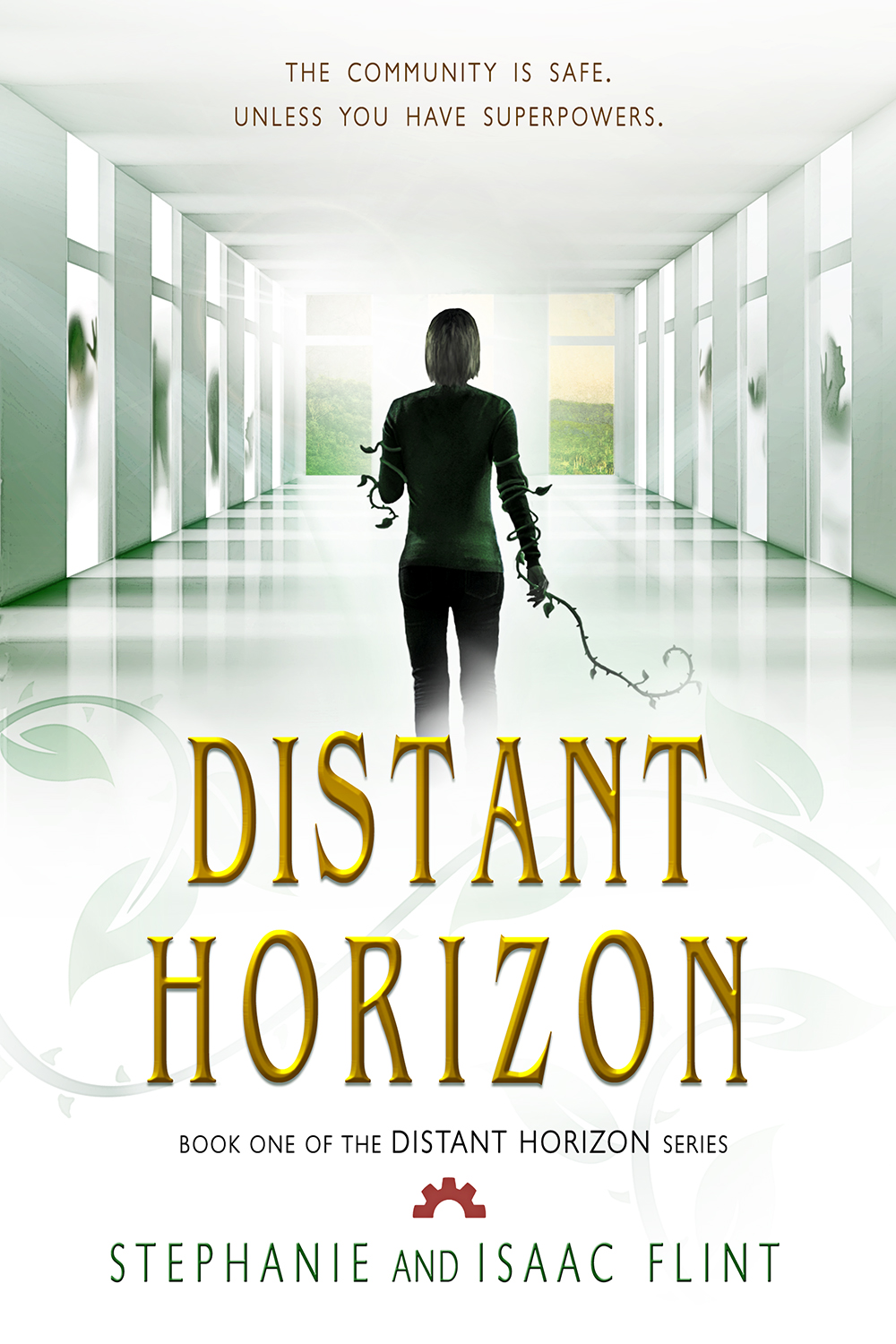
While watching Jessica Jones (which is an awesome show, by the way), one of the things that struck me and Isaac was the similarities between the villain of the show, Killgrave, and Brainmaster, the villain of our story, Distant Horizon.

They’re definitely different, but they do have some striking similarities (except that Killgrave is just so much more evil… An absolutely fascinating character, but evil). Note: I have only seen the show, so I’m not sure how he compares from the comics.

First, let’s take a look at Killgrave.

Killgrave has mind control powers. He can walk up to a person, tell them to do something, and they’ll do it. His powers have a time limit (12 hours), and a limited range. He’s obsessed with Jessica Jones, trying to win her back after she finally managed to escape his grasp. He doesn’t mind leaving behind a body count just to get Jessica to move in closer as she tries to stop him. (But he doesn’t do the dirty work. No. He comes up with creative ways for other people to kill each other or themselves… and leaves an even bigger mess for Jessica to clean up).

Also, he wears a purple suit. Kind of his style.

Now, let’s take a look at Brainmaster, from the story Isaac and I are working on.

Brainmaster has telepathy, which, in our story, equates to three possible options… mind reading, mind control, or communication via thought. Powerful characters can do all three. We see her doing all three of these things, but one of her trademark moves is taking control of characters by implanting suggestions in their brains… some of which cause them to attack others or themselves.

And she wears purple robes.

(This is where I was cringing watching Jessica Jones. Killgrave, also a mind controller, has a purple suit. I’d never even heard of his character (at least, not other than a single cartoon episode of X-Men with a very different version of him) until a few weeks ago.

These characters are different, but they do have similarities. Both have mind control powers. Both haunt the main characters (Jessica has traumatic flashbacks of Killgrave, Jenna has traumatic memories that Brainmaster plants in her head), and both wear purple. Maybe it’s because of the idea that the color purple often reflects royalty and power. (There’s an interesting web page about the historical uses of the color purple here).

For characters who are meant to be powerful, it makes sense to have them wearing purple.

Anyway, I thought it would be fun to post a short scene from Distant Horizon, one where we get to see Brainmaster for the first time.

Note: This scene has been truncated to minimize spoilers.

I pushed the door open.

Inside, a lady wearing a flowing, deep purple robe stood at the end of a long metal table. Her robes were fringed by golden swirls and thick, bold lining. Part of her white hair was rolled into an elaborate bun; the rest cascaded to her shoulders.

The lady’s eyes narrowed and her face contorted into wrinkles. She wore just enough eyeliner to accentuate her fierce eyes, and her nails were painted a gold that matched her outfit. More than most leaders, she was dressed for appearance.

Beside her, an elderly woman with graying hair was bound to the chair. Her shoulders were slumped and her head lolled back.

Go away.

I jumped. I hadn’t heard anything, but it was clear that the woman standing with her manicured hand on the corner of the woman’s chair had spoken. She lifted her chin and scowled.

“Let her go.” I tightened my grip on my spear.

Brainmaster smirked and slid her nail along the edge of the chair. Something forced me– my mind– away.

I couldn’t move. My arms were frozen in place.

She smiled and brushed back a wisp of white hair. Drop the spear. Close the door behind you. Take a seat. She gestured to the chair, a slow, elegant motion.

I dropped the spear, took a seat. Listened.

A slow smile crawled across her cheeks. She gestured to the woman in the chair. “The true plague is disobedience. It makes our society inefficient. This woman is a traitor. She spreads the plague by her presence. She’s a lost cause. Kill her.”

I stood, vines uncoiling from my arms, and walked the length of the table. Power pulsed through my vines, urging me to take control. To let them flourish. To use them.

The traitor turned her head, her eyes half-shut.

“She’s the true monster,” Brainmaster murmured. “A threat to everything we hold dear.”

I wrapped my vines around the woman’s throat. Felt their pressure against her skin. Closed them tight. The woman coughed, gasping, but I didn’t let go.

Funny thing, Nickleson. Do you ever wonder how a beast feels when it’s given orders? Is this what you want?

I stared at the dying woman, confused.

A beast is such a mindless thing. You could be so much more.

The woman sputtered and fell limp. Her head lolled.

A chill clawed through my spine.

She was dead.

I’d killed her.

And that’s where I’m going to leave that scene…

*Cough.*

Brainmaster. Yeah, she likes messing with people’s minds. Maybe that’s why I enjoyed watching Killgrave’s character so much.

Anyway, I hope you enjoyed this post. 🙂 Have you ever written a character, then found their literary doppelganger?


2 Comments

Filed under Writing

Thoughts on Writing – Combining Characters Part 2

In my previous post, I talked about a couple characters of whom I decided not to combine in Distant Horizon, and why. Today I’m going to talk about a couple characters who I very well might combine into a single, hopefully stronger character, in The Shadow War.

I’ve been plotting for The Shadow War (book two after Magic’s Stealing) for a little while now, and when I was telling Isaac about some of my ideas last week, he suggested that I consider combining two of my characters who will be introduced in the second book. Let’s take a look at the characters in question: Nihestan and Shalant.

Both characters are secondary. They’re important to the plot, but they’re not main characters. Each serves to aid the character of Daernan (Toranih and Daernan each have their own point of view in this story), but in different ways.

Nihestan Nivasha is Cirenan-born, a weapon’s mage, and has dealt directly with Shevanlagiy and Lord Menchtoteale (the bad guys from the first book). Nihestan also works closely with Madiya, the goddess of the dead (who features more prominently in the Cantingen patheon than Cirenan) and he leans toward the immortal spectrum thanks to a run-in with unicorns. (Unicorns aren’t exactly the friendliest creatures in the Cirenan universe).

In the current draft, Nihestan plays the role of a cynic, always watching the world and being wary of the future… mostly because he got a glimpse of the potential damage that the Wishing Blade could do (his weapon’s magic allows him to see potential and past acts of violence within an object). He’s actively trying to thwart Isahna, the trickster god, and has been undercover for many years to protect his family.

He also knows a bit about how glass-stone works (though he’s still trying to figure out the finer points of the confounded stuff), which is one of the reasons that Daernan gets involved with him.

Then there’s Shalant. He’s Cantingen-born, a word mage, and something of a seer. Daernan first runs into him when he goes to the temple in Ashan, where he finds Shalant using his word magic to help the high priestess after the stealing. Shalant acts as an enthusiastic (if slightly wary) mentor. His knowledge of the gods and (word) magic often comes in handy, and his ability to use word magic is crucial in fighting the shadows. As a seer, he knows a bit more than he should (especially regarding Shevanlagiy), and he’s spent some time working with Nihestan on the mage’s glass-stone project.

Now, the problem I was having is that many of the scenes I plotted in my head could work well for both Nihestan and Shalant. Other than their cynical versus enthusiastic personalities, and their ribbon versus word magic capabilities, they play similar roles.

There’s a particular scene I’ve been planning that involves a confrontation with Shevanlagiy, one which works similarly well with both characters.

If Nihestan confronts her, he uses his knowledge of glass-stone and weapon’s magic against her. But now that I’ve been thinking about it, I need to decide whether or not he’ll still have that magic. He has been working with the gods, and he knew the stealing was coming, so there’s a chance he could have prevented his magic from being lost.

If Shalant does the confrontation, he doesn’t have any personal stakes (other than potential foreshadowing for a future series idea that I have in mind), but his scrying would have given him insights that Shevanlagiy would prefer he doesn’t know… including a weakness that she herself doesn’t fully understand. The problem is that I’m afraid his character would open up the story to a new plot line that I’m not ready to delve into. I like the idea of bringing this guy’s character in, but I’m not sure it’s necessary for this particular story.

The two characters were getting lost in the crowd.With so many characters, I wasn’t sure what each one was doing at any particular moment.

So, when Isaac suggested that I try combining Nihestan and Shalant, I began picturing the resulting character and liked the result.

First off, Nihestan’s last name, Nivasha, sounds more Cantingen in origin than Cirenan, and vice versa for Shalant. I’d been toying with the idea that Nihestan had converted to the Cantingen pantheon at some point in his past, and the idea of combining these characters solidified that. He could have originally been Nihestan Shalant, and later taken the last name of Nivasha after his dealing with Madiya (or one of her agents). Thus, we would still get some insights into the Cantingen culture without pulling the main story too far off track (again, I’ve got that sequel series brewing in my head–though it will probably be a while before you see that–and it will likely deal heavily in Cantingen mythology).

Second, their combined knowledge would allow Nihestan to play a mentor figure… even if the person he’s mentoring is skeptical of his motives. It also stands to reason why he knows so much about Shevanlagiy, since he’s worked with her before, and his vast knowledge of things he technically shouldn’t know about would come from his time spent working with the gods.

Third, Nihestan as both a ribbon and word mage… whew!

He’s going to be a tough cookie in a fight. Seriously. Even if he’s without his ribbon magic, he would have word magic at his disposal… and perhaps be able to achieve a few plot points that I don’t want to spoil here.  The first book has a few lines of foreshadowing that could easily reference his character. Not only that, but he might actually be able to keep some of his ribbon magic through the use of word magic, since he already expected the stealing to come.

This allows the confrontation scene with Shevanlagiy to work smoothly. This version of Nihestan has personal stakes in the matter, and the ability to be a threat.

Fourth, I don’t have to keep track of who is doing what. The tough part comes if these two characters are doing completely separate actions, but I don’t think there will be too many problems there.

The other problem, however, is that where Shalant is playful, Nihestan is cynical.

Merging the personalities might prove tricky. Most likely, I’ll keep some of my original ideas of a younger Nihestan (who has a more carefree attitude), while giving him the wary outlook that comes with what he’s seen and knows.

As for Shalant, he may appear again in a different form with a different name… as he was apt to do in my plotting. (Seriously, in my super rough draft from many years ago, Shalant was an arrogant god who mentored Daernan mostly because he needed someone to represent the immortals… and had fun watching Daernan fumble. Very different character. I’m considering making a darker version of that character into a small-time antagonist for Toranih. Maybe. Not sure yet. We’ll see if it serves the plot).

I haven’t decided if this is the route I want to take, but I’m giving it serious consideration. Overall, I think the story will be stronger for the merge.

I hope you enjoyed this post. 🙂 Have you ever combined any of your characters?

4 Comments

Filed under Writing

Thoughts on Writing – Combining Characters Part 1

One of the writing tips I’ve heard for making stories stronger is to combine characters. Theoretically, combining characters cuts down the number of supporting characters (thus making the cast easier to remember) and makes for a stronger single character (by bringing in conflicting, but often interesting behaviors).

When I was working on Distant Horizon, a YA science fiction novel I’m co-authoring with my husband, Isaac, a suggestion we got from one of our beta-readers was to combine two characters who both played the role of a mentor. Ultimately I turned down the idea, because each character had conflicting backstories that I wanted to be able to bring in later (though that isn’t technically a good excuse–somewhere I read a similar train of thought about a Wheel of Time character, but I can’t remember which article that was).

However, by realizing how similar the two characters were, I realized how important it was to differentiate between them if I chose not to combine them.

Let’s take a quick look at these two characters, Pops and Jim, from Distant Horizon.

Pops is the main character’s grandfather, though she knows him for the same length of time as Jim. He has the wisdom of experience from working with the people he now fights, and he wants to protect the main character from those people.

Jim, on the other hand, is older than Pops, and he’s never worked with the bad guys. He knows the time from before the bad guys took over, and thus, he took on the role of the rebel’s historian.

Both characters are mentor figures, and in my earlier drafts, had a tendency to convey repetitive information.

I needed to determine what made each separate character crucial to the plot, and why I wanted them to be different characters.

One reason was their respective eras.

Pops grew up during a time when the bad guys had almost full control of their territories, but their reign was still uncertain. They were no longer seen as the bad guys, and thus, Pops took part in helping their agenda. He grew up familiar with the earlier uncertainty where the lack of jobs and money were a problem, and he understood the promise of the coming “Community ideals.” But in his work he’s seen the darker side of the Community, and while he still values the ideals, he no longer supports the bad guys. While with them, he trained as a scientist who studied powers, and so he is the resident expert.

As for Jim, he grew up in the age of superheroes (relatively similar to our world, but with powers). He saw the fall of the Super Bureau, and the fall of the free world. He is familiar with the concept of democracy, various religions (which were largely wiped out by the bad guys) and freedom. He was there to watch the world spiraling out of control, and he was there at the founding of the rebels’ group. He’s seen the change of eras. Paralyzed from the waist-down in his early days, he no longer fights direct battles, but he provides useful information regarding the past as it was… and how the bad guys have covered up that past with lies. He is the only surviving member of the Super Bureau.

Each character has several similarities. But they are also different. When the main character wants information regarding how the bad guys act from within their ranks, she should go to Pops. When she needs more information on powers, she should go to Pops. When she wants comfort in the Community ideals she believed in, she should go to Pops.

But when she wants to know why this rebel group behaves as they do, she needs to go to Jim. Only he can give her the dynamics that neither she, nor Pops, can fully understand. When she wants information on the world as it was, and might be yet again, or answers that don’t involve the Community’s dark secrets, she needs to go to Jim. He has a different perspective than Pops, and unlike Pops, who is jaded from the world he’s seen, Jim still has some lingering hope within the sadness of everything he’s lost, in part because of how he was raised.

Now, would it be possible to combine these characters? Probably. The ages might change. The new character might have been a superhero trained in the science of powers who worked for the bad guys for a while, then quit for reasons that are revealed in the story. The new character would still be a mentor, but due to the change in backstory, how they see the world–and how others see them–would be different.

It’s not quite what Isaac and I were going for. There’s a certain symbolism we’re hoping to achieve through the two characters, and they each have different outlooks on life. Maybe the story would have been stronger if they were merged. Maybe it wouldn’t.

For now, I’m planning to keep them separate. But having considered merging them helped me to consider what made them stronger separately.

I hope you enjoyed this post, and next time, I’ll be talking about a couple characters I’m considering combining in The Shadow War. 🙂

Have you considered combining any of your characters? Why or why not?

EDIT: You can read the second part of this post here.


4 Comments

Filed under Writing

Thoughts on Writing – Tightening Prose to Improve a Scene

Isaac and I are getting close to having all the edits made to our most recent version of Battle Decks, which reminded me that I needed to continue editing the blog series that goes with it. So, at the most recent writer’s club meeting, I decided to work on episode five of The Multiverse Chronicles rather than The Shadow War, which I’m currently doing  background plotting and research for. Since The Multiverse Chronicles will start coming out before that book, I didn’t mind putting The Shadow War on a temporary hold.

Anyway, there are three sections in episode five of The Multiverse Chronicles: Trials of Blood and Steel. The first section details interactions between a dejected pigeon, the taskmaster, and the general. The second deals with Trish and the colonel, and the third (the obligatory end-sequence at the end of the episode) with a group of airship pirates. The last two scenes I’m fairly happy with, and I’m ready to send to our beta reader. However, there’s something still irking me about the first section.

My instincts said that the scene dilly-dallied too long. So, after editing the general episode, I went back to the first scene and began looking for ways to tighten the prose and make the wording more concise.

However, when I looked at the resulting edits, I found that the same chunk of information was actually a few words longer than the former introduction. But wordy sections had been tightened, offering room for stronger world and character building.

Let’s take a look at the previous intro.

A lone dragoon pigeon flew over gently swaying trees. It had a very important mission, which could not be deterred. For on its back, in a tiny, dark green capsule, the pigeon carried a message for General Buford of the Queen’s Army.

It was an important message, as all messages sent via pigeon were. (Thus far, the prose feels stilted, because the sentences are fairly similar.)

The pigeon swept over a sleeping red dragon with harsh, glimmering scales, then skimmed through a squad of pterosaurs, quickly diving to avoid having its tail nipped as some scoundrel drake’s lunch. (Feels lengthy). A few minutes later, the pigeon arrived at a large wooden building that smelled of hay and feathers. The bird swooped into its loft, surpassed the landing board, then took roost in the one of the homing cages. It cooed, head held high and chest out, standing tall while it waited for the pigeon fancier to come take its message.

The pigeon ruffled its feathers proudly. A successful mission, to be sure.

After tightening the prose and adding voice, this was the result:

A lone dragoon pigeon with a very important mission flew between gently swaying trees. (I combined a couple sentences, and changed how the bird is flying in regards to the trees). It could not allow itself to be deterred. (Here we get that the pigeon is the one who does not want to be deterred… not that it can’t happen in general). For on its back—in a tiny, dark green capsule—the pigeon carried a message for General Buford of the Queen’s Army. (I’ve found that using the dashes help separate the thought better and adds flavor).

The message was of the utmost importance, as were all messages sent via pigeon. (I clarified “the message” instead of “it,” and changed the placement of “were” so that the sentence ends on a stronger visual word).

The bird swept over a sleeping red dragon with harsh, glimmering scales, then skimmed through a squad of pterosaurs. It dived, avoiding having its tail nipped by some scoundrel drake wanting an early lunch. (Early lunch helps imply that the pterosaur is acting out of bounds per the pigeon’s rules… (adds voice), and splitting the sentences adds urgency to the action).

A few minutes later, the pigeon arrived at a large wooden building. The musky scent of hay and feathers wafted through the air. (Splitting the sentences helps pacing, and we get a better visual). The bird swooped into its loft, surpassed the landing board, and then took roost in the one of the homing cages. It cooed, head held high and chest out, ruffling its feathers as it waited for the pigeon fancier to take its message.

A successful mission, to be sure. (I combined a couple sentences, slowing the pace a tad bit, but also cut needless repetition.)

Overall, I’m much happier with the latest edit. After tightening the prose and adding a bit more voice, the scene has a tiny bit more “pizazz.”

In one of my previous posts, “What does a serial episode need?” I included a list of traits I wanted to instill into each episode:

  • A strong sense of character, and relationships between characters. (The updated version includes a little more of the pigeon’s personality.)
  • Both humor and serious notes… usually involving some bit of quirkiness. (By adding more of the pigeon’s personality, we added the quirkiness.)
  • A strong sense of world-building. (This remained about the same for the intro, except that I tightened and condensed points. However, I suspect that I need to build on this further into this scene.)
  • Conflict and/or tension. (Will the pigeon deliver its message?)
  • A reasonable beginning, middle, and end. (This selection only shows the intro, but the end of the scene will show the pigeon flying off with a new message.)
  • Something that propels this episode into the next. (This isn’t seen in this particular section, but the end of the scene introduces Trish’s arrival coming in the next scene.)

I also re-read another post I wrote, “Creating Tension,” which reminded me to look into the scene and see if the tension and point of view lagged.

I hope you’ve found this post enjoyable. Have you found any tips for tightening your prose (even if it caused your word count to increase)? 🙂

Leave a comment

Filed under Writing

Thoughts on Writing – Trademarks and Evolving Languages

Yesterday at the writing group my husband and I usually attend, one of the writers made a comment about how English is a growing language. They pointed out that it constantly shifts and adds new words, whereas other languages are stagnant and are ruled by a constant number of words. This caught my interest, so I thought I’d do a little bit of research on the topic.

Though my research didn’t go quite the way I anticipated, I focused on new influencers to a language.

The National Science Foundation website mentions in their article on language and linguistics that there are a few things that can influence a change in language. For example, the invention of new technologies can bring with it new words (or specifically, the new use of words). The article says, “Plastic, cell phones and the Internet didn’t exist in Shakespeare’s time.” Which, if you think about it, means that time period wouldn’t have had a need for those words.

But what happens when those new technologies develop? The new words have to come from somewhere.

In an article from The Atlantic, they explain the origin of the term ‘cell phone,’ or more accurately, cellular phones. At the time, the word cellular referred to biological cells (still does). What does that have to do with phones?

The network for sending signals to each phone was conceived as being of a cellular nature (check out the article for a diagram). As such, a cellular phone would use a cellular network, and the term was later shortened to ‘cell’ phone.

(As a side note, if you are developing a magic system and your story spans over many years, you might consider what developments might influence that magic. For example, in Isaac’s and my Distant Horizon universe, one of the characters has techno sight… the ability to manipulate (digital) technology with their mind. If you go backward to the Multiverse timeline, there aren’t any computers (at least, not that don’t use artificial spirits), so those characters don’t have the techno sight power. Or they might, but it would basically be an unknown power that doesn’t get used, even if it’s in their bloodline for future generations)).

New technology can impact how a language evolves, especially as new terms are needed.

However, when new technology gets involved, so do trademarks. And that’s where things get interesting. For example, look at the the Xerox photo-copying machine. How many people might say “I’m going to xerox that…” turning Xerox, a trademarked brand name, into something generic… (despite attempts to keep in it in their grasp).

If you look at the name, Xerox is the brand, whereas their product is a photo-copying machine. Note that photo-copy is a combination of two words to describe what the product does. But as people became familiar with the product, they turned Xerox into the verb, and thus a new word (or at least a new meaning to the word) was born. HighNames has an article regarding the origins of Xerox, and it turns out that Xerox pulled their name from a combination of Greek words… xeros (dry) and graphia (writing). If xerox, from xeros, now means ‘to photocopy,’ we can see how influences from other languages, plus the change over time, shaped a new word. (Read more about generic trademarks here).

Even now, companies fight to keep their trademarks intact. Google (to use a search engine, originally pulled from ‘googol,’ the number ‘one’ followed by a hundred zeroes). Kleenex, technically a brand name, but now often used to mean a tissue. (“Go grab me a kleenex.”) This is yet another example of a company having to work to keep its trademark intact (This article from The Atlantic has some great examples of companies trying to protect their trademarks). Yet another example of how a trademarked brand has become (or is on it’s way to becoming) a common word is Coke, in which a Concurring Opinions article mentions people asking for a coke (referring to soda in general) and restaurants must distinguish between a Coke or a Pepsi due to trademark legalese.

If you are interested in more information about the evolution of language over time, TED has series of videos about of “How Language Changes Over Time.” I haven’t watched these, but having watched a few TED Talk videos before, I imagine they could have good information.

So how does all this apply to fiction?

Well, if you include conlangs (constructed languages) in your stories, especially over a period of time, you could have fun with changing the language across the generations. Perhaps it’s a company trying to protect their trademark, if you want to stay with the trademarks theme. Perhaps there is a misunderstanding in general. Perhaps there is confusion, if someone from the future tries to explain something to someone from the past. Or perhaps its the opposite. Someone from the past, using an older variety of an evolving language, has a hard time being understood by someone whose updated language no longer sounds the same. (Refer back to the National Science Foundation article for a good example of having a hard time trying to understand an older language).

There’s all sorts of things you can play with, both with fictional languages, and with real languages and real history.

Alternatively, maybe you have a language that is stagnant. One that has only a specific list of words, and that’s that. How do your characters and your society deal with the changes of time? Do they smash words together? Do they struggle to explain technologies? Do they refuse new technology altogether?

Given the way I’ve currently addressed Cantingen word magic in the rough draft of The Shadow War, I suspect their language will be fairly stagnant, with some interesting combinations when trying to explain an object that doesn’t have a specific name or translation.

I hope you’ve enjoyed this post. 🙂 Have you thought much about how languages evolve, and how you can use that evolution in your fiction?

Further Reading:

http://www.scientificamerican.com/article/use-it-or-lose-it-why-lan/ – Talks about the frequency of a word compared to how fast it evolves

http://www.telegraph.co.uk/technology/mobile-phones/11274292/Do-you-understand-text-speak.html – Text speech (In this case, also slang, not specific to text) and trying to translate text speech

http://www.telegraph.co.uk/education/educationopinion/9966117/Text-speak-language-evolution-or-just-laziness.html – Debates whether text speech is language evolution or a lack of proper teaching (leans toward the latter, but does bring up points regarding text speech and ease of communication that would have been interesting had they been developed further

http://knowledgenuts.com/2015/10/10/text-message-slang-goes-back-to-telegraph-operators/ – More or less a counter-argument to the above complaints about text speech, which points out that it got its start with telegraph operators

http://dictionary.reference.com/browse/verbing?s=t – A Definition of ‘verbing’

2 Comments

Filed under Writing

Thoughts on Writing – Sweating the Small Stuff

At the latest writer’s club meeting that my husband and I attended, I read a scene from The Multiverse Chronicles to see if I had cleared up a few problem spots we’d found when I read the scene at the previous meeting.

Overall, the description seemed to be taken care of, which opened up the ability to notice other little details that were out of place.

For example, in this particular scene, the main character, Trish is meeting with various members of the Britannian army. The story doesn’t revolve to heavily around the military operations, but there are some present… and Isaac and I aren’t exactly familiar with military procedures (About the closest reference I have is from Stargate SG-1… which doesn’t exactly count, and I really didn’t pay attention to the military side of things. I was much more fascinated with Daniel Jackson and his archeological endeavors. There’s also M.A.S.H., but it’s been a while since either of us have watched that show. Of course, these are TV shows, so those might not be the most helpful references).

Anyway, one of the other writers questioned whether or not Trish (a private) would salute the corporal.

This is the section:

Trish had arrived at Corporal Smith’s tent, stepped over the sabertooth cub who slept at the foot of the door, then stood at attention in front of the quartermaster’s desk.


Of all the offices in camp, this was by far the tidiest. Every paper was neatly tucked in its proper manila folder, and each folder was labeled and placed in a metal divider with further library codes etched into their spines. Several bookshelves lined the walls of the canvas tent with books tucked alphabetically by author and several notable gaps between the books, most likely where Cornwell hadn’t returned them.


This time the lower shelves were empty. A few books were stacked haphazardly on the top shelf. The tell-tale teeth marks on their spines suggested that the sabertooth had thought them a chew toy, and Smith had disagreed.


“Can I help you?” he asked, eyeing her cautiously.


Trish saluted the corporal. “Yes, sir. Colonel Pearson wanted me to read The Honour of Tactical Flying, fifth edition.”


“Author?”


“Sir James Cuvier, sir.”


The quartermaster selected a stack of papers from its proper folder, skimmed through the names on his list, then winced. “Sorry, Private. I’m afraid Sergeant Cornwell has that book.” He gave her a pitying look.


Trish sighed. At this rate, she’d never get everything done. “Thank you, sir.”

After the meeting, one of the writers asked someone who had been part of the (US) army, and they said that a private would not salute anyone who is not an officer, and since a corporal is not an officer, Trish would not salute Corporal Smith, nor would she refer to him as “sir.”

Now, I’m not sure how this compares to the British army (especially of the given time period), so Isaac and I may need to do some quick research to compare the two, but this does give us a good reference point to start from.

On the bright side, The Multiverse Chronicles are supposed to be more on the fantasy side than the alternate history side, so we’ve got a  little bit of leeway than if we were trying to write military fiction with a lot of historically accurate details.

Either way, I’ll be making a few adjustments.

A different example of small stuff to consider is period anachronisms.

Another writer at the meeting had their story set in 1995, but the policeman in the story was pulling a cellphone out from his pocket and there were computers being used to check where a patient was being held in a hospital.

I wasn’t sure that this fit the time period (mostly because I was thinking that’s the problem horror films have nowadays… they have to explain what happened to their protagonist’s cellphone), so I questioned that.

As such, another member said that they thought the police might have had cellphones at the time, but they would have been worn on the hip (not small enough to fit into a pocket), and that the hospital probably wouldn’t have been using computers at the front desk.

By having someone other than ourselves take a look at our manuscripts, we authors can catch anachronisms or potential problems that we would have missed before they get too ingrained into our plots.

In some cases, these problems aren’t too big of a deal. They’re “the small stuff.”

On the other hand, these problems have the potential to throw a reader out of their reading, and so it can be good to remove as many problems as possible… or make sure there’s an explanation in place (or you could just lampshade it… though make sure you have a good reason to do so).

There’s a lot more I could cover here, so I may make another post about a similar topic later.

I hope you’ve found this post helpful. 🙂 Have you had beta readers point out things like this in your manuscripts?

2 Comments

Filed under Writing

Liebster Award

Liebster AwardI was recently nominated for the Liebster Award by writer Eve Messenger. Basically, the Liebster Award is a blogging meme that allows bloggers to recognize other blogs they enjoy, similar to the Blogger Recognition Award.

Now, I’m terrible at blog-tagging. Part of this is because I feel really awkward “tagging” people chain-letter style, and the other part is that a lot of the blogs I follow don’t actively participate in blog tagging.

However, when I made my post about the Blogger Recognition Award, I realized a large part of the award was letting other people know you appreciate what they do. So I posted a few of my favorite blogs/resources, but I didn’t tag them directly. Instead, I emailed them privately with a link to the blog post and an explanation of why I had nominated them. Four of the seven people I contacted responded enthusiastically, and while they didn’t tag anyone themselves, they seemed happy to know they were appreciated.


So, on to the Liebster Award!


According to the Liebster Award rules, I must now:

  • Answer a list of questions
  • Nominate other bloggers. (I’m going to amend this slightly…)
  • Pose eleven  questions of my own.


The Questions Asked of Me

1. How important do you think it is to network with other writers?

Depends on your goals. If you want to improve your writing, networking can be a great way to find resources and get advice. If you want to learn marketing, networking with other writers can help you learn what worked for them and what didn’t. If you want to socialize with people who are familiar with the trials you’re going through, then networking can be helpful.

Just don’t forget to spend time writing, too.

2. Do you ever read books more than once? Which ones?

Sometimes. His Dark Materials by Philip Pullman is one trilogy I specifically remember re-reading, along with Harry Potter: The Prisoner of Azkaban by JK Rowling, and Shatterglass by Tamora Pierce.

3. What’s the scariest or most challenging thing for you about writing?

Not being sure if other people are going to like what I write, and thus whether the dream of being able to make a living off this is possible.

4. What is the most amazing thing about writing?

Seeing your worlds come to life. And those moments when you’re re-reading your work and get lost in it without realizing you’re reading your writing. That’s awesome.

5. Where is your favorite place to write?

Wherever I can successfully get into the scene without being distracted. That being said, there’s a coffee shop downtown that I did a lot of writing at for a while, and that was enjoyable. I love the smell of coffee… I just don’t like the taste.

6. When’s your best time of day to write? Why?

Whenever I can. (Though I seem to get on a writing streak in the evening or early morning, depending on the day). But really, that depends on whether my day job is in season or not. If it’s in season, then I’m going to be trying to find writing time when I’m at home (and not working on book covers), or during the weekends.

7. What are three of your favorite words?

Um… I’m not actually sure. I can’t think of anything off the top of my head. Though when I read the word “semaphore” in Ray Bradbury’s Something Wicked This Way Comes, I looked it up on Dictionary.com, then really wanted to use that word in something. I’m proud to say that “semaphore” made it into the final draft of Magic’s Stealing.

8. What’s one thing that would tell you you’ve “made it” as a writer?

When I’m able to make a living off my writing (or off the combined books and games sold through Infinitas Publishing with my husband), then I’ll know I’ve “made it.” That, and seeing people enjoy the stories we’ve worked on.

9. In terms of writing or reading, what’s the best thing anyone could say to you right now?

That they really enjoyed a specific scene in a story I’ve worked on… (I love talking about my story plotting, so getting to talk about the specifics is exciting). On the other hand, simply being told that they believe I’ll be able to reach my writing goals is also helpful.

10. Do you have any rituals, superstitions, or preferences related to writing or editing?

I sometimes listen to particular songs or types of songs to get a specific scene in mind.

11. In the face of all the rejection that comes with being a writer, what advice would you give to someone to help them stay on a path toward achieving their dreams?

Keep working to improve your craft (writing or otherwise) and look into all the options. Don’t restrict yourself to one path. Figure out specifically what you want, and learn what it takes to make that work. Don’t try going into your dreams blindly, because there are a lot of pitfalls that can sneak up on you if you aren’t careful.


My Nominations

I nominate you.

That’s right. I’m going to shake things up a bit.

Since the point of the Liebster Award is to discover new bloggers, and since I’ve recently done a similar exercise via the Blogger Recognition Award, I’m going to open up my side of the blog-tag to anyone who wants to make a post in the next week. I’m going to pose 11 questions, and if you want to participate, answer these questions on your blog, then post a link to your post in the comments below. Next week, time permitting, I’ll collect any shared links, then list them on a new blog post.

You are welcome to continue the trend if you wish, but you don’t have to. 🙂


The Questions I’m Asking You

  1. What do you like to write, and what are you working on now?
  2. What does writing mean for you?
  3. If you could visit any place in a story you’ve written, what place would you visit? (Juicy details, please!)
  4. If you had the chance to meet your characters, would you? Who would you want to meet?
  5. What is your favorite book?
  6. If you had to recommend a specific resource (blog, book, website, etc) to another author that you found really helpful, what would you recommend?
  7. Do you have any preferred forms of social media you like to use? Why?
  8. Why do you blog?
  9. What is your favorite quote?
  10. What’s your favorite game?
  11. If you could have a special power, what would it be?


I look forward to seeing what you have to say. 🙂

2 Comments

Filed under Writing