Tag Archives: writing

Thoughts on Writing – Combining Characters Part 2

In my previous post, I talked about a couple characters of whom I decided not to combine in Distant Horizon, and why. Today I’m going to talk about a couple characters who I very well might combine into a single, hopefully stronger character, in The Shadow War.

I’ve been plotting for The Shadow War (book two after Magic’s Stealing) for a little while now, and when I was telling Isaac about some of my ideas last week, he suggested that I consider combining two of my characters who will be introduced in the second book. Let’s take a look at the characters in question: Nihestan and Shalant.

Both characters are secondary. They’re important to the plot, but they’re not main characters. Each serves to aid the character of Daernan (Toranih and Daernan each have their own point of view in this story), but in different ways.

Nihestan Nivasha is Cirenan-born, a weapon’s mage, and has dealt directly with Shevanlagiy and Lord Menchtoteale (the bad guys from the first book). Nihestan also works closely with Madiya, the goddess of the dead (who features more prominently in the Cantingen patheon than Cirenan) and he leans toward the immortal spectrum thanks to a run-in with unicorns. (Unicorns aren’t exactly the friendliest creatures in the Cirenan universe).

In the current draft, Nihestan plays the role of a cynic, always watching the world and being wary of the future… mostly because he got a glimpse of the potential damage that the Wishing Blade could do (his weapon’s magic allows him to see potential and past acts of violence within an object). He’s actively trying to thwart Isahna, the trickster god, and has been undercover for many years to protect his family.

He also knows a bit about how glass-stone works (though he’s still trying to figure out the finer points of the confounded stuff), which is one of the reasons that Daernan gets involved with him.

Then there’s Shalant. He’s Cantingen-born, a word mage, and something of a seer. Daernan first runs into him when he goes to the temple in Ashan, where he finds Shalant using his word magic to help the high priestess after the stealing. Shalant acts as an enthusiastic (if slightly wary) mentor. His knowledge of the gods and (word) magic often comes in handy, and his ability to use word magic is crucial in fighting the shadows. As a seer, he knows a bit more than he should (especially regarding Shevanlagiy), and he’s spent some time working with Nihestan on the mage’s glass-stone project.

Now, the problem I was having is that many of the scenes I plotted in my head could work well for both Nihestan and Shalant. Other than their cynical versus enthusiastic personalities, and their ribbon versus word magic capabilities, they play similar roles.

There’s a particular scene I’ve been planning that involves a confrontation with Shevanlagiy, one which works similarly well with both characters.

If Nihestan confronts her, he uses his knowledge of glass-stone and weapon’s magic against her. But now that I’ve been thinking about it, I need to decide whether or not he’ll still have that magic. He has been working with the gods, and he knew the stealing was coming, so there’s a chance he could have prevented his magic from being lost.

If Shalant does the confrontation, he doesn’t have any personal stakes (other than potential foreshadowing for a future series idea that I have in mind), but his scrying would have given him insights that Shevanlagiy would prefer he doesn’t know… including a weakness that she herself doesn’t fully understand. The problem is that I’m afraid his character would open up the story to a new plot line that I’m not ready to delve into. I like the idea of bringing this guy’s character in, but I’m not sure it’s necessary for this particular story.

The two characters were getting lost in the crowd.With so many characters, I wasn’t sure what each one was doing at any particular moment.

So, when Isaac suggested that I try combining Nihestan and Shalant, I began picturing the resulting character and liked the result.

First off, Nihestan’s last name, Nivasha, sounds more Cantingen in origin than Cirenan, and vice versa for Shalant. I’d been toying with the idea that Nihestan had converted to the Cantingen pantheon at some point in his past, and the idea of combining these characters solidified that. He could have originally been Nihestan Shalant, and later taken the last name of Nivasha after his dealing with Madiya (or one of her agents). Thus, we would still get some insights into the Cantingen culture without pulling the main story too far off track (again, I’ve got that sequel series brewing in my head–though it will probably be a while before you see that–and it will likely deal heavily in Cantingen mythology).

Second, their combined knowledge would allow Nihestan to play a mentor figure… even if the person he’s mentoring is skeptical of his motives. It also stands to reason why he knows so much about Shevanlagiy, since he’s worked with her before, and his vast knowledge of things he technically shouldn’t know about would come from his time spent working with the gods.

Third, Nihestan as both a ribbon and word mage… whew!

He’s going to be a tough cookie in a fight. Seriously. Even if he’s without his ribbon magic, he would have word magic at his disposal… and perhaps be able to achieve a few plot points that I don’t want to spoil here.  The first book has a few lines of foreshadowing that could easily reference his character. Not only that, but he might actually be able to keep some of his ribbon magic through the use of word magic, since he already expected the stealing to come.

This allows the confrontation scene with Shevanlagiy to work smoothly. This version of Nihestan has personal stakes in the matter, and the ability to be a threat.

Fourth, I don’t have to keep track of who is doing what. The tough part comes if these two characters are doing completely separate actions, but I don’t think there will be too many problems there.

The other problem, however, is that where Shalant is playful, Nihestan is cynical.

Merging the personalities might prove tricky. Most likely, I’ll keep some of my original ideas of a younger Nihestan (who has a more carefree attitude), while giving him the wary outlook that comes with what he’s seen and knows.

As for Shalant, he may appear again in a different form with a different name… as he was apt to do in my plotting. (Seriously, in my super rough draft from many years ago, Shalant was an arrogant god who mentored Daernan mostly because he needed someone to represent the immortals… and had fun watching Daernan fumble. Very different character. I’m considering making a darker version of that character into a small-time antagonist for Toranih. Maybe. Not sure yet. We’ll see if it serves the plot).

I haven’t decided if this is the route I want to take, but I’m giving it serious consideration. Overall, I think the story will be stronger for the merge.

I hope you enjoyed this post. 🙂 Have you ever combined any of your characters?

4 Comments

Filed under Writing

Thoughts on Writing – Combining Characters Part 1

One of the writing tips I’ve heard for making stories stronger is to combine characters. Theoretically, combining characters cuts down the number of supporting characters (thus making the cast easier to remember) and makes for a stronger single character (by bringing in conflicting, but often interesting behaviors).

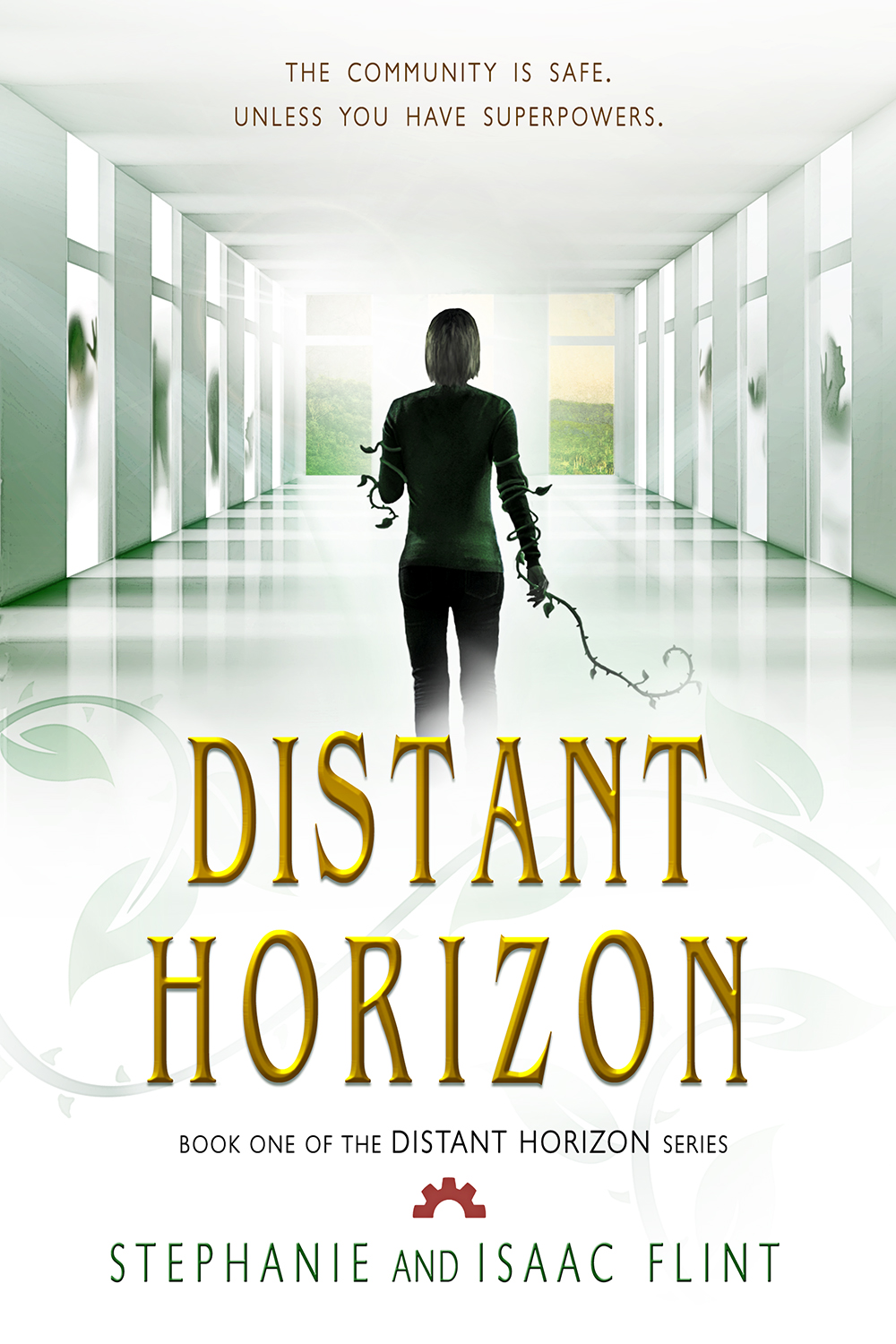
When I was working on Distant Horizon, a YA science fiction novel I’m co-authoring with my husband, Isaac, a suggestion we got from one of our beta-readers was to combine two characters who both played the role of a mentor. Ultimately I turned down the idea, because each character had conflicting backstories that I wanted to be able to bring in later (though that isn’t technically a good excuse–somewhere I read a similar train of thought about a Wheel of Time character, but I can’t remember which article that was).

However, by realizing how similar the two characters were, I realized how important it was to differentiate between them if I chose not to combine them.

Let’s take a quick look at these two characters, Pops and Jim, from Distant Horizon.

Pops is the main character’s grandfather, though she knows him for the same length of time as Jim. He has the wisdom of experience from working with the people he now fights, and he wants to protect the main character from those people.

Jim, on the other hand, is older than Pops, and he’s never worked with the bad guys. He knows the time from before the bad guys took over, and thus, he took on the role of the rebel’s historian.

Both characters are mentor figures, and in my earlier drafts, had a tendency to convey repetitive information.

I needed to determine what made each separate character crucial to the plot, and why I wanted them to be different characters.

One reason was their respective eras.

Pops grew up during a time when the bad guys had almost full control of their territories, but their reign was still uncertain. They were no longer seen as the bad guys, and thus, Pops took part in helping their agenda. He grew up familiar with the earlier uncertainty where the lack of jobs and money were a problem, and he understood the promise of the coming “Community ideals.” But in his work he’s seen the darker side of the Community, and while he still values the ideals, he no longer supports the bad guys. While with them, he trained as a scientist who studied powers, and so he is the resident expert.

As for Jim, he grew up in the age of superheroes (relatively similar to our world, but with powers). He saw the fall of the Super Bureau, and the fall of the free world. He is familiar with the concept of democracy, various religions (which were largely wiped out by the bad guys) and freedom. He was there to watch the world spiraling out of control, and he was there at the founding of the rebels’ group. He’s seen the change of eras. Paralyzed from the waist-down in his early days, he no longer fights direct battles, but he provides useful information regarding the past as it was… and how the bad guys have covered up that past with lies. He is the only surviving member of the Super Bureau.

Each character has several similarities. But they are also different. When the main character wants information regarding how the bad guys act from within their ranks, she should go to Pops. When she needs more information on powers, she should go to Pops. When she wants comfort in the Community ideals she believed in, she should go to Pops.

But when she wants to know why this rebel group behaves as they do, she needs to go to Jim. Only he can give her the dynamics that neither she, nor Pops, can fully understand. When she wants information on the world as it was, and might be yet again, or answers that don’t involve the Community’s dark secrets, she needs to go to Jim. He has a different perspective than Pops, and unlike Pops, who is jaded from the world he’s seen, Jim still has some lingering hope within the sadness of everything he’s lost, in part because of how he was raised.

Now, would it be possible to combine these characters? Probably. The ages might change. The new character might have been a superhero trained in the science of powers who worked for the bad guys for a while, then quit for reasons that are revealed in the story. The new character would still be a mentor, but due to the change in backstory, how they see the world–and how others see them–would be different.

It’s not quite what Isaac and I were going for. There’s a certain symbolism we’re hoping to achieve through the two characters, and they each have different outlooks on life. Maybe the story would have been stronger if they were merged. Maybe it wouldn’t.

For now, I’m planning to keep them separate. But having considered merging them helped me to consider what made them stronger separately.

I hope you enjoyed this post, and next time, I’ll be talking about a couple characters I’m considering combining in The Shadow War. 🙂

Have you considered combining any of your characters? Why or why not?

EDIT: You can read the second part of this post here.


4 Comments

Filed under Writing

Thoughts on Writing – Tightening Prose to Improve a Scene

Isaac and I are getting close to having all the edits made to our most recent version of Battle Decks, which reminded me that I needed to continue editing the blog series that goes with it. So, at the most recent writer’s club meeting, I decided to work on episode five of The Multiverse Chronicles rather than The Shadow War, which I’m currently doing  background plotting and research for. Since The Multiverse Chronicles will start coming out before that book, I didn’t mind putting The Shadow War on a temporary hold.

Anyway, there are three sections in episode five of The Multiverse Chronicles: Trials of Blood and Steel. The first section details interactions between a dejected pigeon, the taskmaster, and the general. The second deals with Trish and the colonel, and the third (the obligatory end-sequence at the end of the episode) with a group of airship pirates. The last two scenes I’m fairly happy with, and I’m ready to send to our beta reader. However, there’s something still irking me about the first section.

My instincts said that the scene dilly-dallied too long. So, after editing the general episode, I went back to the first scene and began looking for ways to tighten the prose and make the wording more concise.

However, when I looked at the resulting edits, I found that the same chunk of information was actually a few words longer than the former introduction. But wordy sections had been tightened, offering room for stronger world and character building.

Let’s take a look at the previous intro.

A lone dragoon pigeon flew over gently swaying trees. It had a very important mission, which could not be deterred. For on its back, in a tiny, dark green capsule, the pigeon carried a message for General Buford of the Queen’s Army.

It was an important message, as all messages sent via pigeon were. (Thus far, the prose feels stilted, because the sentences are fairly similar.)

The pigeon swept over a sleeping red dragon with harsh, glimmering scales, then skimmed through a squad of pterosaurs, quickly diving to avoid having its tail nipped as some scoundrel drake’s lunch. (Feels lengthy). A few minutes later, the pigeon arrived at a large wooden building that smelled of hay and feathers. The bird swooped into its loft, surpassed the landing board, then took roost in the one of the homing cages. It cooed, head held high and chest out, standing tall while it waited for the pigeon fancier to come take its message.

The pigeon ruffled its feathers proudly. A successful mission, to be sure.

After tightening the prose and adding voice, this was the result:

A lone dragoon pigeon with a very important mission flew between gently swaying trees. (I combined a couple sentences, and changed how the bird is flying in regards to the trees). It could not allow itself to be deterred. (Here we get that the pigeon is the one who does not want to be deterred… not that it can’t happen in general). For on its back—in a tiny, dark green capsule—the pigeon carried a message for General Buford of the Queen’s Army. (I’ve found that using the dashes help separate the thought better and adds flavor).

The message was of the utmost importance, as were all messages sent via pigeon. (I clarified “the message” instead of “it,” and changed the placement of “were” so that the sentence ends on a stronger visual word).

The bird swept over a sleeping red dragon with harsh, glimmering scales, then skimmed through a squad of pterosaurs. It dived, avoiding having its tail nipped by some scoundrel drake wanting an early lunch. (Early lunch helps imply that the pterosaur is acting out of bounds per the pigeon’s rules… (adds voice), and splitting the sentences adds urgency to the action).

A few minutes later, the pigeon arrived at a large wooden building. The musky scent of hay and feathers wafted through the air. (Splitting the sentences helps pacing, and we get a better visual). The bird swooped into its loft, surpassed the landing board, and then took roost in the one of the homing cages. It cooed, head held high and chest out, ruffling its feathers as it waited for the pigeon fancier to take its message.

A successful mission, to be sure. (I combined a couple sentences, slowing the pace a tad bit, but also cut needless repetition.)

Overall, I’m much happier with the latest edit. After tightening the prose and adding a bit more voice, the scene has a tiny bit more “pizazz.”

In one of my previous posts, “What does a serial episode need?” I included a list of traits I wanted to instill into each episode:

  • A strong sense of character, and relationships between characters. (The updated version includes a little more of the pigeon’s personality.)
  • Both humor and serious notes… usually involving some bit of quirkiness. (By adding more of the pigeon’s personality, we added the quirkiness.)
  • A strong sense of world-building. (This remained about the same for the intro, except that I tightened and condensed points. However, I suspect that I need to build on this further into this scene.)
  • Conflict and/or tension. (Will the pigeon deliver its message?)
  • A reasonable beginning, middle, and end. (This selection only shows the intro, but the end of the scene will show the pigeon flying off with a new message.)
  • Something that propels this episode into the next. (This isn’t seen in this particular section, but the end of the scene introduces Trish’s arrival coming in the next scene.)

I also re-read another post I wrote, “Creating Tension,” which reminded me to look into the scene and see if the tension and point of view lagged.

I hope you’ve found this post enjoyable. Have you found any tips for tightening your prose (even if it caused your word count to increase)? 🙂

Leave a comment

Filed under Writing

Thoughts on Writing – Trademarks and Evolving Languages

Yesterday at the writing group my husband and I usually attend, one of the writers made a comment about how English is a growing language. They pointed out that it constantly shifts and adds new words, whereas other languages are stagnant and are ruled by a constant number of words. This caught my interest, so I thought I’d do a little bit of research on the topic.

Though my research didn’t go quite the way I anticipated, I focused on new influencers to a language.

The National Science Foundation website mentions in their article on language and linguistics that there are a few things that can influence a change in language. For example, the invention of new technologies can bring with it new words (or specifically, the new use of words). The article says, “Plastic, cell phones and the Internet didn’t exist in Shakespeare’s time.” Which, if you think about it, means that time period wouldn’t have had a need for those words.

But what happens when those new technologies develop? The new words have to come from somewhere.

In an article from The Atlantic, they explain the origin of the term ‘cell phone,’ or more accurately, cellular phones. At the time, the word cellular referred to biological cells (still does). What does that have to do with phones?

The network for sending signals to each phone was conceived as being of a cellular nature (check out the article for a diagram). As such, a cellular phone would use a cellular network, and the term was later shortened to ‘cell’ phone.

(As a side note, if you are developing a magic system and your story spans over many years, you might consider what developments might influence that magic. For example, in Isaac’s and my Distant Horizon universe, one of the characters has techno sight… the ability to manipulate (digital) technology with their mind. If you go backward to the Multiverse timeline, there aren’t any computers (at least, not that don’t use artificial spirits), so those characters don’t have the techno sight power. Or they might, but it would basically be an unknown power that doesn’t get used, even if it’s in their bloodline for future generations)).

New technology can impact how a language evolves, especially as new terms are needed.

However, when new technology gets involved, so do trademarks. And that’s where things get interesting. For example, look at the the Xerox photo-copying machine. How many people might say “I’m going to xerox that…” turning Xerox, a trademarked brand name, into something generic… (despite attempts to keep in it in their grasp).

If you look at the name, Xerox is the brand, whereas their product is a photo-copying machine. Note that photo-copy is a combination of two words to describe what the product does. But as people became familiar with the product, they turned Xerox into the verb, and thus a new word (or at least a new meaning to the word) was born. HighNames has an article regarding the origins of Xerox, and it turns out that Xerox pulled their name from a combination of Greek words… xeros (dry) and graphia (writing). If xerox, from xeros, now means ‘to photocopy,’ we can see how influences from other languages, plus the change over time, shaped a new word. (Read more about generic trademarks here).

Even now, companies fight to keep their trademarks intact. Google (to use a search engine, originally pulled from ‘googol,’ the number ‘one’ followed by a hundred zeroes). Kleenex, technically a brand name, but now often used to mean a tissue. (“Go grab me a kleenex.”) This is yet another example of a company having to work to keep its trademark intact (This article from The Atlantic has some great examples of companies trying to protect their trademarks). Yet another example of how a trademarked brand has become (or is on it’s way to becoming) a common word is Coke, in which a Concurring Opinions article mentions people asking for a coke (referring to soda in general) and restaurants must distinguish between a Coke or a Pepsi due to trademark legalese.

If you are interested in more information about the evolution of language over time, TED has series of videos about of “How Language Changes Over Time.” I haven’t watched these, but having watched a few TED Talk videos before, I imagine they could have good information.

So how does all this apply to fiction?

Well, if you include conlangs (constructed languages) in your stories, especially over a period of time, you could have fun with changing the language across the generations. Perhaps it’s a company trying to protect their trademark, if you want to stay with the trademarks theme. Perhaps there is a misunderstanding in general. Perhaps there is confusion, if someone from the future tries to explain something to someone from the past. Or perhaps its the opposite. Someone from the past, using an older variety of an evolving language, has a hard time being understood by someone whose updated language no longer sounds the same. (Refer back to the National Science Foundation article for a good example of having a hard time trying to understand an older language).

There’s all sorts of things you can play with, both with fictional languages, and with real languages and real history.

Alternatively, maybe you have a language that is stagnant. One that has only a specific list of words, and that’s that. How do your characters and your society deal with the changes of time? Do they smash words together? Do they struggle to explain technologies? Do they refuse new technology altogether?

Given the way I’ve currently addressed Cantingen word magic in the rough draft of The Shadow War, I suspect their language will be fairly stagnant, with some interesting combinations when trying to explain an object that doesn’t have a specific name or translation.

I hope you’ve enjoyed this post. 🙂 Have you thought much about how languages evolve, and how you can use that evolution in your fiction?

Further Reading:

http://www.scientificamerican.com/article/use-it-or-lose-it-why-lan/ – Talks about the frequency of a word compared to how fast it evolves

http://www.telegraph.co.uk/technology/mobile-phones/11274292/Do-you-understand-text-speak.html – Text speech (In this case, also slang, not specific to text) and trying to translate text speech

http://www.telegraph.co.uk/education/educationopinion/9966117/Text-speak-language-evolution-or-just-laziness.html – Debates whether text speech is language evolution or a lack of proper teaching (leans toward the latter, but does bring up points regarding text speech and ease of communication that would have been interesting had they been developed further

http://knowledgenuts.com/2015/10/10/text-message-slang-goes-back-to-telegraph-operators/ – More or less a counter-argument to the above complaints about text speech, which points out that it got its start with telegraph operators

http://dictionary.reference.com/browse/verbing?s=t – A Definition of ‘verbing’

2 Comments

Filed under Writing

Thoughts on Writing – Sweating the Small Stuff

At the latest writer’s club meeting that my husband and I attended, I read a scene from The Multiverse Chronicles to see if I had cleared up a few problem spots we’d found when I read the scene at the previous meeting.

Overall, the description seemed to be taken care of, which opened up the ability to notice other little details that were out of place.

For example, in this particular scene, the main character, Trish is meeting with various members of the Britannian army. The story doesn’t revolve to heavily around the military operations, but there are some present… and Isaac and I aren’t exactly familiar with military procedures (About the closest reference I have is from Stargate SG-1… which doesn’t exactly count, and I really didn’t pay attention to the military side of things. I was much more fascinated with Daniel Jackson and his archeological endeavors. There’s also M.A.S.H., but it’s been a while since either of us have watched that show. Of course, these are TV shows, so those might not be the most helpful references).

Anyway, one of the other writers questioned whether or not Trish (a private) would salute the corporal.

This is the section:

Trish had arrived at Corporal Smith’s tent, stepped over the sabertooth cub who slept at the foot of the door, then stood at attention in front of the quartermaster’s desk.


Of all the offices in camp, this was by far the tidiest. Every paper was neatly tucked in its proper manila folder, and each folder was labeled and placed in a metal divider with further library codes etched into their spines. Several bookshelves lined the walls of the canvas tent with books tucked alphabetically by author and several notable gaps between the books, most likely where Cornwell hadn’t returned them.


This time the lower shelves were empty. A few books were stacked haphazardly on the top shelf. The tell-tale teeth marks on their spines suggested that the sabertooth had thought them a chew toy, and Smith had disagreed.


“Can I help you?” he asked, eyeing her cautiously.


Trish saluted the corporal. “Yes, sir. Colonel Pearson wanted me to read The Honour of Tactical Flying, fifth edition.”


“Author?”


“Sir James Cuvier, sir.”


The quartermaster selected a stack of papers from its proper folder, skimmed through the names on his list, then winced. “Sorry, Private. I’m afraid Sergeant Cornwell has that book.” He gave her a pitying look.


Trish sighed. At this rate, she’d never get everything done. “Thank you, sir.”

After the meeting, one of the writers asked someone who had been part of the (US) army, and they said that a private would not salute anyone who is not an officer, and since a corporal is not an officer, Trish would not salute Corporal Smith, nor would she refer to him as “sir.”

Now, I’m not sure how this compares to the British army (especially of the given time period), so Isaac and I may need to do some quick research to compare the two, but this does give us a good reference point to start from.

On the bright side, The Multiverse Chronicles are supposed to be more on the fantasy side than the alternate history side, so we’ve got a  little bit of leeway than if we were trying to write military fiction with a lot of historically accurate details.

Either way, I’ll be making a few adjustments.

A different example of small stuff to consider is period anachronisms.

Another writer at the meeting had their story set in 1995, but the policeman in the story was pulling a cellphone out from his pocket and there were computers being used to check where a patient was being held in a hospital.

I wasn’t sure that this fit the time period (mostly because I was thinking that’s the problem horror films have nowadays… they have to explain what happened to their protagonist’s cellphone), so I questioned that.

As such, another member said that they thought the police might have had cellphones at the time, but they would have been worn on the hip (not small enough to fit into a pocket), and that the hospital probably wouldn’t have been using computers at the front desk.

By having someone other than ourselves take a look at our manuscripts, we authors can catch anachronisms or potential problems that we would have missed before they get too ingrained into our plots.

In some cases, these problems aren’t too big of a deal. They’re “the small stuff.”

On the other hand, these problems have the potential to throw a reader out of their reading, and so it can be good to remove as many problems as possible… or make sure there’s an explanation in place (or you could just lampshade it… though make sure you have a good reason to do so).

There’s a lot more I could cover here, so I may make another post about a similar topic later.

I hope you’ve found this post helpful. 🙂 Have you had beta readers point out things like this in your manuscripts?

2 Comments

Filed under Writing

Liebster Award

Liebster AwardI was recently nominated for the Liebster Award by writer Eve Messenger. Basically, the Liebster Award is a blogging meme that allows bloggers to recognize other blogs they enjoy, similar to the Blogger Recognition Award.

Now, I’m terrible at blog-tagging. Part of this is because I feel really awkward “tagging” people chain-letter style, and the other part is that a lot of the blogs I follow don’t actively participate in blog tagging.

However, when I made my post about the Blogger Recognition Award, I realized a large part of the award was letting other people know you appreciate what they do. So I posted a few of my favorite blogs/resources, but I didn’t tag them directly. Instead, I emailed them privately with a link to the blog post and an explanation of why I had nominated them. Four of the seven people I contacted responded enthusiastically, and while they didn’t tag anyone themselves, they seemed happy to know they were appreciated.


So, on to the Liebster Award!


According to the Liebster Award rules, I must now:

  • Answer a list of questions
  • Nominate other bloggers. (I’m going to amend this slightly…)
  • Pose eleven  questions of my own.


The Questions Asked of Me

1. How important do you think it is to network with other writers?

Depends on your goals. If you want to improve your writing, networking can be a great way to find resources and get advice. If you want to learn marketing, networking with other writers can help you learn what worked for them and what didn’t. If you want to socialize with people who are familiar with the trials you’re going through, then networking can be helpful.

Just don’t forget to spend time writing, too.

2. Do you ever read books more than once? Which ones?

Sometimes. His Dark Materials by Philip Pullman is one trilogy I specifically remember re-reading, along with Harry Potter: The Prisoner of Azkaban by JK Rowling, and Shatterglass by Tamora Pierce.

3. What’s the scariest or most challenging thing for you about writing?

Not being sure if other people are going to like what I write, and thus whether the dream of being able to make a living off this is possible.

4. What is the most amazing thing about writing?

Seeing your worlds come to life. And those moments when you’re re-reading your work and get lost in it without realizing you’re reading your writing. That’s awesome.

5. Where is your favorite place to write?

Wherever I can successfully get into the scene without being distracted. That being said, there’s a coffee shop downtown that I did a lot of writing at for a while, and that was enjoyable. I love the smell of coffee… I just don’t like the taste.

6. When’s your best time of day to write? Why?

Whenever I can. (Though I seem to get on a writing streak in the evening or early morning, depending on the day). But really, that depends on whether my day job is in season or not. If it’s in season, then I’m going to be trying to find writing time when I’m at home (and not working on book covers), or during the weekends.

7. What are three of your favorite words?

Um… I’m not actually sure. I can’t think of anything off the top of my head. Though when I read the word “semaphore” in Ray Bradbury’s Something Wicked This Way Comes, I looked it up on Dictionary.com, then really wanted to use that word in something. I’m proud to say that “semaphore” made it into the final draft of Magic’s Stealing.

8. What’s one thing that would tell you you’ve “made it” as a writer?

When I’m able to make a living off my writing (or off the combined books and games sold through Infinitas Publishing with my husband), then I’ll know I’ve “made it.” That, and seeing people enjoy the stories we’ve worked on.

9. In terms of writing or reading, what’s the best thing anyone could say to you right now?

That they really enjoyed a specific scene in a story I’ve worked on… (I love talking about my story plotting, so getting to talk about the specifics is exciting). On the other hand, simply being told that they believe I’ll be able to reach my writing goals is also helpful.

10. Do you have any rituals, superstitions, or preferences related to writing or editing?

I sometimes listen to particular songs or types of songs to get a specific scene in mind.

11. In the face of all the rejection that comes with being a writer, what advice would you give to someone to help them stay on a path toward achieving their dreams?

Keep working to improve your craft (writing or otherwise) and look into all the options. Don’t restrict yourself to one path. Figure out specifically what you want, and learn what it takes to make that work. Don’t try going into your dreams blindly, because there are a lot of pitfalls that can sneak up on you if you aren’t careful.


My Nominations

I nominate you.

That’s right. I’m going to shake things up a bit.

Since the point of the Liebster Award is to discover new bloggers, and since I’ve recently done a similar exercise via the Blogger Recognition Award, I’m going to open up my side of the blog-tag to anyone who wants to make a post in the next week. I’m going to pose 11 questions, and if you want to participate, answer these questions on your blog, then post a link to your post in the comments below. Next week, time permitting, I’ll collect any shared links, then list them on a new blog post.

You are welcome to continue the trend if you wish, but you don’t have to. 🙂


The Questions I’m Asking You

  1. What do you like to write, and what are you working on now?
  2. What does writing mean for you?
  3. If you could visit any place in a story you’ve written, what place would you visit? (Juicy details, please!)
  4. If you had the chance to meet your characters, would you? Who would you want to meet?
  5. What is your favorite book?
  6. If you had to recommend a specific resource (blog, book, website, etc) to another author that you found really helpful, what would you recommend?
  7. Do you have any preferred forms of social media you like to use? Why?
  8. Why do you blog?
  9. What is your favorite quote?
  10. What’s your favorite game?
  11. If you could have a special power, what would it be?


I look forward to seeing what you have to say. 🙂

2 Comments

Filed under Writing

Thoughts on Writing – Developing a Mythology

Now that I’ve launched Magic’s Stealing, it’s time to get back on task with other writing projects. In this case, the next project is The Multiverse Chronicles. My husband plots the story and writes the rough draft, while I polish and edit each episode. I’m currently sitting on episode 11 (I’ve got a few ideas on how to fix the problems I’ve been having with it, thanks to the critique group I attend.), and once I edit episode 12, I’ll go back through the first twelve episodes and look for continuity errors. I’ll also be looking at the sections at the end of each episode, which detail what’s going on behind the scenes and hopefully adds suspense, along with fixing a few areas I have highlighted as “Elders.”

For example:

Alia kicked a pebble. It skipped across the bricks and clanged against the iron fence. One of the guards, an older man with more physical prowess than she could ever hope to achieve, gave her a knowing, sad smile before returning his attention to the passing motor carriages.

She sighed and sat on the edge of the fountain at the center of the courtyard. Water trickled behind her, courtesy of the fountain’s elder statue. The elder’s copper limbs were buffed and polished of the green tarnish that constantly tried to creep in.

(MAYBE HAVE HER THINK SOMETHING ABOUT A RELEVANT ELDER HERE).

A round of applause and raucous laughter burst forth from the open palace doors, and Alia squeezed her eyes shut.

The engagement had been announced.

The reason I made note of areas like this is to remind me that there is a reference to world-building here that hasn’t been developed. In this case, the mythology that develops in the story’s world in place of traditional Greek/Roman mythology.

A quick run-down regarding Multiverse… it’s a pseudo-steampunk world (more fantasy now than steampunk) that takes place in a different universe during the year of what is our world’s 1953. Unlike our world, their world developed “magic” and their progress with technology slowed and took a different track. A few pre-historic and mythical creatures remained alive and well (pterosaurs and dragons), and several world religions didn’t take hold.

While Isaac and I went with the idea that they still developed the Greek/Roman culture to a large extent, the pantheon is different. We determined there would be five elders (which would tie into the five pendants of a later story), who were each people who had made themselves “immortal” by tying their spirits to an a jeweled artifact. At some point, one of these five elders (a trickster) gets greedy and attacks the others for their power, successfully defeating them until a “hero” rises to defeat the trickster and, despite being able to become a spirit herself, chooses to live to an old age and die along with the rest of the normal mortals.

That’s the gist of the mythology, but that was all we had. No detailed names or personalities, which makes it really hard to reference in a story.

So, today, I daydreamed of possible details for the mythology for the elders.

First, it had been a while since Isaac and I talked about the concept, so I’d forgotten about the hero existing, and instead placed the first Dragon Queen in the hero’s place.

Second, since this was supposed to be set in Greek/Roman times, I figured I’d draw on what I knew of that mythology to create personalities for the elders. I wasn’t too worried about it being exact, however, since this is a very, very alternate timeline. (Though I did do a bit of quick research once I started writing this post).

Third, the mythology of the elders doesn’t need to be exact since a lot of time has passed in the story, and lore naturally splinters with time.

Fourth, the artifacts each is elder is connected to would be probably be something special to them, and thus the people who worship them might swear upon those objects (by Athena’s sword…)

Fifth, this particular world already has ground rules in regards to what can be done with the various powers (such as only being able to have three powers before the human body begins to breaks down) and certain aspects of later lore (such as the jewels their artifacts would hold, since those are tied to the pendants I mentioned earlier).

So, with those things in mind, this is what I came up with.

For the first elder, I chose Athena as the base personality. I decided she would have shapeshifting (thanks to the story about Arachne… and the song “The Goddess and the Weaver” by Spiral Dance that  I now have stuck in my head), life-spirit (possibly… I may change this later), and super intellect (for being the goddess of wisdom). Her artifact would be based on ruby, for power.

For the second elder, I kept thinking of Ares and Hephaestus (Sad to say, I thought one was Greek and the other Roman, not that they were brothers. *Ahem.* Google searches are helpful). I debated making him a fire elemental and having him be a blacksmith, but that seemed too typical (I already have one of those guy’s in Magic’s Stealing, after all). Instead, I gave him a rare extended power… the ability to manipulate the shape of any metal. (Think ‘metal bending’ from Avatar: The Last Airbender). I’m debating on having him be the brother of the first elder. His artifact would be based on sapphire, for creation.

For the third elder, I decided he would be based somewhat on Demeter (for the harvest… and possibly referencing fertility, though a quick search shows that Aphrodite is better suited to that side of things). I also considered having him based on Artemis (which would put him at odds with the fertility reference), and giving him a relation to “the hunt.” Ultimately, I decided that he would have plant manipulation, beast mastery, and life-spirit for his powers. He is the elder of all things related to growth, and he’s the go-to elder if someone wants to request a bountiful harvest. His artifact would be based on an emerald, for growth.

For the fourth elder, I considered giving him time-bending powers, but then I realized that I was going to end up with six elders, and so he got cast aside and is now the “forgotten” elder. Don’t know if I’ll ever reference him or not.

Anyway, I’m thinking of giving this guy the ‘death’ extended power, which allows him to pretty much kill anyone without a second thought. (A very rare power, and obviously dangerous). If I recall, Isaac and I have that power set as being the combination of life-spirit, radiation, and carbon alchemy. (So he’d be a Hades/Thanatos reference, perhaps?) I’m thinking that he and the first elder were business partners when they were still human, and the first elder used her intellect with his alchemy to figure out how to make themselves spirits (and relatively immortal), and thus rise to power. His artifact would be  based on a diamond, for command over life.

For the fifth elder, I went less the way of a trickster, as originally planned, and instead considered referencing Pandora and/or Prometheus. This elder would have a “jack of all trades” power, which meant that she would be able to do minor dealings with all the elements involved, and she would be of the curious sort. Her artifact would be based on amber, for binding/time.

Based on these personalities, I figure that they successfully ruled their subjects for a long time, until “Pandora” got bored and decided to see how far she could take her powers. She steals a powerful artifact from “Demeter,” and goes about trying to create a strange land of her own, which would later be known as the Deep, a weird forest that, once entered, cannot be escaped. However, her experiments wreak havoc on the surrounding land, and the other elders attempt to attack her. However, due to the various magics in the Deep, and “Hades’ ” attempt to use radiation (known to harm spirits) to subdue her, he accidentally transforms her into a wraith-like monster, and she in turn attacks the elders.

I wasn’t satisfied with this.

Instead of wreaking havoc intentionally, what if “Pandora” stole the secret for becoming an elder from the others, and gave this to the regular humans around her (where we get the Prometheus reference)? Seeing that she’s reduced their power, the other elders attempt to contain her by creating the Deep (a labyrinth of sorts), but when “Hades” attempts to do the final containment with his powers over light, he overdoes his power, which then conflicts with the strange magic in the area and transforms “Pandora” into a wraith-like spirit, who must now feed off other spirits to sustain herself. She goes mad, and the first person she attacks upon breaking free is “Hades.” She then proceeds to torment the land in elemental whirlwinds and firestorms as she searches out the other elders to kill them.

(At one point, I considered that the elders would either go into hiding, according to those who might still worship them, or that “Athena” and “Hephaestus” would survive long enough to seek out a promising young woman who could talk to dragons, thus leading into the Dragon Queen lore, but then Isaac reminded me that the main cultures in the Multiverse story at this point didn’t worship them, and that the Hero, not the First Dragon Queen, slayed the trickster.)

She eventually does kill the elders, and continues wreaking havoc until a lone hero rises up to defeat her (we can thank the anime, The Devil is a Part-Timer, for this little bit of story). Once “Pandora” is defeated, the Hero could choose to become immortal herself, but decides instead to end the reign of the spirits over them, and thus ends the time of the elders.

I still like the idea of her stealing Demeter’s artifact, so maybe she does do that, but nothing is set in stone. A lot of this will probably change.

But this version does work well in connection with the pendants, because now a certain alchemist in one of the later stories has research fodder that can be used to achieve his goals. Everything ties together, and there might even be a bit of a cycle from this story which will be relevant to other stories in this universe.

Maybe. We’ll see.

I talked to Isaac about the latest idea for the history of the elders, and he seemed to like it. We still need to come up with names for them, preferably based on Greek or Roman names, but I suspect it would be better not to name them directly since they’re supposed to be characters in their own right.

But, more importantly for now, I have a loose mythology that I can reference in Multiverse. Now that statue Alia sits by can finally have a name. 🙂

I hope you enjoyed this post. How deep do you like to delve into the mythology of your fictional universes?

Leave a comment

Filed under Writing

Thoughts on Writing – To Swear or Not To Swear

Warning: This post is meant to be an informative article about swearing in fiction. As such, I have not censored the words involved. If you do not wish to read the actual words, you may wish to skip over this particular post.

Before I finished editing Magic’s Stealing, one of the lines I was torn on changing involved whether or not to have a character swear. In all fairness, I tend to lean on the side of, ‘as few swears as possible, but do what feels right for the character and sounds better.’ However, I ran into the problem that this particular swear would be in the very first chapter, and I was worried that readers who generally avoid swearing might avoid the book if they happened to see a curse word so early.

First chapters set up a standard of what the reader should expect. If you see magic early on, you expect magic. If you see dark, creepy landscapes, you expect horror. Clones? Sci-Fi. And if you see swearing in the first few pages, you’re likely to expect swearing later.

However, in Magic’s Stealing, this is the one time throughout the entire book that we see a modern day swear. Everything else is set specifically to the world.

Here’s the passage:

Coming? The pink ribbons carried Daernan’s thoughts to Toranih’s mind, and she fought the urge to swipe them away.

Toranih knelt beside the window so that she was eye-level with the owl. He tilted his head and blinked. She snorted. “I’ve been expressly forbidden from attending the festival,” she said in the most high-and-mighty voice she could muster. “So, no. I’m not coming.”

Not that she minded missing the event. Too much magic and too many people teasing her about when she and Daernan would make their courtship a formal engagement.

She turned from the window, lit her oil lamp, and then mentally killed the crystal’s light.

The ribbons vanished.

Let me guess. Your father wasn’t happy that you challenged Lady Ikara to a duel, then respectfully threatened that she ought to let her fiancé fight for her, lest you knock her off her high horse onto her—he mentally coughed for effect—her lazy ass?

Toranih shrugged. “She insulted you. Good excuse not to go.”

Originally, the line read

Let me guess. Your father wasn’t happy that you challenged Lady Ikara to a duel, then respectfully threatened that she ought to let her fiancé fight for her, lest you knock her off her high horse onto her—he mentally coughed for effect—her lazy bum?

Given the circumstances, showing Daernan quoting Toranih exactly, and having her say a curse word (in this context), helps to clearly show the type of character she is… even if most of her other curses are either world based (“For the love of Shol,” “Cursed Trickster,” “Isahna-cursed…”) or simply said as She cursed under her breath.

In the long run, I decided to use the actual word. For one, it fits her character and the situation, and for another, it’s not that “bad” of a swear. (Keep in mind, this is YA. We can see some really strong cursing depending on the characters and genre involved). In all honesty, I don’t know if I would have thought about it twice if it hadn’t been for the fact that–before edits–the story almost felt like it could be classified as middle grade.

I tend to look at cursing as having a variety of “types.” You have what feels to me more like classic curses (whether they are or aren’t)… such as damn, hell, ass, etc… and then you have what feels more modern (even if they have been around for ages) fuck, crap, heck… and even then, the ‘strength’ of the reaction a person will give to each varies entirely upon the person. Others could care less what curse you use as long as you don’t curse in vain (This is an interesting article on the subject of cursing in vain, if you’re interested in Christian theology. It also shows how deeply ingrained religion is regarding various curses). Consider that you can get creative, too. (“Odin’s beard” for Norse mythology, anyone?… Take a look at this site (renaissance faire-themed) for a few examples of how you can string together world-based curses).

(As a side note, this post as a whole has the most curse words I’ve ever written in one place. Outside of the occasional “frack” I used when role-playing a certain character a while back (you can probably blame the original Battlestar Galactica for that one) you will rarely hear me curse. Rarely. Can’t say it doesn’t happen, because things sometimes take me by surprise, but still. This is rather interesting to write).

Curses also tend to be based on context clues and tone.

Take a look at the word “ass.” When refering to a certain barnyard creature, it’s not a curse. Call the guy sitting next to you an ass, and now you have a swear word. (According to dictionary.com, a swear word is “a word used in swearing or cursing; a profane or obscene word.” That is, something that is offensive.

The great fun of trying to decide whether to swear or not is largely based on whether or not you wish to risk offending someone, or alienating members of your audience who might find certain terminology offensive. On the other hand, you risk offending someone if you don’t include the swear where they feel one should be.

Isn’t writing wonderful?

This is why it pays to know your audience, and know what terminology they accept. If you’re writing for yourself, you can do whatever [the fuck] you want. Note that adding the swear doesn’t fit my normal writing style, and writing it felt really out of place. If we’re looking at this from a character point of view, this doesn’t fit the established rules for my “character.”

Take a look at this scene from my husband’s and my manuscript of Distant Horizon:

Behind us, Jack snorted. “Superheroes– like comic books. You’ve heard of comic books, right? Video games?”

The three of us exchanged glances. We’d played interactive educational activities on EYEnet, but those weren’t particularly humorous.

“You’ve… you’ve heard of video games, right?” Jack pushed himself from the doorway and gaped at us.

Lance shook his head ‘no.’

Jack grunted. “Pops, I’m telling you– the Community sucks.”

Tim stuffed his hands in his pockets. “The Community is safe, secure, efficient. It’s not… bad.”

Jack is anti-Community, very much a rebel, so he’s going to use curses however he [damn] pleases. Tim, on the other hand, has been raised in the Community, where cursing is seen as inefficient… though they have a few of their own choice phrases (For the love of efficiency, Jenna, hurry up and finish your homework!). When Tim tries to refute Jack, he almost quotes him, but he doesn’t, because saying a curse makes him feel awkward. (Like me and writing half the curses in this post. Though, arguably, it’s questionable whether Tim would have even heard that particular swear). Again, this reveals characterization… not that all characterization is in whether they curse or not. That’s just one tiny aspect of dialogue you can fiddle with.

Now let’s take a look at how we can approach cursing in fiction.

Say the actual word: If you’re writing an adult novel or upper YA, you’re probably safe to use the actual word given your target audience. If you’re writing middle grade, using a substitute might be better. The benefits of saying the actual word come when it isn’t avoidable (the sentence doesn’t work without it, or removing it makes a scene unnecessarily comical), or when it shows a personality trait of the character. You might not use swear words in regular prose, but you might add them to dialogue. Whether you sprinkle them in or apply a heavy dosage depends on the genre you’re writing and your target audience.

Use a substitute: Particularly useful if you’re writing middle grade (where parents tend to be a bit pickier about what their children read), or if you want to add comedy. Also useful if you want to add flavor to the world. Of course, some people prefer to see the actual word, others don’t. Just make sure that the word used fits the situation and feels natural.

However, there are downsides to using a substitute.

If you aren’t careful, you can turn a completely innocent word into a curse for your poor, unsuspecting reader.

When I was a kid, my parents had a filter on the TV. It censured and replaced certain words from the captions (I have a partial hearing loss, so I have captions on whenever possible). I didn’t really care for cursing, so I didn’t mind… with a couple exceptions. One, the filter didn’t always recognize the difference between names and swears… Principal Prickly on the TV show, Recess always had his name filtered, and while watching 8 Simple Rules, the word ‘sex’ would often be translated to ‘hugs.’ (It was a really strict filter).

The problem was that my mind automatically began to translate everything back… even when I wasn’t watching TV.

This is around the same time that a certain “Free Hugs” movement became popular.

*Ahem.* (See what my mind translated that to? Took a while for me to stop wincing every time I saw a sign for free hugs).

Let this be a warning… people will still know the original meaning.

Alternatively, you can also create a negative meaning to an otherwise innocent word. For example, if you tell kids to substitute ‘witch’ for ‘bitch,’ we now apply a derogatory meaning to the word ‘witch.’ Of course, you have the Halloween nasty, evil witch (of which this is probably meant to reference), but keep in mind that there are people who consider themselves witches in practice and don’t act in the way that the term ‘bitch’ usually implies.

That particular factor was brought up when I was reading articles regarding the Clean Reader app (Read the article here about what the Clean Reader app is, and here for the article that mentions the problem of substituting “witch” for “bitch,” if you’re interested).

Also, slight derail, words can take on negative sub-text through similar routes.

For example, take a look at the word ‘gyp’ (as in… I’ve been gypped!) It wasn’t until recently that I became aware that the term derived from the word “gypsy,” referring to a stereotype of gypsies as thieves. Now, in some areas, calling someone a gypsy is a major slur. In others, not at all. Depends on who you’re talking to and how you’re using the term. But it’s something to be aware of.

Like all curses, slurs, and swears… whether or not something is offensive depends entirely on the audience. (In fiction, you can recognize this in how characters react to each other based on what they say or don’t say).

So, you can use a substitute, but make sure it has the meaning you intend.

Reference without specifying: You can sometimes suggest that a person cursed without ever saying what was said. He turned the corridor. Three giant monsters stood in his way. He cursed. This plan was getting worse by the minute.

We’re told that the character curses, but it’s left to our imagination as to what he actually says. I tend to use this one when a world-based curse won’t work. Alternatively, how other characters react to something said in a foreign language we don’t understand can give us the impression that they cursed or said something insulting… even if we don’t know for certain. (Consider how R2-D2 and C3p0 talk in Star Wars. We don’t know what R2-D2 says, but we have a pretty good idea thanks to C3P0’s reactions.)

Eliminate: When in doubt, leave it out… or not. Sometimes a sentence really doesn’t need the cursing to flow properly, and will feel stronger without it. (Remember earlier, where I bracketed the curse words) Sometimes a slight rephrasing of the sentence can eliminate the need for a particular word. Test how the sentence sounds with and without the curse (speaking aloud can be helpful here… though you might want to be alone when you try this) to determine whether the curse adds to the story.

There are some words I tend to avoid when I write, because I personally don’t like them or want to perpetuate a stereotype. For example, I tend to avoid slut because I don’t like vilifying someone just because they sleep with multiple partners, or bastard because I don’t like vilifying people born out of wedlock.

Granted, there may be times when they story calls for these particular slurs, and to use anything else sounds ridiculous. But I typically try a bit harder to avoid those than other curses.

The point is, whether you use cursing in your writing is entirely up to you. If you get your stories published through a publishing press, they may have their own house rules about what stays or goes. But otherwise, you get to decide based on your own needs, and whether or not you think it will work for your target audience.

Like all words in a story, the swear should serve the story. If it doesn’t, cut it. (Your word count will thank you). If it does, keep it.

I hope you found this post useful. How do you handle swearing in your stories?

Further articles of interest:

https://www.goodreads.com/author_blog_posts/2636571-by-odin-s-beard-what-the-frack-is-all-this-sprock

https://dailypost.wordpress.com/2013/10/24/cursing/


Leave a comment

Filed under Writing

Thoughts on Publishing – A To-Do List

I launched the cover reveal and announcement of pre-orders for Magic’s Stealing yesterday, so make sure to check that out if you haven’t already. 🙂

In the meantime, I have ideas for new posts, primarily based on my writing process, though they do include minor spoilers (per usual) for the various stories. Possible topics include “Developing A Magic System – Glass-stone (The Wishing Blade series),” “To Swear or Not to Swear,” “How to Keep Characters Alive Under Dire Circumstances/Using Game-play to Solve a Story Problem (The Multiverse Chronicles),” and “Dealing With Multiple Character Motivations in a Scene (The Wishing Blade series).” Let me know if any of them stand out to you that I should write first.

For now, though, I thought I’d go over my publishing process from the past couple days. If you have any questions, feel free to ask.

Last couple days:

  1. Marked up paper manuscript of Magic’s Stealing. Input changes into ebook file.
  2. Added the table of contents and platform-specific adjustments to each file.
  3. Quickly proofed both files with their table 0f contents on my Kindle.
  4. Uploaded files to Smashwords and Kindle (and discovered that if you have the final file ready, you can set the pre-order for only a couple days away).
  5. Checked that those files uploaded properly the next day.
  6. Added the book to Goodreads.
  7. Changed my accounts to have new author photo.
  8. Updated the main Infinitas Publishing website with the new book cover, blurb and links. Corrected Battle Decks name, and added a blog post.
  9. Tweeted the pre-order announcement from the publisher account (which is specifically meant for announcements).
  10. Prepared a blog post announcing pre-orders and revealed cover. (Thank you to everyone who shared the post! I appreciate it. 😀 )
  11. Responded to tweets.
  12. Sent email to potential reviewer and cover reveal/book launch blogger.
  13. Sent emails to beta readers to offer a thank-you copy of the final ebook.
  14. Wrote up this list to help me keep track of what I’ve done thus far.

Up next:

  1. Complete book cover assignments from separate project (I’m really glad I got through most of those before trying to launch Magic’s Stealing).
  2. Update author photo on Author Central for non-US countries, since they have separate web logins.
  3. Research potential reviewers and make contact.
  4. Continue editing The Multiverse Chronicles episodes. Isaac is getting well ahead of me in getting the rough draft written.
  5. Start writing The Shadow War (I have the first portion written in rough form, but I already know there’s a few big changes I need to make before continuing).
  6. Take a break every now and then. Probably in the form of role-playing one of my favorite characters in the current campaign with Isaac. (Side note: It will be a while before that particular story gets written. It’s highly convoluted… which is what happens when dealing with a super-powerful fourthwaller. *Ahem.*)

That’s the plan. I hope you enjoyed this post. 🙂 Have you had any experiences with preparations for releasing a book?

6 Comments

Filed under Business Ventures, Writing

Thoughts on Writing – Creating a Fantasy Map

I recently received my final beta-reader comments for Magic’s Stealing, and I’ve been making edits (I’ll be doing a cover reveal soon!), but today I’m going to focus on one of the ideas that the beta-reader suggested, which was to include a map of the region.

A lot of fantasy stories include a map of some sort as a way to help readers envision the layout of the land, or the city where the story is taking place. Maps can be used to enhance the feeling of the story (seriously, take a look at the map of Middle Earth) and one article I read suggested that a well-drawn map, which includes elements of the story, can make the world feel more real. It’s sort of like having an artifact from the world itself.

I’ve debated before on including a map, but I originally put the idea aside because I wasn’t sure if I could make it look professional, and also because I didn’t want to lock down the distances before I finished the series.

Then my husband pointed out, having a map would be a good tool for future reference. Not only that, but I wouldn’t have to include it in the first edition of the ebook. I could wait until I release the print edition, then update the ebook at that time.

Anyway, let’s take a look at the steps I’m taking to create the map. I have a rough guide. When I wrote the first draft of this story twelve years ago, I also drew a map in Paint. It’s horribly inaccurate

The estate where Toranih lives probably shouldn’t be as large as the capital city of Cirena. The Cantingen Islands probably shouldn’t be quite so tiny. And there are plenty of other problems.

SBibb - Old Cirena Map

Original map… made many years ago

My husband suggested that I start by writing down the places referenced in the story, then taking note of their directions and the amount of time it takes to travel from one place to get to another, as mentioned in the story.

So I went through Magic’s Stealing and searched for key phrases related to traveling. Minute, hour, road, travel, east, west… etc. I didn’t include directions within buildings, such as going downstairs. Just the kingdom and the cities.

This is what I found in Magic’s Stealing through a basic search.

Fifteen minutes later, Toranih reached the place of the healers. (From the seer’s cottage, jogging)


In minutes they had left the square behind and pounded into the lower city. (Riding hard on horseback)


“We’re two hours from Viyna. A guard could stop here, and we’d be reasonably undercover…” (At the mountain forge, riding on horseback, not rushing)


They fled into the heavy rain, mud spattering them on the road to Viyna. (From the Covonilayno estate)


…and then stormed through yet another portal into the temple in the northern district of Ashan. (Directions within a large city)


The girl was cold and shadowy, colder than the northern village of Reveratch. (Region layout)


“Go to the northern tunnel. Tell Cafrash to send more of his shadows into the city…” (Directions of a tunnel)


“This is it. Sid-Dreh.”//“What’s Sid-Dreh?”//Siklana pushed Toranih out of the way and squinted at the plaque. “South and west, respectively…” (Cardinal directions in Old Cirenan)


…but many of them used the communal oven in the marketplace that had developed in the eastern side of the city. (Layout of Viyna)


The marketplace brimmed with travelers from Ashan, the eastern port. (Region directions)


The ribbons streamed into the sky, a dazzling array of colors, then fled East, away from the city in a glaring river. (Direction the magic is stolen, from Viyna to the mountain forge)


“…If the Trickster branches into the Islands or crosses the sea to the eastern lands, there is no telling how quickly he could rise.” (Region layout)


Ferta was several days out, even by carriage. (Regional layout)


“…When I’m at the academy, I practice in the forest outside of the city walls.” (Reference to Cirena City)

While I may not want to draw out the tunnels on the main map, having a map may make the tunnels be a little more understandable. At this point, though, I’m seeing potential for some interesting back story. How far out do these tunnels actually extend? As you’ll see in a bit, the distances between cities and towns is much greater than the original map suggests. Do the tunnels extend to other cities? Are there towns or dwellings I haven’t mentioned before? Or do they open in the middle of nowhere?

Anyway, instead of trying to mark out the full range of a city or estate, I’m considering following the lead of a few other maps I looked at, which use a basic symbol to designate the location of a city or important landmark. In order to figure out the rough scale, I’ll need to look up the average travel times of riding horseback or walking, and then place my locations based on that scale.

According to this site: http://www.lrgaf.org/guide/writers-guide.htm horses can walk 3-5 miles per hour, trot 8-10 miles per hour, canter at 15 miles per hour, or gallop at 25-30 miles per hour. Now, keeping in mind that weather, type of horse, and condition of horse will effect speed, let’s go with the idea that we’re talking about a horse with decent stamina and who hasn’t been tired from a lot of riding. And let’s go with the idea that the roads in Cirena are of decent quality, and the map is counting on non-rainy days. A general internet search suggests that a fit person can walk 4 miles in an hour (or 1 mile every fifteen minutes), on relatively flat terrain.

So… now that we’ve got some numbers, let’s look back at the descriptions pulled from the story.

Fifteen minutes later, Toranih reached the place of the healers.

In this scene, Toranih is jogging/quickly walking to the temple. She is in reasonably good physical condition, as she’s trying to train to be a guardsman. I had a hard time finding a single average for jogging, so let’s just say that she’s walking. In this case, she walked a mile to reach the temple from the seer’s cottage. If the temple is supposed to be relatively central in the city, then Viyna may be a couple miles wide.

In minutes they had left the square behind and pounded into the lower city.

The characters are riding hard in this scene, but they are likely cantering instead of galloping due to street layout and rain. At the quoted 15 miles per hour, a quarter of a mile per minute, and let’s say 4 minutes, then they have traveled 1 mile from the courthouse to the lower city.

“We’re two hours from Viyna. A guard could stop here, and we’d be reasonably undercover…”

Here, the characters reached the mountain forge by riding on horseback. They took it easy, probably walking or trotting, which puts us at 3-10 miles per hour. Let’s say they traveled at an average of 5 miles per hour. The mountain forge would be roughly 10 miles from Viyna, or if they had cars and a 60 mph speed limit, ten minutes to drive. Picture someplace that takes you ten minutes to drive to on the highway, and now you have the rough distance. (And the kingdom suddenly feels much smaller).

It was going to be a long week (of traveling through the wood).//Scene break//After a full day of assuring her sister that not only were bandits rare in this forest, but she was protected by two mages and– ahem– a well-aimed knife thrower, Toranih finally led Starlight to the forest edge. The dusty road from Viyna to Ashan wound its way in the distance around the edge of the forest. Though the road was smoother, the route jogged several miles north and was usually filled with travelers, adding almost a week to the trip when a couple days of hard riding through the forest would do.

They’re in a hurry to get through the woods, but it’s been raining and they’re somewhat tired. Let’s say their pace averages a fast walk, at five miles per hour, for seven hours of the day. That’s 35 miles a day, or 175 miles after five days of traveling. According to the narration, the road between Viyna and Ashan that avoids the forest adds a day to the trip, whereas hard riding (when possible), gets them quickly through the forest. Say ‘hard riding’ is 7 hours a day (based on 7.5 hours I read somewhere on the internet…which I don’t remember where now and may not be all that accurate) at 10 miles per hour due to rough terrain, so that would be 70 miles per day, or 140 miles in two days.

If they took the road directly from Viyna to Ashan, instead, then they would be walking 7 hours a day, 4 miles per hour, and let’s go with a full seven days, approximately 196 miles. Granted, if they stop to rest one or two of those days, and that’s been taken into account, then the distance isn’t quite as great.

But I went ahead and plugged 196 miles into Google Maps to get a comparative distance with a road I’m used to traveling, and eeps.

Ranging from 140 to 200 miles wide, that forest is much larger than what I was picturing.

This is why having a scaled map is a useful tool for world building. Even if you don’t give the readers the actual scale, you can figure out relative distances without having them wobbling all over the place.

So, for my test run, let’s say that this forest is 140 miles. I picture the edge of the forest not being too far from Viyna, maybe a quarter mile, and maybe a couple miles from Ashan. For the Cantingen Islands (which are mentioned in the second book as being ‘near’ to Ashan but without a more concrete detail), I went to look at the distances from other islands to a mainland. Miami, Florida, to Bailey Town, Bahamas, is about 55 miles out, according to Google Maps and a trusty ruler.

Let’s say the Cantingen Islands are 60 miles from Ashan.

Now, let’s look at another city…

Ferta was several days out, even by carriage.

Horses trot at 8-10 miles per hour, and I read that a pair of horses pulling a carriage would move faster than the average horse alone, so let’s go with 10 miles per hour. Then 8 hours of riding for 4-5 days, we’re looking at around 320 to 400 miles away.

It doesn’t even fit on my initial map attempt.

SBibb - Cirena Map Test Run

Then my husband reminded me that people rarely travel in straight lines. There’s hills, glades, rivers, lakes, avoiding certain unfriendly estates, resting the horses… a number of things that could increase the time, but not the distance.

So I took my current references, redrew a map that actually includes geography, replaced the cities with the scale as a general guide, not rule, and now I plan to check the narration to revise for the updated travel times (or have them be a little more accurate, anyway). I don’t plan for this to be the final version (since it’s missing a few cities and roads), and I probably won’t put this in the ebook.

But it should make a lot more sense than the original version–other than the fact that this map has the mountain forge at 90 miles away from Viyna, which doesn’t exactly work for the story.

Oh, well. It’s a starting point.

SBibb - Cirena Map Updated

I hope you enjoyed this post. 🙂

Have you ever tried making a fantasy map? What difficulties have you run into?

4 Comments

Filed under Photo Illustration, Writing