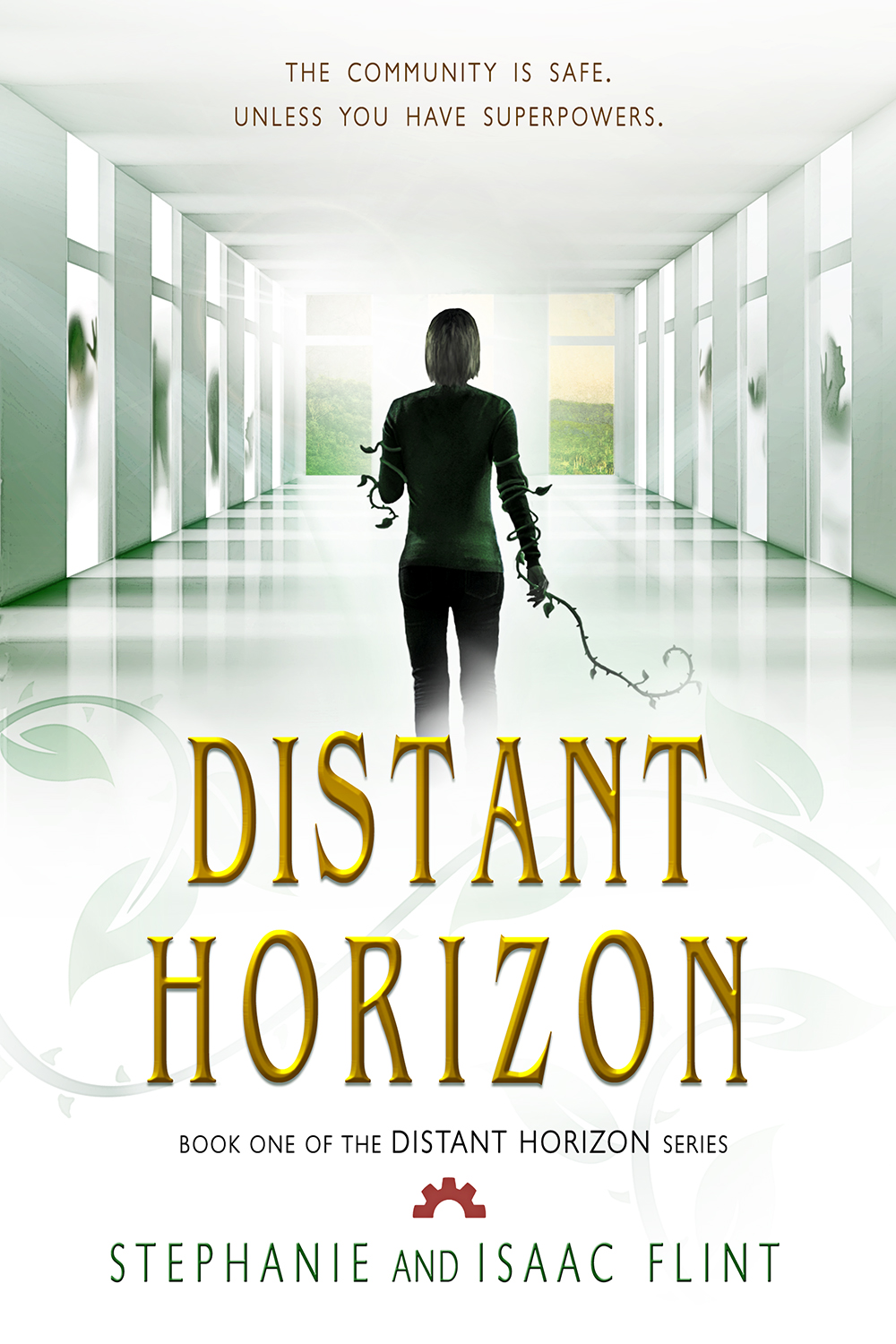
Dec 5th 2018 Update: The result of this project has been published! Click here to read the post about the completed book. 🙂
Warning: This is a really long post. But I wanted to include everything in one place rather than trying to split it up.
A while back, in the November Infinitas Publishing status report, I mentioned that, for my NaNoWriMo project, I had a goal of reaching 50,000-65,000 words in 12 days, writing in a world I hadn’t written before. I achieved that goal (completed at 50,316 words), and today I want to go a little more in depth about that progress.
(I’d been meaning to get this blog written for a while, but as you can probably tell, it’s been a hectic couple of months).
A Bit of Background
I have used loose outlines before, but I haven’t really tried a heavy-duty outline for a world I haven’t written in. My most detailed outline was for Messenger of Gaia (rough draft completed, but not yet edited), a novel that clocked in at 77,000 words and was written during Camp NaNo. That one, however, was based on a role-play that my husband ran, so I already knew the basic story and how everything fit together, and I put together a summary outline that reminded me of each scene. This was the process I wanted to emulate, but I wanted to try it with a completely new story.
The New Project
I’ve had an idea percolating in my head for a while regarding a fairy tale retelling in space, but as the time came closer to November, I wanted to figure out how that world got to where it was, so I could better set up the factions and character motivations. The result ended up being a completely different, cyberpunk fairy tale… a retelling of “Snow White,” but from the point of view of the huntsman (or, in this case, the huntress).
There are a few books I credit with how I developed the outline for this project (Click the links to see my Goodreads reviews of the books):
Janice Hardy’s Planning Your Novel, which helped me develop the Three Act Structure for this story, and further developing the main characters.
Libbie Hawker’s Gotta Read It!, a short ebook explaining pitches, which is excellent for crafting the basic concept of your novel so that you can keep it on task when developing an outline.
Libbie Hawker’s Take Off Your Pants, which further explains concepts from Gotta Read It! and gives another form of outline to work from, as well as explains the idea of the “ally” character, and puts a strong emphasis on the greatest weakness of your main character. It is this “greatest weakness” aspect that I found to be extremely helpful when crafting the outline for this particular story.
Developing the Main Characters (Using the Take Off Your Pants Method)
To start with, I tried to develop a sense of the main character. (Note that this is just my initial concept, and I changed some of the main pieces once I started outlining.) While writing this, I made notes to myself of anything I would want to check or explore later, and at this point, I haven’t actually named the Huntress or the Queen (other than knowing her last name will be Konigin).
The main character is Huntress, a loyal bounty hunter for Konigin Corp. She sees the advantage of a nanite-enhanced society, especially since her parents were killed when a plague spread through the metropolis and killed both her parents at a young age. She was taken in by Konigin Corp, who provided funds to take in the numerous children left homeless. (Why were healthy adults targeted?) However, as one of the most loyal to the company, she is privy to information that others are not. She knows that the plague was the result of another company (ZiTech–check to see if that name already exists) messing with a virus and accidentally infecting their scientists with a dormant virus, which then spread. Konigin Corp stopped it from being a worse disaster, but she understands how a balance between nature and science is necessary for their survival. She hopes to gain a say in company matters (and the increasing tensions between progressionists and technologists) by getting closer to Queen.
Looking back at this, after having written the rough draft, I can already say that the plague of the past plays a much smaller role, and only warrants a brief mention. It may end up being cut altogether if I find a stronger explanation of her backstory. The important part was that the main character sees the “queen” as a mother figure, but also understands the concept of balance between nature and technology.
Per Take Off Your Pants, I also jotted down the external goal of the main character.
Do favors for Queen in order to gain more power for herself (become the Queen’s ear), so she can rise in the ranks of Konigin Corp and eventually influence internal company politics and avoid some of their “nastier” practices.
Next, I have the Antagonist listed. (Note: the order I’m talking about these elements is not necessarily the order of development that I came up with the ideas, just how they’re presented in the long run. I highly recommend reading Take Off Your Pants for more details about how to develop each of these elements.)
Queen – the founder of Konigin Corp. Vain, she sees beauty as the ultimate sign of perfection and healthiness. She uses nanites to enhance her beauty, and is furious that Snow maintains her beauty without any augmentation. Augmentation and uplifts (sapient animals… check to see if I can use that term) are the only way she sees humanity surviving against the constant threat of war, environmental disaster, and disease. She wants all her “daughters” (company workers) to be augmented.
Snow – Queen’s half-daughter. Her father broke up with Queen when she insisted on augmenting their child shortly after birth. After the divorce, Snow was raised to see augmentations as a danger to humanity. (Progressionist Lobbyists). Technologists threaten to remove everything that makes them human and upset the natural order of things. She is a favorite ambassador candidate of The Society for Natural Progression, (The SNP, or Natural Progressionists). She has a beautiful singing voice, and is known for her sheer (natural) beauty.
I’ve included both of these characters as antagonists, though which one is the primary antagonists switches as the story progresses.
Then, per the Take Off Your Pants method, I wrote a basic concept of what The End should be.
Huntress must betray Queen’s loyalty and reveal Queen’s secret practices and upset the line of power she’s fought so long to control, thus allowing Snow to assume the corporate throne. She gains Snow’s love, and Snow’s ear. She is able to act as a voice of reason, suggesting they allow Queen to leave Earth for a colony planet with her uplifted army, rather than executing her for her crimes.
This is what I originally envisioned. However, by the time I finished writing out a fleshed out outline, the ending was very different.
The Queen never leaves for a colony planet. She has a different (ironic) fate, though we do see the Huntress try at the very last to give her a chance to redeem herself. Also, whether or not Snow and Huntress actually get together is left vague (Due to some of the atrocities that Huntress commits in the Queen’s name, I haven’t decided if Snow would ever truly feel comfortable around Huntress), though it is clear that Snow now respects Huntress, and there is a chance for a happily ever after. (Because me trying to write a romance? Well… it looks like that challenge has not yet been successful).
Lastly, I decided on these three pieces of information to keep in mind while developing the outline:
Flaw: The huntress is loyal to Queen, even when Queen is obviously in the wrong.
Ally: An uplifted wolf? A hunter for a different corporation (Something??? Inc.), he represents balance between the technologists and the progressionists.
Theme: Balance is important (All things in moderation)
Once this was complete, I diverged a bit from the Take Off Your Pants method and started first with creating an outline from the Three Act structure, so that I could easily see the overall arc of the story.
Now, this is not the final story. I did make a few changes as I created the outline and progressed with the rough draft, so I don’t mind sharing this (since it’s not exactly as spoilery as you might expect).
Opening Scene: Huntress is fulfilling a contract, dragging in a progressionist. She suspects the man is innocent, but turns her back on him and his being experimented on due to her loyalty to Queen.
Inciting Incident: Queen learns that Snow has just been voted the most beautiful, despite her daughters all being healthy and gorgeous (and augmented). Queen orders Huntress to leave Snow with a scar that can only be fixed if she accepts augmentation.
Act One Problem: Snow reveals herself to camera with scar, refuses to get the augmentation, and people still see her as beautiful (she has poise and determination). Queen furious.
Act Two Choice: Huntress seeks way to bridge gap because she realizes she’s falling in love with Snow, but wants to remain loyal to Queen, who raised her. She has secret meeting with Snow, and begins to investigate Konigin Corp’s secret practices (mind-wipe tech, to be used on criminals).
Midpoint Reversal: Queen orders Snow to be killed, and for her lungs and liver to be removed, so she can regrow a version of Snow for her own purposes, a daughter she can train as her own. Huntress suspects that Queen is going too far, but following her orders is the only way to rise in power. (She attempts to bend Queen’s ear, but it fails).
Act Two Problem (Dark Moment): She tries to kill Snow, but fails when she hears Snow’s singing voice and her passion for her philosophy. Huntress questions if she’s as loyal as she should be (and if that’s even a good thing)
Act Three Plan: Plans to face Queen and try to convince her to give up her secret experiments and help her bridge gap… which she has the power to do. She argues with Snow for Queen’s exile, rather than execution, which Snow reluctantly agrees they can try.
Climax:. Queen refuses and sends her hordes of uplifted/augmented armies to attack Huntress and Snow’s men.
Resolution: Huntress reveals to the armies the treacheries Queen has caused, but instead of working with her, they turn against Queen and kill her (using the mind-wiping tech Huntress discovers earlier). Though disappointed, she is able to be with Snow, and argue for some measure of balance, and she is appointed as the new leader of Konigin Corp.
Next, I took my three act structure and filled in the gaps with a short description of every scene that was intended to take place in the story.
At times, I ended up adding new scene while writing the rough draft, because something would feel natural or because I felt like something was missing, but this is what I referenced whenever I continued writing the rough draft.
These are my notes from Act I. (Note: Verdi is the Huntress, and words in all caps were stand-ins until I came up with name for them.)
*Verdi stalks a man from the shadows. He is passing information to another informant… at least, that’s what she’s been told. She suspects he is just trying to get extra food, since food is scarce. But before he can complete his contract, we see her attack the other man using some kind of modified weapon tech, and then capture the innocent man. She will do her duty to Miss Konigin.
*Verdi drops off man at an underground station. Heavily modified workers take him in. He begs her to let her go, screaming that all this is unnatural, but she ignores him. (Complains he’s not accepting the gift Konigin has given them). As she heads down a secret labrynth of halls, she overhears a pair of scientists discussing the miner-protocol mind wipe, and she hurries past the area where she knows special bodies are being grown/built for the mining procedures. This is a necessary part of Miss Konigin’s plans. For now, anyway.
*Queen is pleased with Verdi’s progress. Invites Verdi to one of the company meetings as her personal bodyguard. Verdi is delighted. This is one of the few times she’s been invited in directly. If the other corporate leaders get used to seeing her, maybe they’ll begin accepting her thoughts and opinions.
*However, when one of them suggests stepping up the capture of SNP members, she is immediately shushed when she tries to point out that capturing innocent people is liable to hurt them. She is chastised. Perhaps it is for the best. Konigin knew what was best when the SOMETHING plague went around, anyway.
*Standing guard within Konigin’s personal quarters (which she is familiar with, and has memories from as a child), Konigin reminds her of just how important technology is to them. How they mustn’t give in to the lure of a natural, Darwinian “only the strongest survive world.” Besides… this world is so much more beautiful. Verdi is beautiful, and Konigin seems very pleased with her. Verdi agrees, though she thinks Miss Konigin is the most beautiful of all. Konigin laughs, good-natured, and says they shall see tonight, when the results of a POPULAR MAGAZINE comes in with the votes of the people. She suggests “that one of her other “daughters” (her company workers… all “beautiful”) may manage to beat her out this time.
*They are eating dinner with distinguished guests. Verdi stands watch in the corner. Konigin is horrified when the newscaster reports that SNP candidate, Maria Snow, has been voted the fairest of them all by the people. Verdi is stunned, because she thinks Maria is indeed very beautiful, but Konigin storms out of the room, ranting about the blindness of the people.
*Verdi hurries to follow her, afraid she might do something rash. But, in the silence of her private quarters, Konigin gives her a new mission. She must leave Snow with a scar that can only be fixed if she accepts the augmentation of Konigin’s nanites. She gives Verdi some kind of acid weapon and orders her to leave that night, and not return until the deed is done.
And that’s the first act. My total outline was 3,200 words.
Finally, here is a scene that was spawned from that outline. In specific, it’s the one where the Queen invites Verdi to a board meeting. (Note: This is the rough draft, unedited.)
A soft buzzer sounds from the door. I pause in the middle of stretching. “Agnes?”
President Konigen is here to see you. Should I let her enter?
My eyes widen, and I quickly straighten the black robes I’m wearing. I should have worn something a little more colorful. Black is striking, but there are more beautiful options in my wardrobe. “Of course! Please, let her in.”
As you wish, Veridian.
I smile brightly as the door lock whirs and then the door swings open. President Konigen stands in the doorway, poised with her chin up and her shoulders back, and she is, as always, gorgeous. Her long, wavy black hair has been pinned back at the nape of her neck, likely with a gold barrette. Her skin is pale, almost white, her lips as red as cherries, her cheeks rosy. Her eyes are a bright blue. She wears no makeup, but she doesn’t need to. That’s what she has technology for.
I quickly bow at the waist, and gesture for her to enter. “To what do I owe the pleasure of this visit?”
President Konigen comes in and laughs, her eyes twinkling. “You don’t have to have such formalities around me, Verdi.”
I pop back up, self-conscious. “I know, but you deserve them.”
She chuckles and shakes her head, amused. “Always so polite.” She sits on the edge of my bed, still poised gracefully.
“That’s how you raised me,” I say, my heart skipping a beat. She’s not my biological mother, but she took me in as a child when one of ZiTech’s products took a downhill spiral and went from a well-planned product to a deadly virus. Konigen managed to find a cure, but not before the damage was done. That’s why the lower city is so sparse. There used to be more people living there. Though the virus is no longer contagious, few want to visit the area.
But Konigen had recently lost her own daughter, so she took a few of the orphans in and raised them herself. She made sure we were healthy. She ensured we were beautiful.
She smiles at me. “Then I must have done well.”
Heat rushes to my cheeks. Everything I do, I do for her. I owe her my life. If it wasn’t for her, I might be living in the streets, unaugmented, afraid of technology just because of one company’s mistake. Or I might not even be alive. I might never have received the vaccination which prevented further outbreaks.
“Thank you, President Konigen.”
Though I long to call her mother, and though she raised me as her own, I don’t dare call her such. She’s more than that, and I can’t delude myself into thinking that she is as base as the people who died on me, the people who refused to augment themselves against the virus. She is… President.
President Konigen straightens her knee-length skirt—a lovely forest green that shimmers under my bright bedroom lights. “Verdi, I just wanted to say how proud I am of your recent accomplishments. You have brought in far more of my corporation’s threats than any of the other huntresses, and I hope to see your work continue.”
I puff out my chest with pride. “Thank you, President Konigen.”
She claps her hands together, then presses the tips of her fingers to her rosy lips. “As a reward, I would like you to accompany me to tonight’s board meeting. We will be discussing the future of Konigen Corp’s operations, and hearing tonight’s matters might benefit you going forward.”
My jaw drops. “Seriously?” She’s never invited me to one of the meetings before. I’ve stood outside the room, keeping watch, but she’s always had a senior hunter or huntress accompany her within the room. It’s a critical job. If one of the members turns out to be a traitor, we have to be ready at a moment’s notice to protect her. “I’d love to! Yes, thank you.” I bow again.
Beyond the honor of being to the meetings, if the other board members get accustomed to seeing me with President Konigen, they’ll begin to trust me. I’ll have their ear. Maybe, finally, it’s not just what I do that will be important to them. What I say will be important to them, too.
“Good.” President Konigen nods curtly. “Be ready in half an hour, and make sure you’re wearing your finest. Let’s make a good impression on them with your debut, shall we?”
“Yes, President.” I smile, my stomach doing back-flips. I have to decide what to wear…
It needs to be practical, but stylish. Strong, but not scary.
Beautiful?
Always.
All that’s left is the regular editing and revising process, which might be a while since I have several other projects ahead of this one.
* * *
I hope that this helps explain a bit more of my process, and is helpful to those of you considering writing from an outline.
Have you tried creating a detailed outline for your stories? If so, how did it go?