Alternatively… “Everyone’s the hero of their own story”
(Which appears to have multiple attributions… so know that I did not come up with that quote, but it is very useful for designing antagonists)
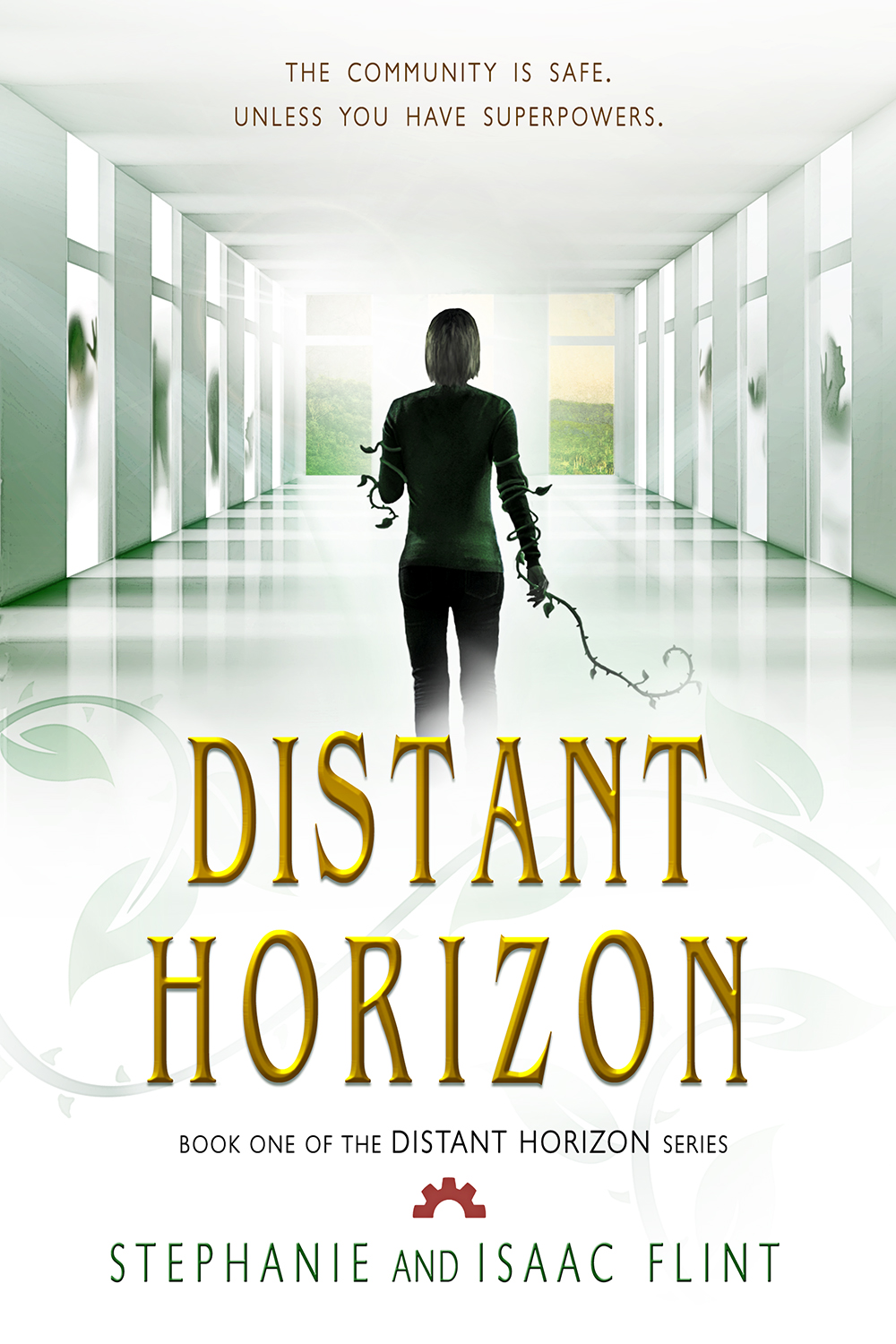
When writing the Glitch saga, one of the parts I enjoyed working with was showing the Distant Horizon universe from a different point of view (in this case, from the point of view of “the bad guys”). Though the Camaraderie of Evil lives up to their name, an aspect Isaac and I wanted to work with was the idea that “everyone is the hero of their own story.”
Most of the villains aren’t doing evil things for evil’s sake. (Most. There are exceptions).
Instead, they’re driven by a desire for security, a utilitarian view of “the greatest good for the greatest number of people,” or a sense that the end justifies the means.
Even the antagonist with the most logical reason to be pure evil has his own motives and reasons for doing what he does. (Though really, he’s been through so much by the time we see him that… uh… it doesn’t really take much to push him into the “he knows what he’s doing is wrong and yet his desire for revenge is a bit too strong to counterbalance that knowledge.)
Sure, there are a couple characters who are outright power hungry, but for the most part, the people we see all want a better life. They just have… not the greatest ideas… about how to achieve that life. (As in, their ideas work, for them, but definitely aren’t “good guy” plans).
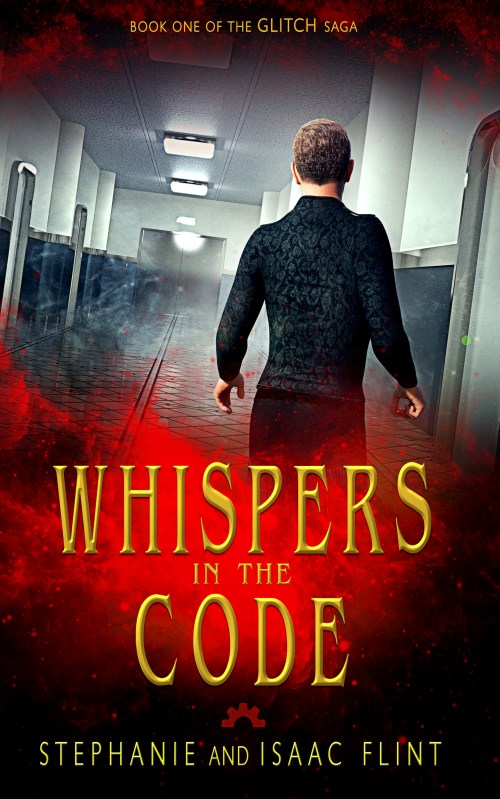
There’s a specific scene from Whispers in the Code (book one of the Glitch saga) that usually comes to mind when considering the Camaraderie’s mentality regarding the world:
Commander Rick motions me to the command room and sits in the chair, resting his chin against the bone of his knuckles. I stand before him, feet together, back straight. I wish I felt more confident.
“You will be challenged by much of what we do,” he continues. “In the Community, your tasks were simple: program basic systems, keep everything running smoothly… This job is not so simple. We call ourselves the Camaraderie of Evil because we are willing to take steps others wouldn’t dare consider. That’s the only way we can accomplish security and efficiency. I don’t personally believe we are evil, but the name stuck around from our earlier days, and they were… an interesting bunch.” A thoughtful smile quirks on his lips and he clasps his hands on his knee. Despite the relaxed position, he still carries an imposing presence.
“Yes, sir,” I say.
“The Community is everything we promise. It is safe, secure, and efficient. Everyone has a secure job, with no fear of being mugged on the street or killed because of needless terrorism. They have food, shelter, and companionship. We rule the Community carefully, and the system works.” He pauses as he gathers his thoughts. “However, there is a price. When the Camaraderie was first formed, Lord Black determined that superpowers posed a threat to his utopian ideals. Those with powers must be controlled or eliminated. Those who do not contribute cannot be allowed to siphon off others.” Commander Rick sets his jaw and my chest clenches tight. I know this already, but to hear it directly from the eldest council member is another thing entirely.
“Thus, through Sanjorez’s and Benjamin’s work with the pendants, the Camaraderie learned how to make beasts. Beasts can be controlled. They can fight. They are more efficient than eliminating each individual person that opposes us. No one would contest using elementals and power users in Special Forces. But our enemies would argue that our actions are morally wrong.”
Like Jenna.
The commander smirks. “Like Miss Nickleson, yes. But I have seen her mind. She seeks truth in answers. In her eyes, to have been lied to about the state of the world was a crime. It is not the action of transformation she sees as wrong, so much as it is that we withheld that information from her.” He presses a knuckle to his chin and gazes out at the dark sky. “I believe it is similar to how you are unaccustomed to making decisions which impact the wellbeing of others, and why you have a hard time understanding the art of war.”
I shift uncomfortably as the commander stands.
“You will do well, m’boy. You will adjust.”
I nod, but I still have a sinking feeling in the back of my throat. To be efficient, truly efficient, I’m going to have to make choices I’d rather not make.
Indeed, Tim does end up having to make choices and decisions that the rebellion would never consider.
And I’ll throw this out there: the Glitch saga doesn’t have a happy ending.
I hope you find it a satisfying one, especially when read in conjunction with the rest of the Distant Horizon series, but things have gone horribly wrong, in large part due to the actions of the Camaraderie.
And things continue to go wrong in the Distant Horizon series, because the things the Camaraderie has done (and even the rebellious Coalition of Freedom) don’t have a simple solution. Like real life, politics and war are messy.
Tim recognizes that much of what the Camaraderie does is questionable, or should be stopped. (And he does try to stop some of those things, or at least mitigate the problems).
But with their actions already snowballing into a terrifying boulder down a slope made slippery by too many people before him, it’s not something he can stop on his own.
Will the things he does help others make things better, even if his story ends tragically? Will his actions matter, allowing for a bittersweet ending? Will his actions have made an impact on those around him… even those who have been working with the Camaraderie for most of their lives?
It may not be immediately evident at the end of the Glitch saga, but once we get to book three of the Distant Horizon series (Starless Night)), I’m hoping a lot more of that becomes apparent. And it should become even more apparent by the time we get to book four, Changing Tides.
Do you have any favorite books where the story had a tragic ending, and yet the character’s actions still made a difference?
* * *
Delve into the Camaraderie’s dark and tragic secrets…
* * *
Happy reading and writing!