
The primary magic we see in The Wishing Blade series is ribbon magic. Today I thought I’d showcase the sinister maroon ribbons of magic’s lure.
Magic’s lure is a rare form of ribbon magic with the power to command people to do a mage’s bidding. Unlike the telepathy powers in the Distant Horizon universe, it doesn’t actually change the target’s mindset… it’s physical.
But some people are more aware than others that they’re being affected. It depends largely on how closely the command matches with what they already want, and what other external factors might distract them from recognizing what’s happening.
Few mortals have access to magic’s lure, and Daernan (one of the main characters in the Wishing Blade series) is one such mage. He keeps his power hidden, knowing most people equate magic’s lure to being a power of the Trickster, Isahna, a nefarious, ill-favored god. Worse, since Daernan has royal blue shapeshifting ribbons, which are also a favored magic of the Trickster, he’s occasionally accused of being one of the god’s pawns… though that couldn’t be farther from the truth.
Daernan would prefer to avoid using magic’s lure when he can. Still, it has its uses, and when time is of the essence, he’ll sometimes bend that rule.
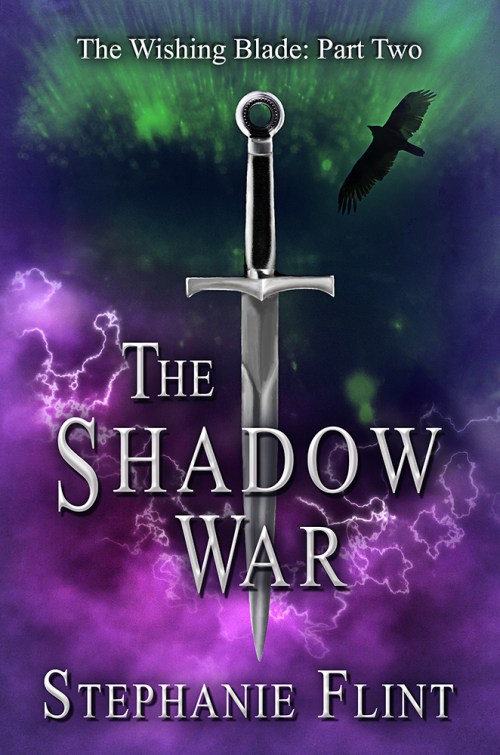
Here’s a scene from The Shadow War in which Daernan and his friend, Siklana, are trying to get past a stubborn secretary to deliver an important message, but Siklana’s diplomatic attempts are failing miserably.
Siklana raised an eyebrow. “I am not going anywhere if this buffoon will not permit me speak with Marquis Eornayan. I’ve tried reasoning with him. I’ve tried listing my family credentials. I even tried giving him an exact time schedule of when the shadows are likely to arrive, and he still won’t listen. I don’t suppose you want to try your charms?”
“Not really,” Daernan admitted. But considering the glare the secretary gave Siklana, and the quill the secretary had snapped a moment ago in frustration, Siklana wasn’t getting in on her own.
He sighed. Siklana knew far more about court manners than he did, but he knew enough that he could manage an upper class attitude when he needed to, and he did have magic that might get them inside. He hated using it, but they only had a short amount of time remaining before the shadows got here…
An uncomfortable lump formed in his throat, but he returned to Siklana’s side, put on a proper pose, and added just a bit to his height via his shapeshifting ribbons. He offered the secretary his hand. “I apologize for the behavior of my assistant, good sir. I am still familiarizing her in the way of the court.”
Siklana’s jaw dropped and her cheeks blushed a furious red.
Play along, he sent, and I should be able to get us in.
She shut her mouth, though her eyes remained as wide as horseshoes. He didn’t usually communicate telepathically with anyone other than Toranih.
“I am Mage Daernan Nivasha. Please let Marquis Eornayan know that I have urgent news regarding a threat to the sovereignty of this excellent city. While I am willing to wait until his earliest convenience, I should note that an attack by the same cursed trickster who stole the magic of Cirena may be imminent. It is of the utmost importance that we speak with him.”
The secretary parted his mouth in a soft “O” and a tiny, fluttering maroon ribbon finished working its charm. The secretary smiled apologetically. “Just a moment. I shall alert him.” He shuffled from his desk, discarded his broken quill into a wicker basket on the way out, and then slipped between the giant doors behind him.
“How… how…” Siklana stared at Daernan. The redness in her cheeks had been replaced with a white that resembled that patch in Daernan’s hair.
He lowered his eyes and scuffed his boot on the marble floor. “We’ve got a way in now.”
“When I said to work your charm, I didn’t mean… There is no way you did that with good looks alone,” she hissed. She lowered her voice. “You have magic’s lure?”
He cringed. “Let’s not go announcing that to everyone, shall we?”
“Certainly not,” she murmured. “Everyone else can figure that out for themselves.”
Daernan let out a breath. If anyone else found out, they’d say he really was a pawn of the Trickster. It had taken a long time for him to accept he had those ribbons. He kept them on a short leash. A cage, really. If people hated string mages, they hated magic’s lure equally. “Go on in if they ask for us. I’ll be back in a moment.”
Daernan’s usually a lot more down-to-earth (Down-to-Cirena? Down-to-the-mortal-realm? I should probably decide what their equivalent phrase would be) than the other nobles, but when it comes down to it, he knows how to play the part.
The question, of course, is whether or not that’s going to work in his favor in the long run. Daernan might prefer not to use magic’s lure more than necessary, but the gods have other plans in mind (as we see in Magebane).
Other instances where we see magic’s lure is The Wind Mage and Wolf, involving one of the city guards that the main character, Livena, does not see eye-to-eye with, and as the magic of one of the main characters in the novella I’m currently writing and releasing through the Wishing Blade Universe Newsletter. Both of those stories are set in the Legends of Cirena era, two hundred years prior to the Wishing Blade series, though the latter novella leans heavily into setting up the events that eventually lead to the Wishing Blade era.
Of course, the fun thing about the in-progress novella (currently just titled “the Ferta story” is that it’s also set at a time when Isahna, the Trickster in the Wishing Blade series, is still only a god’s champion. And yes… he still gets to play a role. 😉
* * *
Beware of magic’s lure…


* * *
Happy reading and writing!




 Stephanie Flint - Author and Artist