Tag Archives: self-publishing

Thoughts on Writing – Formatting Telepathy in a Novel

There’s a section I’m currently working on formatting in Distant Horizon, which has a lot to do with telepathy. And of course, that had me puzzling over the best way to format telepathy.

Originally, I had planned to designate telepathic sections using colons and italics, like this:

:This is a thought that you hear in your head,: the blogger thought to her readers.

However, I had several beta-readers say they didn’t like that formatting (never mind that I loved it in Mercedes Lackey’s Magic’s Pawn), so, since I want to make the book easier on the readers to read and enjoy, I made the change. They suggested keeping with simple italics, tagged like dialogue to note that it’s telepathy.

That worked well in Magic’s Stealing, where telepathy is mostly limited to communication.

Then we get to Distant Horizon.

*Flop.*

There are several forms of telepathy in the Distant Horizon universe. Most telepaths specialize in one or two abilities, but a really powerful telepath can do any of these:

(Note: These aren’t their formal classifications, just how I’ll refer to them for the moment)

  • Communication (Sending thoughts).
  • Mind Reading (Getting a sense of what someone else is thinking).
  • Perception Manipulation (Changing what someone thinks they see/hear/touch, etc.)
  • Possession (Taking control of someone’s body through a mental link).

(…Hehe. I feel like I’m writing out optional skills for a role-play character. Let’s take three points in communication and two in perception manipulation, please…)

The problem I’ve run into is how to denote each of these things, among other normally italicized sections.

Originally, I used italics to denote a few different things: telepathy, flashbacks that the characters is “experiencing” at the moment,” and telepathic attacks, in which what is happening is perceived entirely in the narrator’s mind.

When I was using the colons, it was easy to show that someone was communicating via thought, versus a person was having a short flashback, and when someone was communicating via thought during a flashback.

Fun, right?

Now, however, things have gotten a little more difficult.

For example, if the main character is thinking to herself, it usually isn’t too hard to switch the italicized parts to a non-italicized thought, given this story is 1st person, past tense.

For instance, this:

He winced, then handed me the notebook. “Look– I don’t know about either of us, okay?”

Wait. Either of us?

I gaped at him. “You’re not taking the pill, either?”

Becomes this:

He winced, then handed me the notebook. “Look– I don’t know about either of us, okay?”

Wait. Either of us?

I gaped at him. “You’re not taking the pill, either?”

No big change, and in fact, I like it better. Otherwise, it really felt more like it was italicized for emphasis.

I read an interesting article that mentioned using italics for thoughts creates greater narrative distance. Since I want readers close to the MC’s perspective, removing as many of these as possible could prove beneficial. (Plus, it makes Isaac happy. He never was a fan of all the italicized chunks I had in the earlier drafts).

But what about thoughts that are active? Thoughts that, by all right, should be 1st person present?

“What about you? Do you have this so-called persuasion power?”

He inclined his head. “Yes.”

You’re admitting to it? “You were using it last night,” I tested. “To get me to come with you.”

If I try to remove the italics, the paragraph doesn’t read right (or maybe it does, and I’m just being finicky). Technically, I could change the thought to “He was admitting to it?” and the sentence would read fine, but I’m thinking it sounds punchier if she’s directing an active thought toward him.

So I’m considering removing italics for thoughts that flow with the the past tense prose, or rearranging them into past tense when feasible, while leaving italics for thoughts that are in present tense, along with thoughts which are directed toward another person, even if that person can’t hear them.

The reason for this is that there’s a scene in which the main character unintentionally uses telepathy (I won’t say how, to avoid spoilers). However, some of what she’s broadcasting isn’t actively targeted, at least, it wouldn’t appear to be at first glance.

He gave me a pointed look. “Be careful with that thing.”

I winced. “I don’t plan on using it.”

“What you plan to do and what you do are two different things.”

“Yeah,” I mumbled, ducking my eyes from his scowl. All I wanted was a stupid reminder.

“And what you’ve got is trouble,” Inese retorted. I stared at her. I hadn’t said—

“Now stop worrying about the shiny. We’ve got work to do.”

See what I mean?

If I remove the italics, it won’t be clear that the narrator broadcasted the thought. But it isn’t directed at anyone, either, and kind of reads as if it’s just being emphasized.

But what if I only italicized thoughts that she knows is telepathic. She’s new to the concept of superpowers. If the characters around her react appropriately, she doesn’t have to realize what she’s doing, and the readers will learn at the same time she does.

Try reading this passage again:

He gave me a pointed look. “Be careful with that thing.”

I winced. “I don’t plan on using it.”

“What you plan to do and what you do are two different things.”

“Yeah,” I mumbled, ducking my eyes from his scowl. All I wanted was a stupid reminder.

“And what you’ve got is trouble,” Inese retorted. I stared at her. I hadn’t said—

“Now stop worrying about the shiny. We’ve got work to do.”

Since Inese is commenting directly on the narrator’s thoughts, and the narrator reacts with confusion, we can guess what has happened.

Plus, this allows for a lot of fun when she’s dealing with high-end telepaths. After all, they’re strong enough to manipulate her mind without her knowing that they’re changing her thoughts. Neither the narrator, nor the reader, actually know what is real and what isn’t, and which thoughts are actually hers.

Unreliable narrator, anyone?

Now, the problem with doing it this way is that there’s always the chance that the larger scenes involving telepathy (and there’s a huge one at the end of the story that prompted this particular blog post) may be confusing for the reader. That’s why I’m hoping to find a proofreader for this style of formatting before Isaac and I release the book. But for now, I think I’ve settled on this:

  • Thoughts directed toward someone/something in present tense will be italicized.

He inclined his head. “Yes.”

You’re admitting to it? “You were using it last night,” I tested. “To get me to come with you.”

  • Telepathic communication (when the narrator is aware these are not her own thoughts) will be italicized.

Brainmaster clucked her tongue. Poor Miss Nickleson… Let me show you what happens to the people who rebel.

  • Flashbacks/memory attacks, where the narrator is experiencing them but does not know this is a flashback will not be italicized. Tags may need to be included in the prose to help aid the reader.

Brainmaster clucked her tongue. Poor Miss Nickleson… Let me show you what happens to the people who rebel.

A rocket slammed into the ground, blowing a beast to bits. Sun scorched the back of my neck, and the stench of burnt flesh tainted the air. A blast of heat rolled over me. I shielded my eyes while debris pelted me with dirt. Something smashed into my chest. I removed my hand from my shirt and found it hot and sticky. The pain threatened to destroy my vision—

(Since the main character cannot distinguish the manipulation from reality, this is not italicized).

  • Flashbacks/memory attacks that the narrator is actively experiencing and is aware of, will be italicized.

The winding corridor opened to rows upon rows of floor-to-ceiling tanks, each filled with thick, greenish fluid. Bubbles traveled up the tubes, passing over occupants who had been stripped of everything but a breath mask. A helpless, sickening sensation spread through me. I stared at the liquid, petrified.

Brianmaster dragged me into a tube and shoved me inside, the numbing liquid surrounding me, slick against my skin. Burning.

I needed to escape, to breathe, to run—

“Let’s not open these doors, ‘kay?” Jack said, jarring me from my nightmare.

(In this scene, Jenna is having a memory attack, and though she can’t escape it, she’s aware that the attack is happening).

  • Flashbacks where the character is “remembering,” but not really “experiencing” will not be italicized.

He put the training weapons aside and sat on the floor, stretching his fingers to his toes. “Besides, the Community’s boring. There’s no excitement. Do you remember when we used to pick blackberries off the neighbor’s bush?”

I nodded.

Walking home from school, we used to take the back ally to our parents’ houses. One time I noticed a dark blackberry poking out from a broken slat in the fence. It was ripe, and touching the berry left a deep red juice stain on my fingertips. The neighbors could’ve been fined because the fence hadn’t been repaired in a timely manner.

(She’s recalling a memory, but she isn’t “experiencing” it, per se).

And, of course, I’ll use italics to emphasize certain words. And also for sound effects, foreign languages, etc, though I’ll try not to overdo it. 🙂

So, now that I’ve got this sorted out in blog-post form, I’m off to finish formatting the italics in the manuscript. It’s not perfect, but hopefully the formatting will be smoother now.

I hope you’ve found this post helpful. 🙂 Have you ever had to make a particular type of formatting distinguishable?

Leave a comment

Filed under Writing

Thoughts on Publishing – Infinitas Publishing Status Report

Beginning of the month status report time! 😀

Magic’s Stealing: This book is finished, however, I’ve been working on promotion. I recently did a Goodreads Giveaway and sent out one book, and I did a book signing at a local book store. I’ve got plans to set up another signing soon, as well as to place a few more books in nearby stores.

The Shadow War: Progress made! I’m still editing what I’ve already written, but I’m really excited about the direction it’s taking. Plus, I’ve got a good idea as to how this book will end, and several of the major plot points of the third book. It’s still a ways off from being released, but it’s nice to be back on track.

The Multiverse Chronicles: Trials of Blood and Steel: The first three episodes are slated to be released this Friday! 😀 Check out the blog on Friday for a link to the new blog site, which will be the home of The Multiverse Chronicles. Isaac and I are still doing a few final touches, but I’m really happy with how it’s coming out thus far.

Battle Decks: Trials of Blood and Steel: Isaac and I just finished smoothing out the deluxe edition of the player guide today, and now all we have left is to make adjustments to the trial and basic editions, and to do a few minor tweaks to the box artwork. Then we’ll be uploading the rest of the adjusted artwork to The Game Crafter and be ready to release in time for Stealth Con. Speaking of which, we’re debuting our game there and giving out trial versions of the cards. Isaac’s been working on a play-through video that we created with a group of people who have been play-testing the game with us, so we’ve got a lot of things in store for this. With that in mind, we plan to upload a PDF with the trial edition of the game, and release the full edition game for sale, sometime next week! 😀

SBibb’s Photographic Illustration: Per usual, I’m working on book cover design and formatting. I’ve started keeping a handy little planner so I can keep track of when everything is due. At the moment I’ve got some print edition formatting to work on tomorrow (I did some research at the bookstore yesterday regarding the particular genre), and I have a few book cover proofs to work on for this weekend.

Beta-reading: This is going slower than I intended, mostly because I’m trying to pick times to work on it when my mind isn’t distracted by everything else. I’m hoping to put this project into focus after Stealth Con, that way I can give this more attention and so the author can make the edits she’s been waiting for. Luckily, Isaac has also been helping out with beta-reading, and he’s gotten farther than I have. He just has to watch that he doesn’t give me too many spoilers…

Distant Horizon: This is another project I’m hoping to work on after Stealth Con. It’s ready to be formatted (I’ve got to adjust how the telepathic portions are formatted) and then be proofread for typos and grammar issues.

Video Blogging: I’m taking a short break from reading Magic’s Stealing while Isaac and I do the final touches on Battle Decks and The Multiverse Chronicles, but I expect to continue doing short video blog updates until I start back with the readings at the end of the month.

That’s it for now. We’ve got a lot of stuff coming up, and I’m excited to see what you guys think. 😀


Leave a comment

Filed under Business Ventures, Writing

Thoughts on Writing – How Genres Are Like Different Types of Stores

The other day, I had the thought that book genres are like different stores. I’m not really sure how I got to that particular idea, but it stuck around. So, today, I’m going to delve into that analogy.

Genres are like stores.

You have all kinds of stores. Big stores, small stores. General stores, clothes stores, game shops, book stores, specialty stores.

Each type of store has certain things that make it that particular type of store, just like a genre will have particular elements that make it that genre. While two genres may have similar traits (example, science fiction and fantasy both tend to have speculative ideas, surprising tech/magic, and vivid worlds), they aren’t the same. A reader may enjoy seeing those traits in either book, but there are certain traits they expect will be there, regardless.

For example, someone going to a grocery store versus a convenience store isn’t going to expect the same product availability.

A grocery store sells food–usually a decent variety, along with various other household goods that might be useful… like toilet paper.

A convenience store has a large variety of items, but a limited number of each, and they’re oriented towards quick, on-the-go products and essentials. Plus, they sell gas.

(There’s a nice article on the difference between grocery and convenience stores here)

If you want gas, you’re going to go to a convenience store, and you’ll be sorely disappointed if there are no gas pumps to be found. However, you might be pleasantly surprised to discover they have donuts available, something the grocery store also has. On the opposite end, if you want a bag of spinach, you’ll probably head to the grocery store, because that’s where you expect to find what you’re looking for.

If you want a book with shiny magic and mystical worlds, you’ll choose a fantasy book. You might be pleasantly (or unpleasantly, if you’re not a fan) surprised when there’s a decent romance on the side. But if you’re looking for a romance with a  lot of tender, loving kisses, you’re going to look for a sweet romance book… and if that just so happens to be found in fantasy trappings, great!

Each book has a primary genre, but it may delve deeper to appeal to a specific audience. The same is true of stores.

For example, a clothing store sells clothes. Obviously.

But break that down, and you get different types of clothing stores. It’s kind of like the romance genre. There’s a large market for romance books, but they can each be broken down into sub-categories to better target their reader.

You might be looking for clothes, but if you have the option to choose, are you going to grab the first thing you’re offered? Probably not.

More likely, there’s a particular store you drift toward.

Here’s what I mean. Out of clothing stores (and their comparable romance sub-category):

  • Children’s stores, which cater to kid’s sizes and trends. (YA Romance)
  • Fancy upscale stores, which cost a lot of money for brand name alone. (Category romance, in this case, with a rich man or woman as the love interest)
  • General clothing stores… with just about everything you need to make sure you at least have something. (General romance)
  • Western stores, everything blue jeans and leather. (Western romance. Cowboys, ranches, etc…)
  • Adult stores with “special” lingerie. (Erotica)
  • Eclectic stores, with alternative culture clothing (Romance with fantasy elements)
  • Pop culture stores, with clothes tied into popular movies and games. (Romance with science fiction elements)

The list goes on. (And of course, these are just examples, by no means cut-and-dry).

I like incorporating elements of different genres into the same book. A story will have it’s primary genre, but you can use pieces from other genres to help flesh out the story.

For example, if you go into a fancy upscale store, and notice that the products have been highlighted with specialty lighting which really makes a certain pair of slacks catch the customer’s eye, you might consider using the same technique in a children’s store. Sure, each store targets a different audience, but good techniques often have multiple uses.

In books, this might be stylizing writing to match a certain mood. If you want a fast-paced action sequence in your western romance, it probably wouldn’t hurt to read a few thrillers and see what keeps the pace moving along.

If you want to include a warm, heartfelt romance in your science fiction novel, reading a sweet romance might give you a few ideas of how to build character chemistry.

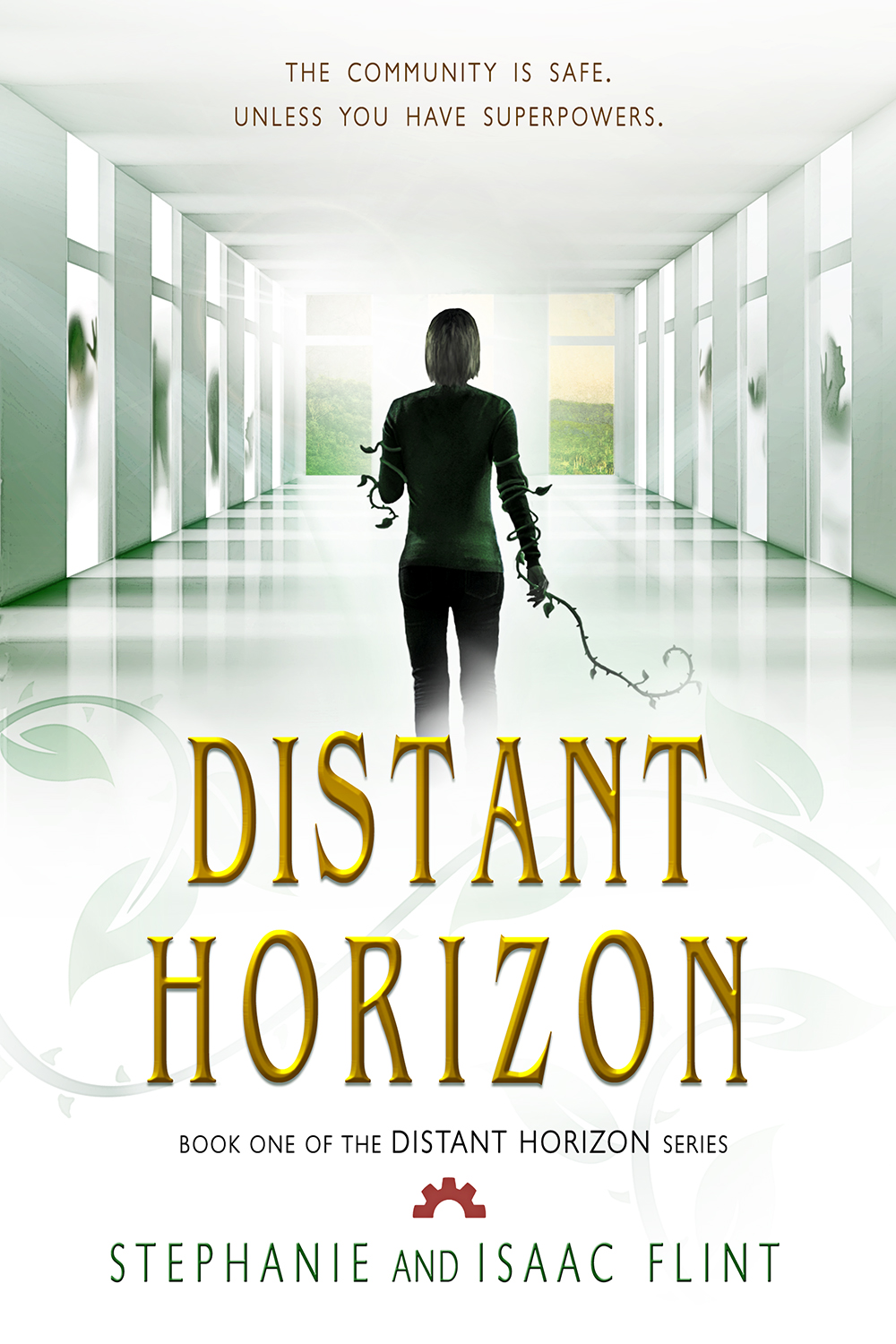
In the YA science fiction novel that my husband and I are writing, Distant Horizon, I used elements of horror to build tension. When the main character reaches a facility where people are being transformed into sub-human monsters, I include elements that are typically associated with horror. I want the reader to sense the creepiness.  The story isn’t horror, but using those techniques helped to set the mood.

Just remember, when you’re trying to pitch your book to an agent (or to a reader), it helps to know what type of reader they are. Just because a person likes romance, doesn’t mean they’ll like all types of romance. Some people may only like westerns. Others, science fiction. Others prefer contemporary.

I hope you enjoyed this post. Have you found any good analogies for various genres? 🙂

(For examples of other types of stores to fuel your imagination, see this article)

2 Comments

Filed under Writing

Thoughts on Publishing – Infinitas Publishing Status Report

First day of the new year, and time for a status report. 🙂

Magic’s Stealing: I’m currently working on promoting Magic’s Stealing. Primarily, I’ve been looking to get this book into local bookstores (Three nearby stores currently carry copies of the book. Woot!) The next step is holding book signings to raise awareness of the book’s existence. I’m also planning to hold a Goodreads give-away, so look for that to come soon. Isaac and I intend to get a P.O. Box so we don’t have to use our personal address when sending out copies. We may also start a newsletter once we get the P.O. Box address (since newsletters require a mailing address be included).

The Shadow War: While I haven’t made much progress writing the second book of The Wishing Blade series, I have gotten quite a bit plotted for both the second and third books. My hope is to finish editing what I already have written, then write both the end of book two, and the parts I already know of book three (or at least create a detailed outline).

The Multiverse Chronicles: Trials of Blood and Steel: Our beta-reader has given us comments on the first six episodes, so I’m ready to make the polishing edits to those episodes. I’m almost finished editing episode seven. Once we release Battle Decks, we’ll also start releasing this series. In the meantime, I’m trying to get ahead with writing these episodes. Isaac and I have discussed releasing each episodes on Friday (on their own separate blog page), thus taking place of these Friday blog posts. The goal is to give me more time to get an episode edited each week.

Battle Decks: Trials of Blood and Steel: Isaac and I recently reviewed our proof copies of the basic and deluxe editions. We’ve sent a few questions to The Game Crafter regarding printing, and in the meantime, we’ve got a few ideas about improving the rules document for clarity. We also decided to go ahead and make the rules document a booklet after shuffling through six separate pages, which was proving to be a real pain. It may still be a while before we release the game for sale, but we want this game to be polished as possible. Also, if all goes well, we’re hoping to demo this game at a new, local convention in February. More on that later, once we’ve solidified the details. 😉

SBibb’s Photographic Illustration: I’m plugging away on covers as usual, and I’m going to start writing the due dates in a planner to keep track of when I need to start each proof to get them completed by the preferred time.

Beta-reading: I have a book I’m beta-reading for a friend in the writing group I attend, and this is going much slower than I expected (partially due to all the recent holiday activity). On the bright side, I’m taking a few vacation days in January, so that should give me more time to read and make notes, and I plan to include reading time in my planner as well.

Distant Horizon: At this point, Isaac and I feel that the basic story is complete. It’s been through many different beta-readers, and we’ve let it sit while working on other projects. I’ve recently started working on basic formatting for this particular story, with the intent of looking for typos and minor grammatical issues. We don’t expect to release Distant Horizon just yet, and we don’t currently have a projected release date. However I want to start working on proofing, since I know that takes awhile. Depending on how well that goes, the release date may be sooner or later. The front cover is complete, however, with only a few minor changes expected.

Video Blogging: Back in October, Isaac and I started doing video blogs with readings from my stories. If you haven’t already, check out the Infinitas Publishing Youtube channel to listen to chapters of Magic’s Stealing and various short stories.

That’s it for now. I hope you enjoyed this post. 🙂

6 Comments

Filed under Business Ventures, Writing

Thoughts on Publishing – Infinitas Publishing Status Report

It’s that time again! Time to evaluate the current status of Infinitas Publishing. 🙂

The Wishing Blade: Magic’s Stealing: As of Monday, the first book is complete. Done. Finis. I’ve finished proofing the print edition and approved it through Createspace. I’ve also uploaded the updated versions to Smashwords and Kindle. If it has the Cirenan map in the preview, then it should be the updated edition.

Magic’s Stealing is now available in paperback! 😀

The Wishing Blade: The Shadow War (Book Two): My NaNoWriMo goal of fully revising the first half of this book fell through, but I did get a bit further in on the edits. I’ve also been plotting a bit of backstory that may or may not make it into the final version. This book may take a bit longer to work through than its predecessor (It’s longer, for one thing. The rough draft is currently the same length as the first book), but now that my time is starting to free up again (Finished several book covers, just about finished with a surprise bit of dental work, and releasing the print edition of Magic’s Stealing) I should have more time now to actually proceed with writing.

The Multiverse Chronicles: Trials of Blood and Steel: I haven’t made a whole lot of progress here, either. Our beta reader has read the first four episodes, and I recently sent her the fifth episode. I’m hoping to work on the sixth episode in the next few days, and go from there. Our plan is still to release the first six episodes around the same time that we release Battle Decks: Trials of Blood and Steel, and then an episode a week after that.

Isaac has been making good progress on the rough draft of the second season, though. He’s currently on episode 19, and once all the episodes are complete, he plans to go back and do basic edits before handing them off to me. 🙂

Battle Decks - Steam Tank Preview Card

Battle Decks: Trials of Blood and Steel: We’re off our target schedule for this, but we have made progress. We’ve updated all the cards, updated the rules and glossary (which need to be proofread… one of our weekend plans) and we’ve finished the new Steam Tank card, which replaced an older card. (I’ve included a sneak peak of the game card… minus the rounded corners and general trimming). This weekend, our goal is to refit the box art to the smaller boxes, finalize the last few tweaks, and order a proof of the updated game.

SBibb’s Photographic Illustration: I’m finishing up the last of a string of covers I was working on last month, and I only have a couple covers slated for this month, which gives me time to catch up on some of my other projects. Of course, I’ll be posting the behind-the-scenes info as the publishers and authors release their covers to the public. 🙂

In the meantime, I have a manuscript that I need to beta-read for a friend. I’m hoping to finish my read-through in the next two weeks, in order to give her time for her own personal deadlines.

That’s all for now. I have a book cover to finalize tonight, and tomorrow I have a new cover proof to start before I get back to work editing The Multiverse Chronicles.

I hope you’ve enjoyed this status report. 🙂

Leave a comment

Filed under Business Ventures, Writing

Thoughts on Publishing – A Video Blog Post – Reading Chapter Four of Magic’s Stealing

Well, I had planned on getting this post up yesterday, but there was fun holiday decorating to attend to. So the video a day late, but here is the reading of chapter four of Magic’s Stealing. In other news, I’ve finished proof-reading the print edition, which should be available on Amazon in a few days. 😀

Chapter One

Chapter Two

Chapter Three

I hope you enjoy this post. 🙂

Leave a comment

Filed under Business Ventures, Writing

Thoughts on Writing – Tightening Prose to Improve a Scene

Isaac and I are getting close to having all the edits made to our most recent version of Battle Decks, which reminded me that I needed to continue editing the blog series that goes with it. So, at the most recent writer’s club meeting, I decided to work on episode five of The Multiverse Chronicles rather than The Shadow War, which I’m currently doing  background plotting and research for. Since The Multiverse Chronicles will start coming out before that book, I didn’t mind putting The Shadow War on a temporary hold.

Anyway, there are three sections in episode five of The Multiverse Chronicles: Trials of Blood and Steel. The first section details interactions between a dejected pigeon, the taskmaster, and the general. The second deals with Trish and the colonel, and the third (the obligatory end-sequence at the end of the episode) with a group of airship pirates. The last two scenes I’m fairly happy with, and I’m ready to send to our beta reader. However, there’s something still irking me about the first section.

My instincts said that the scene dilly-dallied too long. So, after editing the general episode, I went back to the first scene and began looking for ways to tighten the prose and make the wording more concise.

However, when I looked at the resulting edits, I found that the same chunk of information was actually a few words longer than the former introduction. But wordy sections had been tightened, offering room for stronger world and character building.

Let’s take a look at the previous intro.

A lone dragoon pigeon flew over gently swaying trees. It had a very important mission, which could not be deterred. For on its back, in a tiny, dark green capsule, the pigeon carried a message for General Buford of the Queen’s Army.

It was an important message, as all messages sent via pigeon were. (Thus far, the prose feels stilted, because the sentences are fairly similar.)

The pigeon swept over a sleeping red dragon with harsh, glimmering scales, then skimmed through a squad of pterosaurs, quickly diving to avoid having its tail nipped as some scoundrel drake’s lunch. (Feels lengthy). A few minutes later, the pigeon arrived at a large wooden building that smelled of hay and feathers. The bird swooped into its loft, surpassed the landing board, then took roost in the one of the homing cages. It cooed, head held high and chest out, standing tall while it waited for the pigeon fancier to come take its message.

The pigeon ruffled its feathers proudly. A successful mission, to be sure.

After tightening the prose and adding voice, this was the result:

A lone dragoon pigeon with a very important mission flew between gently swaying trees. (I combined a couple sentences, and changed how the bird is flying in regards to the trees). It could not allow itself to be deterred. (Here we get that the pigeon is the one who does not want to be deterred… not that it can’t happen in general). For on its back—in a tiny, dark green capsule—the pigeon carried a message for General Buford of the Queen’s Army. (I’ve found that using the dashes help separate the thought better and adds flavor).

The message was of the utmost importance, as were all messages sent via pigeon. (I clarified “the message” instead of “it,” and changed the placement of “were” so that the sentence ends on a stronger visual word).

The bird swept over a sleeping red dragon with harsh, glimmering scales, then skimmed through a squad of pterosaurs. It dived, avoiding having its tail nipped by some scoundrel drake wanting an early lunch. (Early lunch helps imply that the pterosaur is acting out of bounds per the pigeon’s rules… (adds voice), and splitting the sentences adds urgency to the action).

A few minutes later, the pigeon arrived at a large wooden building. The musky scent of hay and feathers wafted through the air. (Splitting the sentences helps pacing, and we get a better visual). The bird swooped into its loft, surpassed the landing board, and then took roost in the one of the homing cages. It cooed, head held high and chest out, ruffling its feathers as it waited for the pigeon fancier to take its message.

A successful mission, to be sure. (I combined a couple sentences, slowing the pace a tad bit, but also cut needless repetition.)

Overall, I’m much happier with the latest edit. After tightening the prose and adding a bit more voice, the scene has a tiny bit more “pizazz.”

In one of my previous posts, “What does a serial episode need?” I included a list of traits I wanted to instill into each episode:

  • A strong sense of character, and relationships between characters. (The updated version includes a little more of the pigeon’s personality.)
  • Both humor and serious notes… usually involving some bit of quirkiness. (By adding more of the pigeon’s personality, we added the quirkiness.)
  • A strong sense of world-building. (This remained about the same for the intro, except that I tightened and condensed points. However, I suspect that I need to build on this further into this scene.)
  • Conflict and/or tension. (Will the pigeon deliver its message?)
  • A reasonable beginning, middle, and end. (This selection only shows the intro, but the end of the scene will show the pigeon flying off with a new message.)
  • Something that propels this episode into the next. (This isn’t seen in this particular section, but the end of the scene introduces Trish’s arrival coming in the next scene.)

I also re-read another post I wrote, “Creating Tension,” which reminded me to look into the scene and see if the tension and point of view lagged.

I hope you’ve found this post enjoyable. Have you found any tips for tightening your prose (even if it caused your word count to increase)? 🙂

Leave a comment

Filed under Writing

Thoughts on Publishing – A Video Blog Post – Reading Chapter Three of Magic’s Stealing

Today I’ve got another video blog post for you. I’m trying to move the video blogs to Mondays or Wednesdays to give me more time to prepare. In this one I’m reading chapter three of Magic’s Stealing. 🙂

Here’s the Youtube link in case you can’t see it.

You can hear the first chapter here.

Or chapter two here.

I’ve begun noticing a few tricks that are helpful when doing online readings.

The main one?

Slow down and enunciate.

This helps to prevent blurred phrases that don’t make sense once recorded, and lends to a natural pause between sentences. Having those pauses while reading allows for easier cutting in the editing phase, especially if you leave a longer pause where you know you’re going to cut something.

Then, once you take the recording into an editor like Premiere Pro, you can easily identify spots where you read a sentence twice and chop it without having to play that same sentence over and over (and over again) just to get a decent cut.

Also, once you get familiar with the program, you can figure out how to save the files correctly the first (or second time), rather than having the program complain that it can’t export properly with every format you try. In my case, I use the Microsoft Avi format (at least for now) to get the audio recording, and I have to remember to name the file I want to save before encoding it. Otherwise, it gives me an error.

The whole reading phase (including practice reads) and editing phase still takes me an hour or two. But it’s fun, and I enjoy getting to read the stories aloud. I blame being a Speech and Debate student in high school for four years for that one. Or maybe I was in Speech and Debate for four years because I enjoyed the readings…

Anyway, I hope you enjoyed this post. 🙂


Leave a comment

Filed under Business Ventures, Writing

Thoughts on Publishing – A Video Blog Post – Reading Chapter Two of Magic’s Stealing

Haha! I am finally uploading the chapter two reading of Magic’s Stealing! I’m much more satisfied with this version, so I’m glad I didn’t rush this, even if it is two blog days later than I intended. I hope you enjoy it, too. 🙂

Here’s the Youtube link in case you can’t see it.

You can hear the first chapter here. 🙂

Leave a comment

Filed under Business Ventures, Writing

Thoughts on Writing – Swearing in Audio Formats

In my last post, I read from Magic’s Stealing. It was the first time I edited one of my Youtube blog videos using Premiere Pro, and I used it to remove some of the more obvious stumbles where I tripped over my words. However, I ran into a bit of a conundrum that I hadn’t considered before. For public readings, should I bleep out swear words, or should I leave the text as-is?

If you recall, I wrote a post a while back on To Swear or Not To Swear, in which I debated whether or not to include actual swear words in the dialogue of the book. Ultimately, I decided to keep that particular instance, because it fit the character’s intentions and offered readers a bit of insight into the characters.

Keeping the swear as-is continued to bug me, though, largely because I wondered whether or not a middle grade audience (not just young adults) might be inclined to enjoy the book–but might have a less-inclined parent if those parents read the first chapter.

And that in itself is a whole new debate. Is it a good idea to tailor a story to a specific audience, with certain marketing expectations in mind? Middle grade novels are typically expected to be free of swearing. YA ranges the gamut, and adult depends on the genre.

The conundrum I’ve run into is that I intended Magic’s Stealing to be YA. However, I wouldn’t be surprised if a middle grade audience enjoyed it. As such, it’s led me to a new thought… if I ever do a public reading, should I censor the word? Then again, if I didn’t keep the swear, the passage wouldn’t have quite the same meaning. It’s unfortunate from a marketing standpoint that the only real-word swear is in the first few pages. Should I simply find a different chapter to read, perhaps in the middle of the action?

I suspect this will depend on the venue in question. Some venues, especially ones that are geared towards being family friendly, may ask to not have the swear read. Others may not care at all. It’s probably up to the type of fiction you write as to whether or not you choose to use venues that have specific preferences.

But what about audiobooks?

My first thought was, why change what we wrote? We choose our words for a reason.

On the other hand, people reading a book can very easily skim over words they don’t like. It’s not so easy when those words are being spoken aloud.

(I’ll admit that I don’t tend to listen to audiobooks, so I’m not sure what the general protocol is here.)

Granted, censoring spoken swears will depend on the audience. Obviously, censoring an erotic novel would be ridiculous. The target audience has expectations as to the contents of the novel.

But what about a YA novel with the occasional swear? Should this be censored in audio format? My first thought was “no.” That’s not how the author wrote it. But when read aloud, does that change the impact of those words?

Does reading the book aloud change the impact of the intent, and thus, change what should be read? Does reading aloud change how the text is perceived?

Or does trying to censor a word–whether by dropping the volume or inserting a bleep– actually draw more attention to it?

What about switching the word? The meaning changes, but what if, by switching words during a spoken performance, you actually get the intended reaction?

Is there a difference between the impact of something spoken, versus something silently read?

That, to me, is the real question.

If what we write on the page takes a different meaning when said aloud, then perhaps we should consider that impact, and decide what to change from there.

After all, screenwriting is different from novel writing. Adaptations are made because a book is a different format than what you might see in a live or recorded performance, and has different advantages and limitations.

But if the spoken word has the same impact as the written, then perhaps no changes should be made.

Honestly, I’m probably over-thinking this. For the previous reading, I left the swear in. I figured that pretty much anything I did would draw more attention to it (other than writing a whole blog post pondering the question), while letting it flow in context should keep the story running smoothly.

And in general, I’m thinking I’ll read the text as-is. If the one swear is likely to pose a problem, I could always chose a later segment to read.

But now I’m curious as to what you think. How would you handle a reading that has the occasional swear, whether an audiobook or in public?

9 Comments

Filed under Business Ventures, Writing