Tag Archives: Stephanie Flint

Thoughts on Publishing – A Blurb for Magic’s Stealing

As I get closer to publishing Magic’s Stealing, I’ve been compiling the various elements meant to catch a reader’s attention. While a lot of emphasis is placed on the book cover (and I’ve realized the current version I’m considering may be better suited to the third book, so I’m debating what I might use instead for the first), after the cover, a reader inevitably sees the blurb. The blurb should show what the book is about and entice a reader to either buy the book, or at least take a look inside.

However, as a writer, we’re so close to our stories that it’s hard to see what will draw the reader’s attention. I’ve posted my current idea for a blurb on Absolute Write (which is a very useful source of information for authors), and I’ve come up with two slightly different versions. The question is… which works better? Short and snappy? Or more details about the world?

In order to get a little more insight on the subject, I read through a few articles that discussed what makes a good blurb (see the links below if you’re interested), and came up with a list of elements to consider:

  • A sense of the main character(s). Who and what kind of character are they? (For Magic’s Stealing: Toranih is a young noblewoman who would rather have a sword in her hand than use magic to heal or throw fireballs.)
  • Just enough detail to show the type of story and what makes this book different. (For Magic’s Stealing: there’s a kingdom, magical ribbons, mages, shadows who are impervious to mortal weapons… and this is where I start to wonder if I need to hone in on the description)
  • What the main conflict/plot will be. (For Magic’s Stealing: Almost all magic is stolen from the kingdom, leaving two young mages–one of whom doesn’t like magic–to protect their home.)
  • A question that entices the reader, or leaves them wanting more. (For Magic’s Stealing: Will Toranih successfully adopt the responsibilities of a mage so she can fight the shadows? Or will she fail and cause her home to perish?)
  • Offer a taste of the writing style. (Maybe I can include a tiny clip at the beginning of the description. You know, those story bites usually seen in italics?)

These are the current versions of the blurbs that I’m considering for Magic’s Stealing.

Short Version:

Toranih would rather have a sword in her hand than use her powers to heal or throw fireballs, and as a result, her magic skills are lacking. But when the kingdom’s magic is stolen, she’s one of the few whose powers remain. With former mages dying from magic withdrawal, and the looming threat of an army of shadows who are impervious to mortal weapons, she must either adopt her neglected responsibilities as a mage or watch her home perish.

Long Version:

For centuries, ribbons of magic have provided the kingdom of Cirena with light, healing, and protection. Then, in a span of minutes, those ribbons fly from their masters, stolen, save for the ribbons of two young mages. One of these mages is Toranih, a noblewoman who never liked magic to begin with. The other mage is her best friend, Daernan, a gifted shapechanger who uses his magical sight to track the vanishing ribbons. Toranih would rather have a sword in her hand than use her powers to heal or throw fireballs, and as a result, her skills are lacking. But with former mages dying from magic withdrawal, and the looming threat of an army of shadows who are impervious to mortal weapons, she must either adopt the responsibilities of a mage or watch their home perish.

So my question to you is this: Which blurb, if either, holds your attention, and do they entice you to ‘look inside?’ Why? Or if you neither holds your attention, why not?

I’m concerned that the shorter one may read too fast, but that the longer one may loose readers with unnecessary information. One solution I’m considering is that Smashwords offers both a short and long description for retailers, and as such, I could use both descriptions in their respective sections. Anyone who wanted more information could click to read the longer description. In the meantime, if whichever description I choose for Amazon doesn’t seem to be working, I can try switching it out for the other and see which one works better.

I hope you enjoyed the post. Are there any blurbs that worked well for you? Anything you’ve found that didn’t?

A few articles I found particularly helpful while researching the subject:

http://romanceuniversity.org/2011/11/23/5-top-tips-for-writing-a-compelling-book-blurb-by-amy-wilkins/

http://kristenpham.com/2014/01/14/how-to-write-a-great-ya-fantasy-or-sci-fi-book-blurb/

http://www.thecreativepenn.com/2010/11/16/how-to-write-back-blurb-for-your-book/

http://www.lightmessages.com/lm/index.php/blog/writing/229-how-to-write-a-book-cover-blurb
6 Comments

Filed under Business Ventures, Personal Work, Writing

Thoughts on Publishing – Book Trailers

Isaac and I have been considering ways to promote our books once they’re ready. I’ve got a cover in mind for Magic’s Stealing, along with a couple possible blurbs, but we both agree that having a few other promotional materials meant to pique the interest of readers would be handy. One promo piece we’re considering is that of a book trailer.

Love ’em or hate ’em, a good book trailer catches the eye of a potential reader and either gets them to investigate what the book is about, or get them to make that final step toward picking up a book they’ve been on the fence about.

In order to get a feel for what makes a good book trailer, we perused Youtube and watched various (mostly young adult) book trailers. The below is our subjective conclusions.

Elements of a Good Trailer:

  • Music that fits the tone of the book. Compare the kind of music found in movies to your genre. A suspense might have suspenseful music. Horror might have music that is jarring or creepy. Action might be fast paced. Use music (make sure you have the right licence) to help convey genre to the reader.
  • Use cliches to catch interest… sparingly. If your book turns a cliche on its head, such as having a gladiator woman instead of a man… you might want to focus on that. Or you can hint at similarities in your book to other stories. For example, I showed my husband the book trailer for Throne of Glass (Note: I haven’t read the book, so I don’t know how well the trailer matches it), which starts off with a silhouetted version of the character on the cover. Isaac’s first reaction was ‘is this Assassin’s Creed?’ Since the book is about an assassin, then it makes sense that people who enjoyed Assassin’s Creed might enjoy a book about an assassin. Using similarities to other books, games, or movies allows the reader to consider that, if they enjoyed the other story, they might enjoy this one, too.
  • Set the theme. Convey the mood and tone of the book, and offer a sense of setting. This was often done using the imagery and/or animation shown. But also show what makes this book different from other books with similar themes… why readers should pick up this particular book.
  • If you already have a fan base from an existing prequel, touch on what excited them about the first book, but don’t leave new readers without a sense of what’s going on.
  • Include the name of the book and the author, along with when and where it will be available. Include buy links once available, and make it easy for a potential reader to buy your book. Don’t forget to include the cover of the book somewhere in your trailer, so readers can link the trailer to the book when it comes time to buy it.
  • Give readers something to remember. Granted, be careful not to use a cheesy gimmick unless the story calls for it, but if the reader remembers (and likes) the trailer, they may be more likely to pick up the book later, if they choose not to buy it immediately. If the reader doesn’t remember the trailer, they may not be as likely to pick up the book if they come across it later.
  • If writing non-fiction, give a sense of what the book will be about, introduce the author… maybe include a bit of humor, if you’re the kind of author who uses humor in your book.
  • Simplicity is your friend. You may not need a voice-over or a bunch of flashy images. Sometimes a simple ‘what if’ hook will catch a reader’s attention, as can using more ‘booky’ graphics. Words on the screen, skillfully placed, can be effective.
  • When comparing book trailers to movie trailers, Isaac and I noticed that the movie trailer showed the type of characters involved (such as a strong female protagonist and the rough-but-romantic guy). Movie trailers were typically faster paced, and those trailers focused on higher-budget graphics (something books often don’t have… the graphics or the budget). Movies that disappoint in theatres often show clips in the trailer that don’t deliver a consistent feel once you watch the movie.

Elements of a Bad Trailer:

  • Audio: Some trailers were obnoxiously loud or really quiet and hard to hear. Or the dialogue wasn’t clear. Be sure your potential reader can understand what is being said.
  • Too much telling, and/or a trailer that goes on too long. If you go on and on… and on… you may loose the reader. Worse, they may assume your book will drag, too.
  • Don’t quote your blurb verbatim. Readers will read that when they look at the book. Give the reader something new or expand on something that might interest them. You want a hook.
  • Cheesy lines. This can be hard to judge, because certain tropes are common, but make sure your dramatic pauses are actually dramatic… and don’t have you rolling on the floor in a fit of giggles.
    • Unless that’s the kind of story you’re trying to tell. If so, then by all means do so. I bought one book because the campy humor of the trailer was too entertaining to pass up.
  • Too distracting. If the trailer uses flashy elements and distracting colors, or elements that seem out of place, readers may be too distracted by those elements to remember what the actual book is about.
  • Don’t have ads on your book trailer. Seriously… the trailer is an ad. Readers don’t need to see unrelated Youtube ads popping up on the screen while we’re trying to watch it. Having other ads (when you can control them) impedes the message you’re trying to send out.

One thought I had during this whole process was to create a ‘teaser’ for the book rather than a ‘trailer.’ The idea would be to convey a small, interesting part of your story (For Magic’s Stealing, an example might be to voice over a section of the story where the antagonist, Shevanlagiy, is speaking to a rival. The teaser could therefore show what the protagonist is going up against. For example, there’s a line in the current draft of Magic’s Stealing where she say: “I’ll destroy everything,” she whispered, “if it gives me the power I need.” Granted, a little more context might be helpful.) For a trailer, you want to give a sense of the story as a whole. But for a teaser… one trailer we saw used a small bit of dialogue, a small scene that might have been directly from the book to show what the protagonist is dealing with. But it didn’t necessarily say a lot about the larger story.


I hope you enjoyed this post, and in the meantime, Isaac and I will be considering the above when we go to make a trailer for Magic’s Stealing. But what are your thoughts? Have you found any book trailers to be particularly effective (or ineffective)? 🙂


If you want to read more about book trailers:

http://therumpus.net/2013/06/fantastic-book-trailers-and-the-reasons-theyre-so-good/

https://www.goodreads.com/topic/show/1348243-what-makes-a-good-book-trailer

http://www.thecreativepenn.com/2011/01/07/how-to-create-a-book-trailer/


Example trailers, you be the judge of good or bad:

(Note, I haven’t read all of these. I just watched the trailer.)

Throne of Glass: https://www.youtube.com/watch?v=j_t1kXaDtRQ

An Ember in the Ashes: https://www.youtube.com/watch?v=sbvyCrkVT7M

Matched: https://www.youtube.com/watch?v=xaeNWL8rlBI

Steelheart: https://www.youtube.com/watch?v=6sC9NtpXLH4

The One: https://www.youtube.com/watch?v=qVDfV7gCCFE

Fire: https://www.youtube.com/watch?v=IEiijD-tV5M

The Monstrumologist: https://www.youtube.com/watch?v=B4V-biapntE

How to Catch a Russian Spy: https://www.youtube.com/watch?v=W2frzMX4IWM

The Glass Arrow: https://www.youtube.com/watch?v=G20Qz172G4s

Divergent: https://www.youtube.com/watch?v=tu5Erw-posg vs. https://www.youtube.com/watch?v=sutgWjz10sM

Virals: https://www.youtube.com/watch?v=MeBCqpUmPSU

Half Bad: https://www.youtube.com/watch?v=UIcpalOypmo

Three: https://www.youtube.com/watch?v=Zs46WskvpGU

Replica: https://www.youtube.com/watch?v=G62U728THG0

Existence: https://www.youtube.com/watch?v=_pUWjgCTTVg

The Raven Boys: http://maggiestiefvater.com/blog/the-animated-book-trailer-for-the-raven-boys/

The Young Elites: https://www.youtube.com/watch?v=F9VTgbB0dWg

Minder: https://www.youtube.com/watch?v=8lv6eC3E-9k

The Friday Society: https://www.youtube.com/watch?v=xs5rXZrglf4

Miriam Black: https://www.youtube.com/watch?v=gcR1B-48lK4

Leviathan: https://www.youtube.com/watch?v=PYiw5vkQFPw

The Flame Alphabet: https://www.youtube.com/watch?v=YMhEAIDclbI

Reboot: https://www.youtube.com/watch?v=adUV6qZgZdQ&index=8&list=PLogL8GFmSgvnNjVhWtvSFjawIn0HlzTRN

Leave a comment

Filed under Business Ventures, Photo Illustration, Writing

Sneak Peek – Battle Decks

If you’ve been reading my blog lately, you may know that my husband, Isaac, and I are starting a publishing company for our stories and games. Well, I’ve talked a lot about the stories, but today I’m going to give you a peek into one of our games-in-progress: Battle Decks.

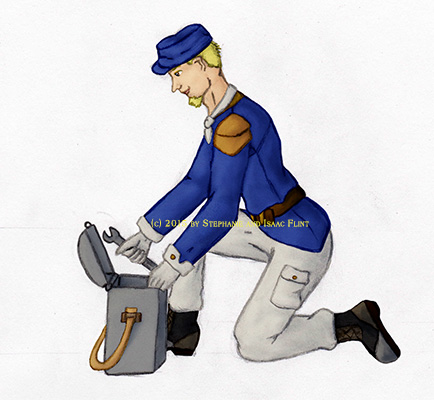
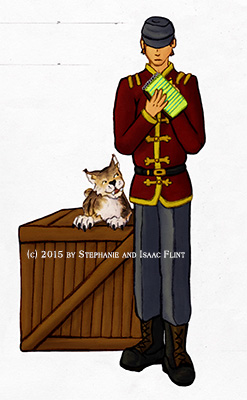
I’m not going to give a whole lot of detail on the game just yet, but I will say this: it’s a fantasy pseudo-steampunk table-top card game, where there are two battling factions and your goal is to take out the opponent’s hero cards. We’re considering the catch-phrase of “Dragons, dinosaurs, and dirigibles, oh my!”SBibb - Battle Decks Sneek Peek

Anyway, at this point in time, we have the basic mechanics of the game, stand-in cards, and we’ve played it on and off between ourselves over the past couple years. Currently, we’re in the process of creating the art for the actual cards. For the typical card, Isaac creates the base image with pencil on sketchbook paper. Then I go in and add the details, smoothing out the line art in the process. We then scan the page onto the computer. I retouch the pencil art in Photoshop CS6. Isaac does the basic coloring. Then I do the final touch-ups to the coloring and shade the image. That completes the basic art, up to the point we add them to their actual cards.

We’ve already ordered one proof of the first few cards, and there are tweaks to be made for readability. But it’s coming along, slowly but surely. There might be a set of stories planned around this game, too…

Your sneak peek is one character from each faction. 🙂

SBibb - Battle Decks Sneek Peek

Leave a comment

Filed under Business Ventures, Photo Illustration

Thoughts on Writing – Aging Up Characters

I’ve been getting feedback from beta readers for Magic’s Stealing, and one of the comments that has been fairly consistent is that the characters (which I intended to be around twenty years old) feel like they’re twelve- to sixteen years old, effectively making the story sound like it’s aimed at a middle grade or the lower end of the YA audience. Which isn’t a bad thing… if I meant for my characters to be younger. However, I’m hoping to get them to sound like they’re at least eighteen, so it’s time to consider what’s making them sound younger, and what can be done to make them sound older. 🙂

To start with, once I knew that their age was an issue, I sought feedback from the beta readers. I needed to know why these characters were sounding younger.

1. Their actual age isn’t mentioned until later in the story. This leaves their age open for interpretation, and by the time a reader gets to the point where their age is mentioned, readers already have a solid idea of the characters’ ages in mind. (As a side note, there’s a book I read recently, Renegade by J.A. Souders, in which a certain intimidating character is revealed to be a child. The story is told in first person by a character who is brainwashed into thinking nothing of this, so she’s not surprised, but it is a twist for the reader. As a reader, I personally loved that twist. However, it did take me a little while to hold the image of a child in my head, rather than that of an older teenager. In  my current manuscript, I don’t want this kind of surprise for the age of my main characters, so I may need to bring up their ages sooner).

2. The characters act younger. In the opening scene, my main character, Toranih, is nervous because she’s been hearing footsteps and thinks she’s being watched. As soon as she ‘turns out the light,’ she dives under the covers of her bed. Personally, I love the image. However… this isn’t what we typically picture an older person doing. Therefore, the first impression is that Toranih must be younger. An option to fix this may be to have her consider diving under the covers, but she forces herself to walk calmly to bed. Or she may walk calmly to bed but reference that she’s going to bed with a knife at her side. Or… some combination thereof. Haven’t decided yet.

Darkness flooded Toranih Covonilayno’s sleeping chambers as she mentally extinguished her magic crystal’s light. She dropped the crystal on her dresser and rushed to her bed, then dove under the covers.

Silly, she knew, but the last few nights had brought strange creaking noises from the attic, soft footsteps and the brushing of rough wool on the edges of the wooden floorboard above. She listened now, waiting to see if the footsteps returned.

3. Lack of romance. The current draft doesn’t show much in the way of a romantic interest between the main characters. Now, that’s not to say you must have romance in a story to make it YA or adult, but without romance, this story seems like a more likely candidate for an MG novella. When I go to edit, I plan to hint a little more at the (lack of) romance between the main characters. I’m toying with the idea of having Toranih and Daernan ‘technically’ courting (mostly so Toranih can keep her father from trying to point other suitors in her direction, since she’s not necessarily interested in Daernan romantically), while Daernan actually does like her. Increases tension in the story, and gives a better clue about their age.

4. Expectations for the type of fantasy. Especially in YA, we seem to get a lot of hints that the teenage main characters are either actively seeking (or avoiding) marriage. These worlds have their characters finding partners at a younger age. In Magic’s Stealing, I’m going with the idea that the characters live longer and have a tiny bit more ‘modern’ of a society (with magic taking the place of electricity, but in an older setting with kingdoms and lords and ladies). However, to pull this off, I’m going to have to show more of their world. We need to see older characters walking in the streets. Maybe a reference to food spoiling when their ‘magic refrigerator’ no longer has magic to keep food cold. Maybe a reference that going to an academy for magic, versus sticking around and getting married, is a common occurrence. I’m considering having Toranih’s sister, Siklana, already be accepted into an academy (think college), rather than expecting to be accepted at the end of the month. Maybe she’s back at the manor because she’s visiting, and she’s planning to oversee the festival that takes place at the beginning of the book. And maybe Toranih actually is studying swordsmanship, rather than dreaming about it, but her lessons are private since she can’t convince her father that being a guardsman is fitting for a lady of her status (but she can’t pass her magic exams, so… what else is she going to do?). There’s a lot of world building opportunities here, and the great thing is that these changes don’t have to be major alterations.

5. Lack of (graphic) violence. Though there are a couple battle scenes, we don’t really see much blood spilled, and nor do we get graphic depictions of the shadows who are burned. Now, this doesn’t mean it isn’t for older readers, but it makes it more open to an MG audience. That being said, I’m  considering adding a bit more detail to these scenes, partially for the impact they have on the main characters, and partially so that once we get to the second book, it doesn’t come as a surprise when we actually start seeing more violence coming into play. Doesn’t mean it’s going to be gratuitous. Just means that the MC is going to be distinctly aware of what’s going on around them.

Her friend had backed into a rocky cove, but he was using that to focus his attention on the growing force of shadows in front. He shifted back and forth, thrusting each hand separately and delivering a blast of air or a blast of fire, to which they ducked and dived away.

The shadows shied from the wind, but they hated fire. They scuttled aside when his magic seared their hands and scalded their weapons. They sent new shadows to fight while they nursed their burns. Those burns healed, but slowly. And one shadow lay dead on the floor, burned beyond recognition, and did not appear to be healing at all.

Toranih shuddered. If these were mortal men, Daernan wouldn’t be using fire like this.

But fire did hurt them, and they weren’t mortal men.

6. How other characters perceive them. The antagonist refers to the main characters as the ‘boy’ and the ‘girl.’ Granted, from a god-like character who can’t die, it makes sense that she’d view these characters as being childlike. But with this scene placed early in the novel, it doesn’t help the perception of the main characters’ ages as being younger. I’ll probably keep these kinds of references for the actual deities, but at that point, the actual ages for the MCs should be established, so the reference should hint more at the internal thoughts of the deities in question.

A cloaked figure knelt beside a sprawling sycamore near the girl’s window, her eyes trained on the two owls.

Finally, they’re gone, the figure thought to herself. She climbed up the tree, bark catching on the tips of her leather boots, then slipped inside the open window. The room was dark, but the light crystal glowed with residual energy and lit the bare essentials.

The girl had rearranged the furniture since the night before. No night table or pile of books, and her usual set of sparring knives didn’t hang from the wall. Probably locked in the chest at the foot of the bed, or buried under the mattress.

There’s a lot of little things that could affect the perceived age of the main characters, and with a few tweaks here and there, I think I can have them sounding like they’re at least eighteen. And it’s worth noting that I do read a lot of YA and the occasional MG book. Therefore, it isn’t surprising that my narrative voice would lean that direction.

I hope you’ve enjoyed this post, and now it’s your turn. Have you had any experiences with your writing or reading where characters don’t sound like the age that they’re supposed to?

6 Comments

Filed under Personal Work, Writing

The Infinitas Publishing Site is now Live!

I’m happy to announce that Isaac and I now have our Infinitas Publishing site live. 😀

http://infinitaspublishing.com

Took most of yesterday (including a couple photoshoots) and a few hours here and there to get it up and running, but after finally figuring out how to get the domain properly mapped, it’s now up. You can read about the behind the scenes process on our first blog (written by Isaac): http://infinitaspublishing.com/blogs/post/Behind-the-Website/

A few parts of the site aren’t quite working yet (the upper banner doesn’t want to resize for mobile devices), but I’ve sent an email to the web host to see if they can help.

Also, we have a new twitter account where we’ll be making announcements in regards to the books and games we’re publishing: https://twitter.com/InfinitasPub

Not much up at the moment, but it’s a start. We hope you enjoy it, and we have more plans for it as we continue to move forward. 🙂

Leave a comment

Filed under Business Ventures, Personal Work

Thoughts on Publishing – Pricing the Novella

Today, let’s talk business: What are you willing to pay for a novella?

When I went to ConQuest, I knew full well that I planned to fork over twenty bucks for a hardback copy of a book that contained two of Brandon Sanderson’s novellas. Sure, they’re available for purchase in ebook format for considerably cheaper, but having the hardback is nice, and I’m a fan of his work. (A note here: I’m the kind of person who likes having a hard copy, be it paperback or hardback. I’ll happily read non-fiction pertaining to publishing on my Kindle, but I have a difficult time reading fiction.) Anyway, I got the book signed at the convention, and I’ve read one of the stories (Perfect State) thus far. Even though I haven’t read the second one yet, spending that twenty dollars was worth every penny.

But not everyone is going to feel that way, and not for every book.

From the business perspective, I’ve got to figure out what readers are willing to pay for each book. Do I want to come up with a single, standard price range, or price them individually, according to length, genre, and various other factors? I don’t have the advantage of hiring a super-awesome illustrator for the cover art, or a top-of-the-line editor to make sure there aren’t typos. Not to start with, anyway (though I’ll sure do my best to find as many typos and errors as I can before I hit ‘publish’). Can I  make sure that the stories are the best they can be? Can I make sure that they are worth a reader’s hard-earned money?

I’ve determined that The Wishing Blade will be a series of (probably three) novellas. I’ve got the first one written, and it’s going through the process of being beta-read. Now the question I’m pondering is this: What should I price this novella, once I’ve completed edits and created the cover art?

On one hand, it’s a novella, so it’s not as long as a novel. I’m not sure how much money readers will be willing to spend, especially for an unknown author. While I do have several free pieces of flash fiction available on Smashwords, the style of writing varies, so it is unclear how many readers who download the freebies will be interested in the paid stories. I can’t price the stories as high as someone who already has a fan base. On the other hand, I’m trying to start a business. Which means that I actually need to be making money. The joy of self-publishing is that I get to wear two hats. I’m the creator, the author, and I’m also the business woman. So… provided that the stories are of a decent quality: engaging, not many typos, decent formatting, and good cover art, what should a novella be priced at?

I’m mostly going to look at Kindle’s (non-Select) pricing strategy, but I intend to sell on Smashwords as well:

99 cents: Not necessarily a bad spot for a short story, and many authors offer their novels at 99 cents as a way to promote their other works. However, the 99 cent price range only offers 35% royalties (I think it’s closer to 50-60% royalties on Smashwords, given that my “Ashes” short story, priced 99 cents, earned 56 cents after a Smashwords 10 cent cut and 33 cents transaction fee). The downside of this range is that people may pick up a 99 cent book on a whim, then forget about it because of the “it’s only a dollar” mentality.

$1.99: Long considered “the dead zone” in ebook pricing. I read a Smashwords report showing a trend of $2.99 vastly outperforming $1.99, and 99 cents doing just a bit better than the $1.99 range. Also keep in mind that Kindle only offers 35% royalties here. Not a lot of incentive to try this range, though I’ve seen trade publishers discount higher priced books to $1.99 on Book Bub. However, without actually testing this price range, it’s hard to say how well it performs for a specific story.

$2.99: Seems a bit high for a novella, with so many novels selling for $2.99, but is it? (See below list of example novella prices). At 2.99, Kindle authors get 70% royalties.  That’s around $2.00, versus 70 cents from pricing at $1.99, or 35 cents from pricing at 99 cents. And technically, if you hope to sell your novel at $4.99 or $6.99, that’s not too bad.

Now, one catch here is that I’m currently looking at the US dollar pricing. I haven’t even started to look at the UK or other territories. I’ll have to decide whether to try the retailer’s automatic price comparisons, or take a look at what’s selling in those stores and price it directly. This could be a bit difficult, though, given that the Amazon sites for other territories doesn’t show much what price they’re selling at. (Feel free to chime in with your thoughts on pricing, regardless of what currency you buy books with).

Here’s a few examples of novella length ebook prices in USD, from both independent and trade published authors (Note: I haven’t read all of these, I just did some research):

  • Perfect State by Brandon Sanderson sells for $2.99. I think it classifies as a novella. “Mitosis,” a short story from his Reckoners series, sells for $1.99.
  • Fairest by Marissa Meyer sells for $9.99 (46,600 words per Renaissance Learning)
  • The Invasion (an Animorphs book) by K.A. Applegate  sells for $5.99  (33,000 words per Renaissance Learning). Novella length, though meant for a younger audience.
  • Out of the Storm by Jody Hedlung is offered for free on Amazon. (The description suggests this is an introduction to her Beacons of Hope series).
  • Icefall by David Wood sells for $2.99 (approximately 30,000 words per article about the novella, and per Smashwords).
  • Elixer by Jennifer L. Armentrout sells for 99 cents (part of The Covenant Series).
  • Peacemaker by Lindsay Buroker sells for $2.99 (40,000 words, per her blog post).
  • Better World by Autumn Kalquist sells for $2.99. (A prequel novella to a novel series).

By the way, Renaissance Learning is great for finding the word count of books, especially middle grade and young adult. http://www.arbookfind.com/default.aspx

One of the textbooks I was reading recently, which focused on small business management (never mind that it’s from the earlier 90s), talked about the perception of value when marketing a product. There were two factors considered: quality and price.

A note on the chart below: an unknown indie author does not mean low quality, simply untested. Unfortunately, many people still perceive self-published books to be of low quality, whether they are or not.

High quality and high price: Serves clientele with expensive tastes. (Think of a Big 5 publisher selling an ebook for 13.99 from a big-name author).

Low quality and high price: No one buys the product, because the perception of value around it is muddled. (Think of an unknown author selling their ebook at $13.99).

Low quality and low price: “Cheap.” Not highly valued, but considered a decent price. (Think of how 99 cent indie novels are often perceived).

High quality and low price: “A good deal.” (Think of a Big 5 publisher running a $1.99 ad in Book Bub for a regularly $9.99 ebook).

So, at this point, I’m thinking of making Magic’s Stealing available for $2.99. It’s currently sitting at 30,000 words.

I hope you enjoyed this post. 🙂 What are your thoughts and experiences in the matter?

If you’re interested in further reading on the subject, these are a few of the articles I read while doing my research:

Leave a comment

Filed under Business Ventures, Writing

Behind the Scenes – Hide and Seek

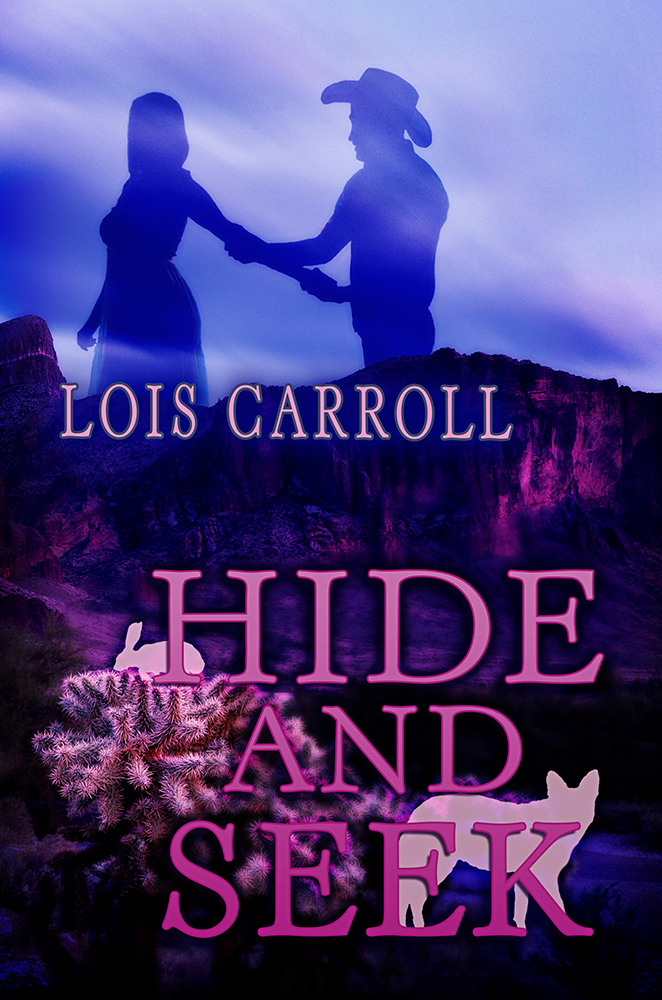
A cover for Melange Books. For this one, the publisher wanted a cover that conveyed the romance of the two novellas in this book, as well as the suspense and western themes. So we stuck with a silhouette, darker (but still romantic) colors, and softer imagery. For the back cover, I simply used part of the desert landscape imagery I hadn’t used from the front, then applied a similar treatment.

This is the result:

SBibb - Hide and Seek - Book Cover

SBibb - Hide and Seek - Back Cover

Stock images from Dreamstime:

http://www.dreamstime.com/royalty-free-stock-images-black-tailed-jackrabbit-sniffing-southern-california-image38700799
http://www.dreamstime.com/royalty-free-stock-image-coyote-image7507496
http://www.dreamstime.com/stock-photos-arizona-desert-image9382933
http://www.dreamstime.com/royalty-free-stock-image-cowboy-couple-her-try-to-leave-silhouette-image36627786

Leave a comment

Filed under Book Covers, Client Work, Photo Illustration

Thoughts on Writing – Consistency of Style

With Magic’s Stealing out to beta readers, I’m trying to avoid working on that story line until I get the collected thoughts of the readers. That way I can evaluate all the comments and figure out how best to apply them. In the meantime, I’ve switched gears. I’m working on Isaac’s and my Distant Horizon story line. The first book is written and mostly polished, so I’m working on plot consistency in the second book. To do that, I’m rereading the first book to refresh my memory on what changes were made. (Seriously… my notes suggest I’ve read the first book twenty times. Granted, some of those rounds only involved skimming for minor edits, but some of those included major overhauls, and needless to say, I’m starting to get a little tired of rereading it.)

During my read-through, I realized that there’s a shift in the writing style from the first few chapters to the later chapters. There’s less description, more every-day action, and the slow set-up of things starting to go wrong for the protagonist. Events are happening, but I’m worried that they aren’t as enticing as they could be. Now, one possibility is that I’ve read through these first few chapters so many times that it’s all kind of a gray blur. I know the plot too well, but the story may be fine as-is. The other possibility is that there’s a definite shift in writing style that needs to be corrected, or risk turning away readers who might otherwise be interested in the story.

When the story first starts, its sounds very much dystopian:

The first time I flushed adominogen, the oblong capsule tumbled from my hand and bounced off the bathroom sink, once, twice, then fell into the toilet with a finalizing plop.

Gone.

I waited all day for someone to ask why I didn’t report accidently losing my pill. But no one did, and I didn’t have any of the hallucinations that I might have had for not taking adominogen. Instead, the world around me felt so much more alive. My attention improved, not that it was bad to begin with, and I could think clearer. Be more efficient.

After that, I stopped taking the pill. I graduated high school and moved into my first year of college, no sign of theophrenia. But when our hall advisor announced that the annual Health Scan would take place in two days, I panicked.

I needed three things to graduate: excellent grades, as many efficiency points as possible, and to pass the scan. It wasn’t often that someone failed, but it did happen. One of my friends in high school had a sister who failed. Galina. She took the scan at the clinic downtown, and Special Forces escorted her away, all while assuring her everything would be fine.

I didn’t want to end up like her, so right after the announcement yesterday, I took the pill. It was like throwing a clear, plastic tarp over my world. I couldn’t concentrate, but I couldn’t go to the doctor for the symptoms.

Not taking the pill was an international offense.

And a little bit later, still in the same style:

After the incident with Lady Black, I had this constant, nagging feeling that someone stood right behind me, watching me. Stalking me. If this was the plague, then I could only guess this was the onset of paranoia, the delusion that I was somehow important enough to warrant special attention.

Or I maybe I was just paranoid; the Health Scan was less than twenty-four hours away.

My bedroom door rattled and I looked up from my biology book. Faint, golden light traced my desk, highlighting the leaves of my plant and trailing along the edge of my bookcase.

The doorknob rattled again, followed by a new, chinking sound of metal.

I scooted from my chair, then sidled against the wall before checking the door’s peephole.

No one was out there.

Maybe the air pressure was playing with the hinges.

I opened the door and stuck my head into the hall. A couple students passed by, but they’d been too far back to affect the door.

But, as the story progresses (leaving act one into act two), the style shifts, bringing on more description:

Pops led us into a dark, narrow hall, a far cry from the neatly glowing dorm corridors. What might’ve gleamed with bronze reflections was now a dull, dented bit of metal. Yellow lights ran the length of the ceiling in small round inlets, casting a weird, brownish glow over the area. One of the lights was burnt out, and another was completely missing, the socket bare.

We headed up the second flight of stairs. The elevator we passed had a piece of yellowed paper with a DO NOT USE warning taped across it.

“We’ve been running on minimal repairs,” Pops explained. “We have decent funding, but we haven’t had a chance to resupply, and Crush only has so much time to work. He usually monitors the computers for signs of enemy activity.” Pops stopped at a plain, bronze door at the top flight of steps. “This is Jim’s office. My room is across the hall.”

Inside, a dusty world globe sat on the corner of an ornate, wood desk, obscured by various file folders and papers. Books were piled high, their spines haphazardly stacked like a puzzle game. An ancient, faded rug lay beneath the desk, so worn that its vibrant, geometric shapes and numbers were barely distinguishable. Bookshelves surrounded us from floor to ceiling, organized and decorated with models of antique stealth planes and trinkets. A giant, arched window graced the far wall, overlooking the night sky, and two red, plush chairs sat opposite the desk, where a reading lamp blanketed the room in a warm glow.

Later, part of an action sequence:

I followed Lance, since he was closest, and we huddled in the leaves, taking shelter from the fight. A local rushed the monster, and the beasts grabbed him by the throat and yanked him from the ground. Bones snapped and his screams fell short.

“We’ve got to help,” Lance said.

I wasn’t sure if it was his heart or mine pounding double-time in my ears.

No wonder Inese gave me her gun.

Behind us, there was no sign of Jack or Matoska, and I couldn’t hear anything more than a mingled mass of screams and shouts. Ahead, more beasties darted through the field, half-loping, half-running. One was lanky and pale, what little clothing it wore hooked over its bony waist. Crusted blood and clods of dirt plastered its skin. A feline eye stared my direction, while the other was swollen shut.

Other beasts were bulky and heavily muscled, swinging swords or metal clubs, bashing in the locals’ skulls if they got too close. A large glob of water hovered around a beast that stood straighter, more human than the others. The creature lunged at a man and water splashed onto the electric spear. Static traversed the metal shaft. Both man and beast crashed to the ground as electricity coursed over the beastie’s water-slick skin.

In the long run, I see a potential benefit of keeping the story the way it is because, as the style shifts, it suggests that the main character, Jenna, opens her eyes and really starts to see the world as it is, not how it’s portrayed by the sheltered Community. The story goes from being light on description to heavy on description, and the writing style includes thicker paragraphs. In addition, at least in the examples I’ve posted, the character goes from reflecting on the world around her (distant), to becoming heavily involved, a participant. Which might not be a bad thing. I won’t know until I have it available for readers to read.

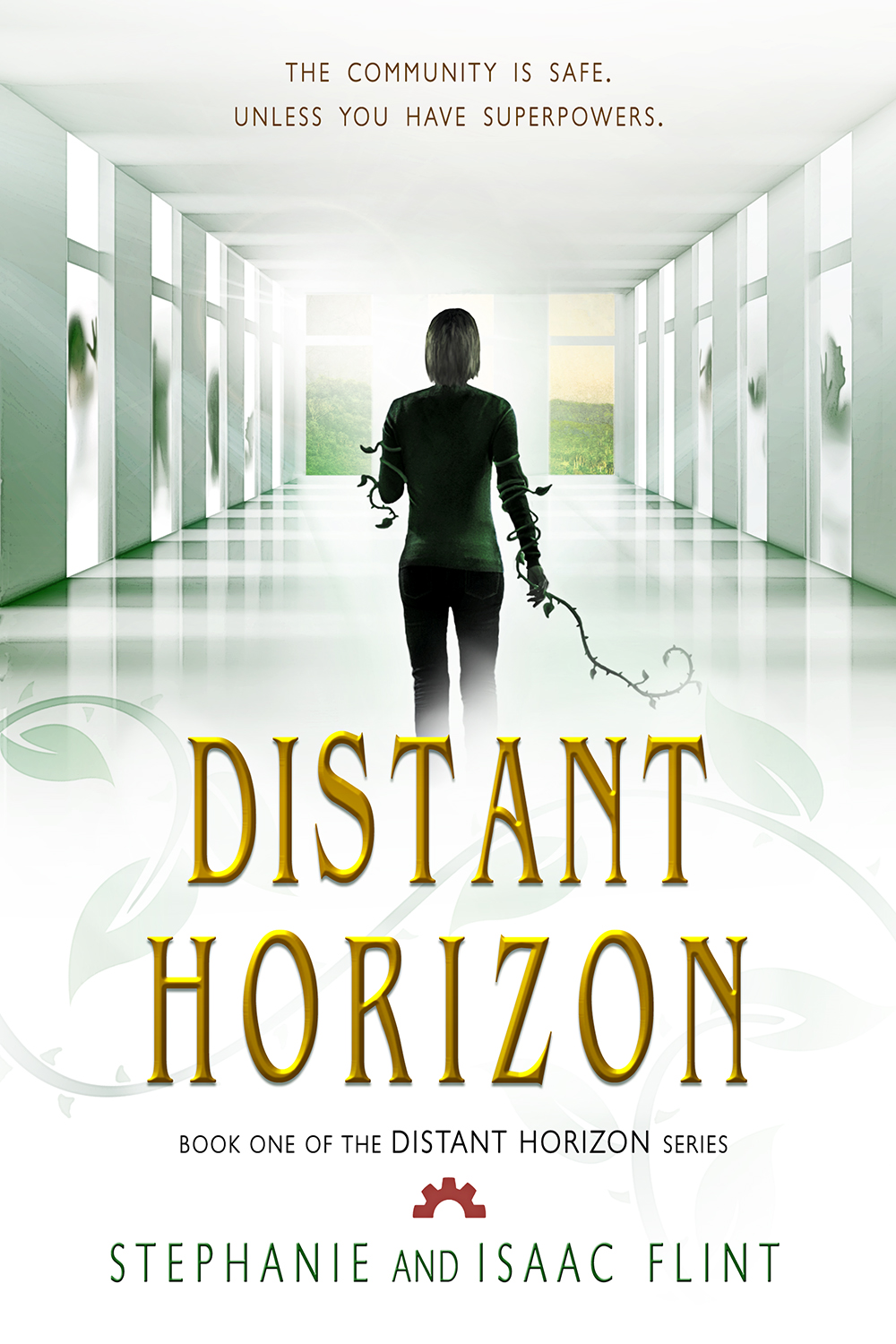
I hope you enjoyed this post (and the sneak peek at Distant Horizon), and I’d love to hear your thoughts. Have you experienced any issues with keeping the style and tone of a story consistent? Have you read any books where the style shifted subtly, or even dramatically?

Leave a comment

Filed under Personal Work, Writing

Thoughts on Publishing – A Novel or Three Novellas?

In general, I write novels. Then I trim said novels because their early drafts are excessively long. However, I’ve recently become fascinated with the concept of serial novelization. You release the novel in several parts, with the idea that readers know they aren’t getting a complete work at one time and that the next installment will come in a timely manner. I toyed with the idea of doing this for my current manuscript, The Wishing Blade, with each installment between 10,000 to 15,000 words. But as I started the rewriting stage, I realized that each section didn’t feel complete. The sections left on a cliffhanger, and weren’t really satisfying.

The other serialized option I’d studied was to write a complete short story (or novella), and make sure it had a full beginning, middle, and end, even if it was part of a larger work. At the moment, I’m thinking that might actually work well for The Wishing Blade. Each installment would be around 30,000 words, maybe more, with an expected three installments. I could release the story sooner, while still producing a reasonable quality work. Each story would be complete in itself, so there would hopefully be fewer unhappy readers who aren’t satisfied with the ending. With each installment, the reader should feel the series has made progress. Think about the show Avatar: The Last Airbender. (I think Legend of Korra and Fullmetal Alchemist where this way in their first seasons, too, but it’s been long enough since I’ve watched them that I don’t remember). For the most part, each episode (or set of episodes) felt complete, even though there was a larger story arc in progress. Granted… I’m still in the second season of Avatar, so that might change.


So here’s how it would work.

1. I separate The Wishing Blade into three novellas. They’re tentatively called Magic’s Stealing, The Shadow War, and The Immortal Realm. (What do you think of the names? Good? Bad? Neutral?)

2. I then figure out the story arc for each individual novella. This is crucial, because while reading them in order would be preferable, I also want readers to be able to pick up book three, enjoy it, then go back to book one. I personally have a habit of grabbing whichever book interests me… even if it’s in the middle of the series.

So the novellas would look something like this:

  1. Magic’s Stealing: Focus on the loss of ribbon magic in Cirena. Main character who hates magic is suddenly one of the few who can still use magic, and she’s trying to figure out what happened to the magic and where she fits into the whole scheme.
  2. The Shadow War: Main characters get separated. One works from within the shadows to foil the trickster god’s plot to kill the gods and get magic for himself. The other seeks out glass-stone, a material which has been proven to kill shadows and not be susceptible to shadow magic, then seeks to protect and warn others in the mortal realm. (For those of you who read my post on creating fantasy languages, this is where word magic shows itself).
  3. The Immortal Realm: Character in shadow realm escapes into ‘immortal realm’ and seeks out artifact (from book one) which could wipe out shadows for good. Other character defends Cirena’s capitol city from the shadows’ massive onslaught. They’ll either succeed in their separate goals, which serves to aid the other, or they’ll fail and the shadows will take over the kingdom.

3. Edit book one and make shiny. Send to beta readers for feedback. Work on a different story in the meantime (either finish the rough draft for The Wishing Blade: The Shadow War, or work on long-overdue edits to book two in my husband’s and my Distant Horizon universe). Once beta readers return comments, I’ll review said comments, make edits as necessary, then set book one aside for a while. Work on The Shadow War in the meantime.

4. Polish book one. Do what editing I can, maybe get an additional beta reader to proofread for errors.

5. Begin publishing process. Upload to Kindle and Smashwords, and consider other markets (I’m currently considering Drive Thru Fiction and Draft2Digital, but I haven’t had experience with either). For now, The Wishing Blade will be in ebook format only. I hope that once I have all three books out, I’ll be able to earn enough from them to purchase a block of ISBNs. Then I’ll need to decide if I want to make a collected print edition with all three books, or make a separate edition for each story. (If you’re looking for a length comparison, I’ve been looking at the old Animorphs series. Wrong genre and age group, but the word count is about right.)

6. Continue process with book two. I’m hoping to release each book around two months apart, though I may change my mind on that once I get further into this process.


Granted, there’s a lot more going on in the background (my husband and I setting up a partnership to publish this, and we’re picking up the DBA, EIN, and trying to figure out tax forms, etc…) but this is what I’ve got going on in the front end. Hopefully you found this post to be interesting, and I’d love to hear what your thoughts are regarding this process. 🙂

6 Comments

Filed under Business Ventures, Personal Work, Writing