
No reading from Magic’s Stealing today, however, I’ve got exciting announcements regarding the release dates for Battle Decks: Trials of Blood and Steel and The Multiverse Chronicles. 😀
Click here for the link if you can’t see the video.
No reading from Magic’s Stealing today, however, I’ve got exciting announcements regarding the release dates for Battle Decks: Trials of Blood and Steel and The Multiverse Chronicles. 😀
Click here for the link if you can’t see the video.
Filed under Business Ventures, Gaming, Uncategorized, Writing
First day of the new year, and time for a status report. 🙂
Magic’s Stealing: I’m currently working on promoting Magic’s Stealing. Primarily, I’ve been looking to get this book into local bookstores (Three nearby stores currently carry copies of the book. Woot!) The next step is holding book signings to raise awareness of the book’s existence. I’m also planning to hold a Goodreads give-away, so look for that to come soon. Isaac and I intend to get a P.O. Box so we don’t have to use our personal address when sending out copies. We may also start a newsletter once we get the P.O. Box address (since newsletters require a mailing address be included).
The Shadow War: While I haven’t made much progress writing the second book of The Wishing Blade series, I have gotten quite a bit plotted for both the second and third books. My hope is to finish editing what I already have written, then write both the end of book two, and the parts I already know of book three (or at least create a detailed outline).
The Multiverse Chronicles: Trials of Blood and Steel: Our beta-reader has given us comments on the first six episodes, so I’m ready to make the polishing edits to those episodes. I’m almost finished editing episode seven. Once we release Battle Decks, we’ll also start releasing this series. In the meantime, I’m trying to get ahead with writing these episodes. Isaac and I have discussed releasing each episodes on Friday (on their own separate blog page), thus taking place of these Friday blog posts. The goal is to give me more time to get an episode edited each week.
Battle Decks: Trials of Blood and Steel: Isaac and I recently reviewed our proof copies of the basic and deluxe editions. We’ve sent a few questions to The Game Crafter regarding printing, and in the meantime, we’ve got a few ideas about improving the rules document for clarity. We also decided to go ahead and make the rules document a booklet after shuffling through six separate pages, which was proving to be a real pain. It may still be a while before we release the game for sale, but we want this game to be polished as possible. Also, if all goes well, we’re hoping to demo this game at a new, local convention in February. More on that later, once we’ve solidified the details. 😉
SBibb’s Photographic Illustration: I’m plugging away on covers as usual, and I’m going to start writing the due dates in a planner to keep track of when I need to start each proof to get them completed by the preferred time.
Beta-reading: I have a book I’m beta-reading for a friend in the writing group I attend, and this is going much slower than I expected (partially due to all the recent holiday activity). On the bright side, I’m taking a few vacation days in January, so that should give me more time to read and make notes, and I plan to include reading time in my planner as well.
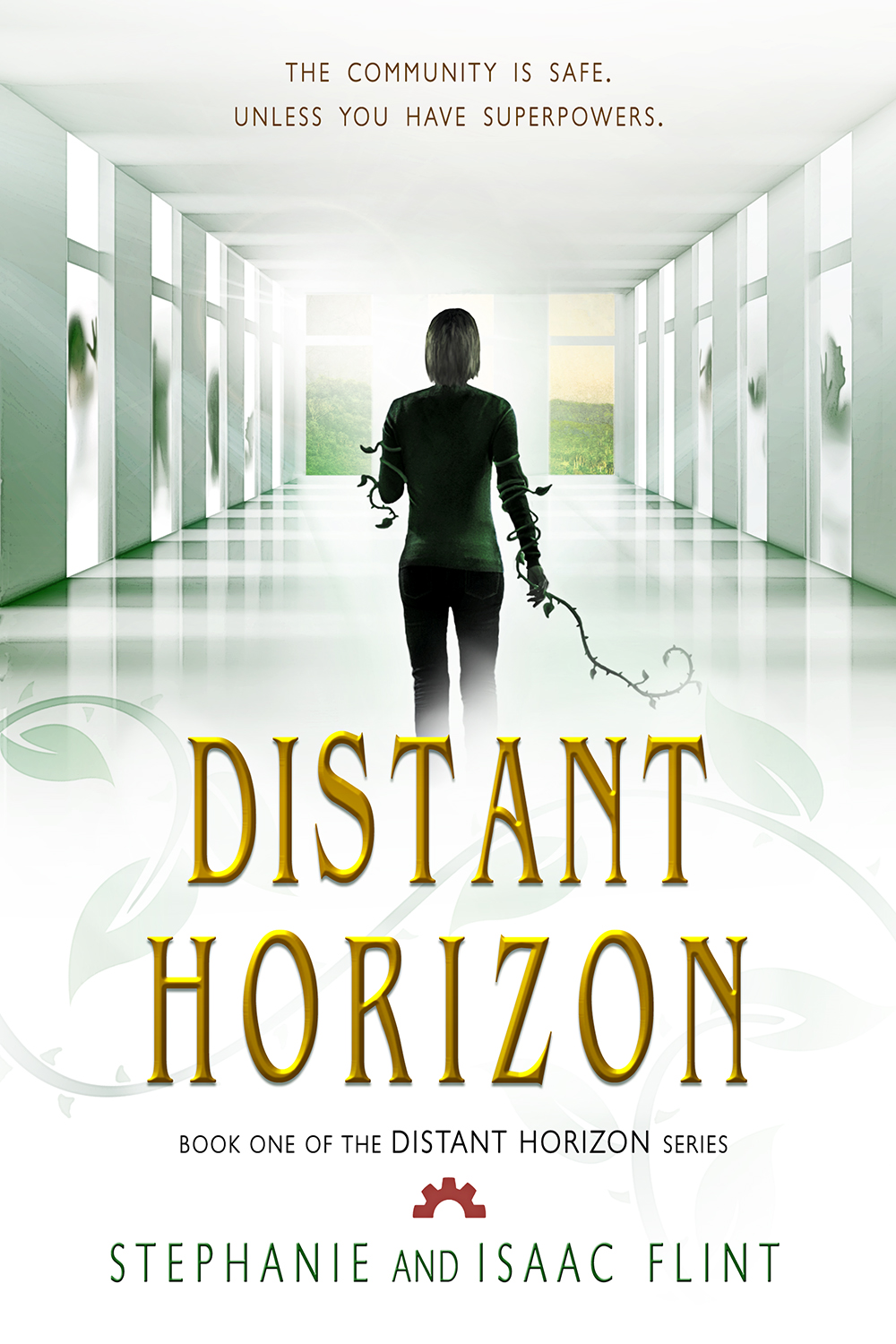
Distant Horizon: At this point, Isaac and I feel that the basic story is complete. It’s been through many different beta-readers, and we’ve let it sit while working on other projects. I’ve recently started working on basic formatting for this particular story, with the intent of looking for typos and minor grammatical issues. We don’t expect to release Distant Horizon just yet, and we don’t currently have a projected release date. However I want to start working on proofing, since I know that takes awhile. Depending on how well that goes, the release date may be sooner or later. The front cover is complete, however, with only a few minor changes expected.
Video Blogging: Back in October, Isaac and I started doing video blogs with readings from my stories. If you haven’t already, check out the Infinitas Publishing Youtube channel to listen to chapters of Magic’s Stealing and various short stories.
That’s it for now. I hope you enjoyed this post. 🙂
Filed under Business Ventures, Writing
Isaac and I are getting close to having all the edits made to our most recent version of Battle Decks, which reminded me that I needed to continue editing the blog series that goes with it. So, at the most recent writer’s club meeting, I decided to work on episode five of The Multiverse Chronicles rather than The Shadow War, which I’m currently doing background plotting and research for. Since The Multiverse Chronicles will start coming out before that book, I didn’t mind putting The Shadow War on a temporary hold.
Anyway, there are three sections in episode five of The Multiverse Chronicles: Trials of Blood and Steel. The first section details interactions between a dejected pigeon, the taskmaster, and the general. The second deals with Trish and the colonel, and the third (the obligatory end-sequence at the end of the episode) with a group of airship pirates. The last two scenes I’m fairly happy with, and I’m ready to send to our beta reader. However, there’s something still irking me about the first section.
My instincts said that the scene dilly-dallied too long. So, after editing the general episode, I went back to the first scene and began looking for ways to tighten the prose and make the wording more concise.
However, when I looked at the resulting edits, I found that the same chunk of information was actually a few words longer than the former introduction. But wordy sections had been tightened, offering room for stronger world and character building.
Let’s take a look at the previous intro.
A lone dragoon pigeon flew over gently swaying trees. It had a very important mission, which could not be deterred. For on its back, in a tiny, dark green capsule, the pigeon carried a message for General Buford of the Queen’s Army.
It was an important message, as all messages sent via pigeon were. (Thus far, the prose feels stilted, because the sentences are fairly similar.)
The pigeon swept over a sleeping red dragon with harsh, glimmering scales, then skimmed through a squad of pterosaurs, quickly diving to avoid having its tail nipped as some scoundrel drake’s lunch. (Feels lengthy). A few minutes later, the pigeon arrived at a large wooden building that smelled of hay and feathers. The bird swooped into its loft, surpassed the landing board, then took roost in the one of the homing cages. It cooed, head held high and chest out, standing tall while it waited for the pigeon fancier to come take its message.
The pigeon ruffled its feathers proudly. A successful mission, to be sure.
After tightening the prose and adding voice, this was the result:
A lone dragoon pigeon with a very important mission flew between gently swaying trees. (I combined a couple sentences, and changed how the bird is flying in regards to the trees). It could not allow itself to be deterred. (Here we get that the pigeon is the one who does not want to be deterred… not that it can’t happen in general). For on its back—in a tiny, dark green capsule—the pigeon carried a message for General Buford of the Queen’s Army. (I’ve found that using the dashes help separate the thought better and adds flavor).
The message was of the utmost importance, as were all messages sent via pigeon. (I clarified “the message” instead of “it,” and changed the placement of “were” so that the sentence ends on a stronger visual word).
The bird swept over a sleeping red dragon with harsh, glimmering scales, then skimmed through a squad of pterosaurs. It dived, avoiding having its tail nipped by some scoundrel drake wanting an early lunch. (Early lunch helps imply that the pterosaur is acting out of bounds per the pigeon’s rules… (adds voice), and splitting the sentences adds urgency to the action).
A few minutes later, the pigeon arrived at a large wooden building. The musky scent of hay and feathers wafted through the air. (Splitting the sentences helps pacing, and we get a better visual). The bird swooped into its loft, surpassed the landing board, and then took roost in the one of the homing cages. It cooed, head held high and chest out, ruffling its feathers as it waited for the pigeon fancier to take its message.
A successful mission, to be sure. (I combined a couple sentences, slowing the pace a tad bit, but also cut needless repetition.)
Overall, I’m much happier with the latest edit. After tightening the prose and adding a bit more voice, the scene has a tiny bit more “pizazz.”
In one of my previous posts, “What does a serial episode need?” I included a list of traits I wanted to instill into each episode:
I also re-read another post I wrote, “Creating Tension,” which reminded me to look into the scene and see if the tension and point of view lagged.
I hope you’ve found this post enjoyable. Have you found any tips for tightening your prose (even if it caused your word count to increase)? 🙂
Filed under Writing
I recently got back notes from our beta reader for The Multiverse Chronicles, and one of the questions we asked her was whether or not she would read it in serial format (in this case, one episode a week). We want to make sure that when we release the episodes that the method of release will work well for readers.
Though she said that she enjoyed the episodes that she read, she also said that she personally wouldn’t read it in the serial format. She explained the reason was because the first two episodes (two weeks of content) had a lot of characters to keep track of, and given that the episodes alternate between two groups, that was a long time to wait to find out what happened to the main character from the first scene.
As an alternative, she suggested releasing several chapters at once, but at longer intervals, so that readers would have a chance to get grounded in the story before having to wait for the next installment.
In a sense, this is what I’m doing with The Wishing Blade series, but with a several-month interval. Technically, each book will fit together as one larger, complete book, though each one is meant to have a semi-complete story on its own.
Our beta reader suggested looking at Stephen King’s The Green Mile as an example of releasing several chapters at once, a serialized novel that was released monthly in 1996. From what I gathered during my (Wikipedia) research, The Green Mile was released in six parts, once per consecutive month, each paperback book around 100 pages until the last book, at 144 pages). Later the publisher released a compiled edition.
Now, I haven’t read the book, so I’m not sure how complete each part was, (though I did try to skim through a few reviews to get a feel for it, and I’m still not sure), so I don’t know how much of a cliffhanger each episode may or may not have been. Click here for more information about the original release of The Green Mile books.
But this research did lead me to thinking about the various options involved in releasing a serialized novel.
Originally, Isaac and I had intended the Multiverse episodes to be stand-alone short stories that fit a larger story arc, but the story arc took over. and now we have a serialized novel on our hands.
The options (with variation, depending on the author) are generally to release episodes or chapters every few days, once a week, every few weeks, or monthly/bi-monthly.
Due to time constraints, Isaac and I decided not to release episodes more than once a week. Otherwise there would be a long span of time between the beginning and end of each “season.”
However, if you have a complete novel, or if you want to write daily and release the new parts as their written, a faster release schedule may be the way to go.
Releasing weekly or every few days could work great if you have cliffhangers and an audience who is excited for the anticipation of waiting for the next episode. Here, having a story that hooks the reader and doesn’t let go, but demands a faster release schedule, may work well.
Though I haven’t read it personally, I found one example to be Worm, a completed web serial by Wildblow. In their case, they released chapters twice a week (sometimes three times, if donations met a specific goal). Also, The Legion of Nothing, which (according to the info at the top left corner of its home page) updates twice a week.
Interesting side-note: According to Merriam-Webster.com, bi-weekly can either mean “twice a week” or “every two weeks.” Gotta love the consistency there.
Releasing every few weeks might work better for stories with larger episodes, where the author wants time to make edits before the release, or for writers who are writing the story as they go, but want time for feedback to develop, and time to implement that feedback.
Releasing monthly or even bi-monthly seems like it would work better for longer episodes or short books that have a reasonably complete story arc, however, my current research suggests that stories with strong cliffhangers can work well at this extended rate, too.
One romance series I’ve heard has done well, Renee George’s The Lion Kings, (according to its description/reviews, since I have not read this series, either) has each book as a fairly short installment that involved cliffhangers, where the author released the books on Kindle at around a month or so apart. Of course, audiences preferences may vary between genres.
Then there’s The Martian by Andy Weir. According to Smithsonian.com, The Martian was released on his blog at the rate of one chapter every six to eight weeks, though it does sound like he made adjustments per reader feedback. I’m not sure how long each chapter was, though, and since I haven’t read it, I’m not sure what specific part of the book may have drawn in the large audience that it did. (The Business Insider suggests that the author’s enthusiasm for science attracted a lot of other readers who were also interested in science, which helped propel its popularity forward. The eventually release of a Kindle edition continued to boost its popularity until it was picked up by a traditional publisher).
I haven’t tested out these methods myself, but I wondered if Isaac and I could mix a couple of these ideas together.
In this case, we’re thinking of releasing six episodes (chapters) to start with, which should give readers time to get familiar with the characters and the world, but also leaves off at a major turning point for the story. Then, a week later, we’ll start releasing one episode a week until the story is complete.
We already know that we’ll have at least 28 episodes, and since we originally planned on a six month schedule of weekly releases, offering the first six episodes to start with would help keep this plan on track. Not only that, but it would give readers more reassurance that this will be completed, since they can begin to see how the story will progress. As a bonus, leaving off the first week after the sixth episode would give readers a bit more idea of the conflict that our Battle Decks: Trials of Blood and Steel game (which influenced the story) is about.
So now I just need to see if I can get all six episodes edited before the release date. If so, then we may give this method a shot.
If that doesn’t work well, we can always switch it up later.
The main thing is that we’re trying to go for consistency, that way potential readers know what to expect.
I hope you’ve enjoyed this post. 🙂
Have you found any serialized novels or blog serials that worked well in terms of how they released each segment?
Related Posts:
Thoughts on Writing – What Does A Serial Episode Need? (The Multiverse Chronicles)
Thoughts on Publishing – A Novel or Three Novellas? (The Wishing Blade series)
Filed under Writing
Recently, I’ve been making edits to The Multiverse Chronicles. It’s a pseudo-steampunk fantasy story, and it’s very much not historically accurate. We’ve got dragons, dinosaurs (all right, all right, I know pterosaurs technically aren’t dinosaurs, but still), dirigibles, magic powers, a dragon queen who rules over Britannia, an Industrial Union of Prussia that makes automatons… The list goes on.
Still, we want to have occasional nods to reality, and it’s nice to know which parts of history we’re butchering before we actually butcher it. Since the world is supposed to (vaguely) resemble our own world, we’ve been trying to add flavor through various means, and our latest method has been to insert little snippets of other languages where appropriate.
For example, one of the end scenes of the Multiverse episodes involves a group of airship pirates. The name of their dirigible is mentioned, and the name is supposed to be in German.
Of course, neither Isaac nor I know much of anything about the German language, which is a recipe for potential issues.
In this particular scene, Isaac wants the name of the ship to roughly translate to, “The Spirit of the Iron Vulture.” The first step to renaming this in German was to use Google Translate.
However, from our experiences with Spanish classes in college, we know that online translators aren’t necessarily that reliable. So, whenever I try to name something or use a word that isn’t English, I may use an online translator to start with, but I will usually run it through multiple translators, and then take that translation back from the target language to English to make sure it translates correctly both ways. (I’ve had a few interesting translations when I tried that particular method, as the translator might have had the right word, but not the right meaning). I also try to look up whether words should go before or after one another, if there might be any changes to how the word looks based on what it’s modifying, and anything else that might be different in that language.
For Spanish, this isn’t quite so difficult because I’ve had a few classes, which helps me know what to look for. Even then, I’ve had a beta reader correct my Spanish grammar, and that was helpful to getting the sentence right (I had the wrong verb form).
For German… well… I don’t know German.
I’ve picked up a couple words here and there from Hogan’s Heroes. (Not exactly conducive to knowing how a language works).
I really wasn’t sure what we were looking for in naming conventions, especially since the name we wanted had the “of the” portion. Then I remembered that a friend from college had studied German, so I figured he might be a someone to ask. I sent him a Facebook message, and he was able to offer quite a bit of help.
When in doubt, ask someone with more experience than you.
When Isaac first chose the name, he ended up with “Der Geist Eisengeier.” (Note: If your ship’s name has “the” in the beginning of it, don’t forget to translate that as well). With a bit more checking, I ended up with “Der Geist des Eisernen Geier,” but it seemed a bit of a tongue twister (which I probably pronounce wrong, anyway, since I don’t know German pronunciation rules). Anyway, we asked if it would be feasible to shorten the latter to the former, but our friend pointed out that without “des” (of the), we would end up with a really long, run-on noun. He suggested “Der Geist Des Eisengeier” as a compromise, though he pointed out that German ships would often have longer names.
Isaac and I chose the compromise (Der Geist Des Eisengeier), though knowing about the longer names factor definitely makes using the full name a more feasible option.
As a writer, half of the process of story research is knowing what to look for. In this case, I suspected the language rules might be different from English, but I didn’t have enough knowledge on the subject to know where to begin. At this point, asking someone who does know (or at least has more knowledge than you) is a good way to find a decent starting point. This can be used for language, culture, special procedures, technology… anything. Of course, the more you read, the more you know when you should conduct research, and the more likely you’ll catch where you might have problems before a reader does.
I hope you’ve found this post helpful. 🙂 Have you ever had issues with adding words from another language into your manuscript?
(Another good example of doing writerly research can be found at Thrill Writing, a blog where the author interviews various experts about specific topics which are helpful to fiction writers.)
Filed under Writing
Isaac has finished writing the rough draft of Trials of Blood and Steel, and I’m about half-way through editing his draft (with plans to go back at the halfway point and start polishing, that way we can start releasing episodes), so Isaac is now working on the little segments that go at the end of each episode.
We’ve been calling these segments end caps (a cross between recap and end of the scene? I’m not sure how we started calling it this), but I realized that wasn’t the actual name for those scenes. Did a bit of research, and they aren’t exactly a post-credits scene/stinger (they don’t come after the “credits,” just at the end of the episode, and they aren’t a teaser, since they come at the end of the episode rather than at the beginning. They also aren’t finales or cappers or endgames, per Merriam-webster.com.
So… I’m still not sure what to call these segments.
For now I’ll call them end scenes (though even that isn’t technically correct, per this site).
Anyway, our goal is to have a small scene at the end of each episode which provides a bit of extra background without being required for the main plot. Preferably, it will be something that makes readers wonder what’s going to happen next, and how this scene will get tangled into the main story.
For example, this is one of the end scenes (Still semi-rough), which references a carrier pigeon that was set loose earlier that episode:
Miles into its flight, the pigeon reached the border of the northern Prussian forest. The bird flapped tirelessly, trained for such flights, though it planned to take a food-break once it reached the other side.
Or it would have had a break, if it had made it that far.
A pair of glowing gold eyes spotted the pigeon from the ground, waited until the bird was within range, then lifted its rifle, sighted the target, and fired.
The shot echoed across the trees, but due to a slight miscalculation in wind speed, the bullet only clipped the bird’s wing. The pigeon faltered, but it had been trained as an elite war bird. It compensated for its broken wing, angling its beak and tail feathers in its best attempt to direct its plummet away from its assailant. The wind coasted under its good wing, and the bird directed its dive into the thicker part of the nearby woods.
The marksman waited as the bird disappeared into the trees. Despite being ordered to retrieve the bird, it turned around on its spiny legs and began its trek back to camp. The bird had fallen into the Deep.
The Deep… even in the marksman’s strained memory… resonated with its core and sent a tingle of fear through its metallic body.
Despite being a small part of the woods, no one who entered the Deep ever came out.
The goal of this scene is to raise the stakes (an important message has now been delayed), to set up the strange, metallic marksmen (which will become a major foe later), and to do the first foreshadowing of the Deep (which our heroes will encounter very soon).
Technically speaking, this scene isn’t absolutely necessary to the main plot.
It does raise the stakes, but if we remove this from the story, the rest of the plot would still make sense, though we might lose some of the richness.
This is, effectively, a subplot.
One of the interesting things about watching Isaac add the end scenes after writing all of the other episodes is seeing how they effectively develop into a subplot (mostly detailing what the bad guys are up to).
Not only that, but the end scenes significantly boost the word count.
Something to keep in mind if you have a bare-bones story that you want to develop further–or need to increase the word count of–is that you can add subplots.
Are there any plot threads that readers might find interesting that add to the story?
On the other hand, if you need to reduce your word count, cutting a subplot may be the way to go, particularly if there’s a thread that slows things down rather than keeps the pace moving. (If you need a breather, a subplot may be a nice way to release tension).
The next decision Isaac and I need to make is whether to have these end scenes be a separate post of their own, so it’s clear that they don’t have to be read for the main story to make sense (though I certainly enjoy them), or whether to include them at the end of the episode, perhaps with a telling Meanwhile… to denote that these are something separate from the main story.
I hope you’ve found this post helpful. 🙂 Have any thoughts about subplots you’ve found to be effective or ineffective?
Filed under Writing
Every couple of weeks, my husband and I meet with the local writing critique group. While there, everyone shares relevant announcements, and we usually critique a small section of each other’s work.
Last week I brought in an episode of The Multiverse Chronicles. My husband plots and writes the first draft, which I then polish. Most of the other episodes haven’t been too problematic, but this particular episode was giving me issues. I’d already tried editing it a few different times, but it still sounded… flat. I knew the transitions weren’t quite working, but something else was missing, too.
Once I read the piece aloud, the group pointed out that it lacked the usual description and emotion I tried to invoke. Thus, having someone who is familiar with our work can be helpful.
Critique partners can see the things which usually embody our work, even if we can’t.
So, after applying the basic suggestions the group made, I went back and sought ways to deepen the emotions of the main character, along with boosting the imagery in each of her “flashbacks” so that the reader would feel better grounded in the reality of the story.
For example, this is what one section looked like while I was still having difficulties editing it:
Trish had been at camp for seven days now, and thus far her training had consisted of textbooks, tests, practicing basic commands with her pterosaur (which, she noted as she stared at the starry sky, still remained nameless), and meeting with Colonel Pearson.
The meetings were the worst.
“Ivers, you seem to be making good progress,” the colonel would say, trailing his finger along a clipboard of notes, “but—” Always, that annoying ‘but.’ “—you need to work on your skills. Have you remembered to meditate with your drake?”
She flexed her shoulders. Maybe he never mentioned meditating with the pterosaur, but he usually gave her some unimportant task that she needed to complete.
“Ah-ha! Now here is a test that will measure your skills on meditating. Don’t forget to read chapters seven through nine of The Honor of Tactical Flying.”
Trish sighed and bit off another chunk of her granola.
The camp had only one copy of each book, which meant Trish had to go to the quartermaster to check them out.
Not only does the scene need a bit of tweaking in regards to transitioning the flashbacks, it also lacks a sense of the surroundings, and the emotion behind it feels dull.
This is what the section looks like now that I’ve added more description and focused on the emotion:
This was her seventh day at camp, and thus far her training consisted of textbooks, tests, practicing basic commands with her pterosaur—which, she noted as she stared at the starry sky, still remained nameless—and meeting with Colonel Pearson.
(Note that using em dashes instead of parentheses have improved the flow of her thoughts)
She inhaled the brisk air at let it out slowly, counting down from ten to relax her thoughts.
The meetings were the worst thing about being here.
(We’re starting to get a sense of her impatience)
The colonel would trail his finger along a clipboard of notes, tap his chin thoughtfully, then meet her gaze with his piercing blue eyes. “Ivers, you seem to be making good progress, but—”Always that annoying ‘but’ “—you need to work on your skills. Have you been meditating with your drake? Surely you haven’t forgotten.”
(The use of ‘would’ following colonel suggests that she’s thinking about this, not that it’s happening right now. Plus, ‘piercing’ eyes (however cliche) denote that she’s uncomfortable). Adding ‘Surely you haven’t forgotten’ gives her that feeling of being put on the spot. Already, we’ve got a lot more emotional details and descriptors to ground us in the scene)
Trish flexed her shoulders. Maybe Pearson had never mentioned meditating with her pterosaur, but he usually gave her some unimportant task that she needed to complete. Like checking the feed levels of the other pterosaurs, or cleaning the cages while the riders were out, or reading.
(By saying ‘Maybe Pearson had‘ shows that we’re back in the present. And the list of complaints continues to show mounting agitation)
So much incessant reading.
“Ah-ha!” Pearson had exclaimed upon skimming through a tiny red booklet that Trish was fairly certain should have been titled A Thousand Ways to Torture Private Ivers. “Now here is a test that will measure your skills! Read chapters seven through nine of The Honour of Tactical Flying, then report back for your next assignment.”
(By having the line ‘So much incessant reading’ on it’s own line, and then going to ‘ “Ah-ha!” Pearson had…’, we make room for another flashback. The choice of ‘incessant’ further shows Trish’s annoyance. And then we have ‘A Thousand Ways to Torture Private Ivers.’ She feels she’s being treated harshly.)
Colonel Pearson had grinned, tossed his clipboard on a stack of papers, then dismissed her to her chores.
(I’m debating on the phrasing of this, but currently, saying that Pearson ‘had’ done this cues that we’re coming back to the present)
Trish sighed and bit off another chunk of her granola.
(Yay, monotony…)
On the bright side, she didn’t have to go through all the same physical drills as the other riders. She got her exercise from running tent-to-tent, trying to locate the miscellaneous items she needed to please her superior officer. The camp had only one copy of each of the primary textbooks, which meant Trish had to go Corporal Smith, the quartermaster, to check them out.
(Adding the bits about her having to run from tent-to-tent and locating miscelleneous items adds to the feeling that she doesn’t think this is important… especially since she doesn’t bother to consider what those miscellaneous items are)
Overall, I think the edited section reads more like the other scenes now. The flashback transitions read smoother, and there’s enough detail to ground me as a reader in what is happening. Plus, we now have a sense that Trish is genuinely annoyed and impatient, rather than just ‘ho-hum’ about her daily life at camp.
I’m still in the process of editing the rest of the episode, but now that I know where to go with it, I think editing will go much smoother.
If you’re in a problem spot, see if you can find a trusty beta reader or critique partner to take a look, even if it’s just a small scene. They may be able to see what you’re missing, especially if they’re familiar with your work.
I hope you enjoyed this post. Have you found any tricks to adding emotions to a scene or transitioning flashbacks?
***
By the way, author Jordan Elizabeth was kind enough to feature my book on her blog, Kissed by Literature. Check it out to find another sneak peak of Magic’s Stealing, and to see what other books she has featured. 😀
Also, Cathleen Townsend has written the first review of Magic’s Stealing! Find it (and other reviews) at her blog, The Beauty of Words. 😀
Filed under Writing
Now that I’ve launched Magic’s Stealing, it’s time to get back on task with other writing projects. In this case, the next project is The Multiverse Chronicles. My husband plots the story and writes the rough draft, while I polish and edit each episode. I’m currently sitting on episode 11 (I’ve got a few ideas on how to fix the problems I’ve been having with it, thanks to the critique group I attend.), and once I edit episode 12, I’ll go back through the first twelve episodes and look for continuity errors. I’ll also be looking at the sections at the end of each episode, which detail what’s going on behind the scenes and hopefully adds suspense, along with fixing a few areas I have highlighted as “Elders.”
For example:
Alia kicked a pebble. It skipped across the bricks and clanged against the iron fence. One of the guards, an older man with more physical prowess than she could ever hope to achieve, gave her a knowing, sad smile before returning his attention to the passing motor carriages.
She sighed and sat on the edge of the fountain at the center of the courtyard. Water trickled behind her, courtesy of the fountain’s elder statue. The elder’s copper limbs were buffed and polished of the green tarnish that constantly tried to creep in.
(MAYBE HAVE HER THINK SOMETHING ABOUT A RELEVANT ELDER HERE).
A round of applause and raucous laughter burst forth from the open palace doors, and Alia squeezed her eyes shut.
The engagement had been announced.
The reason I made note of areas like this is to remind me that there is a reference to world-building here that hasn’t been developed. In this case, the mythology that develops in the story’s world in place of traditional Greek/Roman mythology.
A quick run-down regarding Multiverse… it’s a pseudo-steampunk world (more fantasy now than steampunk) that takes place in a different universe during the year of what is our world’s 1953. Unlike our world, their world developed “magic” and their progress with technology slowed and took a different track. A few pre-historic and mythical creatures remained alive and well (pterosaurs and dragons), and several world religions didn’t take hold.
While Isaac and I went with the idea that they still developed the Greek/Roman culture to a large extent, the pantheon is different. We determined there would be five elders (which would tie into the five pendants of a later story), who were each people who had made themselves “immortal” by tying their spirits to an a jeweled artifact. At some point, one of these five elders (a trickster) gets greedy and attacks the others for their power, successfully defeating them until a “hero” rises to defeat the trickster and, despite being able to become a spirit herself, chooses to live to an old age and die along with the rest of the normal mortals.
That’s the gist of the mythology, but that was all we had. No detailed names or personalities, which makes it really hard to reference in a story.
So, today, I daydreamed of possible details for the mythology for the elders.
First, it had been a while since Isaac and I talked about the concept, so I’d forgotten about the hero existing, and instead placed the first Dragon Queen in the hero’s place.
Second, since this was supposed to be set in Greek/Roman times, I figured I’d draw on what I knew of that mythology to create personalities for the elders. I wasn’t too worried about it being exact, however, since this is a very, very alternate timeline. (Though I did do a bit of quick research once I started writing this post).
Third, the mythology of the elders doesn’t need to be exact since a lot of time has passed in the story, and lore naturally splinters with time.
Fourth, the artifacts each is elder is connected to would be probably be something special to them, and thus the people who worship them might swear upon those objects (by Athena’s sword…)
Fifth, this particular world already has ground rules in regards to what can be done with the various powers (such as only being able to have three powers before the human body begins to breaks down) and certain aspects of later lore (such as the jewels their artifacts would hold, since those are tied to the pendants I mentioned earlier).
So, with those things in mind, this is what I came up with.
For the first elder, I chose Athena as the base personality. I decided she would have shapeshifting (thanks to the story about Arachne… and the song “The Goddess and the Weaver” by Spiral Dance that I now have stuck in my head), life-spirit (possibly… I may change this later), and super intellect (for being the goddess of wisdom). Her artifact would be based on ruby, for power.
For the second elder, I kept thinking of Ares and Hephaestus (Sad to say, I thought one was Greek and the other Roman, not that they were brothers. *Ahem.* Google searches are helpful). I debated making him a fire elemental and having him be a blacksmith, but that seemed too typical (I already have one of those guy’s in Magic’s Stealing, after all). Instead, I gave him a rare extended power… the ability to manipulate the shape of any metal. (Think ‘metal bending’ from Avatar: The Last Airbender). I’m debating on having him be the brother of the first elder. His artifact would be based on sapphire, for creation.
For the third elder, I decided he would be based somewhat on Demeter (for the harvest… and possibly referencing fertility, though a quick search shows that Aphrodite is better suited to that side of things). I also considered having him based on Artemis (which would put him at odds with the fertility reference), and giving him a relation to “the hunt.” Ultimately, I decided that he would have plant manipulation, beast mastery, and life-spirit for his powers. He is the elder of all things related to growth, and he’s the go-to elder if someone wants to request a bountiful harvest. His artifact would be based on an emerald, for growth.
For the fourth elder, I considered giving him time-bending powers, but then I realized that I was going to end up with six elders, and so he got cast aside and is now the “forgotten” elder. Don’t know if I’ll ever reference him or not.
Anyway, I’m thinking of giving this guy the ‘death’ extended power, which allows him to pretty much kill anyone without a second thought. (A very rare power, and obviously dangerous). If I recall, Isaac and I have that power set as being the combination of life-spirit, radiation, and carbon alchemy. (So he’d be a Hades/Thanatos reference, perhaps?) I’m thinking that he and the first elder were business partners when they were still human, and the first elder used her intellect with his alchemy to figure out how to make themselves spirits (and relatively immortal), and thus rise to power. His artifact would be based on a diamond, for command over life.
For the fifth elder, I went less the way of a trickster, as originally planned, and instead considered referencing Pandora and/or Prometheus. This elder would have a “jack of all trades” power, which meant that she would be able to do minor dealings with all the elements involved, and she would be of the curious sort. Her artifact would be based on amber, for binding/time.
Based on these personalities, I figure that they successfully ruled their subjects for a long time, until “Pandora” got bored and decided to see how far she could take her powers. She steals a powerful artifact from “Demeter,” and goes about trying to create a strange land of her own, which would later be known as the Deep, a weird forest that, once entered, cannot be escaped. However, her experiments wreak havoc on the surrounding land, and the other elders attempt to attack her. However, due to the various magics in the Deep, and “Hades’ ” attempt to use radiation (known to harm spirits) to subdue her, he accidentally transforms her into a wraith-like monster, and she in turn attacks the elders.
I wasn’t satisfied with this.
Instead of wreaking havoc intentionally, what if “Pandora” stole the secret for becoming an elder from the others, and gave this to the regular humans around her (where we get the Prometheus reference)? Seeing that she’s reduced their power, the other elders attempt to contain her by creating the Deep (a labyrinth of sorts), but when “Hades” attempts to do the final containment with his powers over light, he overdoes his power, which then conflicts with the strange magic in the area and transforms “Pandora” into a wraith-like spirit, who must now feed off other spirits to sustain herself. She goes mad, and the first person she attacks upon breaking free is “Hades.” She then proceeds to torment the land in elemental whirlwinds and firestorms as she searches out the other elders to kill them.
(At one point, I considered that the elders would either go into hiding, according to those who might still worship them, or that “Athena” and “Hephaestus” would survive long enough to seek out a promising young woman who could talk to dragons, thus leading into the Dragon Queen lore, but then Isaac reminded me that the main cultures in the Multiverse story at this point didn’t worship them, and that the Hero, not the First Dragon Queen, slayed the trickster.)
She eventually does kill the elders, and continues wreaking havoc until a lone hero rises up to defeat her (we can thank the anime, The Devil is a Part-Timer, for this little bit of story). Once “Pandora” is defeated, the Hero could choose to become immortal herself, but decides instead to end the reign of the spirits over them, and thus ends the time of the elders.
I still like the idea of her stealing Demeter’s artifact, so maybe she does do that, but nothing is set in stone. A lot of this will probably change.
But this version does work well in connection with the pendants, because now a certain alchemist in one of the later stories has research fodder that can be used to achieve his goals. Everything ties together, and there might even be a bit of a cycle from this story which will be relevant to other stories in this universe.
Maybe. We’ll see.
I talked to Isaac about the latest idea for the history of the elders, and he seemed to like it. We still need to come up with names for them, preferably based on Greek or Roman names, but I suspect it would be better not to name them directly since they’re supposed to be characters in their own right.
But, more importantly for now, I have a loose mythology that I can reference in Multiverse. Now that statue Alia sits by can finally have a name. 🙂
I hope you enjoyed this post. How deep do you like to delve into the mythology of your fictional universes?
Filed under Writing


 Stephanie Flint - Author and Artist