Tag Archives: world-building

The Wind Mage of Maijev – Now Available!

Good news! “The Wind Mage of Maijev,” the first of the Legends of Cirena short stories written for the collaborative adventure Facebook group, is now available as an ebook!

This is a stand-alone short story that takes place approximately 200 years before the events of The Wishing Blade series and the Stone and String series.


A wind mage in a city that hates magic…

The Wishing Blade - Section Break - Magic Swirl

“The Wind Mage of Maijev”

YA Fantasy Short Story

The Wind Mage of Maijev - Book Cover

The Wishing Blade - Section Break - Magic Swirl

A wind mage in a city that hates magic…

Livena is a young woman living in Maijev’s southern quarters, staying ahead in life by working odd jobs. When her brother entrusts her with selling a pile of books in the undercity, it seems like another normal day.

Until she senses a dangerous storm brewing.

Most would hunker down until the storm passes. But Livena’s deplorable wind magic lacks control, and weathering out a storm inside only invites trouble.

The storm won’t stay outside where it belongs.

If Livena can’t make it home before the storm, and her magic gets exposed, it’s only a matter of time before a deadly mage hunter unravels her secret.

The Wishing Blade - Section Break - Magic Swirl

Explore the magic in this exciting short story…

Read “The Wind Mage of Maijev” today!

Amazon (US) | Amazon (UK) | BN.com | iTunes | KoboSmashwords

Add "Wind and Words" to Goodreads

The Wishing Blade - Section Break - Magic Swirl

Enjoy! 😀

Leave a comment

Filed under Business Ventures, Writing

Wind and Words – Now Available!

I’m thrilled to announce that the second book in the Stone and String series is now available! (And 99 cents for a limited time!)

Amazon (US) | Amazon (UK) | BN.com | iTunes | Kobo | Smashwords

The Wishing Blade - Section Break - Magic Swirl

Wind and Words

Wind and Words - Book Cover

The Wishing Blade - Section Break - Magic Swirl

YA Fantasy

Wind and Words is a novella, 23,000 words compared to “Stone and String’s” 8,000 words. I had a lot of fun exploring more of the Cantingen culture, word magic, and string magic. I hope you enjoy it, too. 🙂

The Wishing Blade - Section Break - Magic Swirl

Life magic is not meant to be alone.


Everyone is born with two strings of magic. One strand is life, and the other is death.


When Edyli escaped the land of the dead after saving her sister, the goddess of death removed Edyli’s death magic. Without that string, Edyli is unbalanced, a “monster” who cannot sleep, cannot die, and without care, will slowly go mad.


Banished from her home for refusing to make amends with the goddess, Edyli is surprised to discover a child without life magic deep in the jungle—a child her remaining magic is drawn to, because those who are unbalanced are inexplicably drawn together.


Terrified of what might happen if the two of them touch, Edyli seeks answers about the mysterious child. If she can recover the child’s life magic, she might earn back the goddess’s favor and become whole again.


But one mistake, and Edyli could live forever in insanity.

You can grab your copy today for only 99 cents! (It’ll go back up to $2.99 in about a week).

Amazon (US) |Amazon (UK) | BN.com | iTunes | Kobo | Smashwords

Add Wind and Words" to Goodreads

The Wishing Blade - Section Break - Magic Swirl

(UPDATE: As of 6/2/2018, all the links should now be working. 🙂

Note: My apologies if you’re in the UK, India, or Germany, and use Amazon. I’m still waiting for them to create the page for Wind and Words there. However, all other links should be working).

The Wishing Blade - Section Break - Magic Swirl

Here’s an excerpt:

A flash of movement caught Edyli’s eye. The hairs on her arms prickled under her wet sari. There were predators in the jungle, and though such creatures would not approach the nearby villages, they might attack a young human who was alone. Since it was night and the sky dark, the predator could be a tiger or other creature that she could not defend against without being able to see. She could, perhaps, use word magic to discern if the creature was a threat or not, and where it came from, but since she could only rest through meditation, she did not desire to use what focus she had.


But something about the creature was strange.


Normally she would have heard the rustle of leaves or the scratching of claws, or the snap of twigs under the creature’s weight. But what she heard was silence. Utter silence. It was deafening, as if the silence drowned out the sound of the wind.


“Who goes there?” she asked, forcing her voice to be loud. Perhaps, if she sounded threatening enough, then whatever was out there would not force her to use magic. “Reveal yourself!”


A tiny form stepped out from behind a scraggly tree.


Edyli blinked. “Akymi?”


The child was the same height and size as Edyli’s little sister, but her skin was a lighter shade of brown and her hair a straight, coarse black that fell below her shoulders. She wore a ragged, plain tunic, long enough to reach her ankles but clearly oversized, as if it had been lent to her. She stared at Edyli, her posture stiff, her hands at her side. Her dark eyes seemed to stare through Edyli, her expression dead. Her black hair fell across her face as she tilted her head, and then she turned her head again so that her hair cleared away.


The emptiness in Edyli’s chest ached, pulling her toward the girl as if something tugged at her, calling for her to move closer, to touch the girl’s tiny hands and to make her whole again. The girl raised her arm and stretched her fingers toward Edyli. A whimper sounded in her throat. Edyli tried to step back, fear mounting inside her, but she couldn’t move. The forest around her dimmed, centering on the child. She was the only thing in Edyli’s vision, and the rest of Edyli’s vision was a black, swirling mass, as if she had fallen into a seething whirlpool made from the night sky.


Shadikryl fa illdratethdruv shomagi drateth noram.


Life magic is not meant to be alone.

The Wishing Blade - Section Break - Magic Swirl

Read Wind and Words today!

Amazon (US) |Amazon (UK) | BN.com | iTunes | Kobo | Smashwords

The Wishing Blade - Section Break - Magic Swirl

Enjoy! 😀

Sican naketonia quisé das vegra.
(May the gods grant you good fortune. – A saying from the Cantingen Islands)

The Wishing Blade - Section Break - Magic Swirl

Haven’t read “Stone and String?”

No worries! You can read it for free when you sign up to The Wishing Blade Universe newsletter.

Leave a comment

Filed under Business Ventures, Writing

Thoughts on Writing – Using a Roleplay Game to Develop a Novel’s Backstory

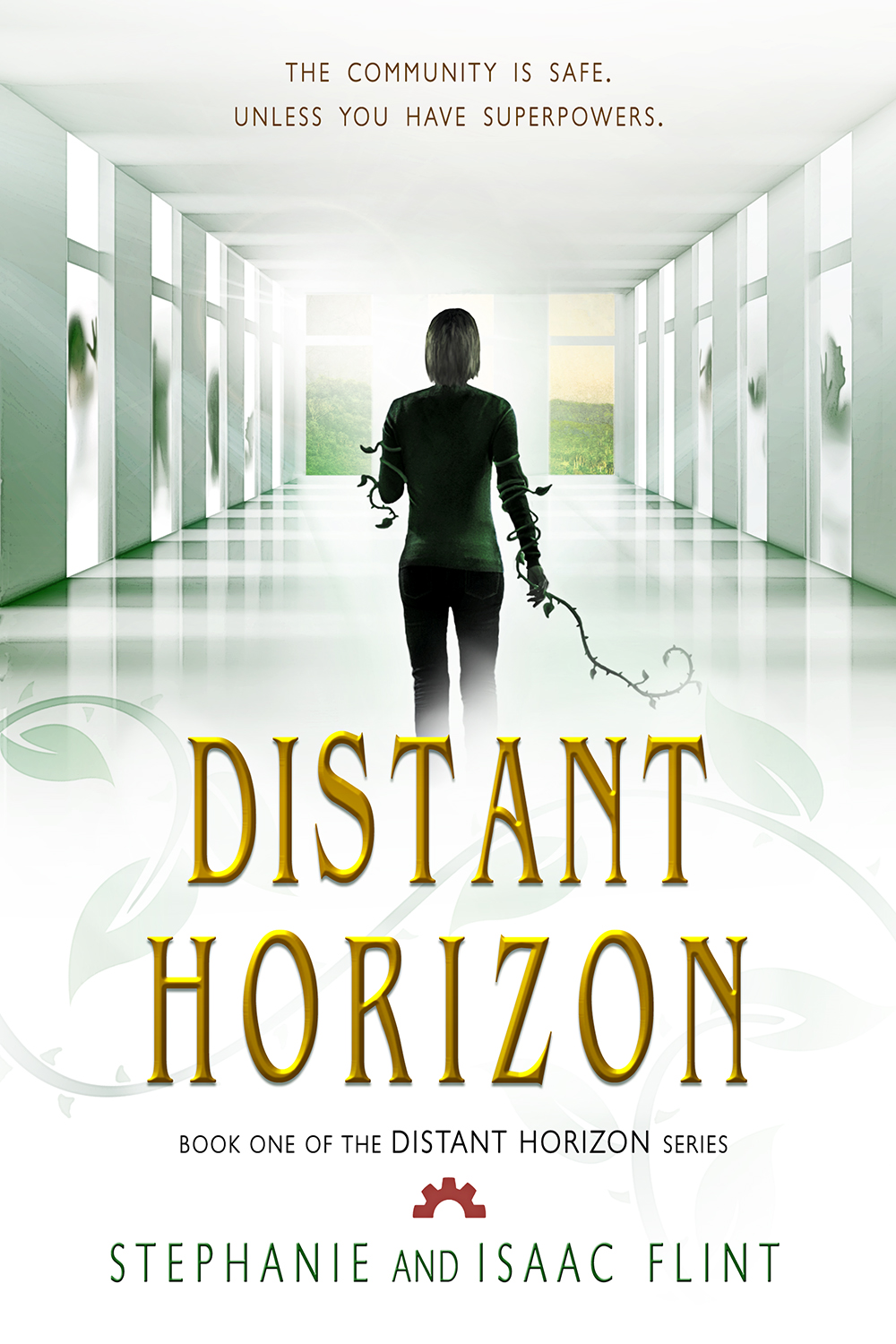
Now that Distant Horizon is out in the world (Yay!), I thought I’d talk a little about how the story came about–specifically, how a role-play game led to the creation of the backstory of Distant Horizon. Granted, a lot of the campaign stories aren’t visible in the first book,  but they still played a role in the backstory of the world.

It started in 2010…

Actually, no. Let me go back just a tiny bit further. It started with tabletop role-playing that involved a group of friends in college. We all lived in the same dorm, so we met in the evenings to play various games with different people taking the part of gamemaster. At times we had several games running throughout the course of the week. How late they went into the night depended on how early we had to get up for our first class the next morning.

I was introduced to RP games through the Savage Worlds system, starting with a fun-though-inevitably tragic (the sacrifice of my favorite giant zombie dog, Snuffles…) zombie apocalypse. I had intended to watch the other players while completing my physics homework, but before the game began, I was intrigued by the various miniatures and the gamemaster’s premade characters. He had extras, so I asked to join in.

The rest is history. I eventually decided to run a few of my own games. After the first failure (where I’d had a whole story plotted out… which was, of course, destroyed as players will destroy any plot by not going the intended direction), my primary games were a Star Wars game (I amassed quite a few of the RPG books and had them spread out across the table or floor during these games for reference), and a couple superhero games.

For the superhero game, I, Isaac, and a group of friends brainstormed what powers we might have. We placed the powers into four categories, then rolled a D4 (four-sided die) and a d10 (ten-sided die) to determine what our powers were. We fiddled with the system a bit (the base we used was Savage Worlds), and did a bit of “winging it” when determining how the powers worked.

Soon we had a team of well-meaning but absolutely terrible superheroes who caused far more destruction than good. One of them obliterated a bank robber’s head with sonic scream. (*Sigh. You were supposed to take him alive.*) One nearly electrocuted himself at a hidden night club after attacking a dancing mech. (Your job was to buy a special edition teddy bear from a vendor there, not assume the whole place was hidden front for a Japanese mafia.) One bent reality… (And he was the most sane of the group). The other kept getting distracted because he wouldn’t stop flirting (But hey, we need NPCs (non-player characters) who can help out with questions, right?). Needless to say, they drove their team leaders crazy… once by driving their car right out the top of the Super Bureau’s headquarters.

In relation to Distant Horizon, I can firmly say that these guys are part of the reason that the supervillains were able to convince everyone that the superheroes were the bad guys. But that story arc came later.

In a different campaign that ran about the same time, the superheros were a smaller team, and rather more effective at their missions… including to the point where they were sent to recover a set of special pendants that had strange powers, including the ability to slow time when four of the five pendants were in close proximity. *Cough.* These pendants make an appearance in Distant Horizon, as the most powerful members of the Community now have them in their hands.

In a different shorty-campaign that used the same power set but was run by my husband (mostly because I’d just had my wisdom teeth removed and I wasn’t in the mood to do much talking or heavy thinking), a group of airship pirates stole an airship and went through a few too many portals in attempt to uncover a precious jar of blueberry jelly… which might not have actually been blueberry jelly. They might be the reason the Community exists in the Distant Horizon universe. There was a lot of tweaking to that story arc, though the blueberry jelly reference remains.

In most these cases, there are a lot of seemingly random events (okay, it was probably pretty random even at the time), but it provided a rough basis for a background… one which Isaac later twisted and developed as the basis for Distant Horizon.

That being said, there’s a lot of stuff from the original campaigns that are not being included in the novels for the sake of plot and consistency, but overall, the games were a lot of fun and helped to build a semi-consistent world of powers. We could see which powers were broken (a much later campaign that used alchemy/enchanting proved where that needed a lot of fixing), develop out how different factions might interact, and then extrapolate from there to consider where it might go next. And now we have fodder to reference in regards to the origins of the world which can help enrich the setting.

Now, you won’t see much of these plots in the first book. Most of the characters are far enough removed from these events that all you’ll hear is an occasional reference. Still, it helped build the power system and let me drop clues that will become more relevant in later stories and companion novels.

Once I finish Little One’s story, (a Distant Horizon prequel I plan to work on after Glitch and Fractured Skies have been released) then you’ll see a lot more references to these campaigns. I had quite a bit of fun placing in those Easter Eggs in the rough draft. But that one also has a more quirky (though dark) tone than some of the other stories set in this world.

Isaac and I have continued to use role-play games to develop stories and worlds, but I’ll have to go into more detail about that in another post. For now, I hope you’ve enjoyed this one. Have you ever used RPGs to help flesh out a story?

3 Comments

Filed under Writing

Thoughts on Writing – Developing a Fictional Language (Maijevan)

Lately, I’ve been working a bit on my conlangs (constructed languages). I started out with the Cantingen language (a “word magic” system used throughout my The Wishing Blade series). I’ve been developing it over time, adding words here and there as required and every once in a while going on a spree to flesh it out.

While going through my latest round of edits on The Shadow War (book two of the series), I double-checked that my attempts to create sensical sentences were correct. Most weren’t, and I had to rewrite many of the instances where the language was included. But I had a chance to flesh it out even more in “Stone and String” (tentative title), a short story based on the Cantingen Islands. I’m super excited to be working on that soon, as I’ve just about got all the feedback from the people I’ve asked to beta-read.

However, that short story led me to thinking about other places in the world of The Wishing Blade that I might want to develop further. Namely, Maijev. It’s a large city in the land of Cirena, but unlike the rest of the kingdom, it has a reputation for being anti-mage and isolated. Mages usually avoid the place because there’s something about the area that burns at their skin if they try to use ribbon magic (word magic is unaffected) and generally makes them uncomfortable.

I’ve gone back and forth on whether or not they should have their own language. Would they only speak that? Probably not. But it did seem possible they would have one for when they didn’t want to be listened to by outsiders, so I started considering how it would sound.

I’ve based the appearance of some of the character’s names from Maijev on Russian names, and as such, used that as a starting point. I looked to see what differences there were between Russian and English (such as the lack of vowel sounds and the concepts of perfective and imperfective aspects). Then I took that and ran (in other words, what I’ve developed thus far of the Maijevan language probably doesn’t look a thing like Russian. I haven’t studied the language, so I don’t know much about it).

Anyway, I started out by writing a few notes about Maijev’s general culture, which could affect the language.

  1. They don’t acknowledge the gods, at least not separately, though they understand that they exist. They might categorize the gods the same as immortal monsters (gods/immortals should be same word)
  2. Magic is cursed. Or, if not “cursed” per se, it is considered something akin to “evil”
  3. Whatever it is coming from the ground that burns mages is what keeps them safe
  4. Competition is encouraged/fierce.
  5. High possibility of strong family bonds? (Might explain why the lord of the city adopts a mage for a son… never mind that he sorely distrusts mages)
  6. They acknowledge a feudal-like caste system
  7. They’re fascinated with technology/science/academia. (While the rest of Cirena is fascinated with magic and what magic can do, Maijev has more-or-less started into the age of the industrial revolution).

I decided that their language system would be very rigid and precise. It’s a phonetic language, and for the most part, you can tell exactly how to pronounce a word based on the spelling. Also, the sentence structure is organized in a specific format:

(Subject) (Negative, if negative) (Perfect/Imperfect) (Tense) (Verb)

I also decided on a few additional rules:

  1. No articles.
  2. Adjectives and adverbs use same word. “Quiet” and “quietly” are both digaev) but placement determines which it is.
  3. When there is more than one adjective or adverb, it is separated by “and” (vo).
  4. Adjectives are placed immediately after the noun in question.
  5. Adverbs are placed immediately after the verb in question.
  6. Verbs are not conjugated. A subject of some form should always be given to show who is acting.

Thus, “The small and quiet dog was digging.” becomes Nitilver vreg vo digaev ni miski natch.

  • nitilver – (subject) dog
  • vreg – (adjective) small
  • vo -(conjunction) and
  • digaev – (adjective) quiet
  • ni – (imperfective aspect) – shows the action was not completed
  • miski – (past tense) shows that the verb happened in the past
  • natch – (verb) to dig

Now, I’m considering removing the past tense word miski and simply replacing it with ni (imperfective – incomplete action) or gadi (perfective – completed action), but then, that would remove the ambiguity if someone didn’t use either aspect. But, if they like having a rigid society, perhaps they don’t have an ambiguous form. Haven’t decided yet.

What have I learned thus far about creating a fictional language?

  1. It was helpful to create a list of phonemes and sounds first. That way I could create words without worrying that I might use a sound later that I don’t want to include in the language. Conversely, once I started working with it, I realized I wanted to include a couple extra vowel sounds.
  2. It was also helpful to create the sentence structure and rules system before trying to create sentences. Now I know a bit more about what words the language even uses, and won’t be stuck rewriting sentences later.

However, I’m not a linguist, and I could be doing these things completely wrong (I wasn’t familiar with how imperfective and perfective aspects worked before I started toying with this idea).

And it might not even matter, because, as Isaac (my husband) pointed out, the Maijevan and Cirenan languages should be at least somewhat related. So I need to go create the Cirenan structure before I do much more work with Maijevan. On the bright side, since this time period is far from the “original” use of the language, and Cirena is a much more travel-oriented community, I might have it pull a few stunts from English. That is, itcan borrow words from the other languages, and have a few more “irregular” rules. *Shudder.*

But, given the mythology of their world… well, we’ll see what happens.

I hope you enjoyed this post. Have you tried creating any fantasy languages of your own? 🙂

10 Comments

Filed under Writing

Thoughts on Writing – How A Deleted Scene Turned into A Short Story Idea

Hello, again! I realize I’ve been silent for awhile, and I thought I’d give a quick update. See, I’m sort of between projects. Distant Horizon is being read by a proofreader, and I’ve gotten notes back for The Shadow War… and I apparently have a few plot holes that need to be addressed before  I can make much progress. That, and I finally finished the beta-reading project I’ve been long overdue on!

But that left me in writing-limbo. It’s not like I don’t have a bunch of projects to work on. (Trust me, I’ve got plenty of rough drafts begging to be polished). But I didn’t want to start anything big until my two main projects were finished.

And, well, I’ve been reading a lot about short stories and the concept of short stories and then I kind of decided… why not write a short story while I’m waiting?

It started with edits to The Shadow War. One concern had to do with the numerous point of view shifts. There are two characters in particular who had scenes, but, upon second look, I realized might not add much to the story itself (Never mind that I thoroughly enjoyed them).

My first thought was to take one of those scenes (since I rarely delete anything, I copied them into a separate document before removing them from the book) and flesh it into a short story from the point of view of one of the antagonists or semi-antagonists.

Problem with that was two-fold. First… spoilers. All the spoilers. There would be no way around it with the scenes I wanted to write. Second… background details that I wasn’t ready to explore. There’s a highly-detailed world behind The Wishing Blade, and not all the details have been worked out. The ones pertaining to the main plot are mostly in place, but some of the ‘how did this character get here‘ have not.

So I pushed those ideas out for now (Someday I want to write a novel or novella that looks at the antagonists of the series. I could have so much fun with their stories).

Instead, I started looking at areas in the world which interest me, but have nothing to do with the main story. Or, well… are only vaguely related. In this case, the Cantingen Islands. Remember that word magic conlang I’ve been working on? It features heavily in the rough draft of the third book, but from an outsider’s perspective. But I’ve wanted to do more with it, and actually take a look at their mythology and culture.

Enter the short story idea for Stone and String (tentative title). My goal was to write a short story between 5,000 to 10,000 words, with a cohesive beginning, middle, and end. And that goal has been achieved, completing the story at 8,000 words!

The story takes place in the Cantingen Islands, around the time of Magic’s Stealing but not tied to any of the main characters. It explores word magic to a degree, but focuses heavily on their afterlife, as the main character is a young girl who trades her death magic for a chance to see her little sister after an accident kills her.

The story is off to beta-readers now, but I’m hoping that edits go smoothly and I can publish it here in the next couple months. Hopefully it will tide readers over until I can finish The Shadow War.

If people enjoy it, I may write more short stories following the particular character. If not… well, it’s a stand-alone, so it won’t leave anyone on a cliffhanger.

Now, the caveat is that I plan on releasing the short story through Kindle Select so that it can be placed in Kindle Unlimited. Which means, at least for a few months, it won’t be available outside of Amazon. I’m curious to see if it might bring new readers to the series.

But the main books will continue to be available through multiple channels, as I prefer not to have all my eggs in one basket.

Anyway, I hope you enjoyed this post! Have you tried using Kindle Select, or had luck writing stand-alone short stories? 🙂

Leave a comment

Filed under Business Ventures, Writing

Thoughts on Writing- Developing a Fictional Language

A while back, I wrote a post about creating a fantasy language. Today, as I’m continuing to plot for The Wishing Blade series, I want to expand on that idea. What things should we consider when developing a fictional language?

I’d say part of that depends on the purpose of the language. If you’re only going to have it show in one or two scenes, a word here or there, you might only need to create those few words and consider how it sounds regarding the culture of the people who use it.

If, on the other hand, you plan to write whole paragraphs in it, have miscommunication issues (or spells that backfire–as with the Cantingen word magic in The Wishing Blade series), or use it explain part of the culture or mythology, you might want to go a little more in detail in regards to how the language functions, even if your reader never sees most of it.

I’ve been skimming through articles, trying to get an idea of things to keep an eye out for, and this article in particular has some great suggestions as to what sort of things to keep in mind when creating a language. Things such as the range of sounds your language has, how words are stressed, and how to change words from present to past tense.

I already know that I’m not going to have a perfect fictional language and there are going to be imperfections. But, having a set of rules that are relatively easy to follow, as well as a dictionary of sorts, should help to alleviate that problem.

Starting out, I took all the phrases I’d already written for the first book and broke them apart, figuring out what each word was and entering that into an Excel file. (As a side note, I just discovered that it will sometimes enter suffixes for you if you have the same word ending row after row in the same column–conjugation got faster!) Then I considered common words that I might run into: colors, directions, verbs, nouns, elements…

Once I had a general list, I started double checking to make sure none of them had the exact same sound (since word magic is based on pronunciation), and that words that have the same sounds have the same spelling, so I could picture it correctly.

For example, I wrote out the cardinal direction and created versions for both Cantingen and Cirenan words:

English || {Cantingen} || Cirenan
North || {Chudé} || Chud
East || {Nuré} || Nur
South || {Sidé} || Sid
West || {Dre} || Dreh
Dimension || {Dribé} ||
Southwest || {Sidé si dre} || Sid-Dreh

(Note: ‘si’ is the equivalent of ‘and’)

Since word magic has a concept of there being different realms and dimensions, I also included that word in the Cantingen language regarding directions (though I’m still working out the details), but did not include it in Cirenan. You can see how the two languages are related, obviously having branched off from one or the other.

I’m still working on grammatical rules, but I’ve figured out thus far that verbs will primarily be regular conjugations (thus making it easier to read because the endings for a verb will always be the same.

Subject {-suffix} || Conjugated Verb (dacin – to destroy)

I {-a} ||  dacina (I destroy)

You (Person) {-at} || dacinat (You destroy)

You (Imperative//Magic) {-an} ||dacinan (Magic destroys) (Note: This is the form often used when a word mage is commanding magic to do something)

He {-on} || dacinon (He destroys)

She {-ol} || dacinol (She destroys)

They {-eht} || dacineht (They destroy)

It {-tra} || dacintra (It destroys)

(Note: Word mages probably wouldn’t use this particular verb in their spells because it’s too vague.)

I’ve been debating adding additional suffixes for goddess and god, essentially a “formal” version of he/she and they. Haven’t yet decided on that, though.

Originally, when I started creating the Cantingen language, I planned on them having a very specific set of words, and no more than those words. The idea was that they would sometimes have to create convoluted phrases to mean something very simple.

Problem is… that’s really convoluted. (And something I may be fixing in the current draft of The Shadow War.

For example, let’s look at this phrase as it currently stands:

Be la niitan musieh shodo li dohlé’jute trorlat si fora lel sarana si tasse lel urell duhan so mitora en eh chi rov’wida so nocho Pellmer chono la be.

Simply put, it’s a portal spell to the grassy plains of Pellmer.

The spell itself isn’t that simple.

Here’s a part of the English translation, with asterisks denoting breaks between words:

(Open)*Create*all and any*transfer-passage*as window-door*12 feet high and six feet wide* direct-front*of my seeing*to*any-safe*grass-field*of*Pellmer*(Close)

That’s… not easy to read at all.

Okay, let’s break that down even further.

The open (Be la) and close (la be) statements signify the start and end of a spell. Required for word magic to work properly.

niit is the word for “to create,” with niitan being the imperative telling magic to create something.

musieh – all and any (mu si eh) – English equivalent to “everything”

shodo – passage

li – in the form of (as a)

dohlé’jute –  dohlé (window),  the apostrophe symbolizes “of” or possession, jute (door) –

trorlat si fora  – ten and two (12)

lel sarana– (lel) measurement akin to feet, sarana (referring to height)

si – and

tasse – six

lel urell – (lel) measurement akin to feet, urell (referring to width)

…And so forth. I think I may want to break it down just a bit more and make it easier to work with. I mean, those poor word mages have it bad enough just trying to pronounce it right.

Eventually, I’d like to go through the language sometime with IPA (International Phonetic Alphabet) and mark all the sounds to keep it consistent, plus design a script that the Cantingen word mages use based on the common sounds.

For now, I’ve got various conjugations created, and I’m trying to work from there. To fully flesh out the language, I’m considering trying to translate English phrases so that I can create words I might not otherwise consider.

For example, I spent about an hour or so taking a passage from The Shadow War, translating that intro a structure the Cantingen language would use, and then translating that into the Cantingen language (after double-checking my glossary and coming up with new words.

This is what I came up with:

Original Passage (English):

Siklana kept reading. “Listhant gave Diandae permission to open a portal into ‘the Old Realm,’ where Ruetravahn retrieved his words of power.” She paused. “This could mean that word magic isn’t really a split from Old Cirenan, but something altogether different.”

Passage rewritten to match style of Cantingen language (Still in English):

Siklana continued to read. “Listhant permitted Diandae to create a portal to the Old Realm. In the Old Realm, Ruetravahn retrieved the Words-of-Power.” Siklana stopped reading. “This scroll I am reading uncertainly explains that the Words-of-Power are something inherently different from the Old Cirenan language.

Passage in Cantingen language:

Siklana ahaolsho shi. “Listhant mocon Diandae niitol Dribékre. Da Dribékre, Ruetravahn glaton Shadi.” Siklana shiylagsho. Keh mishia uuhtrafo Shadilakosha clisé Quisrena’Casikre.

Now, the fun part of this was trying to read the passage aloud, based on the rules of pronunciation I’ve come up with. Each vowel is pronounced separately, with the exception of two vowels which are the same. For example, ‘aa’ is held longer than ‘a’ by itself or next to another vowel (or maybe it’s inflected more… I need to do more studying of phrases regarding language construction). Many of the consonants sound “harder.”

Needless to say, my reading didn’t go smoothly. Could be because I haven’t practiced it, or could be due to my current pronunciation rules. I’m considering adding in more letters and vowels that are smoother when I add additional words, as I originally pictured it being a much more flowing language, which would have made it easier for word mages to perform spells. Right now, there are a lot more stops and starts and broken sounds.

Once I work out a bit more of the language, I’ll probably go back through the second book and make sure that the phrases there still make sense. I’ve already been going back and correcting a few of the mistakes I’ve seen.

I hope you enjoyed this post. 🙂 Have you ever tried creating your own language for a story you wrote?


Related Reading :

http://www.councilofelrond.com/subject/how-to-create-your-own-language/ – An article with a lot of useful things to consider when creating a language

https://www.facebook.com/groups/Linguistics.and.conlangs/ – Facebook group that discusses conlangs

http://www.wired.com/2015/09/conlang-book/ – Article talking about the creation of Game of Throne’s “Dothraki” language

http://www.stormthecastle.com/mainpages/for_writers/using-invented-language-in-your-novel.htm – Ideas to make it easier on your readers if you use a conlang

1 Comment

Filed under Writing

Thoughts on Writing – Considering Attire in World Building

Last weekend Isaac and I went to Planet Comicon as volunteers, and we had a lot of fun! During our off time, we got to see some cool panels, spent money in the vendor room (Always have a budget… it helps), and saw a neat cosplay.

However, the side-effect of going to Planet Comicon and NakaKon is the resulting desire to write and draw comics. (Originally we had planned on writing The Multiverse Chronicles in comic book form, but that didn’t happen. We kept the idea of doing illustrations, though).

Long story short, Isaac and I were trying to get Photoshop CS6 installed on his new laptop (and the program wasn’t quite cooperating), so I had some downtime while chatting with the Adobe representatives. Since my mind was side-tracked with the idea of how to convert one of our later planned series, Exiles, into a comic book format, I decided to try sketching one of the main characters.

This was the result:

Exiles Character Concept Art

When I looked at her armor, I realized it really didn’t quite… work (I’ve never been particularly good at drawing armor). It didn’t fit what I had pictured. So I started looking up modern day outfits. The real-life Special Forces uniforms didn’t match the in-universe uniforms, so I looked a bit more to SWAT teams for inspiration. Had Isaac help with the visors… (my first attempt at their helmets looked like something from Hunger Games), and then we looked over both uniforms.

This was the result of the uniform sketches:

Exiles Special Forces Uniform Concept Art

Ultimately, our conversation concluded with us discussing that their outfits should match the reason they need that outfit.

For example, the reason our in-universe Special Forces look like a SWAT team is because when they came about, they were dealing with people who had super powers. People who could throw fireballs or used super strength. People who might use swords just because they had a super skill that made them extraordinary with a blade.

These guys needed to be equipped to deal with powers.

For that reason, Isaac and I considered that the original outfit I drew might not be that far-fetched, at least for certain teams. Having a form of armor around their arms and shoulders would be seriously helpful if they got into melee combat… and might protect against burns. They probably wouldn’t want to have a bunch of pouches on the outside of their uniform (do you really want your equipment easily accessible to someone who is telekinetic)? In fact, their outfits might be modular. If they expected to go up against a certain kind of adversary in a certain situation, they could adjust accordingly.

Look at historical “knights in shining armor” and consider that chainmail was more effective at blocking certain types of weapons and strikes than others. Plate armor also came with certain advantages and disadvantages. If you didn’t take this sort of thing into account (or couldn’t), you were at a major disadvantage. There’s an interesting discussion about the effectiveness of chainmail here.

However, those considerations meant that our newer sketches still worked. In areas where super powers are unheard of (the Community), our Special Forces would be more likely to wear the bulkier outfits with all the pockets and gear that would be effective against ordinary assailants. But if they were going up against a group of rebels, they might be more cautious of what they wore.

When you are developing your world, keep the clothing of your characters in mind. What would they wear for practicality? What, if removed from the equation, might create a problem for them?

For example, in our Exiles story, none of the outfits our main characters have fit them properly. They snatch the clothes from a shipment of cargo, wear what they can, and have to make do with what else they can find, at least for a little while. It’s a problem they have to solve.

You can use the attire of a character to enrich the world, and the culture of that world. Why are they wearing what they’re wearing? Is it because they can afford to? Can’t afford not to? What is available to them?

Have you considered the attire your characters well as part of your world building? Can you think of any examples of outfits that fit really well (or not at all) in their story’s world?

Also, if you want to watch an interesting review of real-life body armor versus armor from science fiction (Halo), The Game Theorists did an in-depth video on Youtube. Found that interesting a while back, and Isaac remembered it today when we were reviewing our concept art.

I hope you enjoyed this post. 🙂

Leave a comment

Filed under Writing

Thoughts on Writing – Referencing Other Books For Writing Style

One of the things I’ve found helpful when writing specific scenes, especially if I’m aiming for a certain tone or voice, is to read a book with a similar style. For example, in the latest scene I’m editing for The Multiverse Chronicles, I’m working on part two of an episode that has a certain pterosaur’s point of view. In the previous episode (Episode 13: The Test – Part One), the curious pterosaur has been captured by “mangy humans.”

This is the first paragraph from one of the earlier drafts of the intro to Part Two:


For days, the mangy men dragged the young pterosaur around the island with their floating hut. If she could keep up, she was rewarded with fresh fish. If she failed to keep up, the pain of the chain around her neck motivated her to try harder. Eventually she got fast, and then the men started taking her to a small village on the main land.


Curious about what the antagonists were actually doing, I asked Isaac what he was picturing the antagonists doing (partially because I wanted to know more about the boat). He gave me a bit more detail, and I ended up taking a 700 word scene and turning it into a 1,600 word scene. (Remember what I said before about my tendency to go into detail? This is especially true when I ask him questions about a small scene, then run rampant.)

When I first tried figuring out how we might flesh this out, the imagery that came to mind was an old book. If I have my classics right, that book is Black Beauty, which I vaguely remember as a story about a horse’s life as he’s passed from owner to owner. Though I could be mixing up horse stories, I seem to remember a scene with a cruel or uncaring master, which is similar to what I wanted for this scene.

While I didn’t have a copy of Black Beauty on hand, the Goodreads page for this book had a nice-sized preview which gave me a feel for the writing style, voice, and things I might look for. In fact, reading about the horse’s “breaking” reminded me of handicapped horse races, which involved using weights to slow horses down (I was a fan of horse-racing computer games).

Thus, I wondered if the antagonists might be able to use lead weights to burden our pterosaur protagonist, intending to build her strength so she would fly faster. (Originally, they started up their steamboat and dragged her around the island, making her keep up. But when the pterosaur is mentioned later in the story as being able to fly up to 80 miles per hour without a rider, and a quick Google search revealed that an average steamboat speed was 30 miles per hour… our antagonists had to improvise.)


Anyhow, the first paragraph turned into something like this (still needs polishing):


After the young pterosaur’s capture, the mangy humans kept her chained to their floating hut. At first, she fought the chains. She snapped at the chain and flapped her wings, but the chain held fast and the boat was anchored, and she found herself pulled from the shore and into the water. Though the humans at the hatchery had kept her enclosed in their dome, they never bound her with a dirty, ragged chain, which tore at her skin and mangled her scales.


She was not a happy pterosaur.


Later that evening, the weathered man with straw-colored hair approached her with a pile of hemp rope in his hands. She shrieked at him and flared her wings, but he just smiled, revealing a set of broken teeth and grit in his wrinkled skin. The pterosaur snapped at him—let him see that her teeth were not broken! He only laughed. He dumped the rope on the sand and returned to his hut.


Shortly thereafter, the two men cornered her. The jeered as she tried to thwap them with her wings, and too soon they had cast a net of rope over her head. Her beak caught and her claws caught and her crest caught, too. She struggled, but the only result was to become further tangled. No escape.


Now that she was tethered, the weathered man knelt beside her and bound her beak so she could not bite, tied her claws so she could not scratch, and finally, strapped a leaden pad to her back.


They removed the net.


Furious, she tried to launch herself at them, only to stumble and collapse in the sand. How heavy were these weights, which prevented her from standing. She shrugged her shoulders, trying to at least sit upright. No such luck, for the weights held her down.


A fierce whistle pierced the air and a gust of steam rose from a metal pipe above the floating hut. What a terrible noise!


Then suddenly her chains lurched and she was torn into the ocean. Salty water splashed into her eyes and nostrils.


The floating hut moved, and the weights dragged her deeper. Her mind screamed that she could not fly, nor swim, so long as the chain held her fast. She sank, still flapping her wings, splashing.


This goes on for a bit before we see the end of the original paragraph with the pterosaur in the village, but hey… we get a lot more personality from the characters, more of the world, and more emotion. However, there might be some trimming in the near future. We’ll see what our beta-reader says.

The scene might not feel exactly like Black Beauty, but it isn’t meant to. I was looking for inspiration. Reading sections of a book with a style you want to mimic helps improve similar scenes as those books can give insights into the style of writing, voice, and terminology you might need.

I’ve used this technique several times. Reading Ray Bradbury’s Fahrenheit 451 and Something Wicked This Way Comes for the rough draft of Little One, various horror stories for Glitch, and Steelheart for final touches on Distant Horizon.

You don’t want to match the voice exactly, but seeing what other books do or don’t do well can teach you tricks to use in your own writing.

I hope you enjoyed the sneak peek of the next episode of The Multiverse Chronicles. 🙂

Have you found any books to be helpful in developing the stories you’re writing?

Leave a comment

Filed under Writing

Thoughts on Writing – Developing a Mythology

Now that I’ve launched Magic’s Stealing, it’s time to get back on task with other writing projects. In this case, the next project is The Multiverse Chronicles. My husband plots the story and writes the rough draft, while I polish and edit each episode. I’m currently sitting on episode 11 (I’ve got a few ideas on how to fix the problems I’ve been having with it, thanks to the critique group I attend.), and once I edit episode 12, I’ll go back through the first twelve episodes and look for continuity errors. I’ll also be looking at the sections at the end of each episode, which detail what’s going on behind the scenes and hopefully adds suspense, along with fixing a few areas I have highlighted as “Elders.”

For example:

Alia kicked a pebble. It skipped across the bricks and clanged against the iron fence. One of the guards, an older man with more physical prowess than she could ever hope to achieve, gave her a knowing, sad smile before returning his attention to the passing motor carriages.

She sighed and sat on the edge of the fountain at the center of the courtyard. Water trickled behind her, courtesy of the fountain’s elder statue. The elder’s copper limbs were buffed and polished of the green tarnish that constantly tried to creep in.

(MAYBE HAVE HER THINK SOMETHING ABOUT A RELEVANT ELDER HERE).

A round of applause and raucous laughter burst forth from the open palace doors, and Alia squeezed her eyes shut.

The engagement had been announced.

The reason I made note of areas like this is to remind me that there is a reference to world-building here that hasn’t been developed. In this case, the mythology that develops in the story’s world in place of traditional Greek/Roman mythology.

A quick run-down regarding Multiverse… it’s a pseudo-steampunk world (more fantasy now than steampunk) that takes place in a different universe during the year of what is our world’s 1953. Unlike our world, their world developed “magic” and their progress with technology slowed and took a different track. A few pre-historic and mythical creatures remained alive and well (pterosaurs and dragons), and several world religions didn’t take hold.

While Isaac and I went with the idea that they still developed the Greek/Roman culture to a large extent, the pantheon is different. We determined there would be five elders (which would tie into the five pendants of a later story), who were each people who had made themselves “immortal” by tying their spirits to an a jeweled artifact. At some point, one of these five elders (a trickster) gets greedy and attacks the others for their power, successfully defeating them until a “hero” rises to defeat the trickster and, despite being able to become a spirit herself, chooses to live to an old age and die along with the rest of the normal mortals.

That’s the gist of the mythology, but that was all we had. No detailed names or personalities, which makes it really hard to reference in a story.

So, today, I daydreamed of possible details for the mythology for the elders.

First, it had been a while since Isaac and I talked about the concept, so I’d forgotten about the hero existing, and instead placed the first Dragon Queen in the hero’s place.

Second, since this was supposed to be set in Greek/Roman times, I figured I’d draw on what I knew of that mythology to create personalities for the elders. I wasn’t too worried about it being exact, however, since this is a very, very alternate timeline. (Though I did do a bit of quick research once I started writing this post).

Third, the mythology of the elders doesn’t need to be exact since a lot of time has passed in the story, and lore naturally splinters with time.

Fourth, the artifacts each is elder is connected to would be probably be something special to them, and thus the people who worship them might swear upon those objects (by Athena’s sword…)

Fifth, this particular world already has ground rules in regards to what can be done with the various powers (such as only being able to have three powers before the human body begins to breaks down) and certain aspects of later lore (such as the jewels their artifacts would hold, since those are tied to the pendants I mentioned earlier).

So, with those things in mind, this is what I came up with.

For the first elder, I chose Athena as the base personality. I decided she would have shapeshifting (thanks to the story about Arachne… and the song “The Goddess and the Weaver” by Spiral Dance that  I now have stuck in my head), life-spirit (possibly… I may change this later), and super intellect (for being the goddess of wisdom). Her artifact would be based on ruby, for power.

For the second elder, I kept thinking of Ares and Hephaestus (Sad to say, I thought one was Greek and the other Roman, not that they were brothers. *Ahem.* Google searches are helpful). I debated making him a fire elemental and having him be a blacksmith, but that seemed too typical (I already have one of those guy’s in Magic’s Stealing, after all). Instead, I gave him a rare extended power… the ability to manipulate the shape of any metal. (Think ‘metal bending’ from Avatar: The Last Airbender). I’m debating on having him be the brother of the first elder. His artifact would be based on sapphire, for creation.

For the third elder, I decided he would be based somewhat on Demeter (for the harvest… and possibly referencing fertility, though a quick search shows that Aphrodite is better suited to that side of things). I also considered having him based on Artemis (which would put him at odds with the fertility reference), and giving him a relation to “the hunt.” Ultimately, I decided that he would have plant manipulation, beast mastery, and life-spirit for his powers. He is the elder of all things related to growth, and he’s the go-to elder if someone wants to request a bountiful harvest. His artifact would be based on an emerald, for growth.

For the fourth elder, I considered giving him time-bending powers, but then I realized that I was going to end up with six elders, and so he got cast aside and is now the “forgotten” elder. Don’t know if I’ll ever reference him or not.

Anyway, I’m thinking of giving this guy the ‘death’ extended power, which allows him to pretty much kill anyone without a second thought. (A very rare power, and obviously dangerous). If I recall, Isaac and I have that power set as being the combination of life-spirit, radiation, and carbon alchemy. (So he’d be a Hades/Thanatos reference, perhaps?) I’m thinking that he and the first elder were business partners when they were still human, and the first elder used her intellect with his alchemy to figure out how to make themselves spirits (and relatively immortal), and thus rise to power. His artifact would be  based on a diamond, for command over life.

For the fifth elder, I went less the way of a trickster, as originally planned, and instead considered referencing Pandora and/or Prometheus. This elder would have a “jack of all trades” power, which meant that she would be able to do minor dealings with all the elements involved, and she would be of the curious sort. Her artifact would be based on amber, for binding/time.

Based on these personalities, I figure that they successfully ruled their subjects for a long time, until “Pandora” got bored and decided to see how far she could take her powers. She steals a powerful artifact from “Demeter,” and goes about trying to create a strange land of her own, which would later be known as the Deep, a weird forest that, once entered, cannot be escaped. However, her experiments wreak havoc on the surrounding land, and the other elders attempt to attack her. However, due to the various magics in the Deep, and “Hades’ ” attempt to use radiation (known to harm spirits) to subdue her, he accidentally transforms her into a wraith-like monster, and she in turn attacks the elders.

I wasn’t satisfied with this.

Instead of wreaking havoc intentionally, what if “Pandora” stole the secret for becoming an elder from the others, and gave this to the regular humans around her (where we get the Prometheus reference)? Seeing that she’s reduced their power, the other elders attempt to contain her by creating the Deep (a labyrinth of sorts), but when “Hades” attempts to do the final containment with his powers over light, he overdoes his power, which then conflicts with the strange magic in the area and transforms “Pandora” into a wraith-like spirit, who must now feed off other spirits to sustain herself. She goes mad, and the first person she attacks upon breaking free is “Hades.” She then proceeds to torment the land in elemental whirlwinds and firestorms as she searches out the other elders to kill them.

(At one point, I considered that the elders would either go into hiding, according to those who might still worship them, or that “Athena” and “Hephaestus” would survive long enough to seek out a promising young woman who could talk to dragons, thus leading into the Dragon Queen lore, but then Isaac reminded me that the main cultures in the Multiverse story at this point didn’t worship them, and that the Hero, not the First Dragon Queen, slayed the trickster.)

She eventually does kill the elders, and continues wreaking havoc until a lone hero rises up to defeat her (we can thank the anime, The Devil is a Part-Timer, for this little bit of story). Once “Pandora” is defeated, the Hero could choose to become immortal herself, but decides instead to end the reign of the spirits over them, and thus ends the time of the elders.

I still like the idea of her stealing Demeter’s artifact, so maybe she does do that, but nothing is set in stone. A lot of this will probably change.

But this version does work well in connection with the pendants, because now a certain alchemist in one of the later stories has research fodder that can be used to achieve his goals. Everything ties together, and there might even be a bit of a cycle from this story which will be relevant to other stories in this universe.

Maybe. We’ll see.

I talked to Isaac about the latest idea for the history of the elders, and he seemed to like it. We still need to come up with names for them, preferably based on Greek or Roman names, but I suspect it would be better not to name them directly since they’re supposed to be characters in their own right.

But, more importantly for now, I have a loose mythology that I can reference in Multiverse. Now that statue Alia sits by can finally have a name. 🙂

I hope you enjoyed this post. How deep do you like to delve into the mythology of your fictional universes?

Leave a comment

Filed under Writing

Thoughts on Writing – Creating a Fantasy Map

I recently received my final beta-reader comments for Magic’s Stealing, and I’ve been making edits (I’ll be doing a cover reveal soon!), but today I’m going to focus on one of the ideas that the beta-reader suggested, which was to include a map of the region.

A lot of fantasy stories include a map of some sort as a way to help readers envision the layout of the land, or the city where the story is taking place. Maps can be used to enhance the feeling of the story (seriously, take a look at the map of Middle Earth) and one article I read suggested that a well-drawn map, which includes elements of the story, can make the world feel more real. It’s sort of like having an artifact from the world itself.

I’ve debated before on including a map, but I originally put the idea aside because I wasn’t sure if I could make it look professional, and also because I didn’t want to lock down the distances before I finished the series.

Then my husband pointed out, having a map would be a good tool for future reference. Not only that, but I wouldn’t have to include it in the first edition of the ebook. I could wait until I release the print edition, then update the ebook at that time.

Anyway, let’s take a look at the steps I’m taking to create the map. I have a rough guide. When I wrote the first draft of this story twelve years ago, I also drew a map in Paint. It’s horribly inaccurate

The estate where Toranih lives probably shouldn’t be as large as the capital city of Cirena. The Cantingen Islands probably shouldn’t be quite so tiny. And there are plenty of other problems.

SBibb - Old Cirena Map

Original map… made many years ago

My husband suggested that I start by writing down the places referenced in the story, then taking note of their directions and the amount of time it takes to travel from one place to get to another, as mentioned in the story.

So I went through Magic’s Stealing and searched for key phrases related to traveling. Minute, hour, road, travel, east, west… etc. I didn’t include directions within buildings, such as going downstairs. Just the kingdom and the cities.

This is what I found in Magic’s Stealing through a basic search.

Fifteen minutes later, Toranih reached the place of the healers. (From the seer’s cottage, jogging)


In minutes they had left the square behind and pounded into the lower city. (Riding hard on horseback)


“We’re two hours from Viyna. A guard could stop here, and we’d be reasonably undercover…” (At the mountain forge, riding on horseback, not rushing)


They fled into the heavy rain, mud spattering them on the road to Viyna. (From the Covonilayno estate)


…and then stormed through yet another portal into the temple in the northern district of Ashan. (Directions within a large city)


The girl was cold and shadowy, colder than the northern village of Reveratch. (Region layout)


“Go to the northern tunnel. Tell Cafrash to send more of his shadows into the city…” (Directions of a tunnel)


“This is it. Sid-Dreh.”//“What’s Sid-Dreh?”//Siklana pushed Toranih out of the way and squinted at the plaque. “South and west, respectively…” (Cardinal directions in Old Cirenan)


…but many of them used the communal oven in the marketplace that had developed in the eastern side of the city. (Layout of Viyna)


The marketplace brimmed with travelers from Ashan, the eastern port. (Region directions)


The ribbons streamed into the sky, a dazzling array of colors, then fled East, away from the city in a glaring river. (Direction the magic is stolen, from Viyna to the mountain forge)


“…If the Trickster branches into the Islands or crosses the sea to the eastern lands, there is no telling how quickly he could rise.” (Region layout)


Ferta was several days out, even by carriage. (Regional layout)


“…When I’m at the academy, I practice in the forest outside of the city walls.” (Reference to Cirena City)

While I may not want to draw out the tunnels on the main map, having a map may make the tunnels be a little more understandable. At this point, though, I’m seeing potential for some interesting back story. How far out do these tunnels actually extend? As you’ll see in a bit, the distances between cities and towns is much greater than the original map suggests. Do the tunnels extend to other cities? Are there towns or dwellings I haven’t mentioned before? Or do they open in the middle of nowhere?

Anyway, instead of trying to mark out the full range of a city or estate, I’m considering following the lead of a few other maps I looked at, which use a basic symbol to designate the location of a city or important landmark. In order to figure out the rough scale, I’ll need to look up the average travel times of riding horseback or walking, and then place my locations based on that scale.

According to this site: http://www.lrgaf.org/guide/writers-guide.htm horses can walk 3-5 miles per hour, trot 8-10 miles per hour, canter at 15 miles per hour, or gallop at 25-30 miles per hour. Now, keeping in mind that weather, type of horse, and condition of horse will effect speed, let’s go with the idea that we’re talking about a horse with decent stamina and who hasn’t been tired from a lot of riding. And let’s go with the idea that the roads in Cirena are of decent quality, and the map is counting on non-rainy days. A general internet search suggests that a fit person can walk 4 miles in an hour (or 1 mile every fifteen minutes), on relatively flat terrain.

So… now that we’ve got some numbers, let’s look back at the descriptions pulled from the story.

Fifteen minutes later, Toranih reached the place of the healers.

In this scene, Toranih is jogging/quickly walking to the temple. She is in reasonably good physical condition, as she’s trying to train to be a guardsman. I had a hard time finding a single average for jogging, so let’s just say that she’s walking. In this case, she walked a mile to reach the temple from the seer’s cottage. If the temple is supposed to be relatively central in the city, then Viyna may be a couple miles wide.

In minutes they had left the square behind and pounded into the lower city.

The characters are riding hard in this scene, but they are likely cantering instead of galloping due to street layout and rain. At the quoted 15 miles per hour, a quarter of a mile per minute, and let’s say 4 minutes, then they have traveled 1 mile from the courthouse to the lower city.

“We’re two hours from Viyna. A guard could stop here, and we’d be reasonably undercover…”

Here, the characters reached the mountain forge by riding on horseback. They took it easy, probably walking or trotting, which puts us at 3-10 miles per hour. Let’s say they traveled at an average of 5 miles per hour. The mountain forge would be roughly 10 miles from Viyna, or if they had cars and a 60 mph speed limit, ten minutes to drive. Picture someplace that takes you ten minutes to drive to on the highway, and now you have the rough distance. (And the kingdom suddenly feels much smaller).

It was going to be a long week (of traveling through the wood).//Scene break//After a full day of assuring her sister that not only were bandits rare in this forest, but she was protected by two mages and– ahem– a well-aimed knife thrower, Toranih finally led Starlight to the forest edge. The dusty road from Viyna to Ashan wound its way in the distance around the edge of the forest. Though the road was smoother, the route jogged several miles north and was usually filled with travelers, adding almost a week to the trip when a couple days of hard riding through the forest would do.

They’re in a hurry to get through the woods, but it’s been raining and they’re somewhat tired. Let’s say their pace averages a fast walk, at five miles per hour, for seven hours of the day. That’s 35 miles a day, or 175 miles after five days of traveling. According to the narration, the road between Viyna and Ashan that avoids the forest adds a day to the trip, whereas hard riding (when possible), gets them quickly through the forest. Say ‘hard riding’ is 7 hours a day (based on 7.5 hours I read somewhere on the internet…which I don’t remember where now and may not be all that accurate) at 10 miles per hour due to rough terrain, so that would be 70 miles per day, or 140 miles in two days.

If they took the road directly from Viyna to Ashan, instead, then they would be walking 7 hours a day, 4 miles per hour, and let’s go with a full seven days, approximately 196 miles. Granted, if they stop to rest one or two of those days, and that’s been taken into account, then the distance isn’t quite as great.

But I went ahead and plugged 196 miles into Google Maps to get a comparative distance with a road I’m used to traveling, and eeps.

Ranging from 140 to 200 miles wide, that forest is much larger than what I was picturing.

This is why having a scaled map is a useful tool for world building. Even if you don’t give the readers the actual scale, you can figure out relative distances without having them wobbling all over the place.

So, for my test run, let’s say that this forest is 140 miles. I picture the edge of the forest not being too far from Viyna, maybe a quarter mile, and maybe a couple miles from Ashan. For the Cantingen Islands (which are mentioned in the second book as being ‘near’ to Ashan but without a more concrete detail), I went to look at the distances from other islands to a mainland. Miami, Florida, to Bailey Town, Bahamas, is about 55 miles out, according to Google Maps and a trusty ruler.

Let’s say the Cantingen Islands are 60 miles from Ashan.

Now, let’s look at another city…

Ferta was several days out, even by carriage.

Horses trot at 8-10 miles per hour, and I read that a pair of horses pulling a carriage would move faster than the average horse alone, so let’s go with 10 miles per hour. Then 8 hours of riding for 4-5 days, we’re looking at around 320 to 400 miles away.

It doesn’t even fit on my initial map attempt.

SBibb - Cirena Map Test Run

Then my husband reminded me that people rarely travel in straight lines. There’s hills, glades, rivers, lakes, avoiding certain unfriendly estates, resting the horses… a number of things that could increase the time, but not the distance.

So I took my current references, redrew a map that actually includes geography, replaced the cities with the scale as a general guide, not rule, and now I plan to check the narration to revise for the updated travel times (or have them be a little more accurate, anyway). I don’t plan for this to be the final version (since it’s missing a few cities and roads), and I probably won’t put this in the ebook.

But it should make a lot more sense than the original version–other than the fact that this map has the mountain forge at 90 miles away from Viyna, which doesn’t exactly work for the story.

Oh, well. It’s a starting point.

SBibb - Cirena Map Updated

I hope you enjoyed this post. 🙂

Have you ever tried making a fantasy map? What difficulties have you run into?

4 Comments

Filed under Photo Illustration, Writing