Tag Archives: fantasy

Thoughts on Writing – Trademarks and Evolving Languages

Yesterday at the writing group my husband and I usually attend, one of the writers made a comment about how English is a growing language. They pointed out that it constantly shifts and adds new words, whereas other languages are stagnant and are ruled by a constant number of words. This caught my interest, so I thought I’d do a little bit of research on the topic.

Though my research didn’t go quite the way I anticipated, I focused on new influencers to a language.

The National Science Foundation website mentions in their article on language and linguistics that there are a few things that can influence a change in language. For example, the invention of new technologies can bring with it new words (or specifically, the new use of words). The article says, “Plastic, cell phones and the Internet didn’t exist in Shakespeare’s time.” Which, if you think about it, means that time period wouldn’t have had a need for those words.

But what happens when those new technologies develop? The new words have to come from somewhere.

In an article from The Atlantic, they explain the origin of the term ‘cell phone,’ or more accurately, cellular phones. At the time, the word cellular referred to biological cells (still does). What does that have to do with phones?

The network for sending signals to each phone was conceived as being of a cellular nature (check out the article for a diagram). As such, a cellular phone would use a cellular network, and the term was later shortened to ‘cell’ phone.

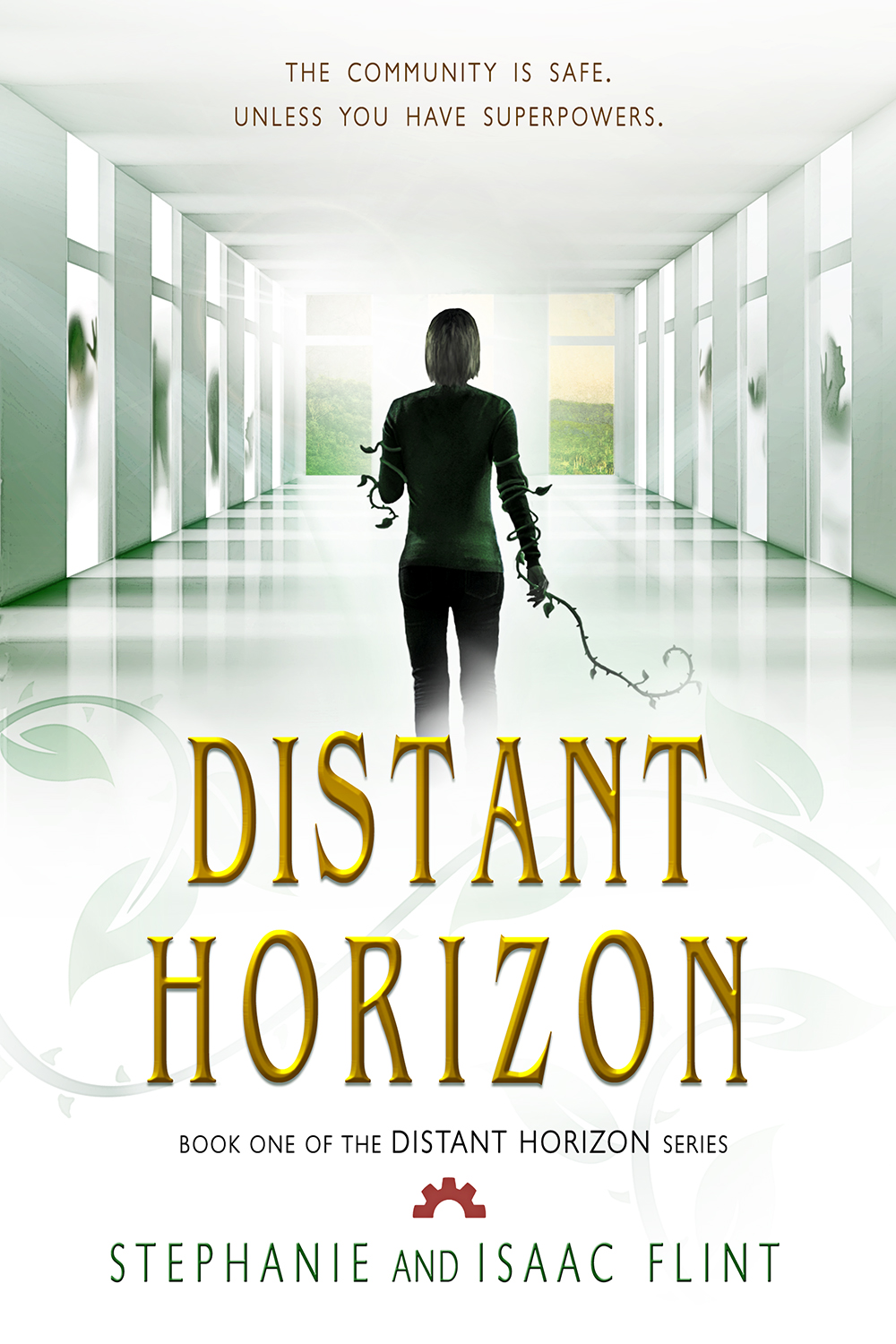
(As a side note, if you are developing a magic system and your story spans over many years, you might consider what developments might influence that magic. For example, in Isaac’s and my Distant Horizon universe, one of the characters has techno sight… the ability to manipulate (digital) technology with their mind. If you go backward to the Multiverse timeline, there aren’t any computers (at least, not that don’t use artificial spirits), so those characters don’t have the techno sight power. Or they might, but it would basically be an unknown power that doesn’t get used, even if it’s in their bloodline for future generations)).

New technology can impact how a language evolves, especially as new terms are needed.

However, when new technology gets involved, so do trademarks. And that’s where things get interesting. For example, look at the the Xerox photo-copying machine. How many people might say “I’m going to xerox that…” turning Xerox, a trademarked brand name, into something generic… (despite attempts to keep in it in their grasp).

If you look at the name, Xerox is the brand, whereas their product is a photo-copying machine. Note that photo-copy is a combination of two words to describe what the product does. But as people became familiar with the product, they turned Xerox into the verb, and thus a new word (or at least a new meaning to the word) was born. HighNames has an article regarding the origins of Xerox, and it turns out that Xerox pulled their name from a combination of Greek words… xeros (dry) and graphia (writing). If xerox, from xeros, now means ‘to photocopy,’ we can see how influences from other languages, plus the change over time, shaped a new word. (Read more about generic trademarks here).

Even now, companies fight to keep their trademarks intact. Google (to use a search engine, originally pulled from ‘googol,’ the number ‘one’ followed by a hundred zeroes). Kleenex, technically a brand name, but now often used to mean a tissue. (“Go grab me a kleenex.”) This is yet another example of a company having to work to keep its trademark intact (This article from The Atlantic has some great examples of companies trying to protect their trademarks). Yet another example of how a trademarked brand has become (or is on it’s way to becoming) a common word is Coke, in which a Concurring Opinions article mentions people asking for a coke (referring to soda in general) and restaurants must distinguish between a Coke or a Pepsi due to trademark legalese.

If you are interested in more information about the evolution of language over time, TED has series of videos about of “How Language Changes Over Time.” I haven’t watched these, but having watched a few TED Talk videos before, I imagine they could have good information.

So how does all this apply to fiction?

Well, if you include conlangs (constructed languages) in your stories, especially over a period of time, you could have fun with changing the language across the generations. Perhaps it’s a company trying to protect their trademark, if you want to stay with the trademarks theme. Perhaps there is a misunderstanding in general. Perhaps there is confusion, if someone from the future tries to explain something to someone from the past. Or perhaps its the opposite. Someone from the past, using an older variety of an evolving language, has a hard time being understood by someone whose updated language no longer sounds the same. (Refer back to the National Science Foundation article for a good example of having a hard time trying to understand an older language).

There’s all sorts of things you can play with, both with fictional languages, and with real languages and real history.

Alternatively, maybe you have a language that is stagnant. One that has only a specific list of words, and that’s that. How do your characters and your society deal with the changes of time? Do they smash words together? Do they struggle to explain technologies? Do they refuse new technology altogether?

Given the way I’ve currently addressed Cantingen word magic in the rough draft of The Shadow War, I suspect their language will be fairly stagnant, with some interesting combinations when trying to explain an object that doesn’t have a specific name or translation.

I hope you’ve enjoyed this post. 🙂 Have you thought much about how languages evolve, and how you can use that evolution in your fiction?

Further Reading:

http://www.scientificamerican.com/article/use-it-or-lose-it-why-lan/ – Talks about the frequency of a word compared to how fast it evolves

http://www.telegraph.co.uk/technology/mobile-phones/11274292/Do-you-understand-text-speak.html – Text speech (In this case, also slang, not specific to text) and trying to translate text speech

http://www.telegraph.co.uk/education/educationopinion/9966117/Text-speak-language-evolution-or-just-laziness.html – Debates whether text speech is language evolution or a lack of proper teaching (leans toward the latter, but does bring up points regarding text speech and ease of communication that would have been interesting had they been developed further

http://knowledgenuts.com/2015/10/10/text-message-slang-goes-back-to-telegraph-operators/ – More or less a counter-argument to the above complaints about text speech, which points out that it got its start with telegraph operators

http://dictionary.reference.com/browse/verbing?s=t – A Definition of ‘verbing’

2 Comments

Filed under Writing

Thoughts on Writing – Using Foreign Languages In Your Stories

Recently, I’ve been making edits to The Multiverse Chronicles. It’s a pseudo-steampunk fantasy story, and it’s very much not historically accurate. We’ve got dragons, dinosaurs (all right, all right, I know pterosaurs technically aren’t dinosaurs, but still), dirigibles, magic powers, a dragon queen who rules over Britannia, an Industrial Union of Prussia that makes automatons… The list goes on.

Still, we want to have occasional nods to reality, and it’s nice to know which parts of history we’re butchering before we actually butcher it. Since the world is supposed to (vaguely) resemble our own world, we’ve been trying to add flavor through various means, and our latest method has been to insert little snippets of other languages where appropriate.

For example, one of the end scenes of the Multiverse episodes involves a group of airship pirates. The name of their dirigible is mentioned, and the name is supposed to be in German.

Of course, neither Isaac nor I know much of anything about the German language, which is a recipe for potential issues.

In this particular scene, Isaac wants the name of the ship to roughly translate to, “The Spirit of the Iron Vulture.” The first step to renaming this in German was to use Google Translate.

However, from our experiences with Spanish classes in college, we know that online translators aren’t necessarily that reliable. So, whenever I try to name something or use a word that isn’t English, I may use an online translator to start with, but I will usually run it through multiple translators, and then take that translation back from the target language to English to make sure it translates correctly both ways. (I’ve had a few interesting translations when I tried that particular method, as the translator might have had the right word, but not the right meaning). I also try to look up whether words should go before or after one another, if there might be any changes to how the word looks based on what it’s modifying, and anything else that might be different in that language.

For Spanish, this isn’t quite so difficult because I’ve had a few classes, which helps me know what to look for. Even then, I’ve had a beta reader correct my Spanish grammar, and that was helpful to getting the sentence right (I had the wrong verb form).

For German… well… I don’t know German.

I’ve picked up a couple words here and there from Hogan’s Heroes. (Not exactly conducive to knowing how a language works).

I really wasn’t sure what we were looking for in naming conventions, especially since the name we wanted had the “of the” portion. Then I remembered that a friend from college had studied German, so I figured he might be a someone to ask. I sent him a Facebook message, and he was able to offer quite a bit of help.

When in doubt, ask someone with more experience than you.

When Isaac first chose the name, he ended up with “Der Geist Eisengeier.” (Note: If your ship’s name has “the” in the beginning of it, don’t forget to translate that as well). With a bit more checking, I ended up with “Der Geist des Eisernen Geier,” but it seemed a bit of a tongue twister (which I probably pronounce wrong, anyway, since I don’t know German pronunciation rules). Anyway, we asked if it would be feasible to shorten the latter to the former, but our friend pointed out that without “des” (of the), we would end up with a really long, run-on noun. He suggested “Der Geist Des Eisengeier” as a compromise, though he pointed out that German ships would often have longer names.

Isaac and I chose the compromise (Der Geist Des Eisengeier), though knowing about the longer names factor definitely makes using the full name a more feasible option.

As a writer, half of the process of story research is knowing what to look for. In this case, I suspected the language rules might be different from English, but I didn’t have enough knowledge on the subject to know where to begin. At this point, asking someone who does know (or at least has more knowledge than you) is a good way to find a decent starting point. This can be used for language, culture, special procedures, technology… anything. Of course, the more you read, the more you know when you should conduct research, and the more likely you’ll catch where you might have problems before a reader does.

I hope you’ve found this post helpful. 🙂 Have you ever had issues with adding words from another language into your manuscript?

(Another good example of doing writerly research can be found at Thrill Writing, a blog where the author interviews various experts about specific topics which are helpful to fiction writers.)


8 Comments

Filed under Writing

Thoughts on Writing – Multiple Character Motivations in One Scene

Though I’ve primarily been focusing on getting the paperback edition ready for Magic’s Stealing (I ordered the proof copy today!) and making edits to The Multiverse Chronicles, I’ve still been thinking about the plot for The Shadow War. My goal is to iron out as many inconsistencies as possible before I get into the heavy writing/editing phase.

Today I’m going to look to look at a scene from The Shadow War and focus on how knowing the multiple character motivations in that scene can help improve the logic of what’s going on.

Warning: There are spoilers in this post regarding events in Magic’s Stealing, along with certain character motivations and the first major event of The Shadow War.

In other words, if you don’t want spoilers, you might want to pick up a copy of Magic’s Stealing before reading this post, then come back to read this post. If you don’t mind spoilers, then by all means, please continue reading. 🙂

Toward the beginning of The Shadow War (the second book) there is a scene in which it is very important that the main character, Toranih, is captured by the shadows. In the current draft of this scene, a city guard requests her presence for legitimate reasons, but once she’s separated from her friends, a pair of shadows ambush her and the guard, then drag her through a portal to where Shevanlagiy (the antagonist from the previous book) is waiting to kill her. Shevanlagiy makes the attempt, but Toranih takes her by surprise and knocks her aside, leaving Lord Menchtoteale (the leader of the Shadows) to try. He attempts to strike her once, but since Toranih knows that shadows can’t be killed by mortal weapons, she grabs the nearest shadow’s knife and strikes her own hand. She falls into the shadow realm, and Menchtoteale again attempts to kill her, this time making what should be a devastating blow with the Wishing Blade, but Isahna (the trickster god behind the shadows, the god Menchoteale answers to) heals Toranih, orders Shevanlagiy to leave Toranih alone, and orders Menchtoteale to train her.

At this point in time, though, I’m a bit concerned that all of that is going to seem rather… confusing.

Why does Isahna prevent Menchtoteale from killing Toranih, and more importantly, why can’t these big bad guys successfully kill an almost defenseless teenager?

(Though I do have to say that Toranih has been working on her magic, and she is good at physical combat. But still… shouldn’t a well-trained sword fighter with a magic sword, or a super-powerful sorceress, manage one partially-trained kid?)

Since I want these scenes to make logical sense, I did my usual day-dreaming to work out the problems with this scene. As a result, I considered the character motivation for each character involved.

Toranih: She wants to get out of this alive. Being caught by shadows? Not exactly conducive to her plans of warning the port city of the upcoming attack. Now, she’s been in the shadow realm before (in a slightly alternate timeline that got erased because of her actions–read Magic’s Stealing if you want to know how that went), so she has a bit of an idea of how shadow magic works. She also knows that–at least according to her memory–she’s resistant to Menchtoteale’s attempts at magic’s lure (basically, a mind control power).

Shevanlagiy: Thanks to events in Magic’s Stealing, Toranih has part of Shevanlagiy’s magic… specifically her resistance to magic’s lure. Before that event, Shevanlagiy could ignore Isahna’s commands (so long as ignoring his commands don’t alert him to her own secret plans). Now that Shevanlagiy has lost part of her magic, she’s not sure how much it will take for Isahna to give her orders that she must follow, which isn’t good when she plans on stealing the Wishing Blade from him later. At this point, she needs to kill Toranih as soon as possible. However, it’s important that she be the one to kill Toranih, otherwise she won’t get her magic back.

Menchtoteale: He’s in charge of wielding the Wishing Blade, and his job is to collect as much power into the sword as possible. He needs an army of shadows (to overrun the Immortal Realm so that he can kill the gods and force their powers into Wishing Blade). Toranih was one of the few mages who didn’t lose her powers when he wished the magic of Cirena into the Wishing Blade, largely because she had the support of a lower-tier goddess behind her. For Menchtoteale, killing Toranih with the sword means finishing that part of the job. Alternatively, striking her with a shadow blade means he should be able to command her. But he knows that someone who looked like Toranih was particularly resistant to his ability to command the shadows. As such, killing her is the more practical option, even though having a shadow mage on his side could be good for the army.

Isahna: His intent is to have Menchtoteale get as much power in the Wishing Blade as possible so that he can eventually take that sword, confront the high gods, then take their place. (It’s a bit of a vendetta after he lost the bid for power to a different god). He’s gotten surprisingly useful information from Shevanlagiy, but he’s certain that she’s playing him for a fool. Unfortunately, he’s not all-knowing, so he’s not sure what her end-game is. He does have an idea that her resistance to his powers may have dropped recently, and has something to do with Toranih. Thus, keeping Toranih around might give him a few insights into what Shevanlagiy has planned… especially since the kid has strong powers (if she can be coaxed into using them) and an interest in military operations (unlike Menchtoteale, who Isahna chose as his general mainly because the guy could forge the Wishing Blade).

There are other motivations behind these guys, as well, but I’m trying not to give away all the twists of this scene. 😉

Anyway, looking at those motivations, let’s take a look at the scene again and at what could happen instead.

First, Toranih must be captured early on in the story (or at least, she needs to be in a position where she becomes a shadow). This is critical to the plot, as she needs to be working against the shadow army from the inside. The problem with this is that, in theory, Shevanlagiy really should just sneak up on Toranih and stab her in the back.

Problem solved (And we have one very happy Shevanlagiy).

But we know from Magic’s Stealing that Shevanlagiy is hesitant to do that so long as Toranih’s other two friends are around. They have an artifact which can effectively wipe out shadows (and is a large detriment to her own powers). Not only that, but one of those people is Toranih’s sister–who has proven to have particularly good aim with a throwing knife and nearly killed Shevanlagiy once before (Shevanlagiy doesn’t die, per se, but she can get thrown into another realm and thus lose all her progress in this realm). The other person is Daernan–someone Shevanlagiy has been working very hard at making sure he stays alive. Putting him in danger isn’t a good idea for her–not yet.

Even if Shevanlagiy simply stabbed Toranih with a shadow knife and commanded her to hold still while she delivered the finishing blow, the possibility that Toranih might get destroyed by the artifact her friends have–thus permanently losing her “stolen” magic–is not a good risk.

So that’s an area I’m still running into issues with. Shevanlagiy needs Toranih dead, so the question is how does she make that attempt?

For now, let’s say that Shevanlagiy still orders a pair of shadows to kidnap Toranih and bring the girl to her. Now she’s putting the shadows–but not herself–at risk. Shevanlagiy’s first goal is still to kill Toranih… just on her own terms. She’s ready to strike when Toranih arrives, and makes an immediate attempt on Toranih’s life.

Since we don’t want Toranih dead yet, this is where we can see Toranih’s growth with magic from the previous story. She successfully thwarts Shevanlagiy with telekinesis… even though her chances are looking bleak if she can’t find a way to quickly escape.

Now enter Menchtoteale. He’s in the same location (which makes me consider… why would Shevanlagiy bring her captive to the same place as someone who might kill Toranih before her? Perhaps he comes back to their base unexpectedly early? Or perhaps Isahna gets wind that Shevanlagiy is up to something, so he sends his puppet along to check things out). Either way, Menchtoteale arrives unexpectedly, realizes Toranih is the same person he saw earlier, and he knows he won’t be able to control her easily. Forget making her a shadow, then. While Shevanlagiy is still dazed from her earlier attack, he attempts to kill Toranih and be done with it… except that Toranih, in her desperation, snags the knife from one of the nearby shadows and prevents her death by turning herself into a shadow. The catch here is that if he uses the Wishing Blade, that would kill her (but she might not be thinking about that)… unless he stops mid-strike because he’s bewildered that anyone would willingly make themselves a shadow.

He’s not the only one. Toranih isn’t sure what to make of her decision, either.

In the meantime, Shevanlagiy has had enough time to get back into the game. Now it’s more important than ever that she kill Toranih. She prepares to make the kill, but is stopped when Isahna shows up and orders them to stop. She can technically disobey his orders at the moment, but deliberately breaking his rules now would make it clear that she has her own agenda, which would jeopardize her later plans. She holds back, though she’s still trying to figure out how to take out her enemy.

Now, this next section needs some work, but this is what I have in mind so far:

Isahna orders them not to harm Toranih. Both Menchtoteale and Shevanlagiy protest, and Isahna makes the case that Toranih might be useful to have around. He orders Menchtoteale to train her, and orders Shevanlagiy not to kill her. When Shevanlagiy expresses her displeasure with the idea, he begins to question her why. Shevanlagiy tries making excuses, to which Isahna starts giving her minor orders with magic’s lure, ones which he knows she will deny if his suspicions about her are correct. Each time she refuses, her ability to resist magic’s lure dwindles, until he finally gives the order not to kill Toranih. This time, he successfully uses his power against her. Not only can he now keep Shevanlagiy away from his new military interest, but he has also discovered exactly where her resistance to his powers ends.

This is important for multiple reasons.

1st – This sets up a rule of magic that we will see throughout the rest of the series, one which Menchtoteale tells Toranih (paraphrased): “Better to accept the little things that Isahna orders of you, and thus be able to resist the commands that matter to you, rather than resist the insignificant things and be forced to do something terrible.”

2nd – We now see exactly why Shevanlagiy is afraid of Isahna… and why she is more desperate than before to push her plans along and find some way to strike Toranih and get her powers back… especially now that she physically can’t unless she takes care of Isahna first. Not only that, but this puts her in a position to ignore Toranih for the time being and focus her attention on Daernan, which gets into the sub-plot regarding glass-stone and protecting the kingdom from the shadows. Shevanlagiy is playing both sides, which makes her, to some extent, unpredictable.

3rd  – Toranih has now seen firsthand how magic’s lure works from Isahna, which affects her decisions through the rest of the series. This is especially important when Isahna offers her a legitimately useful deal later (Though it comes with it’s costs,of course. I rather enjoy stories with villains who can offer a hard-to-resist deal. Probably one of the reasons that I enjoyed Rumpelstiltskin’s character in Once Upon A Time). Along the same token, we’ll also see Isahna offering Menchtoteale a deal regarding Menchtoteale’s own freedom if he can get Toranih interested in trading places with him… and that gets into a whole nother set of character motivations. Needless to say, Isahna is going to try covering all the angles.

In the long run, taking a close look at what motivates each primary character to act, especially early on in your manuscript, can really help to work out the kinks not only in a specific scene, but also in the full length of the plot. Not only that, but you’ll also have more believable antagonists and stronger protagonists, because we can understand what they’re up against.

Now I just have to figure out how much to actually show in the story. On the bright side I’ve already shown multiple points of view in the first book, so it won’t be as odd if we see the occasional point of view from the antagonists.

I hope this post has been helpful. 🙂 Have you ever explored a character’s motivations to solve problematic scenes?

Leave a comment

Filed under Writing

Launch Day! Book Birthday! Magic’s Stealing…

Today is the day! Magic’s Stealing is now available for the public to purchase and read! *Squees and does happy dance.*

SBibb - Magic's Stealing Cover

Purchase on Amazon US

Purchase on Amazon UK

Purchase at BN.com

Purchase for Kobo

Purchase on Smashwords

(Also available on iTunes, but I’m not sure how to link that)

Add to Goodreads Shelf

Now that the book is out, I’ve got to figure out how best to market it… without, you know, spamming everyone.

There’s a fine line when deciding how often to tweet an announcement that you’re super excited about… (I’m going with the plan that if I’m self-advertising, I need to have retweeted several useful articles or interesting tidbits between ads. That, and I’ll only do one or two announcement  tweets with the cover and buy link for Magic’s Stealing. After that, I’ll try to either post little quote pictures maybe once a week (if I remember, and can restrain myself to that), or once a week continue my occasional “pitch line” tweet with a buy link, kind of like I’ve done for my short stories.

Here’s an example of a quote picture (not sure if there’s a technical name for these or not… if there are, please enlighten me).

Magic's Stealing - Mountain Forge Quote

I personally think they’re kind of cool, but we’ll see if everyone else thinks they’re interesting or annoying. Either way,  they’re fun to make. I’m thinking of doing one for Shevanlagiy, too…

What are your thoughts? Have you found any quote pictures to be particularly interesting?

Other than that, I shall try to refrain from active “advertising” other than what other people share, what I reference in blog posts, and a possible giveaway I’ve considered. That way I can focus more on actually writing stories (which hasn’t been happening over the past few days).

In the meantime, I’m debating whether a Facebook author page would be of interest to readers… but I’ve heard that they’ve been a pain lately, in regards to getting the people who follow you to actually see your content (maybe a “group” would be better?). But I’m not even sure what I’d put on one. More pretty quote pictures? Not sure that would be terribly interesting after a while.

What are your thoughts? Have you had any experiences in successfully marketing your book without waving the cover around like a giant, virtual banner?

Now… back to the happy dance. 🙂

20 Comments

Filed under Writing

Author Photo Results and Magic’s Stealing Cover Reveal

I am thrilled to announced that Magic’s Stealing is now available for pre-order!

Now, for the moment you’ve been waiting for…

The cover reveal!

SBibb - Magic's Stealing Cover

For centuries, ribbons of magic have provided the kingdom of Cirena with light, healing, and protection. Then, in a span of minutes, those ribbons fly from their masters, stolen, save for the magic of a few chosen mages. One of these mages is Toranih, a young noblewoman who would rather have a sword in her hand than use her powers to heal or throw fireballs. As a result, her magic skills are lacking. But with former mages dying from magic withdrawal, and the looming threat of an army of shadows who are impervious to mortal weapons, she must either embrace the responsibilities of a mage or watch her home perish.

This is a 34,000-word novella. Book one of The Wishing Blade series.

Preview the first four (almost five!) chapters at  Smashwords. 😀

Pre-order on Amazon US

Pre-order on Amazon UK

Pre-order on Smashwords

Add to Goodreads Shelf

*The Wishing Blade - Section Break - Magic Swirl*

In the meantime, you may have noticed that my author photo has changed across several of the sites I frequent. It’s time to reveal the author photo I chose!

The choice was between 1 and 4 (Read the post about author photos here):

Author Photo #1

Author Photo #1

Author Photo #4

Author Photo #4


It was a tough choice, but I ultimately chose #4, since that picture seemed to convey a quirky, adventurous feeling. You can see the three versions I’ve made for different social media uses. However, I plan to keep the first one around, since it has a nice, professional look to it. 🙂

Stephanie Flint - Author Photo Stephanie Flint - Author Photo Stephanie Flint - Author Photo

I hope you’ve enjoyed this post. If you like fantasy stories, please pick up a copy of Magic’s Stealing and share the news of its release (September 17, 2015) with your friends. 😀

9 Comments

Filed under Book Covers, Business Ventures, Writing

Thoughts on Publishing – Infinitas Publishing Status Report and First Chapter of Magic’s Stealing

Where does the time go? My day job started up again a couple days ago, and I’m currently readjusting my schedule to be able to be productive and not spend all my time daydreaming about what happened in the role-play campaign that my husband and I just finished this week. (A main character got a bittersweet ending… not the ending he was hoping for (he’s a fourthwaller), but an ending that left him reasonably happy and with his mind intact).

Anyway, while I’m readjusting my after-work patterns,  I thought I’d do a quick status report on the projects of Infinitas Publishing

When Isaac and I started up our business this summer, we created a rough schedule of when we would like to release our books and games. It’s something we created for our own personal use, which gives us an extra push to actually publish things, rather than getting into an endless loop of editing. It’s also a good measure for us to use in terms of how much time we have until we complete a project, even if we don’t release the prospective dates to the public. This should give us a little more wiggle room for when our planning inevitably goes astray.

For Magic’s Stealing, I’m about a month behind on my goal (Shh… don’t tell anyone), but I’m in the final phase. I’ve already got it formatted as ebook, except for the table of contents (easy to do, but needs to be different between Kindle and Smashwords editions), and I’m working on the final proofread for typos on printed paper. Once that’s done, I’ll put it up for pre-order and reveal the cover. Look for that coming soon… which I also need to update on the main website. A few months after that I am hoping to make the paperback edition available.

For Battle Decks: Trials of Blood and Steel, we’re on par. We’ve already ordered the initial proof copy (which I posted about a while back), got feedback, and made edits. I’ve updated the box title to Trials of Blood and Steel instead of Multiverse: 1953, based on further feedback, along with updated the rules (still needs to be proofread) and fixed the cards for consistency (cards now say +2 ATK instead of +2 attack, etc). Once we have the rules proofed, we plan to order a second copy of the game to make sure all of our edits are input correctly. We also need to recreate the trial edition of the game with rules specific to the trial (that way we don’t confuse players with irrelevant rules, such as how to choose heroes for each faction). Based on our current schedule, we should be able to release Battle Decks as planned.

For The Multiverse Chronicles: Trials of Blood and Steel, we should still be on par, but we’ll see as we get closer to our planned release date.  Isaac is currently working on the rough draft of episode 19 of the 24 expected episodes, though some of those we’ve planned to split, so we may be a bit further ahead (and there may be more than 24 episodes). I’ve gotten ten of those episodes edited and semi-polished, ready for us to do the full read-through and see how everything meshes together. I’ve got partial edits done on episode 11. However, once those are complete we will need to send out the episodes to beta readers to look for errors, and then polish the first few episodes to release online. We also need to prepare the blog site where we’ll be publishing the story. The first four episodes need to be ready to go before we release Battle Decks.

Beyond those projects, which are up for release by the end of this year, I also have plans for The Shadow War, (book two in The Wishing Blade series).The first draft is partially written (but requires changes), and I’ve been plotting the rest of the story and making sure it will flow easily into book three. The upside of my day job is that I have plenty of time to plot while I do greenscreen work on photos.

Once I have a definite date for these projects, I’ll make them public.

In the meantime, please enjoy the first chapter of my upcoming YA fantasy novella, Magic’s Stealing. 🙂

Magic’s Stealing


The Wishing Blade - Section Break - Magic Swirl ONE The Wishing Blade - Section Break - Magic Swirl

Darkness flooded Toranih Covonilayno’s sleeping chamber as she mentally extinguished her magic crystal’s light. She tossed the crystal onto her dresser and hurried to her bed. The silk covers rustled as she slipped underneath, where she felt for the leather hilt of the knife under her pillow.


The last few nights had brought strange creaking noises from the attic, soft footsteps and the brushing of rough wool on the edges of the wooden floorboard above. She listened now, waiting to see if the footsteps returned.


They did not.


Instead, wind whistled through a tiny crack in her bedroom windowsill. She peeked over the covers. A shadow passed by the heavy curtains and she clasped the smooth fabric between her fingers.


Ridiculous.


She kicked off the covers, knife in hand, and hopped out of bed. She waited, just in case the shadow returned. Then she walked to her dresser, picked up the crystal, and carefully raised the light again.


The dresser was pristine, with only an oil lamp sitting in the dustless corner. A small oak chest at the foot of her bed remained locked with steel. Heavy brocade curtains obscured the window.


No sign of intruders.


So why couldn’t she shake the feeling that someone had been watching her?


She dimmed the crystal’s light until the room was cast in an eerie twilight, but the only magic present was her own. The crystal’s faint light revealed thin, lime green ribbons of magic floating around her, while glowing turquoise ribbons darted in and out of the crystal.


Her older sister, Siklana, had created the artifact for Toranih when she was little. Few could see magic without a crystal. Whenever a mage used their ribbons to do… well… anything, she couldn’t see the cause.


And what she couldn’t see, she couldn’t fight.


Toranih sighed. She was seventeen now, and she wasn’t afraid of magic. She just didn’t like it. There was a difference.


Something tapped the glass. Toranih shrieked, fumbling with the crystal. She clutched it to her chest and spun toward the window. A cluster of ribbons danced around a small form on the other side.


Well, are you coming? Daernan’s telepathic voice flitted through her mind, amused.


Of all the times for him to show up unannounced—


She dropped the crystal on her dresser, sheathed the knife, then flung open the curtains. “Don’t scare me like that!”


A small, brown, ostensibly cute owl peered at her with bright yellow eyes and giant black pupils. Daernan, judging by the white ring of feathers crowning his left eye.


The owl shrugged and puffed out his plumage like a feather duster. Not my fault you’re so jumpy.


Toranih crossed her arms. Though dim in the moonlight, the crystal’s twilight revealed various blue and yellow and pink ribbons swirling thick through Daernan’s owlish body.


Coming? The pink ribbons carried Daernan’s thoughts to Toranih’s mind, and she fought the urge to swipe them away.


Toranih knelt beside the window so that she was eye-level with the owl. He tilted his head and blinked. She snorted. “I’ve been expressly forbidden from attending the festival,” she said in the most high-and-mighty voice she could muster. “So, no. I’m not coming.”


Not that she minded missing the event. Too much magic and too many people teasing her about when she and Daernan would make their courtship a formal engagement.


She turned from the window, lit her oil lamp, and then mentally killed the crystal’s light.


The ribbons vanished.


Let me guess. Your father wasn’t happy that you challenged Lady Ikara to a duel, then respectfully threatened that she ought to let her fiancé fight for her, lest you knock her off her high horse onto her—he mentally coughed for effect—her lazy ass?


Toranih shrugged. “She insulted you. Good excuse not to go.”


The owl sighed, best an owl could, before tapping the window with his beak. Can I at least come in?


She obliged him with a flip of the latch. Then she plopped onto her bed. The owl swooped inside, changing as he went. By the time he landed, the owl had morphed into a young man with shoulder-length brown hair. A patch of white hair ran through his bangs above his left eye.


Daernan stood from his crouch and shook himself like a dog that had just run through a pond. He looked as he usually did, no more dressed for the festival than any other day. Only a simple cotton tunic and loose fitting breeches, along with a leather belt that Toranih had helped to etch and dye. That belt had been an experiment, to say the least. Daernan proved much better at drawing the various creatures than she had. An owl, a shaggy dog, a horse… his favorite changes.


He tossed her a green velvet satchel. “I know you don’t like this holiday, but that’s for you.”


She scowled, dangling the satchel by its cords. “Really?”


If Daernan had brought her spicy cocoa flowers, like last year, she would swear to Shol that she’d make him pay the next time he tried to duel with her.


Daernan shrugged and leaned against the dresser, perilously close to her oil lamp. “Don’t worry, it’s not flowers or ribbons, or anything silly that you wouldn’t like.”


“I didn’t get you anything,” she said. Well, technically she had, but she’d planned to give him the owl-shaped ginger cookies she’d bought for him tomorrow, when the gift wasn’t linked to Aifa’s Night.


“In that case, you could make it up to me by coming to the parade.” He smiled hopefully.


Toranih raised an eyebrow. She dug into the satchel and paused when her fingers touched cool metal ridges. She withdrew a brooch made of sterling silver. The metal had been crafted into a raven that held a wreath of flowers in its talons. Small and not particularly gaudy, the piece would look nice pinned on the pouch she normally wore on long horseback rides.


Daernan rubbed the back of his neck self-consciously. “I might have lied about the flowers. I hope you don’t mind.”


“It’s…” She let out a breath and smiled. “I like it. Thanks.”


He grinned. “I commissioned the crafter whose goods you keep eyeing.”


“I do not!” Toranih had done her best not to let anyone catch her eyeing the metalsmith’s jewelry… just his weapons. They might think she’d gone soft.


“Sure you don’t.” Daernan chuckled, then glanced around the room. “Redecorated?”


“The room was cluttered. I cleaned it.”


“You? Clean something?” Daernan raised an eyebrow. “Who are you and what have you done with Toranih?”


She scowled. “There were too many things someone could hide behind.”


His smile faltered. “You still think someone’s watching you?”


“I heard noises last night. I checked the attic, but nothing was up there. I even used the crystal to look for magic.” She kicked her feet against the bed and sighed. “I know I don’t have enemies, but someone’s been in here.”


“Lady Ikara, maybe? She isn’t exactly friendly towards you.”


“Oh, please. She could run my ear off but I don’t think she could tell the difference between a dagger and a dirk.”


“She doesn’t have to know the difference to stab you,” Daernan pointed out.


Toranih punched his shoulder.


“Ow! I’m just saying!”


She snorted. He wasn’t helping. Lady Ikara wasn’t the kind to go snooping around the manor, and Toranih’s father, Lord Covonilayno, had relatively few enemies. Though he was officially a viscount who oversaw the day-to-day proceedings of Viyna, he was also tasked with guarding the kingdom’s armory, so most nobles chose to stay on his good side.


Daernan sighed. “The parade is starting soon. If you really don’t want to be seen, we can go as owls. There’ll be dancing…”


“Which we can’t enjoy since we’ll be owls.”


“Free food…”


“As owls? Do you want mice? Besides, you get free food anyway. Everyone likes you.”


“They like you, too,” Daernan protested.


“They bow and curtsy to me.”


“Unless you challenge them to a duel.”


“There is that.” Toranih grinned and eyed the raven brooch. Lady Ikara could sniff the air all she liked, but she wouldn’t keep calling Daernan a street mutt. Besides, he did have claim to noble lineage, even if his father wasn’t around to prove it. His mother permitted the commoners to tend to their estate in return for access to a small cottage inside the city. No one paid attention to the fact that she had married into nobility.


Seemed that was how she liked her life.


“And we’ll get to watch all the mag—entertainment.” Daernan closed his mouth quickly.


Toranih rolled her eyes. “Magical entertainment, right. Know what? You go. Report to me in the morning about all the beautiful light showers and flashy streamers, and don’t forget to tell me how the gracious Aifa blessed the newlyweds. If you get back here before sunrise, you might even beat Siklana to the story.”


Her sister always did like magic. She cast enough for the two of them.


Daernan groaned and tugged Toranih’s arm. “Come on—it’s no fun if I go by myself. And everyone’s expecting us, even if we are owls. You should come.” He beamed, giving her his kingdom-class puppy-dog eyes.


She swallowed uncomfortably. “This is a bad idea.”


“Please? It’ll be fun. I promise.”


Toranih sighed. Sometimes she wondered if he had ribbons of the persuasive nature, though she’d never caught him. Wasn’t likely, anyway. That kind of magic was rare.


She rose from her bed and set the raven brooch beside her prized lamp. Then she raised her crystal’s light until it was just right for seeing magic. After she extinguished the oil lamp, she focused on her royal blue ribbons and stretched her arms, her palms open to the ceiling. Tickles rolled through her fingers, then her hands, then her body. Blue ribbons swirled around her, merging into a thick smoke that rushed to her toes. She shrunk. Her bones mended into the form of an owl. Her magic glowed bright, twisting and fading with a heartbeat of its own.


 Ready? Daernan asked, already perched on the windowsill.


Toranih killed the crystal’s light and hopped toward the window with her leathery feet.


She preferred raven form— though it wasn’t much better—but at least now she could see.


Daernan hooted. Let’s hurry—the show should be starting! He dropped off the windowsill, his wings outstretched, and caught the air with a quick swoop.


Toranih cringed. What would happen if she hadn’t made the change properly? What if she didn’t actually fly?


The ground teetered beneath her, perilously far from the ledge. She spread her wings, prayed to Shol she wouldn’t crash, and dropped into the night.

* The Wishing Blade - Section Break - Magic Swirl *


A cloaked figure knelt beside a sprawling sycamore near the young woman’s sleeping chamber, her eyes trained on the two owls.


Finally, they were gone. She climbed the tree, bark catching on the tips of her leather boots, then slipped inside the open window. The room was dark, save for moonlight, but it was just enough for her to see that the young woman had rearranged the furniture since the night before.


No night table or pile of books, and her usual set of sparring knives didn’t hang from the wall. Probably locked in the chest at the foot of her bed, or buried under the mattress.


She didn’t bother to check, though, instead stopping beside the dresser and stroking her fingers across the light crystal. It responded eagerly, and turquoise ribbons flared to life.


She quickly extinguished the crystal and peered into the distance, waiting to see if her own sight revealed the magical ribbons that would signal the two’s return to investigate.


The night remained empty.


The only magic she saw was her own. The rest of the family was at the parade.


But there was something new in the room. Ashen moonlight shone through the oil lamp at the edge of the dresser. Skewed light reflected onto a metal brooch—a brooch with a raven and a wreath of flowers.


The intruder held her breath, reaching her fingers toward the jewel piece, then quickly withdrew. She couldn’t leave any trace that she’d come. That meant leaving objects where they’d been found.


She left the sleeping chamber for the hallway. Bronze wall sconces flickered with pale, turquoise light across elaborate tapestries. The crystals cast shadows along the crimson throw rugs, each one embroidered with curling gold patterns.


She paused, recalling the two owls flying into the night.


Always strange to see the young woman, but stranger still to see Daernan alive.


She wrapped her cloak tight around her shoulders, then traveled the familiar stairs downward, downward, and deeper—under the manor and into the kingdom’s dwindling armory.

Stay tuned for cover reveal and release date! 😀

3 Comments

Filed under Business Ventures, Personal Work, Writing

Thoughts on Writing – Creating a Fantasy Map

I recently received my final beta-reader comments for Magic’s Stealing, and I’ve been making edits (I’ll be doing a cover reveal soon!), but today I’m going to focus on one of the ideas that the beta-reader suggested, which was to include a map of the region.

A lot of fantasy stories include a map of some sort as a way to help readers envision the layout of the land, or the city where the story is taking place. Maps can be used to enhance the feeling of the story (seriously, take a look at the map of Middle Earth) and one article I read suggested that a well-drawn map, which includes elements of the story, can make the world feel more real. It’s sort of like having an artifact from the world itself.

I’ve debated before on including a map, but I originally put the idea aside because I wasn’t sure if I could make it look professional, and also because I didn’t want to lock down the distances before I finished the series.

Then my husband pointed out, having a map would be a good tool for future reference. Not only that, but I wouldn’t have to include it in the first edition of the ebook. I could wait until I release the print edition, then update the ebook at that time.

Anyway, let’s take a look at the steps I’m taking to create the map. I have a rough guide. When I wrote the first draft of this story twelve years ago, I also drew a map in Paint. It’s horribly inaccurate

The estate where Toranih lives probably shouldn’t be as large as the capital city of Cirena. The Cantingen Islands probably shouldn’t be quite so tiny. And there are plenty of other problems.

SBibb - Old Cirena Map

Original map… made many years ago

My husband suggested that I start by writing down the places referenced in the story, then taking note of their directions and the amount of time it takes to travel from one place to get to another, as mentioned in the story.

So I went through Magic’s Stealing and searched for key phrases related to traveling. Minute, hour, road, travel, east, west… etc. I didn’t include directions within buildings, such as going downstairs. Just the kingdom and the cities.

This is what I found in Magic’s Stealing through a basic search.

Fifteen minutes later, Toranih reached the place of the healers. (From the seer’s cottage, jogging)


In minutes they had left the square behind and pounded into the lower city. (Riding hard on horseback)


“We’re two hours from Viyna. A guard could stop here, and we’d be reasonably undercover…” (At the mountain forge, riding on horseback, not rushing)


They fled into the heavy rain, mud spattering them on the road to Viyna. (From the Covonilayno estate)


…and then stormed through yet another portal into the temple in the northern district of Ashan. (Directions within a large city)


The girl was cold and shadowy, colder than the northern village of Reveratch. (Region layout)


“Go to the northern tunnel. Tell Cafrash to send more of his shadows into the city…” (Directions of a tunnel)


“This is it. Sid-Dreh.”//“What’s Sid-Dreh?”//Siklana pushed Toranih out of the way and squinted at the plaque. “South and west, respectively…” (Cardinal directions in Old Cirenan)


…but many of them used the communal oven in the marketplace that had developed in the eastern side of the city. (Layout of Viyna)


The marketplace brimmed with travelers from Ashan, the eastern port. (Region directions)


The ribbons streamed into the sky, a dazzling array of colors, then fled East, away from the city in a glaring river. (Direction the magic is stolen, from Viyna to the mountain forge)


“…If the Trickster branches into the Islands or crosses the sea to the eastern lands, there is no telling how quickly he could rise.” (Region layout)


Ferta was several days out, even by carriage. (Regional layout)


“…When I’m at the academy, I practice in the forest outside of the city walls.” (Reference to Cirena City)

While I may not want to draw out the tunnels on the main map, having a map may make the tunnels be a little more understandable. At this point, though, I’m seeing potential for some interesting back story. How far out do these tunnels actually extend? As you’ll see in a bit, the distances between cities and towns is much greater than the original map suggests. Do the tunnels extend to other cities? Are there towns or dwellings I haven’t mentioned before? Or do they open in the middle of nowhere?

Anyway, instead of trying to mark out the full range of a city or estate, I’m considering following the lead of a few other maps I looked at, which use a basic symbol to designate the location of a city or important landmark. In order to figure out the rough scale, I’ll need to look up the average travel times of riding horseback or walking, and then place my locations based on that scale.

According to this site: http://www.lrgaf.org/guide/writers-guide.htm horses can walk 3-5 miles per hour, trot 8-10 miles per hour, canter at 15 miles per hour, or gallop at 25-30 miles per hour. Now, keeping in mind that weather, type of horse, and condition of horse will effect speed, let’s go with the idea that we’re talking about a horse with decent stamina and who hasn’t been tired from a lot of riding. And let’s go with the idea that the roads in Cirena are of decent quality, and the map is counting on non-rainy days. A general internet search suggests that a fit person can walk 4 miles in an hour (or 1 mile every fifteen minutes), on relatively flat terrain.

So… now that we’ve got some numbers, let’s look back at the descriptions pulled from the story.

Fifteen minutes later, Toranih reached the place of the healers.

In this scene, Toranih is jogging/quickly walking to the temple. She is in reasonably good physical condition, as she’s trying to train to be a guardsman. I had a hard time finding a single average for jogging, so let’s just say that she’s walking. In this case, she walked a mile to reach the temple from the seer’s cottage. If the temple is supposed to be relatively central in the city, then Viyna may be a couple miles wide.

In minutes they had left the square behind and pounded into the lower city.

The characters are riding hard in this scene, but they are likely cantering instead of galloping due to street layout and rain. At the quoted 15 miles per hour, a quarter of a mile per minute, and let’s say 4 minutes, then they have traveled 1 mile from the courthouse to the lower city.

“We’re two hours from Viyna. A guard could stop here, and we’d be reasonably undercover…”

Here, the characters reached the mountain forge by riding on horseback. They took it easy, probably walking or trotting, which puts us at 3-10 miles per hour. Let’s say they traveled at an average of 5 miles per hour. The mountain forge would be roughly 10 miles from Viyna, or if they had cars and a 60 mph speed limit, ten minutes to drive. Picture someplace that takes you ten minutes to drive to on the highway, and now you have the rough distance. (And the kingdom suddenly feels much smaller).

It was going to be a long week (of traveling through the wood).//Scene break//After a full day of assuring her sister that not only were bandits rare in this forest, but she was protected by two mages and– ahem– a well-aimed knife thrower, Toranih finally led Starlight to the forest edge. The dusty road from Viyna to Ashan wound its way in the distance around the edge of the forest. Though the road was smoother, the route jogged several miles north and was usually filled with travelers, adding almost a week to the trip when a couple days of hard riding through the forest would do.

They’re in a hurry to get through the woods, but it’s been raining and they’re somewhat tired. Let’s say their pace averages a fast walk, at five miles per hour, for seven hours of the day. That’s 35 miles a day, or 175 miles after five days of traveling. According to the narration, the road between Viyna and Ashan that avoids the forest adds a day to the trip, whereas hard riding (when possible), gets them quickly through the forest. Say ‘hard riding’ is 7 hours a day (based on 7.5 hours I read somewhere on the internet…which I don’t remember where now and may not be all that accurate) at 10 miles per hour due to rough terrain, so that would be 70 miles per day, or 140 miles in two days.

If they took the road directly from Viyna to Ashan, instead, then they would be walking 7 hours a day, 4 miles per hour, and let’s go with a full seven days, approximately 196 miles. Granted, if they stop to rest one or two of those days, and that’s been taken into account, then the distance isn’t quite as great.

But I went ahead and plugged 196 miles into Google Maps to get a comparative distance with a road I’m used to traveling, and eeps.

Ranging from 140 to 200 miles wide, that forest is much larger than what I was picturing.

This is why having a scaled map is a useful tool for world building. Even if you don’t give the readers the actual scale, you can figure out relative distances without having them wobbling all over the place.

So, for my test run, let’s say that this forest is 140 miles. I picture the edge of the forest not being too far from Viyna, maybe a quarter mile, and maybe a couple miles from Ashan. For the Cantingen Islands (which are mentioned in the second book as being ‘near’ to Ashan but without a more concrete detail), I went to look at the distances from other islands to a mainland. Miami, Florida, to Bailey Town, Bahamas, is about 55 miles out, according to Google Maps and a trusty ruler.

Let’s say the Cantingen Islands are 60 miles from Ashan.

Now, let’s look at another city…

Ferta was several days out, even by carriage.

Horses trot at 8-10 miles per hour, and I read that a pair of horses pulling a carriage would move faster than the average horse alone, so let’s go with 10 miles per hour. Then 8 hours of riding for 4-5 days, we’re looking at around 320 to 400 miles away.

It doesn’t even fit on my initial map attempt.

SBibb - Cirena Map Test Run

Then my husband reminded me that people rarely travel in straight lines. There’s hills, glades, rivers, lakes, avoiding certain unfriendly estates, resting the horses… a number of things that could increase the time, but not the distance.

So I took my current references, redrew a map that actually includes geography, replaced the cities with the scale as a general guide, not rule, and now I plan to check the narration to revise for the updated travel times (or have them be a little more accurate, anyway). I don’t plan for this to be the final version (since it’s missing a few cities and roads), and I probably won’t put this in the ebook.

But it should make a lot more sense than the original version–other than the fact that this map has the mountain forge at 90 miles away from Viyna, which doesn’t exactly work for the story.

Oh, well. It’s a starting point.

SBibb - Cirena Map Updated

I hope you enjoyed this post. 🙂

Have you ever tried making a fantasy map? What difficulties have you run into?

4 Comments

Filed under Photo Illustration, Writing

Thoughts on Writing – Creating Tension

In my previous post about what a serial episode needs, one of the key elements I mentioned was having tension and/or conflict. Each episode needs to have some kind of tension, or else the story will be boring.

Often times we add conflict to a story by adding action. But that’s not always what creates tension (and action scenes can be boring if the stakes aren’t right for the character involved). At times, I’ve struggled in my edits of The Multiverse Chronicles to see what is missing. In some cases, it’s the lack of scenery details. In other cases, the characters aren’t interacting properly. In yet others, there’s a lack of tension, as I discovered in one of the recent episodes I edited.

In the first part of that episode, Trish, a cadet in the Queen’s Royal Army, is riding a cart towards the camp where she will be stationed for the next six months. She has a chat with the driver, but everything is peaceful.

Too peaceful.

So I delved deeper into the scene. There needed to be some tension involved, or the scene would fall flat. Upon looking closer, I realized there was plenty of tension to be had. The tension starts with Trish. She’s not just a cadet, she’s a second-chance cadet. An earlier mishap got her dishonorably discharged. She still feels guilty for the incident, but she’s determined to prove that she will make a great rider. But, compounding the problem, she wasn’t the best student to begin with (she didn’t think pterosaurs would be that difficult to ride), and she’s prideful. By examining the scene through Trish’s eyes (What is she worrying about? What does she think of the driver?), the tension starts to develop.

So I built up the relationship between her and the driver (who unintentionally makes a major jab at her pride), showed her in a world where the details lend to uncertainty, and watched the tension rise.

(Note, this scene may change in the final version of this story.)

Example:

 The cart ahead of them swayed, sending its recruits wincing against the frame, and Trish braced herself for another jolt. The cart lurched and the young driver next to her yelped under his breath.

 (Already we know that Trish isn’t in the most comfortable situation. The stage is being set.)


Mr. Ó Riagán was lanky and pale—made more pale by his flame-orange hair and prominent freckles—and he sported a bright pink sunburn anywhere that wasn’t covered. Trish guessed he wasn’t more than eighteen years old, given his baby face, but he still donned the crimson uniform of Her Royal Army.

(The driver seems young. This will come back later.)


He drew back the reins and slowed the horses. “Easy there, Norwich,” he crooned in a soft Irish accent. “You’re going to break your leg if you hit one of those holes directly.”

 (Another problem… a horse breaking its leg isn’t good. Not a major hindrance, but it’s now something the main character could worry about.)


The mare nearest to him shook her head as if to protest. In fact, Trish got the distinct impression that she was more likely to break his leg if he didn’t give her a little more lead. He frowned uncertainly and loosened the reins a bit.

(Now we see Ó Riagán being a bit unsure of himself, at least in Trish’s mind, due to his earlier mentioned age.)


“So…” The guy glanced at Trish, licked his lips nervously, then went back to watching the roads. “You’re the one who can control the rogue?”

(He’s trying to make conversation…)


Trish blinked, surprised that he’d said anything. He hadn’t spoken more than a mumbled “hi” to her until now. (Apparently he hasn’t been very talkative.) She turned to their cargo behind her, the rogue pterosaur. The creature slept peacefully, drugged so that the trip wouldn’t be too stressful. The other drakes flew overhead, but since Trish wasn’t a trained pterosaur rider, this one had to be brought in by cart. (A reference back to how she was able to re-enlist, and a stab at the fact that Trish isn’t trained to ride yet).


With that in mind, Trish wasn’t sure how Colonel Pearson planned to handle her training. Her deployment had been sudden.

(This is all happening a bit fast for her.)


Still, she nodded to the young man and smiled fondly at the sleeping pterosaur. “You could say I can control her, but I think that’s because she likes me.”


The young man’s green eyes lit up in awe. “You have a familiar bond?”


“A what?” Trish frowned. She wasn’t sure what he was talking about.

(More uncertainty on her part.)


He blinked. “You don’t know about familiar bonds?”


Trish shook her head.


“Oh, I’m sure the colonel will explain when he has the chance.” The young man grinned. “I would try, but I’m afraid I’d butcher the explanation.”


“Butcher the explanation?”

(She’s trying to get information, but he’s not giving it.)


“Yeah… I graduated from the beastmasters’ academy in Oxford, but—”


“Wait. You went to Oxford?”

(Guy who looks younger than her went to prestigious academy)


“Yeah, well…” He scratched the back of his neck, sheepish. Trish hadn’t thought his sun burnt cheeks could get any redder, but they did. “The instructors said I was gifted. I started using beast mastery when I was eight.”


Trish stared at him. “You were eight?” Here she thought she’d been special, given the strength of her beast mastery. But she’d started showing her powers when she was thirteen, along with most the other people who had powers.


Not nearly so young.

(And now she’s feeling a bit dejected because this guy is obviously more gifted than her. Earlier episodes revealed her prideful tendencies.)


Mr. Ó Riagán nodded enthusiastically. “I liked to scare my older sister when she was reading. I’d have Jesse—that was our terrier—sneak up behind her and bark real loud.” He chuckled. “I was such a twerp.”


Trish forced a smile. “So what do you do now? Are you a rider, a pack master…?”

(She’s trying to change the conversation…)


“General Buford and Ruger are the pack masters for the wolves. I’m the head assistant for Lady Akeyo Kaburu. She’s the beasts’ caretaker.” He puffed out his chest with pride. “Just call her Lady Akeyo, though. She doesn’t like formalities. Not unless she doesn’t like you. By the way, I’m Sean. Do you mind if I call you Trish?”


“Um… sure.” She wasn’t sure what to think of him quite yet, and he was… chatty.

(She’s not so sure she likes this guy… but she’s trying to withhold judgement.)


“Hey!” he called out to the horses. “Stop trying to aim us for the potholes!”


The second mare nickered, as if she were blaming Norwich, but they maneuvered cleanly around the rugged hole that the cart ahead of them hit square on.


Trish eyed him, amused. “Do you talk aloud to all your beasts?”

(A sort-of jab at him.)


Sean shrugged. “Well, sometimes. Most the soldiers don’t talk to me. Granted, these fellows don’t talk back either, but I can get their general feelings.”


Trish nodded sympathetically. She hadn’t gotten much chat from the other soldiers, either, though that might have had something to do with the short notice in which she’d joined and been deployed to this particular station.

(And now they’ve found common ground. The tension has shifted from her dealing with Ó Riagán to her dealing with the other soldiers.)

By adding the details of the jolting wagon and the uncertain road, we’ve added scenery details to the world that enhances the tension. Those scenery details also lead to the characterization of Ó Riagán, who thereby gets into an in-depth conversation with Trish, which leads to more uncertainty on her part.

There’s not a lot of action, but there’s still tension between characters.

I hope you found this post helpful. Have you read any books where the story felt flat and lacked in tension? Have you worked on any stories where you realized that conflict was missing?

Leave a comment

Filed under Writing

Thoughts on Writing – What does a Serial Episode need?

While waiting for the final round of beta comments on Magic’s Stealing (there are a lot of waiting phases… which is why it is really helpful to have another project on hand), I’ve been working on editing The Multiverse Chronicles.

As I’ve said before, The Multiverse Chronicles is a set of short stories written by my husband, which I then revise and edit. Our current goal is to have twenty-four episodes in the first season, which will be released weekly over a period of six months.

There are a few specific challenges associated with this project. While all the episodes must fit together as a whole (and I’m not sure I’d recommend reading them out of order), they each need to stand alone on some level.

The reason is this: Not everyone who might stumble upon the Multiverse blog will read them from the very beginning, and readers who do start from the beginning may miss a week. While each episode stands alone, Isaac and I must decide how much information to remind a reader of in each episode (since we don’t want to remind them that Alia is the bodyguard of Prince Alfons every episode–that would get monotonous very quickly if they’re reading the full season all at once).

So what do I want us to achieve in our upcoming serial blog series?

Each episode needs to be compelling. There needs to be:

  • A strong sense of character, and relationships between characters.
  • Both humor and serious notes… usually involving some bit of quirkiness.
  • A strong sense of world-building.
  • Conflict and/or tension.
  • A reasonable beginning, middle, and end.
  • Something that propels this episode into the next.

With these core elements, I believe each episode has the potential to draw a reader back the next week, or, if they aren’t interested in serial fiction, maybe get them intrigued by the complete volume of season one (which needs to be complete in itself while opening up questions of interest for season two).

Isaac and I intend to have the entire first season written  (at least a rough draft), as well as the first four episodes polished, before releasing the first episode. This way we have a month’s worth of episodes ready to release without worrying about what happens if we run into a snag while polishing a later episode. Of course, I’m hoping we will have the majority of the season polished beforehand, but we’ll see. I’ve also got to continue writing the rough draft of the second book in The Wishing Blade series.

Will this work? Can we successfully imbue each episode with these elements? Will readers enjoy The Multiverse Chronicles?

Hard to say until we start releasing episodes, but if I think that if we keep the above ideas in mind, I’ll have a decent guide to work from as I edit each episode.

I hope you enjoyed this post. Do you have any serial stories that you’ve enjoyed? Are there certain traits of serial fiction that you like or dislike?


Further Reading About Writing Serial Fiction:

http://tuesdayserial.com/?p=2032

http://riptidepublishing.com/faq/all-about-serial-fiction

http://thewritepractice.com/serial-novels/

http://blog.karenwoodward.org/2013/04/how-to-write-episodic-serialized-fiction.html

http://ezinearticles.com/?How-To-Write-Serial-Fiction—The-Four-Keys&id=6243275

http://www.justinmclachlan.com/1948/5-tips-writing-serial-fiction/

http://writerunboxed.com/2014/02/24/serial-fiction/

http://blog.janicehardy.com/2013/04/what-downton-abbey-can-teach-us-about.html

5 Comments

Filed under Business Ventures, Writing

Thoughts on Writing – The Omniscient POV

For most of the stories I’ve written, I prefer a deep point of view. I like being right next to the character, getting their thoughts and feelings as they see it. Most of the time I choose either first person (Distant Horizon and Glitch), or close third (Magic’s Stealing and The Little One). While I might swap point of view characters between scenes, those scenes stay distinctly in one person’s head.

And then I started working on The Multiverse Chronicles.

The Multiverse Chronicles is pseudo-steampunk fantasy that consists of a series of short episodes (each around 1,000 to 2,000 words long) that will posted weekly on a blog dedicated to the series. My husband, Isaac, writes the rough draft, which I edit.

At first, editing an omniscient point of view drove me nuts. I wanted one person to follow, and I wanted to stay with that person. (This despite toying with the omniscient POV in The Little One, where one of the characters is a fourthwalling telepath). All of those rules about not head-hopping? They kept poking me while I tried to edit. But once I finished editing the first episode, I tentatively took it to the writing group we attend. To my surprise, they didn’t have a problem with the point of view.

Okay, cool. So I just need to keep up whatever we did with the first episode, right?

I started work on the next episode. I initially wrote with the expectation that I was writing from the bodyguard’s point of view, but then I realized she wouldn’t see the scene in the way we’d written it. In this particular episode, the bodyguard is grudgingly attending a ball in which the man she loves is about to be formally engaged to a snobby princess who looks down at her.

But what I’d embellished focused on the splendor of the ball… not the dark side of the festivities.

Let’s take a look at the current (rough) intro for this episode:

The grand hall of Britannia’s castle was adorned with ornate, stained-glass lanterns. Their yellow arc lights depicted the glorious reign of the Dragon Dynasty across the cream-colored wallpaper. Flickering images of gold and crimson dragons danced among pink-tinted clouds at sunrise. Further down the grand hall, these lanterns revealed the proud history of Britannia. The first Dragon Queen sent her dragons to battle an unkempt hoard of miscreants, and later, she stood with her proud chin high as she morphed into the form of a glistening dragon, uniting her subjects into an unshakable empire for the past two-and-a-half centuries.


Beneath the lanterns, diplomats from across the continent mingled, tipping crystal goblets at each other with brilliant smiles as they eagerly awaited the announcement from the current Dragon Queen, Queen Catherine V.

Not exactly the reaction I’d expect from a scorned bodyguard.

However, it did match the mood of the queen, who is pleased with the arrangement of her daughter to the prince.

Suddenly, it made sense. I needed to write part of this scene from the perspective of the queen. Because we’re writing this in omniscient, I could bring in her point of view, even in the same scene, allowing us to see the contrast between the two characters and sense the rising tension.

For example, compare the queen’s thoughts about the bodyguard with the bodyguard’s thoughts about the royalty:

The queen had to admit that the prince was bit relaxed, slacking on the formalities she’d worked so hard to instill into her daughter. But he would come around, just as her Ramón had.


Her telepaths had assured her that the prince was faithful, even if his doting bodyguard was something of a slob. She rapped her fingers on the armrest’s dragon head, exhaled in time with the methodical orchestra, and returned her attention to the guests.

Now, for the bodyguard:

“Indeed, this has been a marvelous party, fit for the First Queen, and now, for my daughter.” The queen cast a loving gaze to Princess Cassandra, who beamed with pride.


As if she was ever anything but prideful.


Alia kept her face blank, but her cheeks burned at the thought of that snooty, high-horsed princess being anywhere near Alfons.


Not that there was anything she could do about it.


“Over these past months,” the queen continued, “I have been thrilled with the courtliness of Prince Alfons, crown prince of the house of Egilhard, who has treated my daughter with the utmost respect that can be expected from a man of his station.”


Because anyone who isn’t raised like some prude isn’t expected to be respectful, right? Alia clenched and unclenched her fists, but Alfons was too busy fawning over his princess to notice the queen’s slight.

Neither queen nor bodyguard like each other. Since we’re in an omniscient point of view, we get to see inside the heads of both characters.

The question I pondered, then, was how to make sure the transition was smooth. The danger of omniscience is head-hopping, a disorienting feeling of being thrown from one person’s point of view to another.

In order to avoid that problem, I decided to make sure that whenever a transition occurs, that transition must be clear. Our focus subtly shifts to the new character with a few cues, such as naming the character and quickly getting into their thoughts with a thought that is clearly not the thought of the former character.

As I considered the topic, I realized we could model this concept after movies and TV shows. Different camera shots let us see what different characters are up to, even in the same scene. (Off the top of my head, I’m thinking of Agents of SHIELD and Once Upon A Time). Without leaving the scene, the camera subtly pans to a character with an ulterior motive. We see their reaction, whether it be a malicious smile or a sad lowering of the eyes. We don’t hop heads, but we do switch point of view.

Let’s take a look at the current draft of The Multiverse Chronicles, in which the point of view switches from the queen to the bodyguard.

The queen’s telepaths had assured her that the prince was faithful, even if his doting bodyguard was something of a slob. She rapped her fingers on the armrest’s dragon head, exhaled in time with the methodical orchestra, and returned her attention to the guests.


Amongst the rigid guards and the pristine diplomats, amongst the proper dukes and the swirling, bejeweled duchesses who danced at their side, stood a lone, blue-uniformed soldier.


Alia Behringer, the prince’s favorite bodyguard. She was tall, especially among this crowd, with wheat blond hair and a lean, muscled body.


Alia cast a furtive glance toward the Dragon Queen, caught her glower, and looked away. She remained stoic as the redcoats, but unlike her counterparts, her blue-eyed gaze returned to the prince.


He was her charge, and she would defend him with her life.


She avoided the queen’s heavy gaze and gave her attention to the prince. Months ago he would have been joking at her side, not perched on miss high-and-mighty’s ‘graceful, endearing, and oh-so-lovely’ arm.

This scene could still use some tightening in terms of point of view, but we can see the switch from the queen to the bodyguard. The queen focuses on the bodyguard, we get a bit of information about her, and then we start seeing her thoughts, things she would know but the queen wouldn’t. Calling the guards redcoats, for example, or noting that she would defend the prince with her life, or how she calls the princess ‘high-and-mighty.’

The queen would not think in these terms.

The Multiverse Chronicles is still very much a work in progress. But the beginnings of the omniscient point of view is there, slowly unraveling itself and making itself useful.

I’ve tried taking cues from other books that feature an omniscient point of view (Ray Bradbury’s Something Wicked This Way Comes, for example) but I’ll admit, I haven’t read many stories with an omniscient POV that I remember, though I know I’ve read them.

I hope you enjoyed this post. Have you had much experience in reading or writing omniscient points of view? 🙂

Further reading I found on the subject:

http://io9.com/5924661/how-to-write-an-omniscient-narrator-if-youre-not-actually-omniscient-yourself (A really nice explanation of omniscient narration, and how to make it work)

http://www.scribophile.com/academy/using-third-person-omniscient-pov (Explains the difference between subjective and objective narrators, and potential pitfalls with an omniscient point of view)

4 Comments

Filed under Writing