Tag Archives: SBibb

The Immortals’ Languages

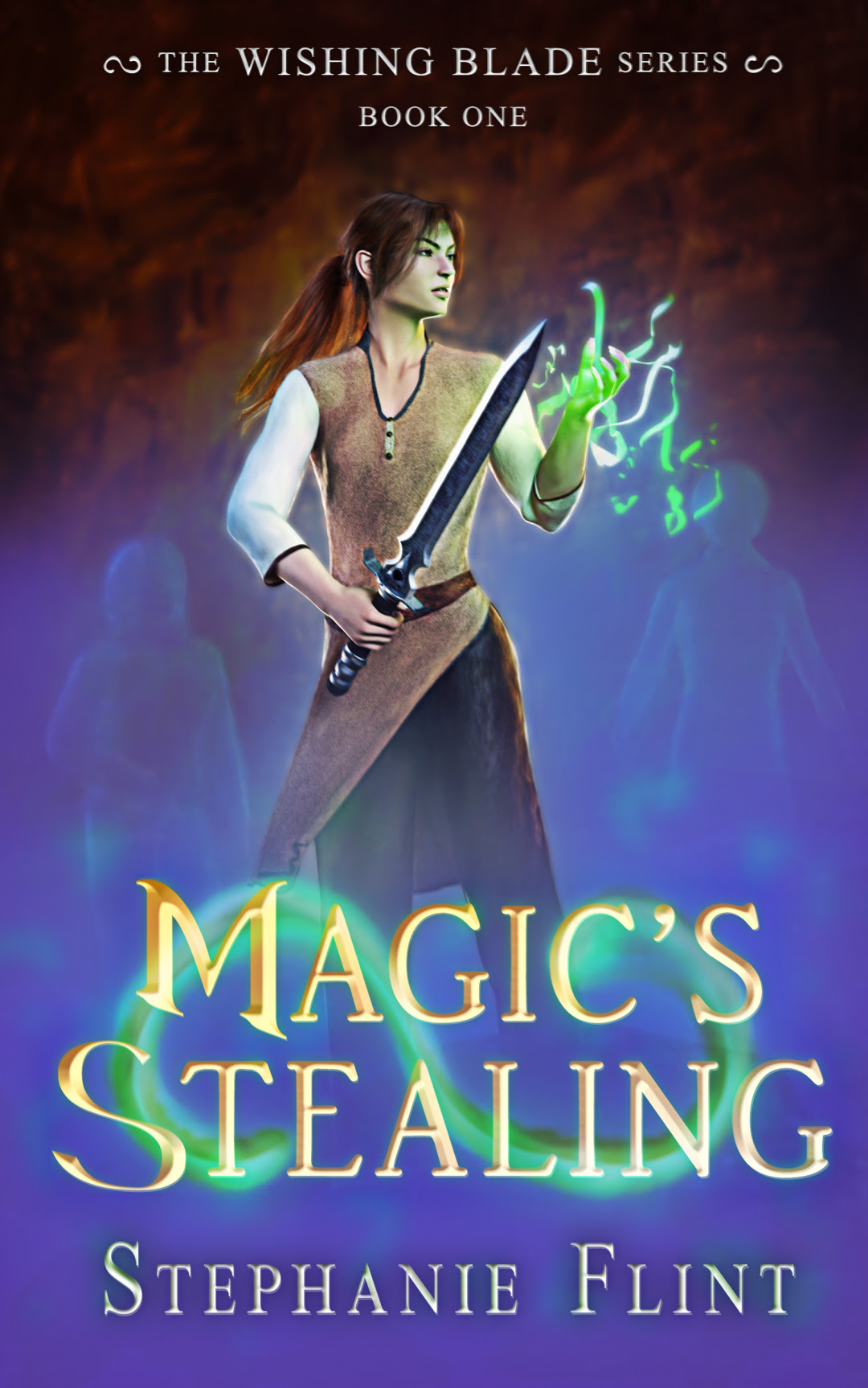
If you’ve read any of the Stone and String stories or later Wishing Blade books, you know I very much enjoy creating fictional languages. The Cantingen language for word magic is fairly fleshed out with grammatical rules and a good-sized list of words, though it still has a ways to go before being fully functional.

That being said, it isn’t the only language present in the world of The Wishing Blade.

We also hear reference of the the Cirenan language, Ancient Cirenan (mentioned in Magic’s Stealing), the Maijevan language, and the immortals’ languages.

The fun part is that Cirenan is supposed to be kind of like English… a mixture of several different languages. The problem?

I needed to figure out at least a portion of Ancient Cirenan for use in one of the later Stone and String stories.

Since Ancient Cirenan is supposed to be a mix of Cantingen, the immortals’ language, and an as-of-yet-undetermined language (Anethian?), I realized I needed to start delving into creating the other languages of influence… at least the basics.

So, I made notes on the immortals’ languages. So far I’ve got a basic idea of sentence structure, interrogatives, how verbs work, and the phonetics.

There would be too much to cover in one post (though if you want to see my notes on creating the sounds of the language, click here to check out my blog post from 2018), so I wanted to focus on one specific aspect… what the immortals call themselves.

The thing is, the Immortal Realm is fluid… a misty, fog-filled place with different regions inside it that don’t have any concrete position on a map. You could leave the edge of one region, travel through the mist, and arrive at a different region each time, despite traveling the same “direction.”

As a result, there are several different tribes and clans of immortals… beings which often resemble humanoid wolves, giant bears, equines, and other animals, although you also get the occasional griffin, dragon, minotaur… etc. Each group has their own dialect and variant of religion and culture, which results in occasional clashes.

I chose to focus on the primary language of the wolves, the one which has the most influence on Cirena. (Though, admittedly, I’ll sometimes use the same version of the language for the bears, and go with the idea of borrowed phrases or similar development of words).

One of the first things I wanted to figure out is what the immortals call themselves. While a lot of this is still in flux and may change, here’s what I’m currently looking at:

Since the immortals believe themselves to have come from the mist/fog of their realm (the word for “Mist” being “nirrin,” I decided that they would call themselves Mist Children. They live long lives (they don’t typically die unless they are outright killed or if disease takes them), and they have immortal ribbon magic, which is considerably stronger than regular ribbon magic.

The word for child is “cira’ma.” Plural, it becomes “gercira’ma.”

When creating names or special places that have a possessive tendency or description, the two words simply go together, primary noun first, and then the descriptor.

Thus, “Children of Mist” / “Mist Children” becomes:

gercira’ma’nirrin

(I’ll note that the apostrophes simply mean that the vowel sound before it does not merge with the next consonant. Thus, this words sounds something like “gair-cir-ah-ma-near-in.”)

I’ve got a lot more planned for this language, including what they call “created” beings who are still “immortal” but aren’t Children of Mist… but I’ll save that for another day.

* * *

Explore the my different conlangs…

* * *

Happy reading and writing!

Leave a comment

Filed under Writing

Types of Magic

There are several types of magic in The Wishing Blade universe (because I like making magic systems). Some are closely related, and others aren’t. Here’s a look at the different types:

Ribbon Magic: One of the most common forms of magic in Cirena (until the Stealing) is ribbon magic. These invisible ribbons float through a person and can be commanded to do various tasks, depending on the type of ribbon. Some mages can see ribbons (Magic’s Sight), and those who can note that different ribbons have different colors.

A non-exhaustive list of some of the known colors of ribbons and what they do:

  • Pink – Telepathy
  • Gold – Healing
  • Yellow – Fire
  • Lime Green – Telekinesis
  • Royal Blue – Shapeshifting
  • Navy – Teleportation
  • Violet – Portals
  • Turquoise – Light

Ribbon magic can also be tied to various objects to enchant the object and allow non-mages to use their magic. The most common usage is the light crystal, in which light ribbons are attached to a piece of quartz, or a similar material.

Note: Ribbon magic is mostly seen in the Wishing Blade series and Legends of Cirena series.

Immortal Magic: Closely related to ribbon magic, immortal magic appears as ribbons except that it is much, much stronger. These ribbons tend to be black and silver, though the hue of their primary ability may still show through. Those with immortal magic tend to age slower, if at all, but are still susceptible to being killed by weapon or disease (though they tend to heal faster and be more resilient to diseases).

Note: Immortal magic is mostly seen in the Wishing Blade series and certain Legends of Cirena stories.

String Magic: Everything is made of tiny, invisible strings, which few mages can manipulate. It is possible to indirectly manipulate strings by using word magic, but the ability to see and touch strings directly is limited. Often, even these abilities are restricted, with string mages able to feel/sense strings or see strings, but not both. They might not be able to manipulate them, even with these abilities.

Even the gods and goddesses are limited in terms of how well they can manipulate string magic, so mortals born with this ability tend to be closely watched, feared, or respected.

Note: String magic is primarily seen in the Wishing Blade series, but also in a couple Legends of Cirena stories.

Shadow Magic: A consuming, unstable magic. Shadow magic tends to infect the mortal world, rendering objects and people invisible to those who aren’t shadow. If wounded by a shadow weapon, a mortal will become shadow. Shadows do not like fire or glass-stone (both can kill them), and shadow weapons can also wound them. A non-shadow weapon, while it might hurt temporarily, will quickly heal. Most unstable shadows can’t see color, and feel cold.

That said… what we see of shadow magic in the Wishing Blade universe is primarily unstable… but stable shadow magic acts a bit differently. While still cold when in the mortal realm, stable shadows don’t infect, and being touched by magical ribbons will cause them to temporarily become visible before vanishing again.

Note: Unstable shadow magic plays a huge role in the Wishing Blade series. We’ll get to see stable shadow magic in Legends of Cirena #9: The Dark Forest of Aneth!

Word Magic: Technically, the Cantingen language doubles as word magic. While it’s used for everyday purposes, spells are activated by phrasing things between “Be la” and “la be.” This works independently of other magic types, though it can be used to control and manipulate string magic.

An example of word magic: Be la russéan micasi la be. (“Release my spell.” — This phrase is used to cancel a previously cast spell).

This magic is relatively straightforward, but dangerous because of the necessity of using an exact phrase. Intention plays a role, but only those with extremely strong willpower are able to speak a vague spell and have it do what they intend versus an exact rendering of what they say.

Note: Word magic doesn’t yet exist in the Legends of Cirena era, but we do see it in the Wishing Blade series and in the Stone and String series.

Charlago / Magebane: This isn’t technically magic, but its anti-magic properties mean that it interacts with magic and thus is included as part of the magic systems I try to keep track of. Magebane is a material (technically uranium, radium, or pitchblende, with special properties in the Wishing Blade Universe) which explodes when brought in in direct contact with immortal magic, and may explode depending on the concentration of ribbon magic. Ribbon magic may fray rather than explode, causing it to behave erratically, and sometimes with more… personality… than normal. When brought in contact with shadow magic, magebane loses its destructive tendencies and stabilizes the shadow.

Note: Magebane plays a huge role in later books of the Wishing Blade series, and in certain Legends of Cirena stories.

* * *

Explore the different magic systems in these three series starters…

* * *

Happy reading and writing!

Leave a comment

Filed under Writing

Strings of Life and Death

In the world of The Wishing Blade universe, everyone has two strings of magic. One strand is life. The other strand is death.

Actually, their entire world is made of strings, which is why string mages are particularly powerful, but those two strings are extra important for magic.

Why?

Life magic is the key to a person’s free will and awareness. Without it, they go into “zombie mode” and act solely on instinct. They’re quieter, and don’t tend to resist magical commands well.

This is also the string used to created “inhabited” or cursed objects (and if that object is glass-stone, it changes from clear to a smoky, glossy black, reminiscent of obsidian. This is a huge point in my upcoming Legends of Cirena novel, The Dark Forest of Aneth. People, and especially priests and priestesses, typically try to avoid inhabited objects.)

But why tie life magic into an object?

Well, it allows the wielder, or a specific user, to power enchantments without expending their own willpower. (The catch here is that if you tie someone’s life magic to an item and that person has a strong will, you might be fighting their will instead of simply powering an enchantment).

Life magic is the string provided to mortals by Listhant-Nsasrar (Lishivant), Cirena’s high god.

On the other hand, death magic is the key to a person being able to die, to sleep, and to dream.

Without their string of death magic, they will eventually go mad unless they have a way to magically induce sleep or go into a meditative trance. (And getting mortally wounded without death magic unpleasant, to say the least. But very effective at keeping them technically alive).

This is the string provided by Madiya (Madia), the goddess of the dead.

If you’ve read “Stone and String,” you know that Edyli lost her death magic after infuriating Madia.

But she’s not the only one who has made Madiya furious.

Ralendacin (Shevanlagiy in The Wishing Blade series) lost access to her death magic, but due to a magic-meets-magebane accident that she might have overpowered with some artifacts she shouldn’t have used, when she “dies” she instead wakes up in another world. (Is this at all tied to something to do with her life magic? Read the Wishing Blade series to make some theories of your own on that…)

Unfortunately for those worlds, Shevanlagiy has a tendency to destroy any world that fails to give her what she’s after, and thus she gained the nickname, “The Destroyer of Worlds.”

Her method of destroying worlds tends to unravel the strings that hold them together, or outright obliterate the strings, giving the gods in the Wishing Blade series a very strong incentive to keep her from destroying this one, too.

* * *

A spell to infuriate the goddess of the dead (Stone and String)… or an opponent who has already made that goddess furious (Magic’s Stealing)…

Quick reminder… you can read Stone and String for free by signing up to my newsletter!

* * *

Happy reading and writing!

Leave a comment

Filed under Writing

Uranium Glass and the Magebane Book Cover

So far, Isaac and I have done all the photography for The Wishing Blade series covers. And when it came to the cover of Magebane, we’d been planning that cover for a while… even bought the candle holder specifically with the intention of shooting this image.

(It wasn’t entirely an excuse to buy more Depression era glass. Not at all… *Cough.*)

And though it’s been a while since we released Magebane, today I want to talk more about the glass on the cover.

Book Cover for Magebane

True story… when first proofing the cover, I asked for feedback and someone said it seemed a little too radioactive green. Funny thing about that… That green was intentional, and they weren’t actually wrong.

That glow is the result of UV light shining on the glass and fluorescing with the uranium salts coloring the glass. I actually had to lower the amount of light coming from the candleholder while working on it in Photoshop.

Don’t believe me?

Here’s a look at an unedited photo from the photoshoot:

Glowing Uranium Glass Candleholder

There’s a model lamp at the top providing a general light, but that purple light you see is from the UV light. The glass is Depression Era glass.

Here’s a look at the same glass but without the UV light.

Green Uranium Glass Candle Holder and Cup

We also shot a set of daisy button glass dishes we considered using (which I believe are actually Victorian era, rather than Depression era, based on their color and pattern), but decided to stick with the candle holder as the main image.

This one just has UV light on it, and no modeling lamp.

Glowing Uranium Glass Dish and Toothpick Holder

It glows hot. Which has been my experience with most yellow uranium glass that I’ve come across.

This, by the way, was with the cheapy UV light we bought at Walmart. Later, we acquired a more powerful UV light (different wavelength, better visible light filter), and these pieces were even brighter.

Now, let’s go into more detail about the real life inspiration for the story’s “magebane” / “charlago.”

The good news is that this glass is not as destructive as it is in the story.

However that “radioactive green” look might be a little more accurate than you first expect. Often known as “Depression Era glass,” these pieces are usually a kind of odd, Vaseline green or “canary yellow” color. You’ve probably seen them hiding in China cabinets or antique stores.

(Pictured Above: Green Depression Era Glass)

Usually, it doesn’t stand out. Some pieces are a little more flowery in their designs, but what makes them so special?

They glow under ultraviolet light (blacklight).

(Well… some do. The frustrating part of hunting for glowing Depression Era glass is that not all green or yellow glass glows. UV flashlights are useful for checking to see which pieces do and don’t. And just because it glows, doesn’t necessarily mean that’s it glowing for the reason I’ll explain in a moment. But when you find the piece that does… there’s the magical “ah-hah!” moment of success.)

See, here’s the thing. For a long time, glassmakers have been using uranium oxide to give glass a rich green or yellow color.

Yes, uranium.

The glass is technically radioactive.

However, according to most internet sources (take these with a grain of salt) and the mineralogist I asked, these glass pieces aren’t so radioactive as to be harmful, at least if you’re not constantly handling them, ingesting pieces of glass (you shouldn’t do that anyway), or messing around with them aside from using them as pretty decoration.

(I would like to add here that I am not an expert in radiation, and I have not actually tested these pieces with a Geiger counter. Please don’t go out and do something that’s going to give you radiation poisoning. There are some antiques that actually do have harmful amounts of radioactive material in them. Stuff with radium, for example. And certain orange or red Fiestaware ceramics from before a certain year. Both are details I play with in Magebane.)

So, that “radioactive green” glow?

Well, it does contain radioactive material.

At the same time, the term is a little misleading because the UV light causes the uranium within the glass to fluoresce, not because it gives off its own creepy light due to nuclear radiation.

You can find a lot of Depression Era glass in antique stores because it was popular during the Depression due to being inexpensive. Though a ban was plaed on putting uranium in the glass during World War II, the process was allowed again later (using depleted uranium), which means that not all uranium glass is Depression glass. Some pieces are replicas and are much more recent.

(In some cases, you can tell when it was made based on the specific markings added by the manufacturer).

However, some pieces are even older than the Depression:

(Pictured above: Canary Yellow Daisy Button Sauce Dish, circa 1880s. Though this is uranium glass, this isn’t actually Depression glass.)

Uranium glass was also made in the late 1800s, meaning that you could find it in the Victorian era. (I was rather thrilled to have ended up finding a piece that, based on its pattern, Isaac and I are pretty sure is from that time frame).

As for the story…

This means that Maijev — that mage-hating place that’s supposed to be pulling from Industrial Revolution and Victorian era tendencies (yes, I know, I’m blending time periods) — could have uranium glass.

And, in the world of The Wishing Blade, ribbon magic and nuclear radiation (even trace amounts) don’t mix well. (Unless you like world-unraveling explosions).

Hence… magebane!

Now that you’ve read about real-life uranium glass, here’s an excerpt from Magebane, a scene in which Siklana gets her first look at charlago glass. 🙂

Unlike real life, though, “Depression era” glass isn’t inexpensive in Cirena… it’s coveted, largely because of its tendencies to ward away mages.

Ruderk examined Siklana soundlessly, then moved to the stove where a tea kettle warmed. “Tea?” He held up the kettle and a green glass cup, paused, and then extracted a different cup. “I’d offer you the finer glassware, but you said you were a mage, didn’t you? I’m not sure how much residual magic might stick around, and I don’t want you getting sick.”

She blinked. “You have charlago glassware? May I see it?”

He shrugged. “Long as you don’t go throwing ribbons at it. One wound a day is plenty enough for me.” He passed over the green cup.

She flinched at the hint of a sting when it touched her skin, and she kept her navy ribbons deep inside herself, where they could not reach the glass. While Ruderk poured them each a cup of tea, she turned the piece in her hands. It was smooth and plain, with a pair of seam lines on either side from the mold, and a simple round base to keep it upright. She sorely wished she had her light crystal with her. Though she could not let the ribbons come into direct contact with the glassware, the light the crystal produced was not magical, and Camir had said kosa light would cause certain forms of charlago to glow.

“It’s beautiful.” She handed back the glassware, and Ruderk exchanged her offering with a steaming, white ceramic cup.

“You should see some of the more meticulous pieces,” he said. “Far more than I can afford, but they have a pretty selection of flowers and patterns to choose from.” He sat himself across the table from her, then reached behind him, snagged a tin, and dropped it onto the table with a clatter. “Biscuits. Help yourself. I made them this morning, so they shouldn’t be too stale.”

* * *

See uranium glass in a fantasy world…

* * *

Happy reading and writing!

Leave a comment

Filed under Writing

Lonely Child Song – Conlang Poetry

I enjoy creating the language of word magic and the Cantingen Islands in my Wishing Blade Universe. So much so that I have a handy Excel sheet with a handful of pages and a semi-clear structure that I’ve realized I really need to get organized (because it’s rather… fun… trying to remember sentence structure when I’m in the middle of revising my current project, The Dark Forest of Aneth, and need to construct a sentence in Cantingen and don’t remember if I’ve decided how that particular grammar is supposed to look.)

One exercise I’ve especially enjoyed, however, is the creation of poetry and songs using the conlang (constructed language). Whether or not I’m actually good at poetry is an entirely different matter, but it’s still fun.

Wind and Words, the second book in the Stone and String series, features two different poems/songs (well, one is intended to be a chant), and one of those songs is called “Dornoram” (“Lonely Child”) and features Madia when she was still a young goddess, before she created mortal-kind.

Though I don’t include the entire song in the story itself (I did include both the Cantingen version and the rough English translation in the back of the book), here’s a look at part of the song:

Dornoram, dornoram
Lonely child, lonely child

illselvimorin sut wuget so vinllada’ralencos.
wandering in the fog of her father’s new world.

Dornoram, dornoram
Lonely child, lonely child

fallamin kidame nevésil vego cochome si kecirme.
She has no toys to play with but feathers and strings.

*

Viskar vrethin si walin
So she sits and she weaves

drogos osain vieram jévidasil.
while she yearns for a playmate that she understands.

Vego éda ralencos dratethia shadi si fashuvasia.
But this new world is magic and does not comprehend.

*

Dor so shadi si niitéra
Child of magic and creation,

morladiin vieram.
she dreams of a playmate,

Morladiin vieram néollased.
dreams of a playmate to keep company.

Viskar novanin vincede loch lalli esil, esildo.
So she weaves her hair into the form of a doll, little doll.

Morladiin kryl vinvieram llullamia.
Dreams of the story her playmate might have.

Vego esil dratethia goréso,
But the doll is a puppet,

fallamia kareme,
has no thoughts of its own,

si luuh vinmorladsme ketondruv nékryl.
and only her dreams give it life.

Essentially, the Cantingen Islanders believe they are Madia’s esilme, her dolls, who return to her from the mortal realm after they die. The rest of the song continues that story, and the idea plays an important role in the Stone and String series.

Do you enjoy seeing fictional languages in stories?

If so, what’s your favorite one? (I’m personally a fan of Tolkien’s Sindarin Elvish, though I never learned more than a few words).

* * *

A spell to infuriate the goddess of the dead…

Quick reminder… you can read Stone and String for free by signing up to my newsletter!

* * *

Happy reading and writing!

4 Comments

Filed under Writing

Story Length in the Wishing Blade Universe

When I set out to write The Wishing Blade series, I originally planned on it being a set of novellas. (Especially because the very first draft I wrote for the entire story arc of the series was 64,000 words).

Magic’ Stealing, the first book I published in the Wishing Blade series, was around 34,000 words, and I figured that future books would be similar.

What I didn’t count on was adding so many more words once I started exploring additional points of view.

Daernan got a chance to shine in The Shadow War, and the main plot really centers around him. Siklana has a major role and character arc in Magebane… and we still get the original views of Toranih and Shevanlagiy.

Not only were viewpoints added, I ended up further developing, and adding, magic systems (who knew word magic and charlago/magebane would play such a critical role in future stories?), and I added words as I reworked scenes to make more sense. Because Isaac–my writing partner and developmental editor–has a point: why try scaling a guarded wall when you could just… I dunno… take the sewers and discover even more fun stuff that affects the plot?

The result was that The Shadow War ended up clocking in around 55,000 words – a short novel, and Magebane clocked in at a whopping 109,000 words – a full-length novel.

(Fun fact… the first version of this post, sent to my newsletter years ago, had Magebane still in progress at 89,000 words.)

The Stone and String stories have also found themselves with longer stories than I originally planned. “Stone and String” was a short story of 8,000 words (surprisingly, it stayed within its expected count). It was meant to be a standalone story. But, of course, I wondered what happened next…

And so Wind and Words came along. While it took a couple starts to actually get it going the direction I wanted, I realized quickly it wasn’t going to be a short story. It ended up being a novella at 23,000 words.

Now the real question is, how long are the next books going to be? (Especially considering that Stone and String 3 should have direct ties to Wishing Blade 4).

While I cringe to look at the release dates of those books and realize I haven’t yet released the next in the series, I’ve found a similar pattern occurring within The Legends of Cirena series as it progresses.

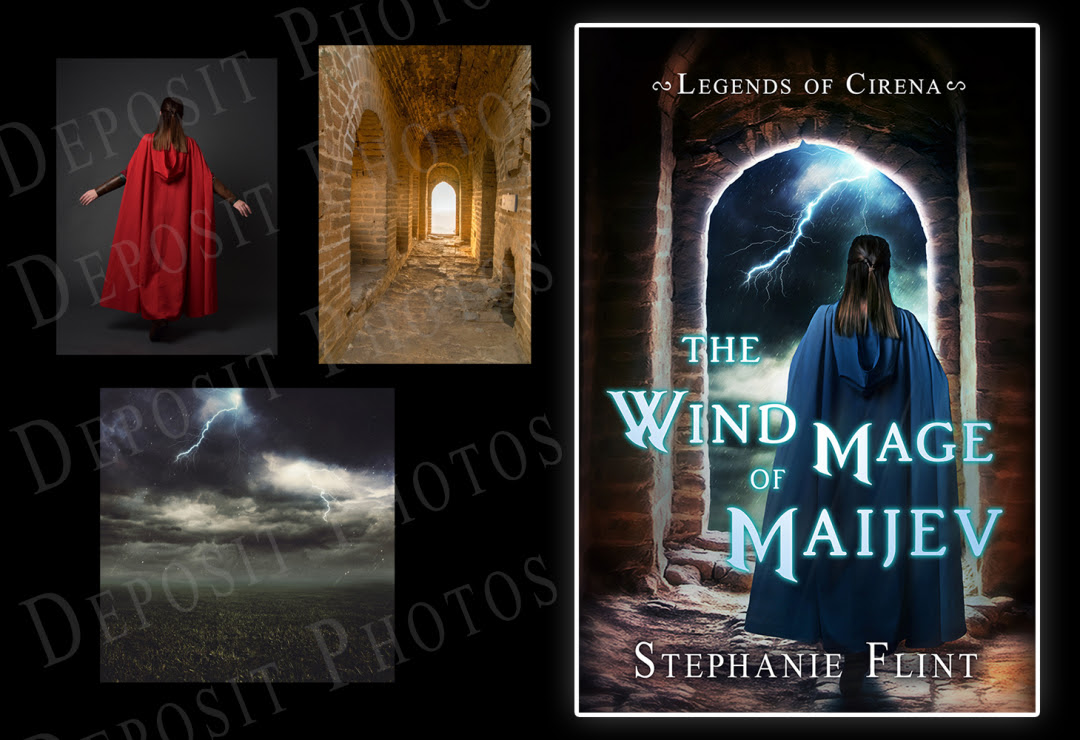
  1. The Wind Mage of Maijev – 15,000 words
  2. The Gryphon and the Mountain Bear – 12,000 words
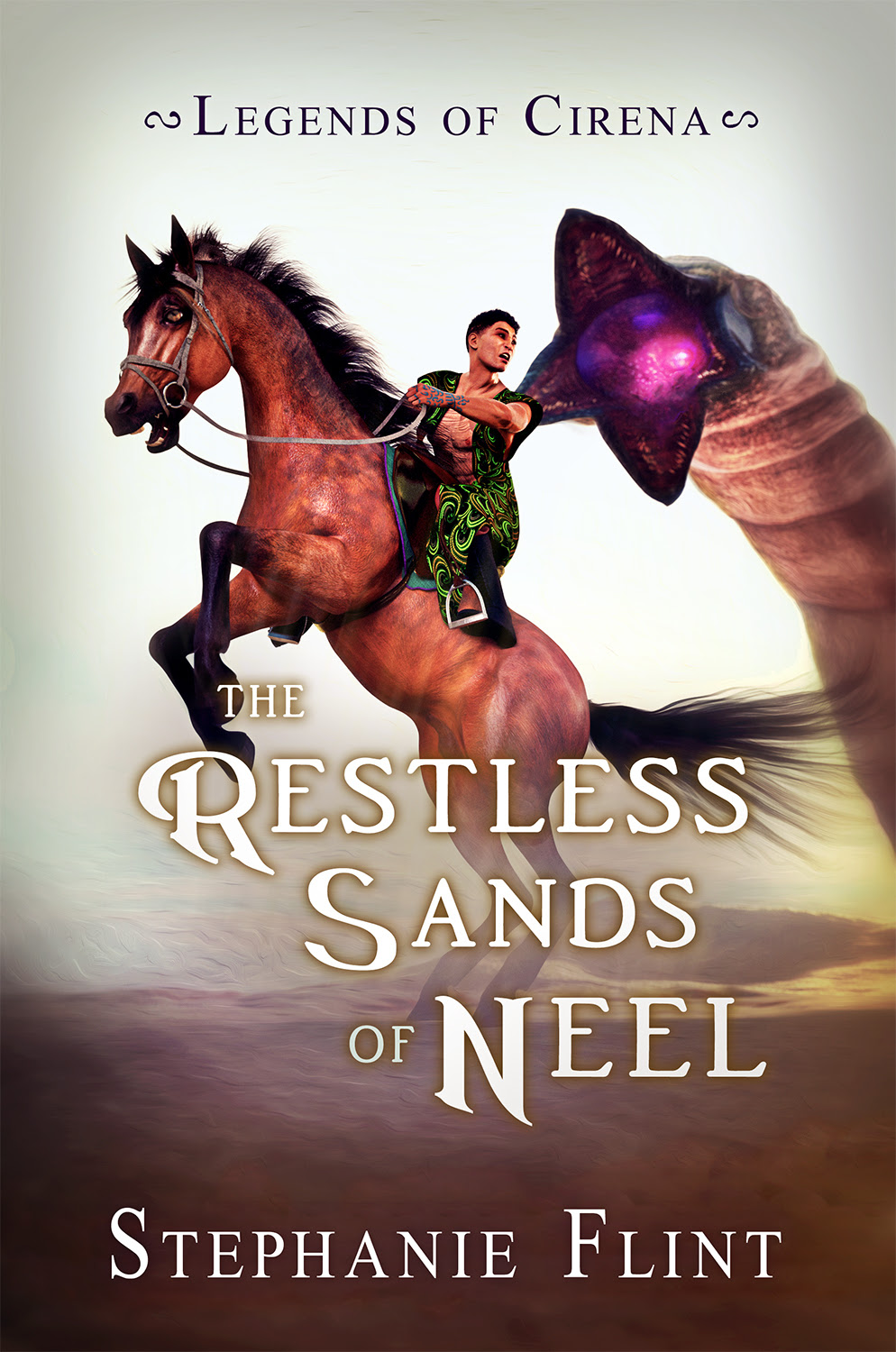
  3. The Restless Sands of Neel – 25,000 words
  4. The Cursed Halls of Kalecen – 18,000 words
  5. The Scars of Her Past – 21,000 words
  6. The Dragons of the Mist – 21,000 words
  7. The Wind Mage and the Wolf (Cross-over) – 47,000 words
  8. The Trial of Bells and Blood (Cross-over) – 32,000 words
  9. The Dark Forest of Aneth (Cross-over) – WORK-IN-PROGRESS Currently 68,000 words.
    • In its defense, it not only has the cross-over points of view, it got a third viewpoint and is delving into preplanned lore that wraps up the arc from the first 9 books while setting up the next arc. 🫣

I think a lot of this has to do with adding characters, getting deeper into the lore… stuff like that.

There’s a couple drafts already written for stories that will eventually come after The Dark Forest of Aneth, which you might have seen if you’re signed up for the Wishing Blade Universe newsletter. And then there’s the ongoing story which definitely is building into pre-planned lore and I don’t know if it’s going to be a novella or novel, but the next chapter is eight of sixteen, and it’s already 17,000 words long.

Anyhow, do you have a preferred book length you prefer to read or write?

Full-length novels, novellas, short stories? 🙂

* * *

Three series starters…

Quick reminder… you can read Stone and String for free by signing up to my newsletter!

* * *

Happy reading and writing!

Leave a comment

Filed under Writing

About Ruetravahn – a god of wind, language, and Truth

I have a lot of fun creating the world and culture of the Wishing Blade Universe (Isaac has fun with this, too, as seen by the existence of the Legends of Cirena stories, which started because he went and created a role-playing guide for each of the regions).

One aspect of world-building I especially enjoy is creating the pantheon of gods, goddesses, and deities.

Many of the gods interact directly with mortals, as well as immortals, meaning we see their personalities and how people deal with them (or try to avoid them). Some worship them, some scorn them (especially the dragons of the Immortal Realm) and others are indifferent.

Today, I wanted to take a closer look at Ruetravahn.

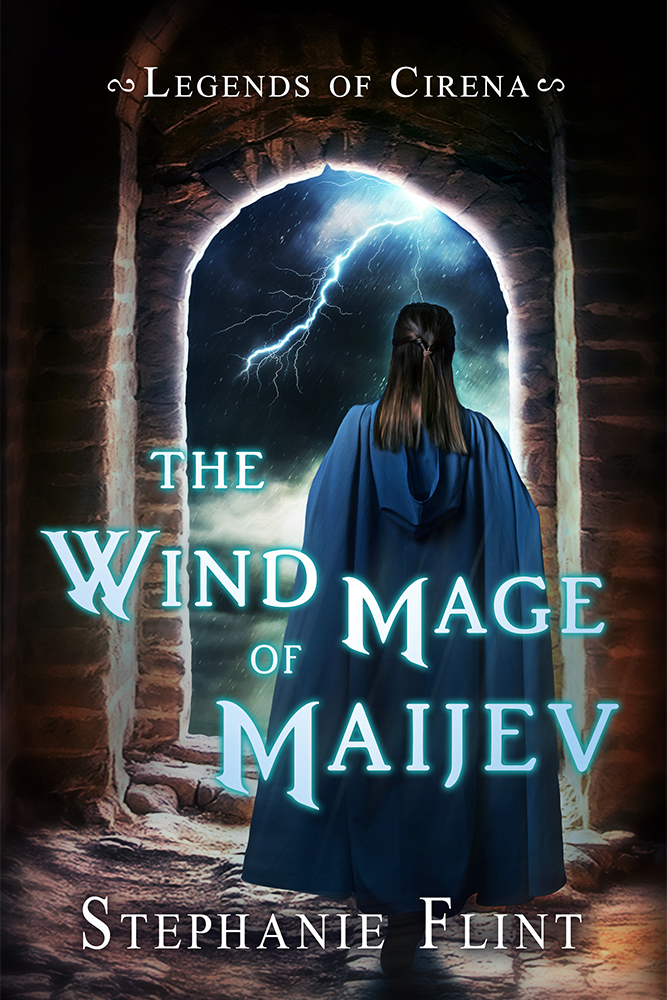
As one of the older gods, Ruetravahn has a place in both the Cirenan and Cantingen pantheons, though he features more prominently in the latter. (But even Cirenan characters get stuck dealing with him, as Livena finds when she accidentally gets saddled with a truth spell/curse in The Wind Mage of Maijev).

Per Cirenan tales (as of The Wishing Blade series), when the high god, Listhant-Nsasrar, chose to retire, Ruetravahn convinced him to leave the gift of word magic with mortals so they would not always be at the mercy of the gods, and those without ribbon magic would have a defense against born mages.

As such, Ruetravahn became known as the god of language. Though the Cantingen language had been around for as long as mortals could remember, the ability to use it in spells only came after Ruetravahn’s deal. (Which gets fun when I’m writing anything in the Legends era, because I have to remember they don’t have access to word magic yet).

Even with this gift, Ruetravahn is rarely worshiped in Cirena, possibly because they continued to rely more on ribbon magic than word magic.

As for the Cantingen Islands, the people looked to him as not only the god of language, but also the god of Truth, the world as it really is, and the god of wind, capable of hearing everything that is spoken. Those who worship him consider lying an affront to the gods, and they are careful to choose their words and speak as accurately as possible.

He is the primary god that Edyli, the protagonist of Wind and Words (book two of the Stone and String series), chooses to worship. Her respect for him affects her actions. However, there are those who still see him as a lower god, and who therefore ignore his teachings in favor of completing tasks assigned by the high goddess, Madia.

This scene touches on the conflict between them. 🙂

From Wind and Words

The priestess spun on her heel and surveyed the room. “Do not tell anyone of your intentions, and do not tell them who sent you.”

“Nasillah?” Edyli asked, confused. What temple work could be so secretive? “I cannot lie. That is against Ruetravahn’s will.”

The priestess turned sharply and narrowed her eyes, but even the acolyte pressed his lips into a thin line behind her, his concern evident. “Do you question the will of Madia?” she demanded. “Would you put a lower god above Her Graciousness? You must do as she commands, and that is to bring the monster who stole the child’s string to justice. If you must lie to achieve that task, then it is necessary.”

Anger rushed through Edyli. Ruetravahn might not have been a high god, but his intentions were sacred. Their language rode in his wind, and he was the one who established the treaty with Lishivant, Madia’s father, to bring word magic to mortals.

Whatever happened, Edyli would not lie. She would not betray him.

“I will do what I must,” she said firmly. Even saying that much made her cringe, because the priestess would likely assume that she was agreeing to do as she had been asked. But, as familiar fables said, it was not the truth-sayer’s fault if they spoke Truth, but the listener turned a deaf ear.

While Edyli is determined to serve Ruetravahn faithfully, not everyone is so faithful, as seen above. Of course, those who don’t like magic or gods are even less inclined to like him, as we find with Livena after her magic goes haywire near a blessed scroll in The Wind Mage of Maijev.

(But hey… things like that happen when you accidentally mix a blessed scroll, wind magic, and magebane).

* * *

A spell to infuriate the goddess of the dead…

See more of Edyli’s faith in Ruetravahn in the Stone and String series:

Quick reminder… you can read Stone and String for free by signing up to my newsletter!

* * *

Happy reading and writing!

Leave a comment

Filed under Writing

Infinitas Publishing – Status Report

Time for the April through mid-August Infinitas Publishing status report! 📋

Despite this primarily being during the so-called “chaos months” (in this case, lots of things happening that disrupt routine… including a couple of “meh” life events that weren’t planned, of which one is still ongoing), a lot of stuff got done, and I’m excited to go back through my planner and record it all here. 😁

The chaos months are only sort of over, but we’ve finished the big move and brought home a cat, so that’s one relief. (I even figured out where to put the fancy printer so I could prep for the June events!)

I’ve highlighted the projects that had changes in blue.

Warning… there’s a lot. (That’s a good thing!)

* * *

Changing Tides: (Book 4 of the Distant Horizon series). On hold while working on The Dark Forest of Aneth. Next step is to merge the two revised drafts and start writing the missing scenes.

Betrayed (Deceived #2): I’ve posted the launch review! If you’re looking for a deep dive into my launch process for this book, that’s the post to read.

Next up, revising Deceived #3 (tentatively titled Exposed).

Other future steps: Input Isaac’s notes from Deceived #5 (formerly #4) into the manuscript, revise Deceived #5, and revise #6 (formerly #5) before handing it to Isaac for his feedback.

Dossiers (Deceived Spin-off): I continued this story a bit further, adding two more chapters before completion. This also included adding a Daz render and dossier for Agent Shepherd. I’ve also done one more revision pass, but I feel something else needs added before formatting and sending it out to beta-readers.

While I was originally thinking I’d make this exclusive for newsletter subscribers, I’m now leaning toward making it a free or 99cent “1.5” book available in the Deceived series.

Multiverse Chronicles (Distant Horizon Universe Spin-off): I’ve started sharing this with the Distant Horizon Universe newsletter! After several years of being relegated to the back burner, the prologue and first seven chapters have been fully revised, edited in ProWritingAid, and sent out to newsletter subscribers. Fortunately, the majority of this has been edited already, with the exception of one chapter that Isaac and I both somehow missed writing, so it mostly just needs light revisions.

TWB 4: (Book Four of The Wishing Blade series). On hold. Next step is to add the remaining outline to Scrivener, review that outline for missing plot points, and then write the rough draft.

Legends of Cirena Volume One Ebook Cover

The Legends of Cirena Volume One (Collection of books 1-6): Released! (Including on Google Play and Smashwords, which I hadn’t uploaded previously).

I did a small launch of paid promos (which I still need to analyze), as well as sent extra book details to the Wishing Blade universe newsletter for each included story.

The Dark Forest of Aneth (“Ro’nor (“The Restless Sands of Neel”) & Zynia (“The Dragons of the Mist”) cross-over / A Legends of Cirena short novel): While this was on hold during the early chaos months, my goal was to finish the missing scenes during July. Which happened!

I completed a round of revisions on the already-written scenes, added in the missing scenes, and input ProWritingAid’s Manuscript Analysis feedback, with a few notes left behind for future tweaks.

I’ve been letting it sit for a couple weeks before I begin the next stage of revisions. Then it’ll be ready for ProWritingAid edits, any final AutoCrit Analysis tweaks, and then it’s off to beta-readers!

Other Goals: Revisit the book cover concept. Create a blurb. Polish the related poem/ballad so it can be included as back matter.

The Ruins of Amixthael (The Gryphon and the Mountain Bear Spin-Off): I’ve completed a full revision pass of the original six chapters, and drafted intermediary chapters for a secondary character (four complete, two to go, with one of those being outlined but not drafted). Those will still need polishing edits in ProWritingAid.

Additionally… while it’s not decided for certain, the secondary character’s perspective might allow me to start foreshadowing a much larger antagonist that appears later in the Wishing Blade world. (*Squee!*)

There’s a strong chance that this is going to be part of a new arc in the Legends of Cirena series (The Dark Forest of Aneth will conclude the previous arc while also laying the foundation for the new arc).

Future goals: Polish cover. Create blurb.

Untitled LoC Short Story (Standalone – Merchant in Reveratch): This story concluded with seven chapters, so I have drafted, polished and sent two additional chapters to the Wishing Blade Universe newsletter since the last update.

I’ve set aside the current manuscript so I can fully review it later with a fresh set of eyes. This is another story which will likely be part of the next Legends of Cirena arc.

Goals: Figure out a title. Create book cover and blurb. Polish the related poem/ballad so it can be included as back matter.

Untitled LoC Novella (Standalone – Twins in Ferta): I’ve outlined the next story to appear in the Wishing Blade Universe newsletter (5,400 words). I am really excited about the possibility for this one to connect with the larger Litkanston War arc, because I finally, finally get to introduce Lord Nomca. And it’s not even exactly a cameo, like I originally expected (he’s briefly referenced in the Wishing Blade series, but hadn’t yet made an appearance in any other stories). I’m currently working on chapter six, and the full draft (being revised/edited as each chapter goes out to the newsletter) is 13,300 words. I’m definitely expecting this to go into novella-length territory, if not that of a short novel. Six of the chapters have already been sent to the newsletter.

The Wind Mage and the Wolf Spin-Off (A Legends f Cirena short story) : I made some progress to Joran’s short story! I’ve revised what was already there and made note of a couple spots that still need work. Additionally, I’ve started cross-referencing the final scene in The Wind Mage and the Wolf from Joran’s point of view.

This will go to newsletter subscribers first, but I may make it a “7.5” story in the Legends of Cirena arc.

Goals: Edit in ProWritingAid, read-aloud, proofread. Book cover and blurb.

Huntress 3: On hold. Next step is to finish re-reading Changeling to make notes on the series guide, finalize the cover (proof created), and create a detailed outline.

Horse Shifter Romantasy (Maybe???) : This one was a surprise to me, too. 🐎

Unrelated to any of my current story worlds, this one got a lot farther along than I ever expected it to. (Thank a co-worker talking about fanfiction and me happening to be processing a book with a horse on its cover at the time). But it’s been a nice “refresher” story that’s allowed me to go running into the weeds with world-building ideas without falling down a rabbit hole in the other worlds (which often happens during chaos months when I can’t put my full attention on any particular project).

It currently has a 5,500 word outline, with additional details on the side. I’ve been using AutoCrit’s analysis features to figure out where I’m missing crucial beats and what details could still use fleshing out, and let me tell you, I’m excited for the world, the magic system, and the characters (and I think the characters might even actually be following the romance beats they’re supposed to, though that’s an area I notably have trouble writing).

If this gets written, it’s going to be because I wanted the challenge of writing a romance-focused story with really strong worldbuilding elements that tie directly into the plot.

Other Stories: I wrote a flash fiction short that I posted to Substack. This one was based on a picture Isaac created:

I also did a revision pass for the YA Alien Invasion/Dystopian story, which does need a bit more work before I’m ready to release it. The next step is to review the AutoCrit analysis to see if there’s any feedback I want to input before the next stage.

I also discovered there’s a fantasy anthology I’m interested in submitting to, so I’ve been outlining possible short story ideas I might use for my submission. I’ve got two so far:

  • One involves a grumpy sorcerer who wants to be left alone, and a sorceress who’s stuck in the form of a bat-winged squirrel and steals his pears to drag him out of his garden. Definitely a short story.
  • The other is a “love-wins-in-the-end” story involving refugees fleeing from evil ice mages whose single-minded fear/hatred has narrowed their magic to one purpose, and the refugees find support within a protective community whose magic hasn’t become so narrowly focused. Pretty sure this one is itching to be a novella.

Game Design: Not a whole lot of new updates for Anchor, but Isaac did a bit more prototype work and we’ve acquired a few more test pieces for future prototype testing.

He also reviewed our Legends of Cirena game and made notes for a shorter version of the game, and we went over some possible changes for a future edition of Battle Decks (and I like these changes, because while it’s still a war game, a new morale mechanic puts more emphasis on keeping your characters alive rather than using secondary characters as canon fodder).

Testing AutoCrit: I did a two-week trial of AutoCrit, a writing software with an analytical feature I’ve been wanting to try for a while. Mostly I uploaded previously completed manuscripts into its Story Analyzer tool to see how it did at finding loose plot threads, with hopes that it might make writing later books easier if I can quickly review what’s happened previously. Seemed to be potential there, and I liked its Story Builder tool for being able to analyze missing plot beats, so I went ahead and subscribed for a month.

Afterward, I finally went in for a year on this, because I rather like its Story Builder feature for organizing my thoughts, and because I like being able to write a chapter and then analyze it for potential issues (though I’ll admit that its analysis features are a bit hit and miss).

Additionally, while first exploring the AutoCrit Story Builder analysis features (not so much the generation features), I started exploring what I’m temporarily calling the “Greedy Adventurer” story idea, which now has a very loose outline but may influence Litkanston history within the Wishing Blade universe.

That said, because the AutoCrit tools (and the ProWritingAid chapter critique tool I like) does use Generative AI, I crafted an AI use policy so others can easily see how I do and don’t use AI.

Long story short, I don’t use generative AI for images or creating/writing the actual story, but at this point in time I do use writing-specialized genAI tools for the purpose of analyzing what I’ve already written and occasionally trying to brainstorm through a block.

As a note… I have also been trying to see what other AI features might be useful in analysis, helping organize my thoughts when it comes to quickly finding what I’ve already written, or searching for comp titles of books that I might not have considered previously. The AI policy goes more into that.

Still no plans to use it for image generation, however.

Marketing: The last several months had far less focus on marketing than the previous month. Meanwhile, these are some of the recent projects:

  • Amazon Ads same as usual, the ones that were already running and one extra as a test.
  • I created a list of my books by publication and word count for my personal use. Eventually I want to create a simple web page guide.
  • I did some research on various book pricing strategies, and I might update book prices in the near future.
  • I scheduled Initiated for a BookFunnel promo that ran in May and July, and I scheduled promos for June and August with Stone and String. It’s all scheduled and ready to send. I’ve also started doing author book swaps again where we exchange books to highlight in our newsletters.
  • The newsletters have been going out on time with their respective stories, so yay for that! (Apparently having one story in progress, and one that only needs revisions on a chapter-by-chapter basis, is working really well for me). I also finally did a scrub to remove subscribers who haven’t opened any of the newsletters in over a year.
  • I updated the design for the Distant Horizon Universe book pages on the Infinitas Publishing website. Minor tweaks, but should ultimately look better once all the details are in place (Goal is to add sample pages, Goodreads/BookBub links, additional book info, etc).
  • I kept up with Infinitas Publishing accounting through May… woot! Now it needs updated again.
  • I created my first book-themed quiz, and created a new “Extras” page on the Infinitas Publishing website! Check out the “Which of our series should you start with?” quiz!
  • I finally finished setting up the Payhip/Stripe Store accounts and linked them to BookFunnel, and I even created pages for the first six Legends of Cirena ebooks! They can now be purchased directly from me.
  • I tinkered with the idea of audiobooks, and I recorded chapter one of The Wind Mage of Maijev and tested editing the recording using Audacity. Thus far, I think if I plan to proceed with the process, I’ll likely need to re-record that chapter for better enunciation on my part. No big plans for that at this point.
  • I’ve been trying to get back into writing and marketing research, both with reading articles and listening to more podcasts and webinars. I picked up the Newsletter Ninja’s “Launch to Your List” course and I’m working on revamping upcoming book launches.

Next up: Continue updating the design of individual Infinitas Publishing book pages. Continue adding sample chapters to the BookFunnel sales pages for each book, and then to the main Infinitas Publishing website. Add BookBub and Goodreads links to each landing page. Update my author bio across the different retailers. Continue adding books to the Stripe store for direct sales. Revise Amazon ads, and overhaul book categories, keywords, and blurbs.

SubstackSporadic posting at the moment, due to the chaos months, though I did get a couple more writing tip roundups posted. I also created a Tip Jar.

Weekly(ish) Writing Tip Round-Ups:

Crafting Your Fictional World:

A while back I’d started writing a non-fiction book focused on world-building, and while I haven’t made much more progress in that regards, I did post a couple of the chapters to Substack.

Repurposing Old Newsletter Content:

For a while now, I’ve been considering going back through my older newsletters and repurposing some of the behind-the-scenes content. I got the extra push to move forward with this plan upon learning that blog content is not only good for SEO (whee… the search engines can find you and point more readers your direction, yay!), but might also be good in the age of AI search engines, which seem to be interested in context when doing searches. And sense more search engines are moving to AI-powered searches… yeah. Now I get to have fun revisiting those older newsletters and updating them for the blog. (And this actually is fun for me. The content’s already there, and just needs revising, so it’s cool seeing what I did in the past for newsletters and what I might want to start doing again).

Events: June was busy with three events. Two we vended at, and the third was a writing workshop that we attended.

UP Rainbow Pride (Marquette) – June 14th

Lots of fun, and we tested a more condensed display with our SIFlint Art (the dragons) at the front to draw people in. To our surprise, the tote bags did really well (I need to order more of the yarn dragon now), and this definitely did better this year than last. We even had someone come looking for book two in a series. Yay!

The booth at UP Rainbow Pride

Writers of Warrensburg Workshop – June 22nd

We got a chance to reconnect with friends from Missouri in what was a combination trip to visit family, attend the writing workshop, and return to Michigan with our new cat, Baby Girl Neelix.

The workshop was a lot of fun, with three presentations and four great presenters, and a lot of helpful information. Plus, we got to participate in the author signing after.

An orange cat in a harness sits between car seats.

Hancock Pride Market – June 29th

Because we didn’t have a local artist alley for Pride month, one of our friends put together an awesome local pride market that ended up being lots of fun, one of my favorite setups we’ve tried (grids to the max, and condensed setup!) and I’m definitely hoping this happens again next year.

Stephanie and Isaac stand in front of their booth at the Hancock Pride Market.

SBibb’s Photographic Illustration: Mostly on hold for the moment, though I did do a photoshoot of my new houseplants I acquired from plant-sitting. I have chosen the ones for editing and done basic edits, but I still need to finish the bigger edits and send them to their previous owner.

I might also have another formatting project coming soon.

Future Goals: Update the SBibbPhoto website to incorporate Daz work and fix the SEO information. Finish designing cute mascot for a local store. Finish editing photos for a local Aikido group.

SIFlint Art: I finally got to print my shiny (literally, it’s on metallic paper!) dragon display!

I even printed my own business cards this time around. Wasn’t perfect (not happy with the paper chipping at the edges) but I’m still pretty satisfied with them.

Plus… Isaac made a shiny new self-serve sticker display! It’s been really nice so far (though we need to hot glue the back string on so it’ll stop falling off).

Goals: Finish the line-art for a bag-hoarding dragon, do a fun commission for a friend, and order new merch for upcoming events.

Daz PA: Though on hold for most of the chaos month, I’ve now returned to working on projects! Everything been updated to make it easier to work again, and I’m really glad Isaac and I made a Standard Operating Procedure for making poses last year. That really helped to fast-track me back to work on these.

I’ve finished reviewing the poses of the Leadership set Isaac started, which are ready for thumbnails. There’s been a bit of a hang-up on this one, however, because I’m hoping to include props… and it’s been a little while since I’ve done any 3D modeling. I’ve started designing a podium to go with the poses, but I need to review how to use Substance Painter so that the model (which is complete) looks decent.

In the meantime, I’ve started a “Cursed Expedition” centaur set that I’ve started making thumbnails for. Next step is to finish the thumbnails and create promo art.

Goals: Find collaborator for Genesis 9 Diverse Worlds set and complete the Ankylosaurus Rider pose set Isaac started. Maybe complete snow and ice texture pack idea?

* * *

Happy writing and reading (Or 3D rendering if you’re into Daz)! 🙂

Leave a comment

Filed under Business Ventures, Daz 3D, Writing

Backstory Between Toranih and Siklana

In The Wishing Blade series, there’s a rivalry (often unspoken), between Toranih and her older sister, Siklana. Though they care for each other (in fact, the one magical item Toranih actually likes and frequently uses is a light crystal Siklana made for her), Toranih has always felt like she was in her sister’s shadow… that, no matter what she did, her sister was always better. Better at academia, better at fitting in with social expectations, and better at earning their parents’ approval.

Once, when they were younger, Toranih and Siklana were instructed to create a small tapestry to showcase what they’d learned of weaving and embroidery. Toranih chose to painstakingly render a detailed depiction of a beautiful knife wielded by the legendary noble, Duke Nomca, who was known for his fairness and protection of those in need, including those without magic. (And of the beastmen, which gets shown in a story I’m currently writing). Toranih worked hard on that tapestry, and when her work was complete, the final piece was beautiful… if in its own pragmatic way.

She was quite proud of that work, and sure she had finally managed to achieve something her sister couldn’t. But when they unveiled their tapestries for their parents, Siklana’s detailed work far outclassed anything Toranih dreamed of achieving… and her hopes were dashed.

After that day, she refused to touch the loom except for the most basic of lessons, and she turned to Captain Brekartn for lessons wielding a weapon like Duke Nomca. Though any skill with knives eluded her, she soon found mastery in swords. The more she practiced, the better she became.

As the years passed, Toranih denounced the arts her sister excelled at—including magic—and instead focused her talents on the one thing Siklana showed little interest in—swordsmanship.

If all went well, she would one day become a guardswoman, while her sister would become an academy mage.

But, of course, life doesn’t go as planned.

Magic is stolen.

Siklana is left without the magic she’s become known for, and Toranih’s traditional weapons prove useless against the army of shadows invading the kingdom. Toranih finds herself forced to consider the role her sister once studied for—the role of a mage, while her sister is left wondering where she fits into this strange new world.

And there you have it, a little history between Toranih and Siklana.

Toranih’s reaction to the change of her world is the primary focus of Magic’s Stealing, whereas we see more of Siklana’s reaction in The Shadow War, and Siklana has a major arc in Magebane, the third book in the series.

* * *

A heinous plot is unveiled when magic is stolen…

See how Toranih and Siklana adjust in The Wishing Blade series:

* * *

Happy reading and writing!

3 Comments

Filed under Writing

How the Wishing Blade Universe changed over time

When I first created the world of The Wishing Blade, I had no idea how much I’d change of the story as it progressed. And how much I’d add. Like a whole ‘nother language… (Wheee, language creation!) I had only really considered the main series, and how some of its immortal characters lived throughout time, but not the lives of the characters from The Legends of Cirena series. Not Edyli and her sister in Stone and String, or how varied Litkanston might look.

Even major elements now, like the Cantingen Islands with its word magic, were only briefly mentioned and didn’t play a large role in the story. (Word magic didn’t even exist yet… I don’t think?) Pretty sure the islands weren’t directly mentioned in any of the early drafts, though I did find a later pixel version of the map that had them added in, likely as I expanded the story after the events of The Wishing Blade series.

I think this was “storyideamap26.gif” if that gives you any idea of my process. For reference, the map below is one of the first maps I ever made referencing Cirena, in all its pixel-y goodness.

(I later created the current version in pencil and ink and then polished it in Photoshop)

Notice that several features have changed from this version (storyideamap26) for The Wishing Blade series…

To the most recent version for The Wishing Blade series:

  • For example, scaling and spacing got readjusted. Neel, while still a city, also became a desert region.
  • Toranih’s estate doesn’t even get a dot on the map.
  • The Cantingen Islands (and pretty much every landmark) got redefined.
  • The Shadow’s Pass and the Pass of Cirena haven’t even been touched in the current series. (Though we might still see a version of these as the series continues).
  • The Midder Triangle (in my head now as “Midder’s Triangle”) also hasn’t been addressed… though some of the Legends stories that are in development (The Dark Forest of Aneth) are now making references to that goddess, and the concept of the Triangle might eventually make it into Litkanston lore if any of my current headcannon makes it into published cannon.

As the story developed, much of the plot and world-building changed. I guess that’s what happens when my first ideas for this series started 12 years before I published the first book (Magic’s Stealing). I was still in junior high, daydreaming in choir and whenever I had free time.

I set the idea for The Wishing Blade series aside for a while after high school, though I occasionally tried rewriting the concept without much success.

Then, after college, I tried reworking the story again, and finally published Magic’s Stealing in 2015.

It took a while to finally get the world to a place where I was satisfied, but I’m excited to see what changes as the series continues, and what plot points and characters stick around.

For example, Toranih’s sister, Siklana, plays a major role in the current version of the series, which was a big change since she was only seen in a couple scenes in the earlier drafts. She even has a major arc in the third book, Magebane.

I expect plenty more to change, though there are still major scenes that I look forward to finally writing.

* * *

A heinous plot is unveiled when magic is stolen…

See the result of my world-building changes in The Wishing Blade series:

(And yes, there’s at least one, if not two more books planned for the complete arc).

* * *

Happy reading and writing!

1 Comment

Filed under Writing