Tag Archives: Stephanie Flint

Thoughts on Publishing – A Video Blog Post – Reading Chapter One of Magic’s Stealing

Today I’m continuing the trend of doing a weekly video blog post, but instead of doing a reading from 1000 Words, I’m reading the first chapter of Magic’s Stealing. 🙂

(And  a Youtube link in case you can’t see it).

This is a day late–I normally try to post on Fridays– but this time I edited the audio to remove the more obvious stumbles where I tripped over my words. It’s been a while since I used  Premiere Pro, so it’s not perfect (and I caught a couple spots I missed once I listened to the full video), but hopefully the edits will make the overall listening experience smoother.

As a side note, I started doing the video blogs as an experiment in seeing whether or not that would help shorten the amount of time I spent producing material for the blog.

Did it?

Nope.

I want the videos to look and sound at least semi-professional, so I practice the reading at least once beforehand, so that the actual reading has as few stumbles as possible. Since I’ve now rediscovered how to use Premiere Pro, removing obvious stumbles also takes time, and then I have to export the edited clip from Premiere Pro and create a “movie” image in Movie Maker for the book (because I haven’t quite figured out the video options in Premiere Pro). Then I upload the different clips to Youtube (I do the reading separate from where I talk beforehand). Depending on my internet speed (which has been lacking as of late), those clips can take a while to upload. Then, once uploaded, I need to splice them together using Youtube’s video editor (handy thing, though limited), listen to transition points to make sure those flow smoothly, and create the new video. Once that’s uploaded, I listen to the full thing to make sure that everything has correctly processed.

It’s a lot more time-consuming that I thought it would be, but I suspect part of that is the learning curve involved with each program.

I still enjoy doing the readings, however, and I hope you enjoy them, too. 🙂

2 Comments

Filed under Business Ventures, Writing

Behind the Scenes – The Girl Who Flew Away

This is a cover for Barking Rain Press. The author had several ideas on their art form for how the cover might look, and they listed a few options for symbolism. After reading the form, I had an idea of the style I thought might work. I found the images (including the sketchy dragonflies, both the illustration and the creature referencing the book) and put together a mock-up. My initial mock-up had a different background, which included cliffs and a waterfall but didn’t really give the right feel in regards to setting. I sent another idea for the background, just the picture, along with the mock-up, and they asked to try it. This is the end result. 🙂

SBibb - The Girl Who Flew Away - Book Cover

SBibb - The Girl Who Flew Away - Wrap-Around Book Cover

Stock images from Shutterstock:

http://www.shutterstock.com/pic.mhtml?id=94726207

http://www.shutterstock.com/pic.mhtml?id=171422249

http://www.shutterstock.com/pic.mhtml?id=116280835

http://www.shutterstock.com/pic.mhtml?id=146807903

2 Comments

Filed under Book Covers, Client Work, Photo Illustration

Thoughts on Publishing – Infinitas Publishing Status Report

Wow, time flies. O_O

It’s time for another Infinitas Publishing status report!

The Wishing Blade: Magic’s Stealing (Book One) – I’ve just about got the print version ready. I’ve gone through the first proof and searched for typos, and one of my beta readers graciously agreed to look through it a (third? fourth?) time, and they pointed out a few grammatical suggestions here and there. I’ve made notes about which changes I plan to implement, and my next step is to apply those changes across the three files (print edition, Kindle edition, and Smashwords edition), then order a proof copy to make sure my formatting is still correct. Shouldn’t take too long, but I don’t want to rush and accidentally botch something.

Also, at the suggestion of my beta reader (and the encouragement of Isaac), I went ahead and polished up the Cirena map. So the print edition should have this map, and once I release the print edition, I’ll also update the ebook editions with it, as well. 🙂

SBibb - Cirena Map

(Read about my earlier map-making process here.)

The Wishing Blade: The Shadow War (Book Two)- I’m about where I was last time I wrote one of these reports (*Cringe*). However, my NaNoWriMo goal is not to complete 50,000 words, but to revise the first portion of this book, then finish writing the rest of it so that I can hand this over to beta readers. Let’s see if we can get this story on track.

The Multiverse Chronicles: Trials of Blood and Steel – I’ve given the first thirteen episodes their basic revisions, and I’m currently polishing episode five, including the end scene. In addition, I’ve been sending these off as I finish them to our beta reader for this series, and she’s been giving us good notes that I intend to implement. Then Isaac will go over them one more time to make sure any revisions I made fit with his vision, and afterwards, we’ll start releasing them. The goal is to release the first six episodes at one time, with one episode a week following that. We still need to make tweaks to the Multiverse blog site, and the release has been put on hold until we have our Battle Decks game ready.

In the meantime, Isaac’s NaNoWriMo goal involves writing the rough draft for season two of The Multiverse Chronicles. 🙂

Battle Decks: Trials of Blood and Steel -We’re off schedule on this project. Got the latest proof in, found a few minor edits to tweak, but then we had a friend come over who pointed out a lot of things that could help make the game stronger. As such, Isaac adjusted one hero character card into a basic reinforcement card, brought in a new hero card (he already had the sketch completed, but I need to clean it up in Photoshop and color it). Plus, Isaac’s changed a few stats and abilities on the other cards, and changed what certain abilities actually do. As such, this game is going to be released later than planned. Hopefully next month, if we’re able to get a new proof ordered in the next couple weeks. Not only that, but we’re currently considering offering two editions–one that has dice and tokens and a full, easy-to-read set of rules, and one version which only has the cards and a single sheet of rules (harder to read, but we’ll have the rules available for free online), which should also be a bit easier on players’ pocketbooks.

Phalanx – Won’t be released for a while, but this is a board game Isaac put together based on a game that’s mentioned in one of the Multiverse episodes. Something like a cross between Chess and Tetris. Look for more details in the upcoming months. 🙂

SBibb’s Photographic Illustration – Working through book covers, per usual. Finalizing a couple and working on the proof of another.

Lesson to be learned?

Give yourself plenty of time to complete projects. Count on needing to make more revisions than planned. Come out with a stronger product in the end…

And try not to pull out your hair in the meantime.

I hope you enjoyed this post. 🙂

Leave a comment

Filed under Business Ventures, Writing

Thoughts on Publishing – A Video Blog Post – Reading Four Way Stop

Last week I did my first video blog post, in which I read “The Magician,” one of my 1000 Words short stories. Tonight I’m continuing  that trend by reading “Four Way Stop” (also from 1000 Words), in a special, Halloween edition. 🙂

I had a bit of help with this one from Isaac, who helped create a few themed props, and the process which much faster than last time, since I had a better idea of what I was doing.

Anyway, here’s the video!

(And  a Youtube link in case you can’t see it).

I hope you enjoyed this post. Please let me know if you would like to see more of these. 🙂


Leave a comment

Filed under Business Ventures, Writing

Thoughts on Publishing – YA Paperback Prices

In my last post, I discussed my thoughts on pricing an indie card game. That got me thinking back to pricing paperback books. I’ve already determined that I’ll probably sell the paperback edition of Magic’s Stealing for $7.99. It’s an odd price, but a compromise since there weren’t a whole lot of YA novellas in paperback that I could find to reference, and the ones I did find were by well-known authors, and therefore priced higher.

Since there’s a slight possibility that Magic’s Stealing may appeal to the upper range of the middle grade audience, I referenced the $7.99 price point of similar-sized books. Here, AR quizzes can be of use determining word count.

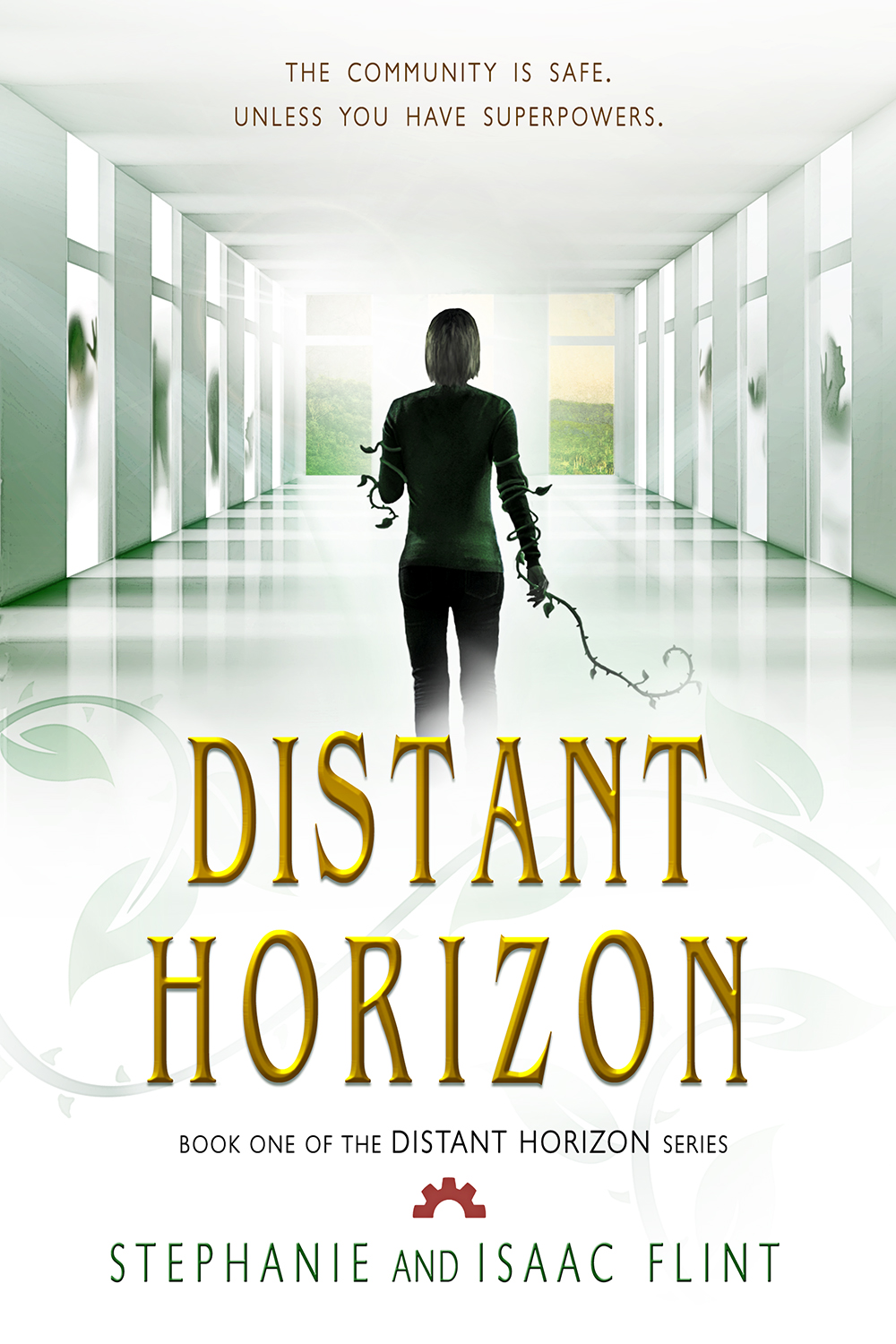
However, I’ve now been thinking about Distant Horizon (a 97,500 Ya/NA science fiction novel), and wondering how I want to format the print edition. Granted, it still needs to be proofread, and Isaac and I are quite a ways from releasing it, but I like figuring out these things.

The print format that I used for Magic’s Stealing won’t work… we would end up with a huge page count, which means that the production costs would be too high to bring the book into local stores.

Createspace gives us the option to compare basic book costs, shipping, and royalties. With a quick check of the Distant Horizon file in the same format as Magic’s Stealing, I found that the initial page count was 450. That’s not including getting the chapter spacing formatted to look nice.

But let’s plug that into the calculator and get some numbers.

For a single copy of a 5.25 x 8 book, black and white pages with bleed, we’re looking at $6.25 for the book and $3.59 for standard shipping. $9.84 per book.

Let’s take a look at volume discounting for a moment, since that’s what makes it possible to get these books into stores.

If we buy 25 copies of the book, we pay $156.25 plus $15.50 for shipping, for a total of $171.75, or $6.87 per book. Notice how much the cost per book went down? If we buy 50 copies of the book, we pay $312.50 plus $23.00 shipping (be sure to adjust your quantity value in both calculators). That’s $335.50 total, or $6.71 per book. A slight difference from 25, but not so different that we couldn’t purchase the smaller quantity of books if funds are tight.

For royalties on Amazon (not looking at any expanded distribution options), we start making a profit at $10.99 (34 cents), $11.99 (94 cents), $12.99 ($1.54), $13.99 ($2.14), and $14.99 (2.74). Books printed in Great Britain need to be priced higher than the converted $12.99, or they lose money, while books printed in Europe need to be priced higher than the converted $10.99 or they lose money.

Keeping in mind that we can adjust those prices separately, I’m not worrying about non-US prices right at the moment.

However, without knowing how to format the book, it’s hard to say what the right price point is.

So I decided to run over to Hastings and take a look at their YA section. Figured I’d take twenty minutes to do some quick research.

One hour later…

*Ahem.*

Anyway, I came up with a list of various young adult books across different genres. I noted their title, my best guess at their genre (I referenced Goodreads for a few of them), their page count (by last page of the story, not including front and back matter), line count per page (unfortunately I didn’t think to count the average words per line), price (there may be some variation here due to price stickers covering the price listed on the book), and book size.

I found that, overwhelmingly, the young adult paperbacks were 5.25 by 8 inches, or very close to that size (some variations from printer to printer should be expected). In general, if they came from a traditional publisher, they were 5.25 x 8. Keep that in mind if you’re self-publishing, and you want your book to “look” professional. On the other hand, I briefly skimmed the adult section with the 6×9 book, and there were several more instances of the 6×9 trade paperbacks available. At some point I would like to go back and check the adult book price points and line counts and such, since I think my previous research has suggested that the average adult trade paperback would sell for roughly $14.99.

Keep your target audience in mind, and research similar books to get a feel for how to format and price your own book.

This is the list of YA books I compiled at Hastings.

Michael Vey: Rise of Elgen (Science Fiction) – 6 x 9 – 335 pgs – 35 lines per page – $10.99

Hush, Hush (Paranormal Romance) – 5.25 x 8 –  391 pgs – 25 lines per page – $11.99

Perfect Chemistry (Contemporary Romance) – 5.25 x 8 – 359  pgs – 29 lines per page – $9.99

Barely Breathing (Romantic Thriller) – 5.25 x 8 –  502 pgs – 32 lines per page – $9.99

Perfect Ruin (Dystopian) – 5.25 x 8 – 356 pgs – 29 lines per page – $9.99

The Jewel (Dystopian Romance)- 5.25 x 8 – 359 pgs – 30 lines per page – $9.99

Beautiful Creatures (Paranormal Romance) – 5.25 x 8 – 563 pgs – 30 lines per page – $9.99

Eye of Minds (Science Fiction) – 5.25 x 8 – 310 pgs – 30 lines per page – $9.99

The Dark Is Rising (Complete Sequence, Fantasy) – 6 x 9 – 1082 pgs – 30 lines per page – $16.99 (The Amazon edition is different than the edition I found)

The Hunger Games (Dystopian – Original Edition) – 5.25 x 8 – 374 pgs – 29 lines per page – $8.99 originally. Now has sticker that says $10.99

The Hunger Games (Dystopian – Movie Edition) – 5.25 x 8 – 374 pgs – 29 lines per page – $12.99

The Hunger Games (Dystopian – Shiny Gold Edition) – 5.25 x 8 – 436 pgs – 27 lines per page – $12.99

City of Bones (Urban Fantasy – New Cover) – 5.25 x 8 – 485 pgs – 30 lines per page – $13.99

The Sight (Fantasy) – 5.25 x 8 – 464 pgs – 33 lines per page – $8.99

Graceling (Fantasy) – 5.25 x 8 – 471 pgs – 28 lines per page – $8.99

The Demon King (Fantasy) – 5.25 x 8 – 506 pgs – 29 lines per page – $9.99

The Testing (Science Fiction Dystopian) – 5.25 x 8 – 325 pgs – 29 lines per page – $9.99

The Darkest Minds (Dystopian) – 5.25 x 8 – 488 pgs – 30 lines per page – $9.99

(About here I discovered that Dreamland is out. *Squee!* I’ve been wanting to read that since I read the first few chapters… *Ahem.* Back to cataloging…)

Mortal Gods (Mythology Fantasy) – 5.25 x 8 – 366 pages – 33 lines per page – $10.99

Never Fade (Dystopian) – 5.25 x 8 – 507 pages – 30 lines per page – $10.99

Fourth Comings (Contemporary Romance… looks New Adult) – 6 x 9 – 310 pages – 31 lines per page – $13.99 (Amazon has the list price at $15.00, so I think this may technically be categorized as an adult romance, though it was in the young adult section)

IMPORTANT: Some of these numbers may be incorrect due to my notes having tiny handwriting. I’ve linked to the books in the Amazon store where available, and those may have product details for the print editions that include the front and back matter. As another note, you could probably do a lot of this same research on Amazon by checking the scratched-out list price when you have the paperback edition selected.

I also found that hardback books tend to lean toward the 6 x 9 mark, but they completely vary as to the exact size, and some are considerably smaller. Also, font size and line spacing varied from book-to-book, so when formatting your own book, be sure to take that into account, and study your favorite books in the genre of the book you are formatting.

Now, let’s do the same categorizing for Magic’s Stealing that I did for the above books.

Magic’s Stealing (Fantasy) – 5.25 x 8 – 158 pages – 28 lines per page – $7.99 (once the print edition is available)

Based on the above list, most of the YA books are sized 5.25 x 8 inches, typically range around $9.99 to $10.99, higher if they’re a well known book. Based on this sampling, there aren’t as many at $11.99 as I originally thought, though more research may be needed regarding specific genres. The biggest benefit to this list that I see for Distant Horizon is that a large number of those books allow for 30 lines per page, which can significantly decrease page count. Additionally, something I didn’t check for at the time is the average word count per line, which would give a rough font size estimate.

Let’s go back to our Distant Horizon book and see what happens. I lowered the font size (which isn’t the end-all answer, but this is a rough estimate), which brought the line count to 31 lines per page (a little high, but still acceptable), and now only have 370 pages. Let’s round this to 400 pages, since formatting changes could increase the count.

With those variables, a single book is $5.65 plus $3.59 shipping, or $9.24 per book. A volume purchase of 25 books would be $141.25 plus $15.50, for a total of $156.75, or $6.27 per book. 50 copies would be $282.50 plus $23.00, for a total of $305.50 or $6.11 per book.

At the common price points, a 5.25 x 8, 400 page book would profit on US Amazon at 34 cents ($9.99), 94 cents ($10.99), and at the uncommon prices $1.54 ($11.99), and $2.14 ($12.99)

Let’s say that we want to take this into local bookstores. We choose to pick up 50 books to start with, so each book costs us $6.11. At the high end, a store asks for a 40% discount, which doesn’t work at all for the $9.99 book, but yields about 50 cents for the $10.99 book, or $1.09 for a $11.99 book.

So… it is possible to sell the book to stores at a 40% discount, though the profit wouldn’t be high. The profits would increase as the store’s requested discount decreases.

Alternatively, we could hand-sell the book at conventions, keeping all profits for ourselves (minus sales tax… and the cost of a booth), earning $3.88 per $9.99 book. Potentially, we could list it as $11.99, and still have room to discount it at conventions. However, it’s still not the best price point available, and I’d need to play with formatting to get the lowest number of pages possible, while still keeping the book as readable as possible.

Remember, poor formatting can drive a reader away from a book without them ever knowing why, while good formatting can help them ease into the reading experience, so make sure your book is readable to your target audience.

I hope you enjoyed this post, and these are just a few things to consider when you’re preparing to format your book. Good luck. 🙂

2 Comments

Filed under Business Ventures, Writing

Thoughts on Publishing – Pricing an Indie Card Game

Isaac and I have been working on our upcoming card game, Battle Decks: Trials of Blood and Steel, and we had a gaming-experienced friend come by a few days ago to test the game. He gave us a lot of great advice that we’re now looking into implementing. Our date of release may have been pushed to a later date now, but we should have a better game for it.

In the meantime, Isaac and I have been thinking about how to price Battle Decks, as well as how to make it available to the largest number of people (and still make at least a small profit).

Currently, we’re printing Battle Decks through The Game Crafter, a print-on-demand company for tabletop games.

The downside with any version of print-on-demand is the cost. For books, this has become increasingly better over the past several years, and it is now reasonably possible to be competitive with traditionally published books). For tabletop games… they could use a bit more work.

But here’s the problem. Since a customer typically only buys one game at a time, the cost per game is relatively high (at least compared to what you would find in stores). This can be offset by purchasing a large number of games in bulk, but for a small business, this quickly adds up.

Take, for instance, our current version of Battle Decks with all its bells and whistles (four glossy rules pages, a pair of dice, 108 tokens, 126 cards, and the box). The base cost for buying just one game is $28.00, not including shipping. Once you add the cheapest shipping–short of will call (sorry, we’re not traveling to Wisconsin to pick up a box)–we’re looking at $36.00 per game. That goes down to $26.50 per game if we buy ten games at once, but when we add shipping, the price comes to $303.00, or roughly $30.00 a box.

(Note: Shipping costs may vary by location.)

Say we chose to purchase ten boxes at $30.00 a box. We still want to make a profit. If we sell them ourselves, we could offer them for $40.00 a piece and make $10.00 per game, minus sales tax if we factor tax into that cost. However If we take it to a store and ask them to sell it, they’re going to want a wholesale discount. I expect stores want at least a 35% discount off the retail price, and the one store I’ve spoken to thus far preferred a 50% discount off the retail price. Which means that, if we sold our game at $40.00, we’d be selling the game to 35% stores at 26.00 (we lose $4.00 per box), or at $20.00 to 50% stores (we lose $10.00 per box), which basically means that price isn’t feasible.

So, if we push the price of the game up to $50.00, the 35% store wants the game for  $32.50 (we make $2.50 per box), and the 50% store wants the game for $25.00 (we lose $5.00 per box).

However, now we risk pricing the game too high for potential players to take the risk on a new game.

Now, keep in mind that I haven’t done nearly as much research on what stores want in regards to purchasing indie games as I have with books,  so it may be that they want a lower discount. But given that many stores offer discounts to their customers (such as a 10% student or military discount), and they also want to make money (make sense, since they need money to stay in business), and indie games don’t usually have the name recognition that traditionally published games do to help keep those games selling, rather than sitting on the shelves, untouched, I expect that stores will want a decent-sized discount. (Note: See the comments below for input regarding wholesale discount ranges from an experienced seller. According to him, 50% is much less likely to be the norm than a 35% or smaller discount).

I’ll be doing more research in the form of talking directly to stores in the future, once we have more funding available to do a bulk purchase.

In the meantime, yikes.

Our best bet of keeping the game somewhat affordable and still making a small profit is to sell online. However, we’re still looking at a roughly $35.00 to $40.00 game, plus the cost of shipping.

So how do we make the game more accessible?

There’s a few possible options that I’ve found thus far.

Print-And-Play

While browsing The Game Crafter website, Isaac and I noticed that a few games (card games, in particular), had print-and-play editions. With a little more research, and I discovered that Cards Against Humanity has a free print-and-play edition as well as their regular edition.

Basically, a customer pays a small fee (.99 cents to a few dollars) to purchase a PDF file with all the cards ready to print. They print the cards, cut them out, and read any rules that come with the game. They can start playing almost instantly. No shipping time, and low cost.

The downside is the lack of quality control. If a player’s printer renders cards dark or blurry, it may turn other players away from the game. Or maybe the cards aren’t printed on card stock, and shuffling is therefore terrible. (Cards Against Humanity gets around this by putting a set of instructions at the front of their PDF with suggestions on how to print quality cards).

The other downside is that if your game has a lot of cards, and the player uses their own printer, they may end up using a lot of ink.

So… Isaac and I are thinking this isn’t the best alternative option for Battle Decks.

Card-Only Variety

Another option we’re considering is offering a stripped-down, card-only version of the game. No dice, no tokens, a smaller box, and online PDFs you can download and print at your leisure.

This brings the cost of each box down to roughly $17.00 (plus shipping), and if we wanted to make a $5.00 profit, we could offer the game online for $22.00. Shipping would be anywhere from $3-$9, (not sure, since I couldn’t put an unproofed game in my cart). But it’s considerably more affordable, and suitable for players who have plenty of dice, don’t typically use tokens, and don’t mind printing the rules themselves.

We’re thinking of offering the full edition of Battle Decks, with all the additional pieces, along with the card-only version, which gives players more options in regards to how much they want to spend on the game, and how they want to play the game.

Character Cards Only, and Players Use Free Trial Print Version with Proxy Decks

The final option we have considered is offering a small pack of just character cards. (18 cards in a poker card wrap). Base cost $5.00, plus shipping (probably around $3.00, given the piece of one of our other purchases with a slightly larger tuck box).

The idea behind offering only the characters is so that people who play the trial edition (which is a PDF we plan to release that shows players how to proxy the game using poker decks, and includes a single team for each faction) can enhance their game-play while still using the proxy decks, thus making the game more accessible by offering an even lower cost.

However, this only works if you don’t mind using proxy decks. At the moment, I’m leaning toward offering a card-only variety of the core game, in addition to the full version.

Note: These prices may change over time depending on what is being offered at The Game Crafter. Also, further research is needed to determine what indie games of this particular type would reasonably sell at.

Anyway, those are our current thoughts and theories. We haven’t actually tested selling the game with any of these methods.

I hope you enjoyed this post. 🙂 If you were to buy a new, indie card game, how do you prefer to buy it? What prices do you feel are fair?

Further Reading:

http://gamedev.stackexchange.com/questions/27490/how-do-you-decide-upon-the-price-for-a-game – (2011 article, so information may be out of date) One of the people on this webpage make a great point about pricing (indie computer) games based on what platform you’re selling them from.

http://positech.co.uk/cliffsblog/2011/05/08/indie-game-pricing-pressures/ – (2011 article) This article talks about indie (computer) game pricing pressures. It’s a bit off in regards to how books are produced, but the comments do show concern at an expectation for low prices. Those comments also show example of higher-priced (and high-quality) games selling well).

http://danielsolisblog.blogspot.com/2011/09/q-on-card-game-design-costs-and-prices.html (2011 article) – This post details a card game with components, and what pricing various people consider fair for that game

http://gotgeniusgames.com/kickstarter-topic-4-manufacturing-a-card-game/ – Details on card deck pricing from various printers. (I haven’t read through this yet, but it looks like it has potentially useful information)

https://boardgamegeek.com/thread/926760/card-games-what-price-too-high – Discusses profit difference between core games and expansions.

11 Comments

Filed under Business Ventures, Gaming

Thoughts on Publishing – A Video Blog Post and a Reading – The Magician

Today I’m doing something a little different. In an effort to save time (which didn’t work this time around, but hey, now I know what I’m doing, so next time may go faster), I decided to try making a video for a blog post. This is also the unveiling of the Infinitas Publishing Youtube channel. 😀

This was an experiment, to say the least.

I knew bits and pieces of what I was doing, but I had never used Youtube’s video editor before (it allows you to splice videos, add multiple video clips, add music, etc), nor have I tried using Windows Movie Maker for a really long time (and trust me, the older version I used was much more user-friendly).

Anyhow, I managed to get a video tied together, which includes a reading of “The Magician” one of my 1000 Words short stories. It’s also the first time I’ve made an audio edition of any of my stories together, so we’ll see how it goes.

Now, I’m not using a professional mic by any means, so the sound has a lot of hissing at times (and you can hear a car’s speakers in the background at one point).

Since I only rehearsed the story once before I read it, I did stumble a few times. If I try to do a true audio book with any of Isaac’s and my stories later, I’ll want something with a bit clearer sound, and I’ll probably practice each chapter a bit more before I do the recording.

I also keep noticing little tiny phrases that I would reword for accuracy in the video portion, but I guess that’s downside of doing an unscripted video.

But other than that, here it is!

(And  a Youtube link in case you can’t see it).

I hope you enjoyed this video/blog post. If you liked the video and/or the reading, please let me know. I may do more of these. If not, oh well. Worth a shot. 🙂


Leave a comment

Filed under Business Ventures, Writing

Thoughts on Writing – Trademarks and Evolving Languages

Yesterday at the writing group my husband and I usually attend, one of the writers made a comment about how English is a growing language. They pointed out that it constantly shifts and adds new words, whereas other languages are stagnant and are ruled by a constant number of words. This caught my interest, so I thought I’d do a little bit of research on the topic.

Though my research didn’t go quite the way I anticipated, I focused on new influencers to a language.

The National Science Foundation website mentions in their article on language and linguistics that there are a few things that can influence a change in language. For example, the invention of new technologies can bring with it new words (or specifically, the new use of words). The article says, “Plastic, cell phones and the Internet didn’t exist in Shakespeare’s time.” Which, if you think about it, means that time period wouldn’t have had a need for those words.

But what happens when those new technologies develop? The new words have to come from somewhere.

In an article from The Atlantic, they explain the origin of the term ‘cell phone,’ or more accurately, cellular phones. At the time, the word cellular referred to biological cells (still does). What does that have to do with phones?

The network for sending signals to each phone was conceived as being of a cellular nature (check out the article for a diagram). As such, a cellular phone would use a cellular network, and the term was later shortened to ‘cell’ phone.

(As a side note, if you are developing a magic system and your story spans over many years, you might consider what developments might influence that magic. For example, in Isaac’s and my Distant Horizon universe, one of the characters has techno sight… the ability to manipulate (digital) technology with their mind. If you go backward to the Multiverse timeline, there aren’t any computers (at least, not that don’t use artificial spirits), so those characters don’t have the techno sight power. Or they might, but it would basically be an unknown power that doesn’t get used, even if it’s in their bloodline for future generations)).

New technology can impact how a language evolves, especially as new terms are needed.

However, when new technology gets involved, so do trademarks. And that’s where things get interesting. For example, look at the the Xerox photo-copying machine. How many people might say “I’m going to xerox that…” turning Xerox, a trademarked brand name, into something generic… (despite attempts to keep in it in their grasp).

If you look at the name, Xerox is the brand, whereas their product is a photo-copying machine. Note that photo-copy is a combination of two words to describe what the product does. But as people became familiar with the product, they turned Xerox into the verb, and thus a new word (or at least a new meaning to the word) was born. HighNames has an article regarding the origins of Xerox, and it turns out that Xerox pulled their name from a combination of Greek words… xeros (dry) and graphia (writing). If xerox, from xeros, now means ‘to photocopy,’ we can see how influences from other languages, plus the change over time, shaped a new word. (Read more about generic trademarks here).

Even now, companies fight to keep their trademarks intact. Google (to use a search engine, originally pulled from ‘googol,’ the number ‘one’ followed by a hundred zeroes). Kleenex, technically a brand name, but now often used to mean a tissue. (“Go grab me a kleenex.”) This is yet another example of a company having to work to keep its trademark intact (This article from The Atlantic has some great examples of companies trying to protect their trademarks). Yet another example of how a trademarked brand has become (or is on it’s way to becoming) a common word is Coke, in which a Concurring Opinions article mentions people asking for a coke (referring to soda in general) and restaurants must distinguish between a Coke or a Pepsi due to trademark legalese.

If you are interested in more information about the evolution of language over time, TED has series of videos about of “How Language Changes Over Time.” I haven’t watched these, but having watched a few TED Talk videos before, I imagine they could have good information.

So how does all this apply to fiction?

Well, if you include conlangs (constructed languages) in your stories, especially over a period of time, you could have fun with changing the language across the generations. Perhaps it’s a company trying to protect their trademark, if you want to stay with the trademarks theme. Perhaps there is a misunderstanding in general. Perhaps there is confusion, if someone from the future tries to explain something to someone from the past. Or perhaps its the opposite. Someone from the past, using an older variety of an evolving language, has a hard time being understood by someone whose updated language no longer sounds the same. (Refer back to the National Science Foundation article for a good example of having a hard time trying to understand an older language).

There’s all sorts of things you can play with, both with fictional languages, and with real languages and real history.

Alternatively, maybe you have a language that is stagnant. One that has only a specific list of words, and that’s that. How do your characters and your society deal with the changes of time? Do they smash words together? Do they struggle to explain technologies? Do they refuse new technology altogether?

Given the way I’ve currently addressed Cantingen word magic in the rough draft of The Shadow War, I suspect their language will be fairly stagnant, with some interesting combinations when trying to explain an object that doesn’t have a specific name or translation.

I hope you’ve enjoyed this post. 🙂 Have you thought much about how languages evolve, and how you can use that evolution in your fiction?

Further Reading:

http://www.scientificamerican.com/article/use-it-or-lose-it-why-lan/ – Talks about the frequency of a word compared to how fast it evolves

http://www.telegraph.co.uk/technology/mobile-phones/11274292/Do-you-understand-text-speak.html – Text speech (In this case, also slang, not specific to text) and trying to translate text speech

http://www.telegraph.co.uk/education/educationopinion/9966117/Text-speak-language-evolution-or-just-laziness.html – Debates whether text speech is language evolution or a lack of proper teaching (leans toward the latter, but does bring up points regarding text speech and ease of communication that would have been interesting had they been developed further

http://knowledgenuts.com/2015/10/10/text-message-slang-goes-back-to-telegraph-operators/ – More or less a counter-argument to the above complaints about text speech, which points out that it got its start with telegraph operators

http://dictionary.reference.com/browse/verbing?s=t – A Definition of ‘verbing’

2 Comments

Filed under Writing

Thoughts on Publishing – Serial Publishing Methods

I recently got back notes from our beta reader for The Multiverse Chronicles, and one of the questions we asked her was whether or not she would read it in serial format (in this case, one episode a week). We want to make sure that when we release the episodes that the method of release will work well for readers.

Though she said that she enjoyed the episodes that she read, she also said that she personally wouldn’t read it in the serial format. She explained the reason was because the first two episodes (two weeks of content) had a lot of characters to keep track of, and given that the episodes alternate between two groups, that was a long time to wait to find out what happened to the main character from the first scene.

As an alternative, she suggested releasing several chapters at once, but at longer intervals, so that readers would have a chance to get grounded in the story before having to wait for the next installment.

In a sense, this is what I’m doing with The Wishing Blade series, but with a several-month interval. Technically, each book will fit together as one larger, complete book, though each one is meant to have a semi-complete story on its own.

Our beta reader suggested looking at Stephen King’s The Green Mile as an example of releasing several chapters at once, a serialized novel that was released monthly in 1996. From what I gathered during my (Wikipedia) research, The Green Mile was released in six parts, once per consecutive month, each paperback book around 100 pages until the last book, at 144 pages). Later the publisher released a compiled edition.

Now, I haven’t read the book, so I’m not sure how complete each part was, (though I did try to skim through a few reviews to get a feel for it, and I’m still not sure), so I don’t know how much of a cliffhanger each episode may or may not have been. Click here for more information about the original release of The Green Mile books.

But this research did lead me to thinking about the various options involved in releasing a serialized novel.

Originally, Isaac and I had intended the Multiverse episodes to be stand-alone short stories that fit a larger story arc, but the story arc took over. and now we have a serialized novel on our hands.

The options (with variation, depending on the author) are generally to release episodes or chapters every few days, once a week, every few weeks, or monthly/bi-monthly.

Due to time constraints, Isaac and I decided not to release episodes more than once a week. Otherwise there would be a long span of time between the beginning and end of each “season.”

However, if you have a complete novel, or if you want to write daily and release the new parts as their written, a faster release schedule may be the way to go.

Releasing weekly or every few days could work great if you have cliffhangers and an audience who is excited for the anticipation of waiting for the next episode. Here, having a story that hooks the reader and doesn’t let go, but demands a faster release schedule, may work well.

Though I haven’t read it personally, I found one example to be Worm, a completed web serial by Wildblow. In their case, they released chapters twice a week (sometimes three times, if donations met a specific goal). Also, The Legion of Nothingwhich (according to the info at the top left corner of its home page) updates twice a week.

Interesting side-note: According to Merriam-Webster.com, bi-weekly can either mean “twice a week” or “every two weeks.” Gotta love the consistency there.

Releasing every few weeks might work better for stories with larger episodes, where the author wants time to make edits before the release, or for writers who are writing the story as they go, but want time for feedback to develop, and time to implement that feedback.

Releasing monthly or even bi-monthly seems like it would work better for longer episodes or short books that have a reasonably complete story arc, however, my current research suggests that stories with strong cliffhangers can work well at this extended rate, too.

One romance series I’ve heard has done well, Renee George’s The Lion Kings, (according to its description/reviews, since I have not read this series, either) has each book as a fairly short installment that involved cliffhangers, where the author released the books on Kindle at around a month or so apart. Of course, audiences preferences may vary between genres.

Then there’s The Martian by Andy Weir. According to Smithsonian.com, The Martian was released on his blog at the rate of one chapter every six to eight weeks, though it does sound like he made adjustments per reader feedback. I’m not sure how long each chapter was, though, and since I haven’t read it, I’m not sure what specific part of the book may have drawn in the large audience that it did. (The Business Insider suggests that the author’s enthusiasm for science attracted a lot of other readers who were also interested in science, which helped propel its popularity forward. The eventually release of a Kindle edition continued to boost its popularity until it was picked up by a traditional publisher).

I haven’t tested out these methods myself, but I wondered if Isaac and I could mix a couple of these ideas together.

In this case, we’re thinking of releasing six episodes (chapters) to start with, which should give readers time to get familiar with the characters and the world, but also leaves off at a major turning point for the story. Then, a week later, we’ll start releasing one episode a week until the story is complete.

We already know that we’ll have at least 28 episodes, and since we originally planned on a six month schedule of weekly releases, offering the first six episodes to start with would help keep this plan on track. Not only that, but it would give readers more reassurance that this will be completed, since they can begin to see how the story will progress. As a bonus, leaving off the first week after the sixth episode would give readers a bit more idea of the conflict that our Battle Decks: Trials of Blood and Steel game (which influenced the story) is about.

So now I just need to see if I can get all six episodes edited before the release date. If so, then we may give this method a shot.

If that doesn’t work well, we can always switch it up later.

The main thing is that we’re trying to go for consistency, that way potential readers know what to expect.

I hope you’ve enjoyed this post. 🙂

Have you found any serialized novels or blog serials that worked well in terms of how they released each segment?

Related Posts:

Thoughts on Writing – What Does A Serial Episode Need? (The Multiverse Chronicles)

Thoughts on Publishing – A Novel or Three Novellas? (The Wishing Blade series)

Leave a comment

Filed under Writing

Thoughts on Writing – Proofreading as a Reader

If you read my previous post, you know that I recently got in my paperback proof copy of Magic’s Stealing in the mail. My main goal was to make sure the formatting was correct, so I debated whether or not to correct typos, and then order a new proof (the answer is now ‘yes’), or to leave it be and not risk messing up the formatting.

But my concern was that trying to save money by not ordering a second proof would cost sales in the long run. (Read this BookBaby blog post for more about saving now costing more in the long run… though my main take from this was not to order a bunch of books before you’ve had someone else look at it).

Having found a couple of particularly stubborn errors in the paperback copy, I’ve decided that fixing those typos now, and then ordering a new copy, would be my best bet. That way I can put my best work forward (I’ll update the ebook versions once this is finalized) before purchasing a large number of books to hand-sell or giveaway. By ordering a new proof once I make the changes, I can also make sure I didn’t mess up the formatting.

The question is, what types of changes should I make?

There are two sorts of “errors” I’ve caught thus far: typos (for example, ones’ self instead of oneself, or “That’s the only string magic visible to a ribbon mages…” plural vs singular issue), and style choices (for example, whether or not to combine two paragraphs instead of leaving them separate).

For the most part, style issues will remain the same. Grammatically, they are correct, and that’s just me being picky. (Read this Fiction University blog post for ideas about when to stop revising).

However, typos will be corrected (the ones I find, anyway).

But why is it that, when we read our work with a fine-tooth proofer’s eye, we still miss things?

Why is it that even traditionally published books, with a lot of backing to their names, still have typos, when they have the funding to hire professional editors?

Part of the problem is that we know our work, so we know what it should say.

Even when reading aloud, or printing off a manuscript and scrutinizing it sentence-by-sentence, we’re going to miss some of these typos. We automatically correct them. Even proofers and editors will occasionally lapse and miss something, especially if they’ve been looking at the manuscript for a while (one editor I know said they limit the number of words they’ll read in a manuscript per day in order to avoid this problem).

Inevitably, however, we get our books printed, read through them later, and there it is… a giant, glaring typo.

Why do we see them now?

Well, one factor is time. With more distance from our work, we’re more likely to forget what we intended, so it’s “new” again. (This is why you see all those suggestions about waiting a few weeks or months between major edits).

Another factor is that you may have made an edit in the previous version of the book to correct a different typo, but in doing so, you accidentally hit a backspace key or inserted an extra letter, or you didn’t read the sentence fully after making adjustments. Whatever the problem, the previous edit created a new typo, which then was not proofed.

The final factor that I’ve been considering is perspective.

I went in trying to read the paperback proof of Magic’s Stealing as a reader–that is, I had no intentions of making edits. I wanted to try to enjoy the book as a reader, only noting typos if I saw them. I mean, that’s part of the reason we want to write, isn’t it? So that we can one day enjoy the fruits of our labor and read the book like a reader would? (Or maybe that’s just me).

Point is, when you read your manuscript in a format that is  the final format, and you read it as a reader, with no intention to edit, you’re likely to catch new typos. Your eye lingers just a bit longer on that odd word, because something threw you out of the story, which you were enjoying for story’s sake.

But that’s just a theory. A I’ve-been-watching-too-much-Game Theorists-theory (If you want to see video and computer game plots picked apart, this is a pretty good Youtube series. So is Film Theorists, but for movies and TV shows.)

Now, I’ve got to get back to editing The Multiverse Chronicles and proofreading Magic’s Stealing for typos.

I hope you’ve enjoyed this post. 🙂 Have you found any tricks for catching typos before you release your stories or send them to an agent?

Leave a comment

Filed under Writing