Tag Archives: writing tips

Thoughts on Writing – To Swear or Not To Swear

Warning: This post is meant to be an informative article about swearing in fiction. As such, I have not censored the words involved. If you do not wish to read the actual words, you may wish to skip over this particular post.

Before I finished editing Magic’s Stealing, one of the lines I was torn on changing involved whether or not to have a character swear. In all fairness, I tend to lean on the side of, ‘as few swears as possible, but do what feels right for the character and sounds better.’ However, I ran into the problem that this particular swear would be in the very first chapter, and I was worried that readers who generally avoid swearing might avoid the book if they happened to see a curse word so early.

First chapters set up a standard of what the reader should expect. If you see magic early on, you expect magic. If you see dark, creepy landscapes, you expect horror. Clones? Sci-Fi. And if you see swearing in the first few pages, you’re likely to expect swearing later.

However, in Magic’s Stealing, this is the one time throughout the entire book that we see a modern day swear. Everything else is set specifically to the world.

Here’s the passage:

Coming? The pink ribbons carried Daernan’s thoughts to Toranih’s mind, and she fought the urge to swipe them away.

Toranih knelt beside the window so that she was eye-level with the owl. He tilted his head and blinked. She snorted. “I’ve been expressly forbidden from attending the festival,” she said in the most high-and-mighty voice she could muster. “So, no. I’m not coming.”

Not that she minded missing the event. Too much magic and too many people teasing her about when she and Daernan would make their courtship a formal engagement.

She turned from the window, lit her oil lamp, and then mentally killed the crystal’s light.

The ribbons vanished.

Let me guess. Your father wasn’t happy that you challenged Lady Ikara to a duel, then respectfully threatened that she ought to let her fiancé fight for her, lest you knock her off her high horse onto her—he mentally coughed for effect—her lazy ass?

Toranih shrugged. “She insulted you. Good excuse not to go.”

Originally, the line read

Let me guess. Your father wasn’t happy that you challenged Lady Ikara to a duel, then respectfully threatened that she ought to let her fiancé fight for her, lest you knock her off her high horse onto her—he mentally coughed for effect—her lazy bum?

Given the circumstances, showing Daernan quoting Toranih exactly, and having her say a curse word (in this context), helps to clearly show the type of character she is… even if most of her other curses are either world based (“For the love of Shol,” “Cursed Trickster,” “Isahna-cursed…”) or simply said as She cursed under her breath.

In the long run, I decided to use the actual word. For one, it fits her character and the situation, and for another, it’s not that “bad” of a swear. (Keep in mind, this is YA. We can see some really strong cursing depending on the characters and genre involved). In all honesty, I don’t know if I would have thought about it twice if it hadn’t been for the fact that–before edits–the story almost felt like it could be classified as middle grade.

I tend to look at cursing as having a variety of “types.” You have what feels to me more like classic curses (whether they are or aren’t)… such as damn, hell, ass, etc… and then you have what feels more modern (even if they have been around for ages) fuck, crap, heck… and even then, the ‘strength’ of the reaction a person will give to each varies entirely upon the person. Others could care less what curse you use as long as you don’t curse in vain (This is an interesting article on the subject of cursing in vain, if you’re interested in Christian theology. It also shows how deeply ingrained religion is regarding various curses). Consider that you can get creative, too. (“Odin’s beard” for Norse mythology, anyone?… Take a look at this site (renaissance faire-themed) for a few examples of how you can string together world-based curses).

(As a side note, this post as a whole has the most curse words I’ve ever written in one place. Outside of the occasional “frack” I used when role-playing a certain character a while back (you can probably blame the original Battlestar Galactica for that one) you will rarely hear me curse. Rarely. Can’t say it doesn’t happen, because things sometimes take me by surprise, but still. This is rather interesting to write).

Curses also tend to be based on context clues and tone.

Take a look at the word “ass.” When refering to a certain barnyard creature, it’s not a curse. Call the guy sitting next to you an ass, and now you have a swear word. (According to dictionary.com, a swear word is “a word used in swearing or cursing; a profane or obscene word.” That is, something that is offensive.

The great fun of trying to decide whether to swear or not is largely based on whether or not you wish to risk offending someone, or alienating members of your audience who might find certain terminology offensive. On the other hand, you risk offending someone if you don’t include the swear where they feel one should be.

Isn’t writing wonderful?

This is why it pays to know your audience, and know what terminology they accept. If you’re writing for yourself, you can do whatever [the fuck] you want. Note that adding the swear doesn’t fit my normal writing style, and writing it felt really out of place. If we’re looking at this from a character point of view, this doesn’t fit the established rules for my “character.”

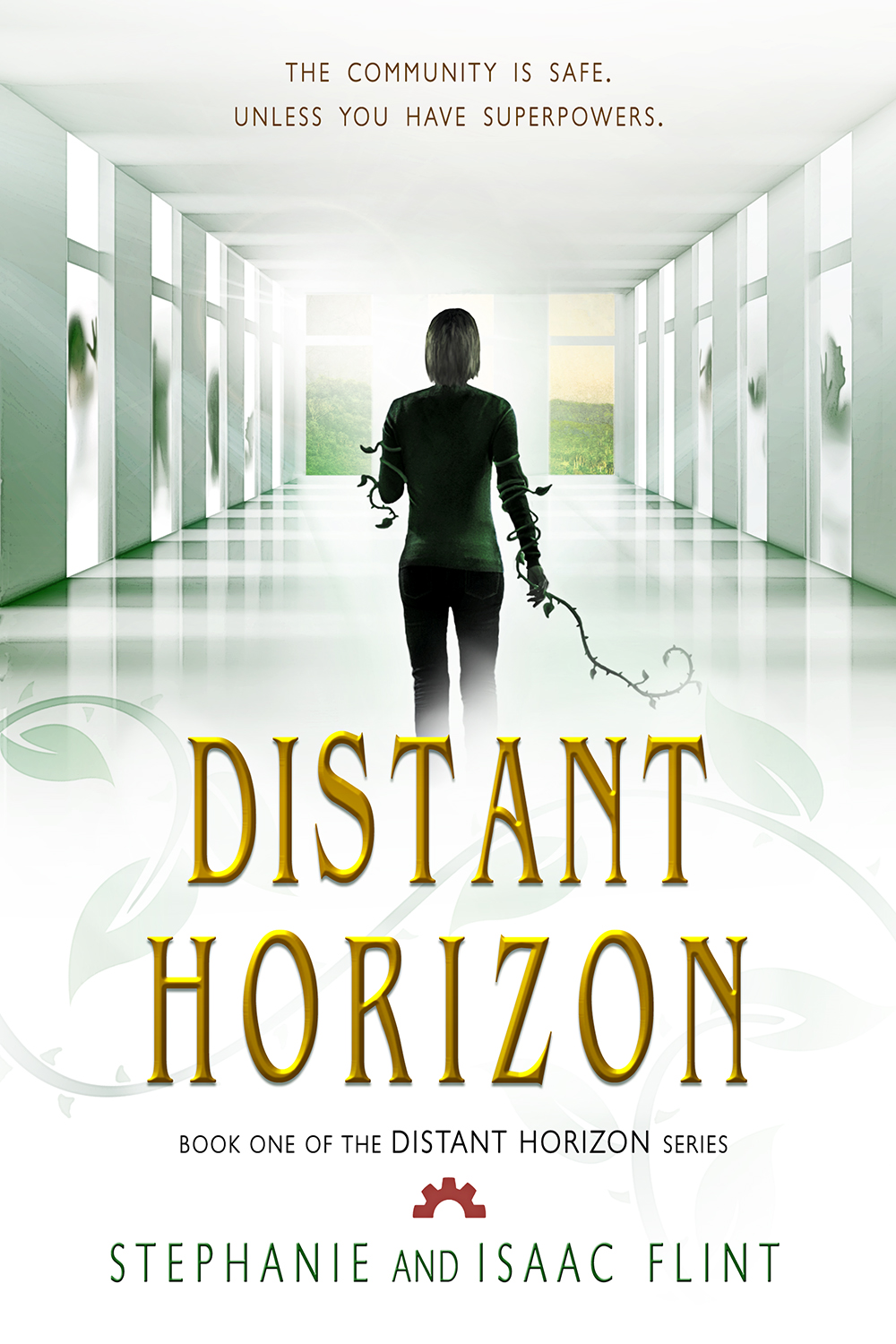
Take a look at this scene from my husband’s and my manuscript of Distant Horizon:

Behind us, Jack snorted. “Superheroes– like comic books. You’ve heard of comic books, right? Video games?”

The three of us exchanged glances. We’d played interactive educational activities on EYEnet, but those weren’t particularly humorous.

“You’ve… you’ve heard of video games, right?” Jack pushed himself from the doorway and gaped at us.

Lance shook his head ‘no.’

Jack grunted. “Pops, I’m telling you– the Community sucks.”

Tim stuffed his hands in his pockets. “The Community is safe, secure, efficient. It’s not… bad.”

Jack is anti-Community, very much a rebel, so he’s going to use curses however he [damn] pleases. Tim, on the other hand, has been raised in the Community, where cursing is seen as inefficient… though they have a few of their own choice phrases (For the love of efficiency, Jenna, hurry up and finish your homework!). When Tim tries to refute Jack, he almost quotes him, but he doesn’t, because saying a curse makes him feel awkward. (Like me and writing half the curses in this post. Though, arguably, it’s questionable whether Tim would have even heard that particular swear). Again, this reveals characterization… not that all characterization is in whether they curse or not. That’s just one tiny aspect of dialogue you can fiddle with.

Now let’s take a look at how we can approach cursing in fiction.

Say the actual word: If you’re writing an adult novel or upper YA, you’re probably safe to use the actual word given your target audience. If you’re writing middle grade, using a substitute might be better. The benefits of saying the actual word come when it isn’t avoidable (the sentence doesn’t work without it, or removing it makes a scene unnecessarily comical), or when it shows a personality trait of the character. You might not use swear words in regular prose, but you might add them to dialogue. Whether you sprinkle them in or apply a heavy dosage depends on the genre you’re writing and your target audience.

Use a substitute: Particularly useful if you’re writing middle grade (where parents tend to be a bit pickier about what their children read), or if you want to add comedy. Also useful if you want to add flavor to the world. Of course, some people prefer to see the actual word, others don’t. Just make sure that the word used fits the situation and feels natural.

However, there are downsides to using a substitute.

If you aren’t careful, you can turn a completely innocent word into a curse for your poor, unsuspecting reader.

When I was a kid, my parents had a filter on the TV. It censured and replaced certain words from the captions (I have a partial hearing loss, so I have captions on whenever possible). I didn’t really care for cursing, so I didn’t mind… with a couple exceptions. One, the filter didn’t always recognize the difference between names and swears… Principal Prickly on the TV show, Recess always had his name filtered, and while watching 8 Simple Rules, the word ‘sex’ would often be translated to ‘hugs.’ (It was a really strict filter).

The problem was that my mind automatically began to translate everything back… even when I wasn’t watching TV.

This is around the same time that a certain “Free Hugs” movement became popular.

*Ahem.* (See what my mind translated that to? Took a while for me to stop wincing every time I saw a sign for free hugs).

Let this be a warning… people will still know the original meaning.

Alternatively, you can also create a negative meaning to an otherwise innocent word. For example, if you tell kids to substitute ‘witch’ for ‘bitch,’ we now apply a derogatory meaning to the word ‘witch.’ Of course, you have the Halloween nasty, evil witch (of which this is probably meant to reference), but keep in mind that there are people who consider themselves witches in practice and don’t act in the way that the term ‘bitch’ usually implies.

That particular factor was brought up when I was reading articles regarding the Clean Reader app (Read the article here about what the Clean Reader app is, and here for the article that mentions the problem of substituting “witch” for “bitch,” if you’re interested).

Also, slight derail, words can take on negative sub-text through similar routes.

For example, take a look at the word ‘gyp’ (as in… I’ve been gypped!) It wasn’t until recently that I became aware that the term derived from the word “gypsy,” referring to a stereotype of gypsies as thieves. Now, in some areas, calling someone a gypsy is a major slur. In others, not at all. Depends on who you’re talking to and how you’re using the term. But it’s something to be aware of.

Like all curses, slurs, and swears… whether or not something is offensive depends entirely on the audience. (In fiction, you can recognize this in how characters react to each other based on what they say or don’t say).

So, you can use a substitute, but make sure it has the meaning you intend.

Reference without specifying: You can sometimes suggest that a person cursed without ever saying what was said. He turned the corridor. Three giant monsters stood in his way. He cursed. This plan was getting worse by the minute.

We’re told that the character curses, but it’s left to our imagination as to what he actually says. I tend to use this one when a world-based curse won’t work. Alternatively, how other characters react to something said in a foreign language we don’t understand can give us the impression that they cursed or said something insulting… even if we don’t know for certain. (Consider how R2-D2 and C3p0 talk in Star Wars. We don’t know what R2-D2 says, but we have a pretty good idea thanks to C3P0’s reactions.)

Eliminate: When in doubt, leave it out… or not. Sometimes a sentence really doesn’t need the cursing to flow properly, and will feel stronger without it. (Remember earlier, where I bracketed the curse words) Sometimes a slight rephrasing of the sentence can eliminate the need for a particular word. Test how the sentence sounds with and without the curse (speaking aloud can be helpful here… though you might want to be alone when you try this) to determine whether the curse adds to the story.

There are some words I tend to avoid when I write, because I personally don’t like them or want to perpetuate a stereotype. For example, I tend to avoid slut because I don’t like vilifying someone just because they sleep with multiple partners, or bastard because I don’t like vilifying people born out of wedlock.

Granted, there may be times when they story calls for these particular slurs, and to use anything else sounds ridiculous. But I typically try a bit harder to avoid those than other curses.

The point is, whether you use cursing in your writing is entirely up to you. If you get your stories published through a publishing press, they may have their own house rules about what stays or goes. But otherwise, you get to decide based on your own needs, and whether or not you think it will work for your target audience.

Like all words in a story, the swear should serve the story. If it doesn’t, cut it. (Your word count will thank you). If it does, keep it.

I hope you found this post useful. How do you handle swearing in your stories?

Further articles of interest:

https://www.goodreads.com/author_blog_posts/2636571-by-odin-s-beard-what-the-frack-is-all-this-sprock

https://dailypost.wordpress.com/2013/10/24/cursing/


Leave a comment

Filed under Writing

Thoughts on Publishing – A To-Do List

I launched the cover reveal and announcement of pre-orders for Magic’s Stealing yesterday, so make sure to check that out if you haven’t already. 🙂

In the meantime, I have ideas for new posts, primarily based on my writing process, though they do include minor spoilers (per usual) for the various stories. Possible topics include “Developing A Magic System – Glass-stone (The Wishing Blade series),” “To Swear or Not to Swear,” “How to Keep Characters Alive Under Dire Circumstances/Using Game-play to Solve a Story Problem (The Multiverse Chronicles),” and “Dealing With Multiple Character Motivations in a Scene (The Wishing Blade series).” Let me know if any of them stand out to you that I should write first.

For now, though, I thought I’d go over my publishing process from the past couple days. If you have any questions, feel free to ask.

Last couple days:

  1. Marked up paper manuscript of Magic’s Stealing. Input changes into ebook file.
  2. Added the table of contents and platform-specific adjustments to each file.
  3. Quickly proofed both files with their table 0f contents on my Kindle.
  4. Uploaded files to Smashwords and Kindle (and discovered that if you have the final file ready, you can set the pre-order for only a couple days away).
  5. Checked that those files uploaded properly the next day.
  6. Added the book to Goodreads.
  7. Changed my accounts to have new author photo.
  8. Updated the main Infinitas Publishing website with the new book cover, blurb and links. Corrected Battle Decks name, and added a blog post.
  9. Tweeted the pre-order announcement from the publisher account (which is specifically meant for announcements).
  10. Prepared a blog post announcing pre-orders and revealed cover. (Thank you to everyone who shared the post! I appreciate it. 😀 )
  11. Responded to tweets.
  12. Sent email to potential reviewer and cover reveal/book launch blogger.
  13. Sent emails to beta readers to offer a thank-you copy of the final ebook.
  14. Wrote up this list to help me keep track of what I’ve done thus far.

Up next:

  1. Complete book cover assignments from separate project (I’m really glad I got through most of those before trying to launch Magic’s Stealing).
  2. Update author photo on Author Central for non-US countries, since they have separate web logins.
  3. Research potential reviewers and make contact.
  4. Continue editing The Multiverse Chronicles episodes. Isaac is getting well ahead of me in getting the rough draft written.
  5. Start writing The Shadow War (I have the first portion written in rough form, but I already know there’s a few big changes I need to make before continuing).
  6. Take a break every now and then. Probably in the form of role-playing one of my favorite characters in the current campaign with Isaac. (Side note: It will be a while before that particular story gets written. It’s highly convoluted… which is what happens when dealing with a super-powerful fourthwaller. *Ahem.*)

That’s the plan. I hope you enjoyed this post. 🙂 Have you had any experiences with preparations for releasing a book?

6 Comments

Filed under Business Ventures, Writing

Thoughts on Publishing – Back Cover Blurb

I’m currently formatting the Magic’s Stealing ebook editions for Smashwords and Kindle, and since I’m determined to get the files uploaded for pre-order tonight, I’m keeping this blog post shorter than usual. But I thought we could take a look at the back cover copy… the little blurb about the book that you see after clicking the cover online.

This little blurb is important, since it tells the reader whether or not they might like the book.

I have a habit of only skimming the blurbs when I’m looking for the next book to read, rather than really letting the information sink in. I’ve noticed this before, but it really became evident today while I was reading The Masque of the Red Death by Bethany Griffin, when I realized that I had little idea about where the book was going. I flipped it over, read the blurb again, and the puzzle pieces fit into place.

It was like the blurb didn’t sink in until after I’d become acquainted with the world.

The same thing happened when I was reading The Girl with the Iron Touch by Kady Cross. I reread the blurb after I’d gotten a few chapters in, and then the blurb seemed to finally ‘click’ for me.

But something in the blurb made me want to pick up the book, so it did its job.

There are also blurbs where I read them after I finish the book, and they don’t quite fit the events of the story. (Or they fit the second book better than the first). The blurb caught my attention, and I enjoyed the book… but it wasn’t really what the book was about.

So today, let’s take a look at the blurb for Magic’s Stealing and compare it to the contents of the book.

For centuries, ribbons of magic have provided the kingdom of Cirena with light, healing, and protection. Then, in a span of minutes, those ribbons fly from their masters, stolen, save for the magic of a few chosen mages. One of these mages is Toranih, a young noblewoman who would rather have a sword in her hand than use her powers to heal or throw fireballs. As a result, her magic skills are lacking. But with former mages dying from magic withdrawal, and the looming threat of an army of shadows who are impervious to mortal weapons, she must either embrace the responsibilities of a mage or watch her home perish.

First off, we have the line about magic and how it gets stolen. This doesn’t actually happen until chapter four, though plenty of stuff happens before then. This is that “start with the action” bit. There’s no fighting yet, but we have tension.

For example, in the first chapter (read it here if you missed it), Toranih’s best friend convinces her to attend a “notoriously magical festival” against her better judgement. She’s conflicted, but ultimately decides to go, leading to her magic being altered by unknown forces. As the story continues, we see her struggling to use her magic (the “her magic skills are lacking” bit in the blurb) and get multiple references to her preference for swords. Once magic is finally stolen, we immediately see the impact it has on mages. Shortly thereafter, Toranih and her friend stumble on the army of shadows in their attempt to find out what happened. Following that, we see Toranih continuing to struggle with her own magic and stubbornness as she responds to the shadow threat.

Though it takes time for the blurb to unfold within the actual story, the main aspects are present. I excluded a number of details from the blurb, such as the involvement of Toranih’s best friend and her sister, the details of the antagonist, and the involvement of time travel (which I may use as a key phrase).

The goal is to give just enough information to entice the reader into reading the first page or buying the book, rather than giving them a detailed synopsis (I’ve read those blurbs, too… in which I knew every major turn of events in the story).

Will this blurb work? I don’t know yet, but we’ll find out soon. If all goes well, expect to see the cover reveal and announcement of a release date for Magic’s Stealing in my next post. 🙂

Have you found any blurbs that didn’t quite fit the book, or didn’t really click until after you started reading? Have you had trouble figuring out what to include in your blurbs?

2 Comments

Filed under Business Ventures, Writing

Thoughts on Publishing – Infinitas Publishing Status Report and First Chapter of Magic’s Stealing

Where does the time go? My day job started up again a couple days ago, and I’m currently readjusting my schedule to be able to be productive and not spend all my time daydreaming about what happened in the role-play campaign that my husband and I just finished this week. (A main character got a bittersweet ending… not the ending he was hoping for (he’s a fourthwaller), but an ending that left him reasonably happy and with his mind intact).

Anyway, while I’m readjusting my after-work patterns,  I thought I’d do a quick status report on the projects of Infinitas Publishing

When Isaac and I started up our business this summer, we created a rough schedule of when we would like to release our books and games. It’s something we created for our own personal use, which gives us an extra push to actually publish things, rather than getting into an endless loop of editing. It’s also a good measure for us to use in terms of how much time we have until we complete a project, even if we don’t release the prospective dates to the public. This should give us a little more wiggle room for when our planning inevitably goes astray.

For Magic’s Stealing, I’m about a month behind on my goal (Shh… don’t tell anyone), but I’m in the final phase. I’ve already got it formatted as ebook, except for the table of contents (easy to do, but needs to be different between Kindle and Smashwords editions), and I’m working on the final proofread for typos on printed paper. Once that’s done, I’ll put it up for pre-order and reveal the cover. Look for that coming soon… which I also need to update on the main website. A few months after that I am hoping to make the paperback edition available.

For Battle Decks: Trials of Blood and Steel, we’re on par. We’ve already ordered the initial proof copy (which I posted about a while back), got feedback, and made edits. I’ve updated the box title to Trials of Blood and Steel instead of Multiverse: 1953, based on further feedback, along with updated the rules (still needs to be proofread) and fixed the cards for consistency (cards now say +2 ATK instead of +2 attack, etc). Once we have the rules proofed, we plan to order a second copy of the game to make sure all of our edits are input correctly. We also need to recreate the trial edition of the game with rules specific to the trial (that way we don’t confuse players with irrelevant rules, such as how to choose heroes for each faction). Based on our current schedule, we should be able to release Battle Decks as planned.

For The Multiverse Chronicles: Trials of Blood and Steel, we should still be on par, but we’ll see as we get closer to our planned release date.  Isaac is currently working on the rough draft of episode 19 of the 24 expected episodes, though some of those we’ve planned to split, so we may be a bit further ahead (and there may be more than 24 episodes). I’ve gotten ten of those episodes edited and semi-polished, ready for us to do the full read-through and see how everything meshes together. I’ve got partial edits done on episode 11. However, once those are complete we will need to send out the episodes to beta readers to look for errors, and then polish the first few episodes to release online. We also need to prepare the blog site where we’ll be publishing the story. The first four episodes need to be ready to go before we release Battle Decks.

Beyond those projects, which are up for release by the end of this year, I also have plans for The Shadow War, (book two in The Wishing Blade series).The first draft is partially written (but requires changes), and I’ve been plotting the rest of the story and making sure it will flow easily into book three. The upside of my day job is that I have plenty of time to plot while I do greenscreen work on photos.

Once I have a definite date for these projects, I’ll make them public.

In the meantime, please enjoy the first chapter of my upcoming YA fantasy novella, Magic’s Stealing. 🙂

Magic’s Stealing


The Wishing Blade - Section Break - Magic Swirl ONE The Wishing Blade - Section Break - Magic Swirl

Darkness flooded Toranih Covonilayno’s sleeping chamber as she mentally extinguished her magic crystal’s light. She tossed the crystal onto her dresser and hurried to her bed. The silk covers rustled as she slipped underneath, where she felt for the leather hilt of the knife under her pillow.


The last few nights had brought strange creaking noises from the attic, soft footsteps and the brushing of rough wool on the edges of the wooden floorboard above. She listened now, waiting to see if the footsteps returned.


They did not.


Instead, wind whistled through a tiny crack in her bedroom windowsill. She peeked over the covers. A shadow passed by the heavy curtains and she clasped the smooth fabric between her fingers.


Ridiculous.


She kicked off the covers, knife in hand, and hopped out of bed. She waited, just in case the shadow returned. Then she walked to her dresser, picked up the crystal, and carefully raised the light again.


The dresser was pristine, with only an oil lamp sitting in the dustless corner. A small oak chest at the foot of her bed remained locked with steel. Heavy brocade curtains obscured the window.


No sign of intruders.


So why couldn’t she shake the feeling that someone had been watching her?


She dimmed the crystal’s light until the room was cast in an eerie twilight, but the only magic present was her own. The crystal’s faint light revealed thin, lime green ribbons of magic floating around her, while glowing turquoise ribbons darted in and out of the crystal.


Her older sister, Siklana, had created the artifact for Toranih when she was little. Few could see magic without a crystal. Whenever a mage used their ribbons to do… well… anything, she couldn’t see the cause.


And what she couldn’t see, she couldn’t fight.


Toranih sighed. She was seventeen now, and she wasn’t afraid of magic. She just didn’t like it. There was a difference.


Something tapped the glass. Toranih shrieked, fumbling with the crystal. She clutched it to her chest and spun toward the window. A cluster of ribbons danced around a small form on the other side.


Well, are you coming? Daernan’s telepathic voice flitted through her mind, amused.


Of all the times for him to show up unannounced—


She dropped the crystal on her dresser, sheathed the knife, then flung open the curtains. “Don’t scare me like that!”


A small, brown, ostensibly cute owl peered at her with bright yellow eyes and giant black pupils. Daernan, judging by the white ring of feathers crowning his left eye.


The owl shrugged and puffed out his plumage like a feather duster. Not my fault you’re so jumpy.


Toranih crossed her arms. Though dim in the moonlight, the crystal’s twilight revealed various blue and yellow and pink ribbons swirling thick through Daernan’s owlish body.


Coming? The pink ribbons carried Daernan’s thoughts to Toranih’s mind, and she fought the urge to swipe them away.


Toranih knelt beside the window so that she was eye-level with the owl. He tilted his head and blinked. She snorted. “I’ve been expressly forbidden from attending the festival,” she said in the most high-and-mighty voice she could muster. “So, no. I’m not coming.”


Not that she minded missing the event. Too much magic and too many people teasing her about when she and Daernan would make their courtship a formal engagement.


She turned from the window, lit her oil lamp, and then mentally killed the crystal’s light.


The ribbons vanished.


Let me guess. Your father wasn’t happy that you challenged Lady Ikara to a duel, then respectfully threatened that she ought to let her fiancé fight for her, lest you knock her off her high horse onto her—he mentally coughed for effect—her lazy ass?


Toranih shrugged. “She insulted you. Good excuse not to go.”


The owl sighed, best an owl could, before tapping the window with his beak. Can I at least come in?


She obliged him with a flip of the latch. Then she plopped onto her bed. The owl swooped inside, changing as he went. By the time he landed, the owl had morphed into a young man with shoulder-length brown hair. A patch of white hair ran through his bangs above his left eye.


Daernan stood from his crouch and shook himself like a dog that had just run through a pond. He looked as he usually did, no more dressed for the festival than any other day. Only a simple cotton tunic and loose fitting breeches, along with a leather belt that Toranih had helped to etch and dye. That belt had been an experiment, to say the least. Daernan proved much better at drawing the various creatures than she had. An owl, a shaggy dog, a horse… his favorite changes.


He tossed her a green velvet satchel. “I know you don’t like this holiday, but that’s for you.”


She scowled, dangling the satchel by its cords. “Really?”


If Daernan had brought her spicy cocoa flowers, like last year, she would swear to Shol that she’d make him pay the next time he tried to duel with her.


Daernan shrugged and leaned against the dresser, perilously close to her oil lamp. “Don’t worry, it’s not flowers or ribbons, or anything silly that you wouldn’t like.”


“I didn’t get you anything,” she said. Well, technically she had, but she’d planned to give him the owl-shaped ginger cookies she’d bought for him tomorrow, when the gift wasn’t linked to Aifa’s Night.


“In that case, you could make it up to me by coming to the parade.” He smiled hopefully.


Toranih raised an eyebrow. She dug into the satchel and paused when her fingers touched cool metal ridges. She withdrew a brooch made of sterling silver. The metal had been crafted into a raven that held a wreath of flowers in its talons. Small and not particularly gaudy, the piece would look nice pinned on the pouch she normally wore on long horseback rides.


Daernan rubbed the back of his neck self-consciously. “I might have lied about the flowers. I hope you don’t mind.”


“It’s…” She let out a breath and smiled. “I like it. Thanks.”


He grinned. “I commissioned the crafter whose goods you keep eyeing.”


“I do not!” Toranih had done her best not to let anyone catch her eyeing the metalsmith’s jewelry… just his weapons. They might think she’d gone soft.


“Sure you don’t.” Daernan chuckled, then glanced around the room. “Redecorated?”


“The room was cluttered. I cleaned it.”


“You? Clean something?” Daernan raised an eyebrow. “Who are you and what have you done with Toranih?”


She scowled. “There were too many things someone could hide behind.”


His smile faltered. “You still think someone’s watching you?”


“I heard noises last night. I checked the attic, but nothing was up there. I even used the crystal to look for magic.” She kicked her feet against the bed and sighed. “I know I don’t have enemies, but someone’s been in here.”


“Lady Ikara, maybe? She isn’t exactly friendly towards you.”


“Oh, please. She could run my ear off but I don’t think she could tell the difference between a dagger and a dirk.”


“She doesn’t have to know the difference to stab you,” Daernan pointed out.


Toranih punched his shoulder.


“Ow! I’m just saying!”


She snorted. He wasn’t helping. Lady Ikara wasn’t the kind to go snooping around the manor, and Toranih’s father, Lord Covonilayno, had relatively few enemies. Though he was officially a viscount who oversaw the day-to-day proceedings of Viyna, he was also tasked with guarding the kingdom’s armory, so most nobles chose to stay on his good side.


Daernan sighed. “The parade is starting soon. If you really don’t want to be seen, we can go as owls. There’ll be dancing…”


“Which we can’t enjoy since we’ll be owls.”


“Free food…”


“As owls? Do you want mice? Besides, you get free food anyway. Everyone likes you.”


“They like you, too,” Daernan protested.


“They bow and curtsy to me.”


“Unless you challenge them to a duel.”


“There is that.” Toranih grinned and eyed the raven brooch. Lady Ikara could sniff the air all she liked, but she wouldn’t keep calling Daernan a street mutt. Besides, he did have claim to noble lineage, even if his father wasn’t around to prove it. His mother permitted the commoners to tend to their estate in return for access to a small cottage inside the city. No one paid attention to the fact that she had married into nobility.


Seemed that was how she liked her life.


“And we’ll get to watch all the mag—entertainment.” Daernan closed his mouth quickly.


Toranih rolled her eyes. “Magical entertainment, right. Know what? You go. Report to me in the morning about all the beautiful light showers and flashy streamers, and don’t forget to tell me how the gracious Aifa blessed the newlyweds. If you get back here before sunrise, you might even beat Siklana to the story.”


Her sister always did like magic. She cast enough for the two of them.


Daernan groaned and tugged Toranih’s arm. “Come on—it’s no fun if I go by myself. And everyone’s expecting us, even if we are owls. You should come.” He beamed, giving her his kingdom-class puppy-dog eyes.


She swallowed uncomfortably. “This is a bad idea.”


“Please? It’ll be fun. I promise.”


Toranih sighed. Sometimes she wondered if he had ribbons of the persuasive nature, though she’d never caught him. Wasn’t likely, anyway. That kind of magic was rare.


She rose from her bed and set the raven brooch beside her prized lamp. Then she raised her crystal’s light until it was just right for seeing magic. After she extinguished the oil lamp, she focused on her royal blue ribbons and stretched her arms, her palms open to the ceiling. Tickles rolled through her fingers, then her hands, then her body. Blue ribbons swirled around her, merging into a thick smoke that rushed to her toes. She shrunk. Her bones mended into the form of an owl. Her magic glowed bright, twisting and fading with a heartbeat of its own.


 Ready? Daernan asked, already perched on the windowsill.


Toranih killed the crystal’s light and hopped toward the window with her leathery feet.


She preferred raven form— though it wasn’t much better—but at least now she could see.


Daernan hooted. Let’s hurry—the show should be starting! He dropped off the windowsill, his wings outstretched, and caught the air with a quick swoop.


Toranih cringed. What would happen if she hadn’t made the change properly? What if she didn’t actually fly?


The ground teetered beneath her, perilously far from the ledge. She spread her wings, prayed to Shol she wouldn’t crash, and dropped into the night.

* The Wishing Blade - Section Break - Magic Swirl *


A cloaked figure knelt beside a sprawling sycamore near the young woman’s sleeping chamber, her eyes trained on the two owls.


Finally, they were gone. She climbed the tree, bark catching on the tips of her leather boots, then slipped inside the open window. The room was dark, save for moonlight, but it was just enough for her to see that the young woman had rearranged the furniture since the night before.


No night table or pile of books, and her usual set of sparring knives didn’t hang from the wall. Probably locked in the chest at the foot of her bed, or buried under the mattress.


She didn’t bother to check, though, instead stopping beside the dresser and stroking her fingers across the light crystal. It responded eagerly, and turquoise ribbons flared to life.


She quickly extinguished the crystal and peered into the distance, waiting to see if her own sight revealed the magical ribbons that would signal the two’s return to investigate.


The night remained empty.


The only magic she saw was her own. The rest of the family was at the parade.


But there was something new in the room. Ashen moonlight shone through the oil lamp at the edge of the dresser. Skewed light reflected onto a metal brooch—a brooch with a raven and a wreath of flowers.


The intruder held her breath, reaching her fingers toward the jewel piece, then quickly withdrew. She couldn’t leave any trace that she’d come. That meant leaving objects where they’d been found.


She left the sleeping chamber for the hallway. Bronze wall sconces flickered with pale, turquoise light across elaborate tapestries. The crystals cast shadows along the crimson throw rugs, each one embroidered with curling gold patterns.


She paused, recalling the two owls flying into the night.


Always strange to see the young woman, but stranger still to see Daernan alive.


She wrapped her cloak tight around her shoulders, then traveled the familiar stairs downward, downward, and deeper—under the manor and into the kingdom’s dwindling armory.

Stay tuned for cover reveal and release date! 😀

3 Comments

Filed under Business Ventures, Personal Work, Writing

Blogger Recognition Award

Today I’m doing something a bit different. Kellie Doherty nominated me for the Blogger Recognition Award. I’m glad you liked my blog enough to consider me. The Blogger Recognition Award is basically a way to let other bloggers know you appreciate their blog. I’ll admit that I am terrible at blog-tagging. However, I figured I’d go through at least part of the process. 🙂


blogger award

Rules for The Blogger Recognition Award

  1. Select fifteen other blogs you want to give the award to
  2. You cannot nominate yourself or the person who has nominated you
  3. Write a post to show your award
  4. Give a brief story of how your blog started
  5. Give a piece of advice or two to new bloggers
  6. Thank whoever nominated you and provide a link to their blog
  7. Attach the award to the post (right-click and save, then upload)
  8. Comment on each blog and let them know you have nominated them
  9. Provide a link to the award post you created


How My Blog Got Started

I started this blog in college as a requirement for a portrait photography class. We had to choose the best images from our class assignments and post them on the blog for our classmates to look at and critique. I still have those posts available, if you want to see my early attempts at portrait photography. Just go to the left column of my blog, look for the category bar, and select Portrait Photography ’09.

I later used this blog for subsequent photography classes. After college I began posting book covers I’d worked on, once a week, when available. Eventually I started putting a bit of behind-the-scenes information with each post as a way to pass along information to people who were interested in book cover design. Didn’t get much traffic, but every once in a while someone would comment or favorite a post.

Then, earlier this year, I went to ConQuest and they talked about blogging, and some of the authors suggested writing about things that already interest us. Me? I love studying the writing craft and publishing, and my husband encouraged me to try blogging about those things. So I gave it a try, and that’s how my blog got to where it is today. 🙂


Advice To New Bloggers

If you want to start a blog, write about things that interest you. Make long posts, short posts, whatever you want. Try to post consistently, whether once a week, once a day, or once a month. Don’t try to force yourself to post constantly if you don’t want to… you want your natural enthusiasm to show through. Find a blog system that works for you. I really like WordPress, but you might like Blogger, or your own self-hosted blog. Consider different methods of blogging. You can write your own posts or invite guest authors. Post pictures. Do a podcast.  If you want to attract new readers, be sure to include ‘tags’ in your post if the site you use allows for them. Blog about what you enjoy, and know that sometimes the posts you least expect to get attention will be the ones others notice.


My Nominations For Great Writerly Resources

I feel awkward actively tagging another blog (since I don’t want to make them feel obligated to do the same), so instead of tagging other blogs, I’m sharing some of my favorite resources.

Fiction University – This is Janice Hardy’s blog, and it is an incredible resource with some of the easiest to understand writing advice that I have found. I almost always recommend this site if someone is asking for writing advice. She also has a great book, Planning Your Novel: Ideas and Structures, which I have thus-far read three times already during the process of working on various stories. Highly recommended.

Absolute Write – This is a forum, not a blogging site. However, there is a plethora of information and resources to be found here, and a lot of great advice to be had if you ask the right questions. Just be sure to read and follow their forum rules.

Terrible Minds – This is Chuck Wendig’s blog. Be warned, cursing runs rampant. But past all that (and sometimes demonstrated through all that), you’ll find honest writing advice and opinions, and a lot of food for thought.

Miss Snark’s First Victim – This is a blog with a lot of critique opportunities that can help you get feedback. I figured out that I had a potential strength in scene description thanks to one of her Drop the Needle critiques.

Brenda Drake – I actually don’t read her blog as much as I follow her twitter account, however, she has a lot of information on #PitMad which is a great way to see if your logline is working to catch the attention of agents. A number of writers have found agents through #PitMad.

Dan Koboldt – I tend to read his blog posts after noticing his links on Twitter, rather than going directly to his site, but he has great insights into the various aspects of making fiction realistic, from scientific explanations and fighting techniques, to medical research.

Thrill Writing – Like the name suggests, this blog has a lot of insights into giving thrillers realistic action and detail. Again, I usually read these blog posts via links on Twitter.

There are many more sites and blogs that I visit (especially through links on Twitter), but these are some that I visit the most frequently. Maybe you’ll find them to be useful, too. And hopefully you’ll forgive me for not doing the actual tagging part (though if I mentioned you on this post and you want to continue the trend, go right ahead). 🙂

EDIT: After further consideration, I realized that part of the point of this award is to actively let other people know that their work is appreciated. With that in mind, I went ahead and privately emailed the people to thank them for their work, with an explanation of why I was contacting them. I also let them know that I didn’t expect them to continue the tagging trend unless they wanted to.

2 Comments

Filed under Writing

Thoughts on Writing – Creating a Fantasy Map

I recently received my final beta-reader comments for Magic’s Stealing, and I’ve been making edits (I’ll be doing a cover reveal soon!), but today I’m going to focus on one of the ideas that the beta-reader suggested, which was to include a map of the region.

A lot of fantasy stories include a map of some sort as a way to help readers envision the layout of the land, or the city where the story is taking place. Maps can be used to enhance the feeling of the story (seriously, take a look at the map of Middle Earth) and one article I read suggested that a well-drawn map, which includes elements of the story, can make the world feel more real. It’s sort of like having an artifact from the world itself.

I’ve debated before on including a map, but I originally put the idea aside because I wasn’t sure if I could make it look professional, and also because I didn’t want to lock down the distances before I finished the series.

Then my husband pointed out, having a map would be a good tool for future reference. Not only that, but I wouldn’t have to include it in the first edition of the ebook. I could wait until I release the print edition, then update the ebook at that time.

Anyway, let’s take a look at the steps I’m taking to create the map. I have a rough guide. When I wrote the first draft of this story twelve years ago, I also drew a map in Paint. It’s horribly inaccurate

The estate where Toranih lives probably shouldn’t be as large as the capital city of Cirena. The Cantingen Islands probably shouldn’t be quite so tiny. And there are plenty of other problems.

SBibb - Old Cirena Map

Original map… made many years ago

My husband suggested that I start by writing down the places referenced in the story, then taking note of their directions and the amount of time it takes to travel from one place to get to another, as mentioned in the story.

So I went through Magic’s Stealing and searched for key phrases related to traveling. Minute, hour, road, travel, east, west… etc. I didn’t include directions within buildings, such as going downstairs. Just the kingdom and the cities.

This is what I found in Magic’s Stealing through a basic search.

Fifteen minutes later, Toranih reached the place of the healers. (From the seer’s cottage, jogging)


In minutes they had left the square behind and pounded into the lower city. (Riding hard on horseback)


“We’re two hours from Viyna. A guard could stop here, and we’d be reasonably undercover…” (At the mountain forge, riding on horseback, not rushing)


They fled into the heavy rain, mud spattering them on the road to Viyna. (From the Covonilayno estate)


…and then stormed through yet another portal into the temple in the northern district of Ashan. (Directions within a large city)


The girl was cold and shadowy, colder than the northern village of Reveratch. (Region layout)


“Go to the northern tunnel. Tell Cafrash to send more of his shadows into the city…” (Directions of a tunnel)


“This is it. Sid-Dreh.”//“What’s Sid-Dreh?”//Siklana pushed Toranih out of the way and squinted at the plaque. “South and west, respectively…” (Cardinal directions in Old Cirenan)


…but many of them used the communal oven in the marketplace that had developed in the eastern side of the city. (Layout of Viyna)


The marketplace brimmed with travelers from Ashan, the eastern port. (Region directions)


The ribbons streamed into the sky, a dazzling array of colors, then fled East, away from the city in a glaring river. (Direction the magic is stolen, from Viyna to the mountain forge)


“…If the Trickster branches into the Islands or crosses the sea to the eastern lands, there is no telling how quickly he could rise.” (Region layout)


Ferta was several days out, even by carriage. (Regional layout)


“…When I’m at the academy, I practice in the forest outside of the city walls.” (Reference to Cirena City)

While I may not want to draw out the tunnels on the main map, having a map may make the tunnels be a little more understandable. At this point, though, I’m seeing potential for some interesting back story. How far out do these tunnels actually extend? As you’ll see in a bit, the distances between cities and towns is much greater than the original map suggests. Do the tunnels extend to other cities? Are there towns or dwellings I haven’t mentioned before? Or do they open in the middle of nowhere?

Anyway, instead of trying to mark out the full range of a city or estate, I’m considering following the lead of a few other maps I looked at, which use a basic symbol to designate the location of a city or important landmark. In order to figure out the rough scale, I’ll need to look up the average travel times of riding horseback or walking, and then place my locations based on that scale.

According to this site: http://www.lrgaf.org/guide/writers-guide.htm horses can walk 3-5 miles per hour, trot 8-10 miles per hour, canter at 15 miles per hour, or gallop at 25-30 miles per hour. Now, keeping in mind that weather, type of horse, and condition of horse will effect speed, let’s go with the idea that we’re talking about a horse with decent stamina and who hasn’t been tired from a lot of riding. And let’s go with the idea that the roads in Cirena are of decent quality, and the map is counting on non-rainy days. A general internet search suggests that a fit person can walk 4 miles in an hour (or 1 mile every fifteen minutes), on relatively flat terrain.

So… now that we’ve got some numbers, let’s look back at the descriptions pulled from the story.

Fifteen minutes later, Toranih reached the place of the healers.

In this scene, Toranih is jogging/quickly walking to the temple. She is in reasonably good physical condition, as she’s trying to train to be a guardsman. I had a hard time finding a single average for jogging, so let’s just say that she’s walking. In this case, she walked a mile to reach the temple from the seer’s cottage. If the temple is supposed to be relatively central in the city, then Viyna may be a couple miles wide.

In minutes they had left the square behind and pounded into the lower city.

The characters are riding hard in this scene, but they are likely cantering instead of galloping due to street layout and rain. At the quoted 15 miles per hour, a quarter of a mile per minute, and let’s say 4 minutes, then they have traveled 1 mile from the courthouse to the lower city.

“We’re two hours from Viyna. A guard could stop here, and we’d be reasonably undercover…”

Here, the characters reached the mountain forge by riding on horseback. They took it easy, probably walking or trotting, which puts us at 3-10 miles per hour. Let’s say they traveled at an average of 5 miles per hour. The mountain forge would be roughly 10 miles from Viyna, or if they had cars and a 60 mph speed limit, ten minutes to drive. Picture someplace that takes you ten minutes to drive to on the highway, and now you have the rough distance. (And the kingdom suddenly feels much smaller).

It was going to be a long week (of traveling through the wood).//Scene break//After a full day of assuring her sister that not only were bandits rare in this forest, but she was protected by two mages and– ahem– a well-aimed knife thrower, Toranih finally led Starlight to the forest edge. The dusty road from Viyna to Ashan wound its way in the distance around the edge of the forest. Though the road was smoother, the route jogged several miles north and was usually filled with travelers, adding almost a week to the trip when a couple days of hard riding through the forest would do.

They’re in a hurry to get through the woods, but it’s been raining and they’re somewhat tired. Let’s say their pace averages a fast walk, at five miles per hour, for seven hours of the day. That’s 35 miles a day, or 175 miles after five days of traveling. According to the narration, the road between Viyna and Ashan that avoids the forest adds a day to the trip, whereas hard riding (when possible), gets them quickly through the forest. Say ‘hard riding’ is 7 hours a day (based on 7.5 hours I read somewhere on the internet…which I don’t remember where now and may not be all that accurate) at 10 miles per hour due to rough terrain, so that would be 70 miles per day, or 140 miles in two days.

If they took the road directly from Viyna to Ashan, instead, then they would be walking 7 hours a day, 4 miles per hour, and let’s go with a full seven days, approximately 196 miles. Granted, if they stop to rest one or two of those days, and that’s been taken into account, then the distance isn’t quite as great.

But I went ahead and plugged 196 miles into Google Maps to get a comparative distance with a road I’m used to traveling, and eeps.

Ranging from 140 to 200 miles wide, that forest is much larger than what I was picturing.

This is why having a scaled map is a useful tool for world building. Even if you don’t give the readers the actual scale, you can figure out relative distances without having them wobbling all over the place.

So, for my test run, let’s say that this forest is 140 miles. I picture the edge of the forest not being too far from Viyna, maybe a quarter mile, and maybe a couple miles from Ashan. For the Cantingen Islands (which are mentioned in the second book as being ‘near’ to Ashan but without a more concrete detail), I went to look at the distances from other islands to a mainland. Miami, Florida, to Bailey Town, Bahamas, is about 55 miles out, according to Google Maps and a trusty ruler.

Let’s say the Cantingen Islands are 60 miles from Ashan.

Now, let’s look at another city…

Ferta was several days out, even by carriage.

Horses trot at 8-10 miles per hour, and I read that a pair of horses pulling a carriage would move faster than the average horse alone, so let’s go with 10 miles per hour. Then 8 hours of riding for 4-5 days, we’re looking at around 320 to 400 miles away.

It doesn’t even fit on my initial map attempt.

SBibb - Cirena Map Test Run

Then my husband reminded me that people rarely travel in straight lines. There’s hills, glades, rivers, lakes, avoiding certain unfriendly estates, resting the horses… a number of things that could increase the time, but not the distance.

So I took my current references, redrew a map that actually includes geography, replaced the cities with the scale as a general guide, not rule, and now I plan to check the narration to revise for the updated travel times (or have them be a little more accurate, anyway). I don’t plan for this to be the final version (since it’s missing a few cities and roads), and I probably won’t put this in the ebook.

But it should make a lot more sense than the original version–other than the fact that this map has the mountain forge at 90 miles away from Viyna, which doesn’t exactly work for the story.

Oh, well. It’s a starting point.

SBibb - Cirena Map Updated

I hope you enjoyed this post. 🙂

Have you ever tried making a fantasy map? What difficulties have you run into?

4 Comments

Filed under Photo Illustration, Writing

Thoughts On Writing – Using Subplots To Tie Everything Together

Last time I blogged, I talked about figuring out what happens next in a scene. That process helped me out considerably with the scene I was working on, along with a few scenes before that. However, I’ve been running into a new problem–figuring out how to get the ending to fit together.

The story I’m currently working on is supposed to be a romance with science fiction elements. One of the scenes I visualized for the ending was… well… not romantic. The characters stay together, but there’s this looming shadow of oppression hanging over them both.

Not exactly a happy ending.

I tried day-dreaming alternative ways the scene could play out. I originally had Special Forces tapping Cole’s phone, and so they overhear when Amy says that Mr. Rivera is a member of Challenge, a supposed terrorist organization. But then my husband pointed out that, as Cole’s supervisor, Mr. Rivera would be the one to hear the message first.

No Special Forces agents descending on the group, leading to a major fight scene that doesn’t end well for anybody. Not unless Tamara called the police earlier, but that didn’t make sense with her motives.

So I started plotting what might be said if Tamara and Cole sat down confront Mr. Rivera directly. One of the things I pictured Mr. Rivera saying was that not all members of Challenge were the bad guys. Then I realized that I already had the elements in place to include an actual bad guy who was working for Challenge.

All in the form of a separate subplot that I’d largely forgotten.

This is a scene from earlier in the story, one which made me realize I had an undeveloped subplot waiting to be used.

“What took you so long?” Amy looked up from her phone and raised an eyebrow. She was probably playing an EYEnet game, or something like that. “Get lost in the cafeteria? Or did you meet somebody cute downstairs?” She eyed my empty laundry basket suspiciously.


“Unless you count the police officer, not really.” I dropped onto the bed and yawned.


Admittedly, the guy had been cute. Light brown hair, closely cropped to his head. Square jaw, and a smattering of super-light freckles across his cheeks. Didn’t look badly built, either. But I’d been too worried about the ‘painting’ to dwell on his looks.


“Police officer?” She frowned and lowered her phone to her lap. “What happened?”


“Someone drew a picture on the wall.” I sighed, already removing my phone from my pocket to show her.


“A policeman came for a picture?”


“Not just any picture.” I passed her the phone. Her green eyes widened as she stared at the picture I’d taken. “You okay?”


I wrestled the phone back from her fingers. Her knuckles had gone white from how tight she was gripping that thing.


“Yeah,” she whispered. “Wish I’d thought of that.”


I blinked. “What?”


She laughed dismissively. “Using laundry detergent to paint a picture. It’s imaginative. Even if it is… well… you know.” Her voice dropped off, and her lips twisted into a frown. She was still eyeing my phone.


“Should I delete the picture?” I asked.


“What?”


“You know… so it doesn’t look like I’m supporting them?”


She scoffed. “You? Supporting them? Please. You’re like… the community ideal. Or you will be, if the whole EYEnet Match thing works out. You already reported this to the police, didn’t you? That’s how they found it?”


I nodded.


“Then you’re fine. Long as you weren’t the one who painted it.” She swiveled around to her computer.


“I’m fine? Someone around here is painting terrorist symbols on campus. In our dorm.”


Amy shrugged. Her blond ponytail bobbed inconspicuously. “I’m not worried. It’s probably just a student wanting to cause a ruckus. And even if it is someone from Challenge, I still wouldn’t worry too much. Didn’t you read those articles I gave you? Most those people probably aren’t going to do an outright attack. They need allies, not enemies, and attacking innocent people isn’t going to win them brownie points.”

Originally, I had planned for Amy to be the one doing the painting, since she has ties to Challenge. But as I wrote this scene, I got the distinct impression that Amy wasn’t the culprit. While I want readers to wonder if she is the culprit, this scene is also foreshadowing. If I weave in other incidents similar to this one, I can hint that there’s someone else on campus who is leaving behind these symbols.

Someone being reckless.

When I get to the scene where Tamara and Cole must choose between reporting to the police that Mr. Rivera is part of Challenge, or working with him, it helps if they have someone to rally against. In this case, a rogue member of Challenge who might actually be a threat.

The stakes are high for both sides. If this rogue is discovered, they draw attention to the ‘good’ Challenge members–Mr. Rivera and Amy. In addition, if this rogue makes an attack, innocent people are at risk. Since Tamara is interested in finding out the truth behind Challenge, she’s likely to get involved. Cole may get involved to protect Tamara and learn more about his supervisor’s (Mr. Rivera’s) secrets, while Amy would get involved because she wants to dispel the notion that all members of Challenge are terrorists.

Thus, by following a subplot that got planted earlier in the story, I may have a way to bring both sides together, raise the stakes, and still have the potential for a happy-ever-after.

But that’s still to be determined.

Now that I know someone other than Amy is leaving the symbol in public places, I’ve got to decide who they are, what they want, and how far they’ll go to get that.

Lesson learned? Subplots can be a helpful tool to move your story along and flesh out the world.

I hope you enjoyed this post. 🙂

Have you ever found a piece of foreshadowing or minor subplot to be useful later when writing a story?

7 Comments

Filed under Writing

Thoughts on Writing – Figuring Out ‘What Happens Next?’

As you may have read in my last blog post, I’ve been working on a new adult, science fiction romance set in the Distant Horizon universe. Which has been… interesting, to say the least. Romances in that particular universe have a habit of not ending well.

However, since I challenged myself to write a romance, and not a science fiction story with romantic elements, that means I’ve got to figure out how to give my hero and heroine a happily ever after with each other. Or at least a happy-for now ending.

*Head-desk.*

Right now I’m working on the climax. I’m in a lovely spot where I’ve figured out what triggers the ending… but not where to go from there.

Let’s take a look, shall we?

Quick back story: Tamara is the main character. She doesn’t have powers and she craves stability (and a stable relationship), but secrets bug her to no end. Meanwhile, Cole (the hero), is a telepath working under Mr. Rivera, who has ordered Cole to date Tamara so that he can get close to her best friend, Amy (who has successfully concealed her powers), to see if Amy has ties to a so-called “terrorist” group, Challenge. There’s plenty of secrets surrounding them, which Tamara is trying to unravel.

Got all that?

So here’s the precursor to the scene I’m on.

Tamara figures out that Cole has telepathy, thanks to her long-running interest in super powers. She calls him out on it, and though he physically can’t tell her everything, he gives her enough information that she finally realizes that he has some kind of telepathic block holding him back. While he’s trying to work around that block, Amy bursts into the room. (She’s Tamara’s roommate and doesn’t expect to find them nuzzling). Cole instantly notices that his powers have been shielded. Since Amy was already scanned a while back… and she didn’t show as having powers, Cole attributes this as proof that she has a rare set of powers and that she may be working for Challenge. He runs off to report to Mr. Rivera because he’s worried for Tamara’s safety if Amy is involved with Challenge.

Shortly after their talk, Mr. Rivera reports to his superiors (his actual superiors, he’s a double-agent for Challenge) so that he can try to recruit Amy. But Cole doesn’t know this, so he’s moping around thinking that he’s just sent away the best friend of the woman he likes.

Meanwhile, Tamara goes to Mr. Rivera’s office in hopes of getting information from him about Cole’s strange behaviors. Instead, she finds an empty office with a folder of incriminating evidence on Mr. Rivera’s desk that suggests the counselor is a member of Challenge… along with a note that has Amy’s name on it. Worried that he’s going after Amy, she tries to contact her best friend. After no response, Tamara then contacts Cole to confront him and see if he had any idea that Mr. Rivera was a double-agent. Cole is perplexed, since Mr. Rivera has been his supervisor for the last several years. But he begins to question himself when Tamara shows him her evidence.

This is where I run into problems.

Tamara has just enough information to be suspicious of the government’s motives, but she has no absolute proof. Cole, on the other hand, has long believed that his powers were a result of the plague he survived, and Amy has been rather vocal in her distrust of the government’s recent actions. So when Cole explains that Amy might have blocked his powers, Tamara is not entirely surprised. But she has evidence that, prior to the plague, Challenge was typically a criminal group (and they had super powers), so she’ not ready to trust them immediately, despite evidence suggesting that Challenge might no longer be criminal. If the government has been corrupted, Challenge is not be the bad guy everyone thinks they are. However, if the government hasn’t been corrupted, then Challenge is most definitely the bad guys.

Back to Tamara and Cole.

They could sit around and hope for the best, (but that would be boring and they have enough evidence to be worried for their friend’s safety), they can call the police, or they can investigate on their own.

In order to figure out what should happen next, I needed to look at the whole picture, even that which isn’t going to be shown to the readers.

Let’s figure out what’s going on with Amy and Mr. Rivera, even though we may not see this particular exchange in the story.

First of all, I needed to know what Amy could do to get out of a tough situation. If you recall, she’s a shielder, which means she can block powers. More importantly, shielding is a combination of three powers: life-spirit, radiation, and power steal. That’s a pretty nice combo to have, especially if she has any training. Given that she’s been meeting with her cousin, a member of Challenge who would want her to protect herself, it’s certainly not impossible. In addition, her power blocking skill is coveted by pretty much every group involved.

People want her alive.

Mr. Rivera, on the other hand, does not have powers, but he does know of a ‘key’ that has been telepathically embedded in Cole’s brain that would allow Mr. Rivera to issue commands to Cole… which Cole would have to follow. The particular process could be experimental, though, and may not always work properly (especially if anyone else knows they key).

The question, then, is the order of events after which Mr. Rivera learns that Amy has powers and might be sympathetic to his cause. He might inform someone in his group that he’s going to approach a potential recruit in case he needs backup. Or he might approach her directly. If Amy has a night class, he might wait until she’s done with class and try to talk to her afterwards, if he’s not afraid of scaring her off. (Granted, I’m not sure about taking this route, since a similar scene happens in Distant Horizon).

Or Mr. Rivera might contact Amy shortly after he learns what she can do, and not bother talking with other members of Challenge. He tries to approach her directly, and thus meets with her in a semi-public place to ease her concerns.

As for Amy, she would be skeptical. She knows that the government is trying to weed out people with powers. But she’s also been trying to get involved with Challenge, so she might take risks that she wouldn’t otherwise take.

Let’s say that Amy skips her night class and goes to meet Mr. Rivera at the coffee shop in the student union. She’s in public, so she’s not meeting a stranger in a high-risk situation. But she’ll have to be careful about demonstrating any of her powers. If innocent people notice and she causes a scare, the security involved may just wipe out the whole area and claim the campus was devastated by the plague.

Wouldn’t be the first time it’s happened.

Now that we know where Amy and Mr. Rivera are (not in a secret facility, like I initially day-dreamed, though that may happen later, depending on the outcome of this scene), let’s jump back to Tamara and Cole.

If Tamara and Cole call security because they’re worried for Amy’s safety, they’ll be questioned and a search will go out for Amy and Mr. Rivera. If Cole mentions Amy’s powers, Special Forces will get involved and everyone’s chances of surviving gets really slim.

This makes for a difficult happily-ever-after, though it has nice stakes if I can figure out how to get them out of trouble. Amy can fend for herself, while Tamara and Cole could potentially help them escape (not quite sure how yet), unless they go the ‘bad guy’ route and go pro-government, entirely believing Challenge is the bad guys. (This could happen if Amy and Mr. Rivera aren’t careful of what they say).

But if Mr. Rivera has a chance to explain himself first, he may be able to prove that the government has been killing off people with powers, and doing a few other nasty experiments on them, too. Cole, with his telepathy and persuasion powers, would be a perfect test subject for their major experiments, and Cole can’t be certain they would let him go after Mr. Rivera gets captured, even if he complies with their orders (and does he even want to? His life hasn’t exactly been his for the past few years).

If Cole agrees to help Mr. Rivera, they could get Amy to safety, and then Cole has to find some way to stay in the country without drawing attention to himself. Or he could flee altogether.

In the meantime, we have Tamara. She would want to protect Amy and get answers, and she would get a lot more transparency if she leaves with Mr. Rivera. But then she wouldn’t be able to see what’s going on from the inside the way that Amy has. By playing the part of the ‘good citizen,’ Tamara might be able to help other people with powers escape.

But then she wouldn’t have the stability she longs for.

Here we have a sacrifice on either end of the spectrum. Does Tamara flee the country, in which she gets the stability she longs for and a more definite idea of what’s going on? Or does she stay behind to pass along inside information to Challenge and help others escape? How does Cole figure into this equation?

This story is supposed to be a romance, after all, with the two of them discovering that they want to be together.

Maybe Tamara remembers that Amy has a night class, and decides it would be best not to jump to conclusions. Cole asks if she’s had dinner yet, and she hasn’t, so they decide to head to the cafeteria while they wait. But once they get there, they see Mr. Rivera sitting at a secluded table chatting with Amy.

But this feels like it has lower stakes, unless they make a pre-emptive call, only to discover the Amy and Mr. Rivera in the cafeteria, and security quickly descending on them…

I haven’t quite decided how this scene plays out, but I’m another step closer. By looking at the whole equation, the potential actions of each character makes a lot more sense, and gives me more room to play while narrowing the options to a logical path.

So… will they call security? Or will they set out to find Amy themselves?

To be determined.

I hope you found this post helpful. 🙂

What do you do when you get stuck with a scene?

Further Reading:

http://blog.janicehardy.com/2015/08/dont-know-how-to-end-your-scene-heres.html

4 Comments

Filed under Writing

Thoughts on Writing – Developing Character Relations

While waiting for beta readers to finish reading Magic’s Stealing, I’ve been doing a lot of edits on The Multiverse Chronicles. However, editing is not writing, and I got the itch to write. I didn’t want to move to book two of The Wishing Blade series until book one was complete, and I just finished reading On Writing Romance, so I decided to attempt to write a new adult, science-fiction romance. It’s set in the early days of the Distant Horizon universe, where super villains have secretly taken over the US government and wiped out people with super powers, all by claiming they have a hallucinogenic plague. In hindsight, writing a romance was probably a terrible idea, given that I am not an avid romance reader, and romances tend to end badly in the DH universe. But it was a personal challenge, and I accepted.

Anyway, I’ve been writing scenes here and there, and I’ve been developing the characters. Since romance focuses heavily on character interaction, I soon found that I had an issue. My characters felt weak and unrelated to the plot. They interacted, but only loosely.

That wasn’t going to work.

So I started examining the individual characters, and how they interacted with the other characters in the story.

These are the original characters:

Tamara: The heroine. College freshman with an undeclared major. Considering business or graphic arts. No powers. As a kid, she was raised by her mother, and due to shaky relations with her father, her mother instilled the whole ‘stranger danger’ fear in her daughter. Because of this, Tamara longs for stability, so she signs up for the new “EYEnet Match” program at her college, which promises to find her a near-perfect match.


Cole: The hero. College junior studying communication and leadership. Telepath, but he can’t tell anyone due to government regulations. He’s forced to join the EYEnet Match program as a means to get close to Tamara’s best friend, Amy, so that he can secretly scan her mind and see if she’s working with Challenge, a so-called terrorist cell. He doesn’t want to participate because he likes Tamara and he’s afraid he’ll end up hurting her if the government’s suspicions prove true.


Amy: Tamara’s best friend. College freshman. No powers. Lost a sibling to the ‘plague.’ She believes in true love, and thinks the EYEnet Match program is basically another online dating site. She’s interested in linguistics. She’s a bit of a rebel, but she has no interest in Challenge. She starts to fall for Joan.


Joan: College freshman. Skeptical of EYEnet Match, but decides to give it a try. Develops feelings for Amy when they meet in linguistics club, causing problems with her own ‘match.’ Joan carries a shield, which blocks powers, and she secretly works for Challenge (the ‘terrorist’ cell that the government is eyeing. Most of them aren’t really terrorists, but that’s how they’re portrayed).


Mr. Rivera: The counselor who organizes the EYEnet Match program on campus. He is Cole’s government supervisor, and he believes he lost his daughter during a terrorist attack. He orders Cole to keep an eye on Amy, and arranges for Tamara and Cole to hook up so that Cole can get in close without raising suspicions.

The problem with this particular arrangement of characters, however, is that the main plot lacked a focus on Tamara and Cole. Plus, when I described Amy and Joan to my husband as I went through the basic points of the plot (and it doesn’t help that I accidentally kept calling the main character Amy), he initially thought that Amy and Joan were the same person. Not only were the characters weak, but the plot lacked a strong conflict. Why wouldn’t Mr. Rivera have Cole keeping an eye on Joan, instead?

My husband suggested that I ‘kill my darlings’ and merge Amy and Joan’s characters. Then he suggested that I develop Tamara’s character a bit differently, since she currently had very little effect on how the story played out.

These are the modified characters:

Tamara: The heroine. College freshman with an interest in journalism. Secretly keeps a stash of old articles detailing the history of super powers, so she immediately becomes suspicious of Cole, who seems to read her mind. Nosy, she’s gets herself involved with the plot as she seeks answers to Cole’s secrets. She still has her family background of instability, which increases her need to know what he’s hiding because she longs to make their relationship work.


Cole: Hero. Not much changed from above. He believes his powers are a result of the plague, at least until Tamara gets involved.


Amy: Tamara’s best friend. College freshman studying linguistics. Has powers– the extended ability to block other people’s powers. She’s not a member of Challenge, but she’s trying to get their attention because she wants in, and it’s leading her to make a few rash decisions. In the past she was close friends with a cousin who was part of the program, but he kept her powers a secret from them and refused to let her join because he wanted her to get an education first. She has no interest in EYEnet Match, and because she’s not interested in men, Mr. Rivera can’t have Cole approach her directly.


Mr. Rivera: Still a counselor and still Cole’s supervisor, but now, instead of believing that he lost his daughter during an attack, he knows the truth– she was killed by the government villains because she was one of the dissidents. But Mr. Rivera maintains the charade of believing the lies so he can act as a double-agent. He pairs Cole with Tamara because he wants Cole close to Amy, mostly so he can find out if she might be interested in joining Challenge.

By combining Amy and Joan’s characters, and fleshing out the details of the other characters, we have relationships that are ripe for conflict, while still ensuring that these characters actually want to be together. Combining characters won’t always work, but it often leads to stronger character development. I plan to move a couple lines from Joan to a minor character, but other than that, I think combining them will make the story much stronger.

Now I’ve got to decide on her new name: Amy, Joan, JoAnn, Amy Jo/AJ… the list goes on. For now, I’m listing her as Amy in the manuscript, and I’ll do a ‘find and replace’ once I make a decision.

I hope you found this post helpful. 🙂

Have you ever thought about combining characters to make a story stronger?


6 Comments

Filed under Writing

Thoughts on Gaming – How Online Pet Sim Sites Helped Me Develop as an Author and a Book Cover Designer

My husband recently picked up a free app on his tablet: SimCity BuildIt. It’s a rather addicting game where you build a city by collecting resources from a factory, make various commodities and goods, and then use those goods to upgrade houses or sell on the global market. If you sell the goods, you make simoleons, the game’s currency. Needless to say, Isaac and I managed to work out a system (at least while I’m waiting for my seasonal day job to start back up), where Isaac manages the actual city stuff before and after he does his article-writing job, and I manage the game’s resources and make in-game money. Our city has grown quite well, and I’ve enjoyed playing with the ‘global market’ aspect, in which you figure out what items sell best, how many to sell at one time, and which items are worth the time it takes to make.

All of this got me thinking about how various different games have helped me further my writing and book cover design work, along with marketing.

For example, website design. When my husband and I sat down to create our website for Infinitas Publishing, it reminded me a lot of my time running a Petz fan website, my time playing online, text-based RPGs, and the time I took a class on Dreamweaver in college.

Let’s break these down.

Petz was a PC game ranging from version 1-5, which was actually two separate games: Catz and Dogz. If you bought both, your petz could interact. P.F. Magic (the company that developed the game) encouraged fan sites. A whole community sprang up from this, where fans created elaborate websites where other players could adopt petz, show petz, earn awards for having an awesome looking site, play mini games of ‘find-it’ across the site by looking for a specific images (usually one of the petz or toyz), or download custom content. Most ‘kennelz’ had an about page, an adopt page, and a linkz page (‘S’ was commonly replaced with ‘Z’ if it came at the end of the word, a reference to the name of the game), along with whatever else the site owner wanted to take care of.

I got started in the petz community by adopting petz. Most sites would have an adoption form where you would give your (online) name, your email, name of the pet you wanted to adopt, and state why you wanted that pet. There was usually a code word to insert in the form so they would know you had read their rules. Sometimes you would get the pet (and it was awesome when you did), and sometimes you didn’t. The more popular sites might have several people vying for the same, adorable, pixelated bits of code.

In a similar vein, you could sign up for a site review so that the owner would look at your site, rate it and give you feedback, and hopefully include a link to your site on their review list. Other players who browsed the original site would see the link and click on it… thus bringing you potential ‘business’ in the form of show entries and adopted petz.

How does this relate to writing?

Well, when I started looking at review sites to get a feel for what to expect when sending out review copies of my books, I realized the process was similar. You have to find blogging sites where the site owner hosts reviews. You’ve got to see what criteria the site owner has, then write to them with the reasons why you think they might like your book.

In terms of ‘adoption,’ you want readers to go to your book page, like what they see, then go buy the book.

Anyway, I also mentioned that online text RPGs helped me in setting up the website. Aside from helping me improve my writing, many of the RPGs were hosted by the same site. Basically, the host site used templates. Once you figured out how to use the template, you could easily design an RPG forum, even with restrictions. This came in handy when creating the main site (and in creating a WordPress blog) because I was familiar with the concept, if not how Zoho (the host Isaac and I use for Infinitas Publishing) specifically worked.

My Dreamweaver class came in handy because it taught me the basics of CSS (I already knew basic HTML from my days of running a petz site). Knowing those basics allowed me to do minor alterations to the template so that the site looked more like how Isaac and I wanted it to look.

But having a functional website wasn’t the only thing online games taught me.

I spent several years playing Furry Paws, an online dog-showing simulation. In the game, you have in-game currency, but you also have FPP, which is usually purchased with real money, then used to buy an upgraded account. I was a teenager when I played the game, and I couldn’t funnel real money into an online game. So I created art (various tags for the players on the forums) who would pay me in-game currency, which could then be exchanged for FPP via other players, then be used to buy an upgraded account.

Players also wanted shiny photomanipulations for their show dogs, so I learned to blend images (my first step in learning the skills needed for book cover design) along with learning the basic rules behind creative commons and royalty free licences in terms of personal use for a game. (We couldn’t just grab any old image. I sometimes question if our understanding of those rules might still have been a tad bit off, but we tried our best to keep the use of the images legal).

I also learned, however, the importance of not spamming.

While I usually didn’t fall for this tactic, I joined a horse showing sim on a whim. But unlike Furry Paws, which had regulated forums, the horse site had a relatively unregulated chat room as a means for advertising your in-game sales. As such, about the only way to get your advertisement viewed was to button-mash the enter button with your message and see a whole stream of your ad go up at once (before quickly vanishing due to the next button-masher).

The whole process was ineffective, and I felt scummy afterwards (though that might have had something to do with being home with a fever that day). I didn’t play that game very long, but I did see the value in not spamming, and only ‘bumping’ threads once. On Furry Paws, if you had a strong advertisement or product, other people would comment, and that would keep your thread active.

This was useful background when learning to use Twitter, especially #Pitmad. Pitmad is a pitch contest for writers interested in finding an agent or publisher for their finished manuscript. However, it has a limit of two tweets per hour, per manuscript, because you could otherwise spam the board and make it hard for all the entries to be seen. It’s hard enough as it is.

I recently followed an author on Twitter who posted some really useful links. However, I’ve been considering unfollowing them because they post a couple times an hour, every hour, making it difficult for me to see anything else in my feed. And they’re reposting the same information. I don’t mind if the information is new, but after I’ve seen it a couple time, I want it to cycle through. Maybe once in the evening, once in the morning, but not every hour. I’ve found Twitter Lists, which helps me sort through tweets, but be careful that you don’t end up spamming your followers.

Finally, I wanted to mention fan art. In particular, music videos. While I don’t have any of mine up anymore, at one point I’d made several Star Wars: Knights of the Old Republic music videos. Unfortunately, Youtube didn’t like me using popular music, so I took them down (another learning experience regarding copyright law… even though I was trying for fair use). Working on fan videos taught me how to do basic video edits, which I suspect may come in handy when I go to create a book trailer.

There’s plenty more examples that could be made, and plenty of other games I played (Power Pets, Mweor), but that’s all for now. The main point I wanted to make was that because I wanted an in-game commodity, I learned valuable skills that I still use today.

So if you play online games and have learned skills to make that game a more enjoyable experience, you might consider whether you could use those skills in marketing your books, using social media, or creating promotions. You might be surprised what you come up with.

I hope you enjoyed this post. 🙂

Have you ever benefited from skills that you learned in a game?

Leave a comment

Filed under Business Ventures, Gaming, Writing