Category Archives: Writing

Thoughts on Writing – Salvaging Plot Points from a Trunked Story

Every once in a while, I like working out potential plot points in blog posts. This is one of those posts. Be warned, there may be spoilers for the world of The Wishing Blade series ahead. I’m trying to keep it to a minimum, but…

I’ll have a big SPOILERS warning before I get to the plot-heavy part.

Now, onto the post.

With beta-readers looking at the manuscript for The Shadow War (Book Two of The Wishing Blades series) and Camp NaNoWriMo coming up, I’ve been plotting for the third book (currently unnamed). I’ve got the general plotline figured out, and I know where this particular story is going. However, there’s a few particulars I’m still trying to figure out, since those may affect the fourth book, as well as later books set in that world.

One particular I’m working on has to do with Litkanston, the country south of Cirena. In Magic’s Stealing, Litkanston is briefly referenced in a conversation between Aifa (a goddess) and Toranih (the main character).

“You’ve heard of Litkanston?” [Aifa asked.]

Toranih scowled. “Kind of hard to miss the neighboring kingdom.”

“But you’ve heard the tales…” Aifa stepped forward, her doe-eyes wild, fearful, and a tad over-dramatic for Toranih’s liking.

“Vaguely. No one can leave Litkanston if they go past the Division.”

“The Divide,” Aifa corrected.

Nothing else is mentioned about it in the first book. In the second book, though, Litkanston is mentioned again. Without delving too deep into spoiler territory, I can say that something the main characters need to stop the shadows is found near the Divide… and there’s a good chance they’ll be spending time in that region in the third book, trying not to get themselves trapped.

But here’s the thing.

The so-called “Divide” that traps anyone who enters Litkanston happened fairly recently in the history of the world, leading a couple characters to suspect that Shevanlagiy (antagonist of the first book) had a hand in its creation.

Does she?

WARNING: THIS IS WHERE THE POTENTIALLY BIGGER SPOILERS ARE! (I say potentially since this might not be the direction I take the story).

That’s what I’m currently trying to decide. On one hand, she very well could be responsible for the Divide, for all the reason that the characters believe (after all, they know she has a major role in the creation of shadows, and a tendency to destroy worlds). On the other hand, I’m tempted to push it into the hands of a character that no one would suspect–Listhant-Nsasrar, the high-god of Cirena.

The reason is two-fold. One, because I don’t necessarily want Shevanlagiy to be responsible for all the world’s big magical problems, and two, because of a story-arc I wrote a decade ago when I wrote the rough drafts of the original Cirena stories, a plot referencing a lost romance between Nsasrar and a princess of the Cantingen Islands.

With the updated story, it would be fairly easy to explain the Divide based on that plot. Let’s take a closer look.

From what I remember of the original plot, Nsasrar falls in love with the princess of the Cantingen Islands. But fate binds him through magic’s lure, and the princess is killed by a specific sword that isn’t supposed to be able to kill her (thanks to the equivalent of word magic). At least, it appears she is killed. In reality, it seems she has been thrown back in time, and into Litkanston, where a younger version of the god and the princess develop their romance. Alas, she is mortal and he is not, and I assume she eventually dies (because this was a story draft I didn’t complete), and presumably, the god returns to the Immortal Realm to wander. (After writing the draft for this post I skimmed through the original manuscript to see if there’s any tasty story fodder… and now I want to work more on the actual mythology of the world).

Theoretically, the high god could attempt to slow time down in the region with his love interest, thus creating the barrier later known as the Divide.

There’s another story element from the original stories that could play a part, as well.

Originally, the time span of the stories was much, much longer. The main characters in The Wishing Blade series became immortal, and the Shadow War took place over a period of two hundred years (Now I suspect it’s going to be less than a year). In both versions, the shodo’charl eliminated shadows in a brilliant flash of light. But in the original, it took those shadows and sent them some two- to four-hundred years into the future, removing the shadow essence from them in the process (and leading to some very confused former shadows).

I haven’t yet decided what happens to the shadows who are hit by the light of the shodo’charl in the updated series. One possibility is that they’re thrown into the future (but not several hundred years). Another possibility is that the shodo’charl sends the shadows to Litkanston.

If that’s the case, then that gives me story fodder for later, as characters seek to bring their loved ones back to Cirena. (Remember, once they pass into Litkanston, they can’t return–at least not until the curse on the place is lifted and the Divide is broken).

My thought is that perhaps Nsasrar falls in love the princess, and knowing the shodo’charl has time-bending properties, he attempts to set up the divide to slow time to the outside world of Cirena–thus giving him more time to spend with his beloved. (I should probably note that while he is the (Cirenan) god of creation, Madiya is the (Cantingen) goddess of death, and he can’t necessarily stop a person from dying. I mean, he could make them immortal, but I’m not sure how well that would sit with a Cantingen princess. The Cantingen religion sees death as part of an important equilibrium. Then again… immortals can still be killed. That there is a potential plot hole I’d need to examine closer before choosing to go this route.)

However, in his attempt to create the barrier, something goes wrong, and the Divide is stronger than he expects, causing the whole country to be cast under a blanket where regular magic doesn’t work (or if it does, it doesn’t work properly) and strange creatures escape from the Immortal Realm to terrorize the land. And the days are extremely short. And the night brings a fog and werewolf-like creatures that use a form of magic’s lure (which seems to be one of the few powers that still works) to control and army and take power…

Ahem. That particular story could use some tidying.

A lot of tidying.

Still, the original plot could also play into the fact that the realm as whole is getting weaker, a plot point I’m currently tinkering with in the second book.

Now, the fun part is that most of this plotting wouldn’t even be touched on in The Wishing Blade series. It’s all backstory for me to know and use to examine character motivations (and possibly have Shevanlagiy protesting that particular magical mishap was not her fault). That, and political implications. Nsasrar isn’t necessarily going to want to mention to Madiya that he’s the one who got the country of Litkanston separated from their realm. But it does show why he might be sympathetic to Shevanlagiy’s cause. Both have lost someone they loved, someone who they took desperate measures to try to get back.

END OF POTENTIAL SPOILERS

The point of this (other than letting me clear my thoughts by writing out the idea and reasoning through it) is that even when you have an outlandish rough draft that you may have trunked a long time ago, you might still find snippets of useful information that can breathe life into your story or make a plot work… without taking a really long roundabout way to fix it. (I am prone to daydreaming the roundabout ways to see if there’s anything useful in them).

And this is why I don’t delete anything. I just save it in a new document and move on. I never know when I might want to examine it again. Plus, if you’re writing a fantasy story, it’s kind of like finding a legend that gives you hints about what might have happened…

Okay, just looked at the original manuscript that has that story line. 134,000 words. Oiy. I always did tend to write on the long side.

I hope you enjoyed this post. 🙂 Have you ever salvaged anything for a story from an older story you wrote?

2 Comments

Filed under Writing

Thoughts On Publishing – Infinitas Publishing Annual Report

Now that a full year has passed since officially starting Infinitas Publishing, it’s time to compile the annual report. So, for those of you who want to see numbers, here you go. 🙂

Since starting the business, we’ve released 1 book, 2 games, and 15 episodes of a serialized novel. (Plus, we pulled in one short story and a collection of short stories that I had published previously)

We had 4 appearances. A book Signing at the Readers World in Sedalia (January 29th, 2016), Game Room at Stealth Con (February 13-14th), Vendor’s Booth at Old Drum Days (April 9th), and the Book Signing at Hastings in Warrensburg (June 4th).


Now for the sales stats:


Magic’s Stealing

Ebook (Released September 17th, 2015) ($2.99)

September:

  • Smashwords: 1 Sale (Kobo)
  • Kindle US: 3
  • Kindle US (Pre-order): 5
  • Kindle UK: 1

October:

  • Kindle (US): 1

November:

  • Kindle (UK): (1 Sold and Returned)

December:

  • Smashwords: 1 Sale (Kobo)
  • Kindle (US): 1 Sale

January:

  • Kindle (UK): 1 Sale

February:

  • No sales

March:

  • Kindle (US): (3 Sold, 1 Returned)

April:

  • Smashwords: 1 Sale (Barnes & Noble)
  • Kindle (US): 1 Sale

May:

  • No Sales

June:

  • No Sales


Total Ebooks Sold: 18


Print Edition (Released December 1st, 2015) ($7.99)

December:

  • No Sales

January:

  • Amazon (US): 2 Sales
  • Readers World (Sedalia) Book Signing: 5 Sales
  • Readers World Sedalia (1 Prior to Signing, 4 bought by store after signing): 5 Sales

February:

  • No Sales

March:

  • No Sales

April:

  • No Sales

May:

  • No Sales

June:

  • Hastings Book Signing: 6 Sales
  • Hastings (Later Date): 2 Sales


Total Paperbacks Sold: 20

Total Copies of Magic’s Stealing Sold: 38


Ashes ($0.99)

Online Only (Short Story – Released prior to creation of Infinitas Publishing)

June:

  • No Sales

July:

  • No Sales

August:

  • No Sales

September:

  • No Sales

October:

  • No Sales

November:

  • No Sales

December:

  • No Sales

January:

  • No Sales

February:

  • Kindle (US): 1 Sale

March:

  • No Sales

April:

  • No Sales

May:

  • No Sales

June:

  • No Sales


Total Copies of Ashes Sold: 1


1000 Words – A Collection of Short Stories

(Released prior to creation of Infinitas Publishing)

(Note: All but one of these short stories are available for free online through Smashwords)

Ebook ($0.99)

June:

  • No Sales

July:

  • No Sales

August:

  • No Sales

September:

  • No Sales

October:

  • No Sales

November:

  • No Sales

December:

  • No Sales

January:

  • No Sales

February:

  • No Sales

March:

  • No Sales

April:

  • Amazon (AU): 1 Sale

May:

  • No Sales

June:

  • No Sales


Total Ebooks Sold: 1

(Note: I did not track sales of the individual free stories. If you’re interested in those, let me know)


Print ($11.99 – full color paperback)

June:

  • No Sales

July:

  • No Sales

August:

  • No Sales

September:

  • No Sales

October:

  • No Sales

November:

  • No Sales

December:

  • No Sales

January:

  • Amazon (US): 1 Sale

February:

  • No Sales

March:

  • No Sales

April:

  • No Sales

May:

  • No Sales

June:

  • No Sales


Total Paperbacks Sold: 1

Total Copies of 1000 Words Sold: 2


The Multiverse Chronicles

(Prologue and 1st 3 episodes released February 5, 2016)

(Online Only – Free Blog Series)

6 Followers


Battle Decks: Trials of Blood and Steel

(Released February 12-13th, 2016)

Deluxe Edition: ($37.99 – Online Only) No sales

Basic Edition: ($24.99 – Online Only) No sales

Total: 0 sold


Phalanx

(Released April 9th, 2016)

Cloth Edition: ($25.00 – Local Only) 4 sales (3 sold in April, 1 sold in June)

Wooden Edition: ($75.00 – Local Only) 1 sale (April)

Board Game Edition: ($28.99 – Online Only) No sales

Total: 5 sold


I suspect that having the games be primarily online only is hurting chances of impulse buys, especially given that it is direct from The Game Crafter website, rather than a site people are familiar with (such as Amazon). For Ashes and 1000 Words, these are older works, so I rarely advertise them.


Marketing

Twitter – Every so often, I tweet for Magic’s Stealing on my writer’s account. Also, Isaac and I created a Steampunk-themed curator Twitter account, The Dapper Pigeon, from which we occasionally tweet about Battle Decks and The Multiverse Chronicles.

Facebook – We created the Infinitas Publishing Facebook page, and I tried running a short campaign ($10.00, from Feb 19th-20th, 2016) but didn’t see any sales.

Word-of-Mouth – We have poker card-shaped business cards and fliers with the first episode of Multiverse that we hand out at events.

Newsletter – We created the Infinitas Publishing Newsletter on June 3rd, 2016. At the moment, we have 0 followers.

Goodreads Giveaway – I gave away 1 copy of Magic’s Stealing in January, 2016. 893 people entered the giveaway, but there were no noticeable sales based on the giveaway (I can attribute the print sales that did happen to people I know personally).

Rafflecopter Giveaway – I offered up 1 ebook of Magic’s Stealing during the first giveaway and 2 ebook copies during the second giveaway. The first had 3-5 people entering, and the second had one.


Let me know if you have any questions. 🙂

2 Comments

Filed under Business Ventures, Writing

Episode 15: The Siege of Hague – Part One

Finally got the next episode of The Multiverse Chronicles up! We hope you enjoy it! 😀

SBibb's avatarThe Multiverse Chronicles

The Multiverse Chronicles

SEASON ONE: EPISODE FIFTEEN

“The Siege of Hague – Part One”

* * *

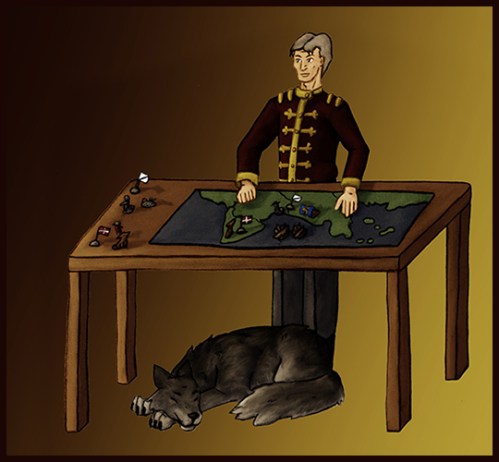
The Multiverse Chronicles - Buford War Map

* * *

General Buford laid a map of Prussia on the table before him. Several of his executive officers gathered around. They stared, eyes locked on the map, their bodies tense.

“Ladies and gentlemen,” Buford started, his face expressionless. “We have our orders from the Dragon Queen herself to set up a landing point for a larger invasion fleet at the city of Hague. I’ve spoken with a representative for the Franks, and they have decided to stay neutral in this conflict. They would rather spend their resources expanding overseas than get in the middle of our bloody feud.” He paused. “Can’t say I blame them.”

“Where does that put us?” Sergeant Cornwell raised an eyebrow and tapped his scone on the edge of his plate. “They won’t be able to stay neutral and…

View original post 2,677 more words

Leave a comment

Filed under Writing

Cover Reveal for Under A Brass Moon – with Jordan Elizabeth

Today I’m participating in a cover reveal for an anthology that Jordan Elizabeth has a story in. While I did not create this cover, I enjoy revealing them. 🙂

Without further ado…

UNDER A BRASS MOON

A Steampunk and Science Fiction Anthology

This anthology includes twenty-seven short stories intended to enchant and consume. Enjoy the works of Jordan Elizabeth, G. Miki Hayden, Benjamin Sperduto, D. J. Butler, Christine Baker, Lorna MacDonald Czarnota, Jessica Gunn, Lorna Marie Larson, Quinn Southwick, James Wymore, Terri Karsten, W. K. Pomeroy, Ashley Pasco, Jeremy Mortis, Grant Eagar, Amberle Husbands, Nick Lofthouse, and S.A. Larsen.

We are thrilled to present this dazzling cover by Eugene Teplitsky.

Under A Brass Moon - Cover Reveal for Jordan Elizabeth

UNDER A BRASS MOON releases on July 28th, but in the meantime, check it out on GoodReads.

Many of the short stories are continuations from GEARS OF BRASS. The anthology is now on sale for 99 cents!

Help us celebrate the cover reveal with the chance to win a $30 Amazon gift card.

All winners will be notified after verification of entry at the end of this promotion.  Prizes have been supplied by and the responsibility of delivery are solely that of the author and/or their representatives. Blogs are not liable for non- delivery on the part of the author. No purchase necessary.


Click here to enter the giveaway!

2 Comments

Filed under Writing

Thoughts on Writing – Breaking the Writer’s Block

A couple days ago I was looking through my Stephanie Flint Goodreads author dashboard (I also have an account under my maiden name, where I post my reviews), and I decided to answer another one of the author questions (you can see my answers here). One of the questions was on writer’s block, and that got me thinking about the concept. I wanted to elaborate on my original answer to “How do you deal with writer’s block?” and this post is the result.

(Parts of this post are taken from from my original answer on my Goodreads page. The rest is new).

I have a ton of story ideas I like to work on, so I rarely feel like I have true writer’s block. It’s more like having a zig-zagging line of a ping pong ball that doesn’t get anywhere fast because it’s trying to go too many places at once. That being said, there are times when I’m not really in the mood to write, or I don’t know how to approach a scene.

If I’m not in the mood to write, I’ll often switch to a different writing project (since I write in slightly varying genres, the projects themselves have different moods). An example of this is when I want something more lighthearted, I might work more on The Wishing Blade series (Middle-Grade/YA Fantasy). Ultimately, I expect that series to have a happy end (though I could surprise myself). If I want to work on something darker, I’ll switch to The Multiverse Chronicles (Adult Steampunk Fantasy war). Both feature war and fighting. but the approach, depending on the scene, is different.

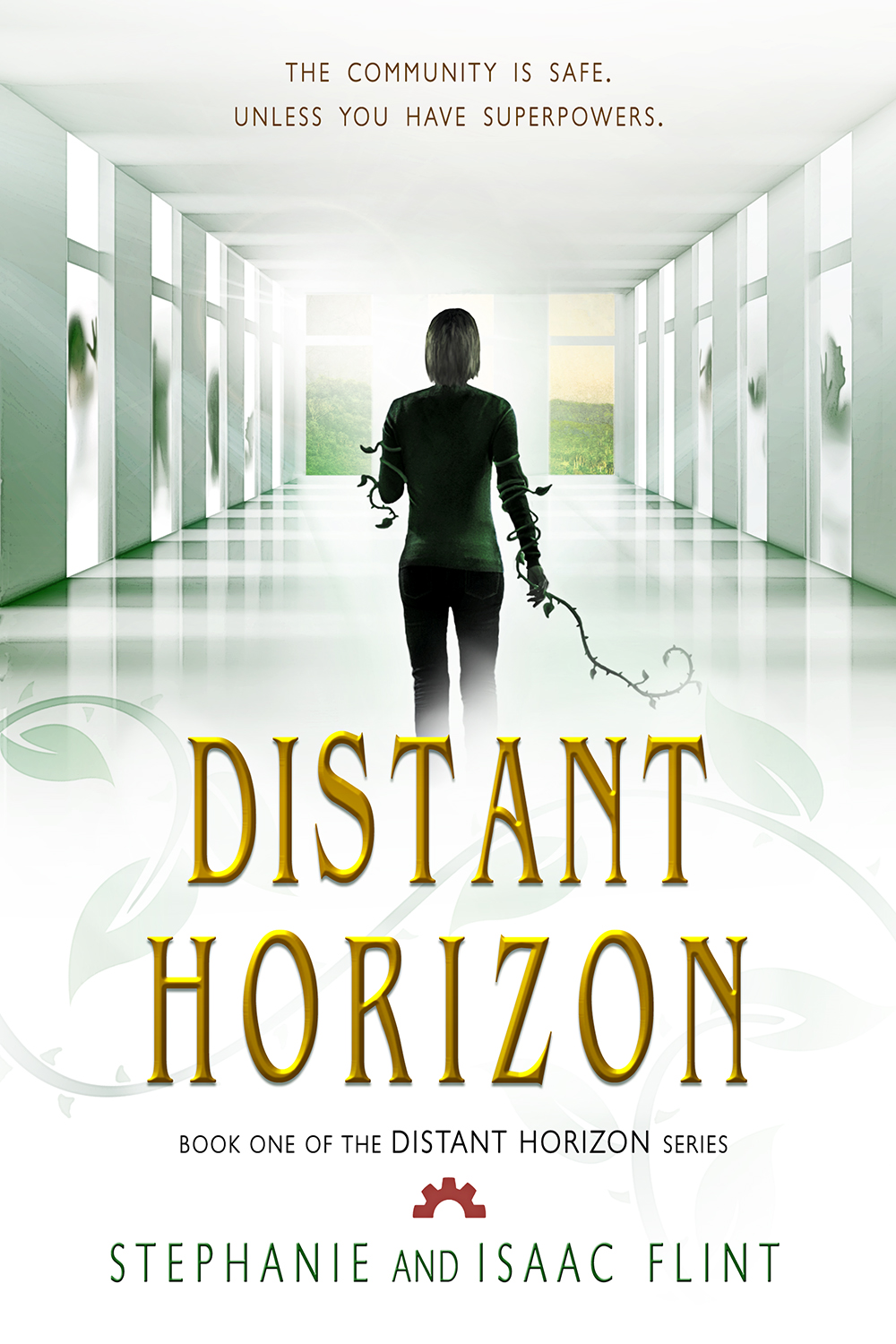
Another example of this is the difference between Distant Horizon and Glitch. Both take place in the same universe, but the themes are different. Distant Horizon is a dystopia at heart, but it’s science-fiction and action, with a few horror elements thrown into the mix. The horror elements add to the tone, but they don’t dominate. In Glitch, the story takes on a more science-fantasy tone, with very heavy horror elements. There’s a sense of dread throughout the book, with a tragic ending rather than a feeling of determination.

If I’m having trouble working on a story in particular, maybe my heart just isn’t into tormenting the main character. I’ll switch projects for a little while. Of course, if I want to drive a character insane, it’s just as easy to switch projects to that story arc and work on the scene I really want to write.

Alternatively, if you prefer to write linearly, but you’re stumped, you might try writing a detailed summary of the scene, or even just a few sentences describing what should happen so that you can keep moving forward and not get stuck. After all, you now have the idea written, even if it’s not fully fleshed out. I did this quite a bit for Little One.

Other times I’ll work on editing and revision instead of writing something completely new. The process of cleaning up the manuscript is usually different than putting a whole new sequence on paper (er… the computer). For me, having multiple projects lets me keep moving along even when one stalls (such as if you have to send it out to beta-readers or an editor or need to set it aside for a month so you can come back to it fresh).

In the event that I don’t know how to approach a particular scene, a lot of times I’ll find music that fits the mood, and listen to that while daydreaming the scene from multiple angles. I’ve got eclectic music tastes. I might go from listening to Epica and Xandria to Gordon Lightfoot and Dan Fogelberg in the same day, all while working on different scenes.

Finding music that matches the mood can be really helpful.

Another music option to consider is that if you’ve listened to a particular song or set of songs while plotting, listening to that music again can help rekindle the desire to work on the story. (Youtube playlists are nice for this, at least until the a video in the playlist is removed or made private, and can’t remember what songs you had listed).

When I started back on working with Magic’s Stealing, I was listening to Gordon Lightfoot’s “The House You Live In,” “Race Among the Ruins,” and “Shadows.” Also found a rendition of “Rainbow Connection” that I liked. Those were some of the original songs I plotted to. Since then, I’ve added other songs to those, but those were my starting point for re-imagining the series.

A different example is for Distant Horizon. “Subdivisions” by Rush and “Brave New World” by Styx immediately come to mind, and listening to those songs will quickly have me daydreaming for the book. Alternatively, “Pushing the Speed of Light” by Julia Ecklar and Anne Prather, and “The Phoenix” by Julia Ecklar will have me wanting to work on Glitch.

Funny thing, though, is that just because you might have a certain mood associated with a song, not everyone is going to picture the same thing. Take a look at fan music videos. Some you’ll think work really well to fit the story. Others… well, you might feel they’re grasping at straws. But the key for your plotting purposes is to find music that helps you. Unless you’re trying to come up with a playlist that absolutely matches the story for readers to enjoy, at which point that might be a bit different.

Finally, I’ve noticed a tendency in the weather and time of year having an effect on the stories I want to write. Come November, I’ll want to work on Magic’s Stealing. Right now, as it’s the beginning of summer, I want to work on Distant Horizon. At the same time, the start of the school year season will have the same result. A lot has to  do with when I started plotting a story, and the setting of the story itself.

But that’s just me. Do you ever have to deal with not wanting to write, and if so, how do you work around it?

I hope you found this post helpful. 🙂

Leave a comment

Filed under Writing

Thoughts on Publishing – Hastings Book Signing – Magic’s Stealing

Author Book Signing - Stephanie Flint

Me at the table I shared with Christine Gilbert.

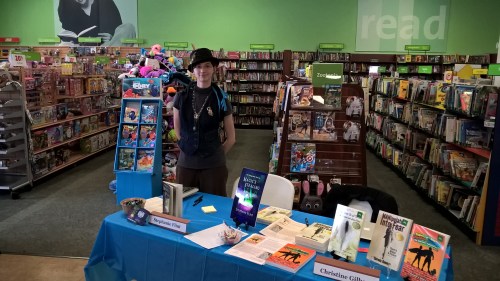
About a week ago, I took part in a multi-author book signing at the Hastings in Warrensburg, Missouri. It was an after-event for the Writers of Warrensburg’s first writing conference, in which we had around thirty writers (from beginning to published) attended panels led by published authors. The panels covered everything from characters to marketing, and we enjoyed the scenic Cena’s Nook (a local bed & breakfast). Had a great time and learned some interesting tidbits (I was hidden most of the event, since Isaac and I were organizing the critique group’s entries), and chatted with several local authors (a few we had met before at a local conventions while wandering the vendor halls).

After the writer’s conference, several of the authors who had published books went to Hastings for the signing. The event ran from 4-6 pm, and the Hastings staff set up several tables for us (two authors per table). Most of us had already brought a copy of our books into the store for them prior to the event, that way they could get the information into the system and make it easier for them to print barcode stickers on the actual day.

Author Book Signing - Writers of Warrensburg

Everyone getting setup for the multi-author signing.

For my half of the table, I included two business cards (shaped like playing cards–one had Magic’s Stealing info and the other had general publishing contact info). I had a bowl with cover-color-themed candy (the bowl is the same as the one on the cover), a newsletter signup sheet with QR code (no one signed up, though), a printed mount of the book cover, and a stand with the book (I used one of those receipt-spindle things with a plastic tip that I found at Office Depot when the local store had a closing sale). Behind the scenes, I brought a couple signing pens, regular pens, and a sticky notepad (in case I needed anyone to spell their name). I had extra books on hand, ready to have Hastings put a price sticker on if needed.

Author Book Signing - Stephanie FlintI went to the conference and signing in my pseudo-steampunk outfit (what I wore for my author photo), and brought Dragon (the stuffed dragon on my shoulder) along for the ride. (As a side note, Dragon sold me a book. It was at the end of the signing, and I had run out to the car to grab a couple things before I could pack up (I had carpooled with another author on my way to the signing, so we could get there early). On my way in, a Hastings customer asked what the dragon was for. I mentioned I was dressed up since I was selling my book at the signing that day. He asked about what I wrote, and I showed him the book (I was holding a proof copy of Magic’s Stealing at the time). He seemed interested and asked about having a copy, so I told him I could get him an actual copy inside. Signed him a book (with a tiny doodle of Dragon), and  I hope he enjoys it. 🙂

Yay for conversation starters!

Hastings Sign for Writers of Warrensburg Book Signing - Picture provided by Jason Meuschke

Hastings Sign for the Writers of Warrensburg Book Signing – Picture provided by Jason Meuschke

Overall, I sold six books. Three to people I knew, one to someone I met that day at the conference, and two to Hastings customers who happened to stop by that day. It was a lot of fun, and I’m hoping to do another signing once I have the next book available.

I hope you enjoyed this post. 🙂

Leave a comment

Filed under Business Ventures, Writing

Thoughts on Publishing – Infinitas Publishing Status Report

It’s that time again! Time for the monthly Infinitas Publishing status report. 😀

The Shadow War: I finished the first round of edits and I’m now in the process of smoothing out the story and polishing before sending it to beta-readers. Progress is definitely being made!

The Multiverse Chronicles: Trials of Blood and Steel: Slowed down a bit on releasing episodes (you can read why in this post) but we’re working our way through the second half of the first season. Isaac and I are debating taking a hiatus on releasing episodes so that we can get through edits on the rest of the season rather than trying to do a heavy round of edits each week, but we’ll see.

Battle Decks: Trials of Blood and Steel: Nothing new at the moment. Had to take a break from beta-testing since we were out of town for a few weekends.

SBibb’s Photographic Illustration: Finished two formatting projects, finished a couple book cover projects, and have one more major formatting project to go. Progress made!

Beta-Reading: Finally got started on this! Still moving slowly, but I’m moving a lot faster than I was before summer started.

Distant Horizon: Waiting on beta-reader feedback. Isaac and I also noticed a few scenes we want to tweak before we release it into the wild, but I’m excited to start working on it as soon as we have all our notes. Also, we now have a blurb!

Video Blogging: Once I’m caught up with formatting and beta-reading, I plan to resume reading Magic’s Stealing in audio format.

Author Blog: I’ve been writing a lot more writing-based articles lately. Let me know if there’s any topics you want me to cover. 🙂

In other news, we’ve just about hit the one year anniversary of Infinitas Publishing, so I plan to do an annual report later this month. I plan to go over everything we released, what we had planned to release (and didn’t), as well as sales. And I also want to touch on how we’re adjusting our original plan and what you can expect to see next.

And if you want to stay up-to-date with our latest book releases and promotions, don’t forget to sign up for our new Infinitas Publishing Newsletter!

I hope you enjoyed this post. 🙂

Leave a comment

Filed under Business Ventures, Writing

Thoughts on Writing – When Good Characters Do Things You Hate

When co-authors disagree… the war behind the war… and characters you love doing things you hate.

*Sigh.*

Sometimes co-authors have two different visions for the same story. That’s when editing gets difficult. You go round and round in circles, and a few choice characters should probably hide lest they get caught in the force of a full-scale rewrite.

Part of the reason I haven’t gotten the next episode of The Multiverse Chronicles edited yet is because I’ve been busy catching up on formatting and book cover projects, and Isaac and I were preparing to go out of town to see Planet Comicon and ConQuest.

The other reason I haven’t gotten the next episode out yet is that I haven’t been sure how to approach this episode (and the ones going forward).

See, before we started releasing The Multiverse Chronicles, I ran through a loose edit of the first half of the story. Each week, I did polishing edits, and then sent the episode to our beta reader.

Not too difficult.

On the most recent episode (episode 15), I ran into a hang-up.

I hadn’t edited this episode whatsoever.

At first, I blamed that for the reason I wasn’t working through it very quickly.

Then, while working on the episode last night, I finally understood the major problem.

It wasn’t that I hadn’t edited it before.

It was that I didn’t agree with what the characters were doing.

Their actions didn’t make sense.

Quick backstory, (includes spoilers): The Britannian queen’s daughter is murdered, and suspicion is on the Prussian prince. The prince is nowhere to be found, an important message is prevented from going through to the other side, and the furious queen launches an invasion fleet on the Prussians. Our Britannian heroes are on the front lines.

There’s just a small problem from my point of view…

Who cares if the queen’s daughter was murdered? No one likes her or the queen, everyone knows it’s only rumor that the prince is involved, and why go in and attack a random city or hurt soldiers who have absolutely nothing to do with the conflict, other than being  members of the offending country?

In particular, why should one of our heroes, a general who obviously cares about his people, whose best friend is a Prussian general, why would he send his people to attack? He knows his queen is hot-headed. He knows innocent people will be hurt if he follows through with the orders.

By moving forward with the queen’s orders, his integrity drops immensely in my eyes.

It hurts. I care about his character, and I don’t want to see him make a stupid choice.

He should know better.

Thing is, he’s loyal to a fault.

After thinking about this a while (because how am I supposed to co-author a story in which I want to rattle a character into his senses?) I found consolation in knowing that good characters have faults.

To be nuanced, to be interesting, to make us pull at our hair and wonder why would you do that?, good characters must have both good traits and bad.

What gets even more fun is that someone else may consider his loyalty a good thing, despite how much I might be railing on about it being terrible.

(I’m the person who watched Once Upon a Time and thought the entire village who called Rumpelstiltskin a coward just because he mutilated his foot so he could go home to his son and not die in a pointless battle were insufferable jerks. Anyway...)

General Buford cares for the people under his command. He steps in to reconcile a wrong when one of his captains lets prejudice get the best of him. He recognizes when there’s a problem, and takes it into consideration. He doesn’t go running blindly into battle.

But he’s loyal. That’s a problem when his loyalty lies with a queen who is known for mangling her messengers when they deliver bad news. A queen who is controlling, and temperamental, and just a tad bit power-hungry.

(I came to the conclusion that the Britannians are very much playing the “bad guys” in this story… at least until you realize that someone else is pulling the strings to cause the whole war).

In order to not throw the not-yet-edited book across the room, I personally needed something more than just “he’s going to follow orders” if he’s going to go along with the invasion plan. Even if he is loyal.

Why does he have the orders he does? To invade and secure the port city, then set up a launch point for further troops to come through.

What reason do they have for invading? (Other than the queen being a dragon-blooded hot-head who’s reasonably angry about the murder of her daughter… just not so reasonable in her tactics.)

From a logical standpoint, the prince–who is suspected of murdering the princess–has vanished… as has one of the queen’s captains who was in charge of the princess’s personal bodyguards. They never got the message that said an investigation was underway, and that the Prussians where cooperating with said investigation.

So, logically, if the Britannians need to search for the prince, having a secured locale allows them to bring in more people as they need to, whether the Prussians want them to or not (Could be that the prince did kill the princess, and now the Prussians are trying to keep him hidden).

It’s not much to go off of, but it’s better than just doing something because the queen everyone knows is illogical said so.

Still, Isaac (first author) wants Buford to be “loyal to queen and country,” and that be the main reason he follows through (despite having him think that the invasion is pointless–since the queen just wants to punish the Prussians). But at least he’s willing to go along with the idea that Buford could reason out the above tactical advantage–the invasion puts them in a position to search for the prince and find out what really happened the night the princess was murdered.

And from all that, we realized we have differing views of how we want the story to go.

Isaac wants it to be a war story… where the war is pointless (and that’s the point) and the soldiers on either side are not necessarily good or bad. I want a steampunk fantasy with elements of a war story, where smart characters say ‘no’ to stupid queens, or have good reasons for following stupid orders… (I am very much looking forward to the inevitable revolt that’s coming in future seasons.)

This is where I also realized that our branding of the story may be wrong. I mean, I had been picturing the slogan of “Dragons and dinosaurs and dirigibles, oh my!” which insinuates a lot more light-hearted or quirky of a read than what the route the story seems to be taking.

(This is the downside of trying to release a serial novel before it’s completely written).

Will the story continue? I imagine it will, but there’s probably going to be a few more tirades of arguing that characters shouldn’t be blind loyalists.

But when they are, I’m not sure whether it tugs on our the heartstrings even more, because we don’t want to see them making bad decisions… or if it makes the author overlord side of me really happy when their blind loyalty bites them in the behind later on.

But hey, that’s all just an opinion.

Have you ever been stuck writing a character (or reading about one) who you really cared about doing something you really despised?

Leave a comment

Filed under Writing

Thoughts on Writing – Active Vs Passive Protagonists

Sometimes, when writing or reading a story, we run into protagonists who fall flat. Protagonists who seem boring or uninteresting, and we just can’t figure out why.

One possibility is that they aren’t playing an active role in the story.

It’s tough to avoid. As a writer, you may very well have a plot you want to convey. You want your character to follow the plot so you can show your readers all the cool stuff in your world.

Sometimes, you choose the wrong protagonist.

I’m a big fan of Janice Hardy’s book, Planning Your Novel. One of the things she talks about is choosing a character who has stakes in the story. Who has the most to lose? Who is going to be the most involved? Who has the point of view most interesting for you to tell?

Another thing to look for? Which character can be actively involved for convincing reasons.

One way to find an active character is to examine which of your characters are willing to act to get what they want.

Maybe they want to protect their sister from certain death (Hunger Games), so they volunteer themselves for a near-suicidal death game. Or maybe they want to choose how they die and not leave it to chance, so they attempt to jettison themselves from an airlock (Better World by Autumn Kalquist).

They’ve got to have desires which are being blocked from them. And regardless, they have to try to get around those blocks.

It doesn’t have to be life-and-death situations. Maybe a character wants to find true love, and so they sneak into a masquerade they would normally avoid. Or maybe they want to solve a crime because they’re reminded of how a family member was killed years ago, and they think it’s the same killer. They want to prevent it from happening again, so they sneak into the scene of the crime at the end of the night.

Point is, an active character has something they want. A goal to be achieved.

An active character will take action on that goal. They don’t just let things happen.

(Note: If your character achieves their goal without making it happen because of what they did, the reader is going to feel cheated at the end of the story.)

It can be easy to let the setting and plot drag them along. Really easy. For example: Oh, hey! I’ve been kidnapped and taken to a rebel camp. And they need fighters, so I’m going to join them in battle even though I have no reason to trust them! And guess what, it just so happens that someone I trusted is really an evil evil bad guy, and they think I’m important for some unknown reason… Yeah…an early draft of one of our stories might have sounded a bit like that before we edited it… Acting on personal motives are important. Even when a character is being tossed around by external forces, they shouldn’t just react. They should actively take a role in the events being played.

The nice thing is that a character’s internal conflicts can push them to act against external forces they might usually ignore.

Let’s take a look at the earlier example of a character who wants to find true love. Maybe internally he’s afraid of being alone, and he feels that if he never finds love, he’ll be alone forever. The catalyst could be that a close friend finds a “perfect” love, and leaves the protagonist behind.

Driven by loneliness, this protagonist determines to sneak into a masquerade where he might meet the true love of his life. (He actively makes this choice and then proceeds to try to go to the masquerade).

He doesn’t have to successfully make it into the masquerade. In fact, it might be more interesting if he doesn’t. (Conflict!)

So our protagonist tries to go in the normal route, but he’s not invited. (Why not? Is he of the wrong societal class? Wasn’t invited because he accidentally showed up the host of the house with a super cool invention? These reasons could play an important role in the coming conflict.)

This protagonist has the option to turn back and go home, giving up on his dreams (Leading into a tragedy, perhaps?). Or he could scale the back wall of the manor and sneak into someone’s chambers, planning to slip into the masquerade unnoticed.

Maybe the room is dark, and he thinks it’s empty. He sneaks into the hall and proceeds to the masquerade, moving along with his goals. He is going to that masquerade, and he is going to dance with anyone who will give him the chance.

And maybe, just maybe, his true love will be there.

He’s actively pursuing his goals.

But what if he instead stumbles in on a secret meeting to overthrow the lord of the house… and they threaten to kill him if he doesn’t participate. And hey, since he snuck inside, no one will believe him if he’s caught poisoning the lord and blames the conspirators.

Now that he’s been dragged into a larger conflict that he has no interest in, it’s easy to let a character be buffeted around without acting on their own behalf, which can quickly get boring. Even if he’s forced to be involved, we should still see him act on his internal conflicts and goals.

Back to the story. Our protagonist now has an additional goal: get through the night alive (which might supersede his goal of finding true love–at least for the moment. However, this internal goal is still going to influence his actions).

Maybe his goal now is to poison the lord as the secret group instructed. Perhaps he agrees that the current lord of the house is a scumbag, and the world would be better off without him. (And maybe he discovered someone he has a crush on is working in the group who just recruited him… so double the motivation for impressing them).

Alternatively, maybe he doesn’t want to poison the lord. Maybe he secretly likes the man, and the whole reason he was sneaking incognito into the masquerade was because he wanted a chance to meet the lord without societal rules getting between them.

And that means he now has an additional conflict. He needs to get close enough to the lord to warn him of the plot… without getting caught by the people who recruited him.

Or maybe he just ditches the whole plan altogether and does what he can to get out of the manor and run for the hills. (Downside… this feels unexciting. How does this fit with his internal goal of finding true love?)

Whatever this protagonist does, he needs to make the choice. There are times he may have to react to a situation, but even then, even when he’s forced into a corner, he should still explore options to get him back on track with his internal goals.

It helps if the antagonist of your story is in direct opposition to your protagonist’s goals. A character without conflict isn’t going to be so clearly taking actions to resolve a conflict if there is no conflict to resolve.

Your protagonist needs to want.

What would this example have looked like if our protagonist wasn’t actively taking a role?

Let’s go with the idea that our protagonist still wants to find true love. But instead of choosing to sneak into the masquerade himself, he mopes around until a friend drags him along. While there, he gripes a bit that no one there will interest him, and mostly stands in a corner until a dancer invites him to dance. He takes the invitation without really being interested, only to learn that the dancer really wants him to slip a pill into the lord’s drink.

Here, he has choices. Refuse (and have the assassins after him later), agree to poison the drink (and actually try to poison the lord), or agree (and then try to warn the lord instead).

This is a catalyst point. He’s been dragged into a conflict bigger than himself. But he still has his own internal goals.

The question is, does he stand up for himself? For his goals?

Or does he allow himself to be thrown around between plot points? Does he react to those points? Or does he push the plot points in his own direction?

Does he actively influence the plot?

If he doesn’t, and he doesn’t have a reason to act, then it’s going to be harder to keep him active. Say our protagonist isn’t looking for true love, and he’s just there because the friend dragged him there. Then when the conspirator tells him to put a pill in the lord’s drink, he does so, because otherwise they plan to kill him. But he’s just meandering along, following what everyone else is telling him to do without making any choices of his own.

At this point, the protagonist really needs to be the one to try to poison the lord or warn him. If he steps back and lets his friend do all the work, or if it just happens that the lord overhears him say something about the conspiracy and that saves the day, then it’s not going to be satisfying. Sure, he had the information, but he wasn’t actively choosing to do something with the information he had.

(That’s not to say it can never work. You might have a comedy in which the hero is bumbling along and causes all sorts of elaborate stuff to happen. But would it be nearly as funny if we didn’t know he was actually trying to do something entirely different and mundane?)

The actions a the protagonist takes should influence the events of a story, Some things may be out of their control, and they will react, but at the same time, they should also act per their own motivations.

Protagonists and antagonists work against each other to create a dynamic story with active characters. Side characters with strong motivations can help create plot twists and keep the story from feeling flat. Internal motives are important to driving stories, and helps to create interesting conflict.

I hope you found this post helpful. 🙂

Have you read any stories or run into any problems trying to write a character who just wasn’t being active in the plot?

Leave a comment

Filed under Writing

Thoughts on Writing – Naming Your Character

In my previous post, I talked about choosing the right attire for the characters in your world. Today, I want to talk a bit about naming.

We’ve all heard suggestions for basic naming conventions. These are a few off the top of my head:

  1. Make sure each name sounds/looks different (Varying syllabic emphasis can help here–pay attention to where you emphasize the name. “Anna” has a different emphasis than “Blayloc,” for instance).
  2. Don’t have the same first letter of their names for multiple characters in the same story (For example: Jenna, Jim, Jack, Janice… oh dear. Isaac and I may need to revisit Distant Horizon and change a few names…)
  3. If writing fantasy/science fiction, don’t have long, convoluted names. Or if you do, shorten them. (I’m looking at you Shevanlagiy… Bit of trivia, when I wrote the first draft of The Wishing Blade a decade ago, I copy-pasted her name each time I needed to type it. Probably should’ve taken that as a hint.)
  4. Don’t have two characters with the same name (Unless this is part of the plot, at which point you still want the readers to be able to easily tell them apart.)
  5. If your name has too nice of a ring to it, Google-search the name to make sure it’s not already taken. (I once created an original character whose name I later realized was very similar to a DeviantArt stock artist that I often used stock from).

When I originally created my main character for the Exiles role-play campaign that Isaac ran (a story set in the Distant Horizon universe, which we plan to write later), I named her Emily Johnson.

Worked for the campaign, but looking back, I’ve been debating changing her name. There are two reasons.

One, she is supposed to be of Asian heritage, and so I have considered giving her an Asian surname (I haven’t decided which particular culture–Korean, Japanese, Chinese, etc…). However, given that she lives in a dystopian world where English names are encouraged, and there’s a good chance that somewhere along the line, her father/grandfather/great grandfather might not have been Asian, I’m not too worried about this one. Name makes sense for the world of the story. Now, in areas which aren’t under the Community’s control, the names you see are going to be a bit different.

However, there is another Emily in the story: Lady Emily Black. While most characters wouldn’t know her as Emily, if Isaac and I ever delve into that character’s youth, we’ll end up with two Emilys in the same universe. If they were stand-alone stories in different universes, I’m not sure it would be a problem. Same universe?

Could be confusing.

My initial response was to change the main character’s name. (After all, there’s a story purpose for “Emily” regarding the other character: her mother’s name was Emma, and she was named for her mother).

But let’s take a quick look at the culture of the world, in which Lady Emily Black is a well-known, highly respected diplomat (at least within the Community). Thus, it makes sense that a family might name their child after her, hoping that kid would pick up some of her better-known attributes (and indeed, both characters play the part of a peacekeeper between the people they work with).

Not only that, Lady Emily Black is typically known as Lady Black, with Emily being relatively unused (unless we ever go into writing her backstory).

Based on those factors, I’m considering keeping Emily’s name as it is. I might still to choose to change it, giving her a different surname or changing her first name to keep the characters a bit more separate, but right now, I think I’ve got another set of names to worry about.

Jenna, Jim, Jack, Janice…

But… I like their names! I’ve grown fond of them! They all fit the character!

*Sigh.* Something Isaac and I will have to discuss and decide if we need to change before we do our final round of edits.

It’s not like we’ve got Camaraderie/Coalition/Community in the same book–

Or Crush and Chill (both “C” names, both based on their superpowers)—

Um… I’ll get back to you on that.

I hope you enjoyed this post. 🙂

Have you ever had to change the names of your characters for clarity? Would you change Emily’s name, or swap out the multiple “J” names a bit?

Looking for more naming tips? Try these articles:

http://thewritelife.com/6-creative-ways-to-name-your-fictional-characters/

http://www.writersdigest.com/online-editor/the-7-rules-of-picking-names-for-fictional-characters

http://www.writersdigest.com/writing-articles/by-writing-goal/improve-my-writing/how-to-give-your-character-the-perfect-name

http://thewritepractice.com/8-tips-for-naming-characters/

Leave a comment

Filed under Writing