Tag Archives: how to write better characters

When the Gods Get Involved – Meddling Deities in the Wishing Blade and Distant Horizon Universes

When it comes to fantasy and sci-fi, I love reading about, seeing, and writing about meddling gods, goddesses, and deities. Which is why, when I’m pitching my books at live events, I tend to say that if you like stories with meddling gods, you might like my Wishing Blade series (and several of the Legends of Cirena stories).

But… that doesn’t mean there aren’t any meddling, deity-like beings in the Distant Horizon books. They’re just not gods, and they don’t play such an obvious, prominent role.

Let’s have a look at how this all got started when it comes what’s been an influence on my writing.

Obviously, meddling deities show up pretty heavily in mythology, including Greek and Roman mythology, which was the mainstay of myth discussion when I was in school. The two which, ironically, has a hard time holding my interest. Too much family drama and gods being too powerful, maybe? I mean, if the gods are going to be jerks, I want to see the mortals kicking them off their throne eventually.

When I have been on myth-research kicks, it’s been Egyptian mythology (probably inspired by being a fan of Stargate SG-1), and Norse mythology (I’m not actually sure what inspired that research kick… possibly a children’s play we did in high school?). That, and I went on a whole kick reading about different kinds of unicorns (which definitely influenced the chesnathéme in the Wishing Blade universe.

Anyway, in reading fantasy, the first one I recall reading and seeing involvement from the gods and goddesses was probably from Tamora Pierce’s series, such as The Immortals and the Trickster Duology. (The latter of which heavily influenced how I developed the Cirenan pantheon world in the Wishing Blade Universe).

Meanwhile, in sci-fi, I’ve always been a fan of Q in Star Trek: The Next Generation. The trickster-aspect, the way the non-powerful people respond to his games… and then in other series, those moments when even Q gets baffled…

All fascinating.

Is it any wonder that meddling deities would work their way into my stories?

In the Wishing Blade series, the gods are extremely involved. From Aifa, goddess of relationships, granting her magic to Toranih and Daernan when mortal magic gets stolen, to the Trickster, with his army of shadows made from mortals who got caught in the wrong place at the wrong time… The gods get involved, they try to account for prophetic danger, and they can guess incorrectly.

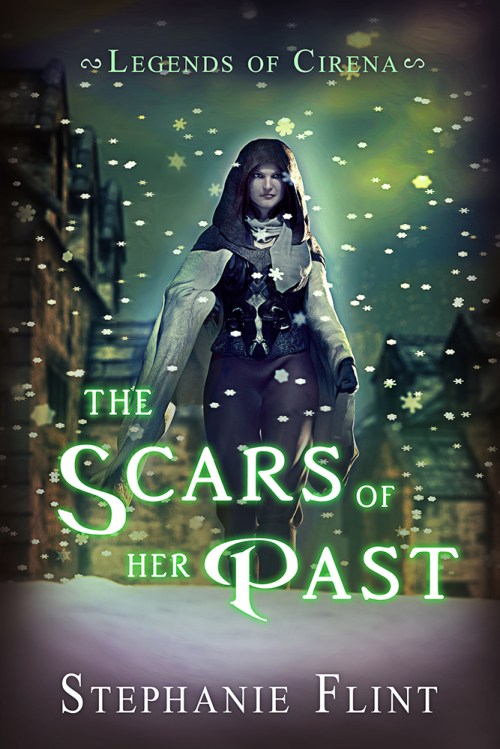
They can also try to lend their indirect help, pointing mortals in the right direction, as we see in The Scars of Her Past, when the Oracle shows up in shapeshifted disguise to pass along a warning to Alia, whose past puts her in a position to offer help no one else can.

On the writing side, it can be tricky to make sure that the gods can’t simply solve the problems themselves, but their flaws and limits make them fun to write.

In the case of The Scars of Her Past (Legends of Cirena #5), the threat Alia must confront involves magebane, which reacts explosively to magic. If the goddess gets too close to magebane with her magic, it would react like a bomb, not only destroying the city she’s trying to protect, but possibly unraveling their reality in the area that got hit.

Which means she needs a mortal without magic to investigate.

We also see the Oracle in the Stone and String series (there she goes by the name of Meshon), offering cryptic help and nudging Edyli along, all while trying to stay out of the sight of the goddess of the dead, whose rigid desire for control of mortal fate could get the world destroyed—again—if the gods aren’t careful.

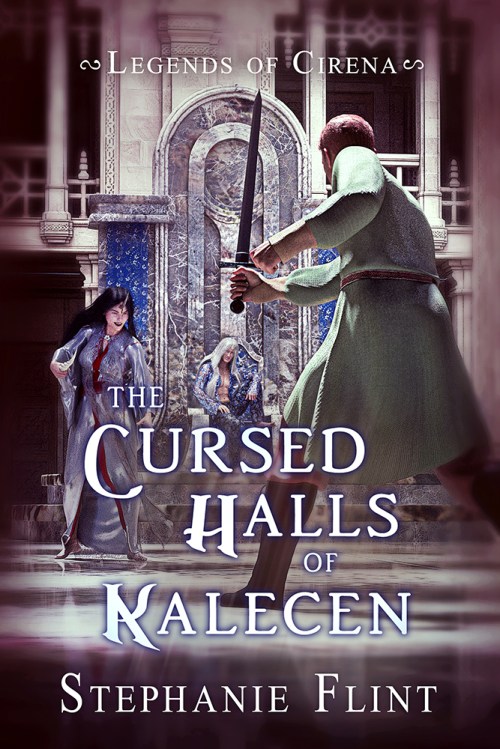
In the case of The Cursed Halls of Kalecen (Legends of Cirena #4), the god of justice was once a chesnathé (more-or-less a very judgemental unicorn) whose horn has been broken. And since chesnathéme use their horns to cast judgement, well… let’s just say his skewed sense of justice is a problem for everyone involved.

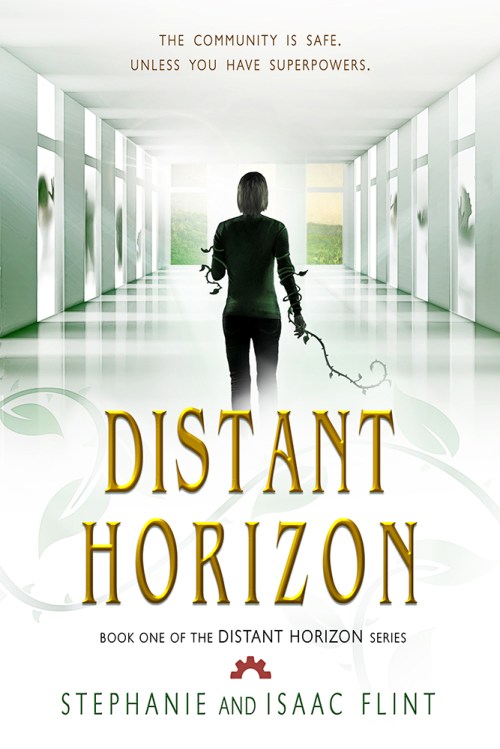
Once we get to the Distant Horizon series, the science fantasy world, we get characters like Spectator and Krissa Wolf, both not-quite omnipotent beings who interfere with the lives of our characters.

Spectator is absolutely a meddler (arguably, he set the events of Distant Horizon into motion behind the scenes, though that’s not revealed until Ghost of a Memory… and even then, it’s vaguely stated).

And Krissa Wolf is a character who can make even the most powerful members of the Camaraderie of Evil nervous, because they can’t shield her (they can’t block her powers). I know why that’s the case, but some reveals won’t come until later stories. 😉

In both cases, they’re reality benders, capable of changing the world around them. Each have their own motives, but because they’re fourthwallers (an in-universe religion that believes their world is all one big game or story), Spectator and Wolf want to keep that game entertaining… which means not using their powers to solve a problem unless it’s going to be fun for the ones watching the game unfold.

And there you have it, a glimpse at meddling deities in the Wishing Blade and Distant Horizon universes!

* * *

Want to see the gods get involved?

* * *

Happy reading and writing!
Leave a comment

Filed under Writing

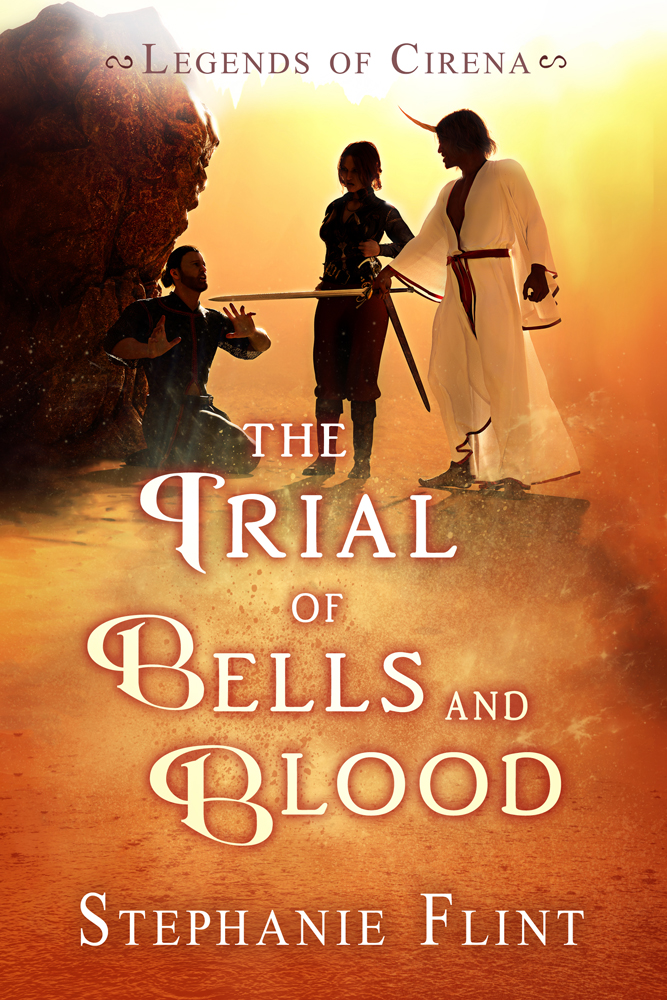
Differing character POVs in The Trial of Bells and Blood

How do Hahven and Alia see the world of Cirena?

Both are fighters of a sort. Hahven is a duelist. Alia is a former guard.

Both have a desire to protect.

But whereas Hahven looks to protect his students from the dangers of the world around them, Alia tries to switch wagons and become a merchant after an attempt to protect people goes horribly wrong.

And how they view the world differently is really fun to write.

Hahven is annoyed with the gods but willing to deal with them if it means protecting someone. Alia is trying to honor her new patron deity of merchants, but still feels honor-bound to step in and protect if no one else can.

Their perceptions of the world, and their biases about the world, each plays a large role in how they interact with the world and with each other.

One thing I strive for with storytelling is writing with character perceptions and biases in mind, especially for any point-of-view characters, so that the world we see is heavily influenced by their perception and biases.

It’s something I’ve been trying to do with the Wishing Blade universe since Magic’s Stealing (we briefly see Aifa and Shevanlagiy’s points of view, in addition to Toranih), and especially the further we go as more character POVs and arcs are added. By the time we get to Magebane, we’re also in Daernan’s head and Siklana’s head. The same events take on different flavors depending on which character approaches that event.

(For my Wishing Blade Universe newsletter, I’ve been working on a draft with a WIP title of “Twins in Ferta”/”the Ferta Story,” and that’s been really fun to write. Not just because Ehmina and Lesi each see the world a bit differently, but because I got to hop into young Isahna’s head… and that led me to some unexpected revelations about his character and backstory).

As for Legends of Cirena, the first six stories each focus on a singular character, but since they’re short stories and novellas, I got to do something similar to the Wishing Blade series, where I’ve been able to explore the world through different characters in different regions with different perceptions.

For example, on one end you have characters like Livena (The Wind Mage of Maijev and The Wind Mage and the Wolf), who is very confident in her beliefs about how the world should be, tends to comment on the social structure of her surroundings, and speaks negatively about magic. On the other end, in The Gryphon and the Mountain Bear, you have a shapeshifting rogue who is completely comfortable using her magic to fool a gryphon (well, as comfortable as anyone can be while trying not to become a gryphon’s dinner).

Or Ro’nor (The Restless Sands of Neel), who really just wants to settle down someplace nice and cool, and isn’t sure what to think of his talkative, very excitable guide. Meanwhile, his guide is friendly and curious and wants to know more about him and where he came from, but that’s maybe too friendly when he’s tired of being asked the same questions about dragons when he doesn’t have any of the powers in question.

Then there’s Hahven and Alia (The Cursed Halls of Kalecen, The Scars of Her Past, and The Trial of Bells and Blood)… Both are jaded by events from their past (Hahven more recently), but whereas Alia leans into her faith in the gods and worries over the cost of having accidentally broken the code of her first patron god, Hahven didn’t really worship any of the gods and doesn’t mind griping about the god he’s become a champion for.

Knowing what the characters value and what they despise or distrust can be a great way to figure out their goals or where they clash. And being able to write from multiple character POVs (points of view) and showing how they react to other familiar characters is one of the things that I’m particularly enjoying with the crossover stories The Wind Mage and the WolfThe Trial of Bells and Blood, and the upcoming The Dark Forest of Aneth.

* * *

Read the very different perspectives of Hahven and Alia…

* * *

Happy reading and writing!

1 Comment

Filed under Writing