Tag Archives: writing craft

Complex Villains – “Evil” isn’t their one defining trait

(Did I just make a The Lego Movie 2 reference? Yes. Do I now have a song stuck in my head? Also yes).

Most of the antagonists I write, or at least, that I enjoy writing, have distinct goals driven by personal motivations that don’t start as outright evil.

In my latest Huntress book, Fae, even the extremists who are about to hurt a lot of innocent people if their attack succeeds aren’t doing so because they want to cause harm. They’re scared. They feel like they’re backed into a corner (even if they aren’t). And someone else is nudging them into a terrible direction.

In this case, that’s Dr. Johnson (main antagonist in Changeling and the primary antagonist for the rest of this series). Which leads me to consider, is Dr. Johnson, secret mastermind, truly evil?

I don’t think I’d say evil. A bad guy? Oh yeah. Her actions cause major harm. But even she is being driven by a misguided sense of wanting to make the world a beautiful place.

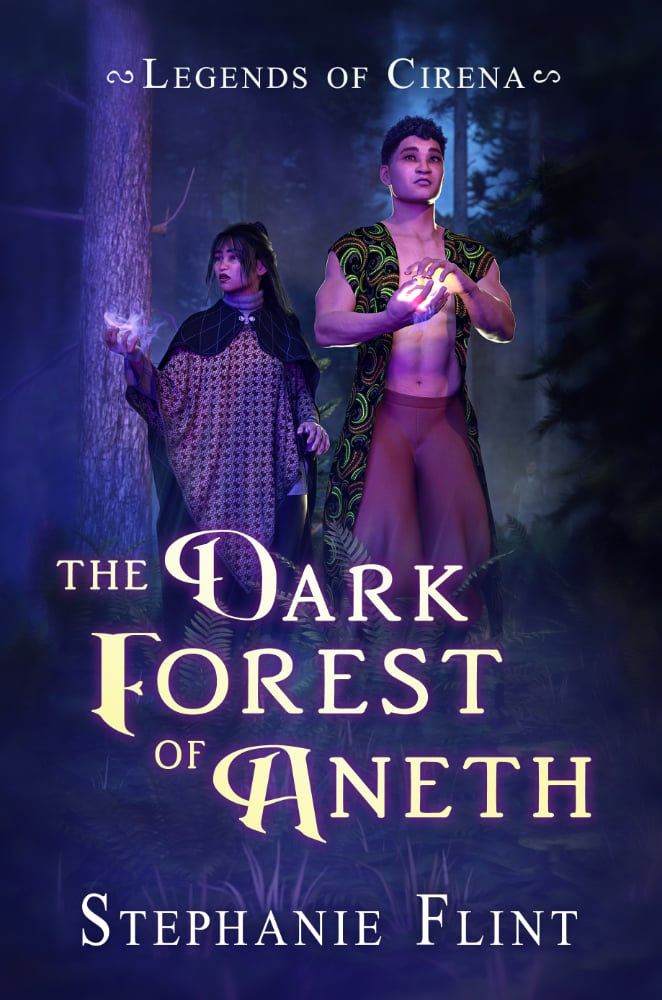
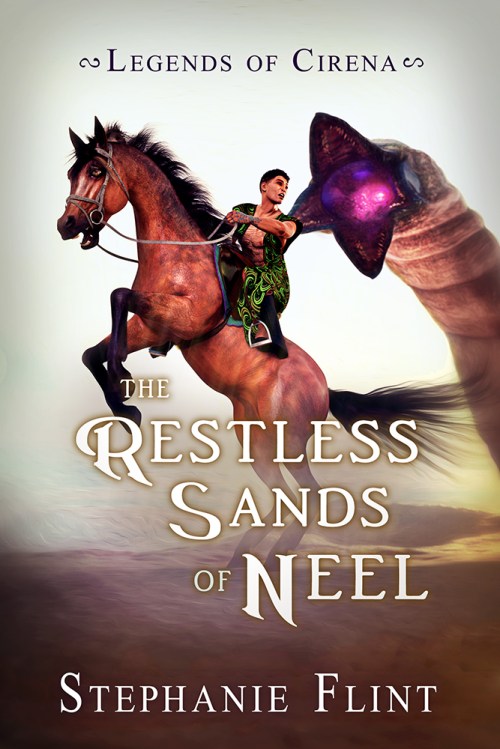
What about Lord Cafrash Menchtoteale, antagonist in Magic’s Stealing? He forges a sword that allows him to steal the magic from the kingdom for the Trickster god (which causes a lot of mages to fall ill and/or die), and then goes on to lead an army of shadows impervious to regular weapons as he invades Cirena.

The catch?

He’s not doing this willingly.

He got tricked into serving the Trickster by trying to protect someone he cared about, and breaking that bond isn’t something he can do without either a really powerful string mage or divine intervention. And the Trickster, who can possess him as part of the bond, isn’t going to let that intervention happen.

So now Cafrash is doing his best to follow the Trickster’s orders, all while trying to mitigate the harm.

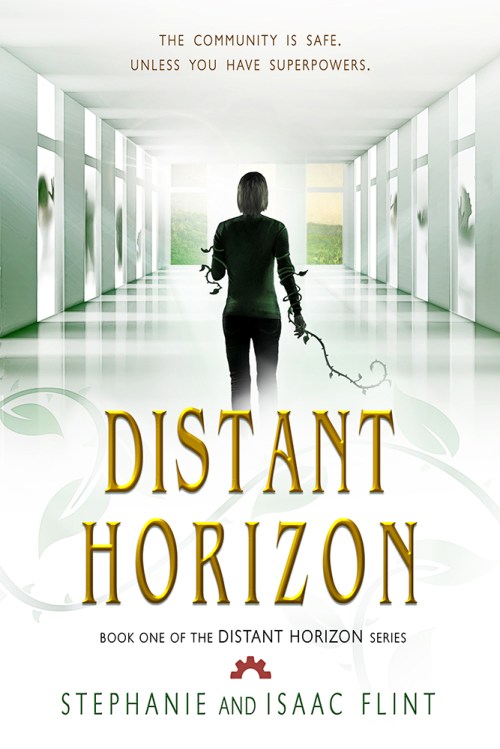
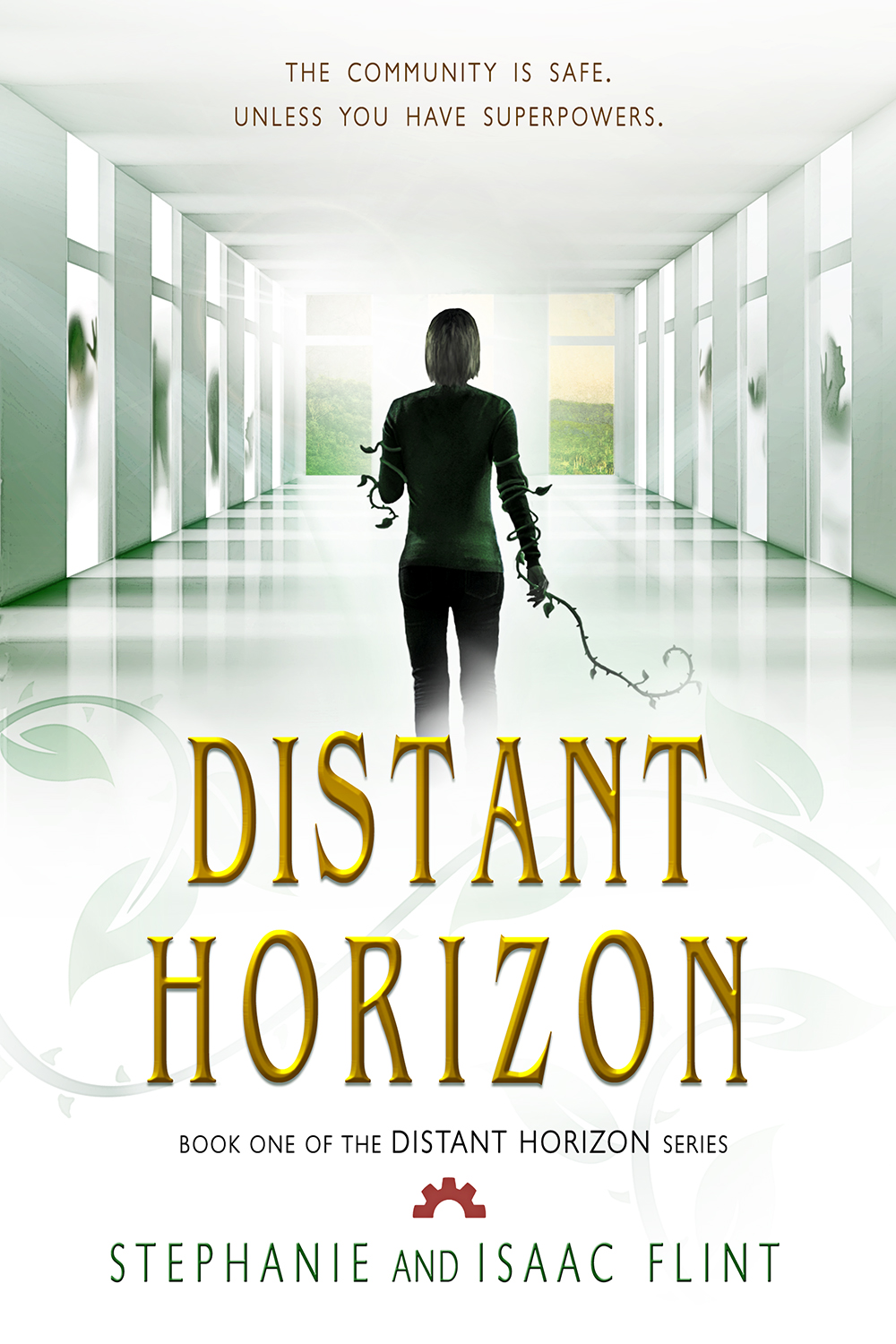
For a much more villainous antagonist, let’s look at Lord Black from my Distant Horizon universe. He’s one of the utopian Community’s founders. He got his start in an alternate universe as a supersoldier who gets betrayed by the authority that created him, and so he goes on a rampage uprooting that corruption before getting locked away… only to find himself in an entirely different universe that was wholly unprepared for what he could do.

(Note: Most of those backstory details haven’t been detailed in the published yet, just speculated on by characters, but that’s the gist of it).

Given the opportunity, Lord Black upends the corruption in his new universe (the one we see in Distant Horizon) to create a peaceful, secure community that cares for its citizens’ needs (mostly), and is pretty decent at protecting them.

But that protection and care came at the cost of turning people with powers into mindless beasts, hiding the existence of powers and those beasts, committing genocide against those of pretty much any religion in order to lower the chances of religious-based uprising, as well as a myriad of other war crimes, all while blaming it on a non-existent plague.

Not a good guy.

Eventually, once all that gets revealed by a monster of his organization’s making, the Community he worked so hard to build crumbles.

(There’s more I’d like to say about him as a character and his potential redemption points, but that would also give major spoilers for the series, so… I’ll just leave it at that for now).

So, where was I going with this? I guess it’s to say I generally like writing complex villains.

They might not appear complex initially, but given time and a chance for their backstory to emerge, eventually that complication—the part that makes us question how we should feel about them and whether or not they’re redeemable—shows up.

Most of the time.

In my “Twins in Ferta” story—working title, I’ll figure out something better later—which I’m currently drafting and releasing to the Wishing Blade Universe newsletter chapter-by-chapter, there is a particular character who I’d give the “evil” designation to.

He acts only for himself, hurts others for his gain and pleasure, and isn’t making any attempt to do better. I don’t spend a whole lot of time with him on-screen, and I don’t plan to redeem him. (Let’s just say he’s not getting a happy ending.)

Long story short, I prefer to write antagonists who aren’t evil for evil’s sake. They might not always get a redemption arc, but generally they’re going to have a logical reason for doing the things they do.

* * *

Want to see these antagonists in action?

* * *

Happy reading and writing!

Leave a comment

Filed under Writing

Two Versions of Telepathy – Magic versus Superpower in the Wishing Blade and Distant Horizon Universes

I recently did a presentation on world-building, so I’ve been thinking a lot about world details, and today I thought I’d talk about how I use telepathy in both the Distant Horizon Universe and Wishing Blade Universe. 🙂

Real quick, in case you’re new to my worlds:

The Distant Horizon Universe includes the Distant Horizon, Deceived, and Glitch series. Science fantasy/dystopia.

The Wishing Blade Universe includes the Wishing Blade, Legends of Cirena, and Stone and String series. Secondary fantasy.

Now, I’ve already done one in-depth focus on telepathy in the Distant Horizon series. You can find that post here. But there are some key differences between the two story universes.

Telepathy in Distant Horizon

In the Distant Horizon Universe, someone with the telepathy power can send thoughts and images, read minds, plant ideas and influence emotions, and possess their target. An extremely skilled telepath can plant “memory seeds” which unfold over time (More on that in this post).

Telepathy has a pretty wide spread of uses, though its capabilities depend on how strong of a telepath the user is and how trained. Someone with telepathy as a secondary or tertiary power isn’t likely to be able to possess their target or plant a memory seed, but they might be able to subtly affect the emotions of those around them.

Artifacts exist that can hold that power if someone doesn’t naturally come by it (they’ll need enchanted apatite), and artifacts exist that can help enhance that power (enchanted emerald).

Alternatively, shields exist that can block the power—whether by shutting down the powers of the telepath entirely, or by blocking a telepath from targeting someone who is shielded. And if the telepath has taken adominogen (an in-universe drug that blocks superpowers), they won’t be able to access their innate telepathy. But once the shield is removed or the adominogen has left their system, they’ll have access to their powers again.

Telepathy in the Wishing Blade

Now, in the Wishing Blade Universe, telepathy comes from pink ribbons of telepathy, a specialized kind of ribbon magic. Mostly, it’s used for communication, sent from the person who has the ribbons to a target, but the target’s mind can’t be read. It’s possible to intercept a ribbon to effectively eavesdrop, but that takes considerable skill. Communication is primarily verbal, though images and senses might also be passed along via ribbon. The thoughts may still convey feeling: amusement, annoyance, anger, the like.

Unlike in the Distant Horizon Universe, telepathy can’t be used as mind control. Even magic’s lure, which is a kind of compulsion magic, doesn’t affect the mind, it only controls the physical body and forces action. Telepathy ribbons might be used to convey a command, but on it’s own, can’t be used to control.

Word magic can affect a person’s mind (for example, wiping memories), but usually isn’t used as an outright mind control mechanism. There are other ways to adjust a person’s mind, but those tend to be much rarer powers that certain deities have, rather than easily accessed by mortals. (We get a really strong example of this at the end of Magebane, when a certain god of merriment manages to take over a town by using his boon, rather than through magic’s lure or word magic).

Crystals (usually quartz, though not always) can be enchanted to hold telepathy ribbons, and anyone can use them to send messages. However, there’s no direct way to block a telepathy ribbon. Magebane could potential destroy or repel the ribbon, while silk might slow it down or prevent it from going through, but can still be bypassed. Glass-stone would likely stop magic from passing through, but there’s no feasible way to use it except as, perhaps, a prison wall. Even then ribbons could find their way through a vent. Ribbons can be removed, however, or destroyed, which would permanently remove a mage’s ability to use telepathy without an enchanted telepathy crystal.

In both universes, using your own telepathy powers or magic can be physically taxing, especially if you’re pushing it beyond what you’ve practiced or are normally capable of doing. And, in both universes, some people are born with telepathy magic or powers, while others aren’t. The exception comes from spirits (Distant Horizon Universe), who automatically gain telepathy, a low-level form of insight, and life-spirit powers when becoming a spirit, and immortals (Wishing Blade Universe) whose immortal magic is a stronger form of ribbon magic, and usually gives them some version of telepathy and healing, and other types of magic depending on what kind of immortal they are.

* * *

Want to see the telepathy in action? Start with Distant Horizon or Magic’s Stealing…

* * *

Happy reading and writing!
Leave a comment

Filed under Writing

When the Gods Get Involved – Meddling Deities in the Wishing Blade and Distant Horizon Universes

When it comes to fantasy and sci-fi, I love reading about, seeing, and writing about meddling gods, goddesses, and deities. Which is why, when I’m pitching my books at live events, I tend to say that if you like stories with meddling gods, you might like my Wishing Blade series (and several of the Legends of Cirena stories).

But… that doesn’t mean there aren’t any meddling, deity-like beings in the Distant Horizon books. They’re just not gods, and they don’t play such an obvious, prominent role.

Let’s have a look at how this all got started when it comes what’s been an influence on my writing.

Obviously, meddling deities show up pretty heavily in mythology, including Greek and Roman mythology, which was the mainstay of myth discussion when I was in school. The two which, ironically, has a hard time holding my interest. Too much family drama and gods being too powerful, maybe? I mean, if the gods are going to be jerks, I want to see the mortals kicking them off their throne eventually.

When I have been on myth-research kicks, it’s been Egyptian mythology (probably inspired by being a fan of Stargate SG-1), and Norse mythology (I’m not actually sure what inspired that research kick… possibly a children’s play we did in high school?). That, and I went on a whole kick reading about different kinds of unicorns (which definitely influenced the chesnathéme in the Wishing Blade universe.

Anyway, in reading fantasy, the first one I recall reading and seeing involvement from the gods and goddesses was probably from Tamora Pierce’s series, such as The Immortals and the Trickster Duology. (The latter of which heavily influenced how I developed the Cirenan pantheon world in the Wishing Blade Universe).

Meanwhile, in sci-fi, I’ve always been a fan of Q in Star Trek: The Next Generation. The trickster-aspect, the way the non-powerful people respond to his games… and then in other series, those moments when even Q gets baffled…

All fascinating.

Is it any wonder that meddling deities would work their way into my stories?

In the Wishing Blade series, the gods are extremely involved. From Aifa, goddess of relationships, granting her magic to Toranih and Daernan when mortal magic gets stolen, to the Trickster, with his army of shadows made from mortals who got caught in the wrong place at the wrong time… The gods get involved, they try to account for prophetic danger, and they can guess incorrectly.

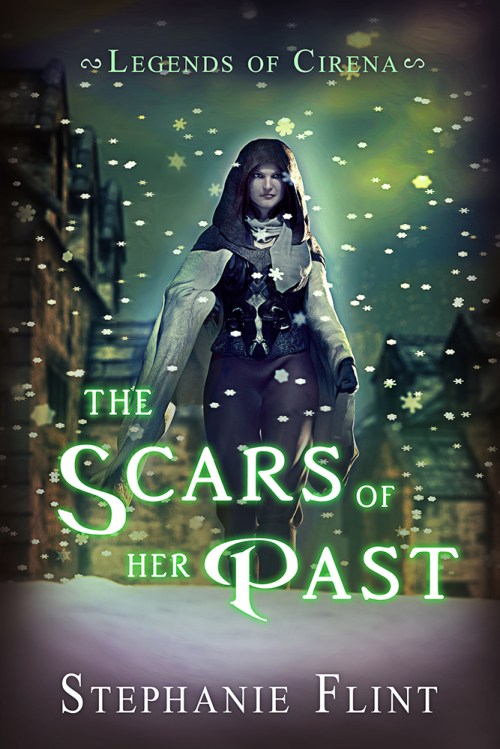
They can also try to lend their indirect help, pointing mortals in the right direction, as we see in The Scars of Her Past, when the Oracle shows up in shapeshifted disguise to pass along a warning to Alia, whose past puts her in a position to offer help no one else can.

On the writing side, it can be tricky to make sure that the gods can’t simply solve the problems themselves, but their flaws and limits make them fun to write.

In the case of The Scars of Her Past (Legends of Cirena #5), the threat Alia must confront involves magebane, which reacts explosively to magic. If the goddess gets too close to magebane with her magic, it would react like a bomb, not only destroying the city she’s trying to protect, but possibly unraveling their reality in the area that got hit.

Which means she needs a mortal without magic to investigate.

We also see the Oracle in the Stone and String series (there she goes by the name of Meshon), offering cryptic help and nudging Edyli along, all while trying to stay out of the sight of the goddess of the dead, whose rigid desire for control of mortal fate could get the world destroyed—again—if the gods aren’t careful.

In the case of The Cursed Halls of Kalecen (Legends of Cirena #4), the god of justice was once a chesnathé (more-or-less a very judgemental unicorn) whose horn has been broken. And since chesnathéme use their horns to cast judgement, well… let’s just say his skewed sense of justice is a problem for everyone involved.

Once we get to the Distant Horizon series, the science fantasy world, we get characters like Spectator and Krissa Wolf, both not-quite omnipotent beings who interfere with the lives of our characters.

Spectator is absolutely a meddler (arguably, he set the events of Distant Horizon into motion behind the scenes, though that’s not revealed until Ghost of a Memory… and even then, it’s vaguely stated).

And Krissa Wolf is a character who can make even the most powerful members of the Camaraderie of Evil nervous, because they can’t shield her (they can’t block her powers). I know why that’s the case, but some reveals won’t come until later stories. 😉

In both cases, they’re reality benders, capable of changing the world around them. Each have their own motives, but because they’re fourthwallers (an in-universe religion that believes their world is all one big game or story), Spectator and Wolf want to keep that game entertaining… which means not using their powers to solve a problem unless it’s going to be fun for the ones watching the game unfold.

And there you have it, a glimpse at meddling deities in the Wishing Blade and Distant Horizon universes!

* * *

Want to see the gods get involved?

* * *

Happy reading and writing!

Leave a comment

Filed under Writing