Tag Archives: writing

Thoughts on Writing – Considering Attire in World Building

Last weekend Isaac and I went to Planet Comicon as volunteers, and we had a lot of fun! During our off time, we got to see some cool panels, spent money in the vendor room (Always have a budget… it helps), and saw a neat cosplay.

However, the side-effect of going to Planet Comicon and NakaKon is the resulting desire to write and draw comics. (Originally we had planned on writing The Multiverse Chronicles in comic book form, but that didn’t happen. We kept the idea of doing illustrations, though).

Long story short, Isaac and I were trying to get Photoshop CS6 installed on his new laptop (and the program wasn’t quite cooperating), so I had some downtime while chatting with the Adobe representatives. Since my mind was side-tracked with the idea of how to convert one of our later planned series, Exiles, into a comic book format, I decided to try sketching one of the main characters.

This was the result:

Exiles Character Concept Art

When I looked at her armor, I realized it really didn’t quite… work (I’ve never been particularly good at drawing armor). It didn’t fit what I had pictured. So I started looking up modern day outfits. The real-life Special Forces uniforms didn’t match the in-universe uniforms, so I looked a bit more to SWAT teams for inspiration. Had Isaac help with the visors… (my first attempt at their helmets looked like something from Hunger Games), and then we looked over both uniforms.

This was the result of the uniform sketches:

Exiles Special Forces Uniform Concept Art

Ultimately, our conversation concluded with us discussing that their outfits should match the reason they need that outfit.

For example, the reason our in-universe Special Forces look like a SWAT team is because when they came about, they were dealing with people who had super powers. People who could throw fireballs or used super strength. People who might use swords just because they had a super skill that made them extraordinary with a blade.

These guys needed to be equipped to deal with powers.

For that reason, Isaac and I considered that the original outfit I drew might not be that far-fetched, at least for certain teams. Having a form of armor around their arms and shoulders would be seriously helpful if they got into melee combat… and might protect against burns. They probably wouldn’t want to have a bunch of pouches on the outside of their uniform (do you really want your equipment easily accessible to someone who is telekinetic)? In fact, their outfits might be modular. If they expected to go up against a certain kind of adversary in a certain situation, they could adjust accordingly.

Look at historical “knights in shining armor” and consider that chainmail was more effective at blocking certain types of weapons and strikes than others. Plate armor also came with certain advantages and disadvantages. If you didn’t take this sort of thing into account (or couldn’t), you were at a major disadvantage. There’s an interesting discussion about the effectiveness of chainmail here.

However, those considerations meant that our newer sketches still worked. In areas where super powers are unheard of (the Community), our Special Forces would be more likely to wear the bulkier outfits with all the pockets and gear that would be effective against ordinary assailants. But if they were going up against a group of rebels, they might be more cautious of what they wore.

When you are developing your world, keep the clothing of your characters in mind. What would they wear for practicality? What, if removed from the equation, might create a problem for them?

For example, in our Exiles story, none of the outfits our main characters have fit them properly. They snatch the clothes from a shipment of cargo, wear what they can, and have to make do with what else they can find, at least for a little while. It’s a problem they have to solve.

You can use the attire of a character to enrich the world, and the culture of that world. Why are they wearing what they’re wearing? Is it because they can afford to? Can’t afford not to? What is available to them?

Have you considered the attire your characters well as part of your world building? Can you think of any examples of outfits that fit really well (or not at all) in their story’s world?

Also, if you want to watch an interesting review of real-life body armor versus armor from science fiction (Halo), The Game Theorists did an in-depth video on Youtube. Found that interesting a while back, and Isaac remembered it today when we were reviewing our concept art.

I hope you enjoyed this post. 🙂

Leave a comment

Filed under Writing

Thoughts on Publishing – A Video Blog Post – Reading Chapter Sixteen of Magic’s Stealing

Today I’m reading chapter sixteen of Magic’s Stealing. Enjoy. 🙂

Click here for the link if you can’t see the video.

Chapter One

Chapter Two

Chapter Three

Chapter Four

Chapter Five

Chapter Six

Chapter Seven

Chapter Eight

Chapter Nine

Chapter Ten

Chapter Eleven

Chapter Twelve

Chapter Thirteen

Chapter Fourteen

Chapter Fifteen

Leave a comment

Filed under Business Ventures, Writing

Thoughts on Writing – Formatting Telepathy in a Novel

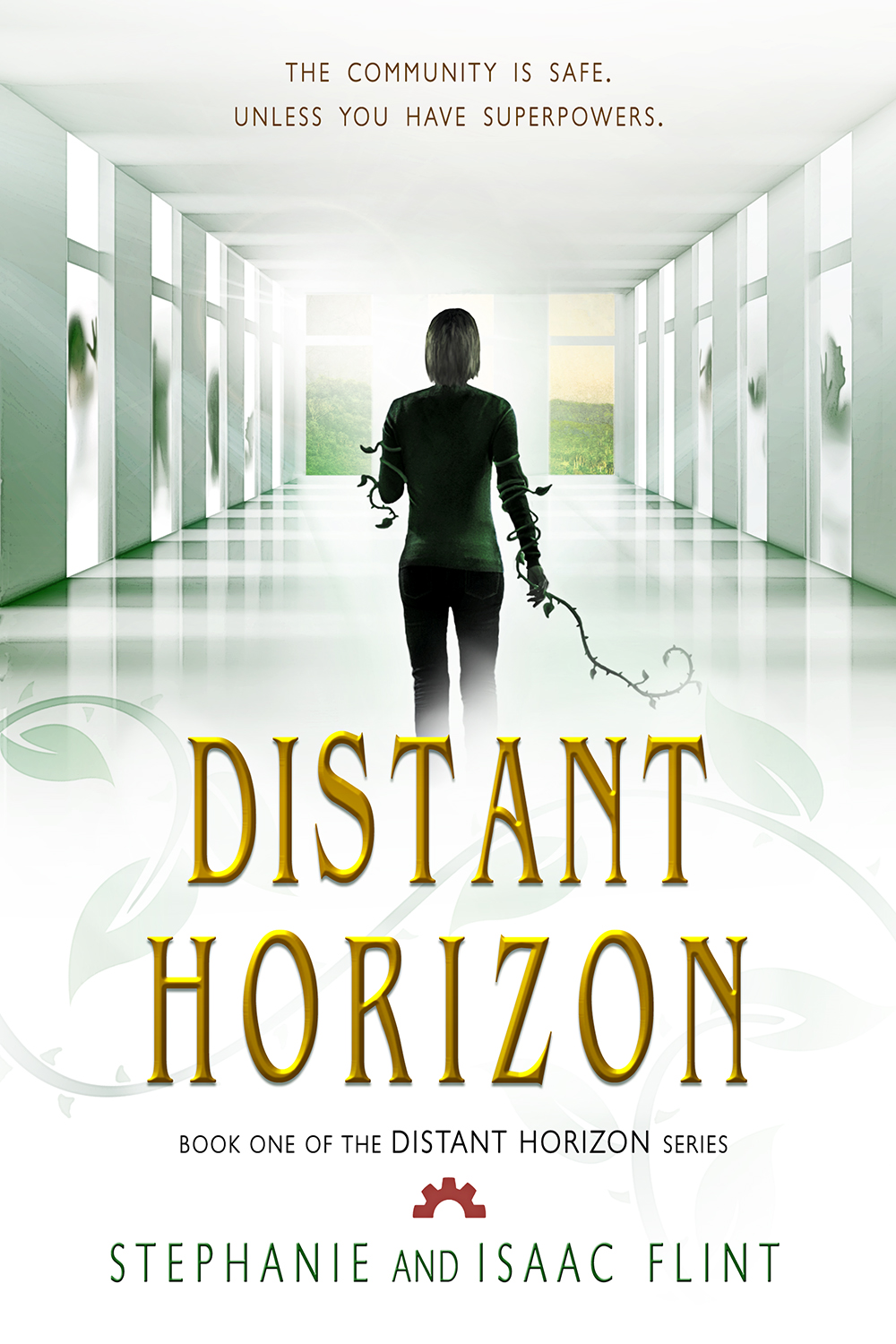
There’s a section I’m currently working on formatting in Distant Horizon, which has a lot to do with telepathy. And of course, that had me puzzling over the best way to format telepathy.

Originally, I had planned to designate telepathic sections using colons and italics, like this:

:This is a thought that you hear in your head,: the blogger thought to her readers.

However, I had several beta-readers say they didn’t like that formatting (never mind that I loved it in Mercedes Lackey’s Magic’s Pawn), so, since I want to make the book easier on the readers to read and enjoy, I made the change. They suggested keeping with simple italics, tagged like dialogue to note that it’s telepathy.

That worked well in Magic’s Stealing, where telepathy is mostly limited to communication.

Then we get to Distant Horizon.

*Flop.*

There are several forms of telepathy in the Distant Horizon universe. Most telepaths specialize in one or two abilities, but a really powerful telepath can do any of these:

(Note: These aren’t their formal classifications, just how I’ll refer to them for the moment)

  • Communication (Sending thoughts).
  • Mind Reading (Getting a sense of what someone else is thinking).
  • Perception Manipulation (Changing what someone thinks they see/hear/touch, etc.)
  • Possession (Taking control of someone’s body through a mental link).

(…Hehe. I feel like I’m writing out optional skills for a role-play character. Let’s take three points in communication and two in perception manipulation, please…)

The problem I’ve run into is how to denote each of these things, among other normally italicized sections.

Originally, I used italics to denote a few different things: telepathy, flashbacks that the characters is “experiencing” at the moment,” and telepathic attacks, in which what is happening is perceived entirely in the narrator’s mind.

When I was using the colons, it was easy to show that someone was communicating via thought, versus a person was having a short flashback, and when someone was communicating via thought during a flashback.

Fun, right?

Now, however, things have gotten a little more difficult.

For example, if the main character is thinking to herself, it usually isn’t too hard to switch the italicized parts to a non-italicized thought, given this story is 1st person, past tense.

For instance, this:

He winced, then handed me the notebook. “Look– I don’t know about either of us, okay?”

Wait. Either of us?

I gaped at him. “You’re not taking the pill, either?”

Becomes this:

He winced, then handed me the notebook. “Look– I don’t know about either of us, okay?”

Wait. Either of us?

I gaped at him. “You’re not taking the pill, either?”

No big change, and in fact, I like it better. Otherwise, it really felt more like it was italicized for emphasis.

I read an interesting article that mentioned using italics for thoughts creates greater narrative distance. Since I want readers close to the MC’s perspective, removing as many of these as possible could prove beneficial. (Plus, it makes Isaac happy. He never was a fan of all the italicized chunks I had in the earlier drafts).

But what about thoughts that are active? Thoughts that, by all right, should be 1st person present?

“What about you? Do you have this so-called persuasion power?”

He inclined his head. “Yes.”

You’re admitting to it? “You were using it last night,” I tested. “To get me to come with you.”

If I try to remove the italics, the paragraph doesn’t read right (or maybe it does, and I’m just being finicky). Technically, I could change the thought to “He was admitting to it?” and the sentence would read fine, but I’m thinking it sounds punchier if she’s directing an active thought toward him.

So I’m considering removing italics for thoughts that flow with the the past tense prose, or rearranging them into past tense when feasible, while leaving italics for thoughts that are in present tense, along with thoughts which are directed toward another person, even if that person can’t hear them.

The reason for this is that there’s a scene in which the main character unintentionally uses telepathy (I won’t say how, to avoid spoilers). However, some of what she’s broadcasting isn’t actively targeted, at least, it wouldn’t appear to be at first glance.

He gave me a pointed look. “Be careful with that thing.”

I winced. “I don’t plan on using it.”

“What you plan to do and what you do are two different things.”

“Yeah,” I mumbled, ducking my eyes from his scowl. All I wanted was a stupid reminder.

“And what you’ve got is trouble,” Inese retorted. I stared at her. I hadn’t said—

“Now stop worrying about the shiny. We’ve got work to do.”

See what I mean?

If I remove the italics, it won’t be clear that the narrator broadcasted the thought. But it isn’t directed at anyone, either, and kind of reads as if it’s just being emphasized.

But what if I only italicized thoughts that she knows is telepathic. She’s new to the concept of superpowers. If the characters around her react appropriately, she doesn’t have to realize what she’s doing, and the readers will learn at the same time she does.

Try reading this passage again:

He gave me a pointed look. “Be careful with that thing.”

I winced. “I don’t plan on using it.”

“What you plan to do and what you do are two different things.”

“Yeah,” I mumbled, ducking my eyes from his scowl. All I wanted was a stupid reminder.

“And what you’ve got is trouble,” Inese retorted. I stared at her. I hadn’t said—

“Now stop worrying about the shiny. We’ve got work to do.”

Since Inese is commenting directly on the narrator’s thoughts, and the narrator reacts with confusion, we can guess what has happened.

Plus, this allows for a lot of fun when she’s dealing with high-end telepaths. After all, they’re strong enough to manipulate her mind without her knowing that they’re changing her thoughts. Neither the narrator, nor the reader, actually know what is real and what isn’t, and which thoughts are actually hers.

Unreliable narrator, anyone?

Now, the problem with doing it this way is that there’s always the chance that the larger scenes involving telepathy (and there’s a huge one at the end of the story that prompted this particular blog post) may be confusing for the reader. That’s why I’m hoping to find a proofreader for this style of formatting before Isaac and I release the book. But for now, I think I’ve settled on this:

  • Thoughts directed toward someone/something in present tense will be italicized.

He inclined his head. “Yes.”

You’re admitting to it? “You were using it last night,” I tested. “To get me to come with you.”

  • Telepathic communication (when the narrator is aware these are not her own thoughts) will be italicized.

Brainmaster clucked her tongue. Poor Miss Nickleson… Let me show you what happens to the people who rebel.

  • Flashbacks/memory attacks, where the narrator is experiencing them but does not know this is a flashback will not be italicized. Tags may need to be included in the prose to help aid the reader.

Brainmaster clucked her tongue. Poor Miss Nickleson… Let me show you what happens to the people who rebel.

A rocket slammed into the ground, blowing a beast to bits. Sun scorched the back of my neck, and the stench of burnt flesh tainted the air. A blast of heat rolled over me. I shielded my eyes while debris pelted me with dirt. Something smashed into my chest. I removed my hand from my shirt and found it hot and sticky. The pain threatened to destroy my vision—

(Since the main character cannot distinguish the manipulation from reality, this is not italicized).

  • Flashbacks/memory attacks that the narrator is actively experiencing and is aware of, will be italicized.

The winding corridor opened to rows upon rows of floor-to-ceiling tanks, each filled with thick, greenish fluid. Bubbles traveled up the tubes, passing over occupants who had been stripped of everything but a breath mask. A helpless, sickening sensation spread through me. I stared at the liquid, petrified.

Brianmaster dragged me into a tube and shoved me inside, the numbing liquid surrounding me, slick against my skin. Burning.

I needed to escape, to breathe, to run—

“Let’s not open these doors, ‘kay?” Jack said, jarring me from my nightmare.

(In this scene, Jenna is having a memory attack, and though she can’t escape it, she’s aware that the attack is happening).

  • Flashbacks where the character is “remembering,” but not really “experiencing” will not be italicized.

He put the training weapons aside and sat on the floor, stretching his fingers to his toes. “Besides, the Community’s boring. There’s no excitement. Do you remember when we used to pick blackberries off the neighbor’s bush?”

I nodded.

Walking home from school, we used to take the back ally to our parents’ houses. One time I noticed a dark blackberry poking out from a broken slat in the fence. It was ripe, and touching the berry left a deep red juice stain on my fingertips. The neighbors could’ve been fined because the fence hadn’t been repaired in a timely manner.

(She’s recalling a memory, but she isn’t “experiencing” it, per se).

And, of course, I’ll use italics to emphasize certain words. And also for sound effects, foreign languages, etc, though I’ll try not to overdo it. 🙂

So, now that I’ve got this sorted out in blog-post form, I’m off to finish formatting the italics in the manuscript. It’s not perfect, but hopefully the formatting will be smoother now.

I hope you’ve found this post helpful. 🙂 Have you ever had to make a particular type of formatting distinguishable?

Leave a comment

Filed under Writing

Thoughts on Publishing – A Video Blog Post (Battle Decks Announcement)

No reading from Magic’s Stealing today, however, I’ve got exciting announcements regarding the release dates for Battle Decks: Trials of Blood and Steel and The Multiverse Chronicles. 😀

Click here for the link if you can’t see the video.

2 Comments

Filed under Business Ventures, Gaming, Uncategorized, Writing

Thoughts on Publishing – A Video Blog Post – Reading Chapter Eight of Magic’s Stealing

Today I’m doing a reading of chapter eight from my YA Fantasy, Magic’s Stealing.  Better yet, I’m using my all-new Blue Yeti microphone I got for Christmas (Thanks Mom and Dad!). 😀

The sound should now be clearer than before, but since I’m still new to using the microphone, I may still need to make a few adjustments to get the best sound quality. Let me know if anything in particular stands out to you, or if it sounds good as-is.

In the meantime, I hope you enjoy listening to chapter eight. 🙂

Click here for the link if you can’t see the video.

Chapter One

Chapter Two

Chapter Three

Chapter Four

Chapter Five

Chapter Six

Chapter Seven

Leave a comment

Filed under Business Ventures, Writing

Thoughts on Publishing – A Video Blog Post – Reading Chapter Seven of Magic’s Stealing

Last time, I read The Dragon’s Tree, a short children’s story that my husband, Isaac, wrote. Getting back into the usual trend of Monday video blogs, today I’m reading chapter seven from my young adult fantasy, Magic’s Stealing. 🙂

As a side note, if all goes well, I’ll be using a new microphone with higher sound quality for the next reading.

In the meantime, I hope you enjoy chapter seven. 🙂

Click here for the link if you can’t see the video.

Chapter One

Chapter Two

Chapter Three

Chapter Four

Chapter Five

Chapter Six

Leave a comment

Filed under Business Ventures, Writing

Thoughts on Publishing – A Video Blog Post – Reading “The Dragon’s Tree”

Merry Christmas and Happy Holidays!

Today I’m doing a Holiday Special video blog. Instead of reading a chapter from Magic’s Stealing, I’m reading a children’s story that Isaac wrote. He modeled the style after the style of fables. It’s called The Dragon’s Tree. We hope you enjoy it. 🙂

Click here for the link if you can’t see the video.

Leave a comment

Filed under Business Ventures, Writing

Thoughts on Writing – Literary Doppelgangers

You know those times when you’re writing a story, and you think you’ve finally created a character that’s at least a little bit different… and then you find their literary doppelganger?

That character which just seems far closer than you would have liked?

While watching Jessica Jones (which is an awesome show, by the way), one of the things that struck me and Isaac was the similarities between the villain of the show, Killgrave, and Brainmaster, the villain of our story, Distant Horizon.

They’re definitely different, but they do have some striking similarities (except that Killgrave is just so much more evil… An absolutely fascinating character, but evil). Note: I have only seen the show, so I’m not sure how he compares from the comics.

First, let’s take a look at Killgrave.

Killgrave has mind control powers. He can walk up to a person, tell them to do something, and they’ll do it. His powers have a time limit (12 hours), and a limited range. He’s obsessed with Jessica Jones, trying to win her back after she finally managed to escape his grasp. He doesn’t mind leaving behind a body count just to get Jessica to move in closer as she tries to stop him. (But he doesn’t do the dirty work. No. He comes up with creative ways for other people to kill each other or themselves… and leaves an even bigger mess for Jessica to clean up).

Also, he wears a purple suit. Kind of his style.

Now, let’s take a look at Brainmaster, from the story Isaac and I are working on.

Brainmaster has telepathy, which, in our story, equates to three possible options… mind reading, mind control, or communication via thought. Powerful characters can do all three. We see her doing all three of these things, but one of her trademark moves is taking control of characters by implanting suggestions in their brains… some of which cause them to attack others or themselves.

And she wears purple robes.

(This is where I was cringing watching Jessica Jones. Killgrave, also a mind controller, has a purple suit. I’d never even heard of his character (at least, not other than a single cartoon episode of X-Men with a very different version of him) until a few weeks ago.

These characters are different, but they do have similarities. Both have mind control powers. Both haunt the main characters (Jessica has traumatic flashbacks of Killgrave, Jenna has traumatic memories that Brainmaster plants in her head), and both wear purple. Maybe it’s because of the idea that the color purple often reflects royalty and power. (There’s an interesting web page about the historical uses of the color purple here).

For characters who are meant to be powerful, it makes sense to have them wearing purple.

Anyway, I thought it would be fun to post a short scene from Distant Horizon, one where we get to see Brainmaster for the first time.

Note: This scene has been truncated to minimize spoilers.

I pushed the door open.

Inside, a lady wearing a flowing, deep purple robe stood at the end of a long metal table. Her robes were fringed by golden swirls and thick, bold lining. Part of her white hair was rolled into an elaborate bun; the rest cascaded to her shoulders.

The lady’s eyes narrowed and her face contorted into wrinkles. She wore just enough eyeliner to accentuate her fierce eyes, and her nails were painted a gold that matched her outfit. More than most leaders, she was dressed for appearance.

Beside her, an elderly woman with graying hair was bound to the chair. Her shoulders were slumped and her head lolled back.

Go away.

I jumped. I hadn’t heard anything, but it was clear that the woman standing with her manicured hand on the corner of the woman’s chair had spoken. She lifted her chin and scowled.

“Let her go.” I tightened my grip on my spear.

Brainmaster smirked and slid her nail along the edge of the chair. Something forced me– my mind– away.

I couldn’t move. My arms were frozen in place.

She smiled and brushed back a wisp of white hair. Drop the spear. Close the door behind you. Take a seat. She gestured to the chair, a slow, elegant motion.

I dropped the spear, took a seat. Listened.

A slow smile crawled across her cheeks. She gestured to the woman in the chair. “The true plague is disobedience. It makes our society inefficient. This woman is a traitor. She spreads the plague by her presence. She’s a lost cause. Kill her.”

I stood, vines uncoiling from my arms, and walked the length of the table. Power pulsed through my vines, urging me to take control. To let them flourish. To use them.

The traitor turned her head, her eyes half-shut.

“She’s the true monster,” Brainmaster murmured. “A threat to everything we hold dear.”

I wrapped my vines around the woman’s throat. Felt their pressure against her skin. Closed them tight. The woman coughed, gasping, but I didn’t let go.

Funny thing, Nickleson. Do you ever wonder how a beast feels when it’s given orders? Is this what you want?

I stared at the dying woman, confused.

A beast is such a mindless thing. You could be so much more.

The woman sputtered and fell limp. Her head lolled.

A chill clawed through my spine.

She was dead.

I’d killed her.

And that’s where I’m going to leave that scene…

*Cough.*

Brainmaster. Yeah, she likes messing with people’s minds. Maybe that’s why I enjoyed watching Killgrave’s character so much.

Anyway, I hope you enjoyed this post. 🙂 Have you ever written a character, then found their literary doppelganger?


2 Comments

Filed under Writing

Thoughts on Writing – Combining Characters Part 2

In my previous post, I talked about a couple characters of whom I decided not to combine in Distant Horizon, and why. Today I’m going to talk about a couple characters who I very well might combine into a single, hopefully stronger character, in The Shadow War.

I’ve been plotting for The Shadow War (book two after Magic’s Stealing) for a little while now, and when I was telling Isaac about some of my ideas last week, he suggested that I consider combining two of my characters who will be introduced in the second book. Let’s take a look at the characters in question: Nihestan and Shalant.

Both characters are secondary. They’re important to the plot, but they’re not main characters. Each serves to aid the character of Daernan (Toranih and Daernan each have their own point of view in this story), but in different ways.

Nihestan Nivasha is Cirenan-born, a weapon’s mage, and has dealt directly with Shevanlagiy and Lord Menchtoteale (the bad guys from the first book). Nihestan also works closely with Madiya, the goddess of the dead (who features more prominently in the Cantingen patheon than Cirenan) and he leans toward the immortal spectrum thanks to a run-in with unicorns. (Unicorns aren’t exactly the friendliest creatures in the Cirenan universe).

In the current draft, Nihestan plays the role of a cynic, always watching the world and being wary of the future… mostly because he got a glimpse of the potential damage that the Wishing Blade could do (his weapon’s magic allows him to see potential and past acts of violence within an object). He’s actively trying to thwart Isahna, the trickster god, and has been undercover for many years to protect his family.

He also knows a bit about how glass-stone works (though he’s still trying to figure out the finer points of the confounded stuff), which is one of the reasons that Daernan gets involved with him.

Then there’s Shalant. He’s Cantingen-born, a word mage, and something of a seer. Daernan first runs into him when he goes to the temple in Ashan, where he finds Shalant using his word magic to help the high priestess after the stealing. Shalant acts as an enthusiastic (if slightly wary) mentor. His knowledge of the gods and (word) magic often comes in handy, and his ability to use word magic is crucial in fighting the shadows. As a seer, he knows a bit more than he should (especially regarding Shevanlagiy), and he’s spent some time working with Nihestan on the mage’s glass-stone project.

Now, the problem I was having is that many of the scenes I plotted in my head could work well for both Nihestan and Shalant. Other than their cynical versus enthusiastic personalities, and their ribbon versus word magic capabilities, they play similar roles.

There’s a particular scene I’ve been planning that involves a confrontation with Shevanlagiy, one which works similarly well with both characters.

If Nihestan confronts her, he uses his knowledge of glass-stone and weapon’s magic against her. But now that I’ve been thinking about it, I need to decide whether or not he’ll still have that magic. He has been working with the gods, and he knew the stealing was coming, so there’s a chance he could have prevented his magic from being lost.

If Shalant does the confrontation, he doesn’t have any personal stakes (other than potential foreshadowing for a future series idea that I have in mind), but his scrying would have given him insights that Shevanlagiy would prefer he doesn’t know… including a weakness that she herself doesn’t fully understand. The problem is that I’m afraid his character would open up the story to a new plot line that I’m not ready to delve into. I like the idea of bringing this guy’s character in, but I’m not sure it’s necessary for this particular story.

The two characters were getting lost in the crowd.With so many characters, I wasn’t sure what each one was doing at any particular moment.

So, when Isaac suggested that I try combining Nihestan and Shalant, I began picturing the resulting character and liked the result.

First off, Nihestan’s last name, Nivasha, sounds more Cantingen in origin than Cirenan, and vice versa for Shalant. I’d been toying with the idea that Nihestan had converted to the Cantingen pantheon at some point in his past, and the idea of combining these characters solidified that. He could have originally been Nihestan Shalant, and later taken the last name of Nivasha after his dealing with Madiya (or one of her agents). Thus, we would still get some insights into the Cantingen culture without pulling the main story too far off track (again, I’ve got that sequel series brewing in my head–though it will probably be a while before you see that–and it will likely deal heavily in Cantingen mythology).

Second, their combined knowledge would allow Nihestan to play a mentor figure… even if the person he’s mentoring is skeptical of his motives. It also stands to reason why he knows so much about Shevanlagiy, since he’s worked with her before, and his vast knowledge of things he technically shouldn’t know about would come from his time spent working with the gods.

Third, Nihestan as both a ribbon and word mage… whew!

He’s going to be a tough cookie in a fight. Seriously. Even if he’s without his ribbon magic, he would have word magic at his disposal… and perhaps be able to achieve a few plot points that I don’t want to spoil here.  The first book has a few lines of foreshadowing that could easily reference his character. Not only that, but he might actually be able to keep some of his ribbon magic through the use of word magic, since he already expected the stealing to come.

This allows the confrontation scene with Shevanlagiy to work smoothly. This version of Nihestan has personal stakes in the matter, and the ability to be a threat.

Fourth, I don’t have to keep track of who is doing what. The tough part comes if these two characters are doing completely separate actions, but I don’t think there will be too many problems there.

The other problem, however, is that where Shalant is playful, Nihestan is cynical.

Merging the personalities might prove tricky. Most likely, I’ll keep some of my original ideas of a younger Nihestan (who has a more carefree attitude), while giving him the wary outlook that comes with what he’s seen and knows.

As for Shalant, he may appear again in a different form with a different name… as he was apt to do in my plotting. (Seriously, in my super rough draft from many years ago, Shalant was an arrogant god who mentored Daernan mostly because he needed someone to represent the immortals… and had fun watching Daernan fumble. Very different character. I’m considering making a darker version of that character into a small-time antagonist for Toranih. Maybe. Not sure yet. We’ll see if it serves the plot).

I haven’t decided if this is the route I want to take, but I’m giving it serious consideration. Overall, I think the story will be stronger for the merge.

I hope you enjoyed this post. 🙂 Have you ever combined any of your characters?

4 Comments

Filed under Writing