📚 There are many subscription options available in the reading/publishing world. Here, I’m going to briefly talk about two of them… Kindle Unlimited, and Kobo Plus.
The most well-known one is probably Amazon’s Kindle Unlimited (KU). A huge selection of books for $12.00. If you’re on a budget and don’t have access to a large local library selection (or want niche books that are harder to get through libraries), then Kindle Unlimited can seem like a pretty good deal.
However, for authors, it comes with a catch.
The biggest one is that any ebooks in KU (at least for independent publishers) must be exclusive to KU during the 90 day period that they’re enrolled (or longer, if the author chooses to extend the contract).
That said, very recently, Amazon has moved to allow KU books to be made available for public libraries, which is a huge win for both authors and readers. (Previously, you most likely wanted your books in Kobo’s Overdrive if you wanted library reach).
I’ve used Kindle Unlimited before, both for Glitch and for Huntress, but I ultimately chose to pull our books from KU because I’m really not a fan of exclusivity, or of the issue of “having all my eggs in one basket.”
While I haven’t, as a reader, used it for myself, Isaac did use the monthly Kobo audiobook credit subscription for a while, which was quite nice.
Now, as a writer I like Kobo Plus, because it offers an inexpensive way for readers to access my books ($7.99 a month) without requiring me to be exclusive with Kobo.
Woot!
So, if you read a lot of books and want to try a subscription service, have a look at Kobo Plus. 😁
If you enjoy the worldbuilding and magic/power system of the Distant Horizon universe, you might enjoy these books!
(Note: The giveaways above are hosted through BookFunnel. Authors will usually ask for your email address, and in many cases, the author will collect these addresses for their newsletters.)
When I set out to write The Wishing Blade series, I originally planned on it being a set of novellas. (Especially because the very first draft I wrote for the entire story arc of the series was 64,000 words).
Magic’ Stealing, the first book I published in the Wishing Blade series, was around 34,000 words, and I figured that future books would be similar.
What I didn’t count on was adding so many more words once I started exploring additional points of view.
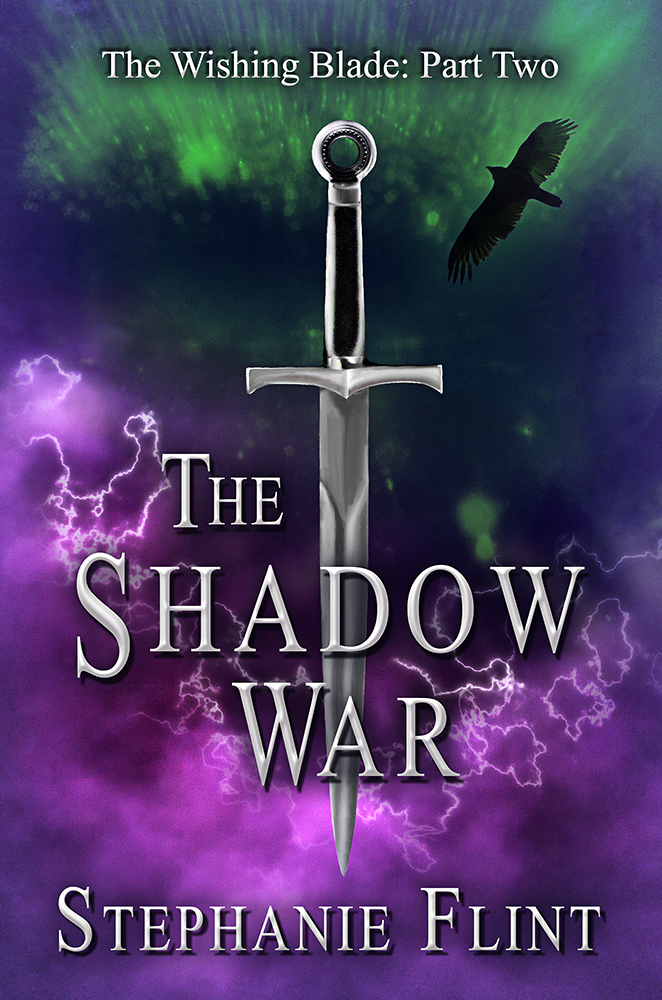
Daernan got a chance to shine in The Shadow War, and the main plot really centers around him. Siklana has a major role and character arc in Magebane… and we still get the original views of Toranih and Shevanlagiy.
Not only were viewpoints added, I ended up further developing, and adding, magic systems (who knew word magic and charlago/magebane would play such a critical role in future stories?), and I added words as I reworked scenes to make more sense. Because Isaac–my writing partner and developmental editor–has a point: why try scaling a guarded wall when you could just… I dunno… take the sewers and discover even more fun stuff that affects the plot?
The result was that The Shadow War ended up clocking in around 55,000 words – a short novel, and Magebane clocked in at a whopping 109,000 words – a full-length novel.
(Fun fact… the first version of this post, sent to my newsletter years ago, had Magebane still in progress at 89,000 words.)
The Stone and String stories have also found themselves with longer stories than I originally planned. “Stone and String” was a short story of 8,000 words (surprisingly, it stayed within its expected count). It was meant to be a standalone story. But, of course, I wondered what happened next…
And so Wind and Words came along. While it took a couple starts to actually get it going the direction I wanted, I realized quickly it wasn’t going to be a short story. It ended up being a novella at 23,000 words.
Now the real question is, how long are the next books going to be? (Especially considering that Stone and String 3 should have direct ties to Wishing Blade 4).
While I cringe to look at the release dates of those books and realize I haven’t yet released the next in the series, I’ve found a similar pattern occurring within The Legends of Cirena series as it progresses.
The Wind Mage of Maijev – 15,000 words
The Gryphon and the Mountain Bear – 12,000 words
The Restless Sands of Neel – 25,000 words
The Cursed Halls of Kalecen – 18,000 words
The Scars of Her Past – 21,000 words
The Dragons of the Mist – 21,000 words
The Wind Mage and the Wolf (Cross-over) – 47,000 words
The Trial of Bells and Blood (Cross-over) – 32,000 words
The Dark Forest of Aneth (Cross-over) – WORK-IN-PROGRESS Currently 68,000 words.
In its defense, it not only has the cross-over points of view, it got a third viewpoint and is delving into preplanned lore that wraps up the arc from the first 9 books while setting up the next arc. 🫣
I think a lot of this has to do with adding characters, getting deeper into the lore… stuff like that.
There’s a couple drafts already written for stories that will eventually come after The Dark Forest of Aneth, which you might have seen if you’re signed up for the Wishing Blade Universe newsletter. And then there’s the ongoing story which definitely is building into pre-planned lore and I don’t know if it’s going to be a novella or novel, but the next chapter is eight of sixteen, and it’s already 17,000 words long.
Anyhow, do you have a preferred book length you prefer to read or write?
When I was a kid, I was introduced to computer games early on because my dad does a lot of computer-related stuff. Somewhere there’s an old 4×6 photo of me sitting in a small pink chair on top of a regular adult chair so I could reach the computer. (Age of dial-up internet… ah… fun times).
It started with games like Wacky Wheels and Commander Keen, acquired on a small floppy disk (you know… the save icon?) Another fun note: the galactic alphabet used in Commander Keen is seen again when you’re enchanting items in Minecraft. I had an absolutely fun moment of going wait… I recognize those symbols!
Anyhow, once I got a little older, one of the games I absolutely loved was Outpost, a 1990s Windows 3.1 game.
Goal of the game?
Colonize a distant planet after Earth gets destroyed by an asteroid, and rebuild civilization to the point where you can launch back out into space.
The game was near impossible to beat. 😅
Part of that, I think, was because I was a kid, who didn’t realize until later that there was a helpful manual that told you what each building did. (Or why all those buildings underground kept turning into Red Light Districts when morale was low. Agh! I needed that laboratory!
(I didn’t realize until much later what a red light district was).
The other part, as it turns out, was that the game was actually released incomplete, and certain rather important functions for building up to a spacefaring age had been left out. If I recall, some editions of the game actually did have just enough to complete the game later on.
Since I think I beat the game once (and only once), I’m guessing I might have been playing the incomplete version. (I beat it on a DOSBox version with wonky colors and no sound because it wasn’t the most compatible with Windows XP but I was determined to play it again).
But everything had to be lined up just right in order to get that ending.
I usually died long before I ran into the issue of reaching the space technologies.
And from this game, I memorized two specific lines from the AI. “Don’t panic,” and “The people hate you, Commander.”
*Annoyed glare at computer.*
Rarely did I get the third line, “The people love you, Commander.”
Eventually, I moved on to other games, though the craving to play Outpost pops up every once in a while. Building tunnels and redundant oxygen systems. Dying within a few turns of starting the game because of choosing the wrong star systems. Old-school music that was catchy but not the best quality…
Imagine my surprise when, a few years ago I went to a local concert playing music from The Planets, and suddenly heard, in full symphonic glory, the primary background song of Outpost.
What?!?! 🥹
Apparently “Mars” was the song they chose for the game, and I’d had it ingrained in my head. I knew I was supposed to be looking for sections pulled for the Star Wars movies from the concert, but Outpost?
I was a happy camper.
You can find a few play-throughs on Youtube if you’re curious about what it sounded like in Outpost. In the meantime… I don’t think I’m quite ready to fight with DOSBox to get the game back up and running.
But the urge to go build a space colony may yet again return…
* * *
None of my space stories are published yet, so no links to point to this time. (But there’s a couple waiting for revisions!)
I have a lot of fun creating the world and culture of the Wishing Blade Universe (Isaac has fun with this, too, as seen by the existence of the Legends of Cirena stories, which started because he went and created a role-playing guide for each of the regions).
One aspect of world-building I especially enjoy is creating the pantheon of gods, goddesses, and deities.
Many of the gods interact directly with mortals, as well as immortals, meaning we see their personalities and how people deal with them (or try to avoid them). Some worship them, some scorn them (especially the dragons of the Immortal Realm) and others are indifferent.
Today, I wanted to take a closer look at Ruetravahn.
As one of the older gods, Ruetravahn has a place in both the Cirenan and Cantingen pantheons, though he features more prominently in the latter. (But even Cirenan characters get stuck dealing with him, as Livena finds when she accidentally gets saddled with a truth spell/curse in The Wind Mage of Maijev).
Per Cirenan tales (as of The Wishing Blade series), when the high god, Listhant-Nsasrar, chose to retire, Ruetravahn convinced him to leave the gift of word magic with mortals so they would not always be at the mercy of the gods, and those without ribbon magic would have a defense against born mages.
As such, Ruetravahn became known as the god of language. Though the Cantingen language had been around for as long as mortals could remember, the ability to use it in spells only came after Ruetravahn’s deal. (Which gets fun when I’m writing anything in the Legends era, because I have to remember they don’t have access to word magic yet).
Even with this gift, Ruetravahn is rarely worshiped in Cirena, possibly because they continued to rely more on ribbon magic than word magic.
As for the Cantingen Islands, the people looked to him as not only the god of language, but also the god of Truth, the world as it really is, and the god of wind, capable of hearing everything that is spoken. Those who worship him consider lying an affront to the gods, and they are careful to choose their words and speak as accurately as possible.
He is the primary god that Edyli, the protagonist of Wind and Words (book two of the Stone and String series), chooses to worship. Her respect for him affects her actions. However, there are those who still see him as a lower god, and who therefore ignore his teachings in favor of completing tasks assigned by the high goddess, Madia.
This scene touches on the conflict between them. 🙂
From Wind and Words
The priestess spun on her heel and surveyed the room. “Do not tell anyone of your intentions, and do not tell them who sent you.”
“Nasillah?” Edyli asked, confused. What temple work could be so secretive? “I cannot lie. That is against Ruetravahn’s will.”
The priestess turned sharply and narrowed her eyes, but even the acolyte pressed his lips into a thin line behind her, his concern evident. “Do you question the will of Madia?” she demanded. “Would you put a lower god above Her Graciousness? You must do as she commands, and that is to bring the monster who stole the child’s string to justice. If you must lie to achieve that task, then it is necessary.”
Anger rushed through Edyli. Ruetravahn might not have been a high god, but his intentions were sacred. Their language rode in his wind, and he was the one who established the treaty with Lishivant, Madia’s father, to bring word magic to mortals.
Whatever happened, Edyli would not lie. She would not betray him.
“I will do what I must,” she said firmly. Even saying that much made her cringe, because the priestess would likely assume that she was agreeing to do as she had been asked. But, as familiar fables said, it was not the truth-sayer’s fault if they spoke Truth, but the listener turned a deaf ear.
While Edyli is determined to serve Ruetravahn faithfully, not everyone is so faithful, as seen above. Of course, those who don’t like magic or gods are even less inclined to like him, as we find with Livena after her magic goes haywire near a blessed scroll in The Wind Mage of Maijev.
(But hey… things like that happen when you accidentally mix a blessed scroll, wind magic, and magebane).
* * *
A spell to infuriate the goddess of the dead…
See more of Edyli’s faith in Ruetravahn in the Stone and String series:
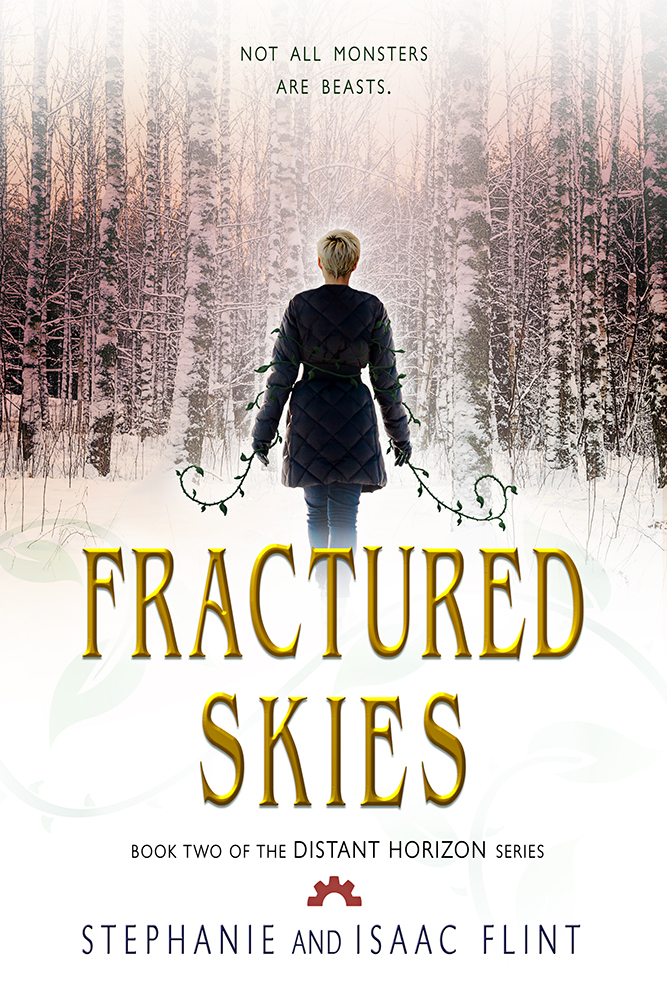
In both the Glitch saga and Distant Horizon series, we see the mention of “time stones,” strange artifacts protected by a mythological guardian. While they’re only researched in Glitch, (and used as bait to lure the rebels into a trap), Jenna and the Coalition of Freedom, a ragtag team of rebels, are a bit more adventurous with these things in Distant Horizon. They have a hands-on experience with a time stone in the first book, and continue to deal with these stones in Fractured Skies.
Here’s a peek at their introduction to one of the guardians in Fractured Skies:
(SPOILER WARNING! – There are two characters present here who aren’t introduced until the beginning of Fractured Skies, so if you don’t want to know who is involved in this scene from later in the book, you may want to skip the quote block).
I grabbed the radio from my pocket. “Inese? Where are—”
A portal appeared in front of us with Inese, Dad, and Lance tumbling through. The portal closed and Inese—with the stone—skidded to a halt, staring at the statues. “Here, too?” Her eyes widened. She clutched the stone to the black body armor of her chest with one hand, her pistol in the other.
I nodded. “Yeah.”
“Lance,” Inese snapped, “portal to the car, now!”
“Sure thing.” Lance wiped perspiration from his forehead as another portal swirled in front of us. “Let’s go before that mummy comes back.”
“Mummy?” Lily yipped. “The mummies are alive, too?”
“They’re not exactly living,” Lance muttered.
“They’re spirits,” Dad clarified, breathing hard. Dark purple rings colored the underside of his eyes. Inese disappeared through the portal. The rest of us followed them to the museum roof. Dust swirled around us, revealing the location of the car in faint, shifting sand. I yanked the edge of my turtleneck shirt over my nose. Inese slammed the driver’s door shut behind her and the car went visible. I hopped in. Lily dived in behind me and yanked the door shut. Outside, trees bent against the wind, leaves whipping across the roof as the sky turned a deep, rouge red. Dark yellow dust clouds rolled in the sky, crackling with electricity.
“Inese…” Dad pointed into the distance. “That’s not a statue.”
Bright, white light traced the outline of a giant lion with the face of a man. It stepped through the cityscape, purple lightning wrapping around it and flaring in bright streaks. Lily’s jaw dropped. “You’ve got to be kidding me.”
Lance shook his head. “After the mummies, nope. Not kidding.”
A deep, resounding voice pounded through my head, overriding my thoughts.
Return the stone.
I froze, my hands clenched on the edge of the seat. The voice of the guardian echoed in my head. A thick blanket of dark sand blasted the windows, obscuring the sphinx.
As seen here, one of the guardians has the appearance of a sphinx. Each one references a different mythology, and each one has a different set of powers:
Guatemala – Jaguar shapeshifter with power stealing
Japan – Asian dragon with water powers
Egypt – Sphinx with radiation and electricity powers
Peru – A puma earth elemental with radiation powers
India – A representation of Durga with healing powers, riding a lion mount
They all tend to be protective of their stones. They’re also extremely powerful spirits… making them difficult to steal from.
Not impossible, but not without cost.
And then trying to keep those stones is another story entirely…
* * *
See the interaction of the team with some of these guardians in the Distant Horizon series!
In The Wishing Blade series, there’s a rivalry (often unspoken), between Toranih and her older sister, Siklana. Though they care for each other (in fact, the one magical item Toranih actually likes and frequently uses is a light crystal Siklana made for her), Toranih has always felt like she was in her sister’s shadow… that, no matter what she did, her sister was always better. Better at academia, better at fitting in with social expectations, and better at earning their parents’ approval.
Once, when they were younger, Toranih and Siklana were instructed to create a small tapestry to showcase what they’d learned of weaving and embroidery. Toranih chose to painstakingly render a detailed depiction of a beautiful knife wielded by the legendary noble, Duke Nomca, who was known for his fairness and protection of those in need, including those without magic. (And of the beastmen, which gets shown in a story I’m currently writing). Toranih worked hard on that tapestry, and when her work was complete, the final piece was beautiful… if in its own pragmatic way.
She was quite proud of that work, and sure she had finally managed to achieve something her sister couldn’t. But when they unveiled their tapestries for their parents, Siklana’s detailed work far outclassed anything Toranih dreamed of achieving… and her hopes were dashed.
After that day, she refused to touch the loom except for the most basic of lessons, and she turned to Captain Brekartn for lessons wielding a weapon like Duke Nomca. Though any skill with knives eluded her, she soon found mastery in swords. The more she practiced, the better she became.
As the years passed, Toranih denounced the arts her sister excelled at—including magic—and instead focused her talents on the one thing Siklana showed little interest in—swordsmanship.
If all went well, she would one day become a guardswoman, while her sister would become an academy mage.
But, of course, life doesn’t go as planned.
Magic is stolen.
Siklana is left without the magic she’s become known for, and Toranih’s traditional weapons prove useless against the army of shadows invading the kingdom. Toranih finds herself forced to consider the role her sister once studied for—the role of a mage, while her sister is left wondering where she fits into this strange new world.
And there you have it, a little history between Toranih and Siklana.
Toranih’s reaction to the change of her world is the primary focus of Magic’s Stealing, whereas we see more of Siklana’s reaction in The Shadow War, and Siklana has a major arc in Magebane, the third book in the series.
* * *
A heinous plot is unveiled when magic is stolen…
See how Toranih and Siklana adjust in The Wishing Blade series:
Enjoy the magic and world-building of the Wishing Blade universe?
You might find some new books to read here!
*
Since Kobo and Kobo Plus don’t get enough love, let’s start with this promo:
The rest of the promos are the usual BookFunnel ones. 🙂
(Note: The giveaways above are hosted through BookFunnel. Authors will usually ask for your email address, and in many cases, the author will collect these addresses for their newsletters.)
In the world of Distant Horizon, telepathy is one of the strongest and most dangerous powers a person can have. While it’s generally used to read minds and emotions, telepathy can also be used to implant ideas in a person’s thoughts and, at its most powerful, possess them.
(Tim is very much not a fan of this when he starts dealing with the second Legion Spore in Spirits of a Glitch, and he first gets an idea of how the implanted memories work in Ghost of a Memory).
Lots of fun for me as the author, not so much fun for my characters.
However, a few telepaths, including Lady Winters (the insidious “Brainmaster,” but don’t let her catch you calling her that), know how to plant so-called “memory seeds.” Rather than having to be present when they attack, a telepath leaves a set of (usually) false memories inside their victim’s mind that are set to activate under certain conditions.
In Jenna’s case, Lady Winters inserts memories of Jenna being transformed into a sub-human beast, though she’s never actually been in a beastie tank.
Here’s a look at a scene in Fractured Skies where she’s attempting to confront the seed with Gwen, one of the rebel telepaths:
Are you ready?
I swallowed hard… or imagined I did… and nodded. Let’s get this over with.
She raised her hands to the black ceiling above us. The blackness grew lighter, shifting into green. Gwen faded into the darkness. Green liquid crashed over my head.
I was trapped in the glass tube of a beastie tank.
Thick bubbles shimmered around me as I flailed, screaming. The burning liquid, the deadened sensation of my hands and feet—I shook my head and begged to get out, but my words were lost in the breathing mask strapped over my mouth.
Look around you. This isn’t real. Wasn’t real? What wasn’t real? I pounded my fists against the glass. “Let me out!”
Look beyond the glass. What should you see?
I took a gasping breath. Beyond the glass I couldn’t see anything…
That was the problem. I should have been able to see something. A shadow of movement, the smooth structures of other tubes. Those images slowly formed in front of me… but not because my eyes had adjusted.
Recognizing that your surroundings aren’t what they are supposed to be allows you to take the first step in controlling your situation.
That voice… Gwen!
Over time the memories get worse, with the idea that the next time Jenna confronts her, Lady Winters could easily use the memory seeds to disable her in a fight.
This happens and, in a later confrontation, Lady Winters adds the memory of the Legion Spore’s transformation. With the latter seed, simply hearing the Legion Spore’s telepathic voices can trigger the memory, but crowded spaces (claustrophobia from being inside the transforming Legion Spore) can also cause the seeds to strike.
Ideally, another telepath would be able to remove them, which is what Gwen tries to do at first. But when you’re dealing with someone as strong as Lady Winters, removing the seeds can be a challenge, especially when traps have been laid to keep them from being removed.
Memory seeds aren’t the only trick telepaths can use to manipulate others, and once we get to Fractured Skies, Jenna learns that the seeds in her head may be a bit more complex than the average seed.
And once we get to Starless Night, well, the enemy she’s fighting might be herself…
* * *
Who can Jenna trust when she can’t trust her own mind and memories?
When I first created the world of The Wishing Blade, I had no idea how much I’d change of the story as it progressed. And how much I’d add. Like a whole ‘nother language… (Wheee, language creation!) I had only really considered the main series, and how some of its immortal characters lived throughout time, but not the lives of the characters from The Legends of Cirena series. Not Edyli and her sister in Stone and String, or how varied Litkanston might look.
Even major elements now, like the Cantingen Islands with its word magic, were only briefly mentioned and didn’t play a large role in the story. (Word magic didn’t even exist yet… I don’t think?) Pretty sure the islands weren’t directly mentioned in any of the early drafts, though I did find a later pixel version of the map that had them added in, likely as I expanded the story after the events of The Wishing Blade series.
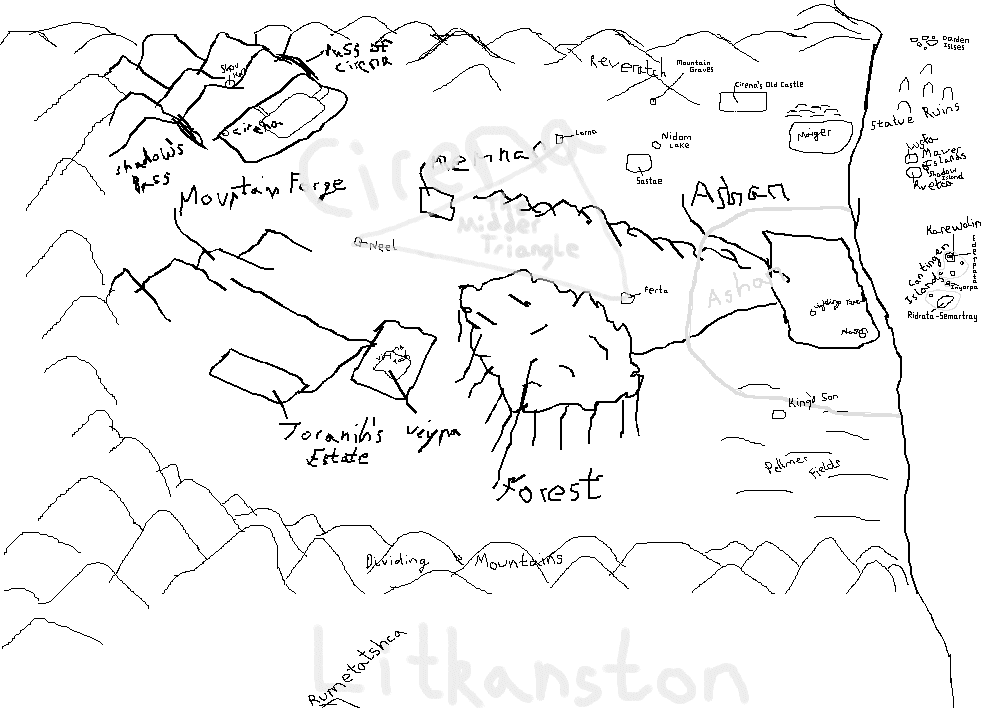
I think this was “storyideamap26.gif” if that gives you any idea of my process. For reference, the map below is one of the first maps I ever made referencing Cirena, in all its pixel-y goodness.
(I later created the current version in pencil and ink and then polished it in Photoshop)
Notice that several features have changed from this version (storyideamap26) for The Wishing Blade series…
To the most recent version for The Wishing Blade series:
For example, scaling and spacing got readjusted. Neel, while still a city, also became a desert region.
Toranih’s estate doesn’t even get a dot on the map.
The Cantingen Islands (and pretty much every landmark) got redefined.
The Shadow’s Pass and the Pass of Cirena haven’t even been touched in the current series. (Though we might still see a version of these as the series continues).
The Midder Triangle (in my head now as “Midder’s Triangle”) also hasn’t been addressed… though some of the Legends stories that are in development (The Dark Forest of Aneth) are now making references to that goddess, and the concept of the Triangle might eventually make it into Litkanston lore if any of my current headcannon makes it into published cannon.
As the story developed, much of the plot and world-building changed. I guess that’s what happens when my first ideas for this series started 12 years before I published the first book (Magic’s Stealing). I was still in junior high, daydreaming in choir and whenever I had free time.
I set the idea for The Wishing Blade series aside for a while after high school, though I occasionally tried rewriting the concept without much success.
Then, after college, I tried reworking the story again, and finally published Magic’s Stealing in 2015.
It took a while to finally get the world to a place where I was satisfied, but I’m excited to see what changes as the series continues, and what plot points and characters stick around.
For example, Toranih’s sister, Siklana, plays a major role in the current version of the series, which was a big change since she was only seen in a couple scenes in the earlier drafts. She even has a major arc in the third book, Magebane.
I expect plenty more to change, though there are still major scenes that I look forward to finally writing.
* * *
A heinous plot is unveiled when magic is stolen…
See the result of my world-building changes in The Wishing Blade series:
(And yes, there’s at least one, if not two more books planned for the complete arc).












 Stephanie Flint - Author and Artist