Tag Archives: Stephanie Flint

Changing the Scenario – Updating Anna from Role-play Game to Book

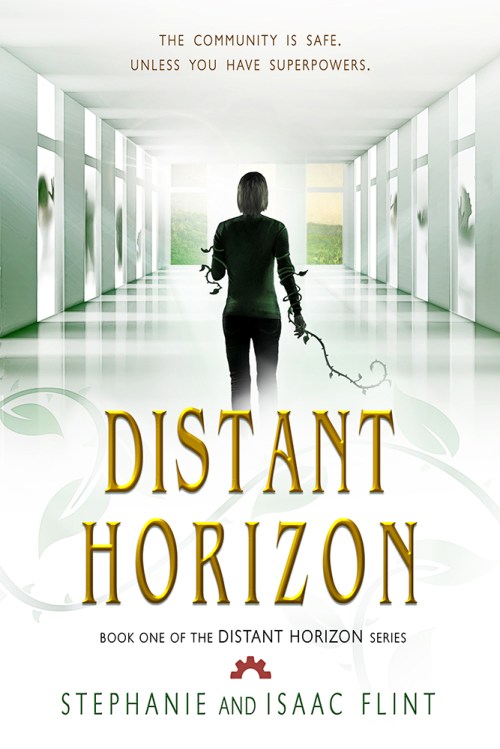
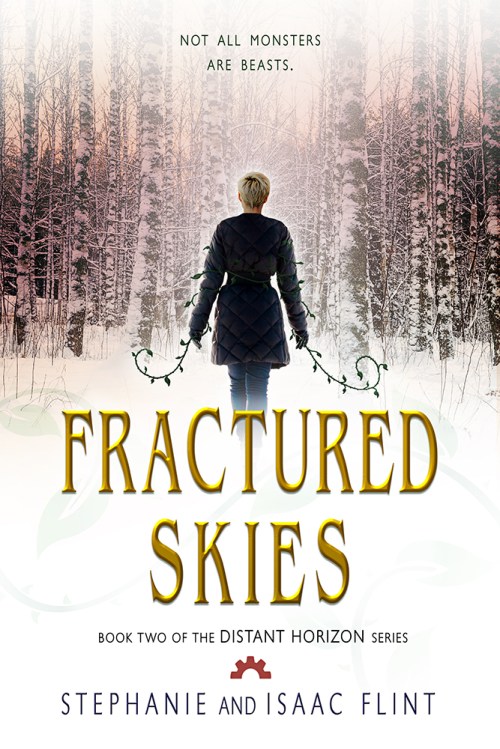
Previously I’ve talked about how Distant Horizon got its start as a role-play game between me and Isaac. Many plot points changed, but many stayed the same. In today’s post, we talk about how, in Fractured Skies, Jenna and Lance met Anna…

Who had a few changes along the way.

I’m pretty sure Anna started as a way for Isaac to keep my character, Jenna, from getting herself hopelessly captured. Let’s set the stage, shall we?

In the game, Jenna and Lance have returned to their hometown in search of her parents, who she knows might be in danger. Security guards have started to notice Jenna looks really familiar (she’s the granddaughter of a rebel leader, so they’ve been given her profile), there are a set of conspicuous mercenaries on her tail… and she is very good about demanding information in a not-so-subtle way. Not a good combination.

So Anna, an old friend from her high school, shows up and manages to (unintentionally) whisk Jenna and Lance to safety.

This despite shouting “Jenna! Lance! It’s you guys!” across the same room with said guards and mercenaries.

Needless to say, I can only assume the guards failed their notice rolls or smarts rolls.

Anyway, Isaac and I realized that wasn’t going to be very believable in the actual novel, so we made a few changes.

One, we gave Anna powers.

Surely Jenna and Lance weren’t the only one who didn’t take their daily pills in a huge city, right?

Two, we decided Anna isn’t an old friend… at least not that Jenna remembers… and that Anna knows more than she first lets on… allowing her to get them away from the guards a little more naturally while still arousing their suspicion as to her real intentions.

Here’s an excerpt from Fractured Skies:

One of the guards looked toward us—the one who had examined our IDs earlier, but before he could question us again, a young woman our age plopped into a seat across from me. She had shoulder length brown hair pulled into one of the few “stylized” cuts the Community allowed, and she wore a pale blue shirt and pale gray pants, nothing that stood out.

I blinked. “Uh… hello?”

“I can’t believe you’re back! Chris… Kate…” She propped her chin on her knuckles. “So good to see you again.”

I stared at her, dumbstruck. How did she know what our fake IDs said? Was she a Special Forces agent in disguise? A telepath?

Lance chuckled nervously. “I’m sorry. Do we know you?”

“Of course!” She laughed. “It’s me, Anna. Don’t you remember? We shared chemistry in high school.”

I tried picturing my classmates from chemistry, but honestly, I couldn’t remember more than a few of their faces. I certainly didn’t remember this “Anna.”

Lance and I exchanged glances. Quin seemed to be fast-talking the guards toward the exit, both groups too busy to worry about us. Was Anna a merc? If so, she fit in way better than the others.

She gave us a mischievous grin. “Now that you’re back, there’s a question everyone wants to know—are you two dating?”

I blinked. Why would anyone care about that?

Lance shrugged. “Sort of.”

I froze. What was he doing?

Anna’s eyes popped open. “Seriously? Oooo… just wait until I tell everyone! I told them it was bound to happen.”

“Yeah…” I shuffled uneasily in my seat, suddenly wishing we were dealing with the mercs. At least it was clear what they wanted.

“That’s so exciting!” Anna clapped her hands together and glanced over our shoulders. She quickly diverted her eyes back to us. “You should totally see my room here. It’s great. I’ve been living on my own ever since I moved from my parents’ house.”

“I’m not sure—”

“Sounds cool,” Lance said smoothly. “Why don’t we go check it out?”

I glared at him. What if this is a trap?

Lance flinched. “It’ll be fun,” he murmured, his voice forced.

Dear Community—

This flower charm was obnoxious. Technically, it was a telepathy artifact—artifacts were objects enchanted to mimic certain powers—and I’d accidently used it to project my thoughts. At least I had directed the thought rather than broadcasted it across the room. That would have been terrible. What if everyone thought they had theophrenia? I shoved the charm between my shirt and my coat, where I wouldn’t have to worry about accidently using it.

“Come on!” Anna grabbed us both by the wrists and yanked us from our chairs. Since I didn’t want to cause a scene and attract more guards, I didn’t resist. She dragged us through the hall and into an apartment room a bit bigger than our old dorm rooms combined. Her walls were covered in pictures of similar people with similar hairstyles—all smiling like cheerful leaders on cheesy self-help brochures, except these were beauticians’ posters.

If I took off my hat, it would be painfully clear I did not fit in.

Anna’s come a long ways from the original campaign.

Right now she only shows up in Fractured Skies, but she’s an example of some of the changes we made along the way. 😊

* * *

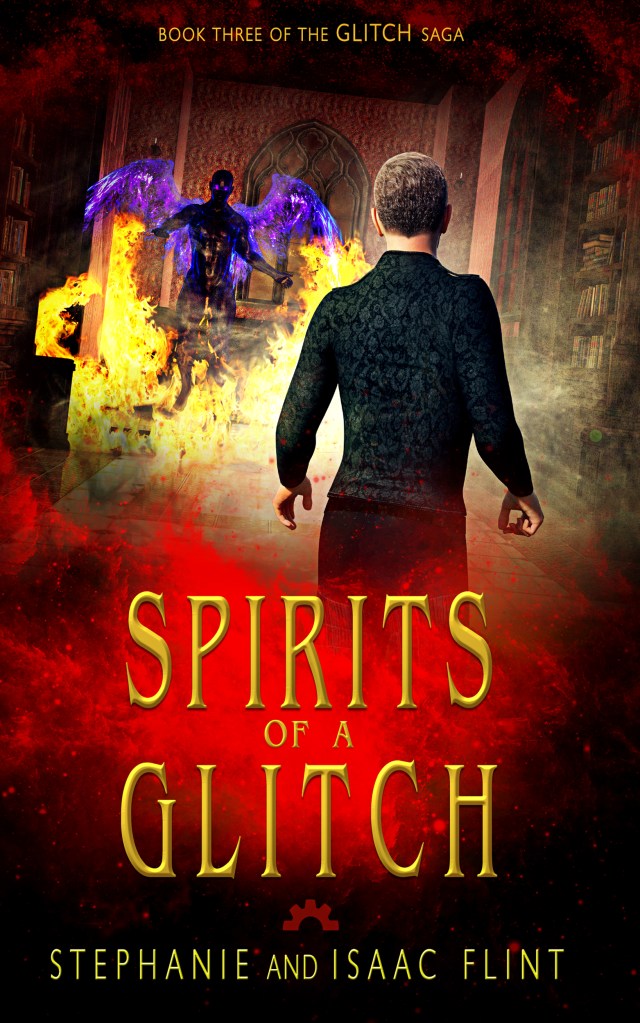
Read the series that started as a role-play game…

* * *

Happy reading and writing!

Leave a comment

Filed under Writing

The Immortals’ Languages

If you’ve read any of the Stone and String stories or later Wishing Blade books, you know I very much enjoy creating fictional languages. The Cantingen language for word magic is fairly fleshed out with grammatical rules and a good-sized list of words, though it still has a ways to go before being fully functional.

That being said, it isn’t the only language present in the world of The Wishing Blade.

We also hear reference of the the Cirenan language, Ancient Cirenan (mentioned in Magic’s Stealing), the Maijevan language, and the immortals’ languages.

The fun part is that Cirenan is supposed to be kind of like English… a mixture of several different languages. The problem?

I needed to figure out at least a portion of Ancient Cirenan for use in one of the later Stone and String stories.

Since Ancient Cirenan is supposed to be a mix of Cantingen, the immortals’ language, and an as-of-yet-undetermined language (Anethian?), I realized I needed to start delving into creating the other languages of influence… at least the basics.

So, I made notes on the immortals’ languages. So far I’ve got a basic idea of sentence structure, interrogatives, how verbs work, and the phonetics.

There would be too much to cover in one post (though if you want to see my notes on creating the sounds of the language, click here to check out my blog post from 2018), so I wanted to focus on one specific aspect… what the immortals call themselves.

The thing is, the Immortal Realm is fluid… a misty, fog-filled place with different regions inside it that don’t have any concrete position on a map. You could leave the edge of one region, travel through the mist, and arrive at a different region each time, despite traveling the same “direction.”

As a result, there are several different tribes and clans of immortals… beings which often resemble humanoid wolves, giant bears, equines, and other animals, although you also get the occasional griffin, dragon, minotaur… etc. Each group has their own dialect and variant of religion and culture, which results in occasional clashes.

I chose to focus on the primary language of the wolves, the one which has the most influence on Cirena. (Though, admittedly, I’ll sometimes use the same version of the language for the bears, and go with the idea of borrowed phrases or similar development of words).

One of the first things I wanted to figure out is what the immortals call themselves. While a lot of this is still in flux and may change, here’s what I’m currently looking at:

Since the immortals believe themselves to have come from the mist/fog of their realm (the word for “Mist” being “nirrin,” I decided that they would call themselves Mist Children. They live long lives (they don’t typically die unless they are outright killed or if disease takes them), and they have immortal ribbon magic, which is considerably stronger than regular ribbon magic.

The word for child is “cira’ma.” Plural, it becomes “gercira’ma.”

When creating names or special places that have a possessive tendency or description, the two words simply go together, primary noun first, and then the descriptor.

Thus, “Children of Mist” / “Mist Children” becomes:

gercira’ma’nirrin

(I’ll note that the apostrophes simply mean that the vowel sound before it does not merge with the next consonant. Thus, this words sounds something like “gair-cir-ah-ma-near-in.”)

I’ve got a lot more planned for this language, including what they call “created” beings who are still “immortal” but aren’t Children of Mist… but I’ll save that for another day.

* * *

Explore the my different conlangs…

* * *

Happy reading and writing!

Leave a comment

Filed under Writing

Music for Plotting in my Distant Horizon and Wishing Blade Universes

While plotting, I often enjoy listening to music. Sometimes it helps me invoke a particular mood for a scene, come up with new ideas, or simply picture scenes better in my head.

For example, I often listened to Rush’s “Subdivisions” while working on Distant Horizon, especially on scenes involving the Community (It seemed to fit the Community quite nicely).

Then, for a while, I enjoyed listening to DragonForce’s “Through Fire and Flames” while working on the end of Fractured Skies and Spirits of a Glitch. Isaac introduced me to that song and which scenes he thought it fit best. Epic battle scenes… determined character montages in my head… that sort of thing.

(Also makes for a great… and difficult… custom Beatsaber level).

Other times, music helps inspire titles. For example, there’s a line from Styx’s “Brave New World” which inspired the title for Distant Horizon. (I don’t like coming up with titles for books. Seriously… they’re illusive little critters that like to hide away and have to be dragged out from their cozy caves for me to find them).

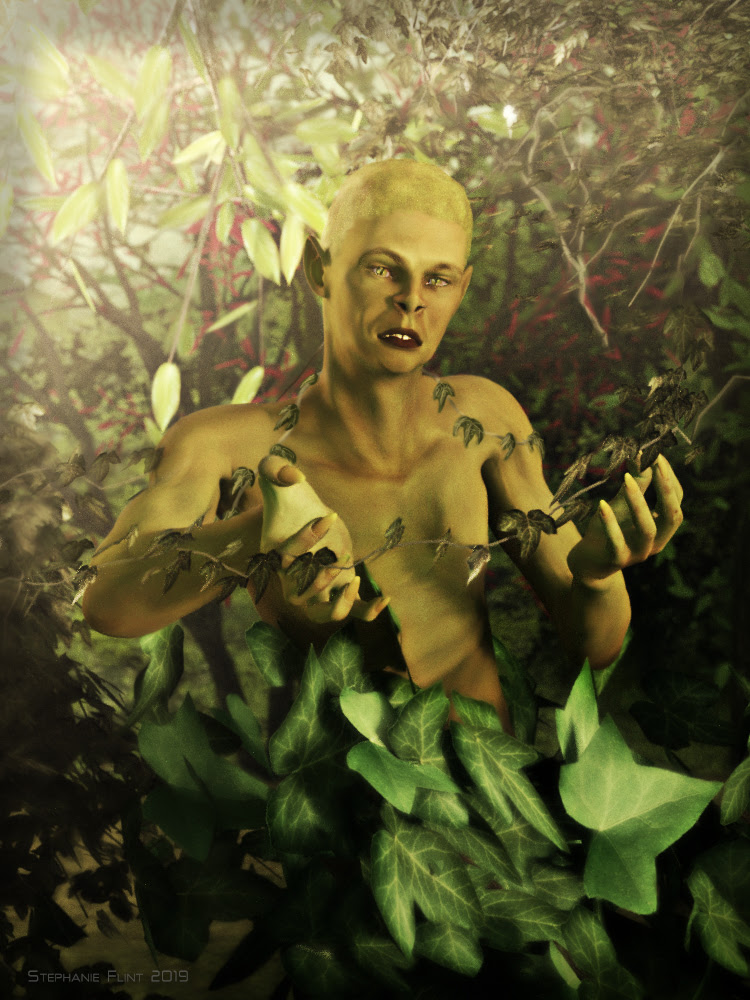
I’ll admit my tastes in music are eclectic. I’ve listened to a lot of Gordon Lightfoot songs. My favorites are “The House You Live In” and “Race Among the Ruins”, though these tend to inspire me more with the Wishing Blade Universe. I’ve also listened to a little bit of Tarja Turunen (“I Walk Alone”) which almost always makes me think of Ivy Man’s character from Fractured Skies (as does the song “Darkness” by Blackmore’s Night). Both are quite useful when writing any scenes that involve that character.

And sometimes songs might not… really fit, but they still work great for me to plot to. I like “Anti-hero” by Taylor Swift for the character of Sanjorez, even if it doesn’t exactly fit. And… even if I put together an animatic in my head of him dealing with the rest of the Camaraderie whenever I listen to that song.

Once I find a song that works for me, I tend to listen to it on repeat, as I did with Nightwish’s “Escapist” as performed by Alina Lesnik & Guitarrista de Atena (Great for plotting with Shevanlagiy’s character in the Wishing Blade Universe), as well listening to as Joan Baez’s  “Rejoice in the Sun” and “Silent Running” (on repeat. Several times. Because when I like a song, it usually ends up looped).

I think I like music I can picture a story to, even if the song might not normally be paired with a particular character or genre. And even if I don’t hear the lyrics right and that spins off a whole ‘nother idea.

There was that one time I listened to Skye Boat Song and misheard “Over the sea to Skye” as “Over the sea to die” and BOOM… new character! (Who, ironically, hasn’t yet shown up. Maybe eventually. That particular story arc took a major turn from the original plan).

And sometimes music gives me ideas for magic systems. Really. The concept of Magic’s Lure and the Wishing Blade spawned from singing “Rainbow Connection” during voice lessons. And the idea of shadows got their first inklings from listening to the song “Shadows” by Gordon Lightfoot.

There are so many more songs I could list as inspiration… But I’ve got to wrap up this post sometime.

Lately I haven’t really listened to music a lot when writing or revising, unless it’s background coffeeshop music, but I still like listening to music while plotting, or if I’m trying to get in the mood to write a certain scene. Or if I’m trying to plot out a stuck spot.

So there you have it. A few songs that I’ve enjoyed listening to while working on these books.

How about you? Do you ever have a soundtrack that reminds you of your favorite books? Do you associate a certain song with a certain character?

* * *

These two series both got a lot of inspiration from listening to music:

* * *

Happy reading and writing!

Leave a comment

Filed under Writing

Types of Magic

There are several types of magic in The Wishing Blade universe (because I like making magic systems). Some are closely related, and others aren’t. Here’s a look at the different types:

Ribbon Magic: One of the most common forms of magic in Cirena (until the Stealing) is ribbon magic. These invisible ribbons float through a person and can be commanded to do various tasks, depending on the type of ribbon. Some mages can see ribbons (Magic’s Sight), and those who can note that different ribbons have different colors.

A non-exhaustive list of some of the known colors of ribbons and what they do:

  • Pink – Telepathy
  • Gold – Healing
  • Yellow – Fire
  • Lime Green – Telekinesis
  • Royal Blue – Shapeshifting
  • Navy – Teleportation
  • Violet – Portals
  • Turquoise – Light

Ribbon magic can also be tied to various objects to enchant the object and allow non-mages to use their magic. The most common usage is the light crystal, in which light ribbons are attached to a piece of quartz, or a similar material.

Note: Ribbon magic is mostly seen in the Wishing Blade series and Legends of Cirena series.

Immortal Magic: Closely related to ribbon magic, immortal magic appears as ribbons except that it is much, much stronger. These ribbons tend to be black and silver, though the hue of their primary ability may still show through. Those with immortal magic tend to age slower, if at all, but are still susceptible to being killed by weapon or disease (though they tend to heal faster and be more resilient to diseases).

Note: Immortal magic is mostly seen in the Wishing Blade series and certain Legends of Cirena stories.

String Magic: Everything is made of tiny, invisible strings, which few mages can manipulate. It is possible to indirectly manipulate strings by using word magic, but the ability to see and touch strings directly is limited. Often, even these abilities are restricted, with string mages able to feel/sense strings or see strings, but not both. They might not be able to manipulate them, even with these abilities.

Even the gods and goddesses are limited in terms of how well they can manipulate string magic, so mortals born with this ability tend to be closely watched, feared, or respected.

Note: String magic is primarily seen in the Wishing Blade series, but also in a couple Legends of Cirena stories.

Shadow Magic: A consuming, unstable magic. Shadow magic tends to infect the mortal world, rendering objects and people invisible to those who aren’t shadow. If wounded by a shadow weapon, a mortal will become shadow. Shadows do not like fire or glass-stone (both can kill them), and shadow weapons can also wound them. A non-shadow weapon, while it might hurt temporarily, will quickly heal. Most unstable shadows can’t see color, and feel cold.

That said… what we see of shadow magic in the Wishing Blade universe is primarily unstable… but stable shadow magic acts a bit differently. While still cold when in the mortal realm, stable shadows don’t infect, and being touched by magical ribbons will cause them to temporarily become visible before vanishing again.

Note: Unstable shadow magic plays a huge role in the Wishing Blade series. We’ll get to see stable shadow magic in Legends of Cirena #9: The Dark Forest of Aneth!

Word Magic: Technically, the Cantingen language doubles as word magic. While it’s used for everyday purposes, spells are activated by phrasing things between “Be la” and “la be.” This works independently of other magic types, though it can be used to control and manipulate string magic.

An example of word magic: Be la russéan micasi la be. (“Release my spell.” — This phrase is used to cancel a previously cast spell).

This magic is relatively straightforward, but dangerous because of the necessity of using an exact phrase. Intention plays a role, but only those with extremely strong willpower are able to speak a vague spell and have it do what they intend versus an exact rendering of what they say.

Note: Word magic doesn’t yet exist in the Legends of Cirena era, but we do see it in the Wishing Blade series and in the Stone and String series.

Charlago / Magebane: This isn’t technically magic, but its anti-magic properties mean that it interacts with magic and thus is included as part of the magic systems I try to keep track of. Magebane is a material (technically uranium, radium, or pitchblende, with special properties in the Wishing Blade Universe) which explodes when brought in in direct contact with immortal magic, and may explode depending on the concentration of ribbon magic. Ribbon magic may fray rather than explode, causing it to behave erratically, and sometimes with more… personality… than normal. When brought in contact with shadow magic, magebane loses its destructive tendencies and stabilizes the shadow.

Note: Magebane plays a huge role in later books of the Wishing Blade series, and in certain Legends of Cirena stories.

* * *

Explore the different magic systems in these three series starters…

* * *

Happy reading and writing!

Leave a comment

Filed under Writing

Distant Horizon RP Campaigns of the early days…

Recently, I was thinking back to some of our early role-play campaigns… including the one for Distant Horizon.

See, the game started as me and Isaac wanting to plan a one-shot campaign that was something of a cross between The Giver meets X-Men.

Actually, that’s not entirely accurate.

The very first campaign set in this universe was a group campaign that followed the terrible exploits of superheroes from the Super Bureau who did more damage than the villains. It was great fun, and ended up providing a bit of lore you occasionally see in the Distant Horizon series.

(For more about that campaign, check out my blog post from 2016)

There’s even an easter egg regarding the Super Bureau campaign in the Glitch saga (Ghost of a Memory), when Tim is researching previous encounters with spirits:


After reviewing an article about a spirit that possessed a brain-dead child, I find several related articles from the time shortly before EYEnet was founded. One is about a man listed as Agent Knight. According to the text, he took an unruly team from the Super Bureau to remove a cult leader who tied the spirits of his followers to metal photographs—some superstition about photographs stealing a person’s soul. But the methods weren’t magical. The cult leader used life-spirit powers to bind his followers to a separate object, where he could better control them.

Long story short, though the actual events have been tweaked to better fit the story (as a great many of the campaign events have), and we don’t actually see all of the members of the ill-fated Super Bureau, some of the basic concepts of that campaign remain.

There is still a possessed, brain-dead child (at the time, she simply had a ridiculous level of power, rather than being possessed) who has a large role in the backstory of this universe (a back-burnered work-in-progress titled Little One). I have Isaac’s notes on the current version of the manuscript, and eventually I’ll need to work on those revisions. There, the investigation of the cult leader who stole souls continues… though he’s already dead (more-or-less) by the time Little One begins.

That said, we do get more Easter eggs regarding Little One’s story in Starless Night… and it’s a plot point that has some weighty significance for Jenna in dealing with the brain seed she’s trying to thwart.

There’s plenty of other little references as well. Jim mentions a few of them in the Distant Horizon series. The character of Benjamin had his start in that early campaign, though his character has gone through several iterations before you see him as he is now.

Distant Horizon was conceived as a campaign about a year or two after that one, but just between me and Isaac, and it started with Jenna in the Community, trying to figure out what was going on with the Health Scan. (Another key idea for this was that the superheroes had failed and the villains now ruled the world… but those in the Community didn’t know).

Of course, it’s not uncommon for our “one-shot” campaigns to run much longer… and it was about halfway through the campaign I decided I wanted to try writing it as a novel (I started taking notes about the spot where Fractured Skies ends). Though events have changed, the basic concept has stayed pretty much on point. One of the biggest changes being how big of a role “memory seeds” play in the story, since telepathic attacks existed, but the detailed workings of memory seeds came about later.

Tim’s story in the Glitch saga, on the other hand, wasn’t actually one of our campaigns. Portions did get played out between Isaac and me (primarily conversations between the Legion Spores and Tim… with Isaac voicing the living airships and me voicing Tim), but a lot of details were notes that Isaac had regarding what happened behind the scenes in the campaign for Distant Horizon.

Now, those aren’t the only Distant Horizon Universe campaigns we’ve done. Of note, we also had one we called “Exiles,” of which much of the story arc has been dismantled due to changes made in the published Distant Horizon series. I may revisit a version of it later, but, for now, you can see hints of it in the Deceived series. A team of young power-users have to escape a beast facility and then go on adventurers to change their world for the better… one of those characters being over-powered enough that the Camaraderie isn’t terribly happy about them…

Another campaign was the Athena arc, which is something of a techno thriller that takes place after Exiles. Again, a lot got changed based on changes to Distant Horizon. However… other aspects might eventually get reworked into later books if we ever explore the world beyond the Distant Horizon series once that’s complete. (And I have been dropping certain foreshadowing hints into the current series in case we do lean into that route).

And then there’s another campaign I ran much farther into the story’s future, but it would need major, major edits to be even remotely feasible, though there are some plot details which may work themselves into other books… especially Little One.

In any case, role-playing has been a fun way for us to develop the story and delve deeper into the individual characters and the world. 🙂

* * *

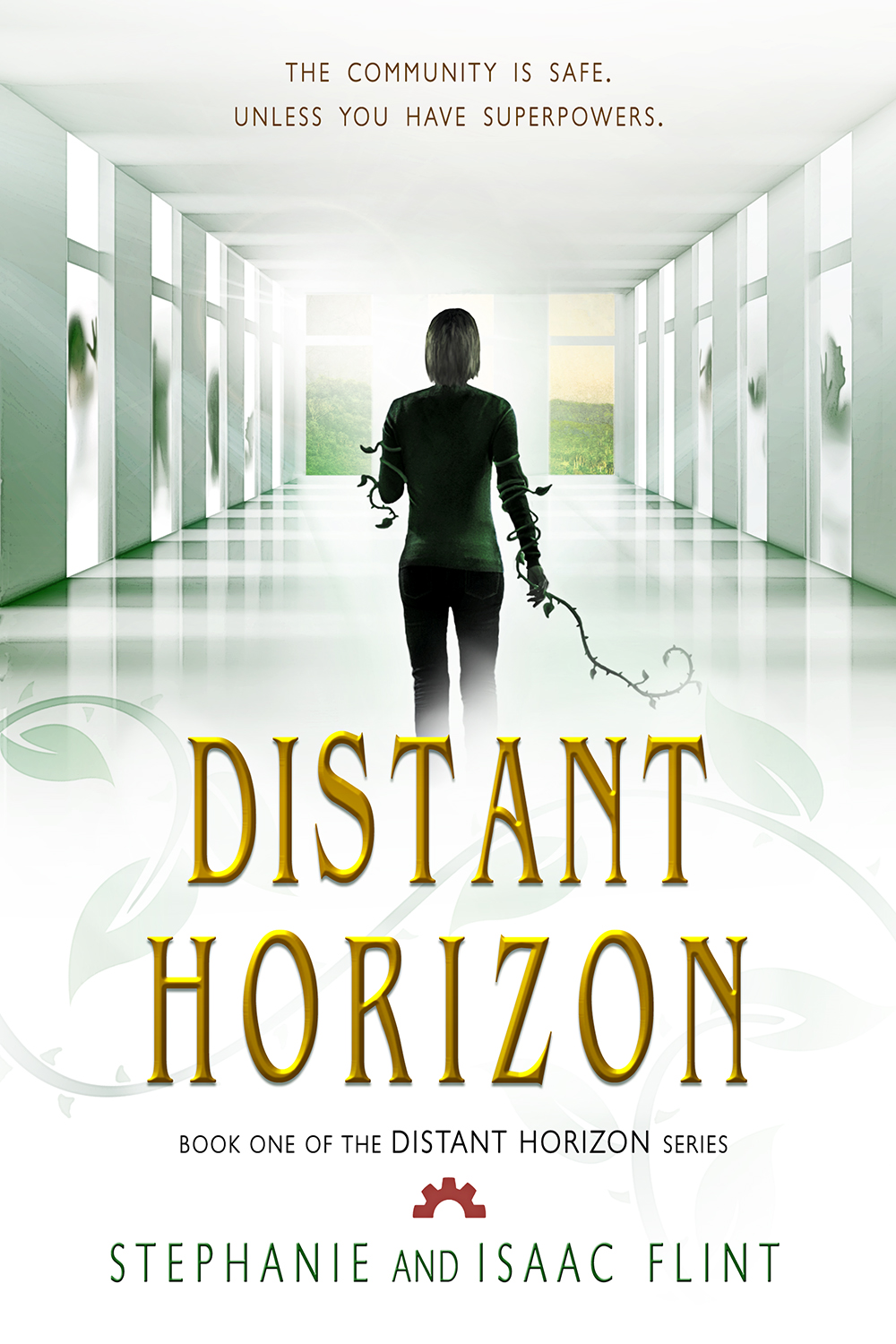
Sneak around with Jenna in the Distant Horizon series!

* * *

Happy reading and writing!

Leave a comment

Filed under Writing

Strings of Life and Death

In the world of The Wishing Blade universe, everyone has two strings of magic. One strand is life. The other strand is death.

Actually, their entire world is made of strings, which is why string mages are particularly powerful, but those two strings are extra important for magic.

Why?

Life magic is the key to a person’s free will and awareness. Without it, they go into “zombie mode” and act solely on instinct. They’re quieter, and don’t tend to resist magical commands well.

This is also the string used to created “inhabited” or cursed objects (and if that object is glass-stone, it changes from clear to a smoky, glossy black, reminiscent of obsidian. This is a huge point in my upcoming Legends of Cirena novel, The Dark Forest of Aneth. People, and especially priests and priestesses, typically try to avoid inhabited objects.)

But why tie life magic into an object?

Well, it allows the wielder, or a specific user, to power enchantments without expending their own willpower. (The catch here is that if you tie someone’s life magic to an item and that person has a strong will, you might be fighting their will instead of simply powering an enchantment).

Life magic is the string provided to mortals by Listhant-Nsasrar (Lishivant), Cirena’s high god.

On the other hand, death magic is the key to a person being able to die, to sleep, and to dream.

Without their string of death magic, they will eventually go mad unless they have a way to magically induce sleep or go into a meditative trance. (And getting mortally wounded without death magic unpleasant, to say the least. But very effective at keeping them technically alive).

This is the string provided by Madiya (Madia), the goddess of the dead.

If you’ve read “Stone and String,” you know that Edyli lost her death magic after infuriating Madia.

But she’s not the only one who has made Madiya furious.

Ralendacin (Shevanlagiy in The Wishing Blade series) lost access to her death magic, but due to a magic-meets-magebane accident that she might have overpowered with some artifacts she shouldn’t have used, when she “dies” she instead wakes up in another world. (Is this at all tied to something to do with her life magic? Read the Wishing Blade series to make some theories of your own on that…)

Unfortunately for those worlds, Shevanlagiy has a tendency to destroy any world that fails to give her what she’s after, and thus she gained the nickname, “The Destroyer of Worlds.”

Her method of destroying worlds tends to unravel the strings that hold them together, or outright obliterate the strings, giving the gods in the Wishing Blade series a very strong incentive to keep her from destroying this one, too.

* * *

A spell to infuriate the goddess of the dead (Stone and String)… or an opponent who has already made that goddess furious (Magic’s Stealing)…

Quick reminder… you can read Stone and String for free by signing up to my newsletter!

* * *

Happy reading and writing!

Leave a comment

Filed under Writing

That little sneak…

Jenna, the main character of the Distant Horizon series, is somewhat notorious for eavesdropping when it comes to trying to gather information.

Today I’ve got a few excerpts of her doing just that… or trying to. 😉

In case you haven’t read Distant Horizon yet, here’s an example of what I mean. To catch you up on what’s happening, Jenna is standing outside of her grandfather’s office, listening in on a private conversation between him and the rebel’s mission leader, Jack.

There was a pause, and this time, Jack’s voice was quiet. “Next time, if there’s even the hint of danger, tell me. Or have Inese do whatever she does and give me a heads up.”
 
A bit of metal clanged behind me and I jumped, but the hallway was clear.
 
Must’ve been the vents.
 
“I do my best,” Pops said. “What about the kids? How’d they do on the field?”
 
“Well, Lance has a good hand with swords, and he’s exactly the type of guy we need right now, but he’s inexperienced and brash.”
 
Pops snorted. “You’re one to talk. What about Tim?”
 
“Besides being Community, he’s a good kid with a good heart, and he managed to hack the Camaraderie’s communications without them batting an eye. I didn’t get a chance to see his shooting skills, but if you want to get Crush on the ground again, Tim should be able to run navigation without a problem.”
 
Pops cleared his throat. “And my granddaughter?”
 
I pressed closer to the wall.
 
Jack grunted. “She needs Inese to teach her to gather intelligence without being caught.”
 
“What do you mean?”
 
“Given that she’s been listening for the past five minutes…”
 
Heat rushed to my cheeks as the door swung open. Jack smirked. “Come in, kid. Your ears must be burning.” I stared at him, mortified, but he waved me in and pulled the door shut behind us.
 
Pops stroked his beard, evaluating me. “How long have you been out there?”
 
“Since you were arguing about the reason you sent Gwen to Guatemala,” I said sheepishly.
 
Jack patted my shoulder. “See? What’d I tell ya? She has a knack for the sneaky spy stuff. All she needs now is some training.”
 
Pops fixed him with a glare and sipped at his coffee. “I’m guessing you have questions about the mission?”
 
“Actually—my parents.”
 
Pops motioned to a chair with his coffee mug, and I sat, twining my fingers around the pendant’s chain in my pocket. “I want them to know I’m alive, and what’s going on in the world. The beasties, the powers. Everything.”

Anyway, her tendency to try overhearing information she’s not supposed to know continues in Fractured Skies... though she hasn’t quite learned how not to get caught.

To fill you in on this excerpt, Jenna has just left the room where she has been eavesdropping on someone she’s not sure she trusts. She’s trying to gather information about the people she’s currently stuck with.

I stepped over Quin’s legs into the other room. He still stared at the wall, his expression blank. I bit my lip, and then slid down next to him. “Hey.”
 
“Done eavesdropping?”
 
I stared at him. He hadn’t moved an inch, save to speak. His hands were clasped over his knees, his chin tilted toward the glass window in the ceiling. His black hair was cropped less than half an inch from his ears, the most Community-oriented hairstyle I’d seen in a while, though he wasn’t Community. He had a rounded face, a smooth, beardless chin, and a lean form. His tunic hugged his chest but gave his arms space for movement.
 
“You heard me?” I wrapped my vines close. This guy could easily beat me in a fight. Hopefully Pops was right to trust him.
 
Didn’t hear you,” he corrected me, still staring at the window. Aside from the reflection of that creepy blue light, there was nothing of interest outside. “You walked by, but once you went to the other room, they didn’t acknowledge your presence. I figured you were trying not to be seen.”
 
“Um…” I closed my mouth, not really sure what to say. “Does it… I mean—”
 
A small smile formed at the edge of his lips. “I’m not mad at you, if that’s what you’re worried about.”
 
“She’s your partner, so I didn’t know—”
 
He snorted, still staring at that confounded window. “She’s my sister, and I’m a mercenary. Mercenaries eavesdrop.”
 
I’m not a mercenary,” I protested, vines quivering with annoyance. Months ago, they responded to my thoughts at a snail’s pace. Now they responded to all my thoughts.
 
“I didn’t say you were.”
 
I scowled. “You implied it.”
 
“No. I meant only that if I eavesdrop, I should not be angry when others eavesdrop.”
 
I blinked. Someone who worked for the Camaraderie who talked sense?

Once we get to Starless Night, however, Jenna has a whole new tool for eavesdropping… telepathy. Granted, she’s not always aware she’s using it (and she does have a pesky brain seed that keeps trying to take over and loves using it for her) but the more the seed influences her, the better she gets.

Here, in this excerpt from the beginning of Starless Night, she’s still not that great at using telepathy to read minds.

It doesn’t help that, perhaps, there’s more to the butler than he lets be known.

Though Lady Black droned on, her butler observed me with a cutting blue gaze. Uneasiness flitted through me.

Something about that butler…

My thoughts strained to reach his surface thoughts. Why did he make me so nervous? Tell me who you are…

I slammed into a steel wall of nothing.

You may call me Stuart, Miss Nickleson, he responded, his mental voice chillingly precise. I am Lady Black’s butler. And you will find that I am not so generous as the ambassadors regarding who I allow into my head. If you have a question, you need only ask. I am quite forthcoming on a good many topics.

I swallowed hard, ducking my head so I didn’t have to see him watching me. I’d done it again—tried reading someone’ s mind without thinking about how I didn’t want them reading mine.

And that’s it for Jenna sneaking around today and eavesdropping today!

Do you have any favorite characters with sneaky skills? 🙂

* * *

Sneak around with Jenna in the Distant Horizon series!

* * *

Happy reading and writing!

Leave a comment

Filed under Writing

Happy Novel November!

📚 Today is the start of Novel November!

What… precisely… is Novel November?

Well, in previous years, there was National Novel Writing Month, or NaNoWriMo. Many a book was drafted in the span of a month, the goal being 50,000 words by the end of the month, or a short novel.

This comes to writing, on average, 1,667 words a day.

Some writers would front load their word count (I know one very fast typist who hit 25,000 words in a day… though this is not the norm). Others would make a last minute rush during Thanksgiving break to complete their book before midnight on the 30th. (I think my highest count was 12,000 words in one day because of this).

But, for 1,667 words a day, you can complete the rough draft of a short novel in one month.

Or make some really, really good progress on a longer novel.

Unfortunately, NaNoWriMo is no more (for a variety of issues I won’t go into here), but the desire for a community of writers encouraging each other to meet their word counts, competing with each other if that’s what makes them write best, and simply proving to themselves that they can finish a book, or that they can make progress on a book, even if they don’t reach the 50,000 word count… that remains.

And I’m thrilled that ProWritingAid (an editing app) has put together something akin to what NaNoWriMo used to be. (I believe AutoCrit has something similar, but I haven’t had a chance to explore it yet).

This new edition is not as fancy or as glorious as NaNoWriMo was in its hey-day, but it promises a lovely word count tracker and a few forums for community.

What is this new sensation?

Novel November! Or NovNov, for short.

My goal? 50,000 words.

The book?

Let it be known that I’m finally going to finish Huntress #3.

(Seriously… after two drafts I wasn’t happy with, I am stoked to announce I have a full-blown outline/skeletal rough draft all ready to go that I’m super excited for.)

Let’s do this!

Are you doing Novel November this year, or something similar?

Let me know!

* * *

I wrote Huntress in two weeks, and I’m fairly certain I wrote Changeling as part of a NaNoWriMo challenge (whether Camp NaNo or November… I don’t remember).

* * *

Happy reading and writing!

Leave a comment

Filed under Writing

The Power of Laser Eyes

Today, I want to talk about a power that doesn’t get a whole lot of visibility in the Distant Horizon series (yet), but has been seen in The Glitch Saga:

Laser eyes.

Laser eyes is what it sounds like… the ability to shoot lasers from your eyes. That being said… what kind of lasers is still in question.

At this point in the currently-published stories, they are mostly highly focused, high-powered beams of damaging light. There are still plenty of related possibilities which have yet to be explored.

And, while it’s the name of a pre-Camaraderie group (the LEU, or Laser Elementals United), this has yet to referenced in any of the currently published stories. They were a band of misfits who were open to all power users… though they didn’t tend to get along well with the Super Bureau (the superheroes of the superheroes vs villains era).

Once I eventually get a chance to revise Little One, we’ll see more about the LEU.

As for the dangers of laser eyes, Tim is all too familiar with them, as evidenced in a scene from Spirits of a Glitch:

The elevator dings and rumbles open to the final floor. I bolt for the hangar. I created a temporary lock on the life support systems in the area, but the heater hums too softly to be running at anything other than minimum capacity.

Another hack, and I skirt through the next two doors.

A red beam of light flashes beside me. My heart jumps to the back of my mouth. Heat scorches the wall. Multiple eyes form along the Manticore’s hull, pulsing with crimson energy. I duck behind the command console near the doors and plug my tablet into the mainframe port.

The Legion Spore (and the Manticore) use laser eyes as their primary weapon against other ships (except when dealing with a glitch). Hence why the Camaraderie is so intent on having power users with laser eyes among those who would make the merge into the monstrous contraption.

Still, little is known about how the power actually works. As mentioned in Distant Horizon:

“We should’ve brought Tim along,” Lance whispered. “He could’ve set them straight.”

I sighed. “I don’t think he knows any more than they do. Besides, we can’t go back in time—it’s not scientifically possible.”

“Superpowers aren’t scientifically possible, either,” Lance said.

I glowered in his general direction. “Powers do have a logical explanation. At least, some do. Some are weird. Like laser eyes. How can a person shoot lasers from their eyes? Wouldn’t that burn out their retinas?”

“You tell me. You’re the one reading Pops’ dissertation.”

Granted, it has been a couple decades since Pops wrote his dissertation, so more may be known than what the rebels have access to.

Regardless of its oddity (some powers, such as reality bending, laser eyes, and phase-through, do seem to bend the laws of physics), the Camaraderie of Evil likes to make use of the ability.

In fact, when Isaac and I first put together a list of powers for use in this universe, we created four categories: Mental, Reality Shift, Physical, and Elemental. Though we’ve changed the categories somewhat since we started writing this series, we’ve kept several of the powers that fell into the reality shift section.

Among those powers are fourthwalling (later split into reality bending and insight… with “fourthwallers” being related to a specific cult), flying, shapeshifting, phase-through, laser eyes, portal creation, power steal, luck/probability manipulation, alchemy, and invisibility.

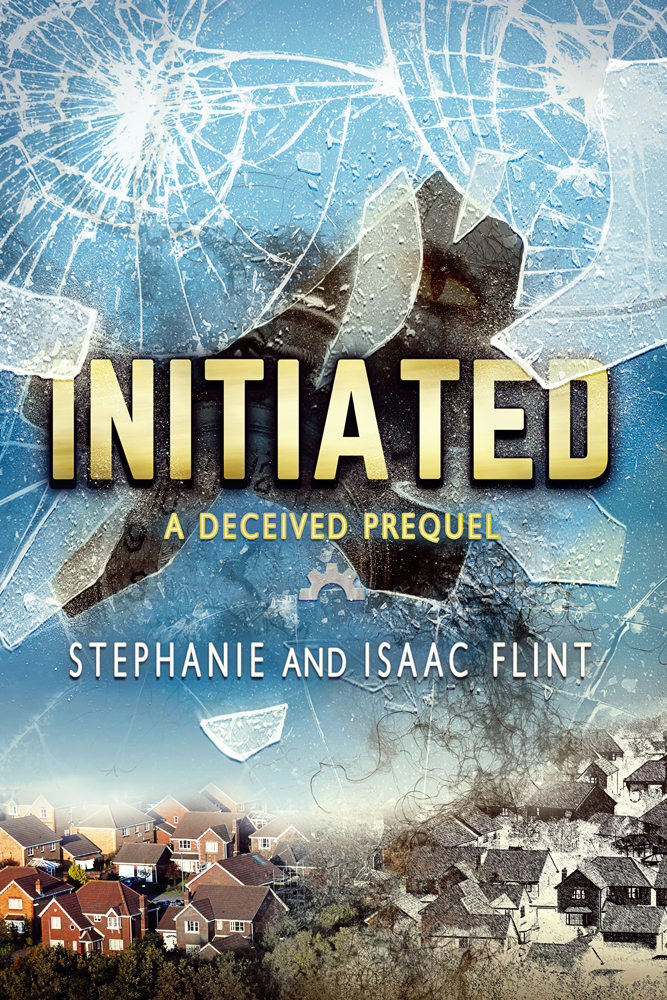
Fractured Skies delves a bit deeper into the insight power, alchemy, and briefly touches on probability manipulation. And Initiated goes full scale into reality bending. But, given time, you’ll eventually see all of them. We hope you stick around to see how it all plays out. 🙂

Here’s an example of laser eyes being used in a battle during Fractured Skies.

Lily pointed to a black helicopter coming in low. A vested, shadowy figure raised a rifle to its shoulder while another stood nearby, eyes glowing a faint red. “Heads down!” She and Quin dropped to their knees behind the boxes. Mom shrieked, covering her head with her arms while Dad threw himself over her. Inese ducked, but a blast of red light smacked her in the chest, sending her sprawling.

“Inese!” I crawled after her, but Quin grabbed my foot and yanked me back. A bullet ricocheted off the concrete where I would’ve been.

“Special Forces agents work together,” Quin said simply. “So should we.”

Eventually we’ll see even more cases of laser eyes in use. 👁️

* * *

Neither Jenna, nor Tim, are much a fan of laser eyes…

* * *

Happy reading and writing!

Leave a comment

Filed under Writing

Uranium Glass and the Magebane Book Cover

So far, Isaac and I have done all the photography for The Wishing Blade series covers. And when it came to the cover of Magebane, we’d been planning that cover for a while… even bought the candle holder specifically with the intention of shooting this image.

(It wasn’t entirely an excuse to buy more Depression era glass. Not at all… *Cough.*)

And though it’s been a while since we released Magebane, today I want to talk more about the glass on the cover.

Book Cover for Magebane

True story… when first proofing the cover, I asked for feedback and someone said it seemed a little too radioactive green. Funny thing about that… That green was intentional, and they weren’t actually wrong.

That glow is the result of UV light shining on the glass and fluorescing with the uranium salts coloring the glass. I actually had to lower the amount of light coming from the candleholder while working on it in Photoshop.

Don’t believe me?

Here’s a look at an unedited photo from the photoshoot:

Glowing Uranium Glass Candleholder

There’s a model lamp at the top providing a general light, but that purple light you see is from the UV light. The glass is Depression Era glass.

Here’s a look at the same glass but without the UV light.

Green Uranium Glass Candle Holder and Cup

We also shot a set of daisy button glass dishes we considered using (which I believe are actually Victorian era, rather than Depression era, based on their color and pattern), but decided to stick with the candle holder as the main image.

This one just has UV light on it, and no modeling lamp.

Glowing Uranium Glass Dish and Toothpick Holder

It glows hot. Which has been my experience with most yellow uranium glass that I’ve come across.

This, by the way, was with the cheapy UV light we bought at Walmart. Later, we acquired a more powerful UV light (different wavelength, better visible light filter), and these pieces were even brighter.

Now, let’s go into more detail about the real life inspiration for the story’s “magebane” / “charlago.”

The good news is that this glass is not as destructive as it is in the story.

However that “radioactive green” look might be a little more accurate than you first expect. Often known as “Depression Era glass,” these pieces are usually a kind of odd, Vaseline green or “canary yellow” color. You’ve probably seen them hiding in China cabinets or antique stores.

(Pictured Above: Green Depression Era Glass)

Usually, it doesn’t stand out. Some pieces are a little more flowery in their designs, but what makes them so special?

They glow under ultraviolet light (blacklight).

(Well… some do. The frustrating part of hunting for glowing Depression Era glass is that not all green or yellow glass glows. UV flashlights are useful for checking to see which pieces do and don’t. And just because it glows, doesn’t necessarily mean that’s it glowing for the reason I’ll explain in a moment. But when you find the piece that does… there’s the magical “ah-hah!” moment of success.)

See, here’s the thing. For a long time, glassmakers have been using uranium oxide to give glass a rich green or yellow color.

Yes, uranium.

The glass is technically radioactive.

However, according to most internet sources (take these with a grain of salt) and the mineralogist I asked, these glass pieces aren’t so radioactive as to be harmful, at least if you’re not constantly handling them, ingesting pieces of glass (you shouldn’t do that anyway), or messing around with them aside from using them as pretty decoration.

(I would like to add here that I am not an expert in radiation, and I have not actually tested these pieces with a Geiger counter. Please don’t go out and do something that’s going to give you radiation poisoning. There are some antiques that actually do have harmful amounts of radioactive material in them. Stuff with radium, for example. And certain orange or red Fiestaware ceramics from before a certain year. Both are details I play with in Magebane.)

So, that “radioactive green” glow?

Well, it does contain radioactive material.

At the same time, the term is a little misleading because the UV light causes the uranium within the glass to fluoresce, not because it gives off its own creepy light due to nuclear radiation.

You can find a lot of Depression Era glass in antique stores because it was popular during the Depression due to being inexpensive. Though a ban was plaed on putting uranium in the glass during World War II, the process was allowed again later (using depleted uranium), which means that not all uranium glass is Depression glass. Some pieces are replicas and are much more recent.

(In some cases, you can tell when it was made based on the specific markings added by the manufacturer).

However, some pieces are even older than the Depression:

(Pictured above: Canary Yellow Daisy Button Sauce Dish, circa 1880s. Though this is uranium glass, this isn’t actually Depression glass.)

Uranium glass was also made in the late 1800s, meaning that you could find it in the Victorian era. (I was rather thrilled to have ended up finding a piece that, based on its pattern, Isaac and I are pretty sure is from that time frame).

As for the story…

This means that Maijev — that mage-hating place that’s supposed to be pulling from Industrial Revolution and Victorian era tendencies (yes, I know, I’m blending time periods) — could have uranium glass.

And, in the world of The Wishing Blade, ribbon magic and nuclear radiation (even trace amounts) don’t mix well. (Unless you like world-unraveling explosions).

Hence… magebane!

Now that you’ve read about real-life uranium glass, here’s an excerpt from Magebane, a scene in which Siklana gets her first look at charlago glass. 🙂

Unlike real life, though, “Depression era” glass isn’t inexpensive in Cirena… it’s coveted, largely because of its tendencies to ward away mages.

Ruderk examined Siklana soundlessly, then moved to the stove where a tea kettle warmed. “Tea?” He held up the kettle and a green glass cup, paused, and then extracted a different cup. “I’d offer you the finer glassware, but you said you were a mage, didn’t you? I’m not sure how much residual magic might stick around, and I don’t want you getting sick.”

She blinked. “You have charlago glassware? May I see it?”

He shrugged. “Long as you don’t go throwing ribbons at it. One wound a day is plenty enough for me.” He passed over the green cup.

She flinched at the hint of a sting when it touched her skin, and she kept her navy ribbons deep inside herself, where they could not reach the glass. While Ruderk poured them each a cup of tea, she turned the piece in her hands. It was smooth and plain, with a pair of seam lines on either side from the mold, and a simple round base to keep it upright. She sorely wished she had her light crystal with her. Though she could not let the ribbons come into direct contact with the glassware, the light the crystal produced was not magical, and Camir had said kosa light would cause certain forms of charlago to glow.

“It’s beautiful.” She handed back the glassware, and Ruderk exchanged her offering with a steaming, white ceramic cup.

“You should see some of the more meticulous pieces,” he said. “Far more than I can afford, but they have a pretty selection of flowers and patterns to choose from.” He sat himself across the table from her, then reached behind him, snagged a tin, and dropped it onto the table with a clatter. “Biscuits. Help yourself. I made them this morning, so they shouldn’t be too stale.”

* * *

See uranium glass in a fantasy world…

* * *

Happy reading and writing!

Leave a comment

Filed under Writing