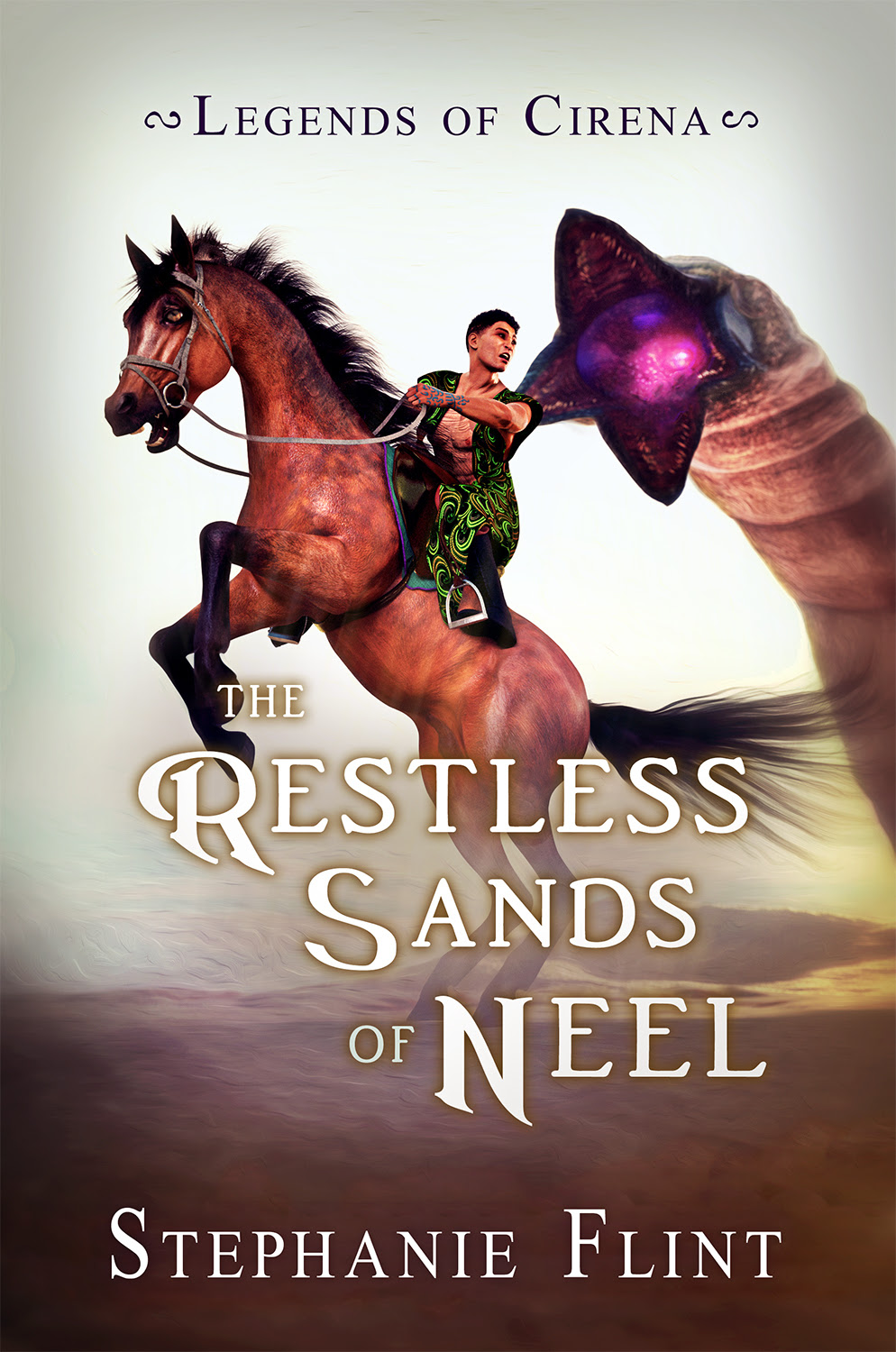
The second Legends of Cirena short story I released was called The Gryphon and the Mountain Bear.
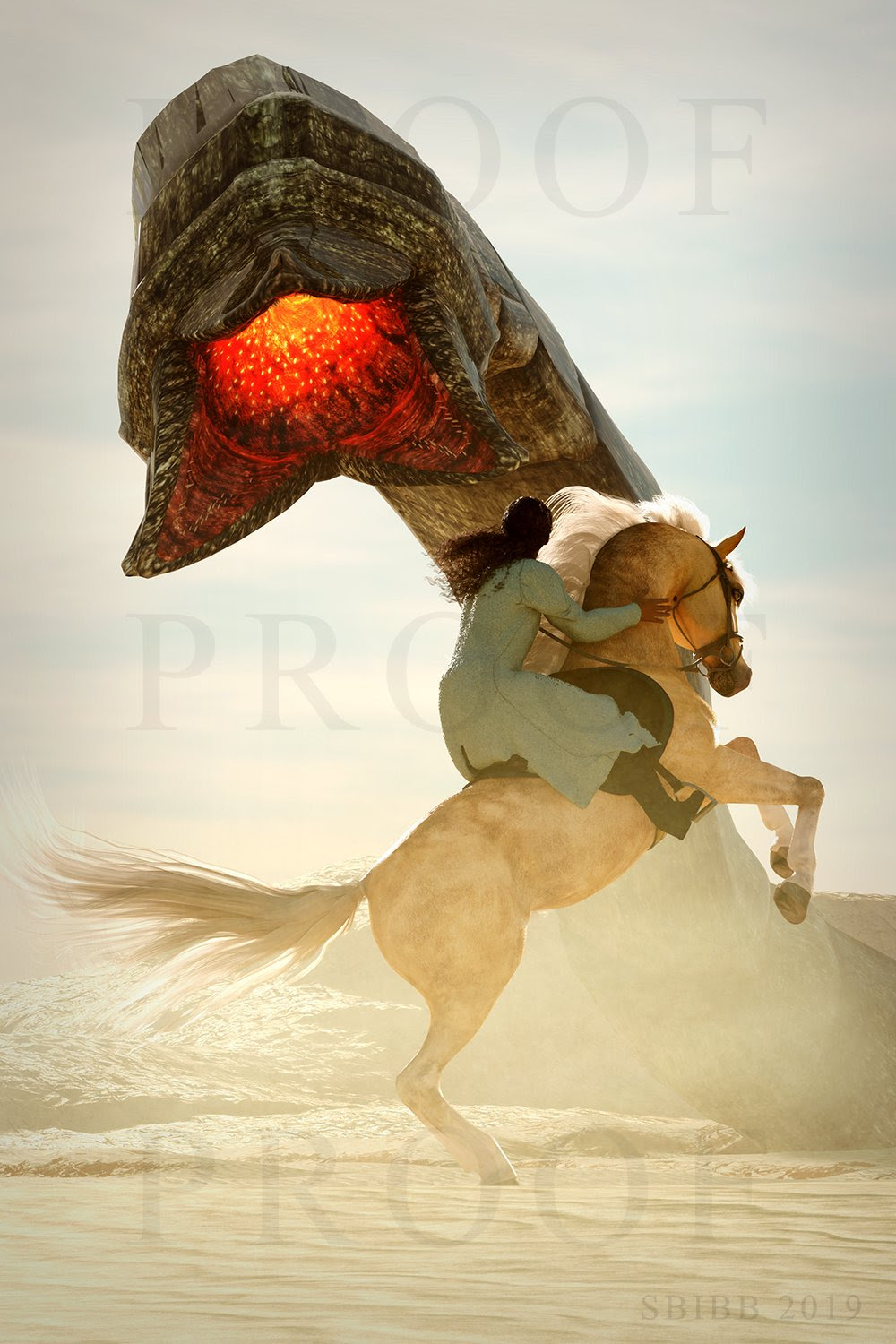
And so I figured it would be a good idea to feature a gryphon on the cover.
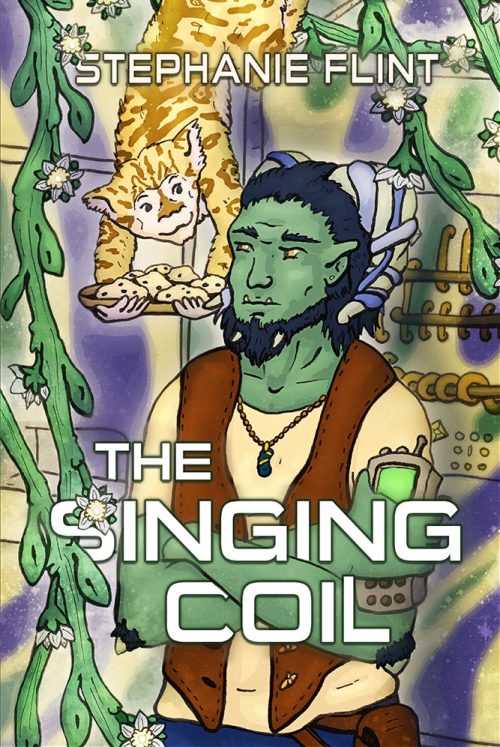
Now, I create most of my own covers via photomanipulation or through Daz Studio renders (“The Singing Coil” was the exception, being illustrated via ink and Photoshop). But, sometimes, when you try to create a gryphon… the gryphon decides to be disagreeable.
And this was before I had discovered Daz Studio.
Sometimes you try to photomanip a gryphon, and you don’t end up creating a gryphon.
Like… what is this guy? I like him, but he’s definitely not a gryphon.
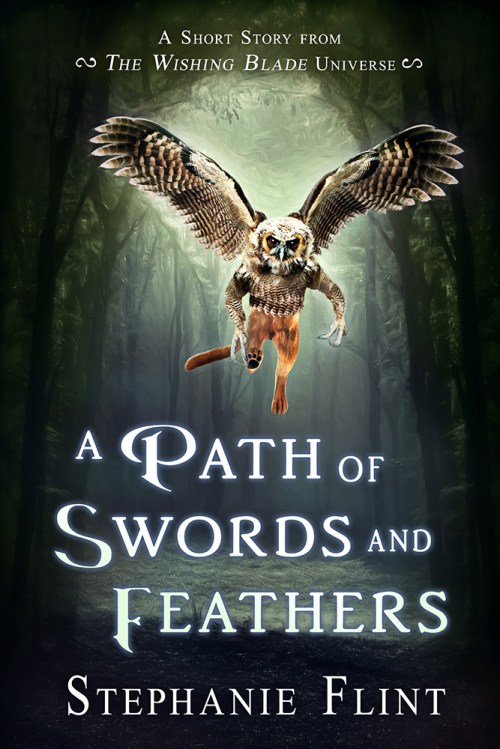
Needless to say, I had to take a different approach for that cover. However, the experiment did result in an idea for a new creature that can be found in the Immortal Realm, a strange owl-cougar-human-looking hybrid called an armansee.
And so this fellow flew his way into a short story I was planning to write but hadn’t fully plotted yet, one which would eventually be called A Path of Swords and Feathers.
I knew I wanted to write a story featuring Daernan’s father and the adventures he went on after he left Daernan and his wife behind to follow the demands of the goddess he serves. And with this strange creature as inspiration (and with me listening to a lot of filk–fictional folk–songs), the plot for A Path of Swords and Feathers came into being.
Now, whether this immortal is foe or friend…
Well, you’ll just have to read the story if you want to find out. 😉
* * *
Want mystical, immortal creatures in your short story reads? How about one of these two stories?
Many years ago, while Isaac and I were enjoying Applebee’s 25 cent wing special (do they do that anymore?) and getting some studying done, we had the joy of running into someone who had read one of our books and seen us at the local comic con.
(*Squee! Recognition!*) ☺️
Anyway, that was awesome.
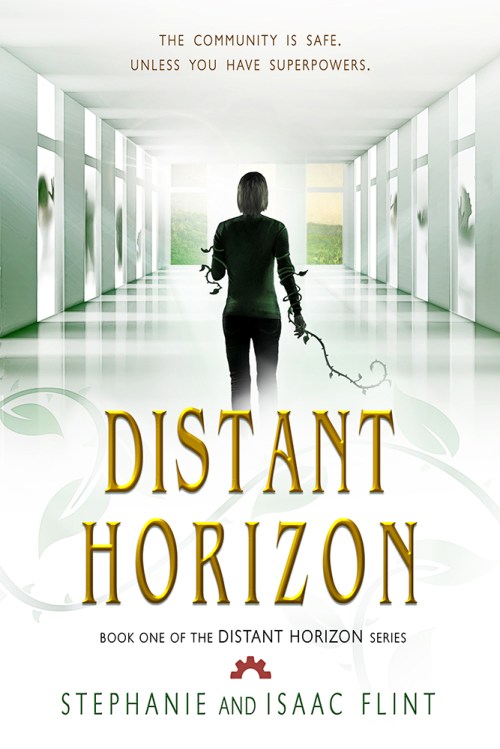
But during our conversation, one of the things the reader mentioned was wondering a bit more about the gamemaster guy and the sea monster he threw at the protagonists toward the end of Distant Horizon, and whether or not there’d be more about him in the next book.
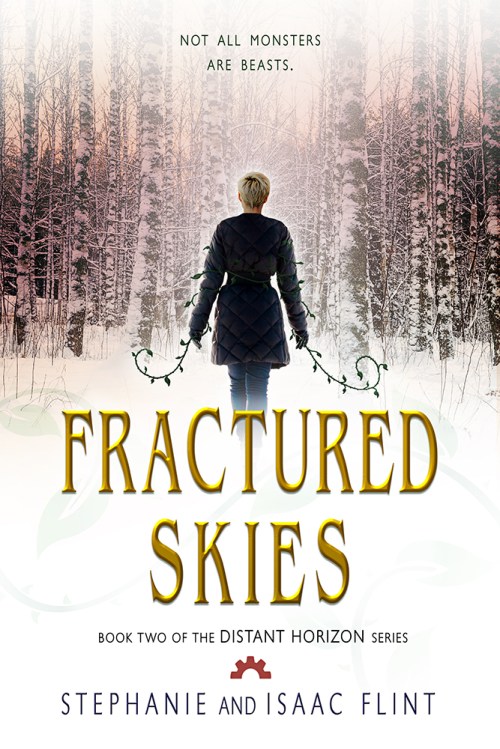
(Spoiler… there is. His name is Spectator, and he plays the role of a minor antagonist in Fractured Skies, and gets a couple mentions in Starless Night. He also makes a brief appearance in Initiated.)
The conversation got me thinking more about that character and his role in the Distant Horizon universe. Isaac and I have gone back and forth into how much of a role he should play (with me usually wanting to give Spectator a bigger role and Isaac wanting to scale him back… mostly because Spectator has a tendency to interfere with overarching plot points or become deus ex machina. His scenes have gone through a lot of revisions).
Granted, part of the deus ex machina problem might be because that was his original role in the game.
See… I had a tendency to make some not-great decisions for Jenna in the role-play game Isaac and I were playing, and I’d kinda-maybe-sorta gotten her captured by the bad guys with no explainable hope of escape in what was supposed to be a one-shot campaign.
That I very much wanted to see continue because I had questions and I wanted answers.
So Isaac snagged a character from one of my previous campaigns in the same world (but modern day), upgraded that character to Spectator status, and decided this newfound “Spectator” was going to make sure the game continued (see “fourthwalling,” below).
So Spectator does a bit of timey-wimey/alternate reality manipulation to make sure certain events can now happen, and the last scene of the one shot campaign got a teensy update.
And Jenna’s team is now able to come to her rescue.
(And we did a ton of work in the novels to make sure his involvement makes sense and doesn’t read quite so deus ex machina-y.)
And once we’d done a bit more work, we determined that Spectator is kind of like the “Q” of the Distant Horizon Universe (Q from Star Trek, for those not familiar). Spectator is not quite omnipotent but close, well aware of things he shouldn’t be, and mischievous. He can put just about any character who knows who he is on edge. He’s a reality bender, capable of changing the world around him to suit his whims, at least to an extent, and he’s also a fourthwaller, meaning he believes he’s part of game world of sorts, and thanks to his insight, he can break through the walls of that world.
Within the Distant Horizon universe there is a cult of fourthwallers who believe their world is controlled by two gamemasters, and that, in order to maintain their existence, they must be as interesting as possible to hold the attention of those gamemasters. Unfortunately, this means that if they lock in on somebody they think is a “player character,” they’ll cause them worlds of trouble in an attempt to stay in the gamemaster’s focus.
That’s all fairly meta, though, and most of the characters simply try to avoid fourthwallers when possible, dismissing them as crazy. Jenna, having come from the Community, has no idea these people exist until Spectator shows up. The rest of the rebels, once they realize he’s a fourthwaller and getting involved, are quick to research everything they can about him… all while trying to keep mysterious artifacts (the ones that lead to the sea monster showing up during Distant Horizon— it actually wasn’t Spectator’s fault) out of the hands of their rivals.
Spectator’s role in the story is explained more in Fractured Skies, so I’m going to avoid delving too much into that since that would be spoilers. But I hope you find him as interesting as I do.😁
Eventually, more will be revealed about the role of reality benders and fourthwallers, a trope I have readily enjoyed both in shows like Star Trek, involving Q, and in superhero stories, like X-Men.
Long story short, Isaac and I are both fans of Star Trek (For me, Voyager was long my favorite, though my first experience came from Next Generation, but Lower Decks now might be my favorite among the series, followed pretty close by Strange New Worlds).
Next Generation, however, introduced me to one of my favorite Star Trek characters: Q.
He’s such a fun character, especially paired against straight-laced Jean Luc Picard. It also helps that the actor who plays Q, John de Lancie, is pretty cool, too. (At least from what I’ve seen of him).
Fun fact, if you ever watch the My Little Pony: Friendship is Magic series (which has some surprisingly great nods to science fiction, fantasy, and various social themes you might not expect), Discord (a chaotic character of that series) is played by John de Lancie. The show’s writers wanted to get someone who could pull off a Q-like character. The people in charge of casting decided, why not ask the original actor, just in case? According to one of his interviews, he was a bit surprised, but went ahead and agreed to the role… meaning that a few iconic references to Q from Star Trek landed in MLP.
Also, the actor was one of my favorite panelists at a Star Trek convention I went to when I was in high school, and he was really friendly at answering my teen self’s questions about acting and directing. Plus, he can direct a pretty good radio play (I had the fortune of seeing that in college).
All righty… I digress.
Point is, I think Q is a cool character, so of course that made its way into characters I enjoy writing.
* * *
See how the meddlesome Spectator gets involved in the Distant Horizon universe…
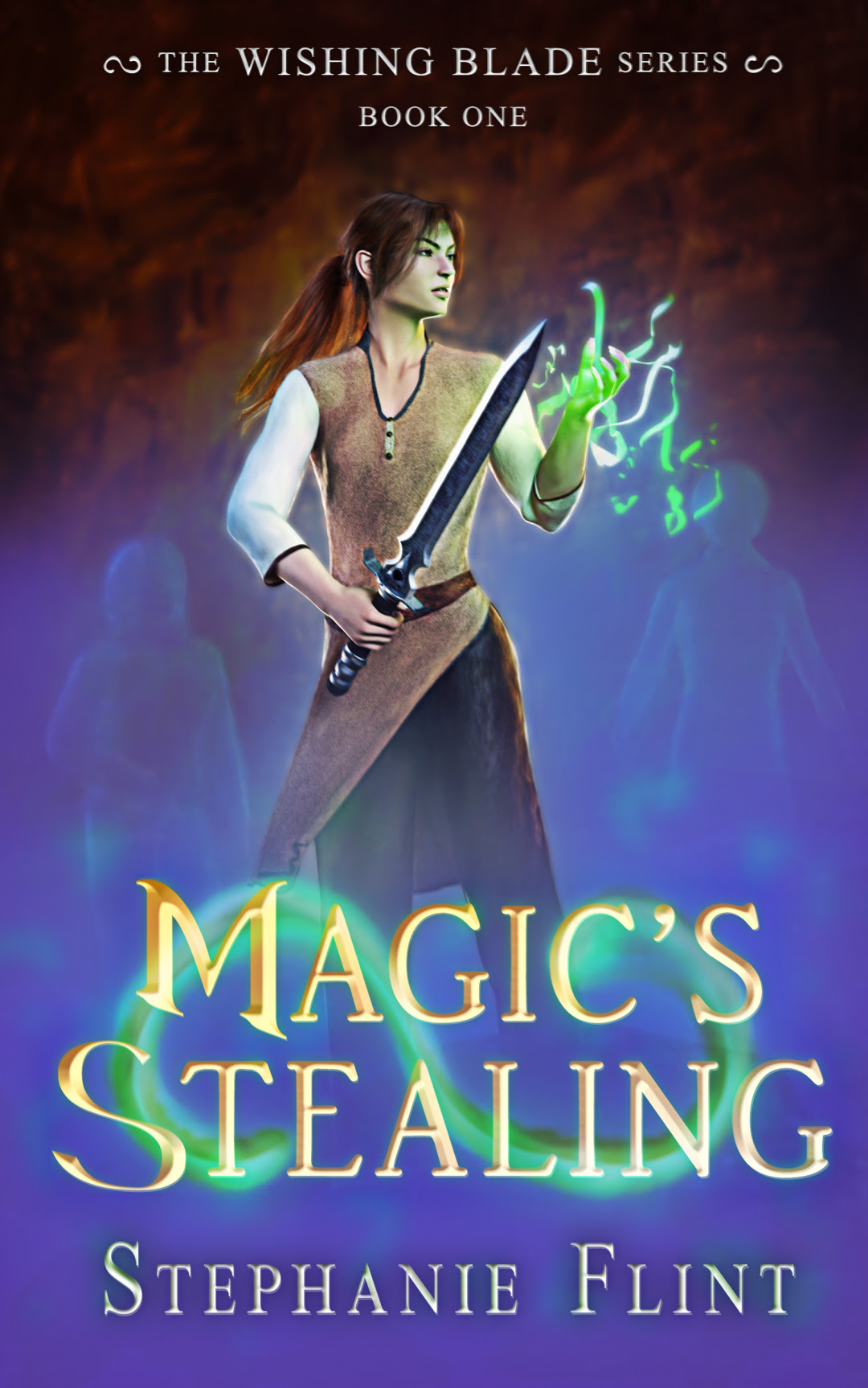
As much as I loved the old cover for Magic’s Stealing, there was a time when I wasn’t sure it conveyed the genre well.
So I decided to test a new design that I made in Daz, one which focused on Toranih instead of Shevanlagiy.
Original CoverNew Cover Design
I only changed the ebook edition, but I left it up on Amazon a few weeks to see how it went. The idea was that, depending on the response, I’d either switch back to the old design, or swap the the other ebook covers to match the new design and upload those across all retailers.
Regardless, I planned to keep the print covers matching the older design until the series was complete, that way anyone who had already picked up print copies could still get a complete collection. (Plus I have ideas in mind for those covers).
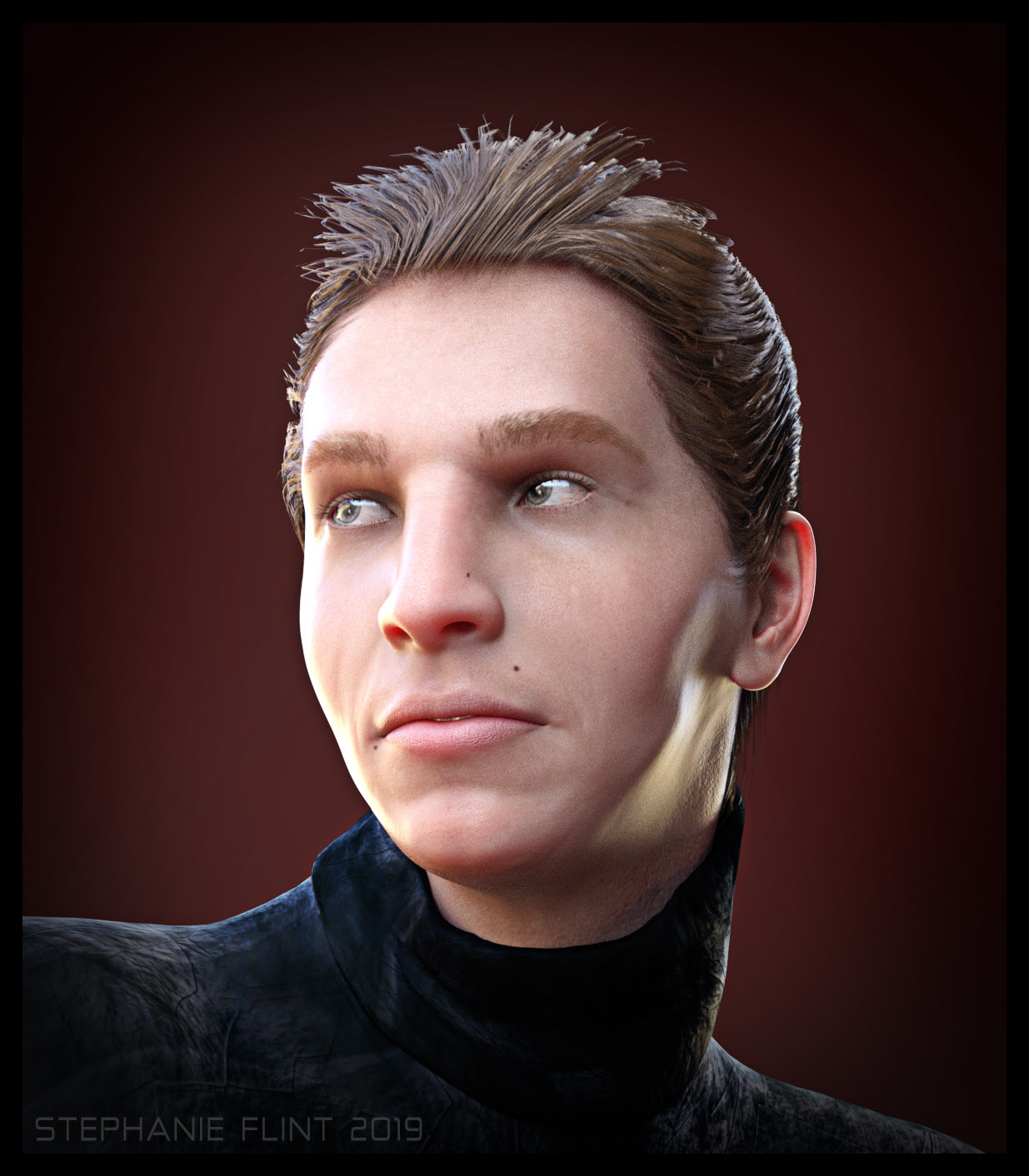
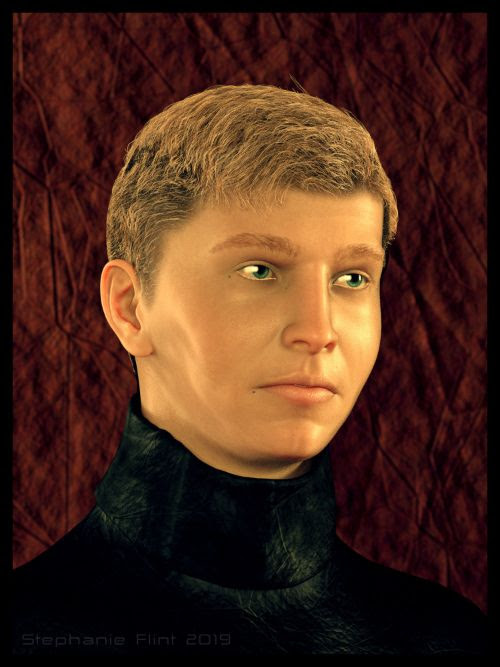
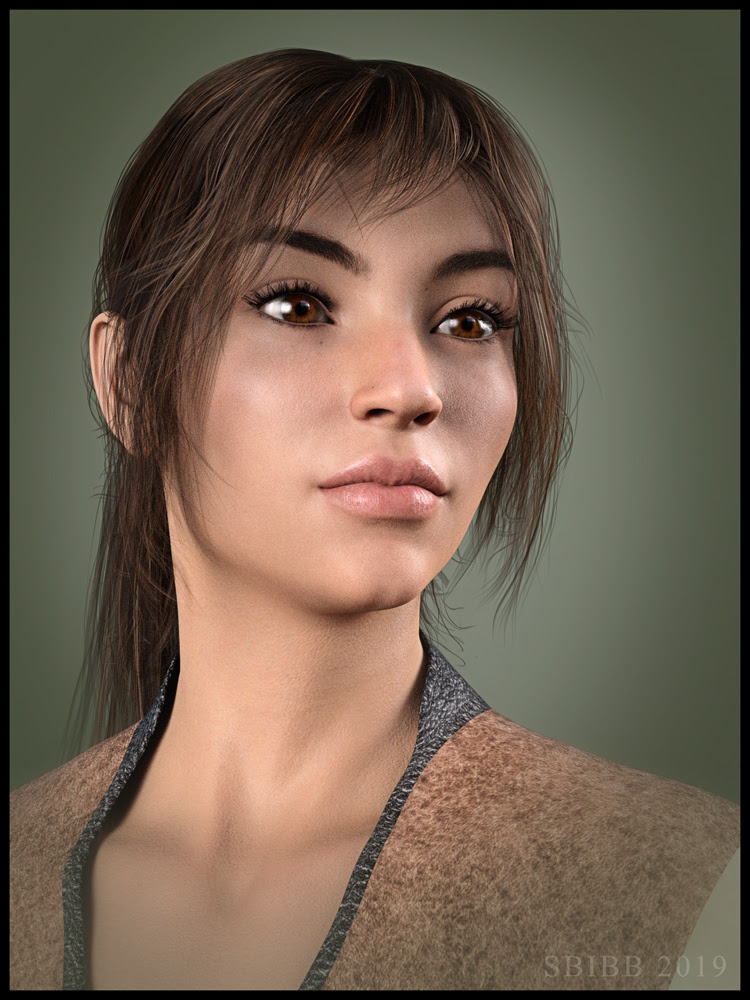
I’d say this was kind of in my middle-ground stage of working with Daz. Not quite as rough as early attempts, but I still didn’t have quite as good of a grasp on the program. Here’s a look at a 3D rendering I made of Toranih, the precursor to creating the newer edition of the cover:
I did end up making a few changes to her between this picture and the design of the cover, but at the time that was about how I pictured her.
The results?
Well, I left the cover up for a month, and I didn’t see a noticeable difference in sales.
However, I also didn’t have a chance to do as much with Amazon ads as I would have like to have tested, so I might not have had the best comparison to work from.
Eventually I switched it back to the original cover, since I still liked that one better. Someday I may try to update the ebook cover again, once I have a better baseline set up and a more well-thought-out plan for advertising, but for now, I think I’ll stick to the original.
What do you think?
* * *
Read the YA fantasy series where magic gets stolen, and one of the only two people who still have magic is a young woman who can’t see it and doesn’t trust it…
* * *
Happy reading and writing (and book cover designing)! 📚
Many, many Distant Horizon Universe newsletters ago, back in early 2019, I had a poll for which Distant Horizon beast subscribers would like to see me try to render in Daz.
Keyword being “try” to render, because I was still learning the program and uh… even my drawn attempts to create beasties hadn’t been that great.
At the time, I had a lot fewer assets to work with, and a lot less practice with morphing the figure’s features to get the desired look.
Anyway, with a lot of Photoshop post-processing…
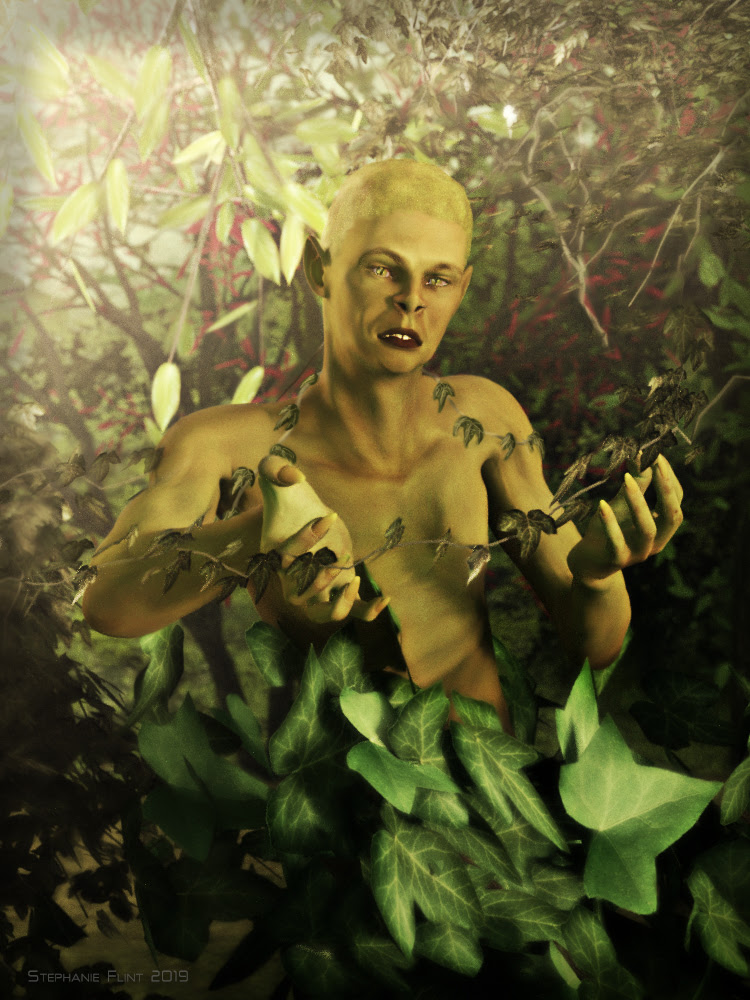
This was my take on a plant beast “candid shot” caught in the wild by a rebel photographer.
The image was inspired by this section from Distant Horizon, where Jenna sees a picture of a plant beast for the first time:
The image had been taken in a jungle, with thick ferns and tall trees spiraling around the frame. It focused on a vaguely humanoid creature. Thick, woody vines wrapped around its hands, twined across its shoulders, and curled around its collarbone. The vines rested loose against its bare chest. The creature—male—was naked, with pale, green-tinted skin and a thicker brow. Like the beast we’d seen in the security feed, this one had cat-like eyes and pointed ears.
Anyway, there you have it!
First attempt to create a Distant Horizon beast in Daz.
Should I give it another go sometime, try a then and now?
* * *
Discover what the Camaraderie doesn’t want the Community to know exists in the Distant Horizon…
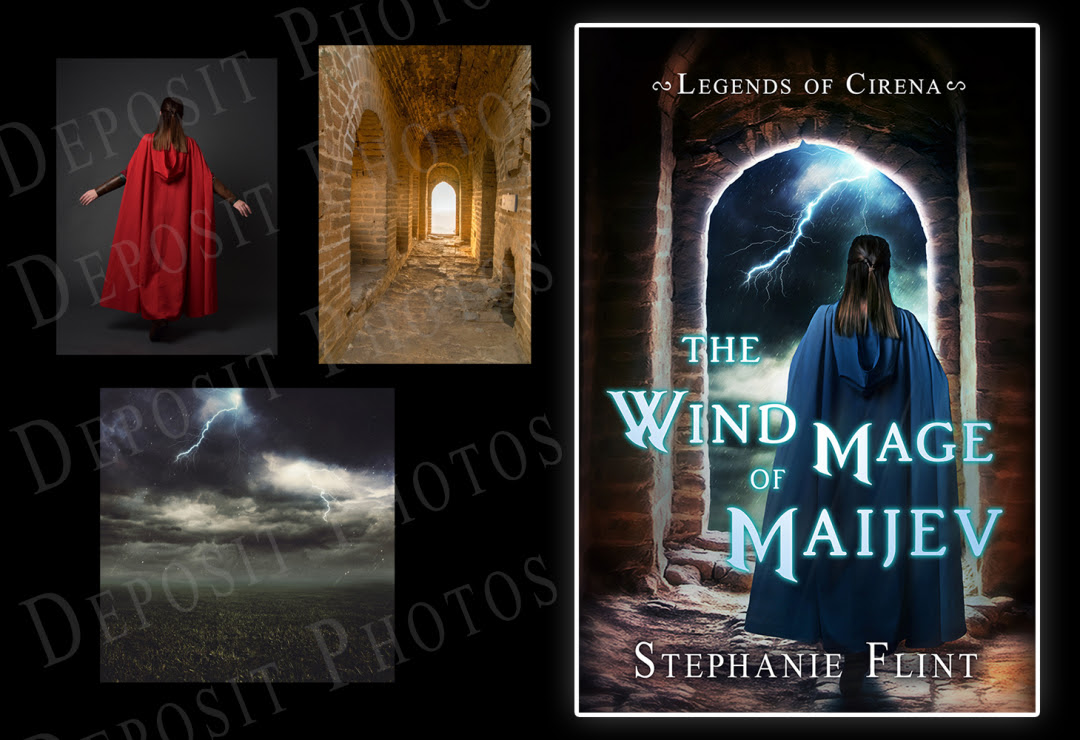
I’ve been rummaging through my older newsletters for blog content (circa 2018/2019), and I came across an email with my behind-the-scenes process of how I put together the cover of The Wind Mage of Maijev.
So, today, I’m revisiting that. 😊
Below you can see the stock images that went into it, and then the final version:
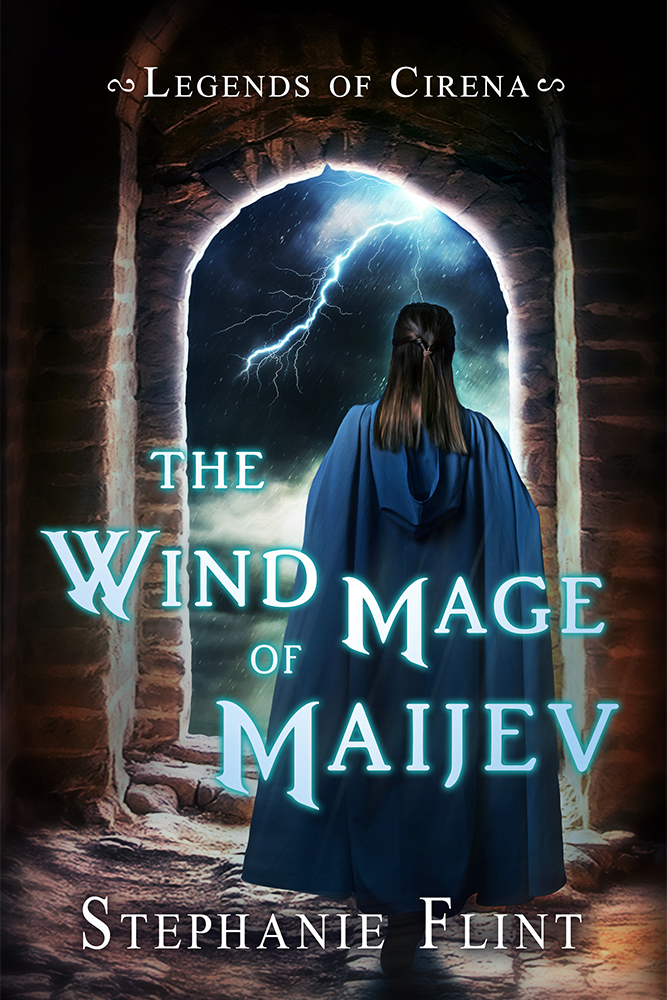
Since the storm plays a major role in the story (including the cause of most of the conflict), it seemed fitting to include that element. Plus, the walls leading to the entrance seemed to work well with the walled city of Maijev. Livena, the main character, isn’t particularly excited about her magic, so I removed the outspread arms, but still, she faces the storm… which she ultimately must face if she is to deal with her magic.
Here’s the final version:
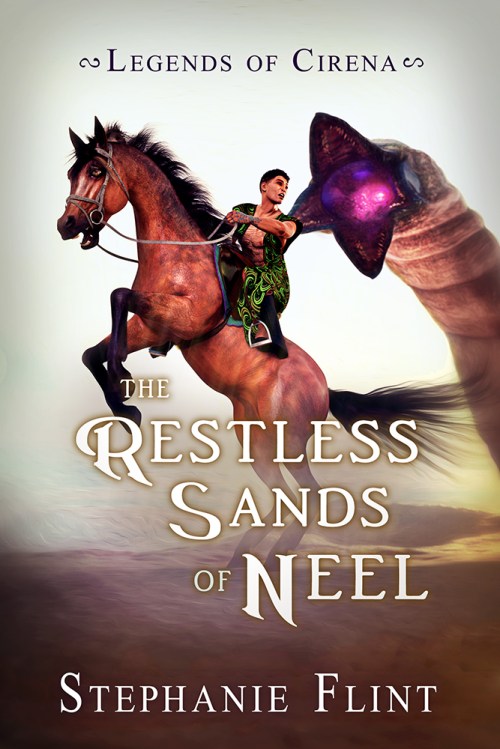
I used the same photomanipulation technique for the next book in the Legends of Cirena series, The Gryphon and the Mountain Bear, but afterward switched to Daz 3D renders so I would have more flexibility with how I illustrated the covers.
An example of the Daz style covers comes with book #7 in the series, The Wind Mage and the Wolf:
* * *
As a note… I try to keep The Wind Mage of Maijev ebook available for FREE, so if you’re interested in reading this one, grab it from your favorite retailer!
(Just be sure to double-check the price before buying. Amazon especially is notorious for switching the permafree price back to its paid price, since they rely on price-matching rather than allowing authors to set the price to free).
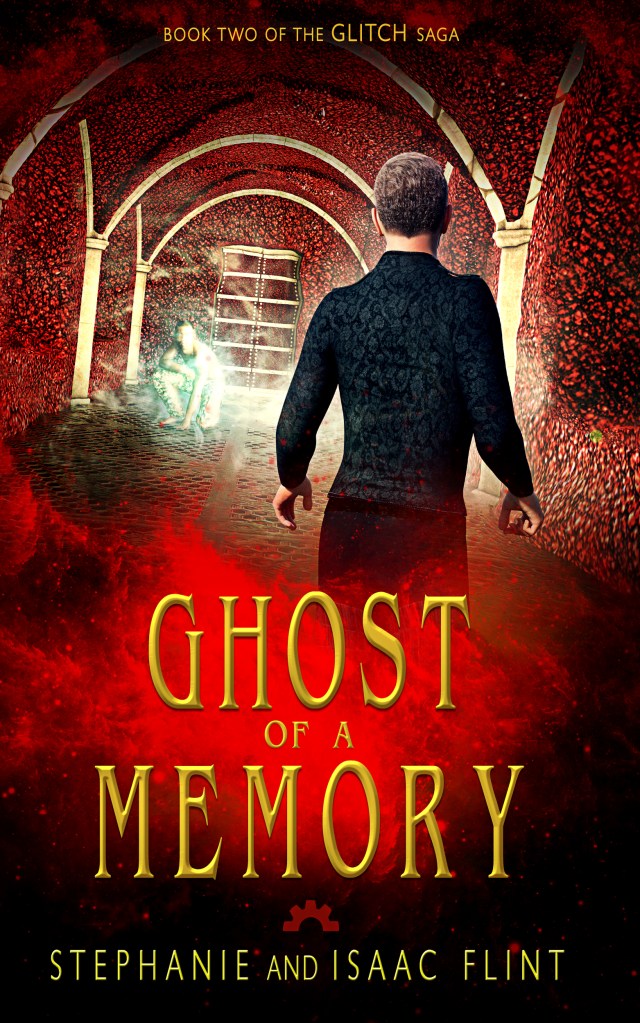
Back when I was originally writing the rough draft for Little One and the Glitch saga (many many years ago, because I was still in the process of figuring out what I was doing with my writing and hadn’t started publishing), I decided to read a few horror books to get a feel for how those stories worked and how to get an underlying tone of dread and something bad about to happen.
One of the books I read was Christine by Stephen King.
Though I don’t remember a whole lot about the plot now, one of the things that stood out to me when I was reading it was how Arnie’s personality slowly changed over the course of the story, and at one point, the narrator realizes that Arnie’s signature has changed due to how he scribbles it on a cast.
That image stuck in my head, and while I had originally read Christine in hopes of getting inspiration for Little One and Glitch, Christine ended up being far more influential on the Distant Horizon series.
Especiallyfor book three, Starless Night.
The book ended up influencing the concept of brain seeds… a telepathic attack that rewards and punishes its target’s behavior so they’ll do what the seed wants. The more the seed grows, the more the target changes.
It’s an issue Jenna, the main character of the series, is all too familiar with.
When Isaac and I first came up with the Distant Horizon world, memory seeds and brain seeds weren’t a thing. Lady Winters did have a tendency to mentally blast people with telepathy and horrifying images, but these weren’t the constant attacks that Jenna has to deal with… or the slow change of personality that we start to see in Fractured Skies and that tries to assert control in Starless Night.
These were small changes in mannerisms, occasional phrases of speech… and Jenna’s general preference in regards to coffee (which were really fun to write).
Below is a scene from Starless Night that takes place between Jenna and Stuart, a butler for the Camaraderie. Stuart has been around for quite some time, and he is perceptive. (And also a powerful telepath who was not fond of Lady Winters).
He can recognize a threat to both Coalition and Camaraderie:
Stuart inclined his head toward the cup in my hands. “It is my understanding you only recently took an interest in coffee. Is that correct?”
I frowned. “Tastes change. Why?”
“Though I shall continue to suggest tea as the superior drink of choice, may I ask how you like your coffee?”
“What do you mean?”
“Cream? Sugar? Or black—”
“Black as a starless night,” I interrupted, taking a sip of the drink. It was more burnt than black, but bitter was bitter.
The butler’s eyebrows narrowed almost imperceptibly. Danger…
The feeling faded. He was only a butler.
“For the sakes of those you care about,” he said, “you should do your best to fight the seed. No one cared for Winters except herself. But there are many who care about you.”
(That said, I somehow managed to nix the phrase “coffee, black as a starless night” from the drafts of both the Glitch series and in Distant Horizon, which effectively destroyed some of the foreshadowing I had intended. *Facepalm.* If I ever do a revamp of the series, that’s getting added back in somewhere. Isaac even gave me a coffee mug for Christmas one year with the Camaraderie symbol and the quote, though it’s long since faded).
How Jenna refers to people, whether she’s nice to them or condescending, whether she knows a little more than she should about a particular situation… all these were little details I got to tinker with.
The biggest issue for me was keeping track of what changes have already started in one book and which ones had yet to take root.
Once we get to book four (currently drafted/semi-revised), she sort of has control again, but she’ll have some all-new problems to deal with.
Either way, the idea of a shifting personality and how the others around the person being affected person respond to those changes, definitely got at least some inspiration from reading Christine.
* * *
An evil brain seed is determined to take root in Jenna’s brain…
A few years ago, while visiting my parents’ house, I found a stage play I attempted to write during college based on my original version of The Wishing Blade series.
It was cheesy.
Really cheesy.
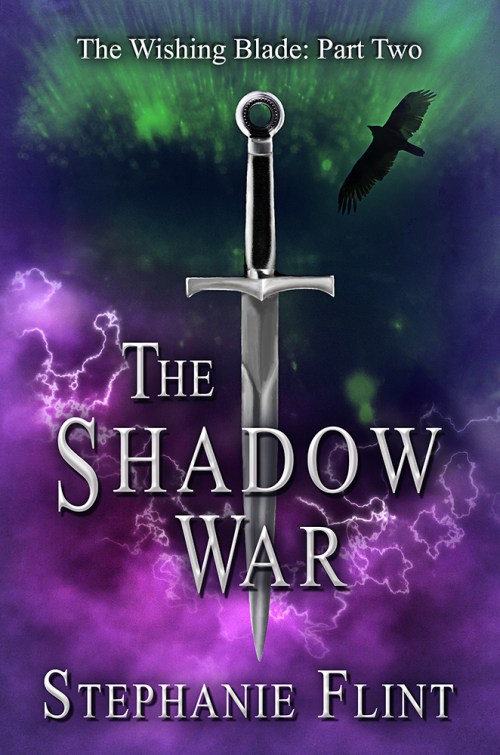
But it was cool seeing which plot points changed and which ones had remained surprisingly similar to the final, published version of Magic’s Stealing and The Shadow War (originally part one and two of the same book).
When I first started writing the story that would eventually become The Wishing Blade series, it was in 2003. (I did a lot of plotting in eighth grade choir).
Eventually, the story got shelved during the later part of high school and college–except for a playwriting class where I decided to try reworking my story idea into a screenplay. While I think I got a decent grade on it, looking back now…
There was way too much going on for a stage play.
However, it was one of my first successful attempts to fully rewrite the original draft and re-envision the story as a whole.
As such, it was fun to read through sections of the play’s draft and see which aspects stayed the same from the original story, and which aspects changed. (Even though several things had already changed from the rough draft to the stage play version).
Here’s a look at what the stage play looked like. As a warning, there are spoilers for the current version of the story. It would be best if you’ve already read Magic’s Stealing and The Shadow War before reading this. However, I’ve tried to make annotations that relate to the series as a whole.
I’ve added my comments in red.
SHEVANLAGIY
(Aside.)
So easy to fool him (Isahna) with half-truths. He doesn’t know why Aifa attacked me, and he does not know who the traitor’s son is. Poor Nihestan got into so much trouble, yet still he lives. Better yet, only a few know how I came to be here. Isahna has an idea, yes, but there’s still so much he doesn’t know… unless he does know and he’s pulling the trick over me…
(Aside from Shevanlagiy monologuing, which happens a lot in the stage play version… Nihestan was Shalant’s original name, and he had connections to Lord Cafrash Menchtoteale. Though hinted at in The Shadow War, the “traitor” aspect has not yet been addressed in the current version of the series… though I think there’s a couple hints of this in Magebane).
(AIFA comes on stage.)
AIFA
You like to make things hard on us, don’t you? Here string magic binds you, and maybe string magic will hold you, unlike the ribbon magic of mortals.
(I was actually surprised that I had string magic referenced this early in the story’s development. The idea that something is wrong with Shevanlagiy’s string magic remains in the current version.)
SHEVANLAGIY
If I’m not mistaken, ribbon magic is the magic of the gods, too. Isn’t it?
AIFA
That… that is true.
SHEVANLAGIY
Sure, string magic can hold me for a time being. But how long before my look-alike pulls a trick that unravels this prison?
AIFA
She doesn’t have that kind of power. And she really doesn’t look that much like you.
SHEVANLAGIY
Close enough. Genetic code is amazing, yes?
AIFA
Genetic what?
SHEVANLAGIY
Heritage. I wouldn’t expect you to know. Though, being a matchmaker goddess, I would think you would be more inclined to know than some of the others. Then again, it isn’t like the gods to try multiverse travel.
(Though I’ve downplayed it in the current version of the story, Shevanlagiy’s travel to other worlds was more prominent in the earlier drafts, as was her tendency to befuddle those around her with her other-worldly knowledge. That being said, the concept of Shevanlagiy visiting other worlds starts playing a much larger role in Magebane.)
AIFA
That doesn’t change the fact that you’re stuck here.
SHEVANLAGIY
Actually, it does. But what’s a minor goddess like you doing with the Time Stone? How are you controlling it? Surely it’s beyond your powers.
(Originally, the shodo’charl was called the “Time Stone.” However, with the introduction of “time stones” in the Distant Horizon universe that Isaac and I write, I decided to change the name to the “stone of passage,” or “shodo’charl.”)
AIFA
It… is trying.
(As seen in the end of The Shadow War, the newer version of the story has it that Aifa’s not having nearly the same amount of luck controlling the stone as we see here. It’s a factor that I intend to play a larger role in the fourth book of the series.)
Some hints have already been snuck into the books, and more hints are working their ways into the upcoming stories as well…
Anyway, that’s a look at one re-imagining of the Wishing Blade series, even though that particular version has been permanently shelved.
(That said, I haven’t gotten rid of my idea that ribbon dancing should be used to portray ribbon magic in a theatrical version).
When Isaac and I first created the Distant Horizon universe, we made it as a homebrew role-play game, sort of a cross between the 90s cartoon X-Men, and The Giver. (Dystopian world with superheroes). There were a lot more superhero references in the game…
And in the names.
Especially for the villains.
For example, Lord Black (the founder of the Community), was usually called “Jellyman” or “Lord Gelatinous” due to his natural form looking something like jelly.
*Cough.*
We eventually decided he probably wouldn’t call himself that, and he definitely wouldn’t have encouraged the people in the Community to call him that (especially since they’re very particular about maintaining appearances and hiding the existence of super powers). But the rebels, particularly those who had a grudge against him, might.
I found a stray reference in an early draft of Starless Night where a character grumbles “Son of Gelatinous!” in frustration. Lord Black’s son was something of a rebel, and therefore a source of frustration to his father. Needless to say, that line got reworked, since it no longer made sense.
Another example was Lady Winters, who was first referenced as Brainmaster. She had a couple name changes, actually. First was Brainmaster, then we changed that to Lady Bridget. But that was too easily confused with Lady Black when reading, so we changed it yet again to Lady Winters.
Long story short, we decided there was no way she would call herself Brainmaster, and most of her underlings would know better than to call her that, too. And they try not to think it either, in case she’s reading their mind. That said, due to her cruelty, the Brainmaster moniker has stuck around for both the Camaraderie and rebel faction if she’s not within earshot or mind-reading range.
And then there’s “The Camaraderie of Evil.”
That name actually got to stay. In Whispers in the Code, Commander Rick explains why they kept the name.
“You will be challenged by much of what we do,” he continues. “In the Community, your tasks were simple: program basic systems, keep everything running smoothly… This job is not so simple. We call ourselves the Camaraderie of Evil because we are willing to take steps others wouldn’t dare consider. That’s the only way we can accomplish security and efficiency. I don’t personally believe we are evil, but the name stuck around from our earlier days, and they were… an interesting bunch.”
What the commander doesn’t mention is that they got the name because the founders were a group of young, ambitious (and variably “evil”) people with powers getting frustrated with their uptight “mad scientist” of the group and deciding they would call themselves that to taunt him.
They didn’t expect it to stick and, nowadays, the COE typically just calls themselves the Camaraderie… or if they’re in the Community, “The Community of E-Leadership.”
Other names were changed for ease of reading. Janice became Gwen because we had so many “J” names already and that was the easiest one to swap and keep the others.
Overall, I think the changes were for the better, though they did change the flavor a bit from role-play game to reading.
* * *
Most of the names got updated. Even so, characters leaving the Community for the outside world still have a few superhero/supervillain surprises in store…
One trope I really enjoy in fantasy is that of the misinterpreted prophecy.
Where characters are acting on a belief that a prophecy is going to go a particular way, but there’s a crucial misunderstanding somewhere in the usually archaic-sounding and ominous poem or lyrics. *Squee!*
Whether the misunderstanding is because a word or phrase gets passed along incorrectly or something gets lost in translation, it’s a twist and a trope that makes me happy.
(Not to be confused with misunderstandings between characters as the driving force of drama, which drives me nuts.)
My first encounter with the misinterpreted prophecy that I can remember comes from the book, The Sight, by David Clement-Davies. I adored both that book and its sequel, Fell, when I was in high school. (Or was it junior high? Might have been junior high for The Sight and Fell in high school, come to think of it). I enjoyed the books enough to create a dramatic interpretation from Fell for my speech and debate class.
The one time I ever took home a second place trophy at tournament was after winter break when I, having read Fell during break, loved it, and decided to cut a piece with reference to the prophecy in the intro, plunged into memorizing it and preparing it over the two weeks and took it fresh to the next tournament.
I also might have made at least one person do a double-take while walking by because I was out practicing in the hall and was having a lot of fun with accents.
*Ahem*
Anyhow, point is… there’s a prophecy in the series and there is a single word change that completely shifts how the prophecy might play out. And almost twenty years later (wait… it’s been that long?) I can still recite the first few lines of that prophecy based on what I memorized for the interpretation.
So… what does all this have to do with anything?
Well, you don’t think I’d pass up the opportunity to slip a misinterpreted prophecy into one of my stories, do you? 😁
(Okay, okay. Technically it’s two stories but the second one doesn’t have anything published from that series yet).
So, which universe are we talking?
The Wishing Blade Universe!
Now, to be fair, nothing has been full revealed. Technically I planned to reveal parts of this in the next Stone and String novella or its spin-off that ties into the backstory of one of the characters from Magebane, but those have been on hold for so long that it seems more likely you’re going to get bigger hints about it from the upcoming Legends of Cirena story, The Dark Forest of Aneth.
Now…
SPOILERS AHEAD!!!
If you don’t wish for any details regarding the misinterpretation, stop reading this post! Seriously. I’m going to be saying what got misinterpreted, but not why or how this affects the story going forward. Okay with that? Cool. Proceed with reading!
.
..
…
What’s the culprit for misinterpretation?
One word: Ralendacin.
If you’ve read the Stone and String series or The Shadow War, you already know that Ralendacin means “the destroyer of worlds.”
(Ralen: world)
(Dacin: to destroy)
However, it comes to the attention of a couple of characters in the eventually-going-to-be-written third Stone and String story that the name is, technically, incorrect. Cantingen, as it stands now, tends to be a very exact language.
But everyone agrees that “Ralendacin” means “Destroyer of Worlds” even though a more accurate translation would be “Ralenme’Dacinllah,” or, alternatively, “Dacinllah so Ralenme.”
(Ralenme: worlds)
(Dacinllah: one who destroys)
Therefore, perhaps, the prophecy foretelling of the coming of Ralendacin might not be entirely accurate. And if that name was translated incorrectly, what else might the translators of the prophecy have gotten wrong? And why have so many people mistaken the meaning behind the prophecy?
Some hints have already been snuck into the books, and more hints are working their ways into the upcoming stories as well…
* * *
Ralendacin is the mastermind behind the inciting incident of both these stories… but her lore goes far deeper than any of these characters yet know…